
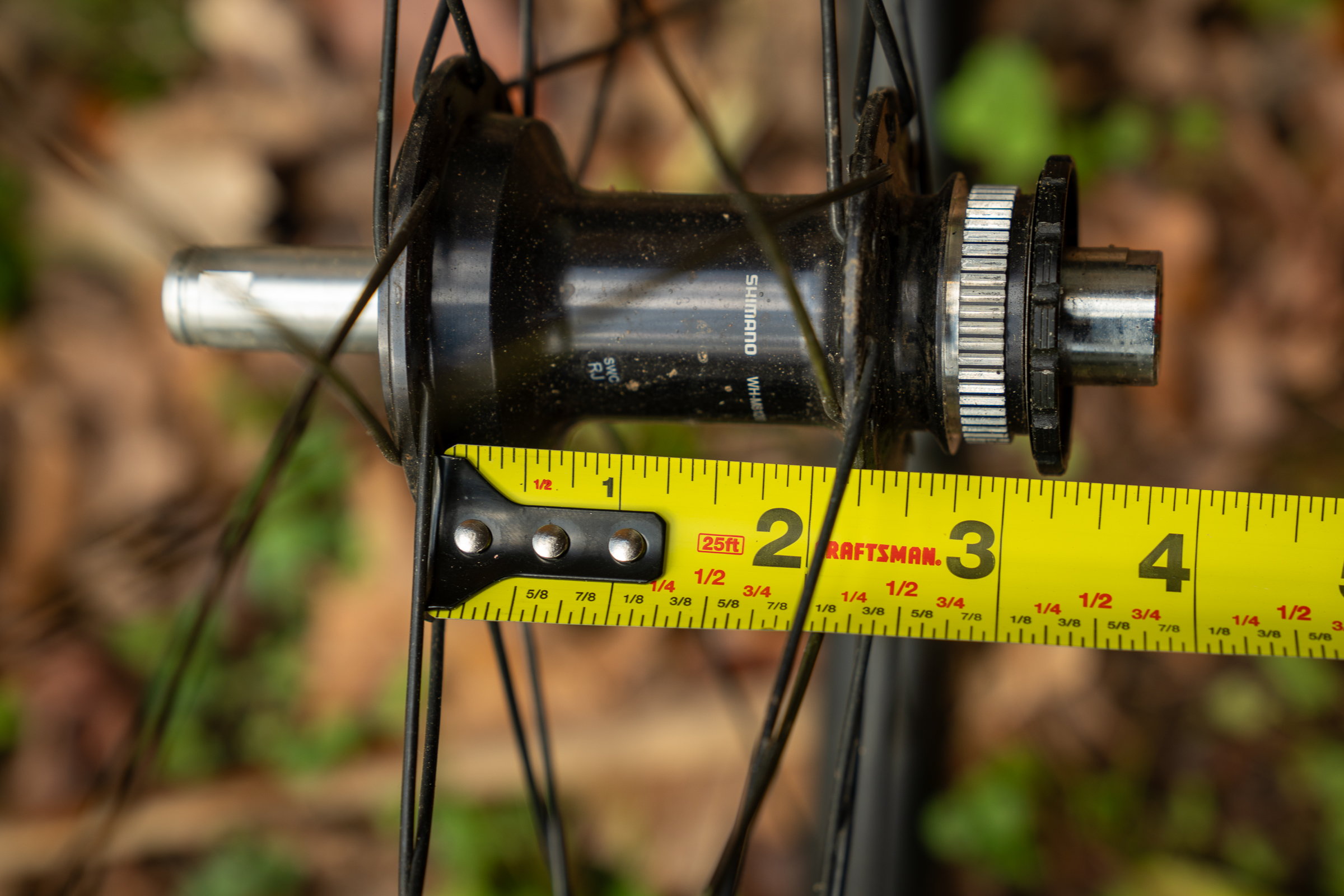
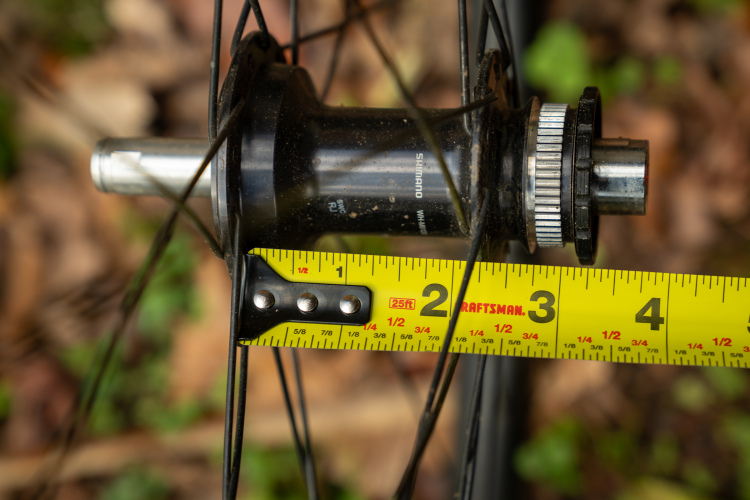
In 2025, things were not looking super for the “Super Boost” axle standard. Three brands that had adopted Super Boost spacing — Evil, Salsa, and Devinci — announced updated bikes last year without the wide-axle standard, moving back to more ubiquitous Boost 148 spacing. Now, the polarizing 157mm hub standard could be in for a comeback thanks to bigger, 32-inch wheels.
Super Boost had its boosters, but few early adopters remained
Among the brands that adopted Super Boost spacing for their trail and enduro bike frames, Pivot was one of the earliest adopters and perhaps the standard’s biggest booster. “From a frame design standpoint, it is a game-changer,” Pivot founder Chris Cocalis told Singletracks in 2021. “We can achieve a much better balance between chainring clearance, tire clearance, chainstay length, as well as critical stiffness and frame strength in a critical area because of that additional 4.5mm that Super Boost gets us over a standard Boost setup.”
Despite these technical advantages, the standard found few adopters long-term. Among major mountain bike brands, Pivot is the only one that’s still producing non-DH bike frames with Super Boost 157 spacing.
The introduction of SRAM Eagle Transmission and new Shimano Di2 drivetrains further eroded the need for Super Boost. When Evil updated The Offering last year, the brand said they were able to eliminate Super Boost spacing on the Offering trail bike thanks to modern drivetrain updates. Previously, Evil utilized Super Boost to achieve a 56.5mm chainline, which was necessary given the frame’s design. Paired with prior-generation drivetrains, Boost 148 delivered a 52mm chainline, but Transmission and Di2 offer 55mm chainlines, making Super Boost unnecessary, at least for Evil.
“The dust has settled, and the market has spoken. Evil-0, Industry-1. We’re back to Boost, baby!” the brand joked.
Super-size wheels are breathing new life into Super Boost
With the interest in 32-inch wheels growing among riders and boutique frame builders alike, Super Boost is getting a fresh look.
“All of our 32er frames are Super Boost so that we get a wider spoke angle and a stiffer wheel,” Zinn Cycles representative Nick Wigston told me over email.
The Singular Albatross, announced just last week, is another 32er bike with Super Boost spacing.
“As with all Singular frames, we aim to use common fitment standards,” Singular founder Sam Alison wrote. “One slight divergence from that with these frames is [the] use of ‘superboost’ 157mm rear hub spacing. It’s my feeling that one potential downside to these big hoops is a lack of lateral wheel stiffness due to reduced spoke triangulation. This can be mitigated by using a hub standard with wider flange spacing, along with building wheels with 32 spokes of 14/15 gauge with brass nipples.”
The need for wider rear ends will only grow as builders experiment with longer-travel, full-suspension 32er designs. David Folch jumped to 197mm rear axle spacing for his Monster Enduro 32er, finding that the fat bike standard was ideal for improving strength. As 32-inch wheels become more common, it’s possible we could see an even wider standard emerge — “Ultra Boost,” if you will.
Fresh Super Boost hubs hit the market
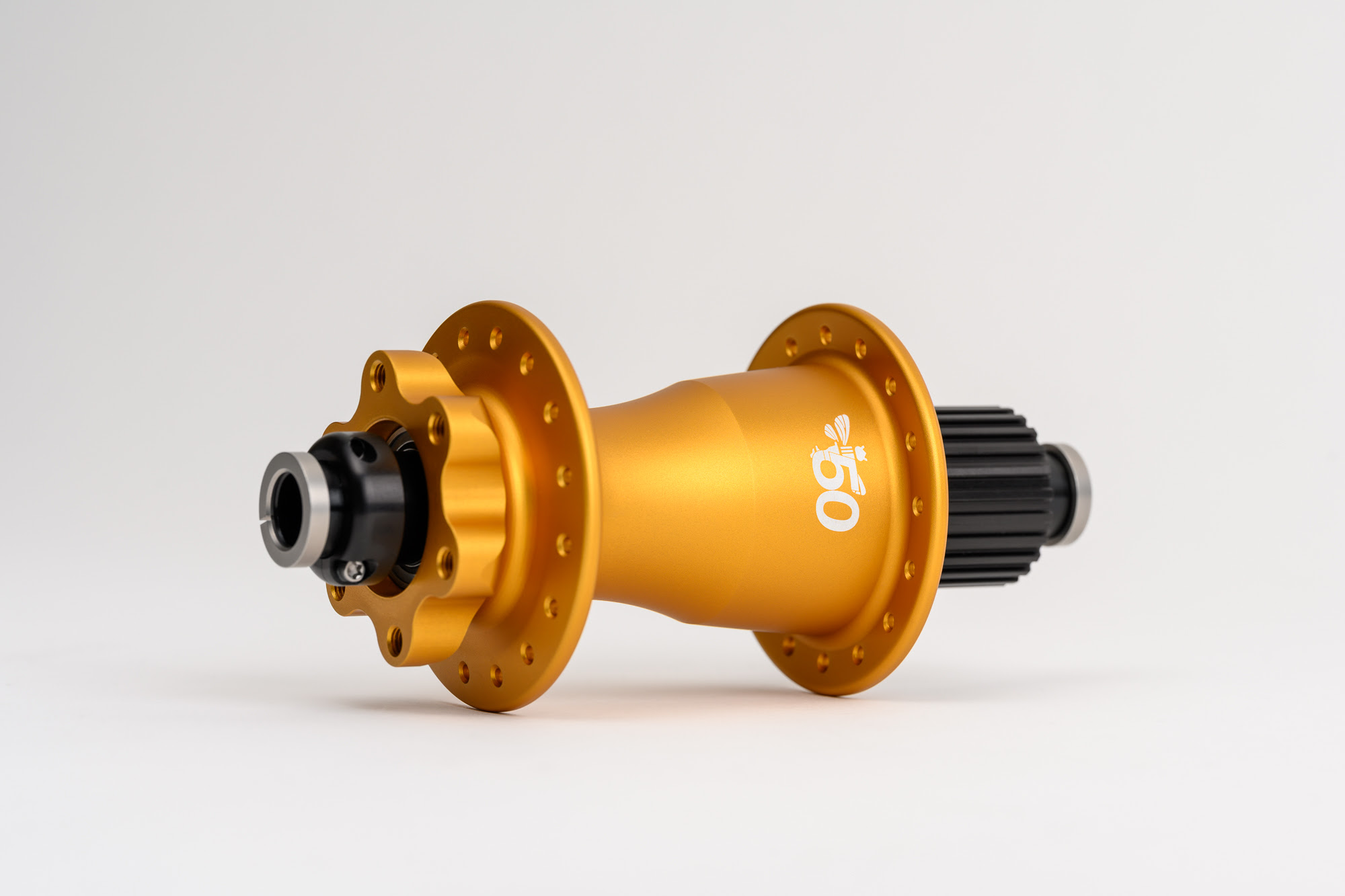
Yesterday, Chris King Precision Components announced a new 6-bolt option for their Super Boost hubs, giving buyers more options when it comes to custom wheels. Previously, Chris King Super Boost hubs were only available with Centerlock rotor support.
“We have been asked to bring back 6-bolt for current DH bikes and older existing bikes in the market for years now, ever since we stopped production over early Covid years,” Jay Sycip, Sports Marketing & Events Manager for Chris King, told Singletracks over email. “The reason we started back up really is to fill demand. We do know quite a few brands will be moving away from 157 and back to 148 Boost in the future.” Sycip noted it’s too early to tell if 32″ wheels will boost demand for Super Boost hubs.
Last year, Industry Nine (I9) introduced new Hydra2 hubs with Super Boost spacing, and buyers can choose from 6-bolt or Centerlock configurations. Though I9 doesn’t offer a complete 32er wheelset at this time, buyers can purchase a 32-hole version of the Hydra2 Super Boost hub to build their own custom wheelset.
Shimano introduced new XT and XTR wheelsets last year, and Super Boost options were notably absent from the line.
Old standards become new again
While bike consumers are generally hesitant about new standards like Super Boost and 32-inch wheels, these standards are not in fact “new” at all. Super Boost grew out of the 157mm standard used for downhill mountain bikes, and 32- and 36-inch wheel and tire sizes came from unicycles.
So it is with biking: old standards don’t die… they just get repurposed.



0 Comments