
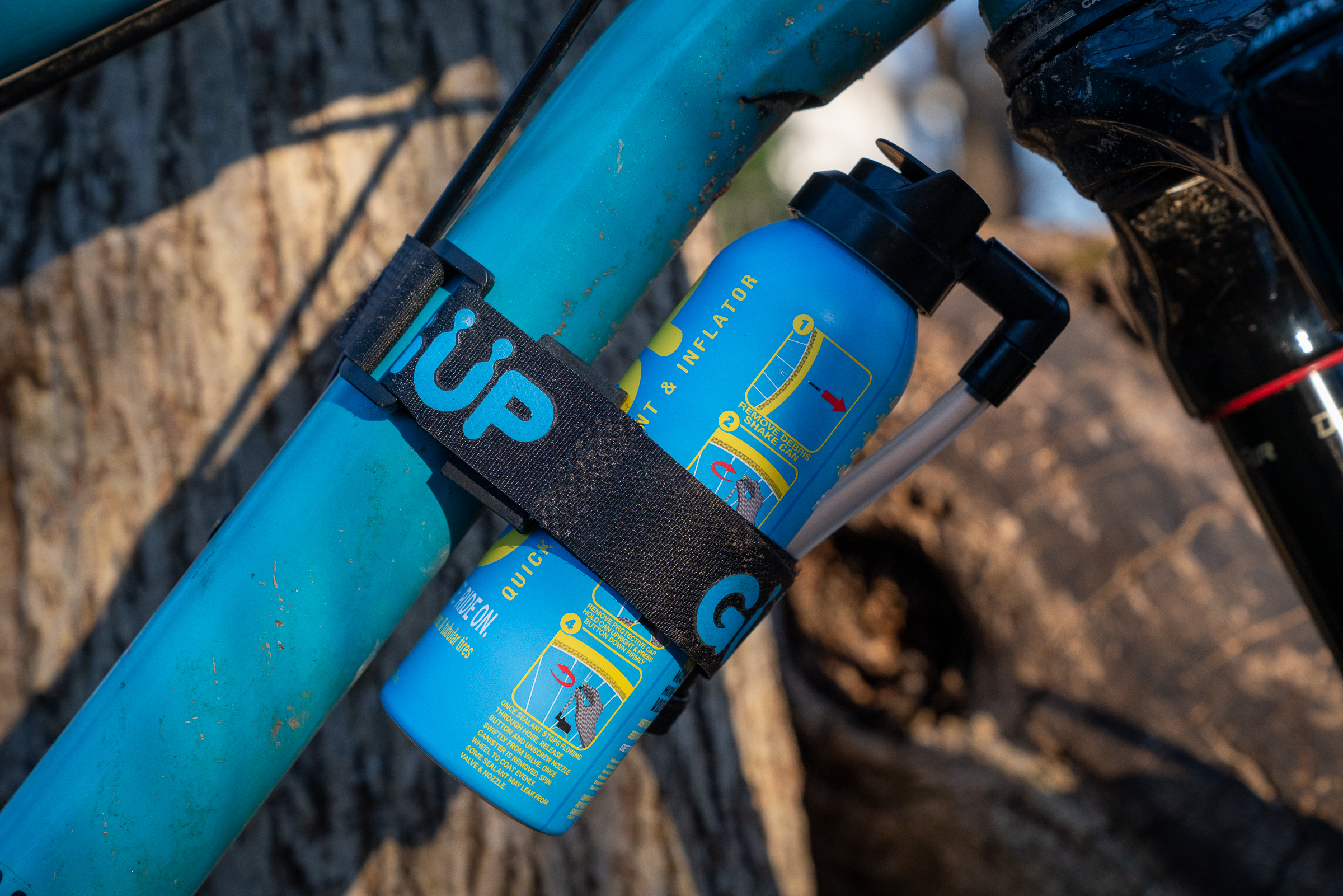
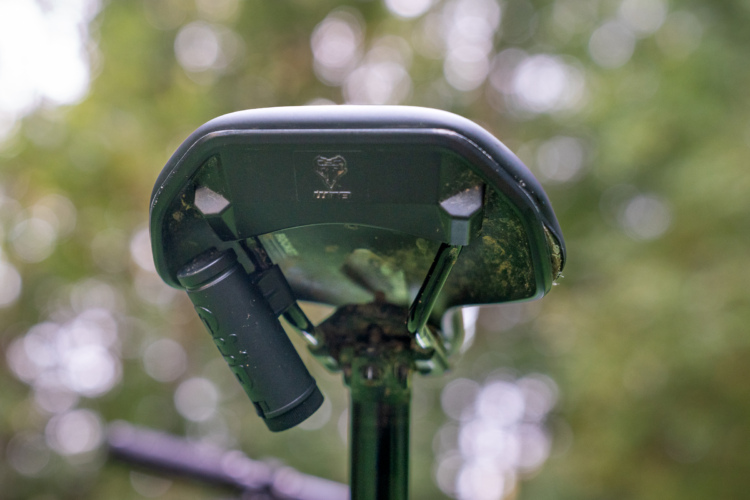
You know how if you carry an umbrella, it won’t rain? I’m pretty sure that’s how GÜP tire sealant inflators work, too. Still, if you carry a can of GÜP long enough, the time will eventually come when you need a quick hit. And when it does, it’s going to be a mess if you don’t follow the instructions.
Trust me.
I rode around for months with a can of GÜP tire sealant strapped to my bike, waiting for a flat. Once, on a group ride, someone got a flat and I was stoked! Can in hand, I pushed everyone aside and offered my services. “Sorry, I’m running tubes,” came the reply. Damn.
Ultimately, I decided to set up a test in my backyard, and it’s a good thing I did. I poked a hole in my tire about the size of a 16d nail, and set about inflating the tire with GÜP. Initially, things did not go as planned.
How to GÜP
GÜP combines bike tire sealant and compressed air in a 125ml canister that features a trigger and nozzle. It’s a one-shot, single-use package that weighs about 4oz and is the size of a Lady Finger banana. Because GÜP is a compact and quick solution, it’s particularly attractive to enduro racers.
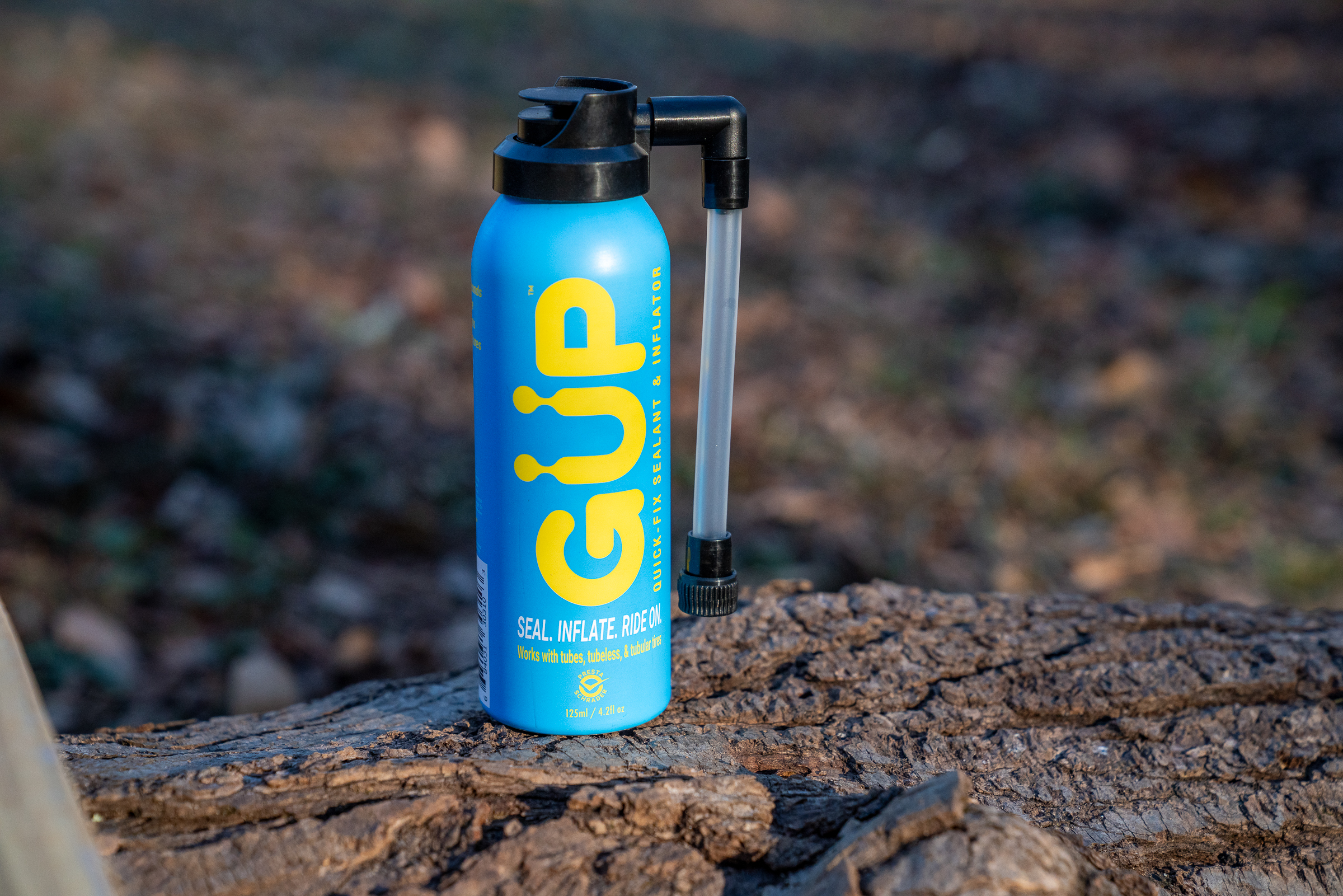
The whole thing is pretty self-explanatory, and if not, there are instructions and diagrams showing how to use GÜP printed right on the canister. There’s also a QR code you can scan to watch an instructional video like the one below. Looks as simple as can be, right?
Still, none of that prevented me from mucking things up on both my first and second attempts. Fortunately, by the third attempt, I was a pro. Here are my tips for getting it right the first time. 🤞
Step one: Completely deflate the tire. Your tire is probably already flat, or very low on air, but if there’s any pressure in there, it’s going to push against the pressure inside the can. Worst case, messy sealant will spray out of the hose and possibly even the trigger.
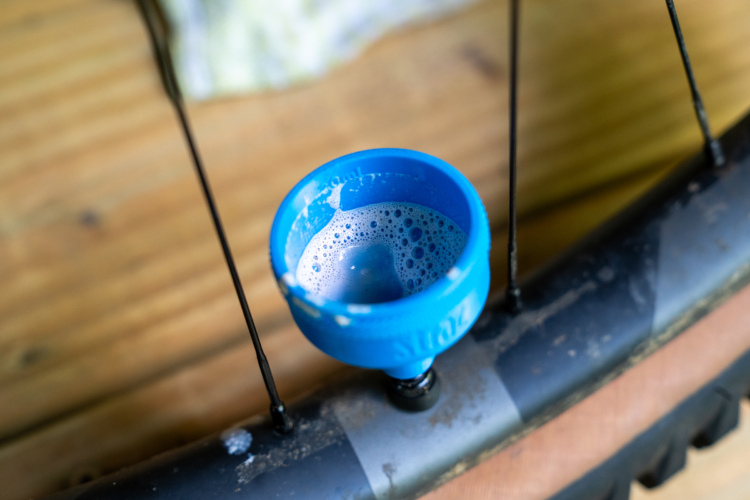
Step two: Open your Presta valve, but don’t remove the core. On my first attempt, I assumed things would go more smoothly without the core in the way, giving the sealant a wide-open path into the tire. However, Tomas Petricko from GÜP told me that it’s best to leave the core in the valve; there’s enough pressure inside the GÜP canister to blast the valve down and allow the sealant to enter.
The only caveat I would add is to make sure your Presta valve core isn’t sticky. I suspect a sticky valve made my second attempt just as messy as the first.
My first test, without the valve core, sealed the puncture and coated the inside of the tire with plenty of sealant. However, as I was inflating the tire, sealant leaked out of the can’s trigger. Once the can was spent, I removed the hose and quickly plugged the open valve core with my finger to prevent air from escaping the tire. Then I did my best to put the core back, and screw it in. I’m sure you can imagine this didn’t go very smoothly. Lesson learned: keep the valve core in!
Step three: Attach the hose to your valve. There are two different versions of the GÜP canister; one has a hoseless “Speed Adapter” that’s Presta-only, and the other is the “Hose Top” version I tested.
Though the Hose Top has a screw-on adapter designed for Presta and Schraeder valves, Petricko shared a pro tip with me. “For Presta valve use, I feel that it’s much easier to use the hose top canisters without either adapter, since it allows the hose to press over the valve, eliminating the need to thread both on/off,” he wrote.
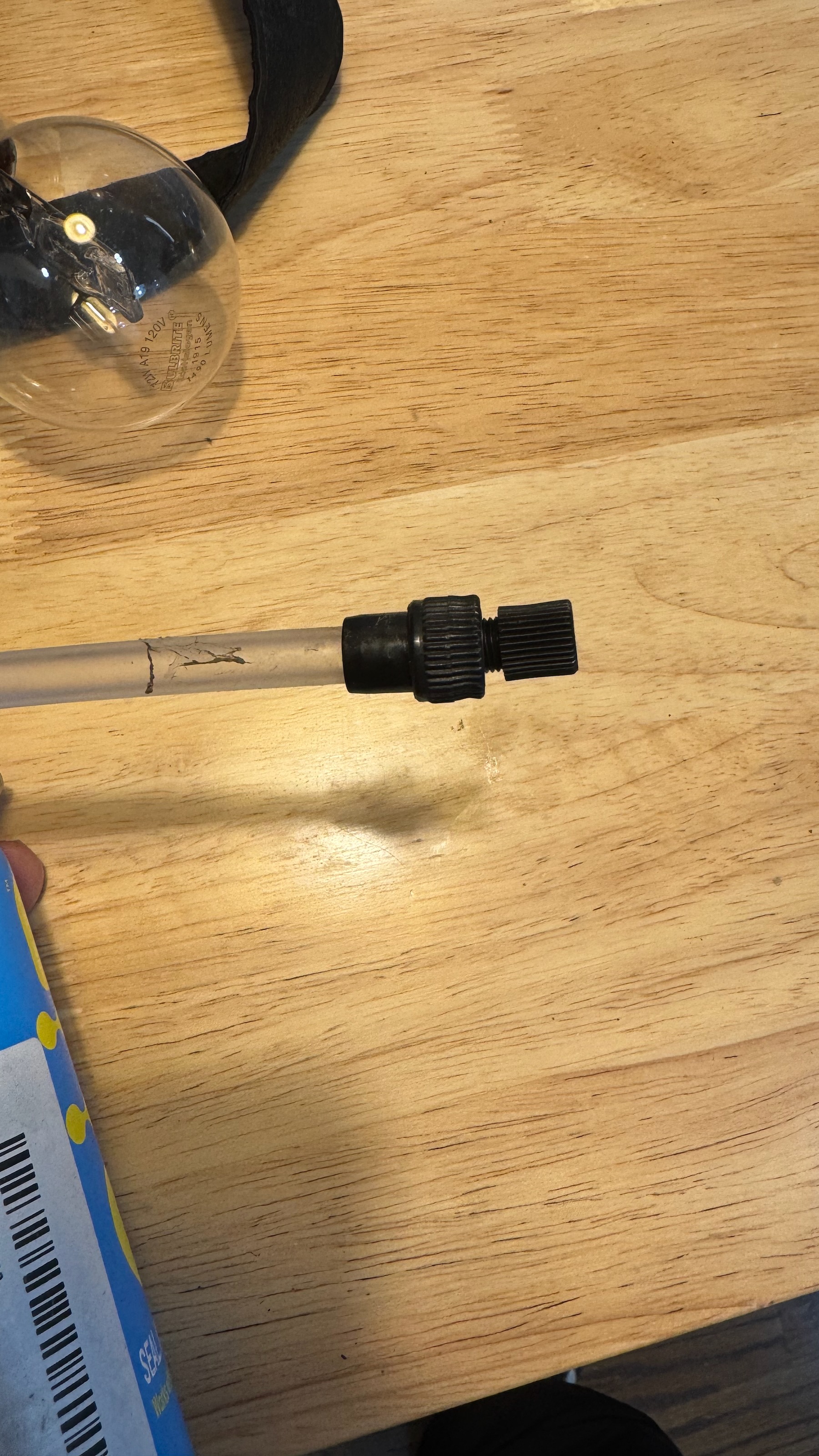
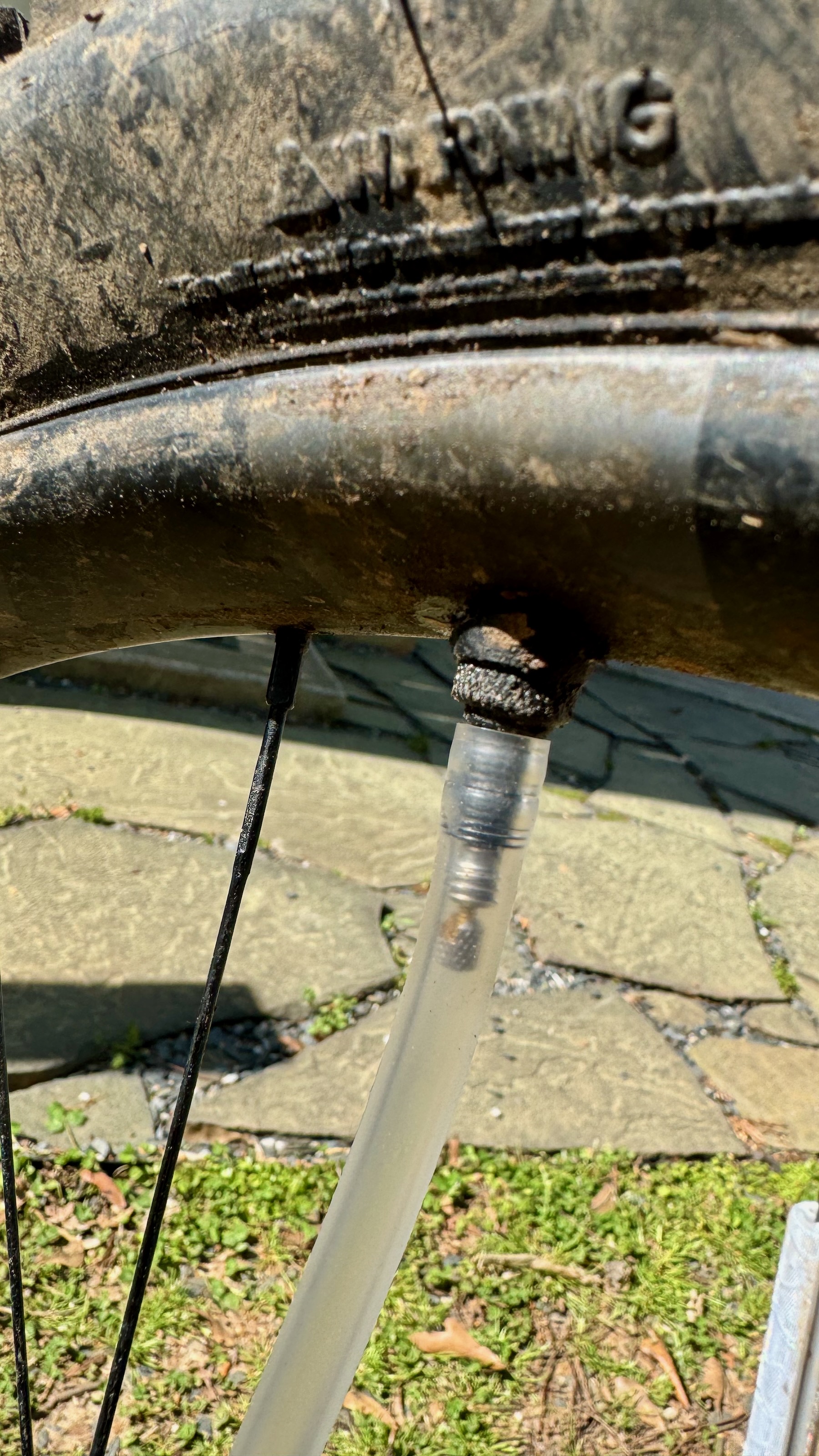
The black screw-on adapter pops off the hose, and I can confirm that by itself, the hose slips easily onto a standard Presta valve. In the instructions and the videos posted online, GÜP recommends spinning the tire valve to the 12 o’clock position when you attach the hose.
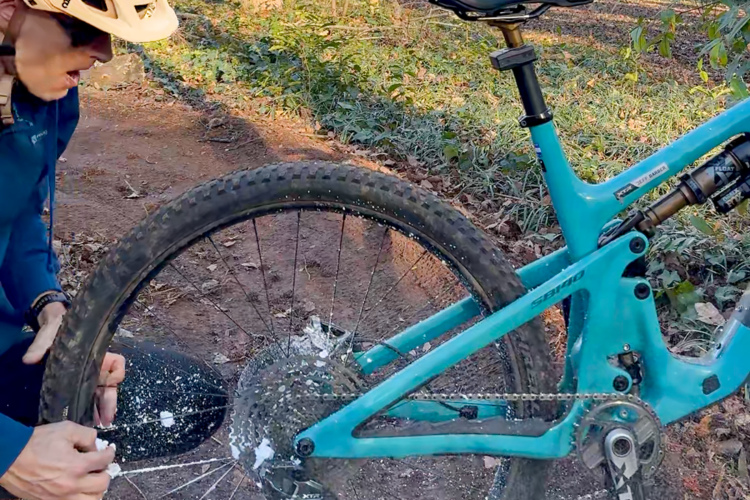
Step four: Let ‘er rip! Press the trigger at the top of the can to dispense the sealant and air into the tire. It takes a while for the propellant to run out, and you’ll want to get all the sealant inside the tire that you can. As the pressure in the can and the tire equalize, the flow will slow.
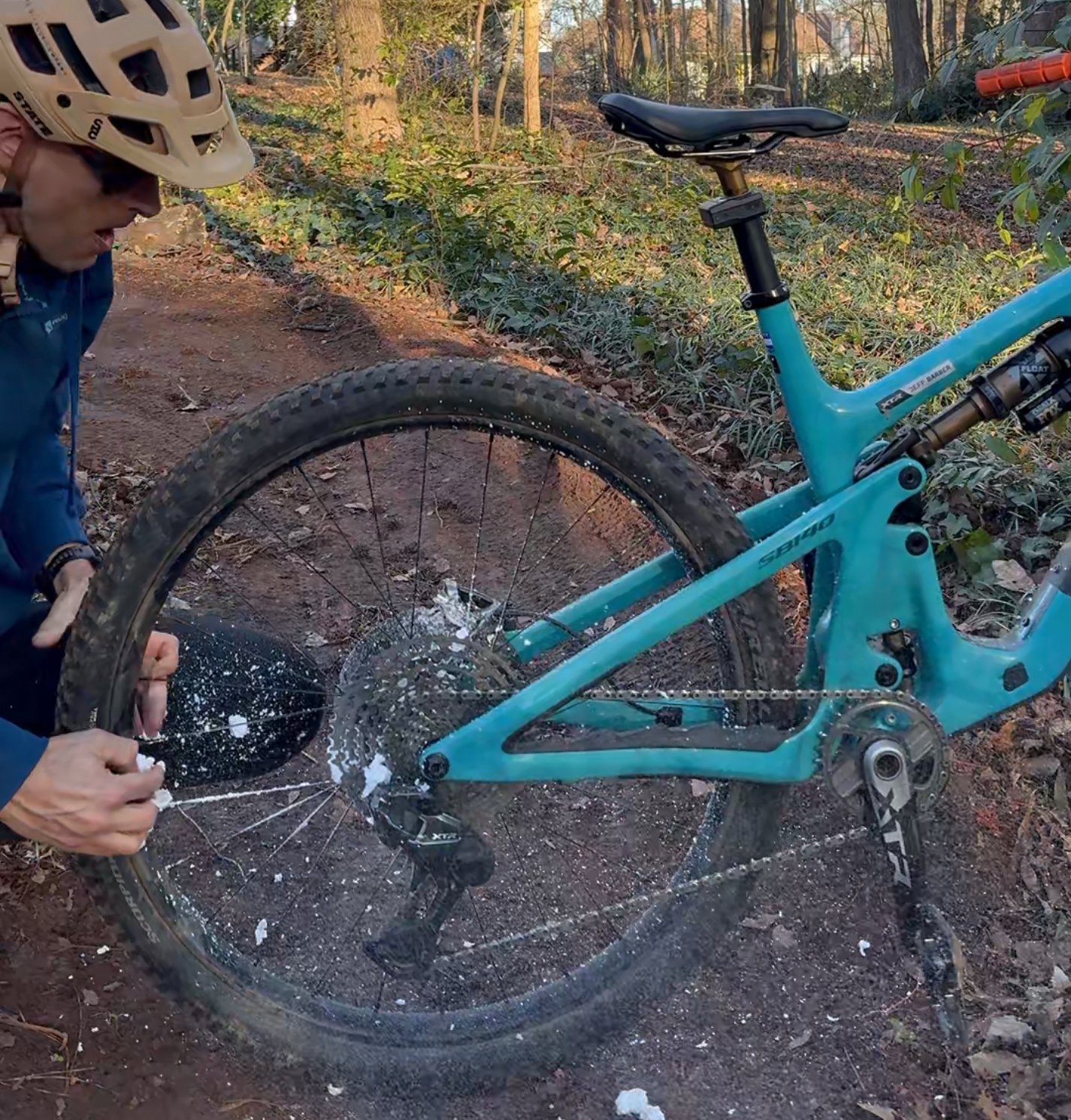
For my second test, I used the screw-on valve, and again, sealant leaked out of the top of the can at the trigger. This could have been due to a sticky valve core, though I can’t say for sure.
With one can remaining, I was determined to follow the instructions exactly, and — everything went smoothly. There was still a little foam that escaped at the valve, but the tire inflated quickly to about 25psi. I recommend you do not attempt to top off the pressure with a pump, at least not immediately. The sealant inside the tire is under pressure and will try to flow into your pump, which could cause damage.
To summarize: mountain bikers with standard Presta valves should remove the black adapter on the Hose Top canister, spin the tire valve to the 12 o’clock position, open the valve (but not the core), slip the hose over the valve stem, and hold down the trigger until the can runs out.
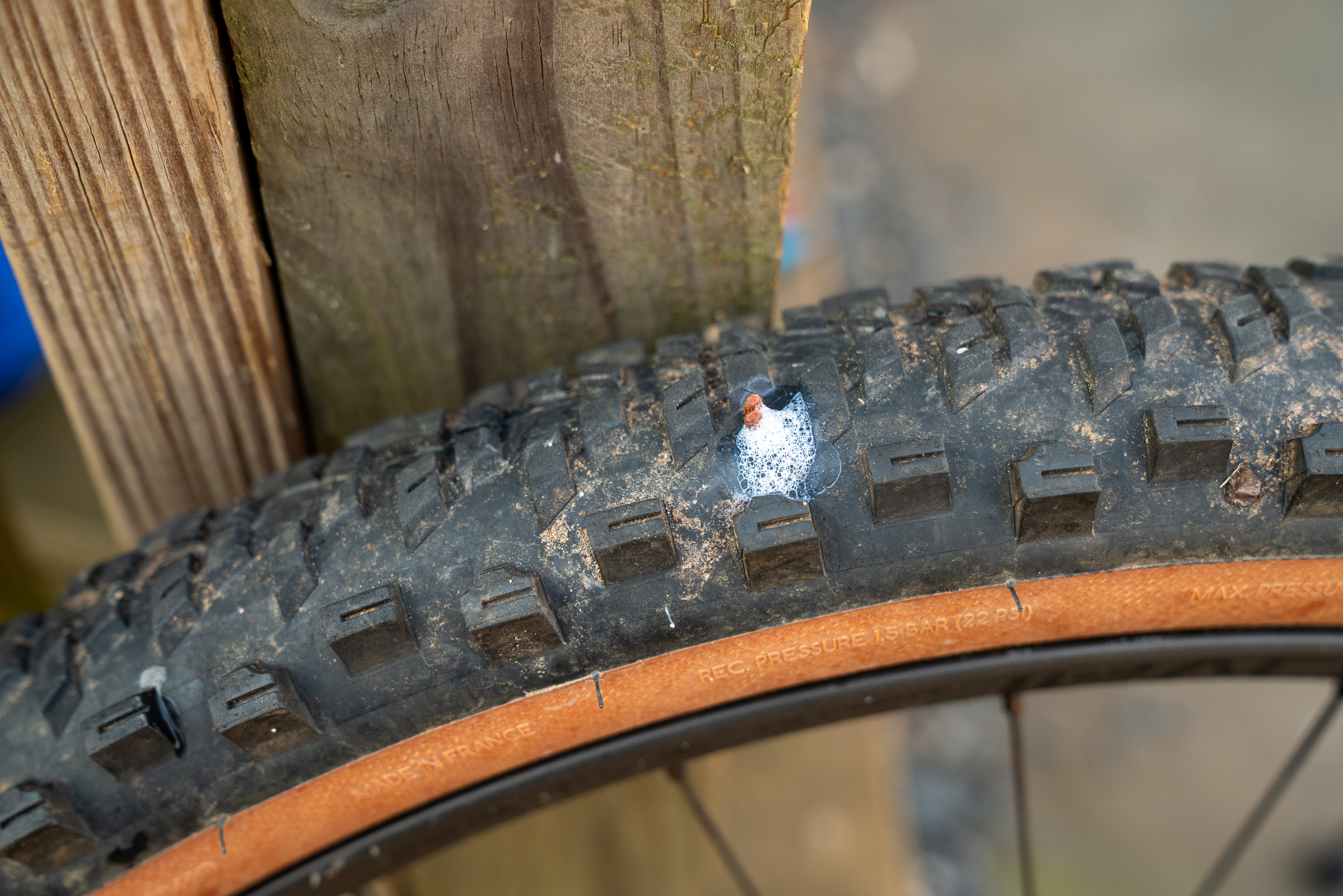
More like a foam than a liquid
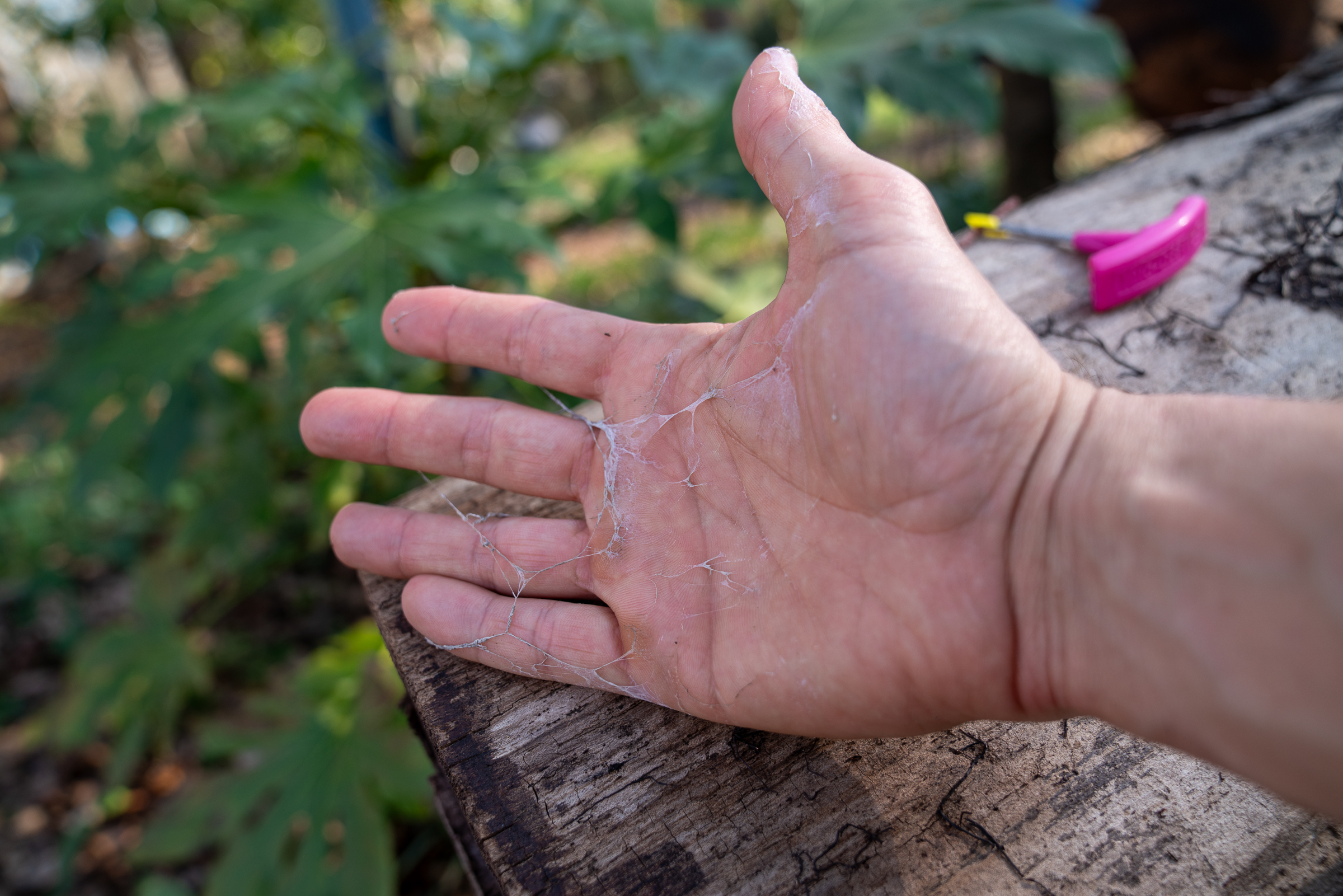
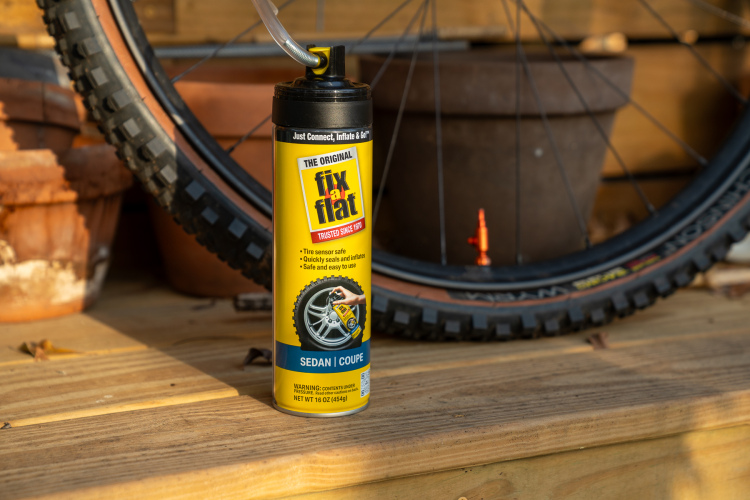
Unlike most liquid tubeless tire sealants, GÜP comes out foamy, like frothed milk. I got some on my hands following the first two tests, and the goop quickly transformed into weblike strands of latex. Fix-a-Flat — which I’ve also tested with bike tires — comes out thicker, like shaving cream.
Based on my tests, GÜP seems to be just as effective at sealing punctures as the liquid stuff. Unlike liquid sealant, it starts to work even if the puncture isn’t in the 6 o’clock position.
A day after sealing my test tire, I pulled it off the rim. The sealant inside the tire still had bubbles in it — again, like frothy milk — but now there was also a liquid component that had pooled at the bottom of the tire. A single can of GÜP doesn’t have enough liquid sealant to make it a long-term solution, but if you find your tire is bone-dry on the trail, a can generally packs enough sealant to get you back to the trailhead without resorting to a tube.
A burped tubeless tire can be a real hassle on the trail, especially if the sealant inside your tire is completely dried out. Though a hand pump or mini electric pump likely won’t give you the blast of pressure you need to re-seat the tire, a can of GÜP just might. Of course, seating a tire with any method can be hit or miss, especially on the trail. A CO2 cartridge will deliver the biggest blast of air, with GÜP running a close second. Unfortunately, like CO2 cartridges, GÜP cans must be disposed of after use.
A can of GÜP costs $16.99, though I picked one up from Walmart.com for $8.95. (The Walmart listing shows a photo of the Speed Adapter version, but this is actually the Hose Top can. At least, that’s what I got, and that’s what the product title says.)
GÜP combines pump and sealant in one, which might be all you need for an emergency tire repair. I say you can never be too prepared for a flat tire on the trail, so I’ll keep packing a pump, tire boot, plugs, and a tube along with that can of GÜP. You know, just in case.



0 Comments