

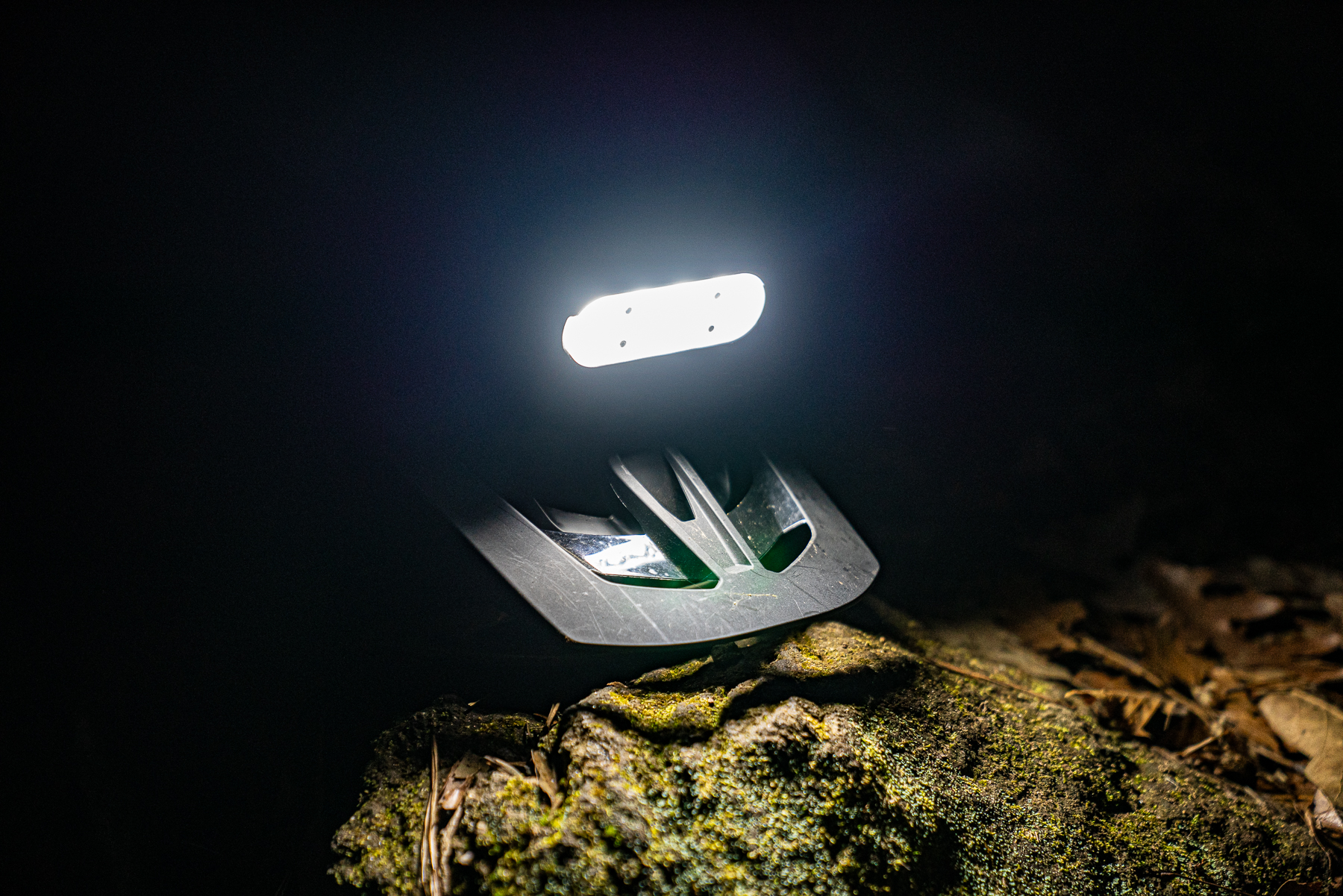
Mountain bike lights have come a long way, with increased brightness and longer-lasting batteries. At the same time, form factors have changed dramatically, with compact, all-in-one systems becoming more common today. New Zealand-based bike light brand Gloworm has been producing high-end lighting systems since 2010, and the new Gloworm CX Core is their first self-contained mountain bike light. I’m a regular night rider, so I had to see how it stacks up against other modern light sets.
Gloworm CX Core key specs
- 1750 lumens max
- 6000mAh battery
- 4 LEDs and swappable optics
- Bar-mounted wireless remote control
- Weight: 183g, not including mount
- Price: $180 – $190
- Buy from Gloworm
Look ma, no wires!
Previously, Gloworm off-road lights utilized a two-piece design that separated the battery and light head. While this setup gives riders options when it comes to swapping batteries and distributing weight, it also comes with the hassle of routing wires and securing multiple attachment points. Personally? It’s been years since I’ve chosen to run a two-part light system. For me, it’s worth giving up battery life for a much simpler setup.
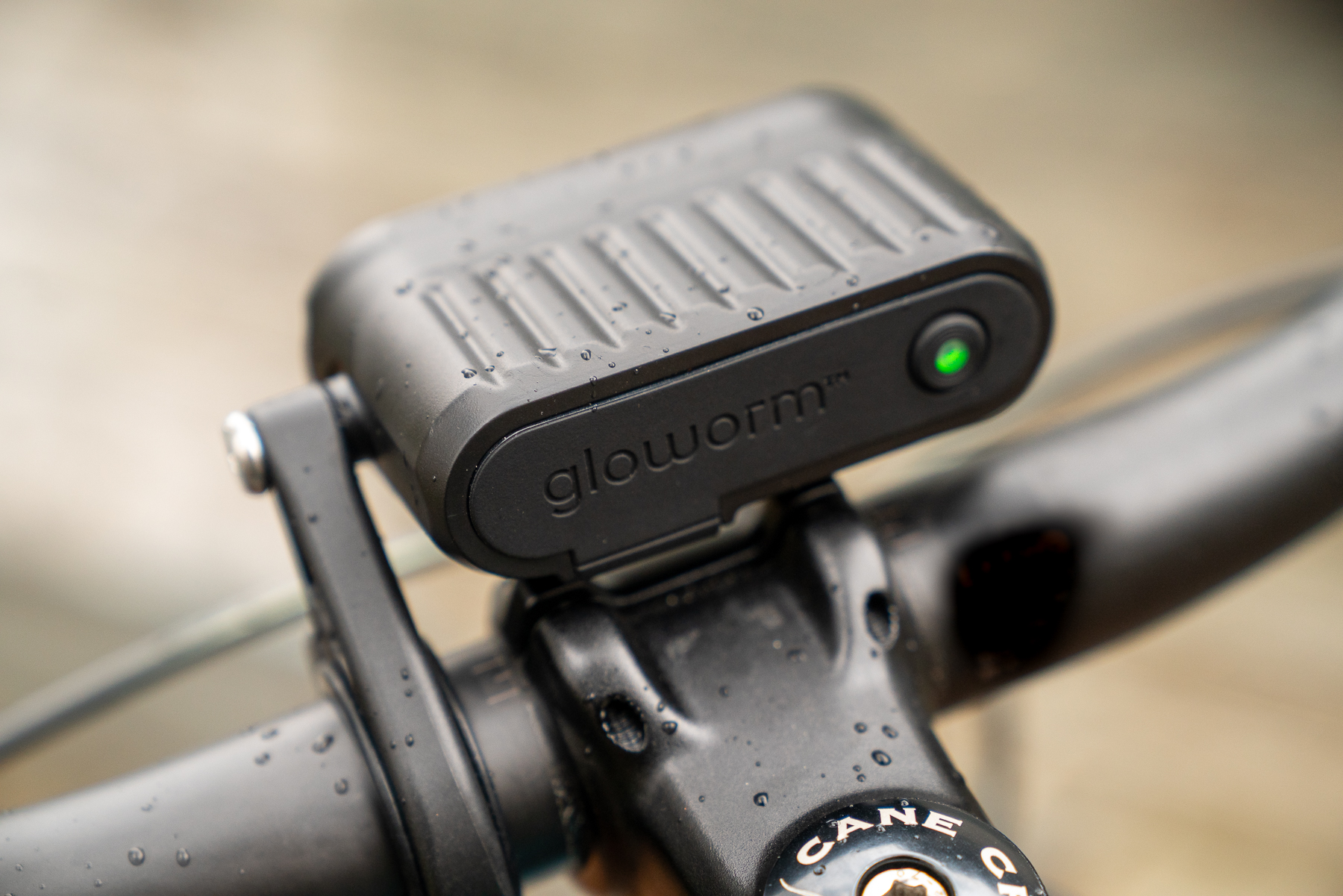
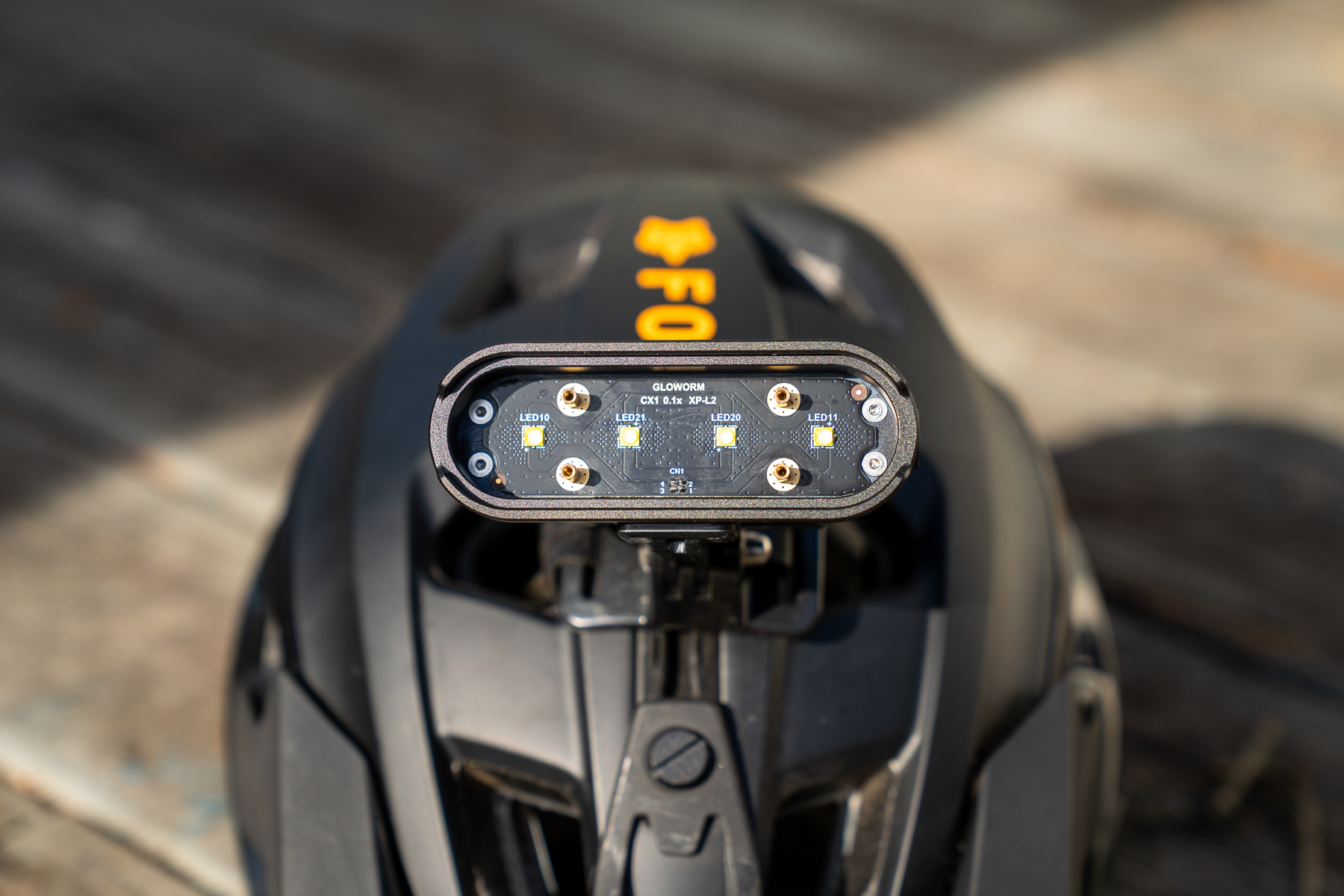
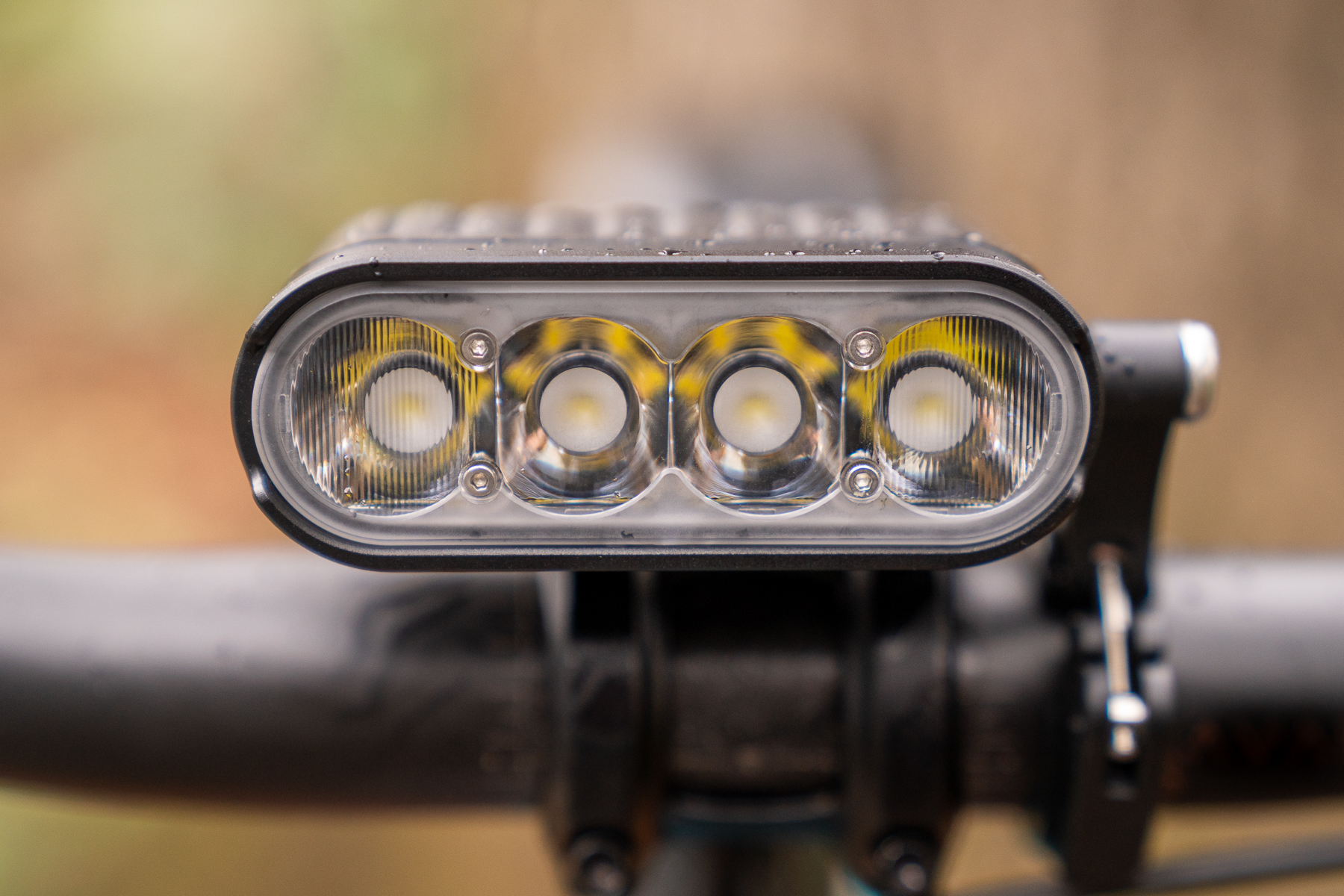
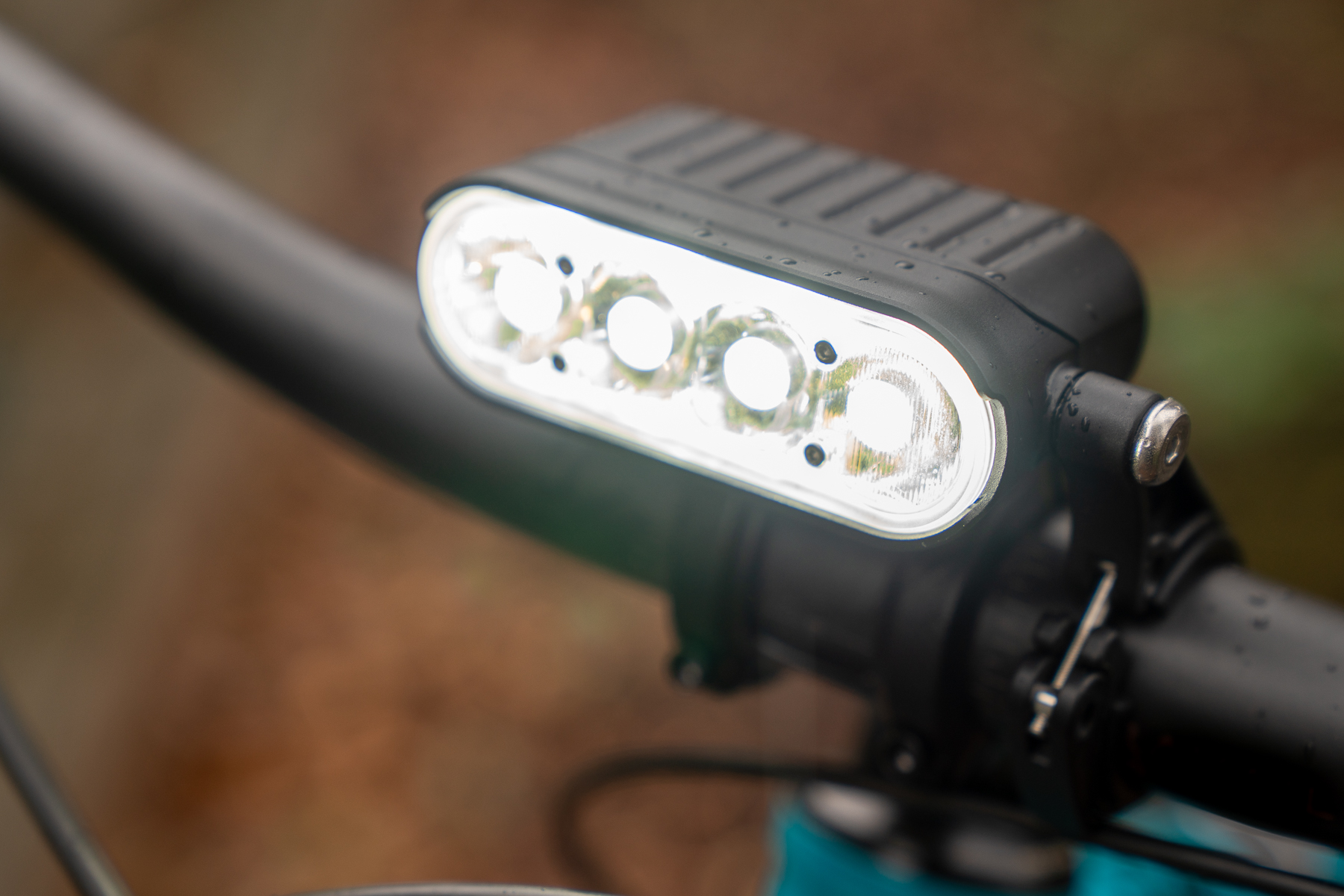
While many self-contained bike lights use a flashlight-like form factor, the Gloworm CX Core places four LED bulbs side by side in a package that’s roughly the size and shape of a deck of cards. This design immediately brings to mind lights like the Hangover from Outbound Lighting and the Specialized Flux. In its default configuration, the CX Core is designed to be helmet-mounted, though it can be handlebar-mounted as well.
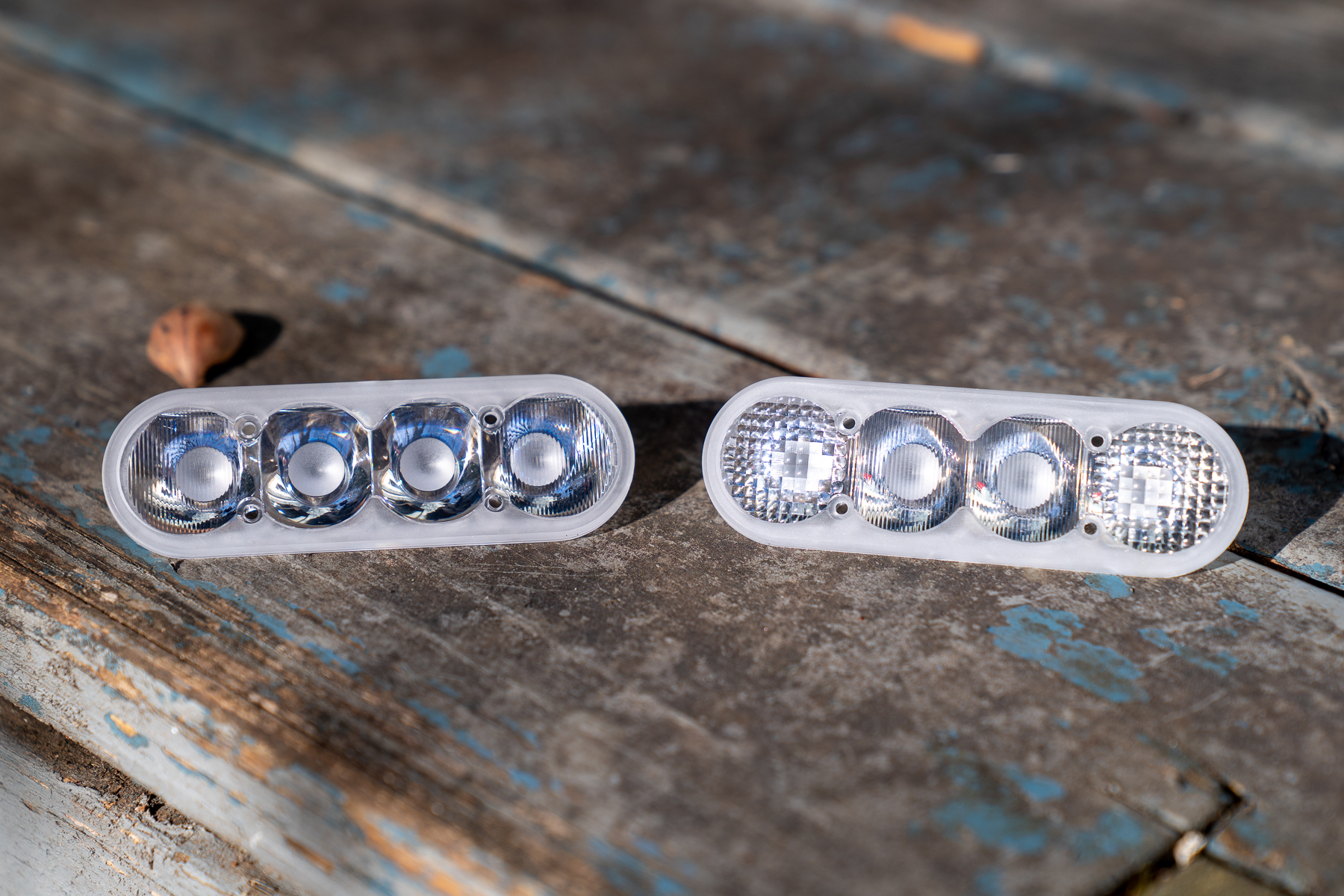
The CX Core has just one button that turns the light on and off and switches between brightness settings. A USB-C charging port with a weatherproof cover is located on the bottom. Out of the box, buyers get a couple of universal helmet mounts, a GoPro-style low-profile adapter mount, and a wireless remote control for the handlebar. For $10 more, Gloworm will throw in a bar mount and a second lens set that delivers a wider-angle beam pattern.
Weighing 183g, the Gloworm CX Core is about as heavy as riders will want to mount to a helmet. I tend to be pretty sensitive to weight on my helmet, and I found the CX Core is acceptable. Compared to other helmet lights, it’s about 10g heavier than the 1650-lumen Outbound Portal (170g, $185) and the 900-lumen Knog Blinder (169g, $79.95), and 65g heavier than the flashlight-like 2000-lumen Exposure Diablo 15 (117g, $260).
Generous battery capacity
Though the Gloworm CX Core is heavier than many helmet lights, it also boasts more battery capacity, and clearly, there’s a direct relationship between battery capacity and weight. The CX Core packs 6,000mAh of capacity inside, while the Portal offers 5,000mAh, and the Diablo has just 4,000mAh.
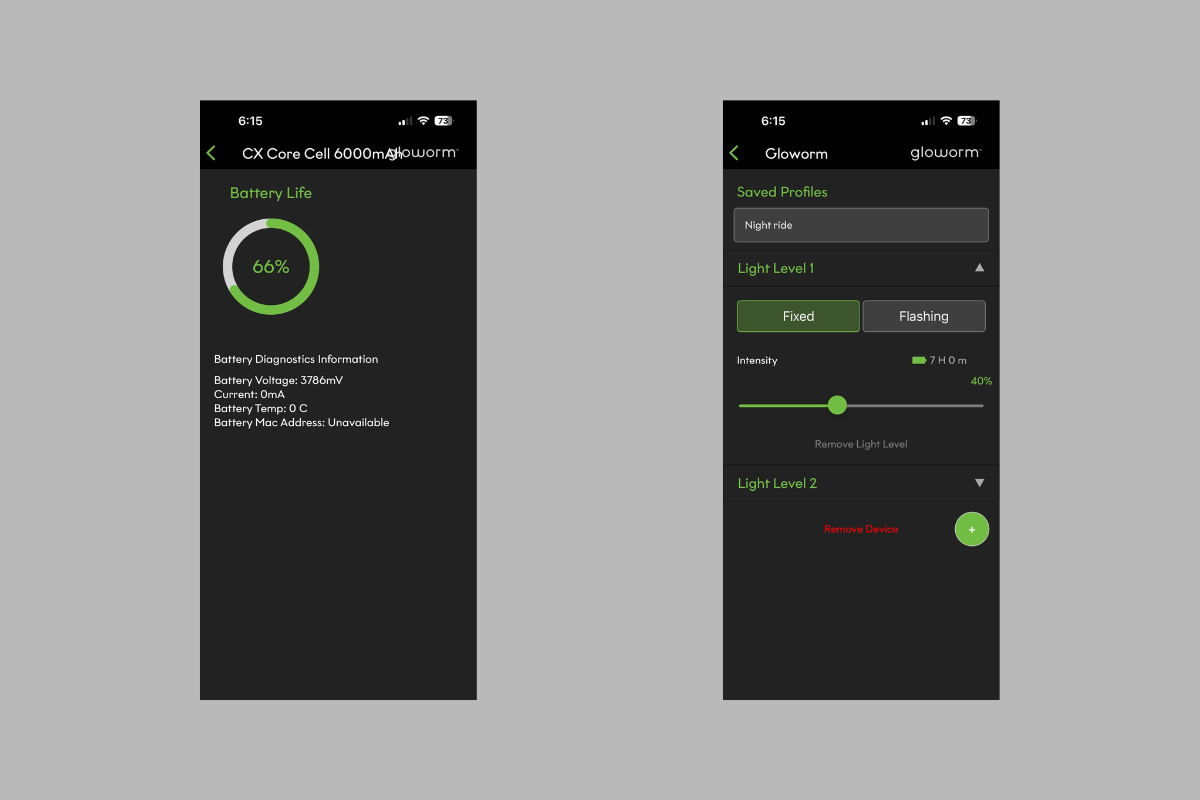
Gloworm says the CX Core should last at least an hour and 20 minutes (1:20) on its highest output level, 1750 lumens. Of course, riders can get far more runtime by switching to a lower light output for climbs and saving the brightest setting for the fastest parts of the ride. With the free Gloworm Link app, you can create your own light programs to fit how you ride. The default program is configured with four light modes — low, medium, high, and flash — and you can create your own program with more or fewer modes.
I set my Gloworm CX Core to two modes for trail riding: low at 40% brightness and high at 100% brightness. Every ride is different, but I consistently got three hours of runtime with battery life to spare, even on nights when temperatures dipped below freezing.
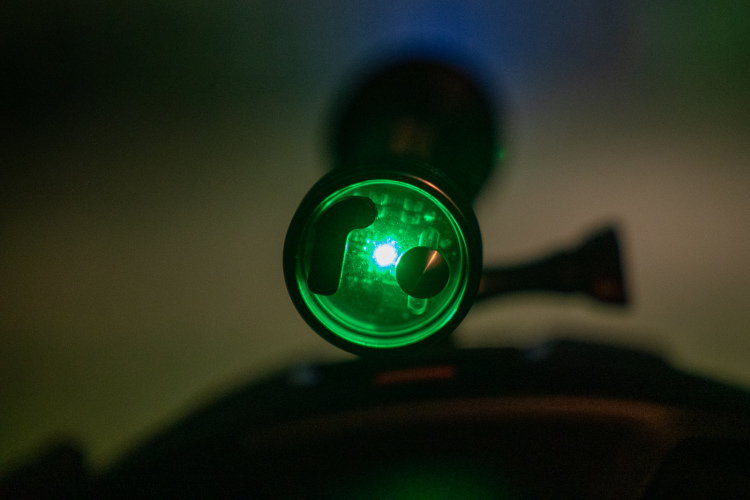
Though the color-illuminated button on the back of the CX Core light serves as a battery indicator, you can’t see it when the light is mounted to your helmet. One solution is to ask a friend, or to open the app to see exactly how much battery life remains.
Putting a spotlight on singletrack
Gloworm says the included standard optic is optimized for helmet use, and in this configuration, the beam pattern is notably focused in the middle of the trail. Looking at the standard optic, you can see the two outer lenses have vertical lines to diffuse the beam at the sides, while the center lenses are smooth for a more direct spotlight-like effect. This works well when mounted on a helmet; the brightest part of the beam is pointed wherever you turn your head, whether that’s down the trail ahead, scoping out a feature before you ride it, or getting a better look at that owl perched on the tree branch above you.
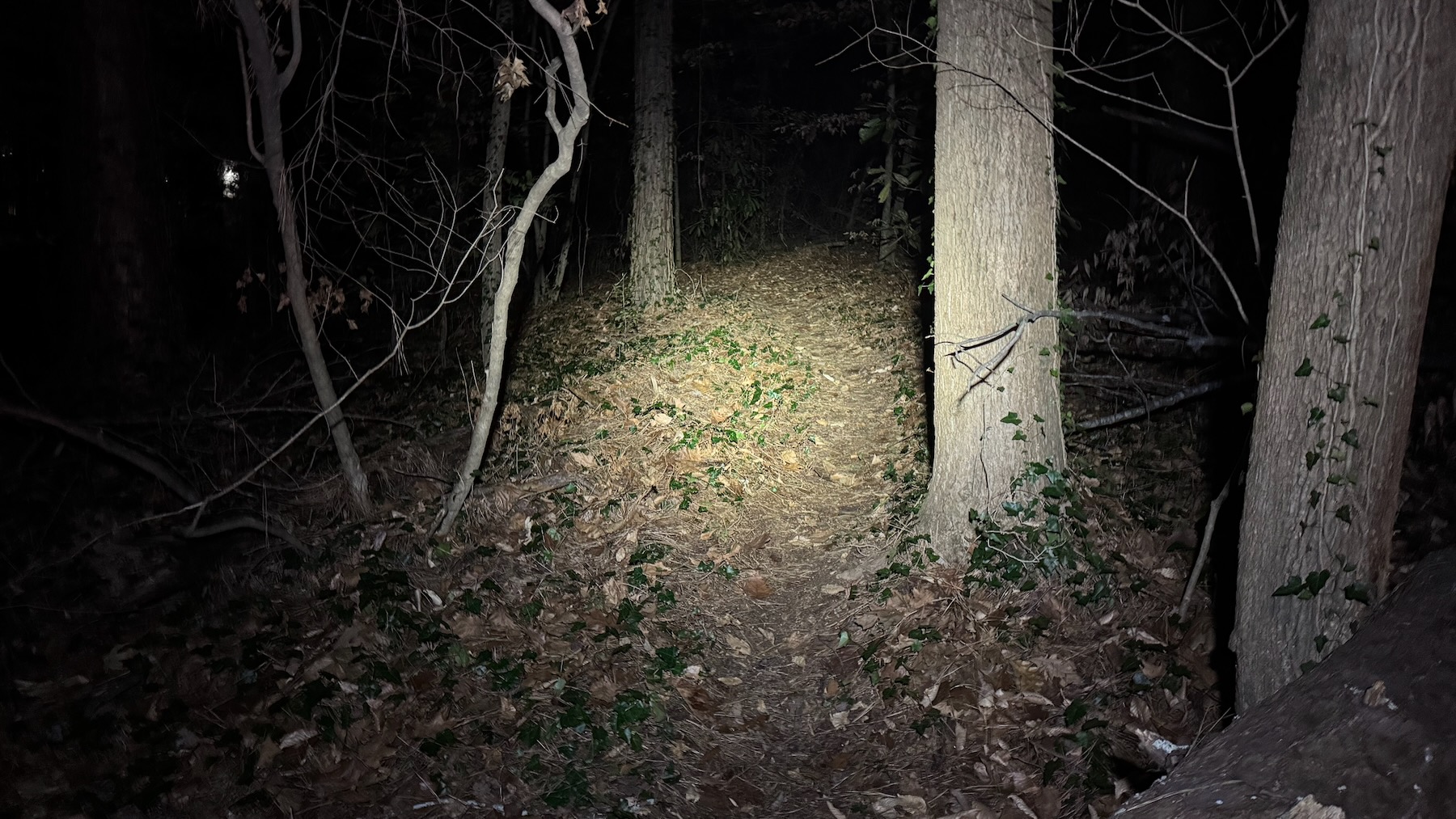
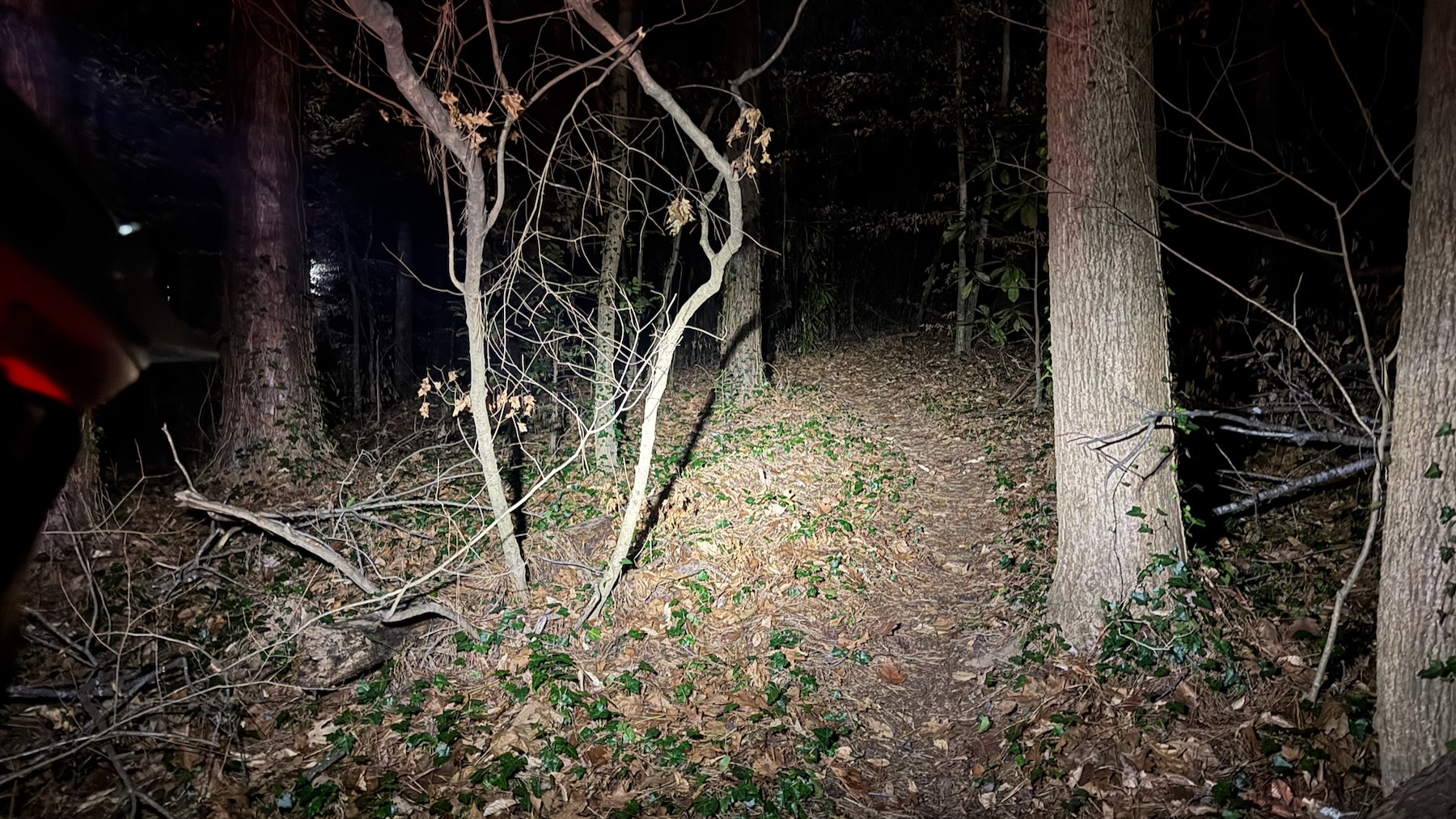
A lot of riders really like the Outbound Lighting Hangover and now Portal helmet lights, which feature a notably wide, diffused beam pattern. As you can see in the side-by-side shots above, the Gloworm CX Core beam pattern is much more focused.
Immediately after shooting these test photos during a ride, a friend asked which one was brighter/better. “I’m not sure,” I replied. “I’ll have to look at the photos when I get back.” In person, on the trail, the two looked incredibly similar, though clearly the beam patterns are quite distinct.
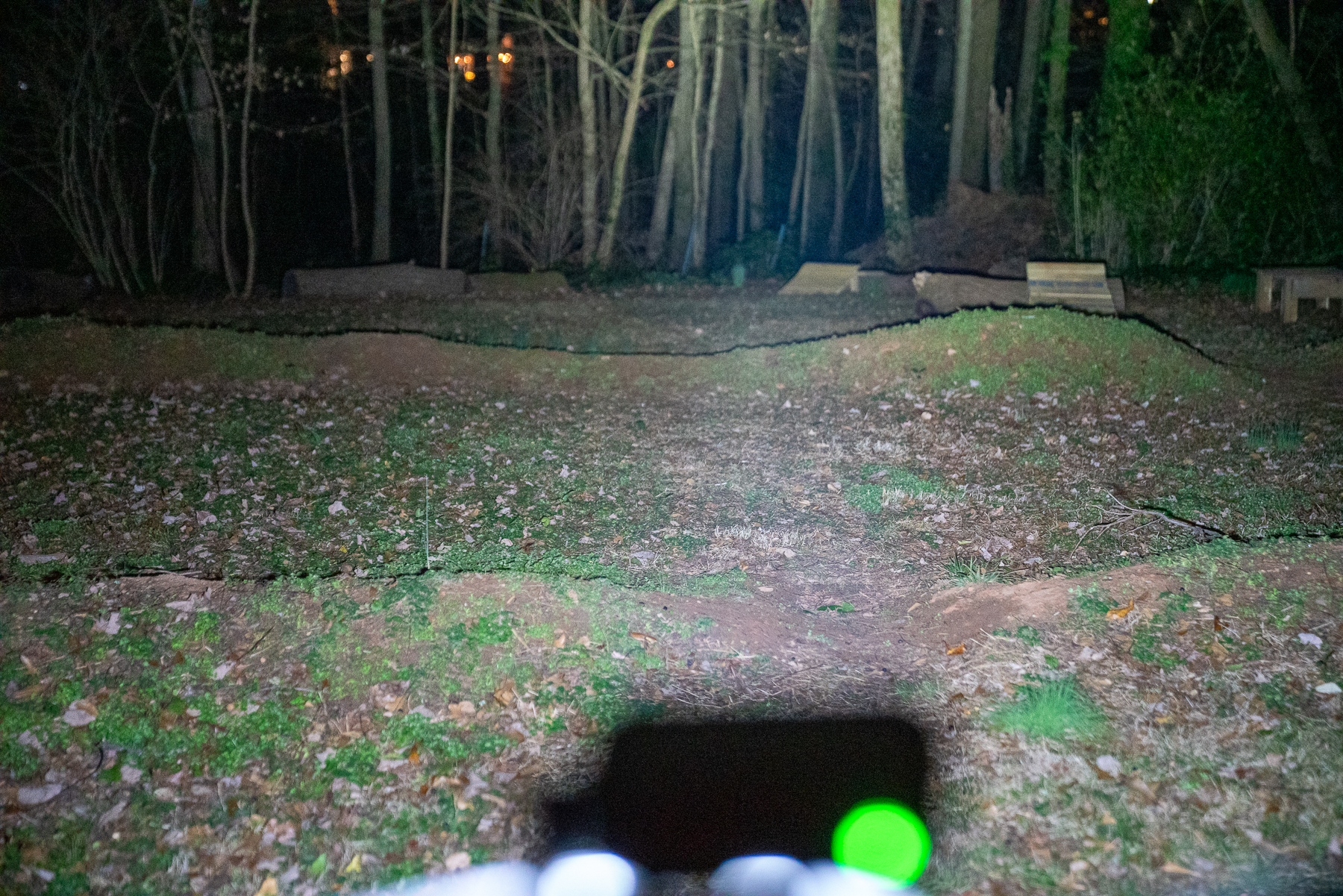
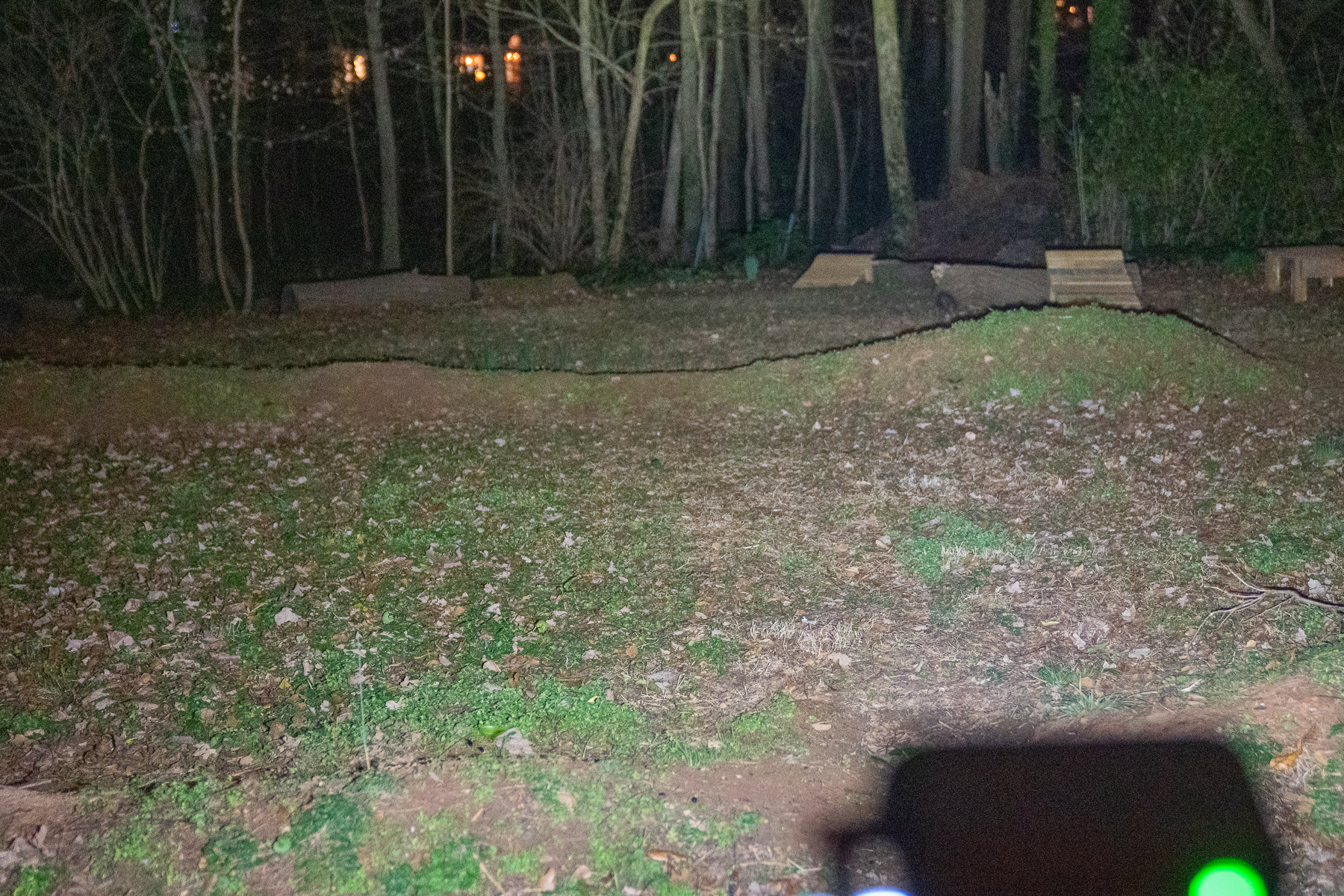
Based on this test, I wanted to see if I preferred the more diffuse, Gloworm Wide Optic lens for trail riding. Though this lens is recommended for commuting and/or handlebar mounting, I found it works pretty well in helmet mode too. In fact, I think I might prefer this lens over the standard lens. Though the center line isn’t as bright, and the light doesn’t carry as far, in most situations the wide beam allows me to see ahead at least as far as the next obstacle or turn in the trail. At the same time, a more focused beam is helpful for riding very fast or on trails with few turns, so it’s nice to have options.
The bar remote makes it easy to toggle light modes without taking your hands off the bars. At first, I decided to use the light without the remote, but quickly determined that using the remote is much easier (and safer).
Share your Gloworm CX Core review
If I have a nit to pick, it’s with the pairing process for both the app and remote. You need to hold down the power button until it flashes blue, but I found that my finger covers the entire button, making it impossible to see when the button turns blue. I also had to re-pair the light with the app after pairing the remote, which is a hassle, but honestly, the procedure is pretty easy to follow. Just restart your phone, and if that doesn’t work (it didn’t for me), “forget” the device in your Bluetooth settings and reconnect the light via the app.
Owners of previous-generation Gloworm lights know that not all USB-C charging cables would fit the recessed battery port on those lights. Fortunately, the port on the CX Core is designed to fit standard USC-C charging cables in case you lose the included Gloworm cable.
Pros and cons of Gloworm CX Core
Pros
- All-in-one design is simple and easy to mount on a helmet or handlebars
- Generous battery life and bright enough for most trail rides
- Swappable optics give riders options
- Easy to customize light modes and included remote
Cons
- A bit heavier than many competing one-piece lights
- Pairing hiccups are frustrating but ultimately solvable
Bottom line
The Gloworm CX Core delivers a bold new design that’s well-suited to trail riding at night, plus it features swappable optics and a remote that similar units don’t offer. I recommend purchasing the light with the bar-mount upgrade kit for an extra $10 ($190 for the bundle, $180 for the light by itself) to get the extra mount and wide-angle optics.





2 Comments
Jan 26, 2026
Jan 26, 2026