
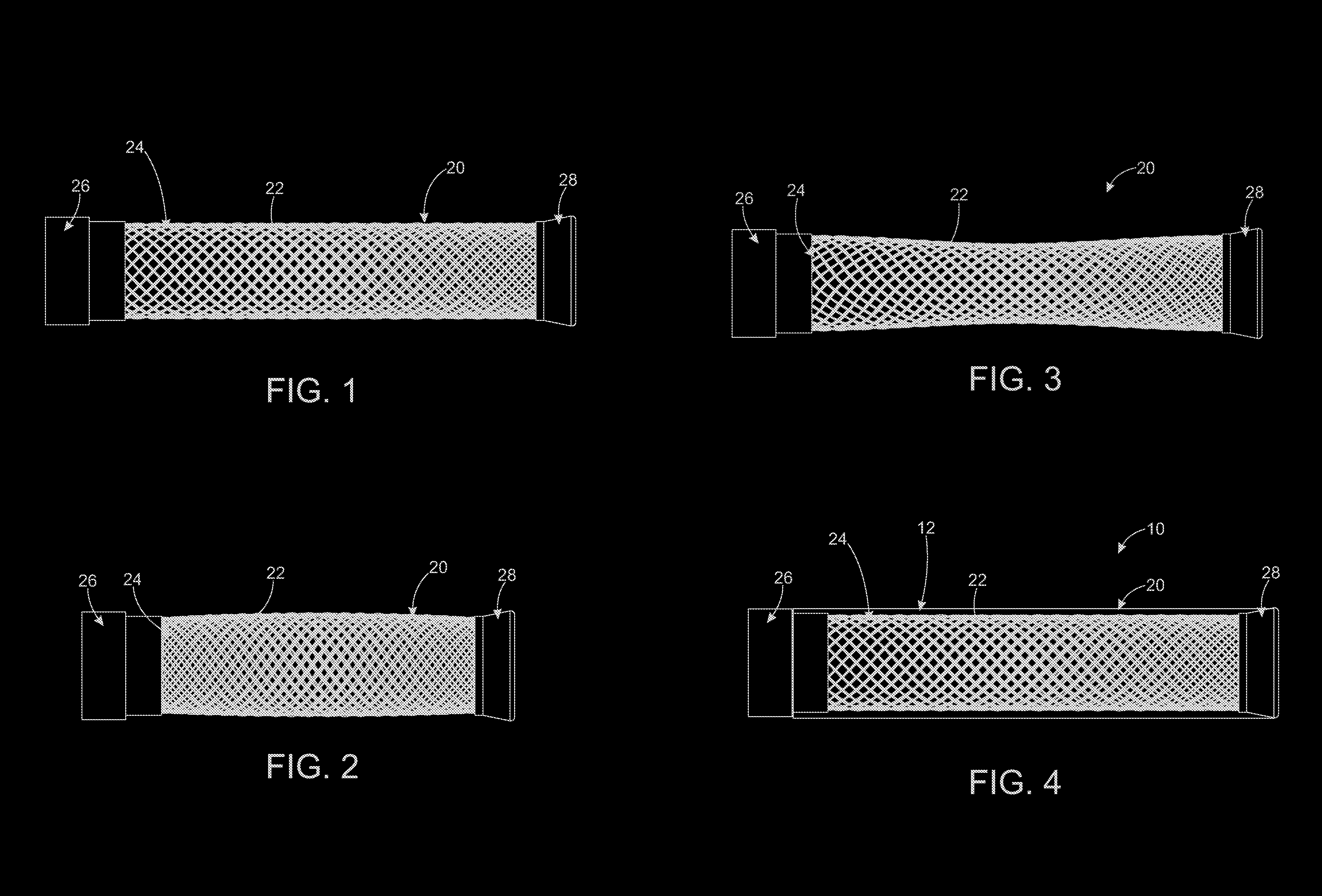
Bike-world patents can be difficult to parse, chock full of overly technical explanations to describe the simplest devices. However, this recently awarded Fox Factory utility patent for Fiber Core grips is easy to understand, especially if you’ve ever played with a finger trap.
The problem with mountain bike grips
Flexible, foam bike grips designed for use with flat handlebars can be difficult to install and remove. Because they generally rely on friction to stay in place, the fit is tight by design. This also prevents the grips from shifting or rotating during the ride.
Lock-on grips utilize a clamp on one or both ends of the grip to secure it in place, making installation and removal easier. Between the clamps, these grips typically utilize a plastic cylinder that’s free to slide and rotate, and does not contact the bar directly. Silicon or rubber padding is added to the plastic core to give the grip, well, grip, and also provides vibration damping.
But there are problems with the typical lock-on grip design. For one, the plastic core serves to reduce the thickness of padding that can be provided for a given outer diameter. The core also adds weight to the grips, which is why the lightest mountain bike grips aren’t lock-on at all, and tend to be foam, friction-style grips.
In their patent application, Fox sums up the challenge thusly: “there is a need for an improved grip that provides comfort and is convenient to install.”
Finally, traditional lock-on grips are secure only at the clamps, which could result in over-torquing them and damaging carbon bars in the process of securing the grips. Or, in the case of a single-sided grip, if the clamp fails (say, you lose the bolt), the grips can no longer be secured to the handlebar.
Fox Factory Fiber Core grips to the rescue
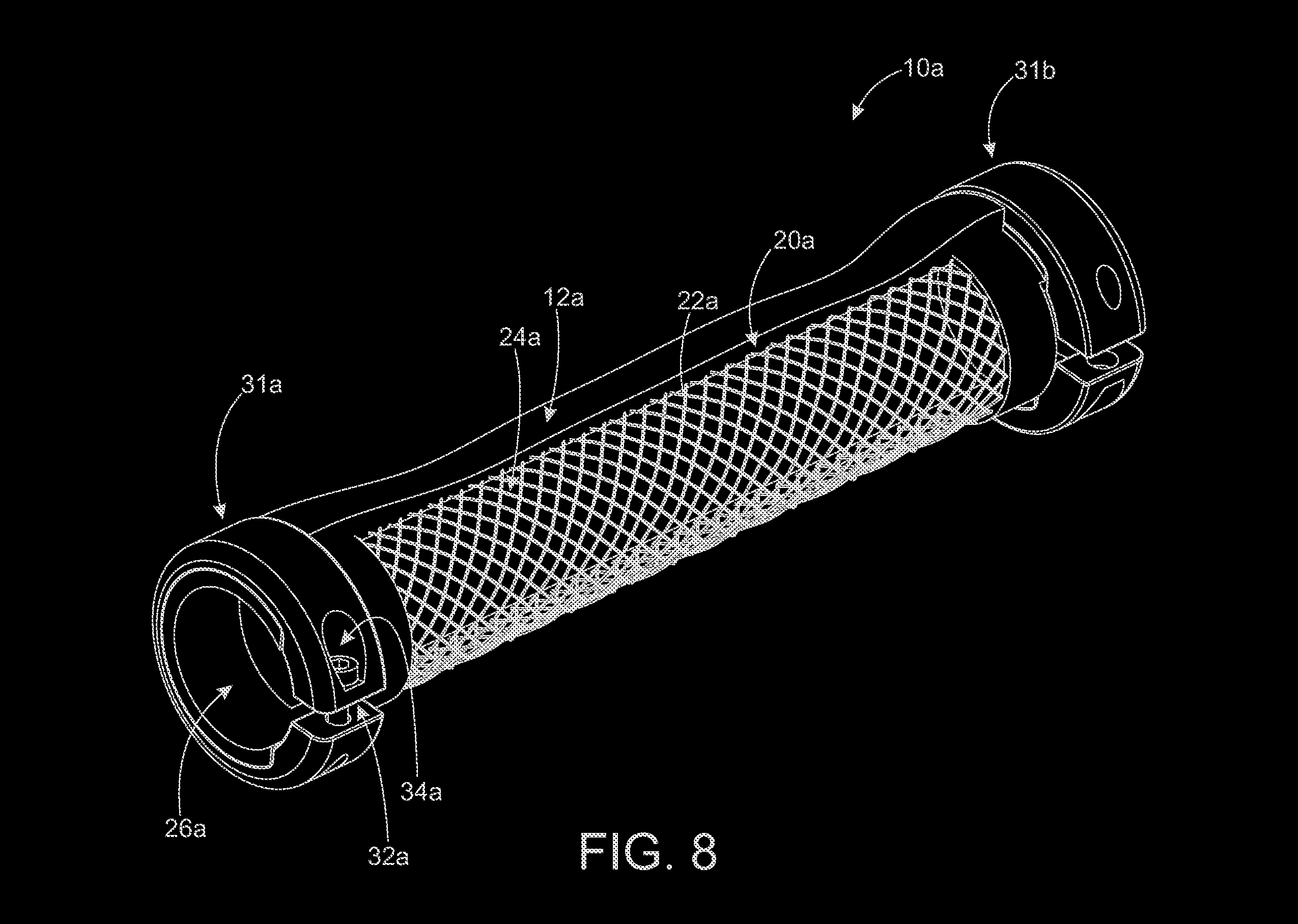
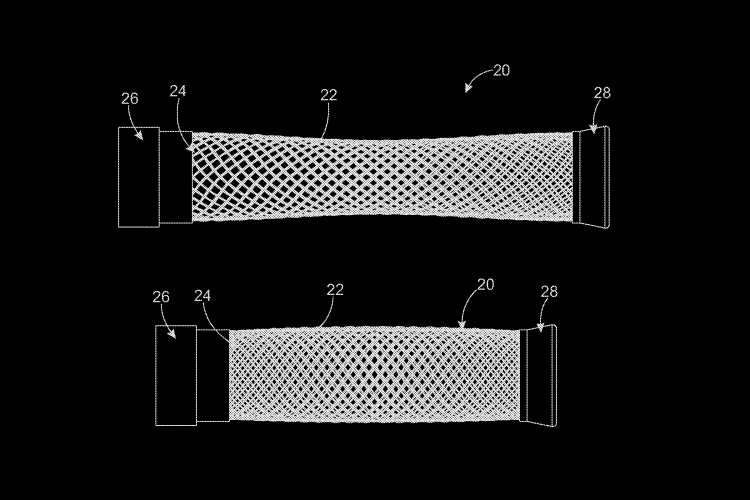
The Fox Factory design pairs a mesh where “fibers may be woven and/or braided together in a helix shape” with a flexible “elastomeric” material. This tube could be bookended by traditional lock-on clamps, as shown in the patent drawing above.
Compressing the ends of the grip toward the center essentially widens the tube, making it easy to slide onto the bar, just like a finger trap. Pulling the ends apart narrows the tube to fit the handlebar. In fact, the harder one pulls on the ends, presumably, the more secure the grip becomes. And overextending the length of the grip would generally cause the flexible elastomeric material to become thinner, affecting both the diameter and the comfort of the grip.
It appears the design relies on the use of clamps to keep the grip stretched enough so that it doesn’t shift or rotate on the bar. However, it does seem possible given the right elastomeric material properties, to create a finger-trap style grip without the need for clamps. A single-clamp version, with a cap on the outer end, would almost certainly would as well.
Fox Factory allows for a number of embodiments of the design in the patent filing, and to be clear a finished product could take a number of different forms. It’s unknown if or when we might see Fox Fiber Core grips on the market, or if that’s even what they’ll be called. However, the design appears promising enough that it’ll likely become available in some form in the future.
See the complete patent, officially awarded March 10, 2026, below for more details.





0 Comments