

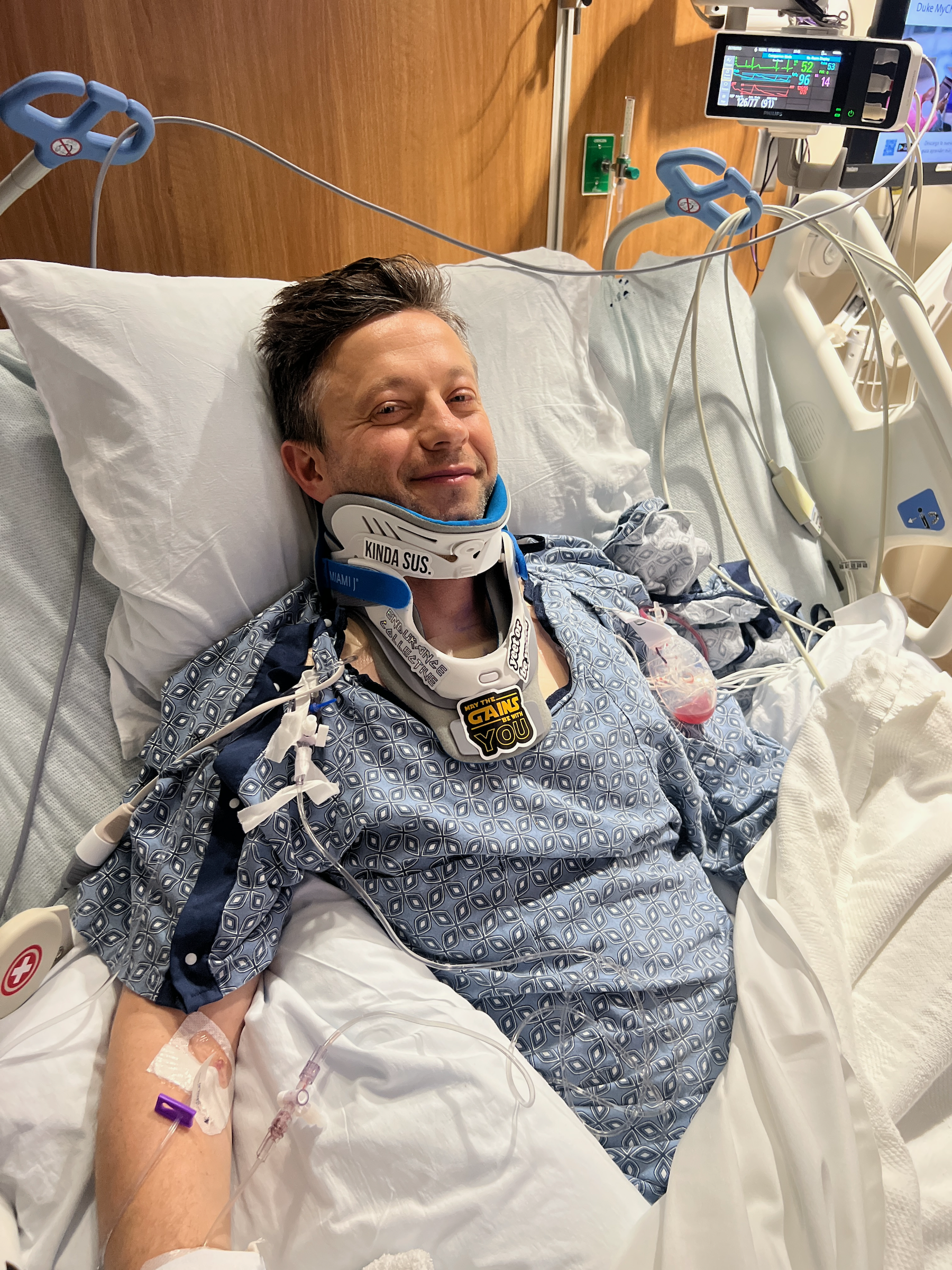
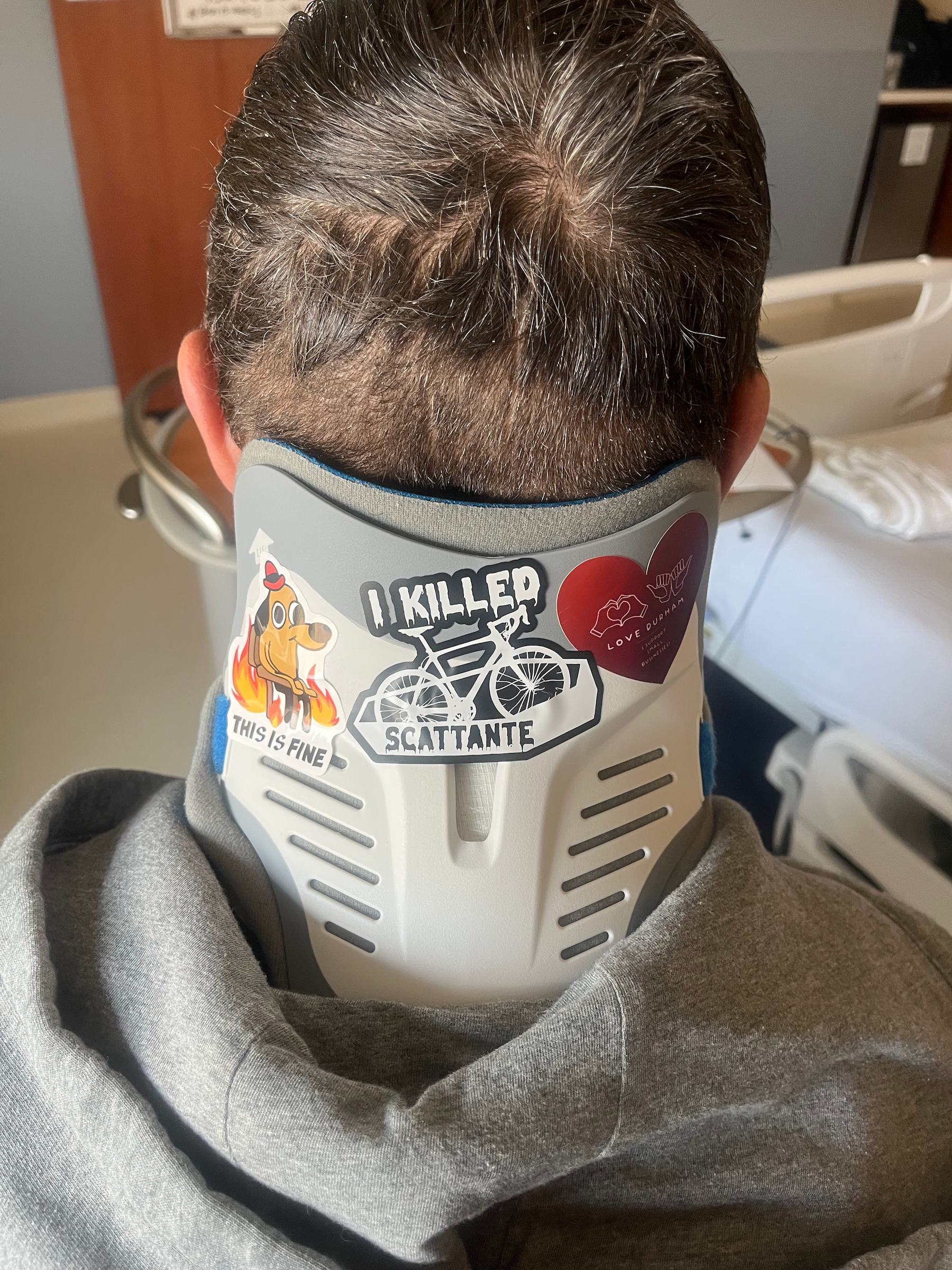
It seems like the worst mountain bike accidents happen when we least expect them. Ben Turits, former elite XCO mountain bike racer and co-owner of the Endurance Collective in Durham, NC, was finishing up a training ride in February when a pedestrian unexpectedly crossed his path.
“I compressed the bike, hopped to the right, and I’m pretty sure I clipped a tree with my handlebar,” he told me. “It threw me over the bars. I landed probably vertically on my head and compressed my cervical spine really bad.”
Turits immediately knew something was wrong.
“I lost feeling in all my extremities. I never lost consciousness, but I could see my arms and legs flailing around, and I couldn’t feel that at all.”
Luckily, Turits’ injury occurred on a college campus with a world-class medical facility, and within minutes, emergency responders arrived and rushed him to a hospital less than a mile away. Doctors concluded Turits suffered from Central Cord Syndrome and performed emergency surgery to decompress his C-spine.
What is Central Cord Syndrome?
Central Cord Syndrome (CCS) is a spinal injury involving damage to the central spine in the neck. Partial paralysis is often associated with CCS and typically affects the arms rather than the legs. Patients often experience numbness and lose fine motor control, and in some cases, bladder control too.
Prompt intervention is generally regarded as the key to minimizing the effects, and fortunately for Turits, he received immediate attention. Within 24 hours, he was able to move his right arm again. Still, his recovery would not be easy.
10 days in the hospital was just the start
As a former racer and now professional coach, Turits knows that dedicated training and preparation are the key to reaching your goals. And the same is true for recovery from a serious injury. Following his release from the hospital, he spent three weeks in intensive occupational and physical therapy and spent four or five hours a day on rehab work.
Because CCS affects the upper body, Turits worked primarily to regain feeling and strength in his hands and arms. It was months before he could bench press a piece of metal conduit, a motion that is pretty similar to piloting a mountain bike down a trail. “The big thing there is that’s me being able to put my body over my bars and controlling the bike,” Turits said. “Every ride I’m a little bit more fluid. I’ve started to be able to really pump the bike. Pressure control is coming back.”
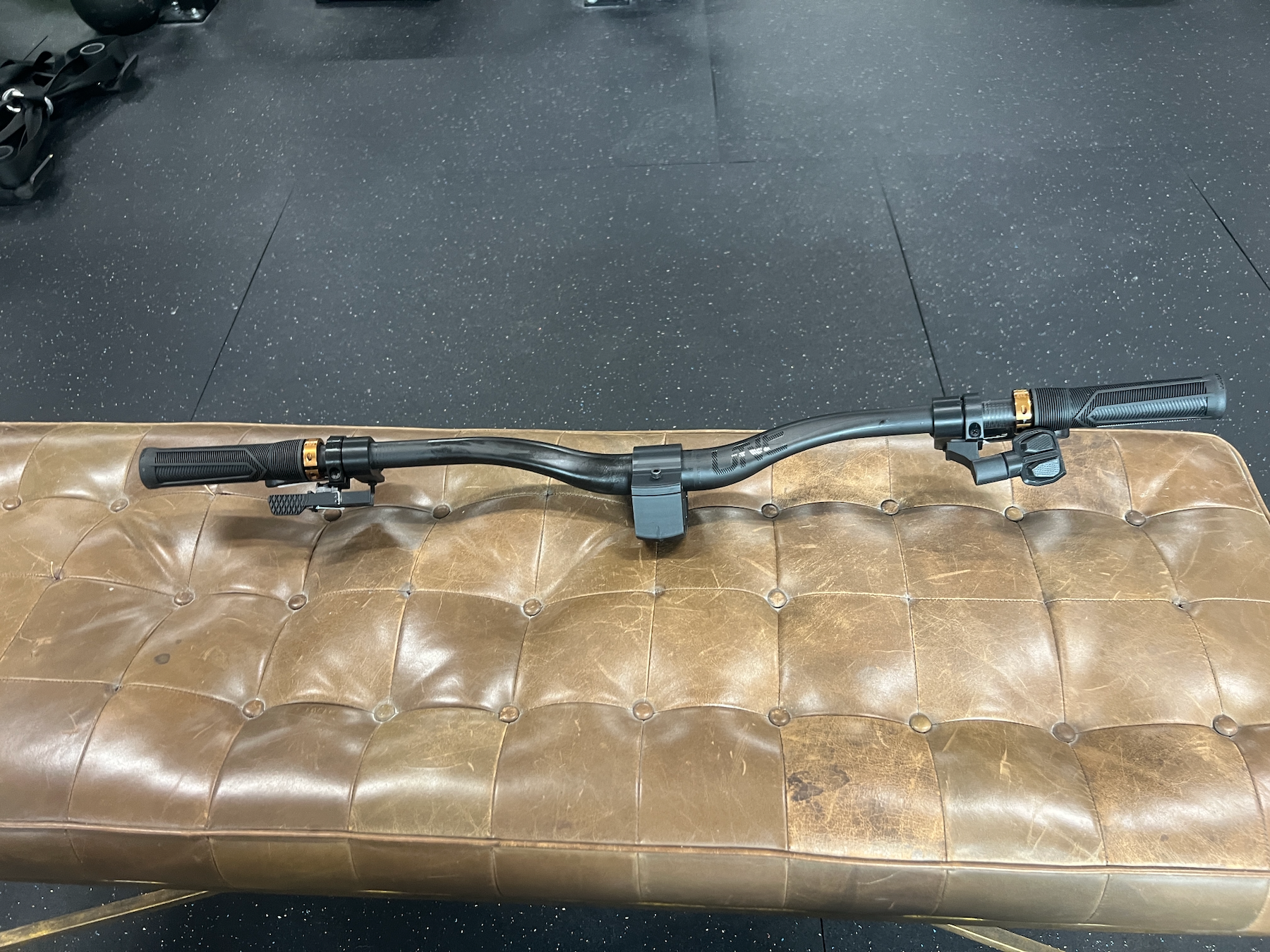
Lingering nerve issues and numbness pose another challenge. Turits covered his brake and dropper post lever with the prickly, hook-side of a velcro-like material to help him get a better feel for the controls. The solution was suggested by an occupational therapist (OT) Turits worked with. He says OTs “are just amazing problem solvers.”
On April 6, Turits finally took off the C-collar neck brace he had been wearing since the accident. That same month, he went on a one-mile mountain bike ride with friends for the first time since the accident. Following months of intensive recovery, Turits tells me he’s still in pain constantly and experiences regular flare-ups that require him to take it easy and rest.
Dr. Ellia Ciammaichella, a physician specializing in spinal cord and brain injury treatment, says that patients typically regain 90% of their motor ability after three years, with the biggest gains occurring in the first year. Turits is grateful to be as far along in his recovery as he is at this point and credits the quality and frequency of his treatment. “I am months ahead of the curve in terms of where I should be with regard to the recovery,” he said.
Navigating the health care system and rehabilitation can be difficult
Turits praises the doctors and nurses who have supported his recovery, though he’s also learned that the health care system can pose challenges for many patients. “If you don’t know how to speak the language in the medical system, you get left behind,” he said.
Taking an active role in his treatment and recovery, Turits pored over PubMed and National Institutes of Health articles related to CCS. He learned that many patients experience low testosterone levels following an injury, and after feeling a crushing level of chronic fatigue himself, he asked his doctors to perform a test to see if his levels were too low. “They’re like, ‘sure as a shit, your testosterone is super low.”
And then there’s the matter of paying for all of this treatment. The insurance system is notoriously difficult to navigate, especially for the uninitiated. “I’ve had to fight for a couple of different treatments, and the only reason I got them paid for was because I was a pain in the ass.”
And if insurance won’t cover the cost of a particular treatment? It might just be worth paying out of pocket. Turits notes that for mountain bikers in particular, getting back into riding shape requires a higher level of care that may not be available within the traditional insurance-based system.
“The doctors are just trying to get you well. They’re trying to get you out of acute injury phase. They’re not looking for performance out of you. If you’re looking to return to a high-performance state, your job is to advocate for yourself.” That means seeking out massage therapists and physical therapists who specialize in working with athletes, for example, with the understanding that you’ll probably need to pay for it yourself.
The mental side of recovery after a bike crash
For many riders, it can be difficult to get back on the bike after a traumatic injury. Initially, Turits wondered if he would ever ride again. That first short mountain bike ride in April was scary he said, but served as a proof of concept. Still, he tells me he felt very fragile initially, even though his doctors assured him his neck was fine and that suffering another CCS injury was unlikely.
“I didn’t crash because of anything really mountain bike-related,” he said. It was, instead, bad luck. An accident. Like getting hit by a bus while strolling across a crosswalk.
Gratitude, and a fresh perspective
At the time of the accident, Turits estimates he was only traveling at about 10mph, and was wearing a Giro Aether helmet with Mips Spherical rotational impact protection. There weren’t any cracks or dents in the helmet following the crash; only a few scratches on the back. But clearly the helmet did its job. “It absolutely saved my life,” he told me. “I wrote a note to Giro and was like, ‘Thank you guys.'”
As a professional coach, Turits has a new understanding of what it’s like to work through recovery following a serious injury. He’s also seeing mountain biking through a new lens, as a beginner once again. He’s become a better listener too, and has been forced to learn patience.
Perhaps most importantly, he’s incredibly grateful for the friends, colleagues, and health care workers who have supported him. After all, it can be difficult for a former pro bike racer to slow down enough to reflect and recover. “This is like a hard, forced pause for me, and maybe it’s the universe being like, ‘hey, take a break,'” he said.
It’s a lesson Ben knew as a coach but had to relearn as a patient. In athletic training — and in recovering from a spinal cord injury — hard work and recovery go hand-in-hand.
The news stinks. Why not follow Singletracks on Google News to bring more joy to your day?



2 Comments
Jun 25, 2026
Jun 25, 2026