






Bellingham, Washington, needs no introduction when it comes to trail towns. Much of that is thanks to Galbraith Mountain, which is essentially synonymous with mountain biking in the city at this point, with much of the “riding in Bellingham” happening at Galbraith. And while they are still finding space to squeeze in the occasional new trail there, anyone looking at a map would come to the same conclusion: Galbraith is getting full.
The Whatcom Mountain Bike Coalition (WMBC) is working with Whatcom County Parks and Recreation on new trails near Galbraith, in the Lookout Mountain Forest Preserve. And the proposed trails, including a purpose-built descent, will provide the area with a different, more raw singletrack experience.

Three new trails proposed in Bellingham
To be clear, some of the “new” trails proposed at the Lookout Mountain Forest Preserve aren’t necessarily new builds. The area has known social trails, and while some of the construction will be new, other work will sanction existing trails and bring them into an official trail network. Currently, the three trails WMBC and Whatcom Parks and Rec are focusing on in the proposal are a mountain biking descending trail, a multi-use trail, and a hiking trail.
“They’re going to be building a hiking-purposed, or ‘hiking-only’ trail,” James Pulse, WMBC Trails and Programs Director, told Singletracks. “That is actually somewhat relevant because it does take hikers off of the road.”
Pulse went on to explain that there was a fast portion of a forest road that mountain bikers use to access trails in the forest preserve. With hikers on the road and seemingly around the corner, conflicts happen. While we typically don’t make it a habit to cover trails mountain bikers aren’t allowed on, this addition to the Lookout Mountain Forest Preserve will reduce future conflicts.
Another proposed new trail (meaning new construction) is a multi-use trail that will mainly serve as a connector. Pulse mentioned that this connector trail will be an instrumental access point to help create bigger loops for mountain bikers and hikers.
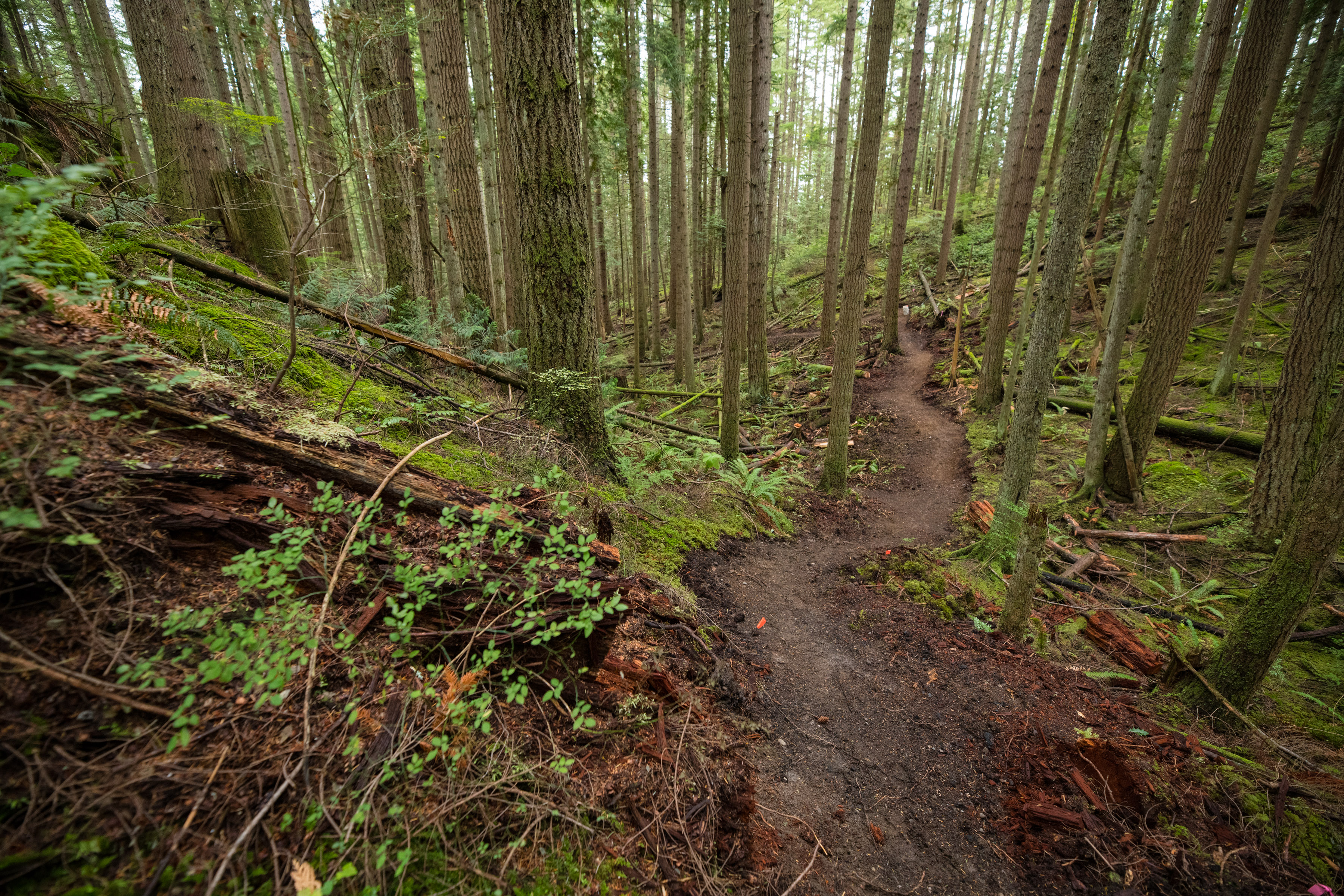
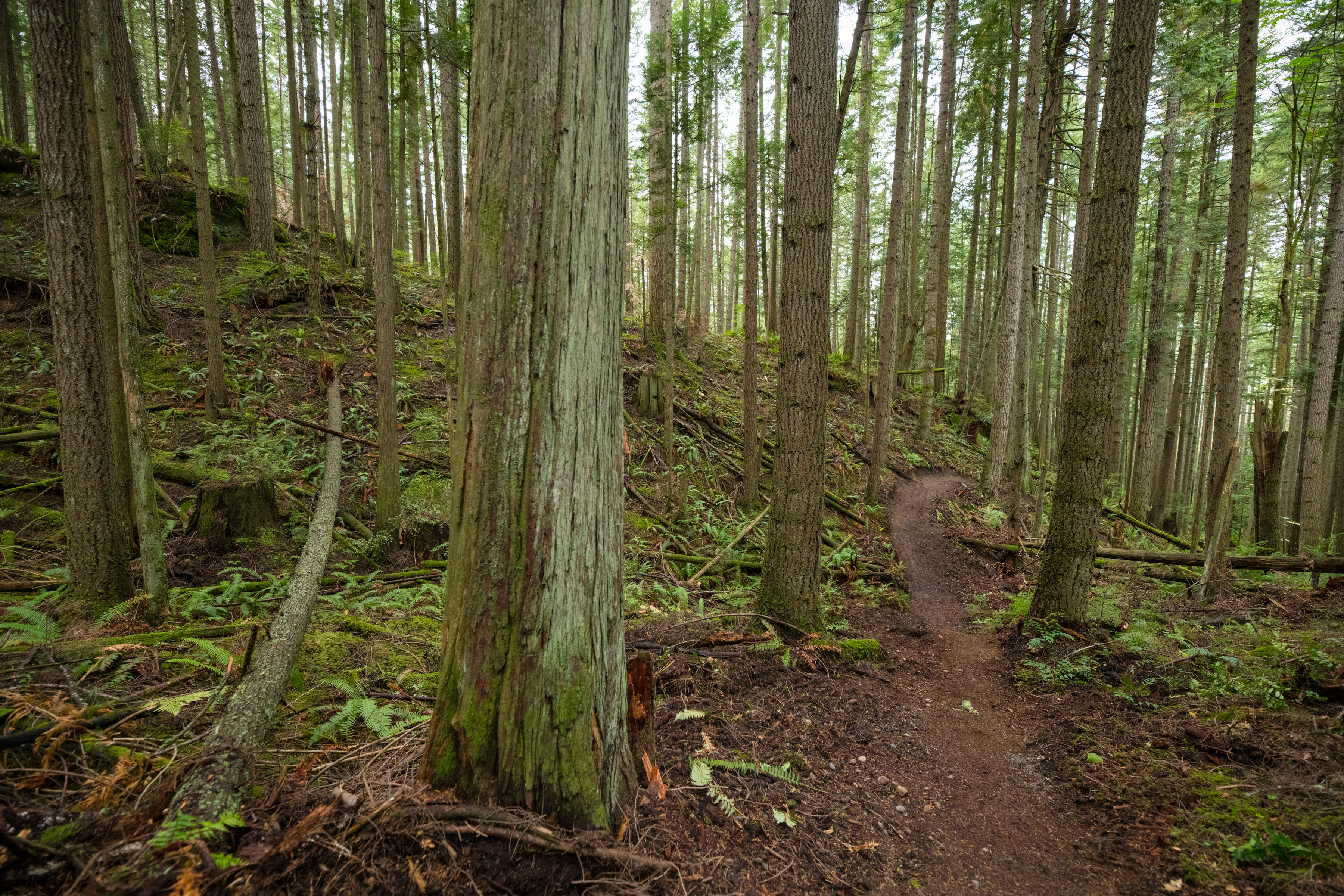
The new trail will tack on additional elevation where a current multi-use trail called Rufus Creek ends. “Right now, Rufus Creek basically drops you at the top of the Cougar Ridge trail, and your only option is to go down,” Pulse explained. “This connector trail will take you from […] that intersection, and climb up to this new zone where the descending trail is going to go.”
Pulse said the multi-use trail will also serve as a better climbing option for Cougar Ridge. Currently, Rufus Creek runs into the techy, advanced descent roughly half a mile from the top. The new multi-use trail will give riders a way to reach the top of Cougar Ridge without having to climb it.
A mountain biking descending-only option
The multi-use trail will also connect to an intermediate descending trail that Pulse said is a little over one and a half miles long and drops a massive 1,300 feet of elevation. He said the trail can be thought of as having an upper and lower segment, with the shorter upper segment not being nearly as steep.
“That’s a pretty fun section. A little punchy up and down in a few spots, and a little off cambered,” Pulse said. “And, then, once you get down to the road, that’s where things get into a little bit steeper terrain.”

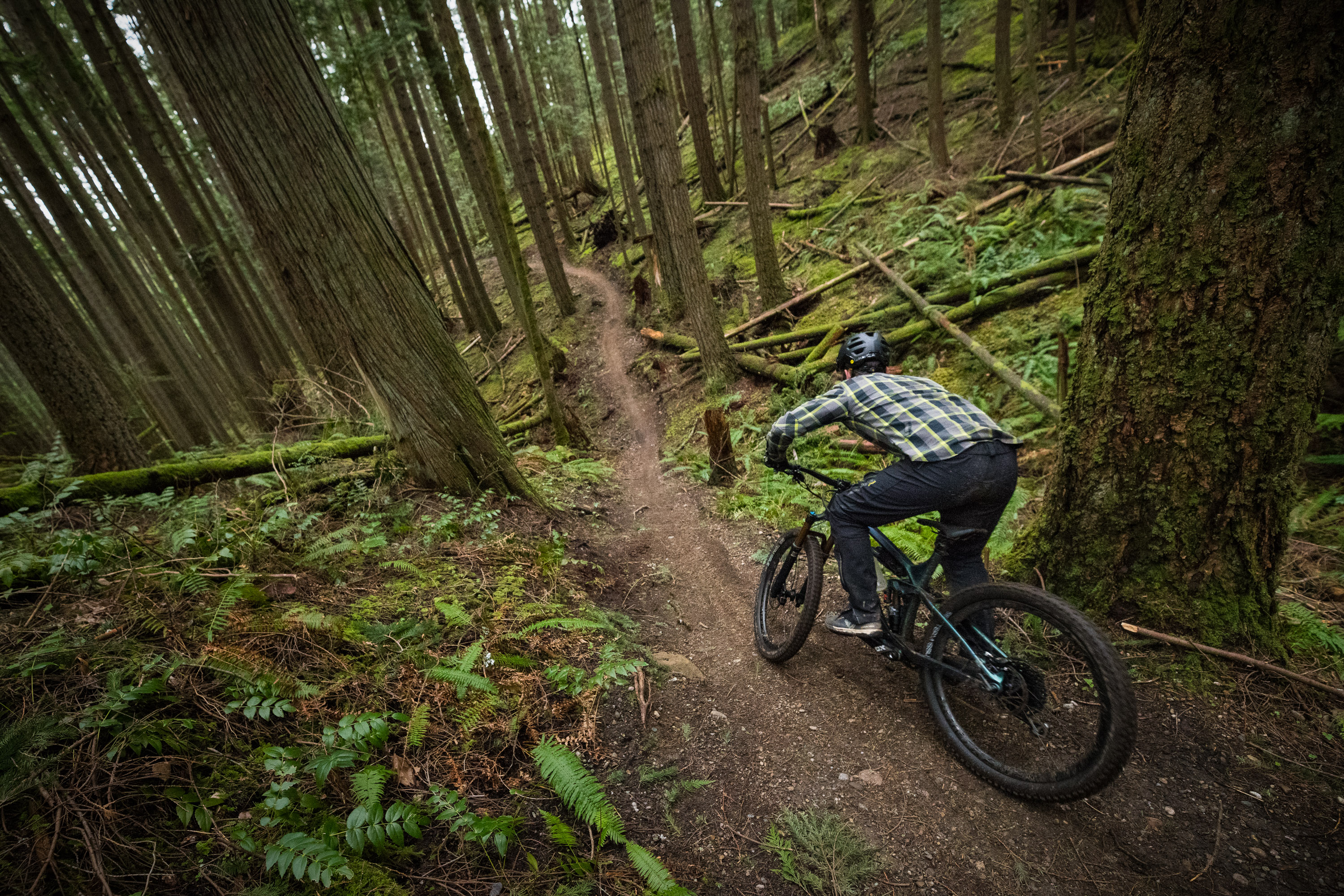
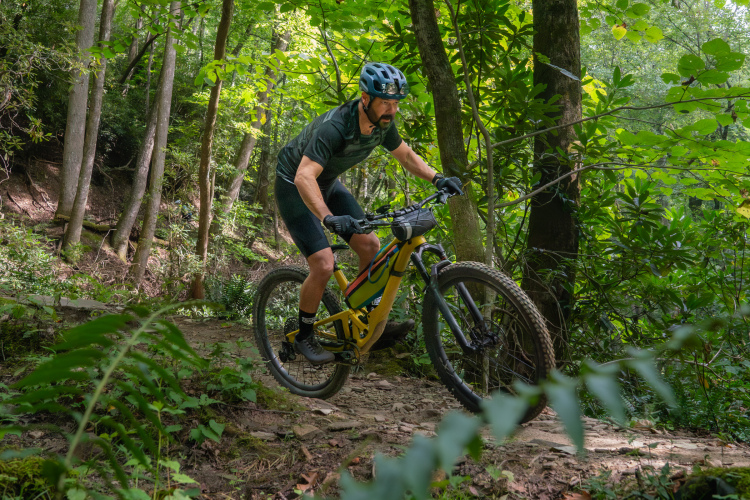
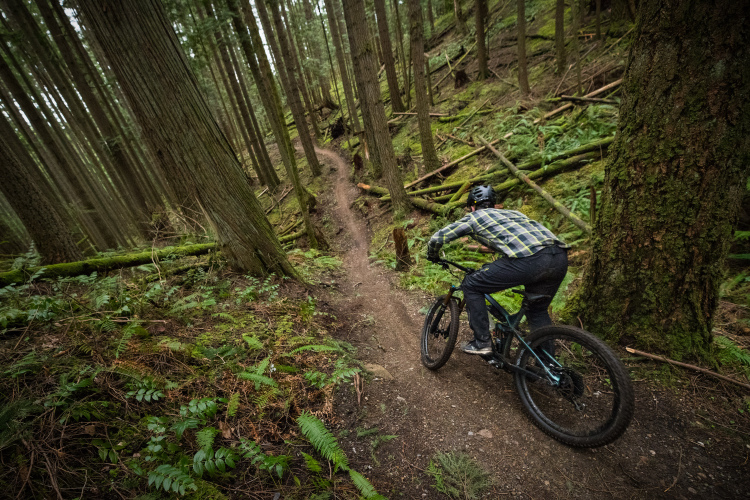
Along with the overall steeper terrain, Pulse said the descending trail has a bit of exposure and a natural, raw singletrack feel. He mentioned that the dirt on the lower section was great, and that any “features” come in the form of natural side hits and options rather than man-made jumps and bumps.
Think hand-built and not machine-built.
The proposed descending trail would mean sanctioning a social trail and officially bringing it into the new network. Pulse said the goal for this “new” trail would be to maintain the characteristics and feel that the trail already has, with as few tweaks and changes as possible. Currently, the plan is to address specific drainage issues and ensure the sustainability of the trail.
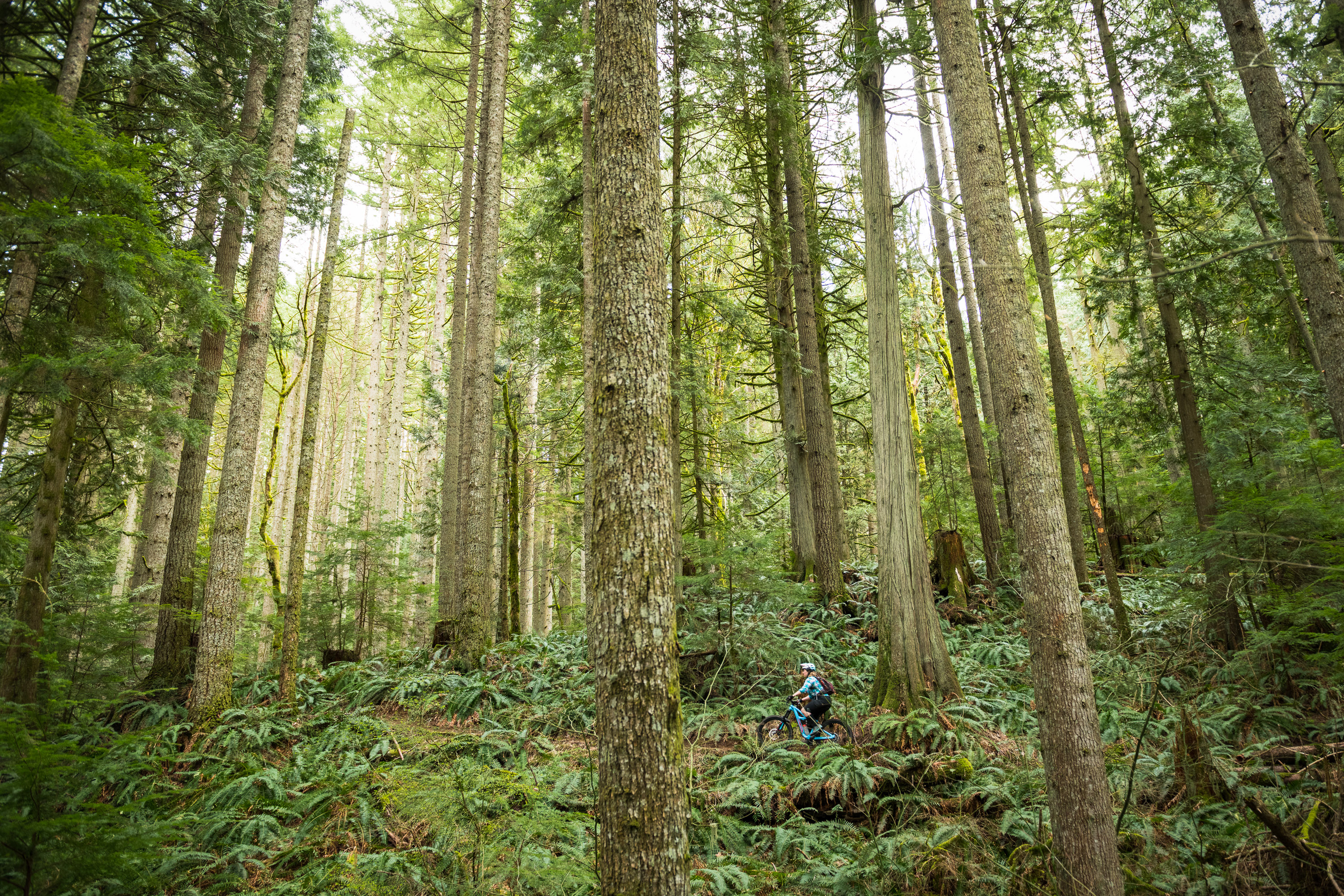
Flow vs. tech, Galbraith vs. Lookout Mountain
When you think of Galbraith Mountain, your first thoughts often go to wide, machine-built jump trails sculpted into the hillside. While Galbraith certainly has its share of chunky, rough, and rowdy terrain, the massive jumps and berms often make their way to our screens and in front of our faces.
And, without a doubt, Galbraith does have a lot of those types of trails. This is where the trail system in the Lookout Mountain Forest Preserve will differ. To simplify things and pit the two systems against each other, you could argue that Galbraith leans more toward machine-built flow, while Lookout will be more raw and technical.
“I think that’s a good way to look at it,” Pulse said. “ All of the trails that are going to be in the Lookout Mountain Forest Preserve that are downhill-oriented trails will be hand-built. I think it’s an awesome way to distinguish between the two.”
Pulse also said the Lookout Mountain trails will have much more uninterrupted descending than Galbraith does. The spiderweb of trails and logging roads doesn’t provide enough footprint at Galbraith for longer trail segments without intersections.
And they aren’t done. Pulse is excited about the partnership between WMBC and Whatcom County Parks and Rec, and the goals the organizations have at Lookout Mountain, which include adding and incorporating more singletrack. While he couldn’t share specifics, he said they are a “couple of key trails that we’re really excited about,” including a “popular descending trail” and the potential for a connector to Galbraith.
“The vision is to create an awesome place to go and recreate.”
The news stinks. Why not follow Singletracks on Google News to bring more joy to your day?



0 Comments