
Specialized Bicycle Components appears to be exploring inverted suspension fork designs, based on a newly published patent application. Inverted forks have long offered advantages like supple small-bump compliance and reduced unsprung mass, but torsional flex remains a technical challenge. Without a traditional arch connecting the lower legs, inverted designs can twist under steering or braking loads.
Rather than adding heavy external braces or bulky arches, the Specialized March patent filing — application number 19/630,157 — details an internal approach to stiffening the chassis from the inside out. Though the drawings suggest the design might apply to commuter-style e-bikes, the filing leaves open the possibility of mountain bike applications as well.
The Specialized patent targets the inverted fork’s torsional stiffness problem
This Specialized application acknowledges the basic trade-offs associated with upside-down forks. Inverted forks are known for sensitive, smooth performance, the application notes, but they can suffer from limited torsional stiffness.
On a conventional fork, an arch connects the two lowers, which keeps the legs from twisting independently under braking or when the front wheel gets knocked off line. Inverted forks have no lower arch since that area needs to be reserved for the fork’s travel. Each exposed lower leg can rotate around its own axis, and the axle is the only thing tying the two sides together.
A cross bolt and a keyed rod promise to reduce unwanted rotation and torsional flex
The design’s fix is to stop rotation inside each fork leg rather than adding external bracing.
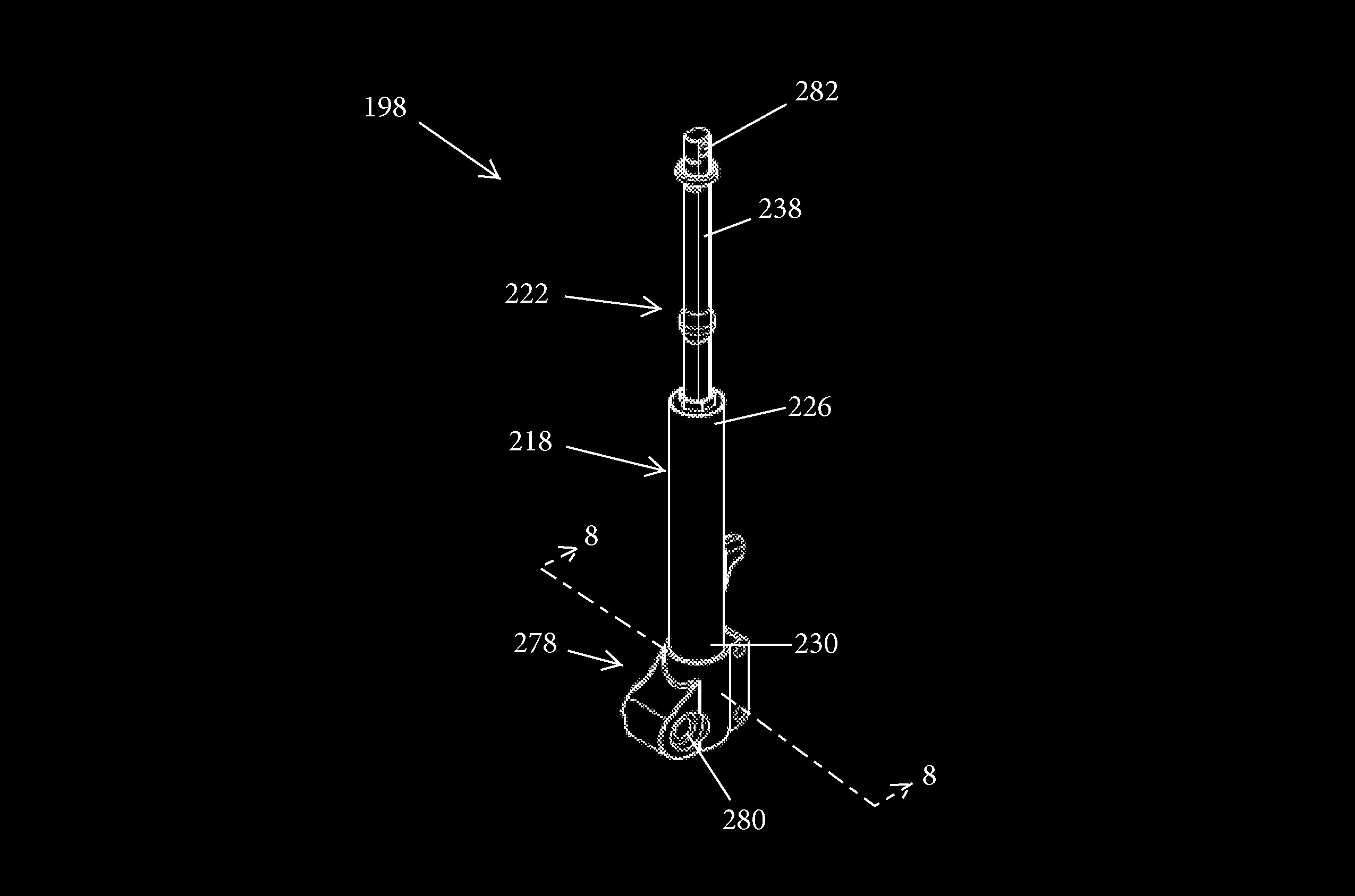
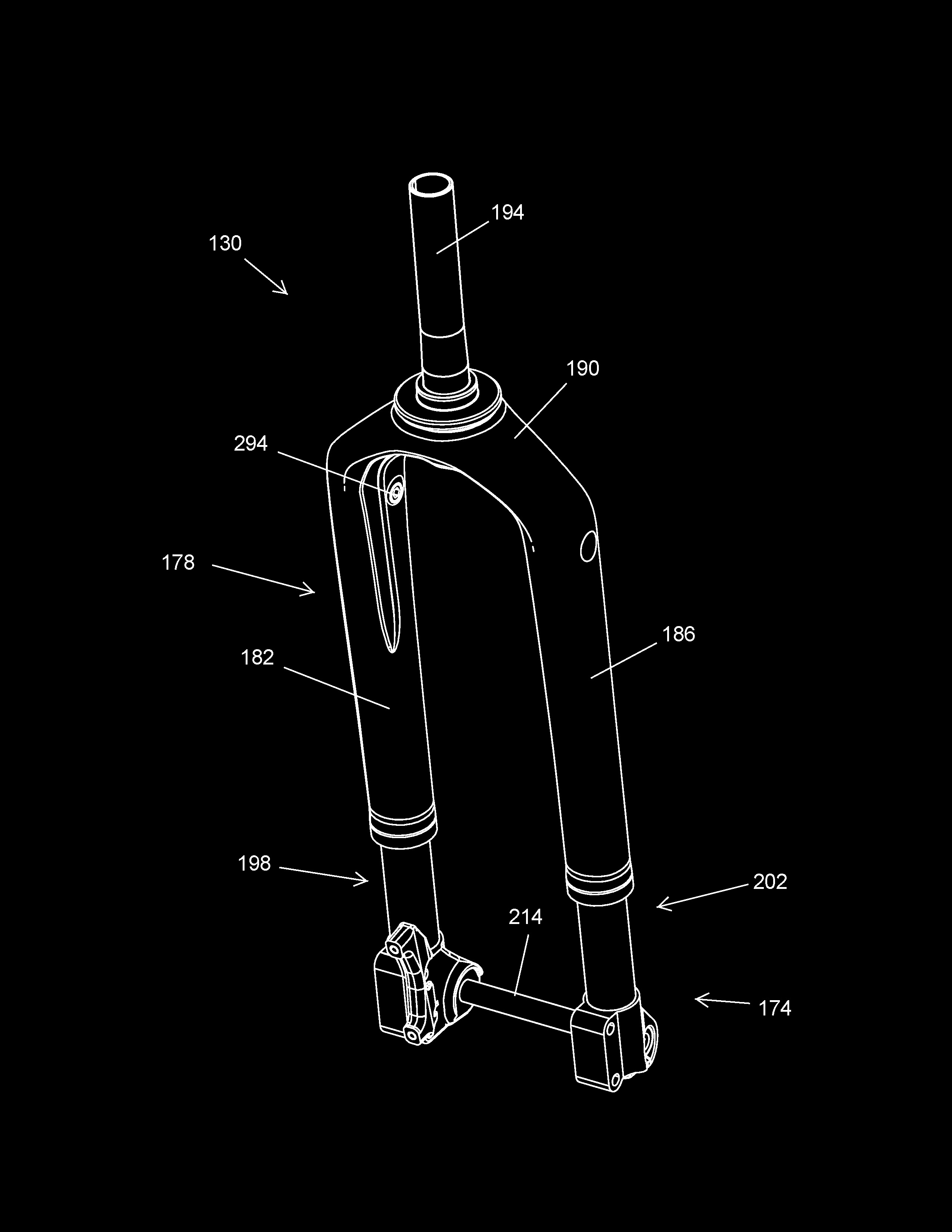
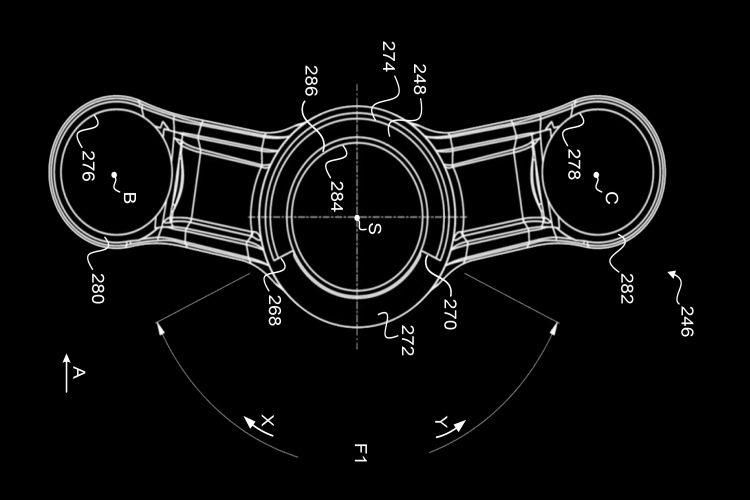
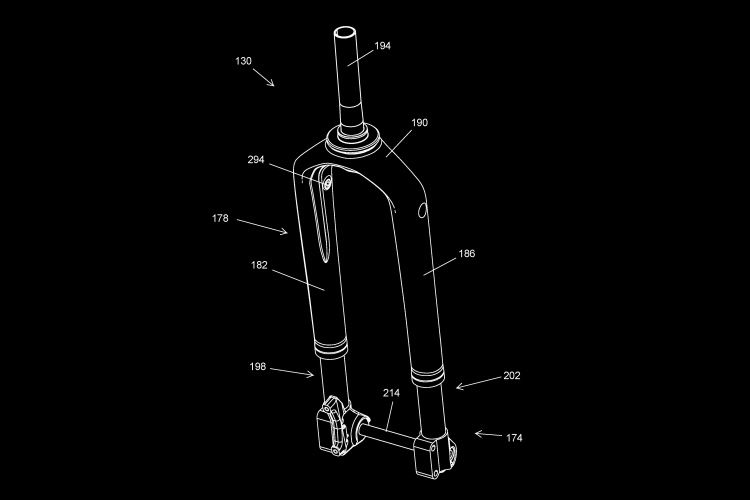
The drawings show a one-piece upper assembly, similar to existing inverted bike fork designs, with two hollow legs joined by a crown that arches over the tire. The application says the upper could be made from aluminum or carbon fiber. A sliding tube on each side carries the axle mount and telescopes up into the leg.
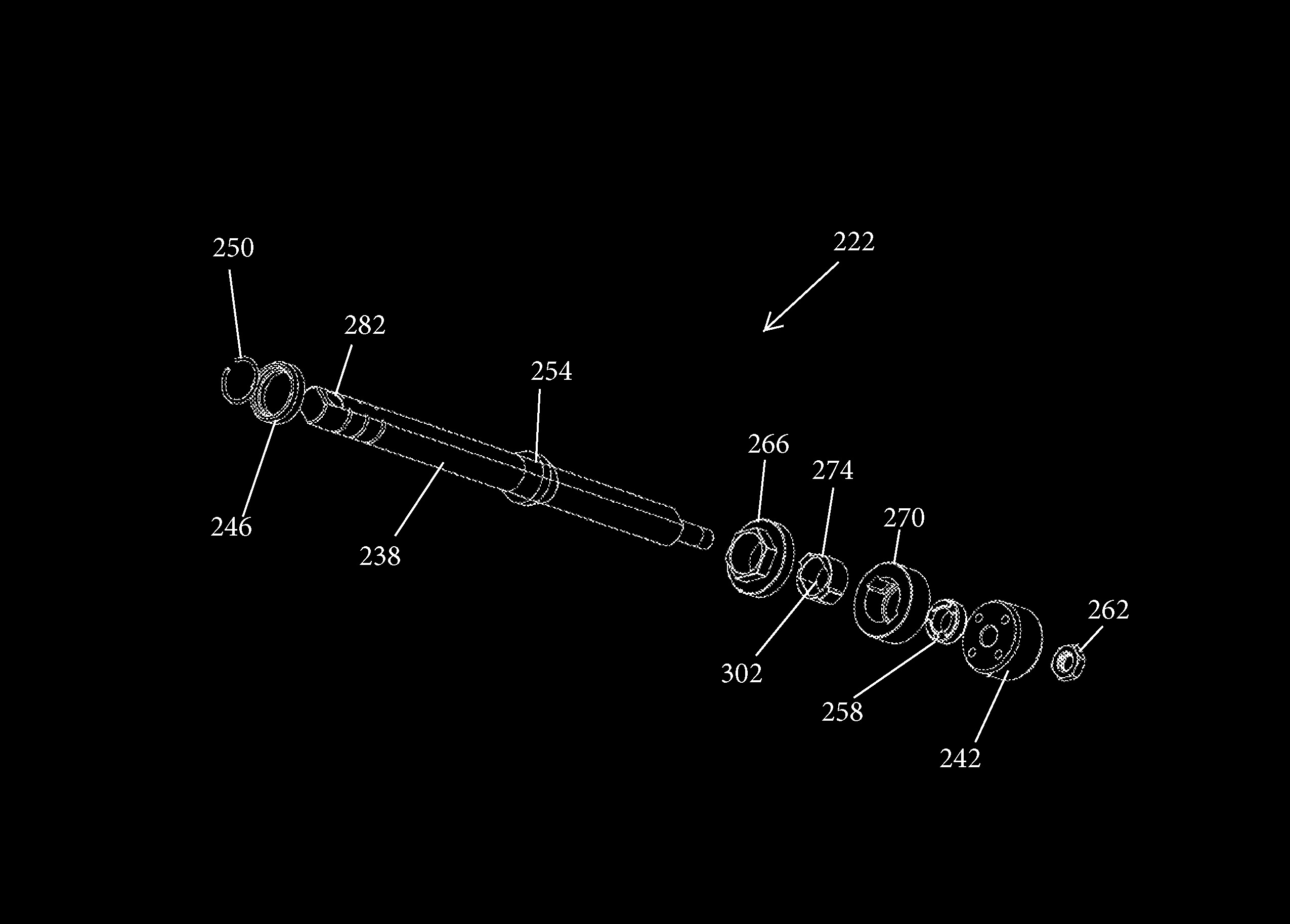
Inside each leg, an extension rod runs down into that sliding tube, with a piston on its lower end. At the top, the rod has an eyelet. A cross bolt passes through the inward-facing side of the upper leg and into that eyelet, so the rod can’t spin. According to the application, the bolt hole can go through only the inside face of the leg, leaving nothing visible from the outside. In the drawings, the bolt sits in a recess just below the crown.
The rod itself isn’t round. It has a flat-sided cross section and passes through a matching keyed bushing fixed to the top of the sliding tube. The tube can slide up and down the rod but can’t rotate around it. The lower is keyed to the rod, which is bolted to the upper.
The patent makes two independent claims. One covers the bolted rod and the other covers the keyed connection, so Specialized could use either feature on its own. Both claims are written around a complete bicycle, not just a standalone fork.

The rod that resists twisting also does suspension duty, carrying the piston and, in some versions, a coil or air spring. The application also describes a version where that leg provides no springing or damping at all. In that setup, the piston serves only as a guide, with air allowed to bleed past it, and the leg’s job is simply to keep the lowers tracking straight while the suspension work happens in the other leg.
The application suggests air springs and through-shaft dampers may make more sense for longer forks, where a coil would get particularly long. That hints the design isn’t limited to short-travel applications.
Specialized is known for coming up with their own suspension designs
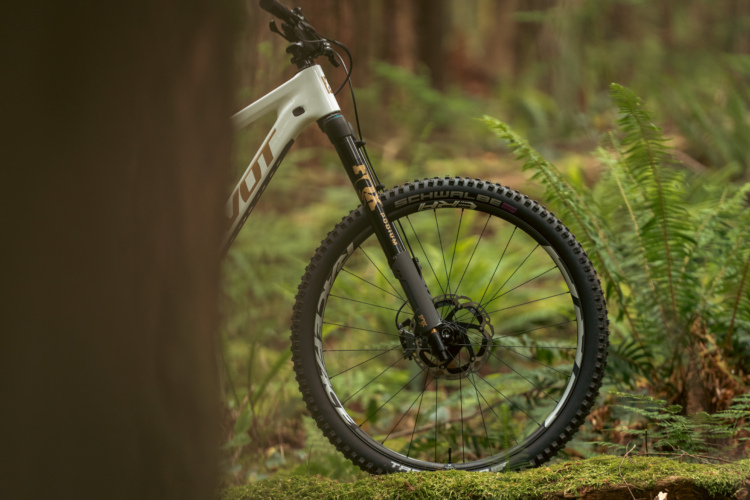
Specialized mountain bikes generally feature Fox or RockShox forks, though the bike brand also specs their own in-house suspension components, like Future Shock on some bikes. For other designs, like the brand’s Genie suspension tech, Specialized partners with another manufacturer to produce the final product.
Many suspension brands, including Fox, RockShox, Intend, and Cane Creek, have their own inverted suspension fork designs.
The design appears to target commuter e-bikes — for now
The patent also describes a press-fit bushing in the crown that strengthens the steerer joint, allowing the fork to use a straight steerer instead of a tapered one.
It’s worth noting that the bike shown in the drawings isn’t a mountain bike. It’s a step-through, hardtail e-bike that the application describes as an “active style” electric bike. Similarly, the Also TM-B electric commuter bike features a short-travel inverted fork, though little is known about that fork’s design.
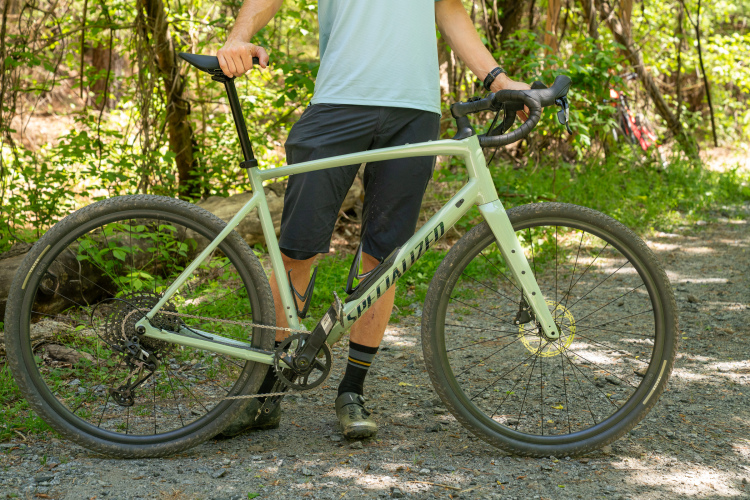
However, the Specialized patent application text says the design could also apply to mountain, gravel, road, and hybrid bikes. A commuter or fitness e-bike is clearly a lower-stakes place to debut an in-house fork than on a trail bike.
As with any patent filing, there’s no guarantee this design ever makes it to market, or that it’s even patentable at all. Brands file patents for all sorts of reasons, and plenty of ideas stay on paper.
The news stinks. Why not follow Singletracks on Google News to bring more joy to your day?


0 Comments