










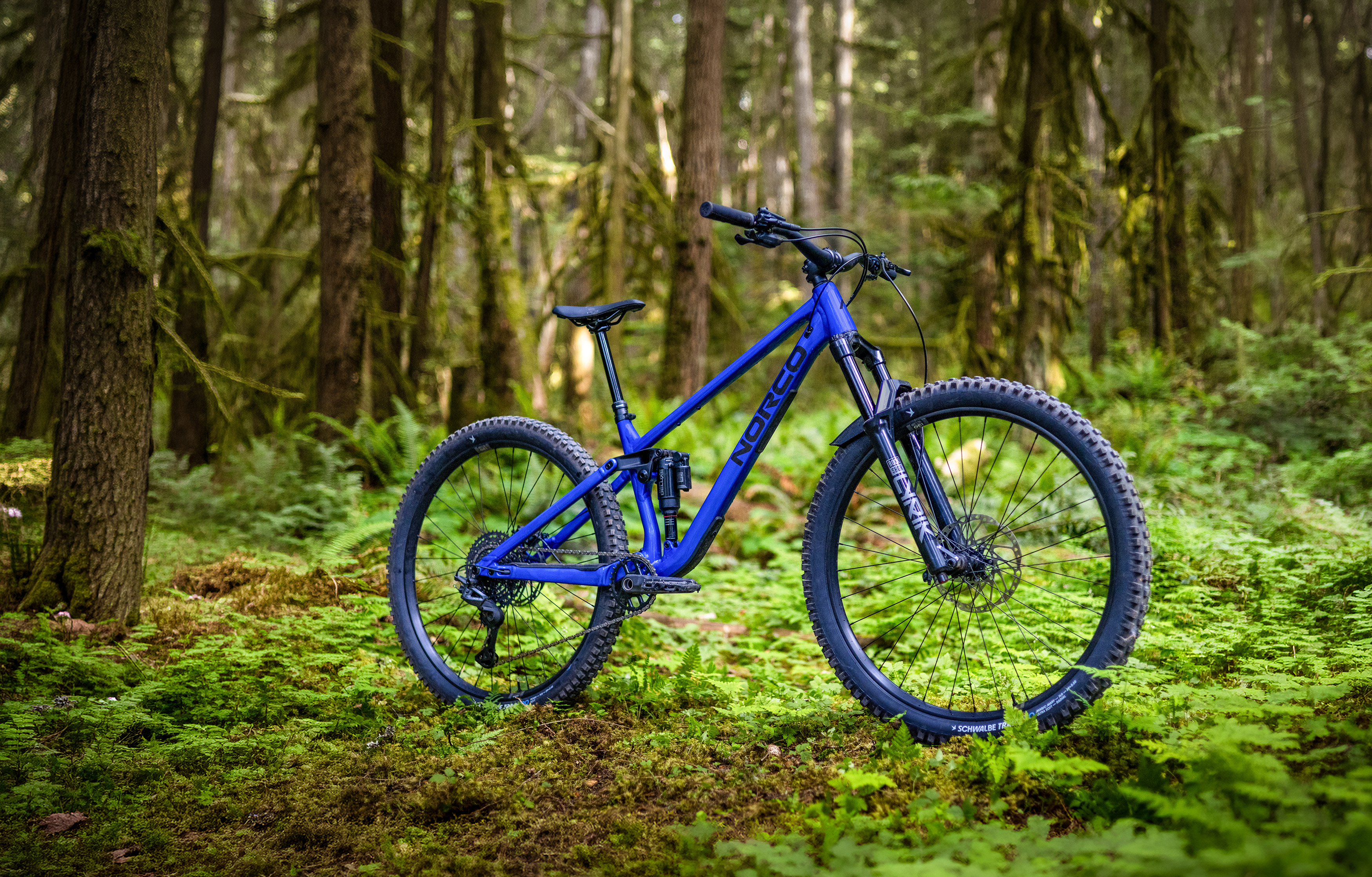
Norco just released a new aluminum version of the popular Fluid trail bike. First glances at the new Fluid may make you think that not much has changed. And, in some ways, you’d be right.
The new Norco Fluid keeps the same overall look and general price point – with builds at $2,299, $2,899, and $3,899 – as previous iterations. Travel numbers remain the same, and the bike still lands in the same spot in Norco’s lineup as before.
But digging into the more subtle differences in the new Fluid, such as geometry and build, shows how Norco has changed the latest version of this budget-friendly trail bike.

Good builds for less than $3,000
Like the previous generation of the Fluid, Norco offers three aluminum models – the A1, A2, and A3. And, all the current models of the Fluid still hover around the same price as the outgoing generation. But it is perhaps the A2 and A3 builds that are most impressive for the price, getting riders on a quality trail bike, from a big brand, for less than $3,000.
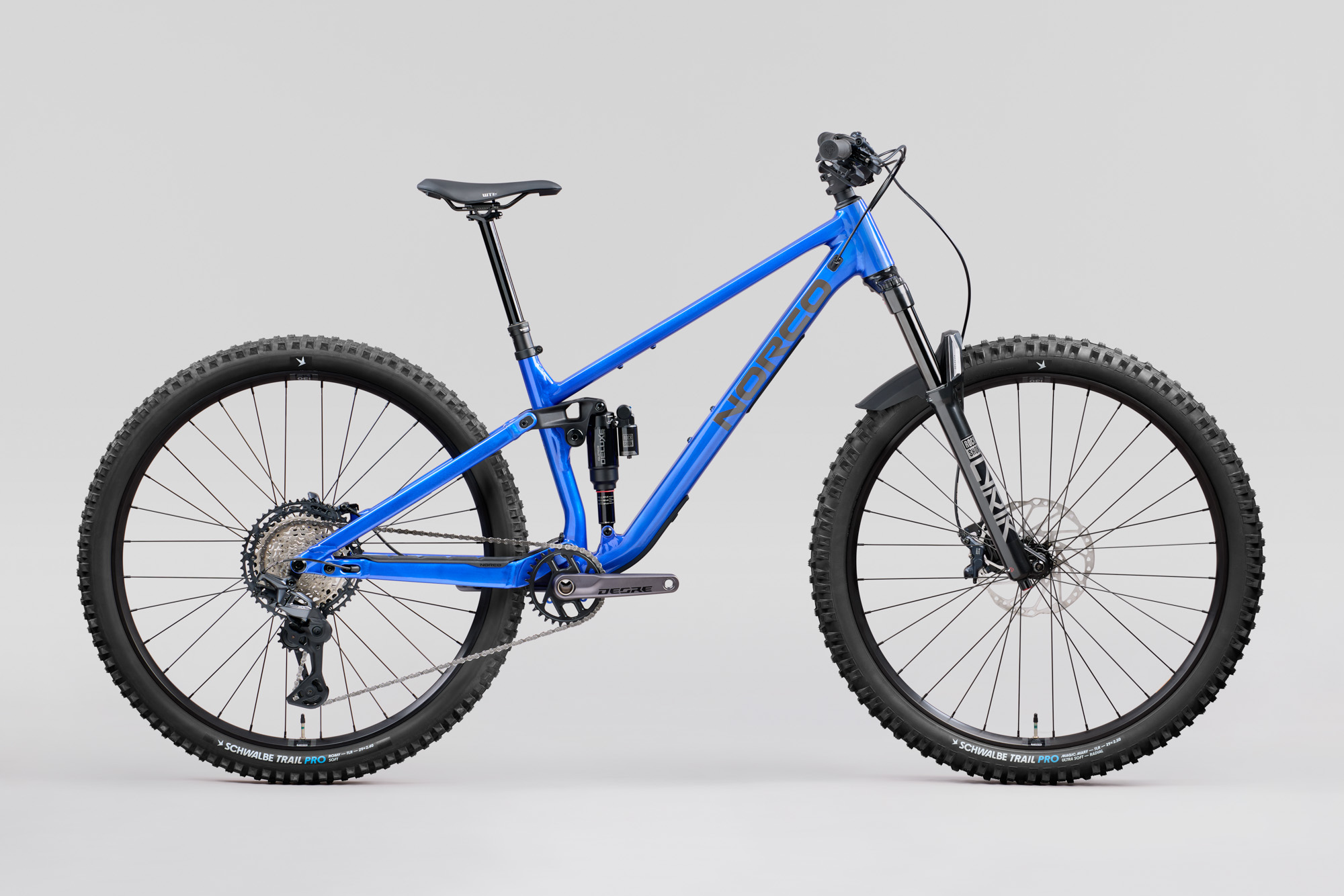
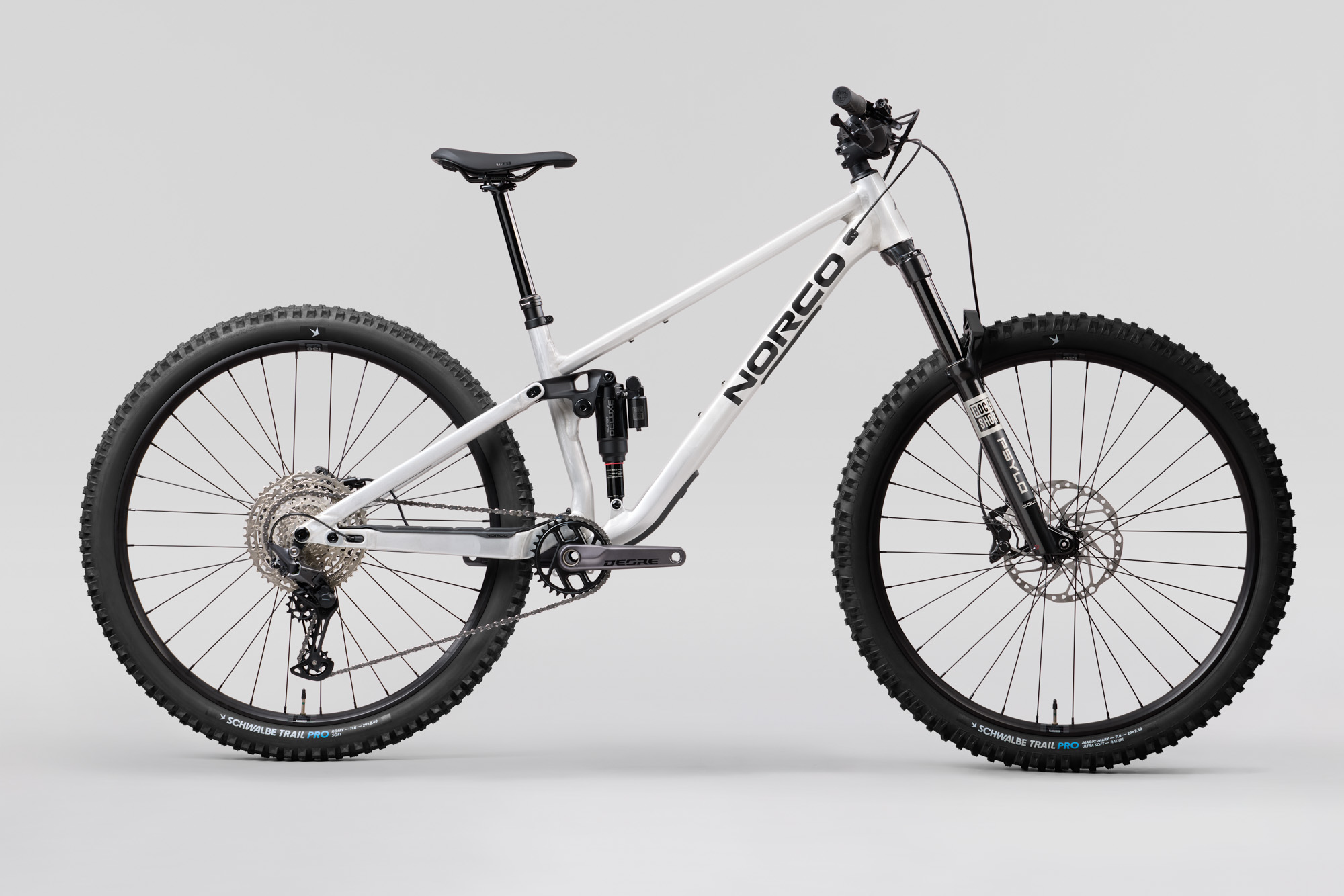
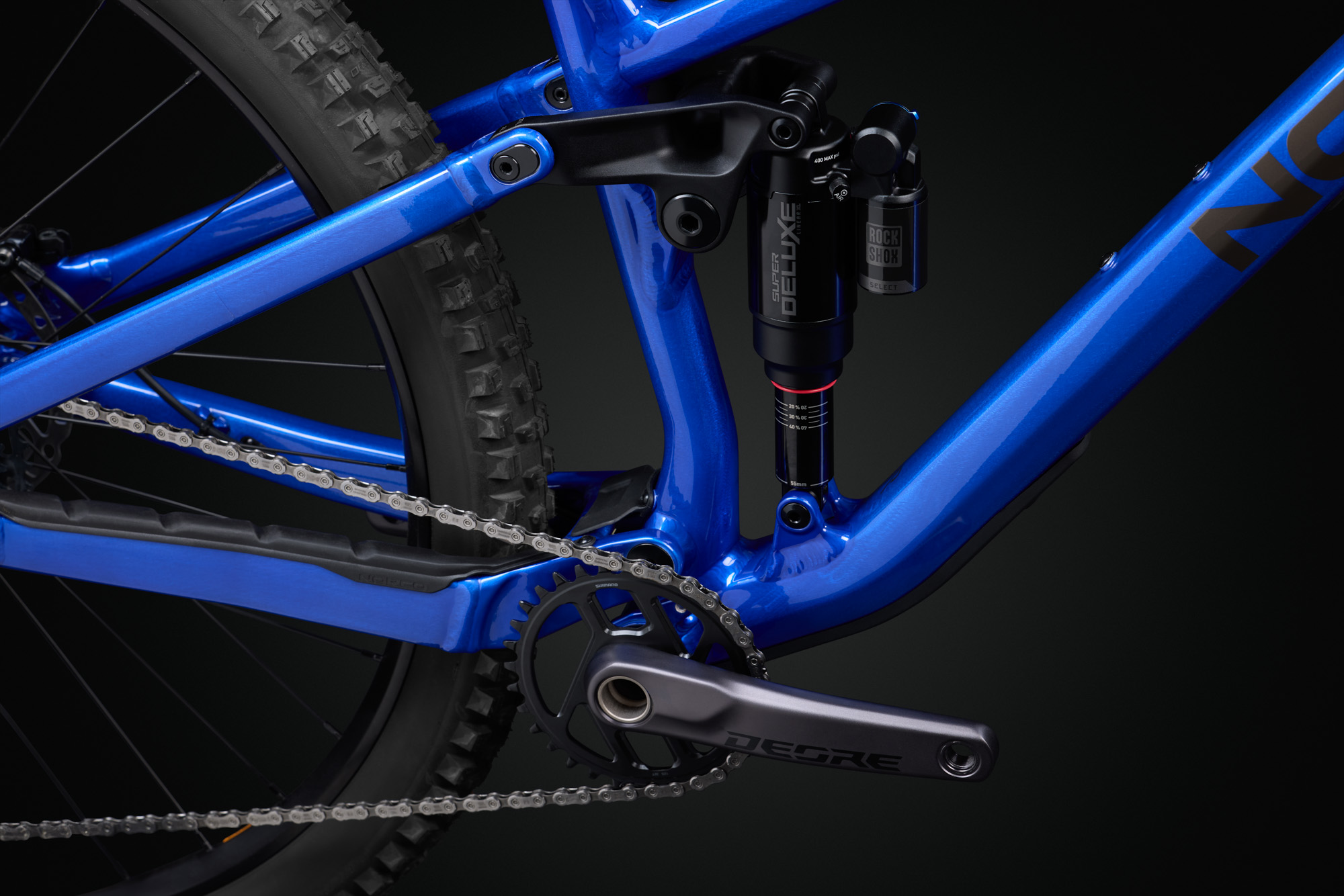
The Norco Fluid A2 retails for $2,899. That gets you a RockShox Psylo Gold RC fork and Super Deluxe Select rear shock. Shimano takes care of the shifting and stopping, with a Deore M6200 12-speed drivetrain and Deore MT420 4-piston brakes. The Fluid A2 rolls on WTB ST i30 wheels laced to Shimano hubs, and is equipped with Schwalbe radial tires front and rear – a Magic Mary and Romy, respectively.
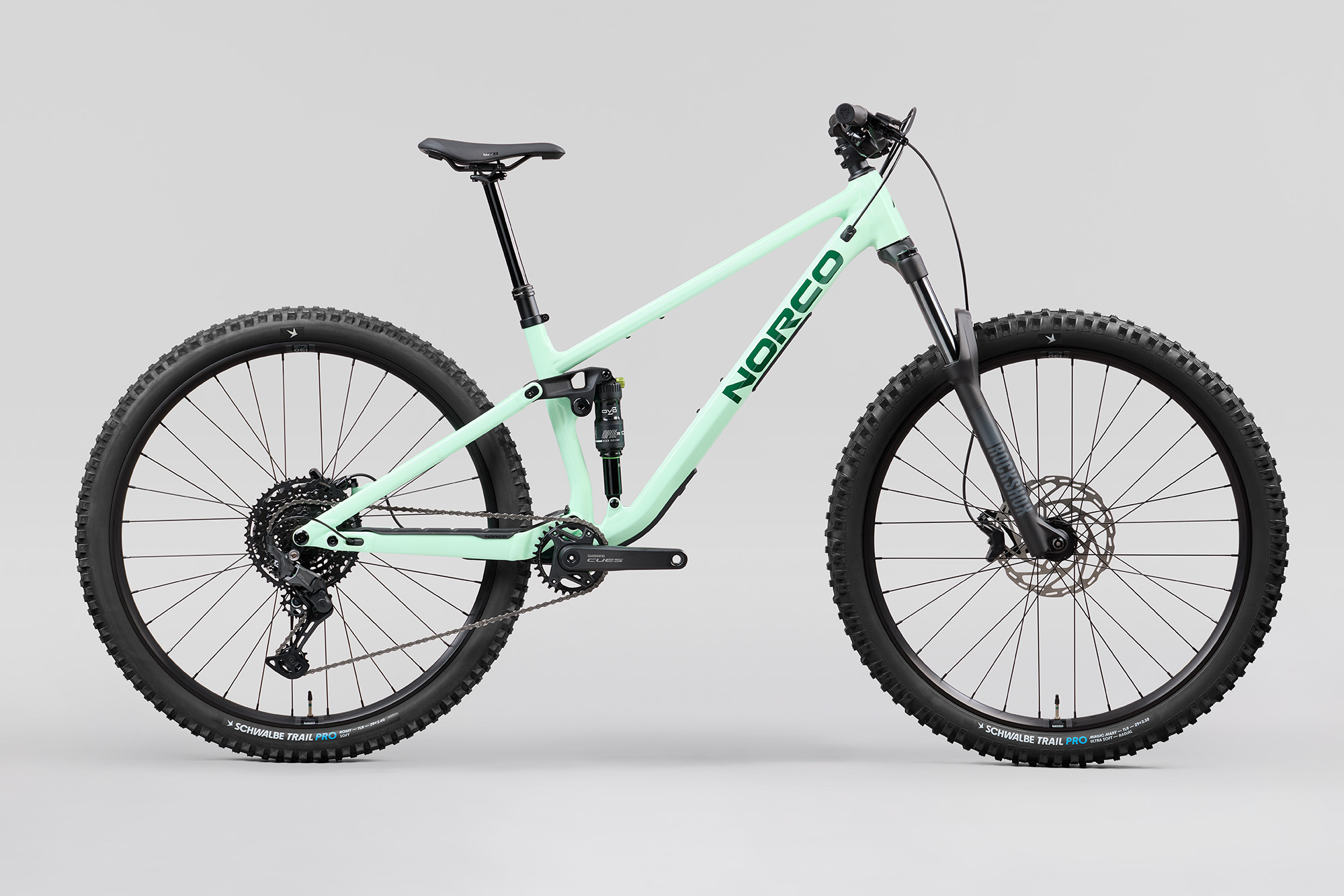
A size 3 Norco Fluid A2 weighs 35.2lbs, perhaps a bit on the heavier side but not too far off what we’d expect for an alloy frame build.
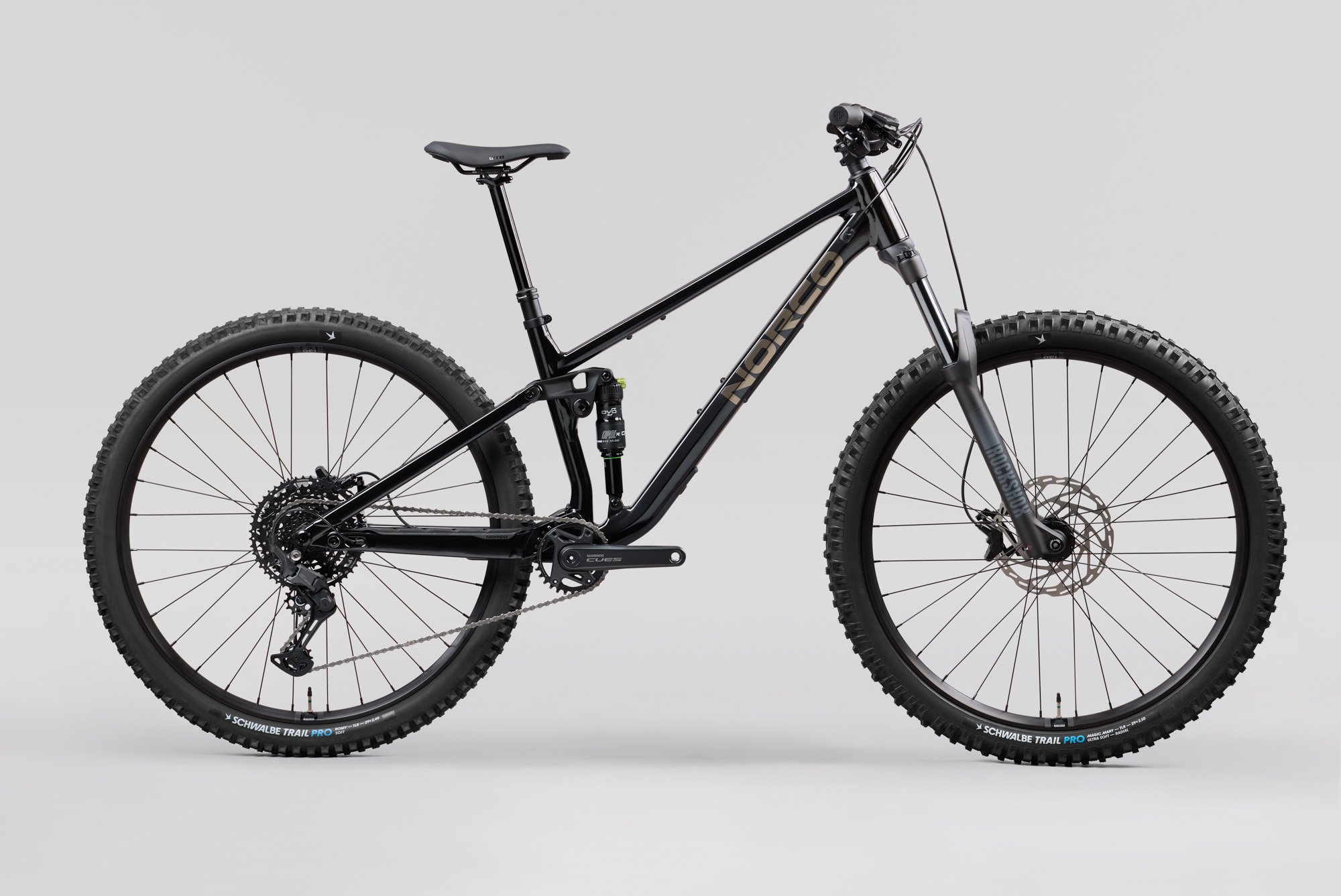
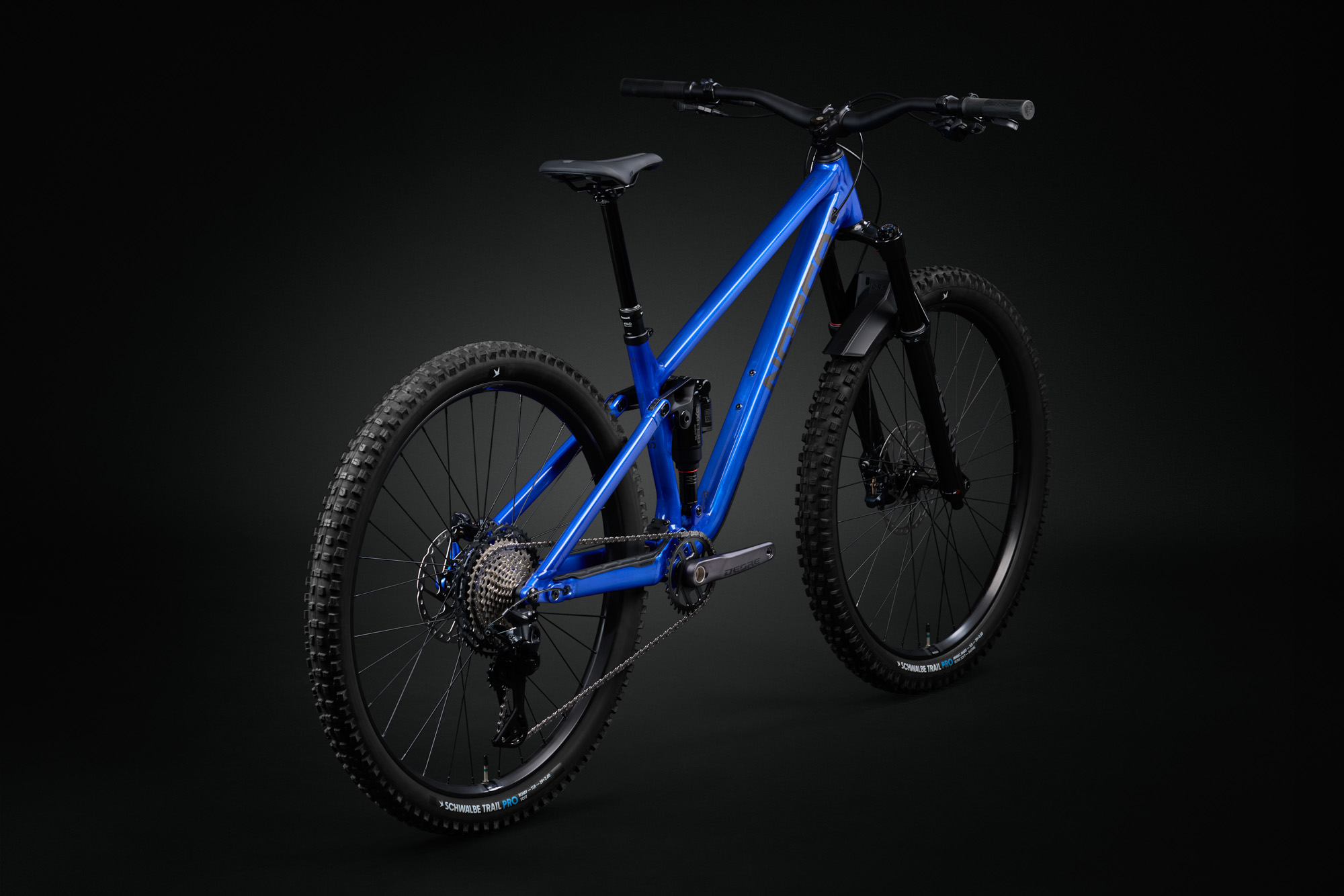
The Fluid A3 definitely tips the scales a bit more – well, to be exact, two pounds more compared to the A2. And here you definitely see a step down in components. The Fluid A3 has a Shimano Cues 10-speed drivetrain, Tektro 4-piston brakes, a RockShox Recon RL fork, and a DVO Opal shock. It also has the same tires and wheels as the A2 build, for $2,299.
While these aren’t top-tier components, they are common on bikes in the $2,000-$3,000 range. All the Fluid models come with 4-piston brakes, dropper seat posts, and, impressively, Schwalbe radial tires. Regardless, it is good to see that the prices aren’t changing drastically this time around.

How new is the new Fluid?
Much of what was loved about the old Norco Fluid is carried over into the new generation. The bike still has 140/130mm of travel front and rear, sports Norco’s Horst-Link Virtual Pivot Suspension, and features internal cable routing. The bike is still an affordable option, featuring an aluminum frame and five sizing options, fitting a wide range of riders.
In this latest iteration of the Fluid, Norco adds a flip chip that lets riders opt for a smaller rear wheel. While it appears that the bike will continue to come as a full 29er, riders wanting a mixed-wheel setup can make the switch.
Norco’s press materials claim “weight savings” and a “lighter” new Fluid frame. Though they don’t share frame weight numbers in the press release, Norco switched from 6061 aluminum alloy on the previous Fluid to 6066 on this version. This is where the claimed weight savings comes from.
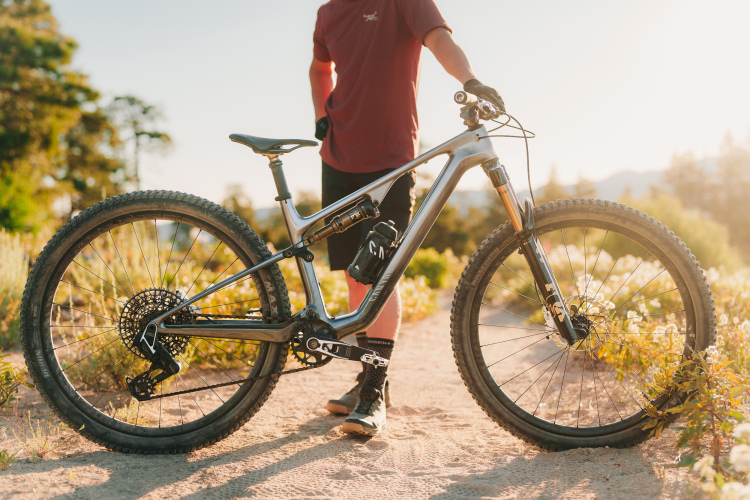
It also gave the new Fluid a new look. The older 6061 frames had an almost carbon-like appearance. The new Fluid has a more raw, industrial alloy look, with welds clearly on display.
Perhaps the alloy switch saved a few grams on the frame, but complete bikes bulked up. Based on the weights Norco provided, the previous-generation Fluid A1 had a claimed weight of 35 lbs, while the new A1 is said to weigh 35.7 lbs. We reached out to Norco for more weight specifics but didn’t hear back before publishing.
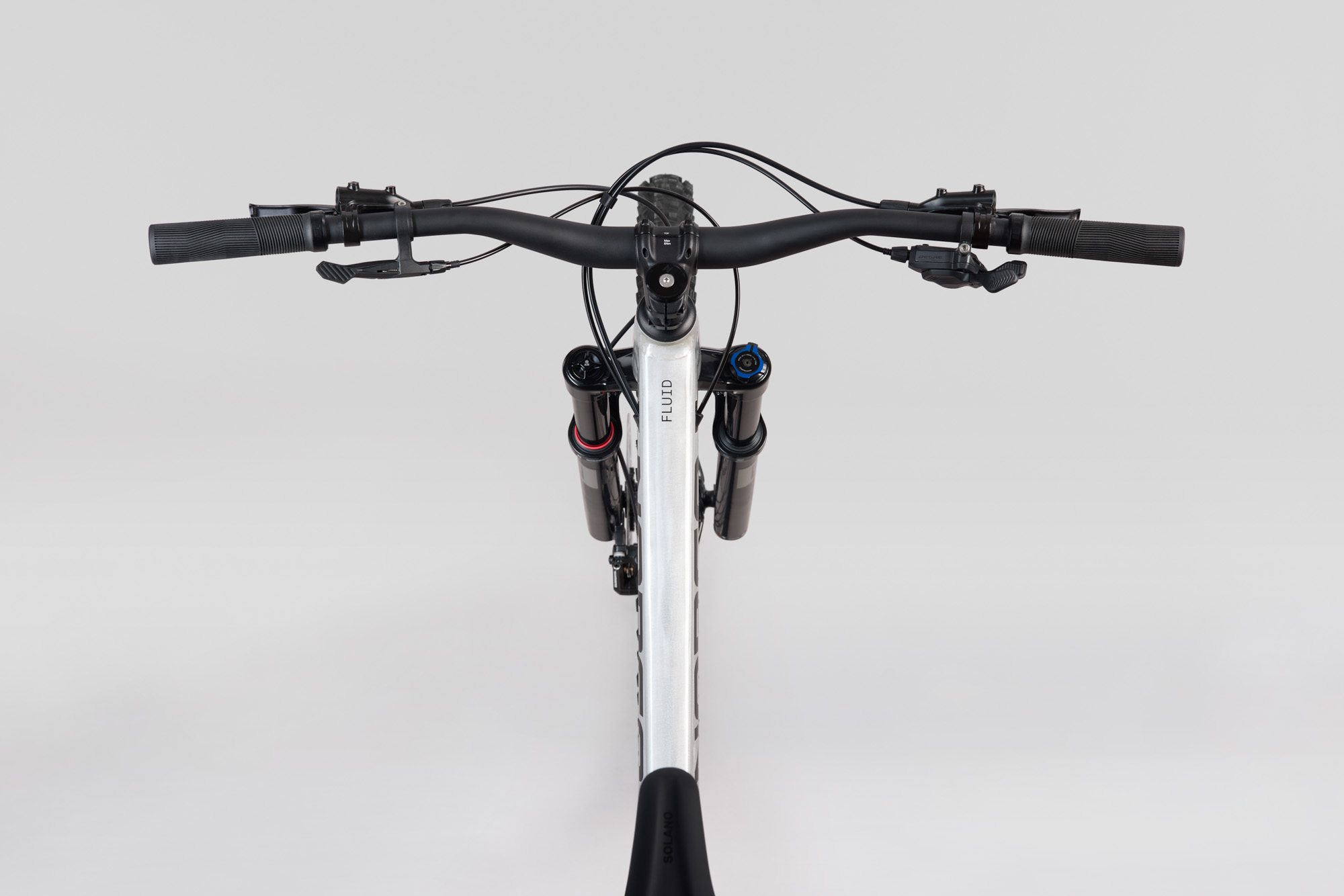
Growing but also shrinking
Norco also updated the Fluid’s standard “T-shirt” frame sizes of S, M, L, and so on to the new number system we’re seeing on their latest bikes. Despite the change, Norco retains five frame sizes, although the geometry has changed – and significantly so in some instances.
While this most recent iteration of the Norco Fluid does grow on one end of the sizing spectrum, it actually shrinks on the other, closing what was a pretty significant sizing gap.
The reach on the previous Fluid began at 420mm and consistently increased by 30mm at each size interval. That meant a tremendously long 540mm reach on the XXL offering. Reach measurements across the S, M, L, XL, and XXL Fluids were 420, 450, 480, 510, and 540mm, respectively.
Looking at the new Fluid, the reach on the two smallest sizes, 1 and 2, increases over the previous generation, while sizes 3, 4, and 5 all decrease. Across the sizing lineup, the new Fluid grows by 20mm reach increments, and starts with a 12mm increase: 432, 452, 472, 492, and 512mm. This means that the largest size of the new Fluid only has a 2mm longer reach than the previous XL.
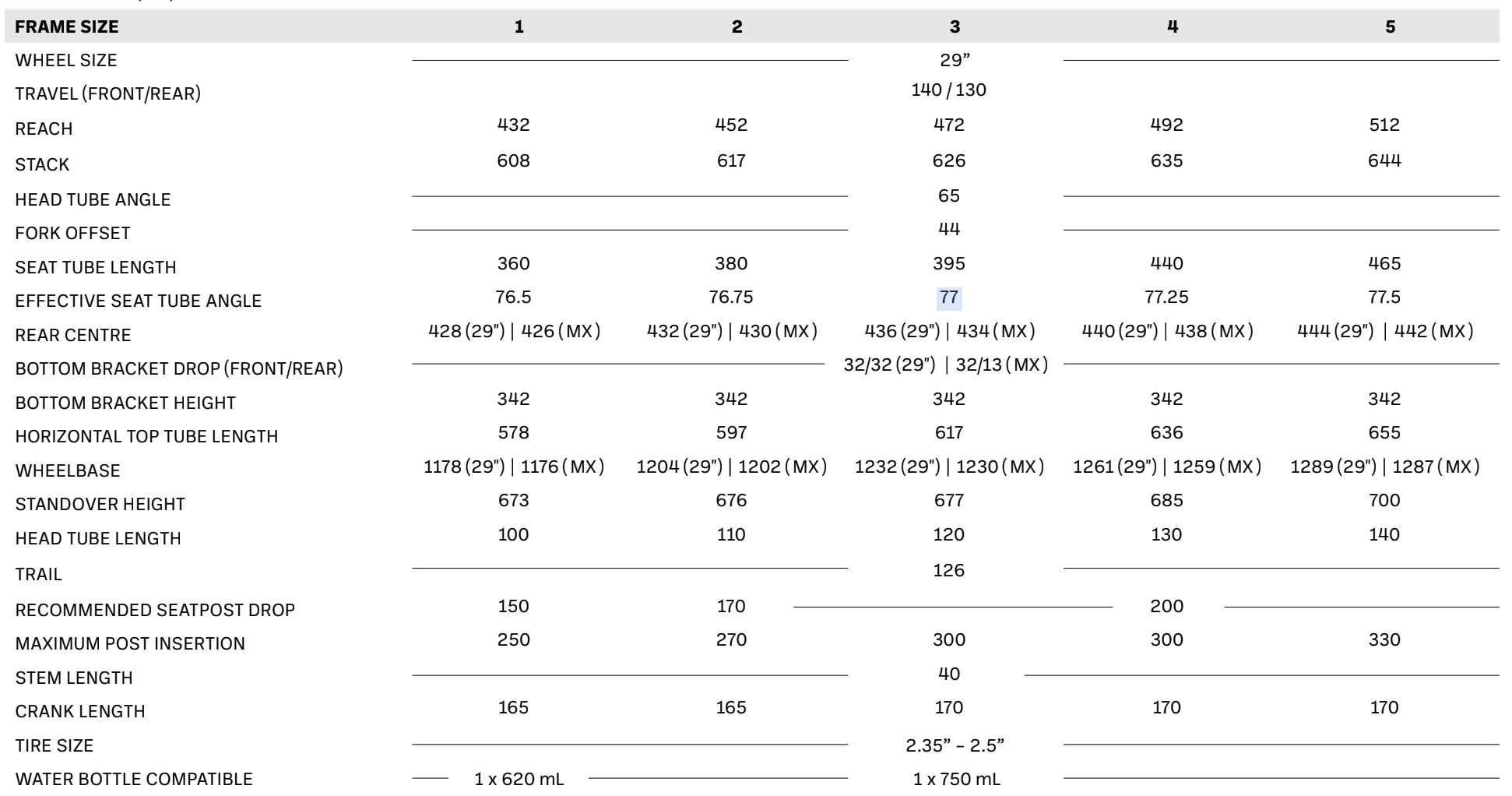
The new Fluid’s stack height also sees an interesting adjustment compared to the previous generation. Across the size range, stack also decreases by essentially just shifting the numbers right to the larger frame size. For example, the largest size 5 option on the new Fluid sees a 644mm stack height, the same as the XL Fluid (essentially size 4) in the past. Size 4 has a 635mm stack, 626mm on size 3, and 617mm on size 2 — all the same stack as the previous generation, just shifted up one size, reducing stack heights overall on the new frame. The size 1 Norco Fluid sees a 608mm stack.
A 65° head tube angle is carried over from the previous Fluid, along with essentially the same seat tube angles. On the new Fluid, the seat angle starts at 76.5° on the smallest size and increases by 0.25° per size.
For the new Fluid’s wheelbase, we obviously see a similar pattern of shrinking and growing as with the reach numbers. Size 1 sees a 22mm longer wheelbase than the previous model, while the size 5 frame shrinks by 34mm. Each Norco Fluid frame has a size-specific rear end, starting at 428mm for size 1 and increasing by 4mm per size, topping out at 444mm for size 5. Swapping to a 27.5 rear wheel drops the chainstay length by 2mm.
The outgoing Fluid also had a carbon fiber offering. At this point, it is unknown if Norco plans to update the carbon lineup with similar geometry changes.

How do the new Fluid builds compare?
Compared to the outgoing model, it is tough to say whether customers are getting a better deal. For example, the new Fluid A1 features RockShox Select and Select+ suspension, while the previous A1 had Fox’s top-tier offerings.
Looking at the Fluid A2, the old and new models share the same fork, though the old model featured a Fox Float X Performance Elite shock. Compared to the new bike’s Super Deluxe Select shock, that seems like a downgrade. However, the price of the new Fluid A2 is $100 less than the previous one.
The biggest sting is the difference (or lack thereof) between the old and new Fluid A3 models. The new model sees a different (better?) shock and tires to the tune of an extra $200.
Looking at the new Fluid A1 side by side with the Specialized Chisel Comp EVO yields an interesting comparison. While you can argue about which bike has better components, you can’t ignore the 6-pound weight savings with Specialized. That said, the Chisel EVO blurs the line between XC and trail bike. But even a beefier trail bike, like the Specialized Status 140, has quality components, retails at a price between the A2 and A3 models, and weighs around 33 lbs.
Keep up with the latest mountain bike news by adding Singletracks as a preferred source on Google.




3 Comments
Jul 16, 2026
Jul 16, 2026
Jul 17, 2026
HOWEVER
No.
Just no.
When I can cobble together a trail bike off the used market that weighs ten pounds less than a slack angled, long wheelbase, thirty six pound mountain bike is neither fun or appealing, it's ponderous...and only makes E-bikes more appealing to those "new" to the sport, something is amiss.