

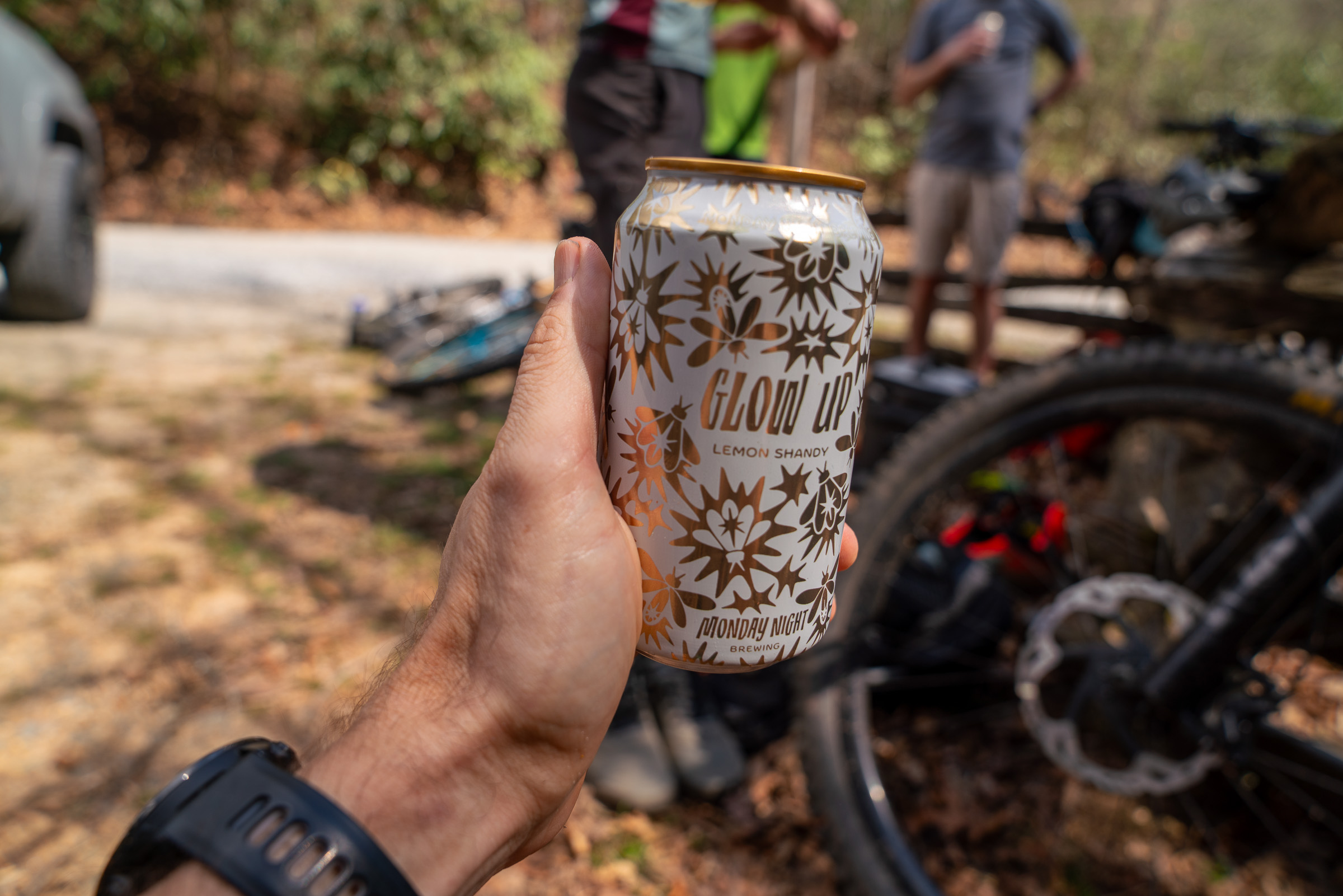
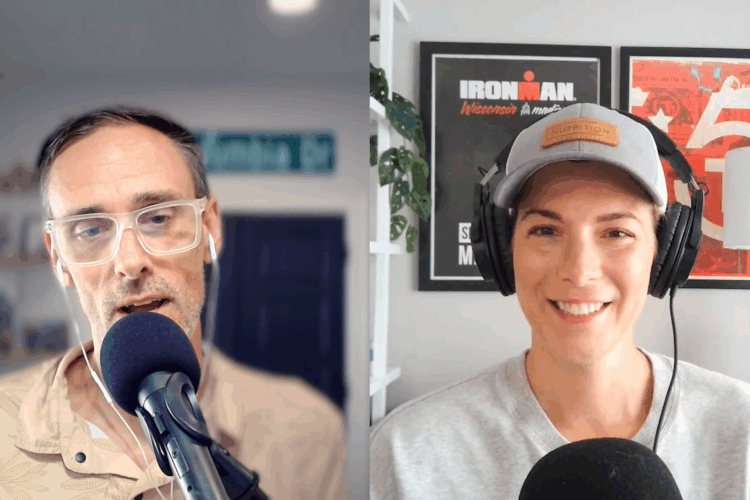
For many mountain bikers, myself included, the post-ride routine goes something like this: put away the bike, plop down beside the truck with a beer, and search up “burritos nearby.” And yet, I’ve had this nagging suspicion that this ritual isn’t doing me any favors the next day. So I asked my friend and coach at the Endurance Collective in Durham, NC, Ben Turits for some tips. As it turns out, there’s one big (and simple) thing that’s missing from my post-ride ritual.
Harder ride = longer cool-down
You’ve no doubt heard the term cool-down, and aside from post-ride nutrition, it’s basically the main thing riders should focus on after a tough ride, according to Turits. “The higher the intensity event, the more a cool-down is important,” he said.
Coming to a dead stop after an intense ride is “like putting a hot sausage in the freezer. We want to bring [the body] down to room temperature” gradually. Turits notes that it’s not uncommon to see Tour de France riders riding back down the mountain following a high-altitude finish for that very reason. Even downhill racers could stand to cool down after a short (but intense) descent, though in reality many choose cool liquid refreshment over a soft pedal around the base area.
But a soft pedal is exactly what’s called for after a tough ride. I mentioned a particularly brutal day of riding in Pisgah earlier this year when I collapsed at the trailhead parking as soon as I finished. Beer in hand and snacks within reach (see photo above), I sat on the gravel for a good 30 minutes, relaxing and chatting with friends about the ride.
However, Turits tells me I probably would have been better off pedaling a bit longer.
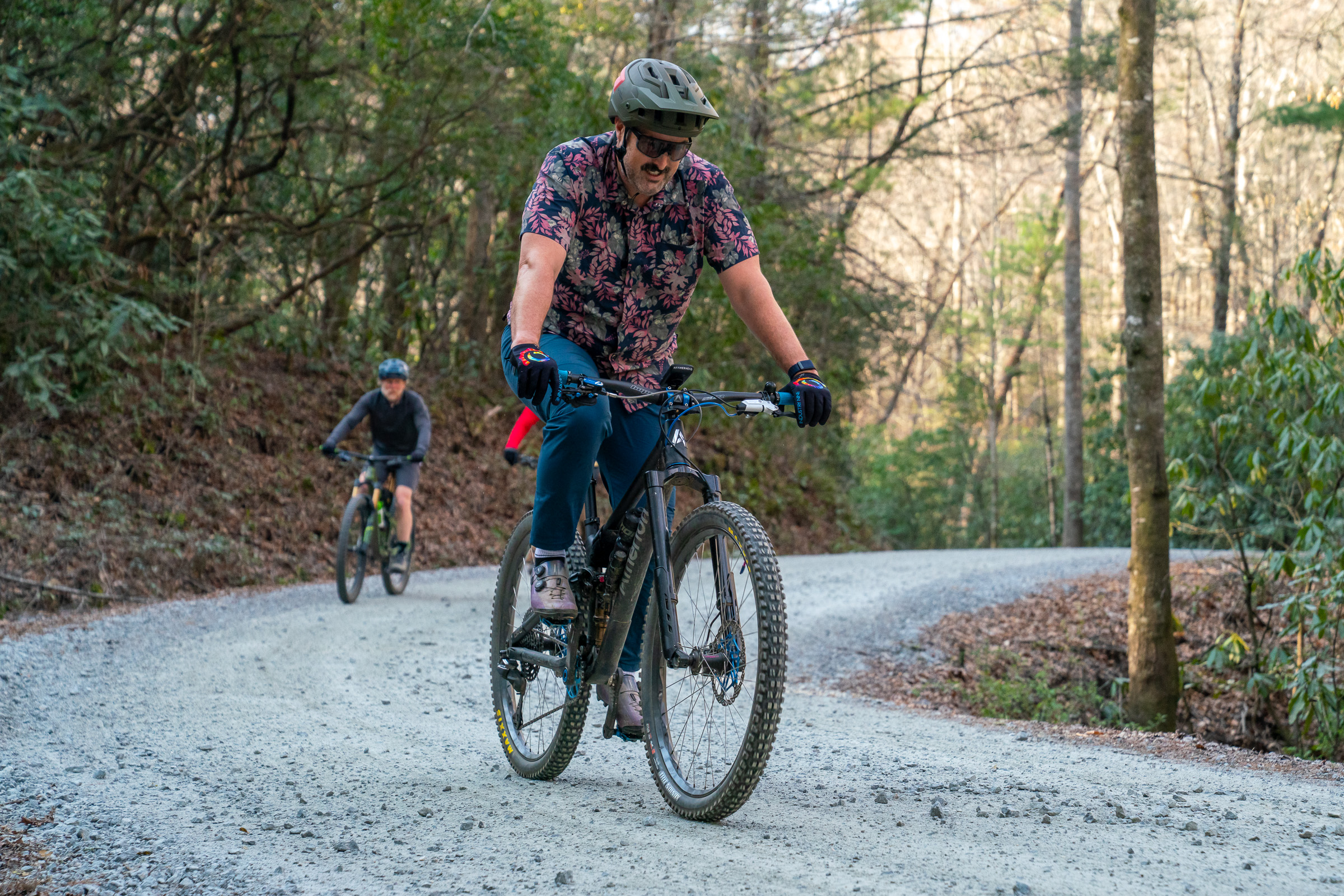
“Cruise down that dirt road to the end and turn around and ride back. You’re going to feel much better the next day if you did that extra 15 minutes of pedaling.”
Turits recommends an easy spin that keeps your heart rate in zone one if you’re wearing a heart rate monitor. Pedaling at an easy pace gives your muscles a chance to gradually relax and has the added benefit of generating a cool breeze to bring your body temperature down.
On particularly hot days, I’ve found that cooling down after the ride also helps prevent dehydration later. If you’ve ever stopped mid-ride or at the end of a ride and found sweat pouring down, you know how quickly your body heats up without the wind in your face.
I like to wipe my head and neck with a cold, wet washcloth that’s been sitting in my iced drink cooler immediately after a hot ride. A dip in a lake or river is even better. At home, I rigged up an outdoor shower that’s teed off a garden-hose spigot, and it’s an absolute game-changer for sweltering rides that end at the house. (If you want to create one up for yourself, all you need is a short washing machine fill hose, a length of threaded galvanized pipe, a shower angle adjuster, and a cheap shower head.)
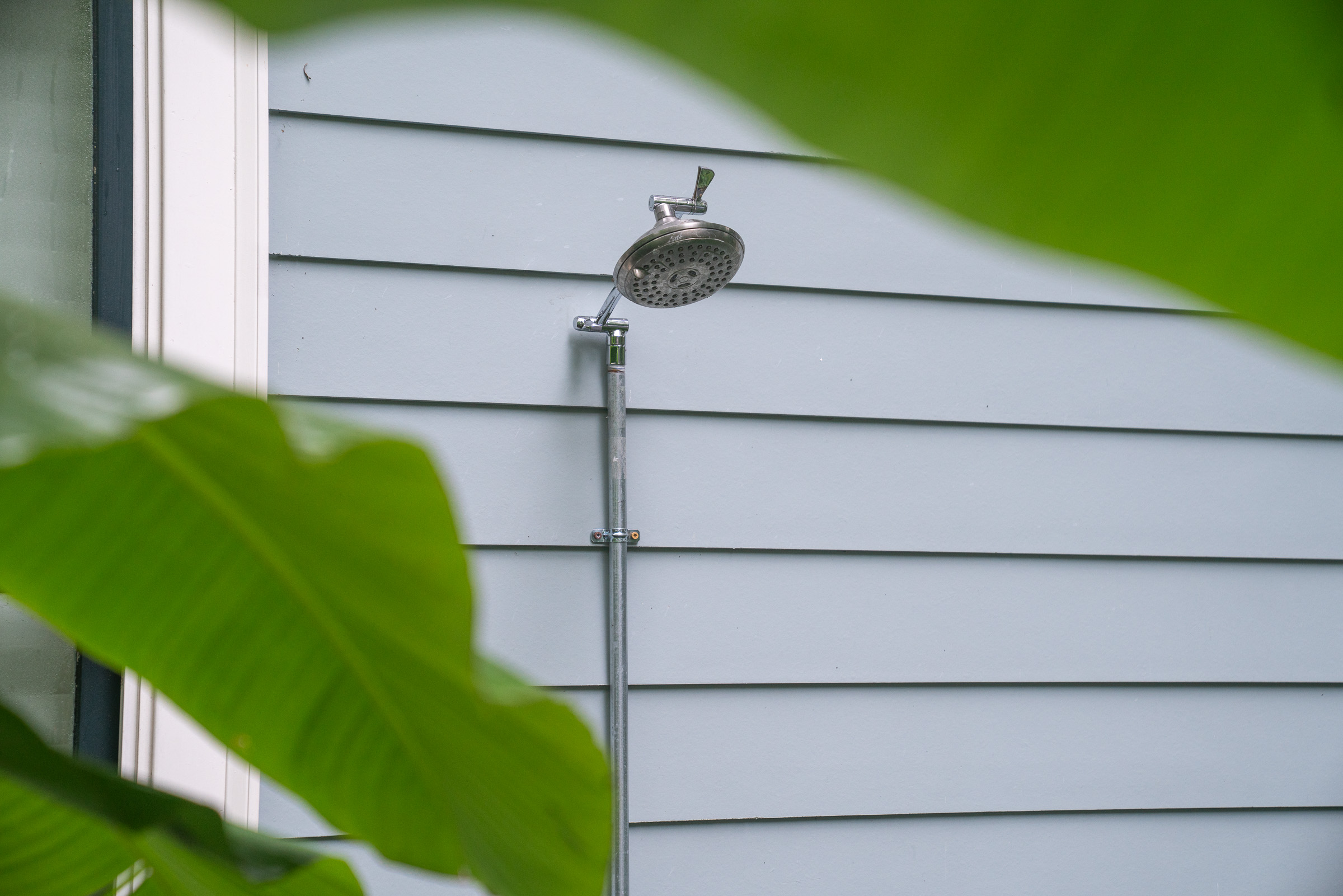
A proper cool-down after an especially hot ride slows sweating considerably, saving you from unnecessarily wasting the last of your body’s hydration, which you’ll need to make up for later.
Timing matters
The reason that it’s a mistake to plop to the ground immediately after a hard effort is simple. “You’re coming off a really hard, long set, and you’ve got a ton of leg and arm pump,” Turits said. “If you just get off your bike and sit down, those muscles are in a contracted state. They’re gonna be pissed off. That’s when you start to get those fatigue cramps.”
Guilty. I’ve suffered from muscle cramps a lot over the years, and it seems my post-ride routine may have been a factor. Nutrition and hydration are drivers as well, and Turits recommends taking in liquids, carbohydrates, and protein as soon as possible. You can even do this while you’re soft-pedaling through your cool-down.
Following these simple tips will go a long way toward proper recovery after a difficult ride. But how do you know if your recovery worked and you’re ready for another big day of riding?
Data can help, but listen to your body
“The best way to figure out if you need a rest day is if you feel like garbage,” Turits told me. However, that’s cold comfort if you’re only on day two of a three-day mountain biking trip.
I track my daily health and fitness activities continuously using a Garmin Forerunner smartwatch, and I was curious if there were certain metrics like HRV that might provide a clue as to how successful (or unsuccessful) my post-ride recovery was. As Turits explained, fitness data can be helpful when it comes to tracking your normal fitness routine, but it’s less accurate for out-of-the-ordinary situations like a stage race or multi-day bike trip. For that reason, he recommends listening to your body instead, and making smart compromises if necessary.
“You flew to Utah, and you were looking at your HRV and your sleep score, and you decided to not do While Enchilada. In my mind, that’s dumb. Maybe you should do it a little bit slower.”
If you’re not fully recovered, taking things easy is a good risk-mitigation strategy. In fact, many of the best riders are those who are in tune with their bodies, knowing when to push but also when to hold back, even if that means taking an unplanned rest day.
Though fitness data can help riders understand their recovery status, Turits cautions that there’s a tradeoff. “Data metrics can be really, really toxic for some people.” He says he’s recently gone device-free for that reason.
“I started to obsess over it. On a day where the Garmin was telling me that I should get 8,000 steps, I was like ‘I’m too tired to do 8,000 steps,’ but I’m trying to do it anyway.”
Keep it simple, stupid
I guess I shouldn’t be surprised that when it comes to a post-ride routine, it’s really not that complicated. Cool your body down gradually. Keep your muscles moving. Replenish your body with hydration and nutrition. And most of all, pay attention to how you’re feeling the next day.
“Respecting and listening to your body is really the best metric.”
Keep up with the latest mountain bike news by adding Singletracks as a preferred source on Google.



4 Comments
Jul 26, 2026
Aug 6, 2026
Jul 25, 2026
Jul 24, 2026