

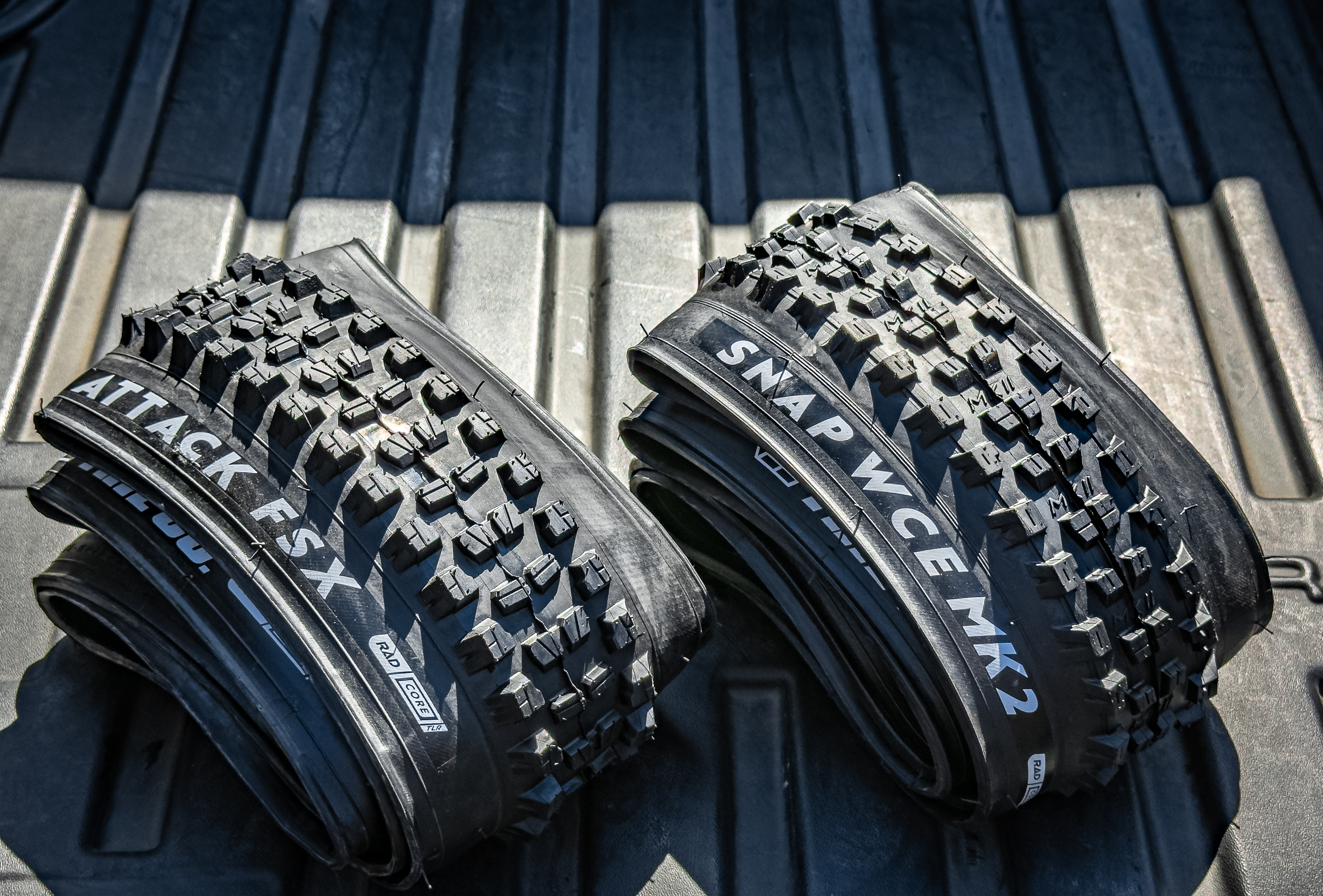
Today marks the official launch of RAD-Core casing technology from Vee Tire Co. The brand showcased their new radial mountain bike tire design at this year’s Sea Otter Classic, joining other tire brands including Schwalbe, Specialized, and Delium who have announced or released radial tires in the past few years.
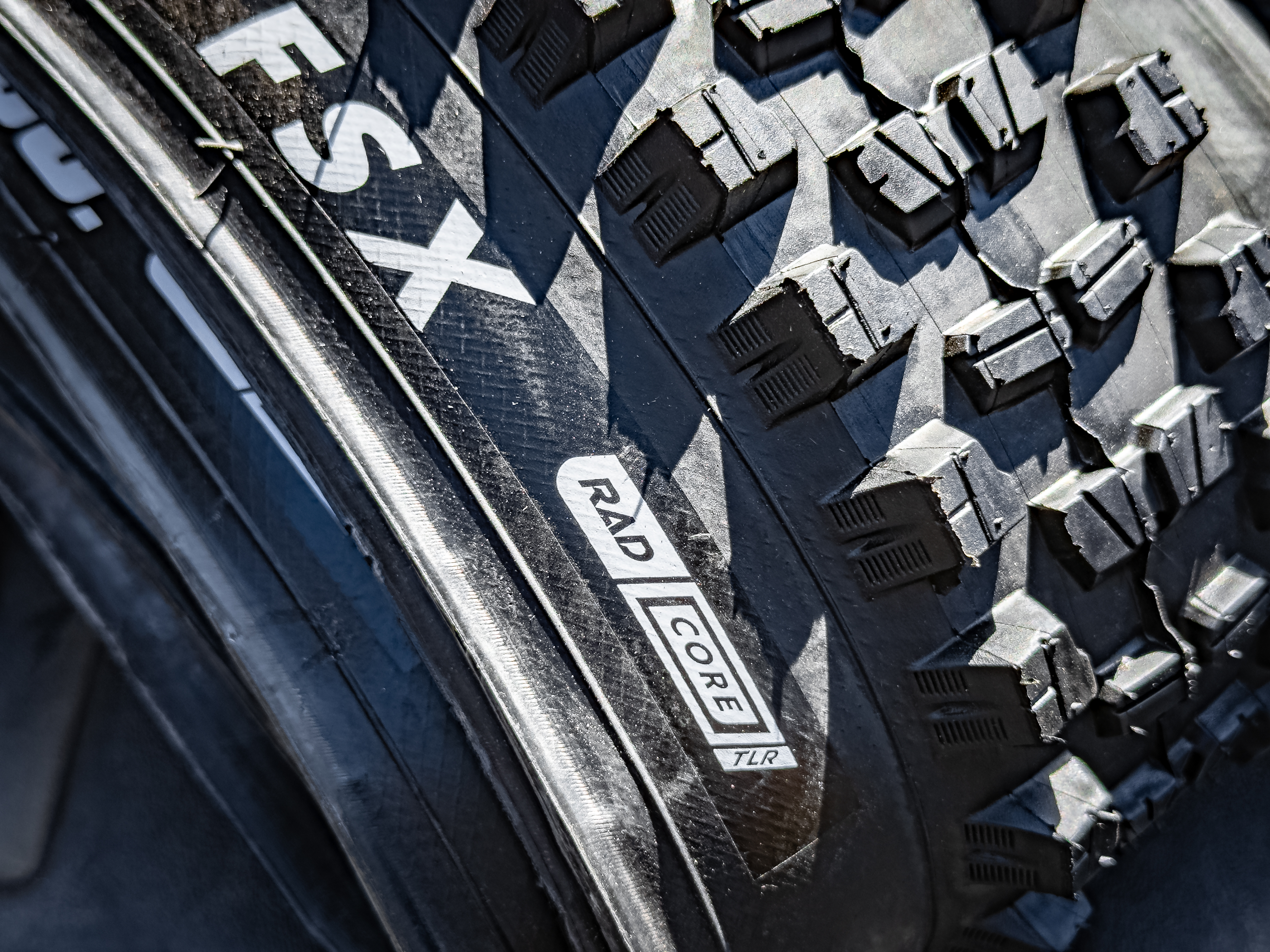
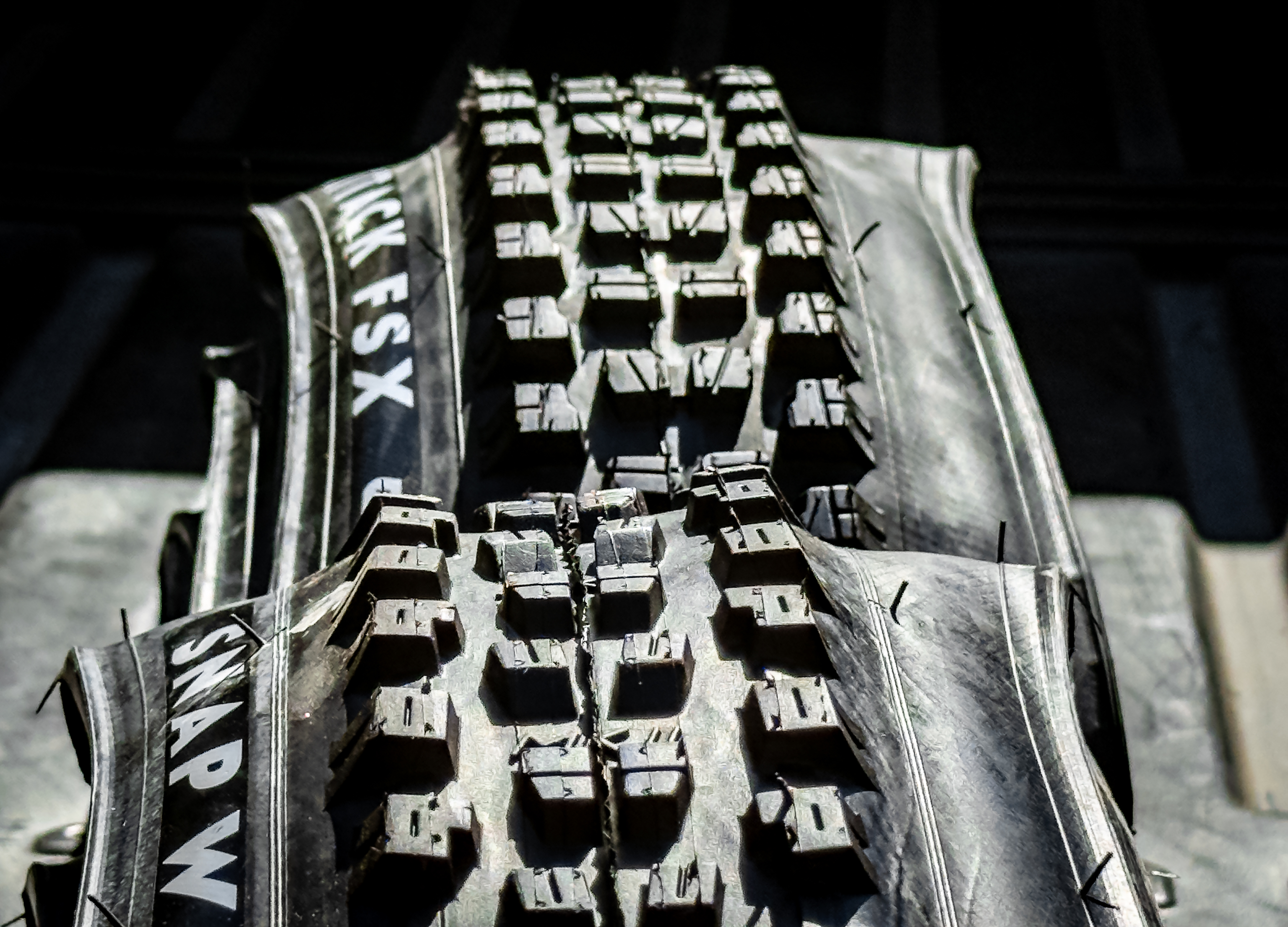
Vee tire models with RAD-Core: Attack FSX, Attack HPL, Snap WCE MK2
- Sizes: 27.5×2.50″ and 29×2.50″
- Compound: Full 40 Compound
- Casing: RAD Core (72 TPI, Folding Bead, Tubeless Ready)
- Recommended Pressure: standard 35-50 PSI*
- Price: starting at $84.99
Only three of Vee’s gravity-focused tires got the radial treatment. These include the Attack FSX, Attack HPL, and Snap WCE MK2 models. These three models are offered in 29×2.50″ and 27.5×2.50″ sizes. Vee says there are no plans to offer the tires in a 2.40″ width.
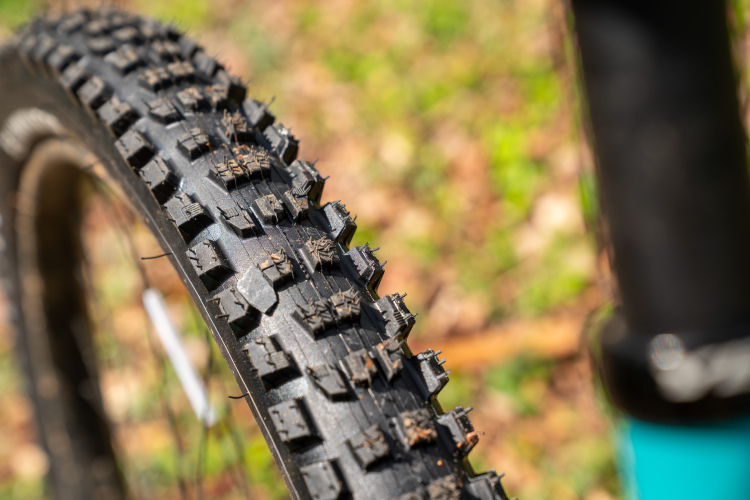
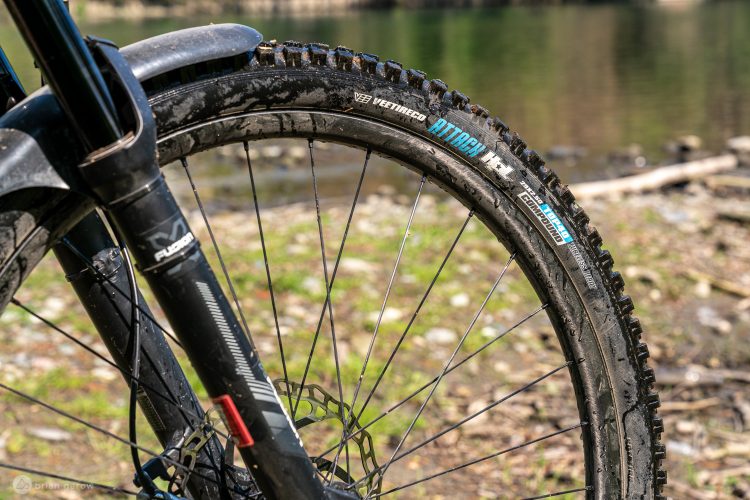
I tested a 29×2.50″ Attack FSX on the front and 29×2.50″ Snap WCE MK2 on the rear to see how the new tires perform. I decided to install the Attack FSX up front, as it has taller, more pronounced cornering knobs, and the Snap WCE MK2 in the rear, since it has slightly lower-profile, directional center knobs.
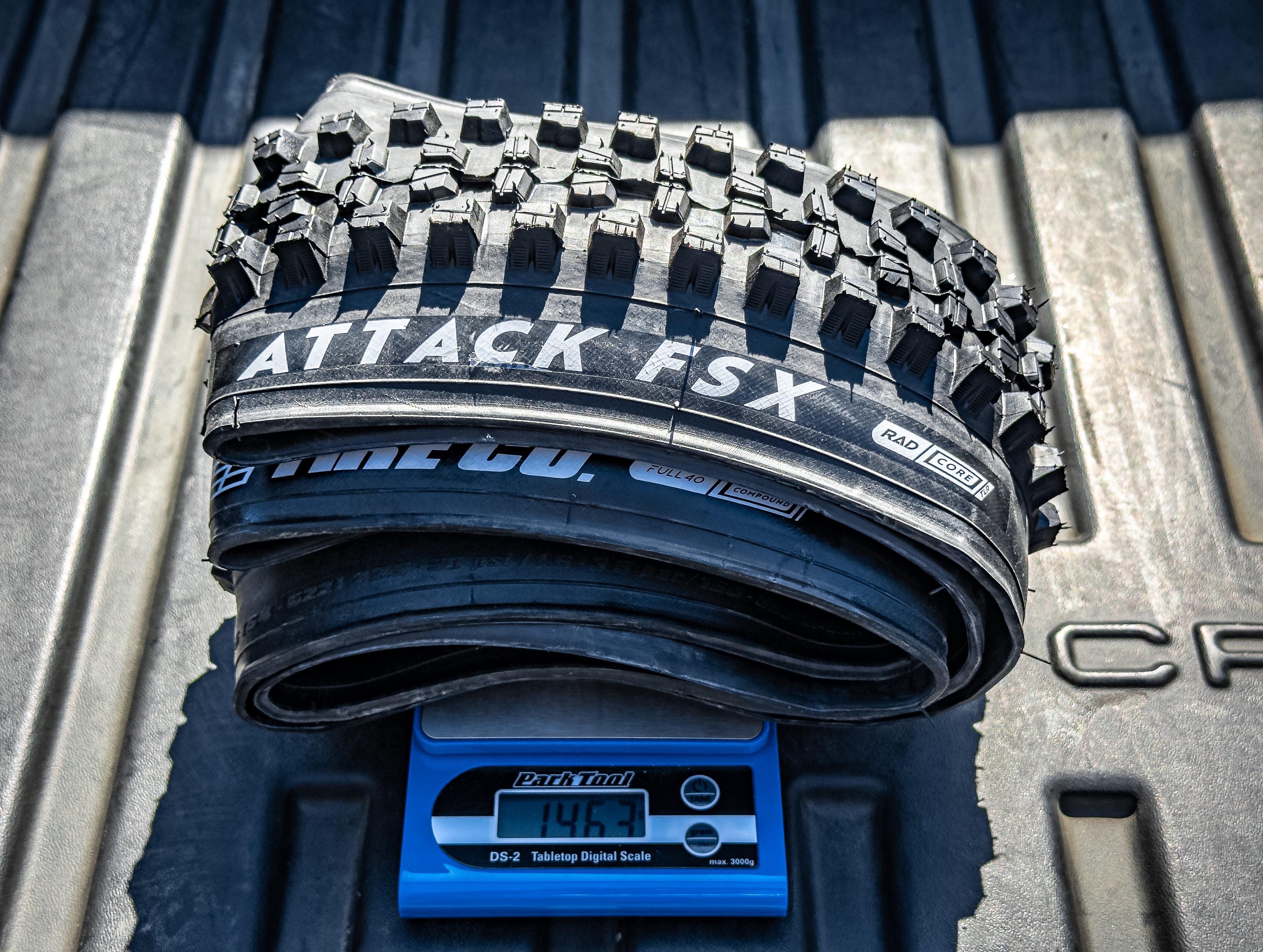
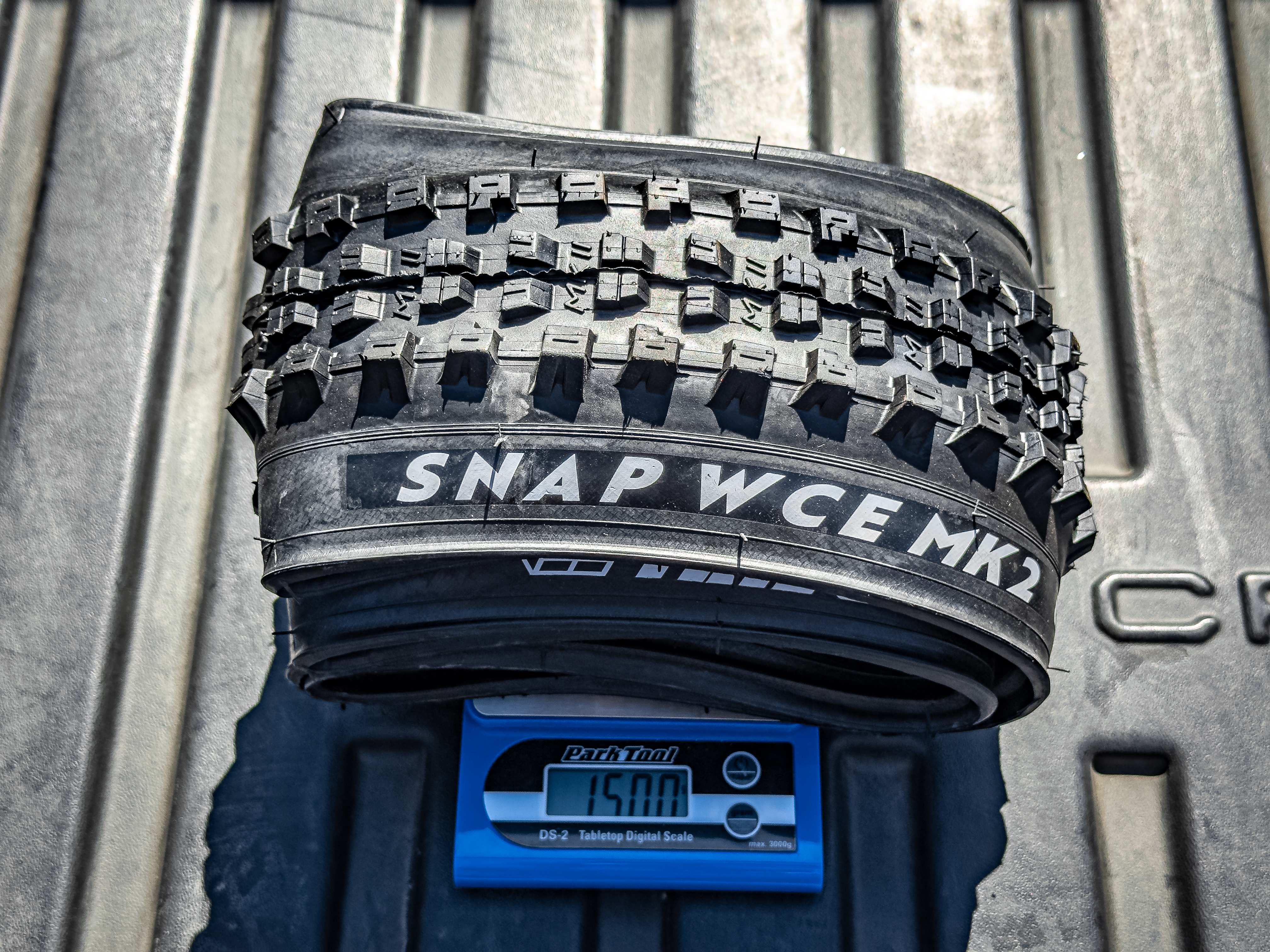
Right off the get-go, I could feel the heft of these tires; they are gravity tires after all. The Attack FSX I tested weighs 1460g and the Snap WCE MK2 was right at 1500g, which is about what Vee claims. The weights are on par with Vee’s burliest DH Core casing tires, which the brand says “delivers maximum support, protection, and durability.” Attack FSX tires with GXE casings — Gravity x Enduro — weigh nearly 200g less.
Mounting the RAD Core tires didn’t require too much muscle. I was expecting they would put up a fight, but the stiff sidewall just needed some massaging and bending to soften the rubber. A couple of Pedro’s tire levers was all I really needed to get that last bit of bead onto the rim.
My mini compressor blasted the bead onto my carbon rims on the first try. I mounted the wheels and set my air pressure. Vee recommends you start at least 5 PSI higher than you normally would, and to increase tire pressure if more support is needed. They state you can inflate the tire all the way up to 50 PSI. I normally run 23-24PSI up front and 25-26PSI in the rear. With these radial tires I bumped the pressure up to 27-28PSI front and 30-31PSI rear which felt good to me.
All said and done, my Santa Cruz went from a solid thirty pounds with pedals to thirty-three and a half pounds with these tires. That is quite the increase, but these tires aren’t for weight weenies!
On the trail with the new radial Vee tires
I headed to my local trails for a couple of laps. I was expecting a sluggish climb, but to my surprise, the tires roll well for their category. While these aren’t XC-efficient tires, the casing kept them very composed as they rolled over bumps and roots. It’s an interesting feeling riding radial tires, as the radial casing threads actively conform over uneven surfaces. It’s subtle but noticeable on climbs compared to non-radial tires. The weight of the tires is noticeable on the climbs, but again, these are gravity tires.
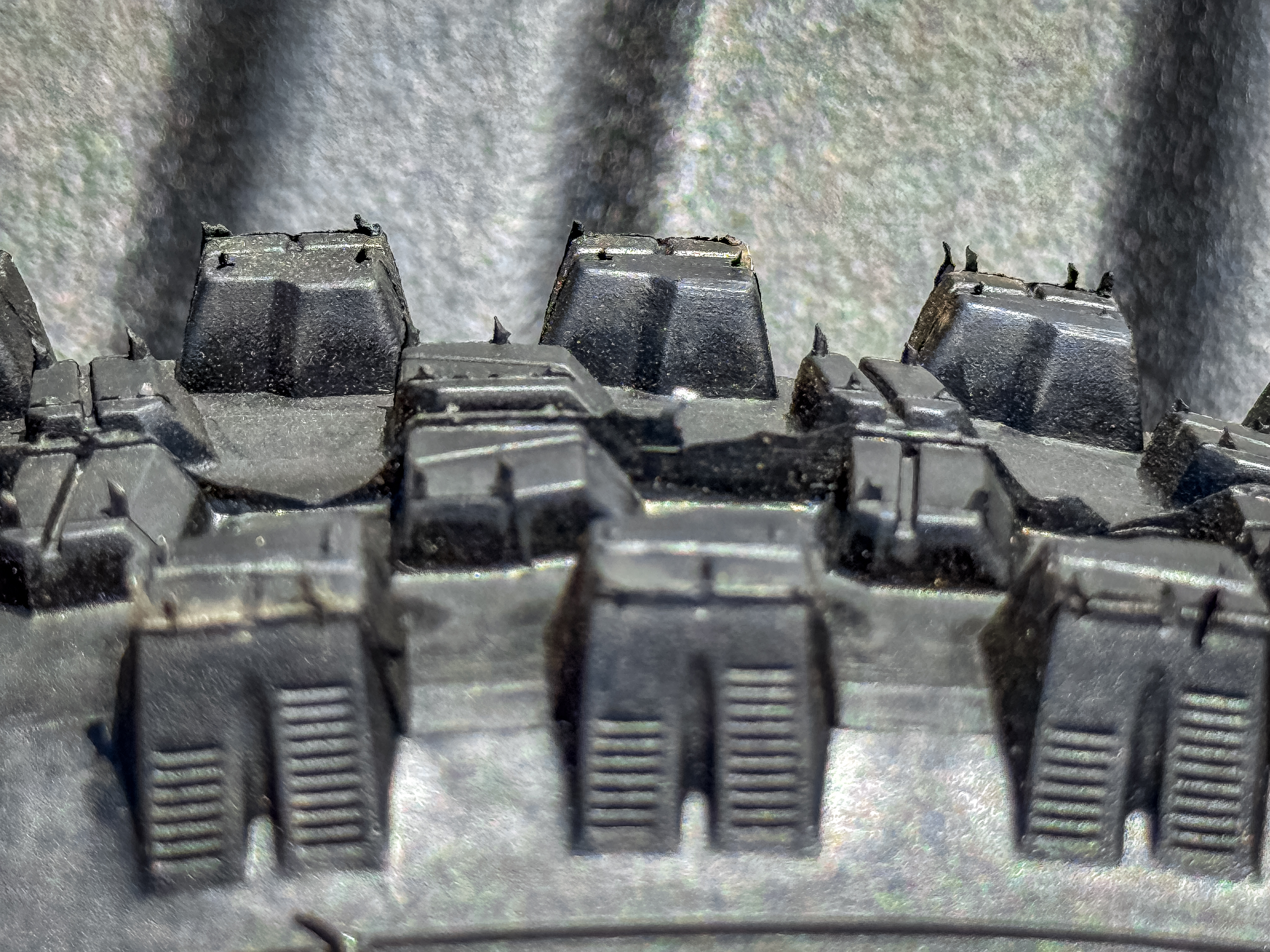
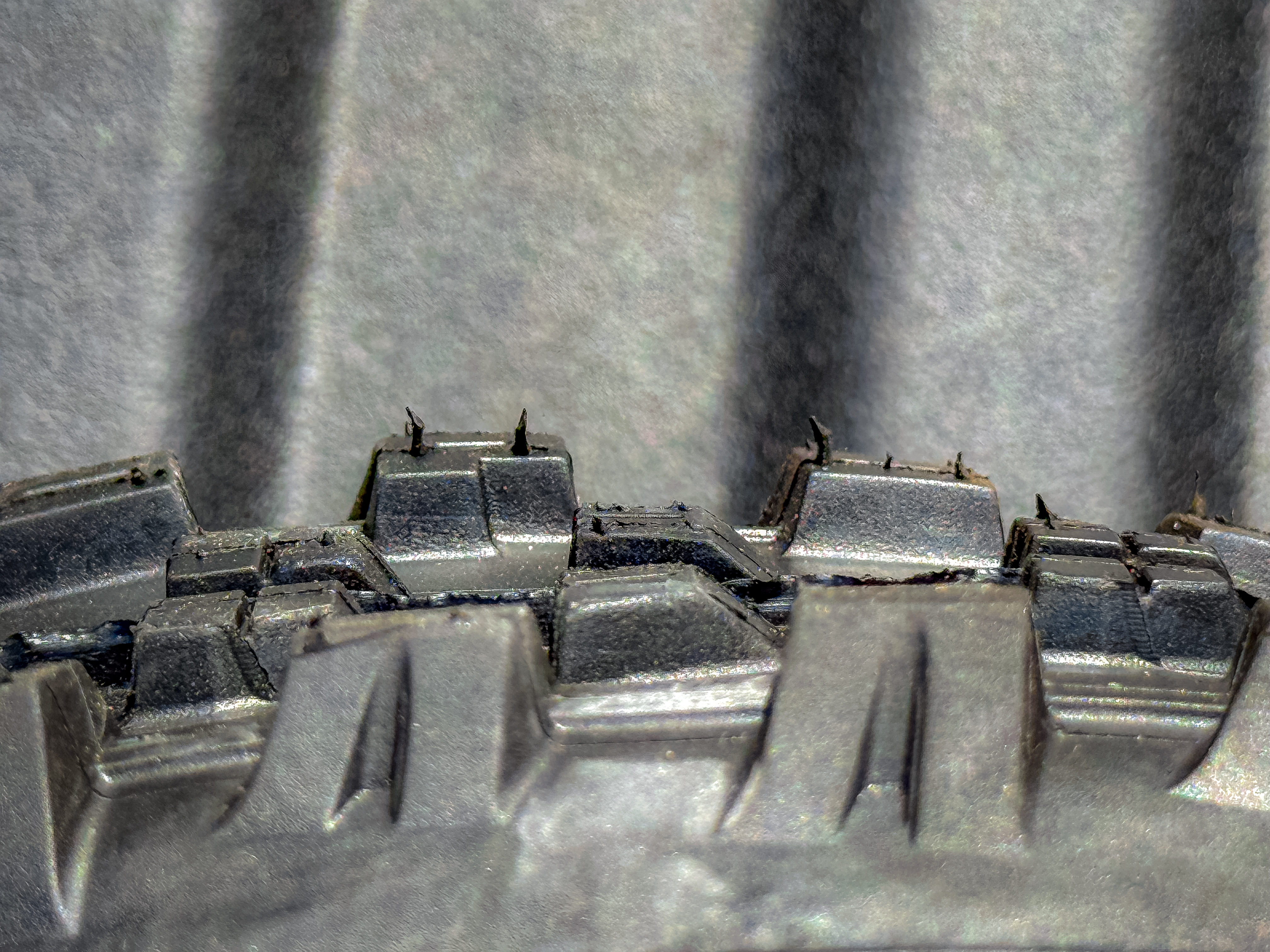
On the descents I tried to look past the fact that I was rolling on fresh, tacky rubber and knobby, aggressive tread. My immediate first impression while descending was that the trail chatter muffled but not quite muted; the feedback is still there. High-speed chatter was felt particularly lower than on a standard tire. I did not feel the rubber squirm even in tight corners, and there was plenty of support in both the front and the rear. I’ve ridden 2.40- and 2.50-inch-wide tires in the past, but I could feel there was a bit more trail contact patch from these 2.50’s, especially on tight turns. I think it’s a feeling a lot of folks who ride chunky and exposed trails will enjoy, as these tires take some of the vibration off of your hands. These tires love to grip and rip.
Maybe it’s just me, but sometimes I worry if my mountain bike tire will hold the corner, especially if the riding line gets compromised at the last second. These tires kept my mind at ease at higher speeds, and that’s when they really shine — on the descents. These Vee tires are screaming at me to take them to the bike park.
I described how these tires felt like to my wife over dinner and she commented, “Like our new car tires?”. While not an apples to apples comparison, she had the idea! I went through a slightly similar experience with a set of new Michelin tires on our car. We originally had an OEM, sporty fast tire that accelerated quickly and efficiently, but made us feel every road imperfection. We then upgraded to a supple, grippy, and quiet tire. We bought these new tires for this exact purpose and they delivered! The acceleration and MPG did take a small hit but it was a tradeoff well worth it for us on the daily drives. I would argue you could apply similar logic if you are wondering if you should buy radial-cased tires for your bike.
What is radial construction, anyway?
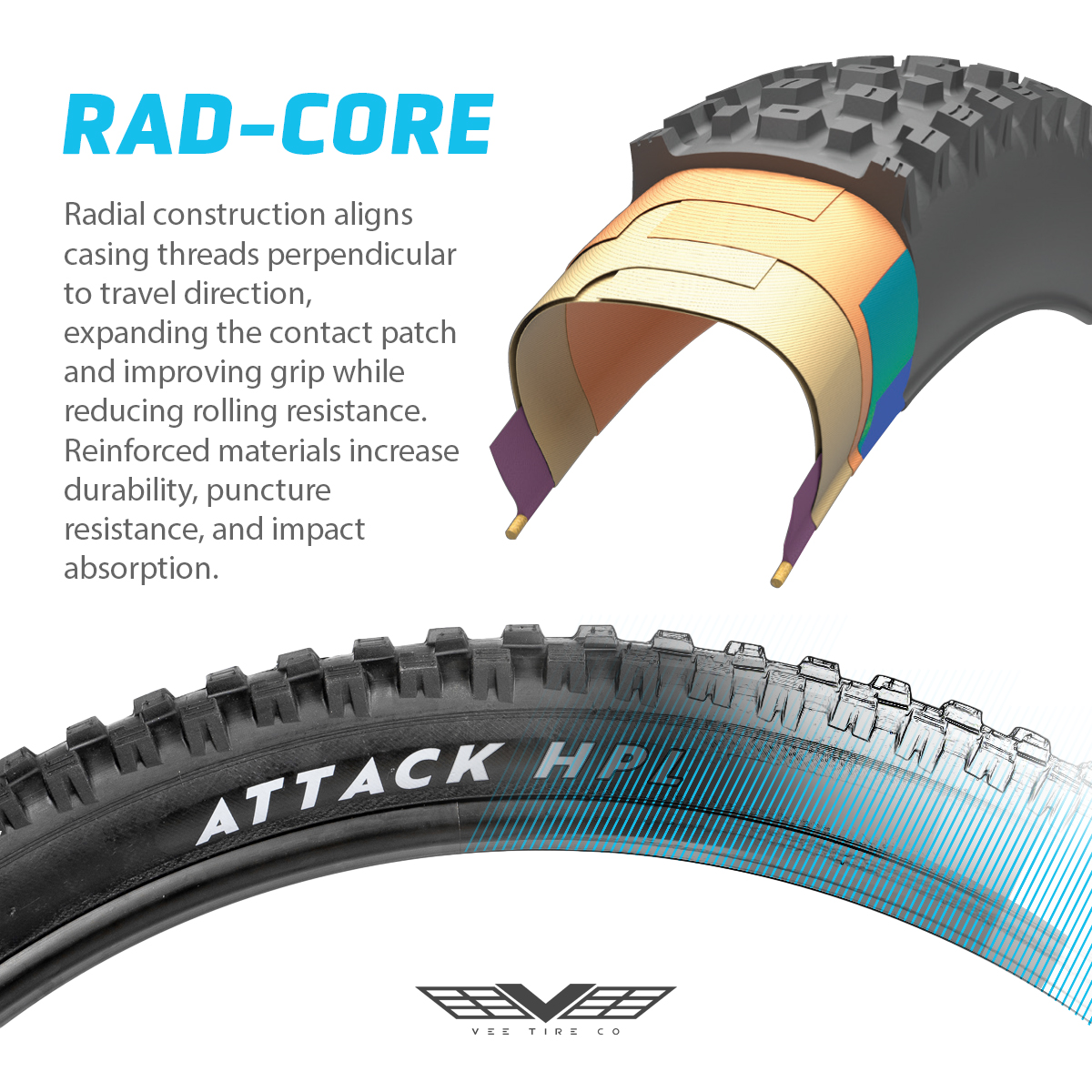
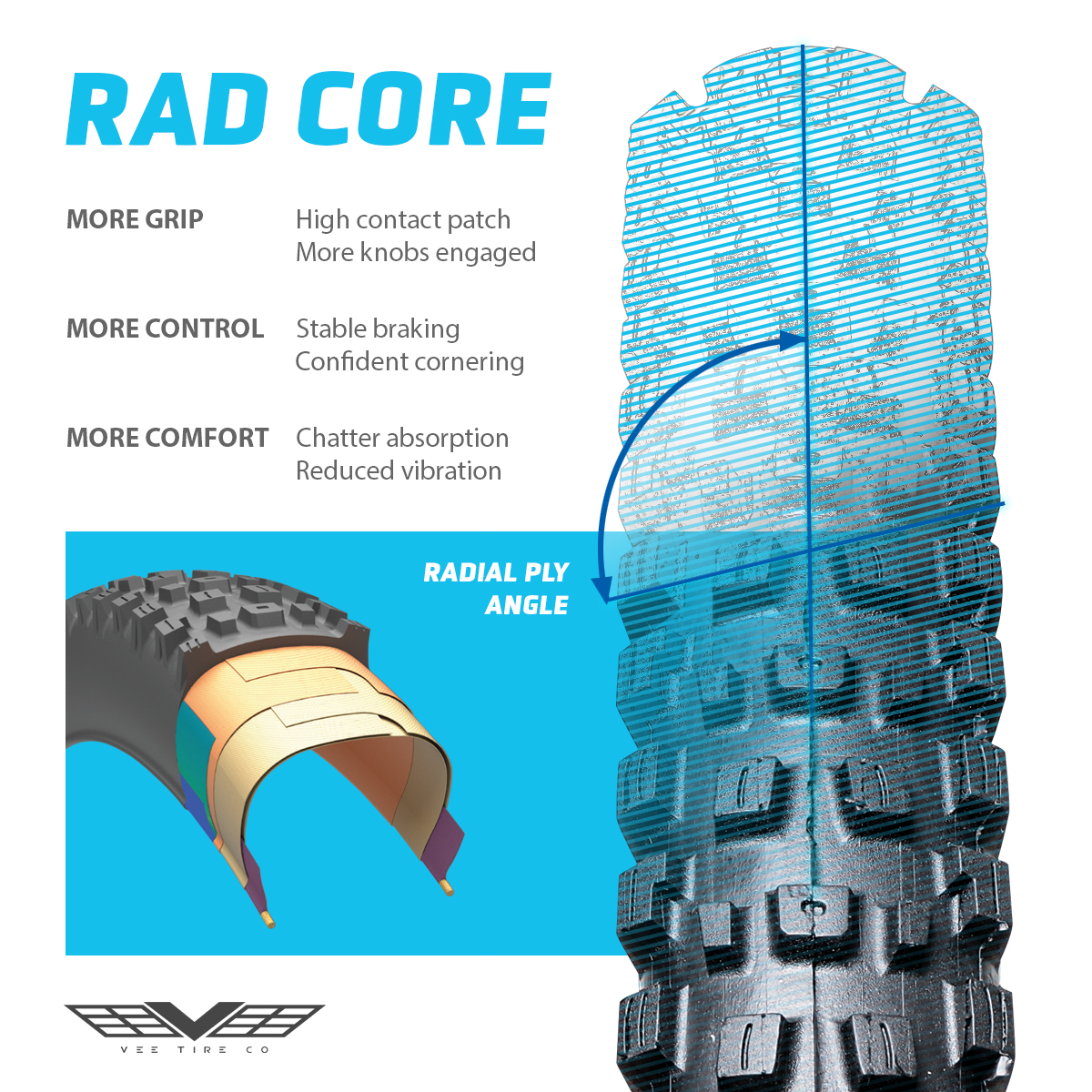
Traditionally, mountain bike tires oriented casing threads at a roughly 45° angle to the tire’s centerline. True radial designs are typically used for vehicle tires and orient the threads at a 90° angle that’s basically perpendicular to the centerline. The advantage of this design is that the tire conforms to the terrain better. The disadvantage is the sidewalls are less stiff. Car tires use belts to ensure the tire holds its shape while bike tires generally do not.
Vee explains it this way: “Unlike traditional bias-ply tire construction, Vee Tire Co.’s RAD-Core innovative radial construction aligns casing threads to be substantially more perpendicular to the ride direction.”
Like Schwalbe and Specialized, Vee won’t share the exact angle they’ve chosen for the casing threads, noting that it’s a “proprietary design.”
As a previous long-travel e-Bike owner, I think radial tire tech is almost a must on such bikes, especially as e-Bikes have become more powerful with increased range. While these are E-25 rated, enduro and park riders can also benefit from radial-cased tires thanks to the increased contact patch, comfort, and unique riding characteristics. I know a lot of “big bike” riders who these tires would be perfect for.
Share your Vee Attack Radial review
Pros and cons of Vee Attack Radial
Pros
- Radial casing characteristics can be beneficial on rough terrain
- Increased riding comfort
- Increased traction
Cons
- Just as heavy as Vee DH Core tires
Bottom line
Vee RAD-Core radial casing tires offers more grip, more control, and more comfort that mountain bikers can definitely benefit from. The benefits are obvious if you have been in the sport for some time. I don’t think radial casing designs are a gimmick but rather another option for riders looking to get more out of their tires based on the terrain they ride. While Radial casing may not be for every rider out there, I think it’s here to stay. Vee Tire Co. definitely put a lot of thought into their designs and did a good job integrating RAD Core into these existing tire models.
The news stinks. Why not follow Singletracks on Google News to bring more joy to your day?




4 Comments
May 20, 2026
May 20, 2026
May 24, 2026
Jul 28, 2026