

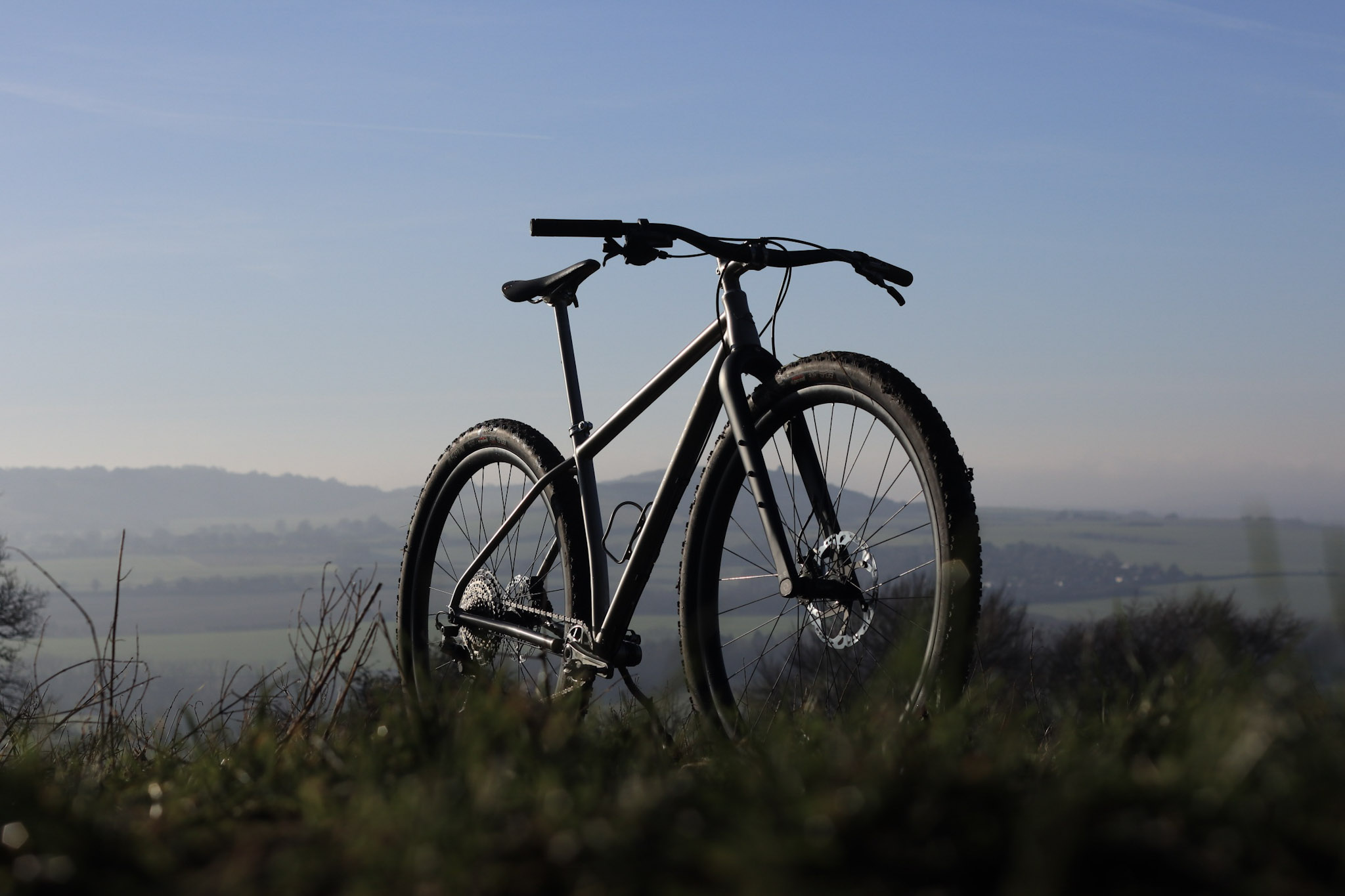
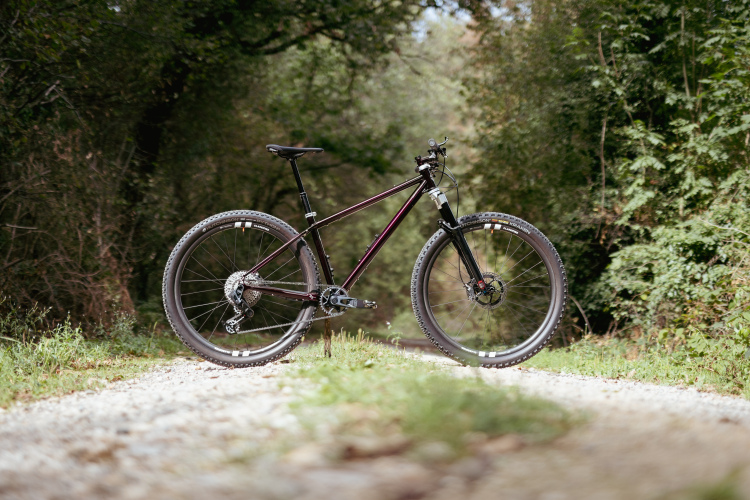
English bike brand Singular Cycles just announced their first 32er mountain bike, the Singular Albatross. The titanium frame is designed around a rigid fork and is being pitched as a cross-country / bikepacking bike.
It’s not just about rollability and traction
“A major motivation behind my starting Singular in the first place was big wheels,” founder Sam Alison wrote online. “I was an early adopter and strong advocate since I first rode a Gary Fisher X-Caliber with then new, exciting, and divisive 29″ wheels […] What attracted me was not just the better roll-over, greater inherent stability or traction of the larger diameter wheels — it was that for the first time as a full grown adult I felt like I was on a bike which actually fit me.”
The Singular Albatross is being offered in just three sizes: large, double extra large (XXL). Alison says the bike should fit riders who are at least 5’10” tall, though the 32er wheel size is ideal for riders taller than 6′ 2″.
Super Boost spacing, extended chainstays, and more drop
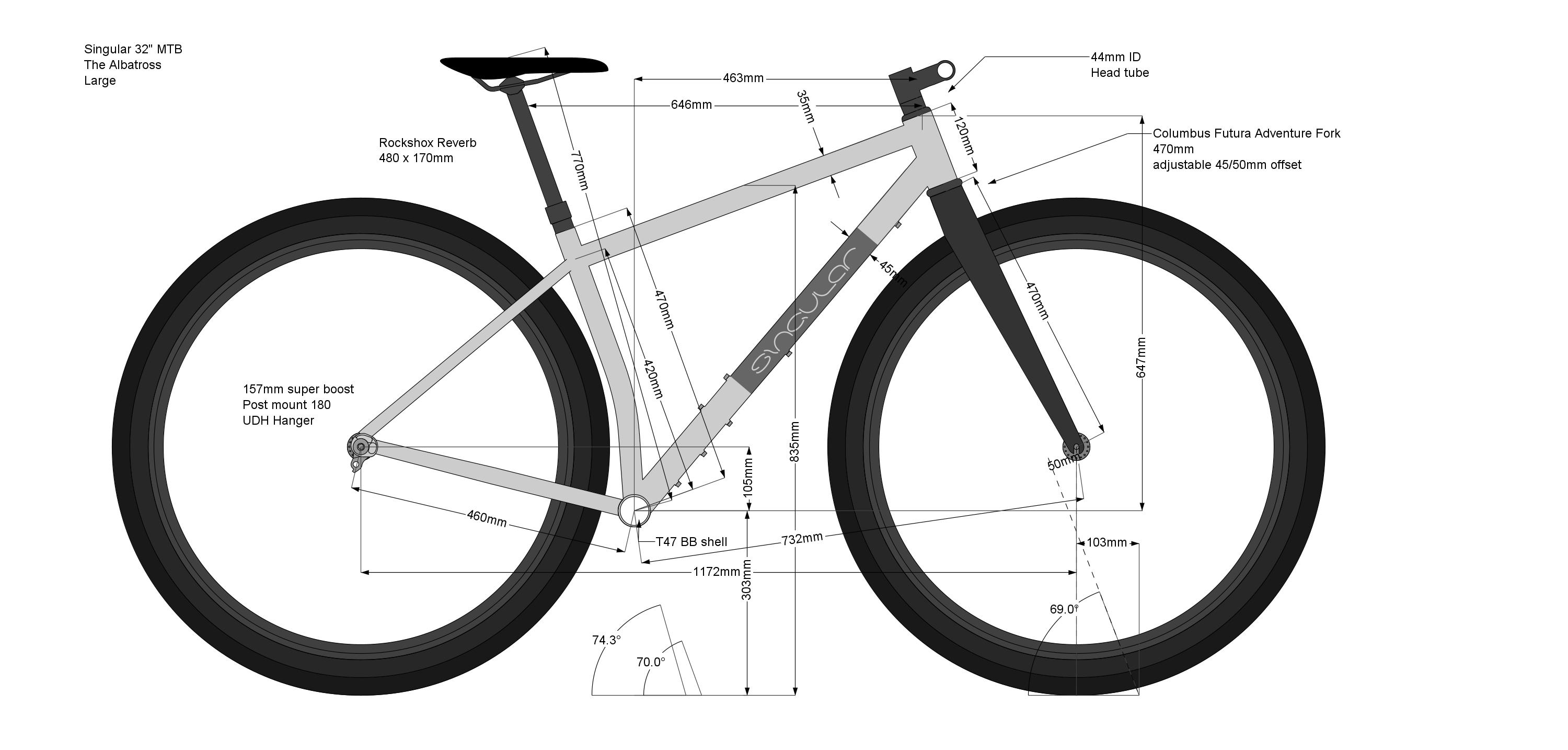
With the move to larger diameter, 32-inch wheels, Alison found the wheels needed additional lateral stiffness. Super Boost spacing (157mm) seems to offer the extra strength necessary, and the Albatross is designed with a Super Boost rear end. Other 32er bike designers have come to a similar conclusion, with Dirty Sixer founder David Folch opting for even wider, 197mm fat-bike hub spacing for his brand’s full-suspension 32er bike, the MonsterEnduro.
Alison worked to keep the chainstays reasonably short, though that’s a challenge with the bigger wheels. To minimize rear tire buzz when descending on a 32er, it’s important to ensure the chainstays aren’t too short. The Singular Albatross features a 447mm chainstay length, which is longer than the average 29er hardtail, but still within the range of many bikes.
Bottom bracket drop, however, is another matter. Since this is a rigid mountain bike, the 303mm bottom bracket height is on the low side, and is accomplished via a massive 105mm bottom bracket drop. Alison experimented with 90mm and 100mm drops before ultimately settling on a 105mm drop.
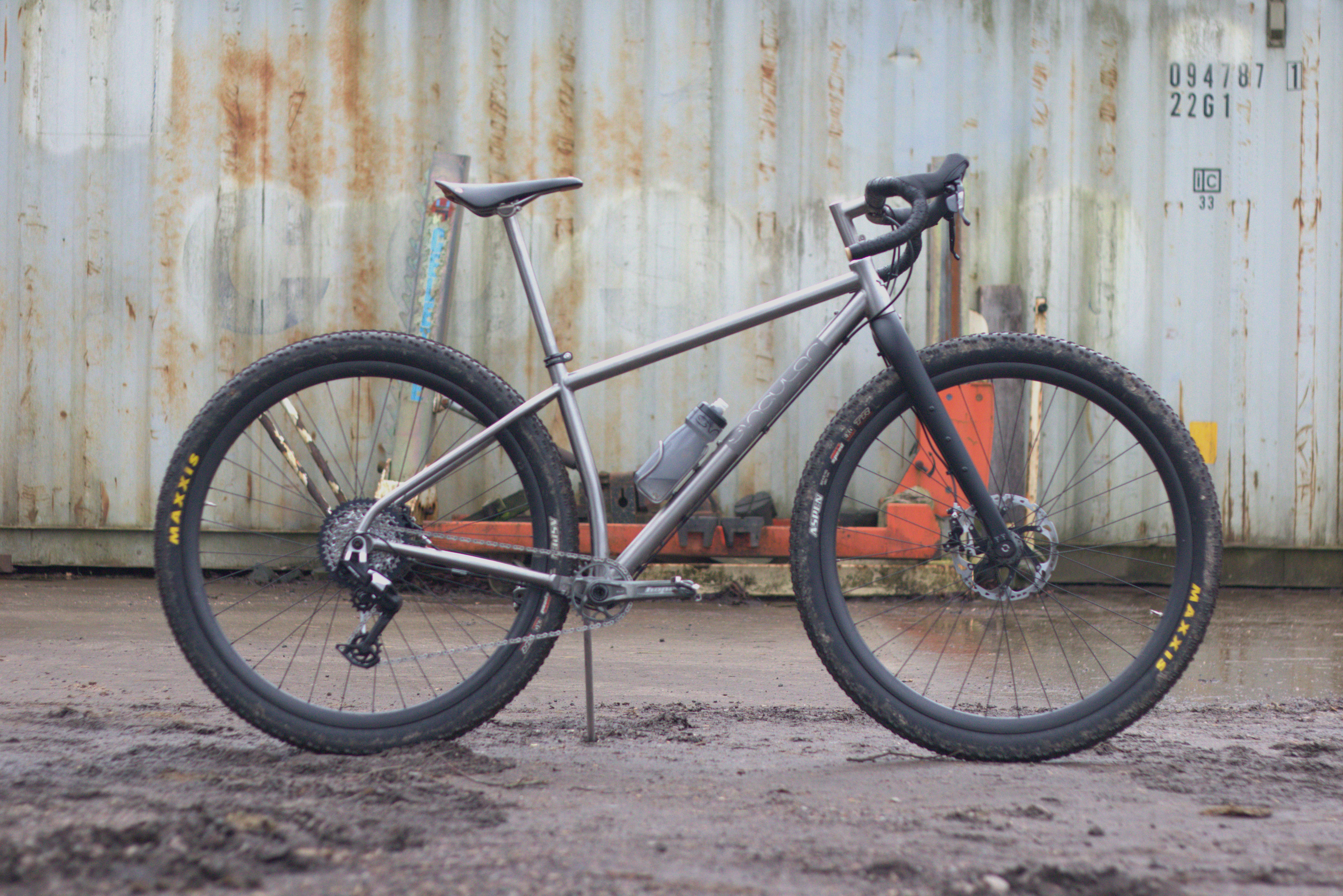
Singular will initially offer the Albatross as a rolling chassis with a titanium frame, carbon fork, and aluminum wheelset running Maxxis Aspen 32×2.4″ tires for $3,900. One thing buyers will want to consider is that their gearing needs will likely change when moving from a 29er to a 32er.
“I’ve gone down to a 30 [chainring] up front. Typically, I ride a 32 on 29″ wheeled bikes. You’d probably need another tooth less to fully compensate for the effectively larger gear with the big wheel, but it’s working well for me on local trails,” he told Singletracks.
The Singular Albatross joins more than a dozen 32ers already on the market
For industry observers keeping track, Singular joins roughly a dozen brands and custom builders who are producing bike frames for 32-inch wheels.
- 36pollici Trentadue
- Actofive I-Train 32
- Clydesdale Bronco
- Dirty Sixer MTB
- Dirty Sixer MonsterEnduro
- Falconer 32
- Quarry Project Rage Bait 32
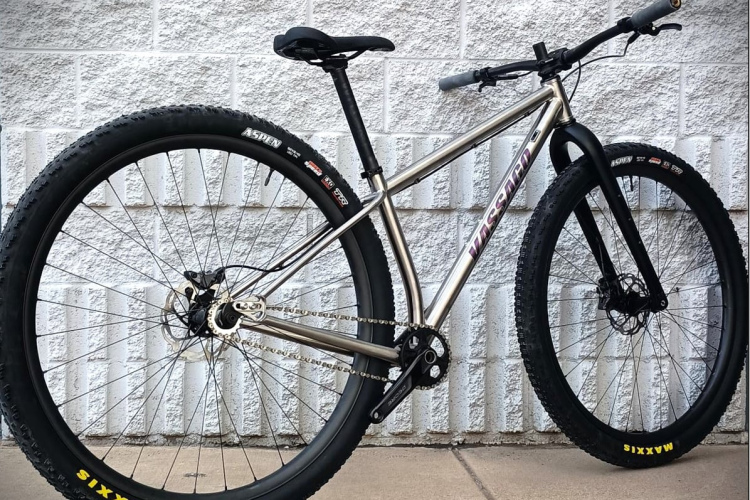
- Vassago Maximus Ti
- Sour Pasta Party 32
- Stoll P32
- Zinn Titan 32er
- Zinn B.I.G. 32er
Others, like Starling Cycles, are experimenting with mixed wheel bikes that pair a 32-inch wheel up front with a 29er wheel in the rear. In fact, Alison says he test rode a mixed-wheel setup before building the first Albatross 32er prototype.
Today’s 32er buyers have several tires to choose from, including the Maxxis Aspen and Dissector, Vee Monster T, and Schwalbe Race Rick 32. Though neither Fox nor RockShox offers suspension forks for 32-inch wheels, brands like Wren and Intend have dedicated solutions to fit the latest big-wheel bikes.
Major brands have yet to commit to the new wheel size
So far, the only companies that are producing bike frames designed for 32-inch wheels are smaller boutique brands like Singular. BMC is perhaps the biggest bike brand that has publicly acknowledged testing a prototype 32er mountain bike, though rumors suggest that Trek may be doing so as well.
The early adoption by independent brands and frame builders mirrors the development of 29er wheels in the late 00s. Big brands and the industry as a whole took a conservative wait-and-see approach to the larger wheel size, releasing their own bikes once the demand for them was proven and components like forks and tires became more readily available.
The news stinks. Why not follow Singletracks on Google News to bring more joy to your day?


4 Comments
Feb 26, 2026
Feb 26, 2026
"Due to lack of commercially available suspension options for the wheelsize, as well as a desire to keep the front end height reasonable - plus understanding how smoothly these wheels roll - I have designed these frames around a rigid 470mm carbon fork from our friends at Columbus. For those interested in a suspension corrected design, we can accommodate that as part of our custom programme. "
Mar 2, 2026
Mar 3, 2026