

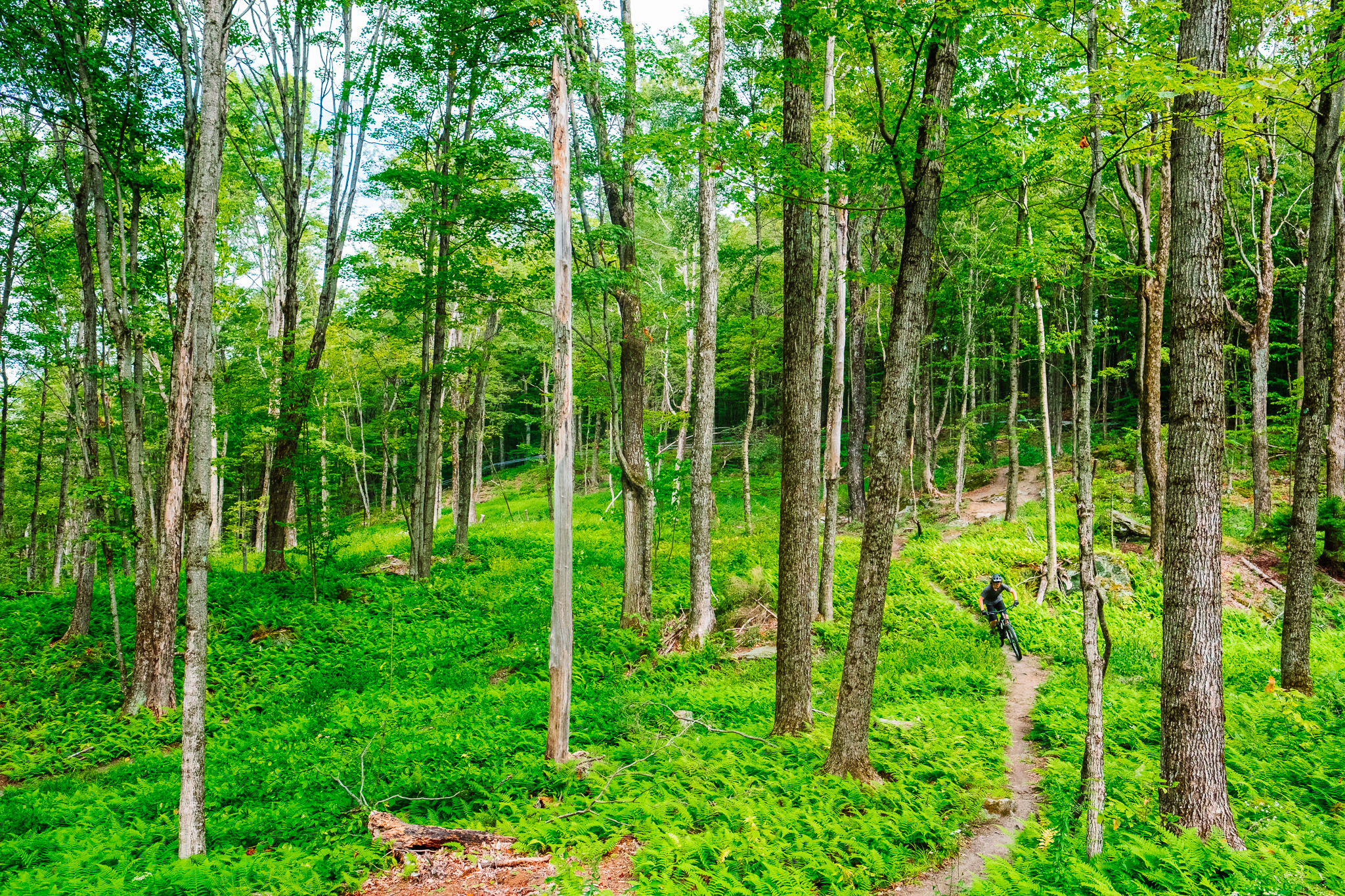
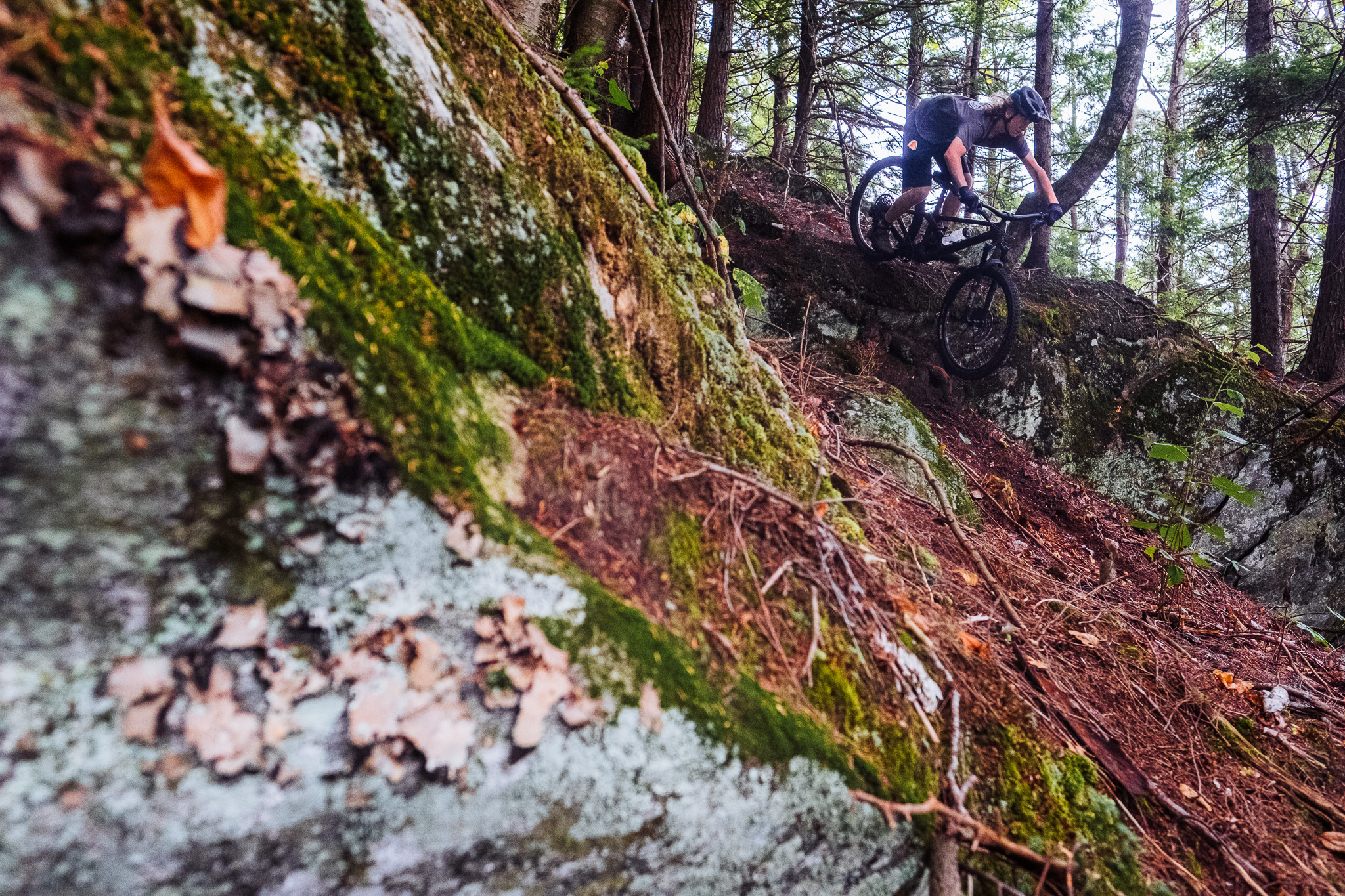
Halfway down a fast, rocky descent in Vermont’s Mad River Valley, my son and I realize: we’ve made a wrong turn. It wouldn’t be the first time on this ride, and it won’t be the last; trail markings are intermittent at best. Fortunately, the realization hits right before the maple syrup tap line strung neck-high above the trail does, and my last-second limbo saves me from decapitation by maple syrup, a uniquely Vermont fate.
A quiet valley that punches above its weight
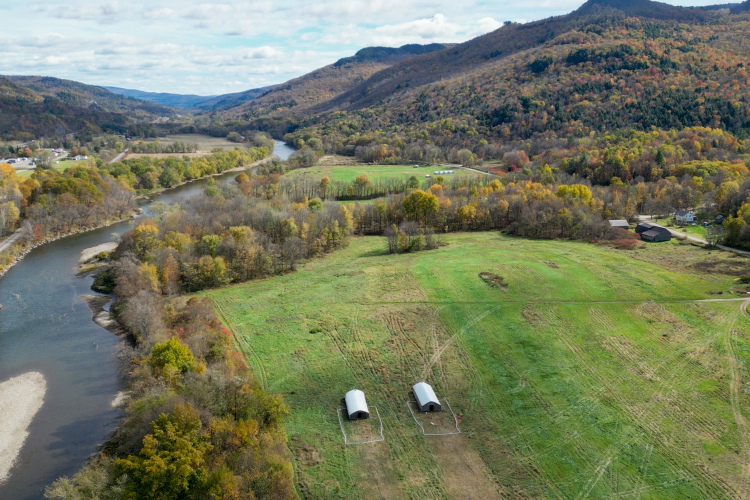
With 650,000 residents, the Green Mountain State is one of the least populous in the nation. But even by that standard, the Mad River Valley is quiet, overlooked even by leaf-peeping Northeastern tourists and by mountain bikers bound for Burke’s Kingdom Trails or Stowe.
“The Mad River Valley has always been a bit of a backwater,” says Jonny Adler, a lifelong Vermonter who opened Madbush Falls, a renovated roadside motel, restaurant, and bike shop that has become one of the unofficial community centers for mountain biking in the valley. “It’s got its own kind of funky counterculture vibe; promoting itself has never been a priority of the Mad River Valley.”
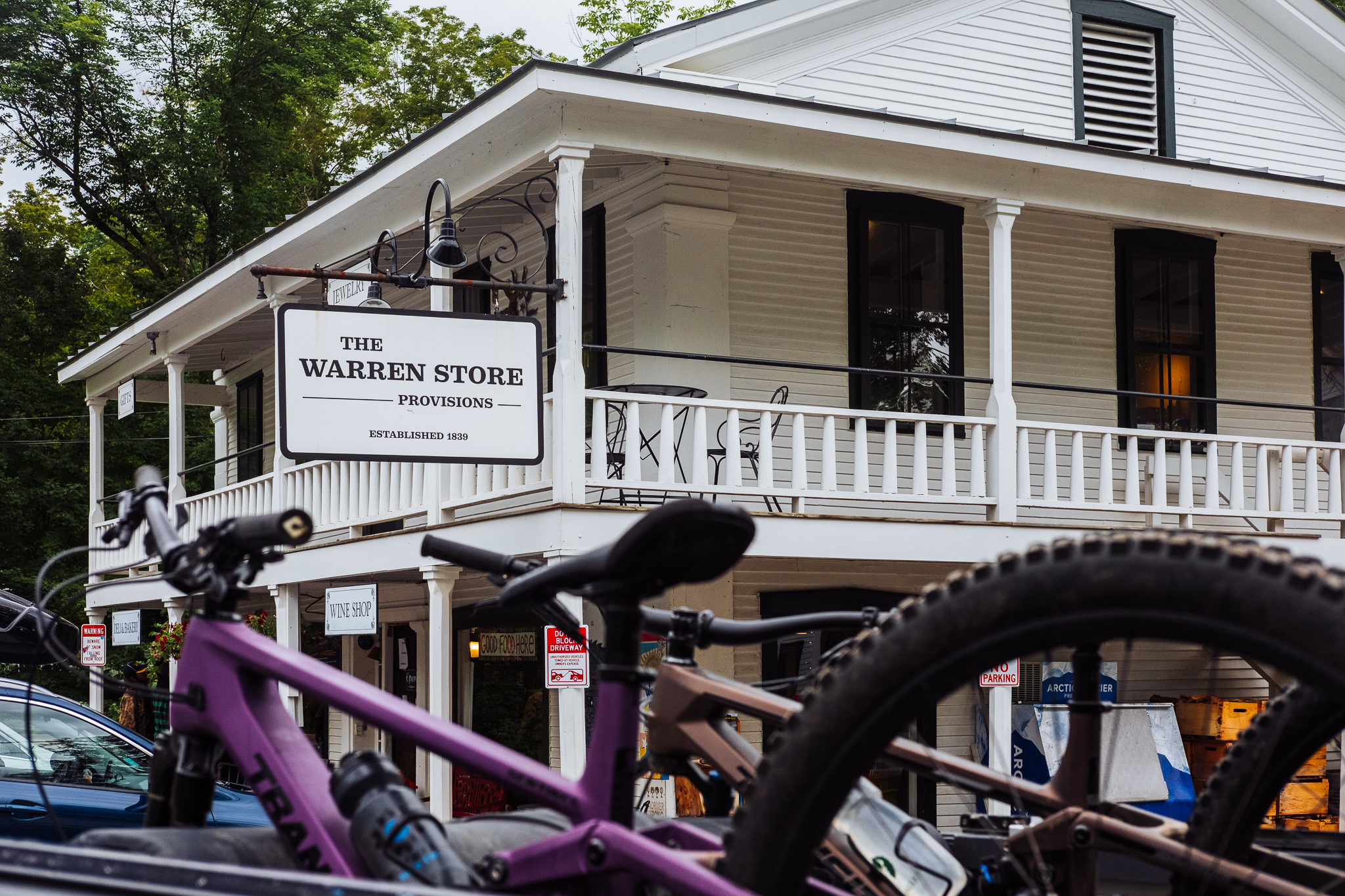
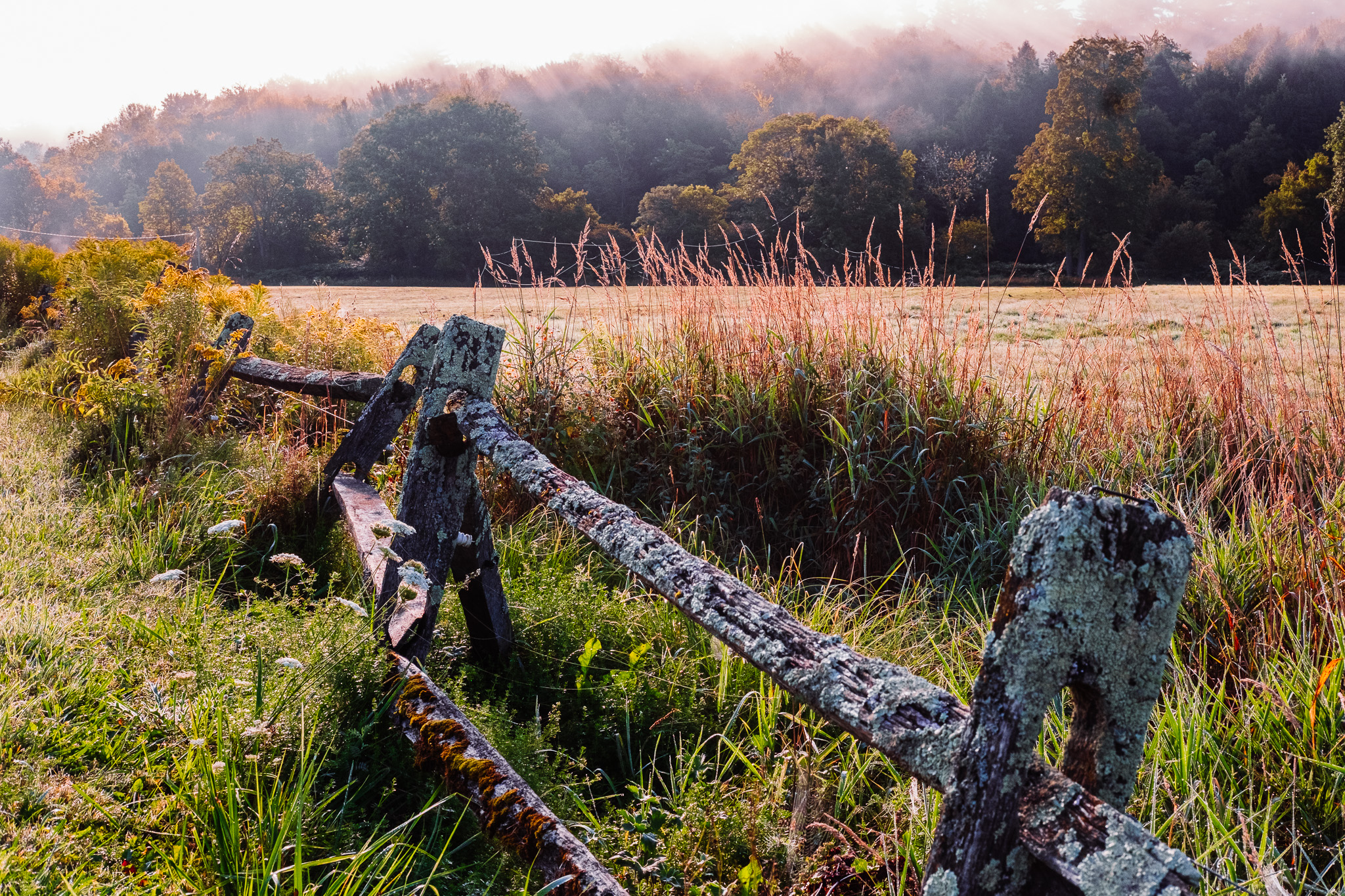
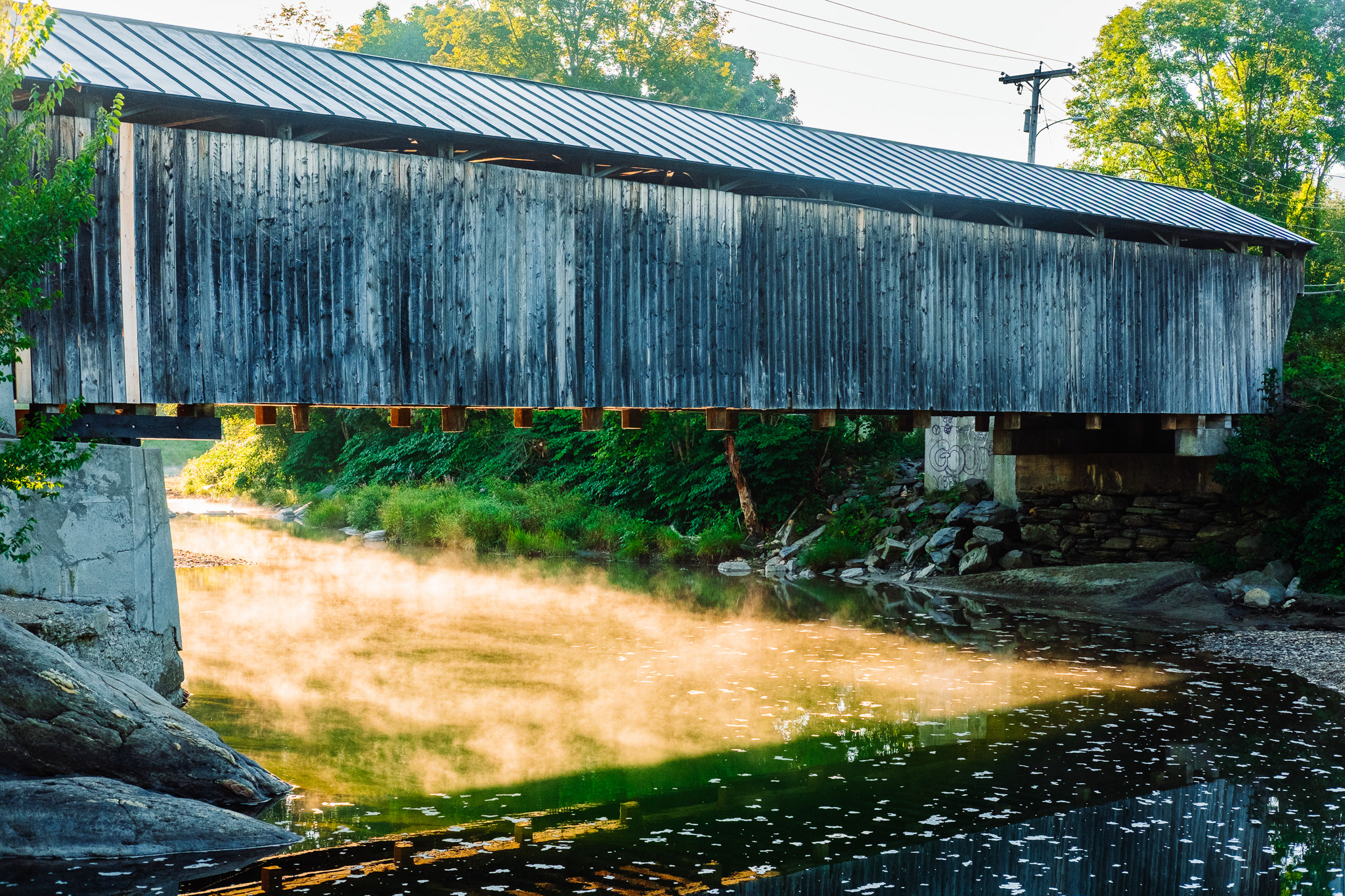
Settled in the ’70s by hippies and back-to-the-land homesteaders, the valley of covered bridges, cottages, and spotty cell coverage has crafted its own path, seemingly untethered to contemporary time, or just time in general. Vermonters run on the New England equivalent of “Island Time.” I grew up in the slouch-shouldered slackerdom of the Pacific Northwest, and the Mad River Valley is relaxed even by that standard.
But that outwardly relaxed attitude masks a rugged New Englander self-sufficiency. And the same spirit of solo craftmanship that has spawned craft breweries, creemee stands, and farm-to-table cafes has inspired the valley’s trail builders. With little fanfare, the Mad River Riders, the local chapter of the Vermont Mountain Bike Association (VMBA), one of the largest state-wide mountain biking organizations in the country, has amassed some 60 miles of singletrack throughout the valley. And they’ve done it while navigating not just rocks and roots but the rights-of-way of a patchwork of private property owners.
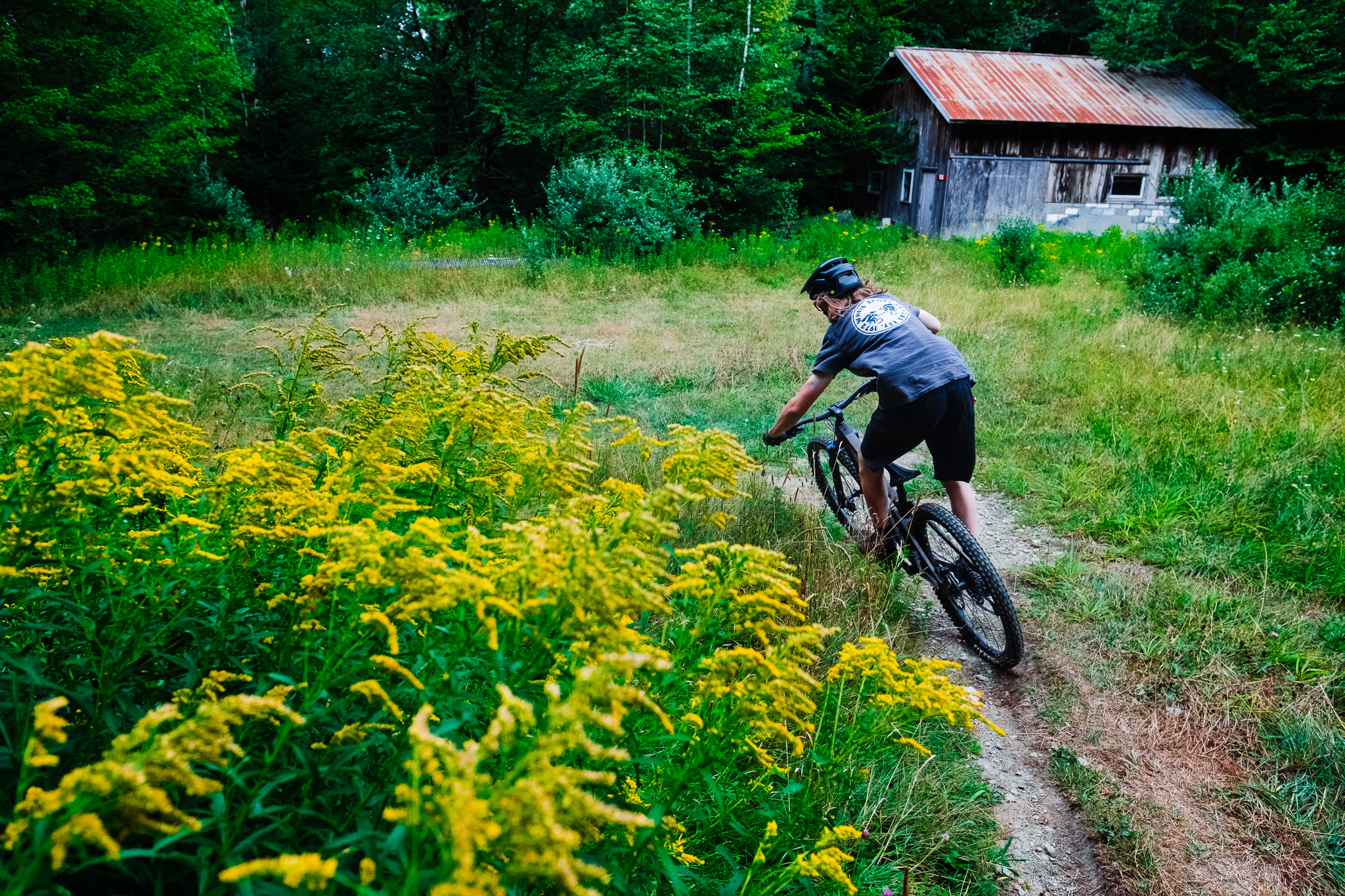
Private land, public trails
Private landholders own approximately 85% of all land in Vermont, and of the thousand miles of trails that trace the state, half lie on private land. In 1998, a year after the founding of the VMBA, the state passed the Vermont Recreational Use Statute, which encourages landowners to open their property to free public recreational use without opening them up to legal liability. Two concepts underpin the law: the idea that Vermont property owners can use others’ land just as readily as they allow others to use theirs, and the idea that recreational users must accept the inherent risks of the activities, such as mountain biking, in which they engage.
That Vermont ethic—a mix of rugged self-sufficiency and good-neighbor spirit—influences trail construction.
“That’s what makes the bike culture here so awesome: it’s a team effort,” says Adler. “That’s how this network has gotten built: it’s just like, ‘Here, take my tools.'”
The ButterUp trail demonstrates how quickly trails here can take shape. A key climbing trail that connects the valley floor to the popular Kew Hill trail network, construction of ButterUp necessitated agreements with multiple landowners. Within days of the ink drying on the final agreement, Vermont trail builder Tom Lepesqueur and his design/build company, L&D Trailworks, broke ground. Just as quickly, the ButterUp – Busternut – Goodnight Irene loop became a hot-lap classic.
Like the Grateful Dead cover bands that populate the valley, Mad River’s trails occasionally meander and are sometimes hard to follow, but can flow and rock in equal measure.
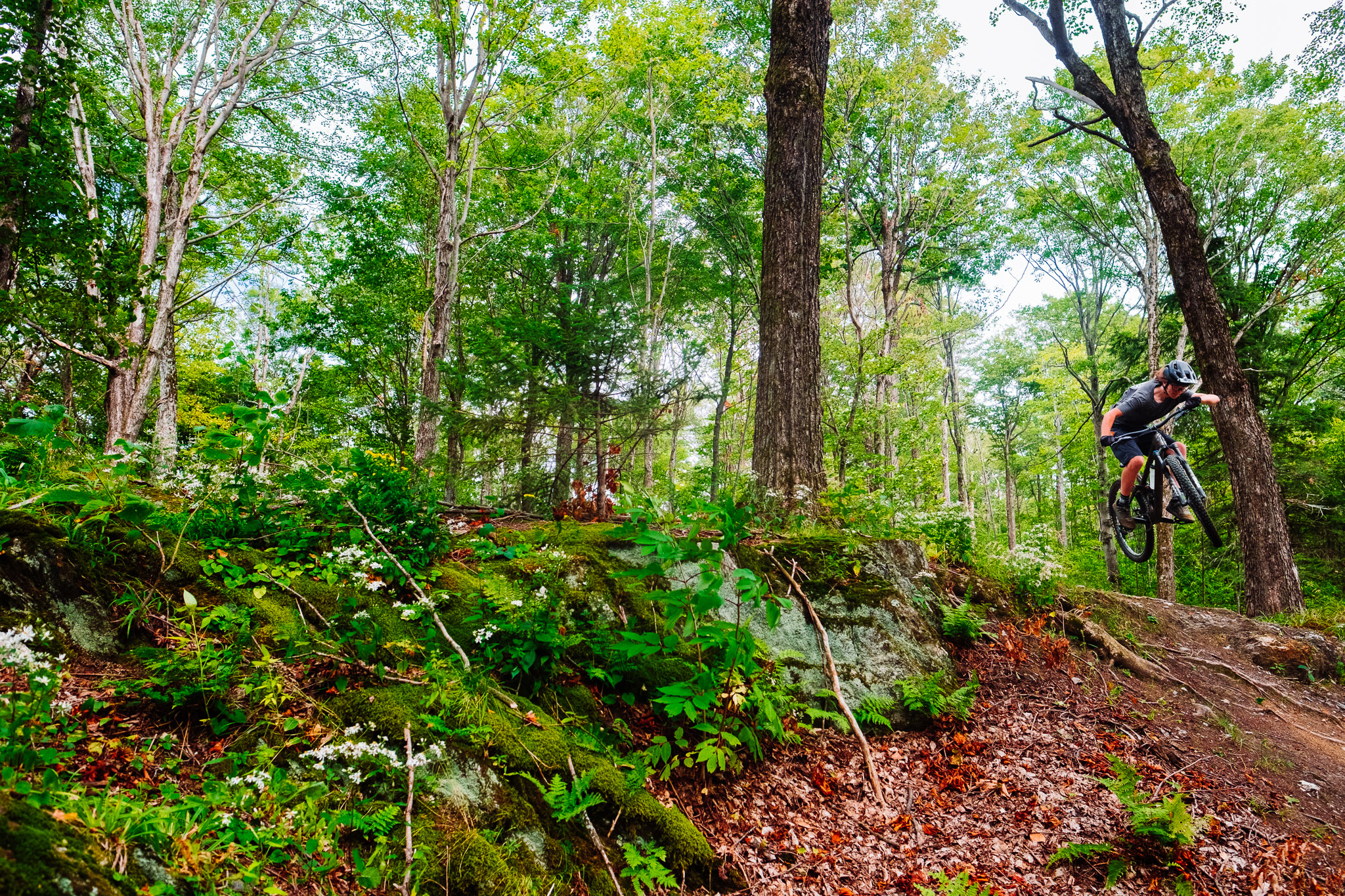
“The riding itself is so good and so vast, but what the Mad River Valley really stands out for is it has every kind of Vermont riding in one place—not just that it has it, it has a particularly good version of it,” says Adler.
Every kind of Vermont riding in one place
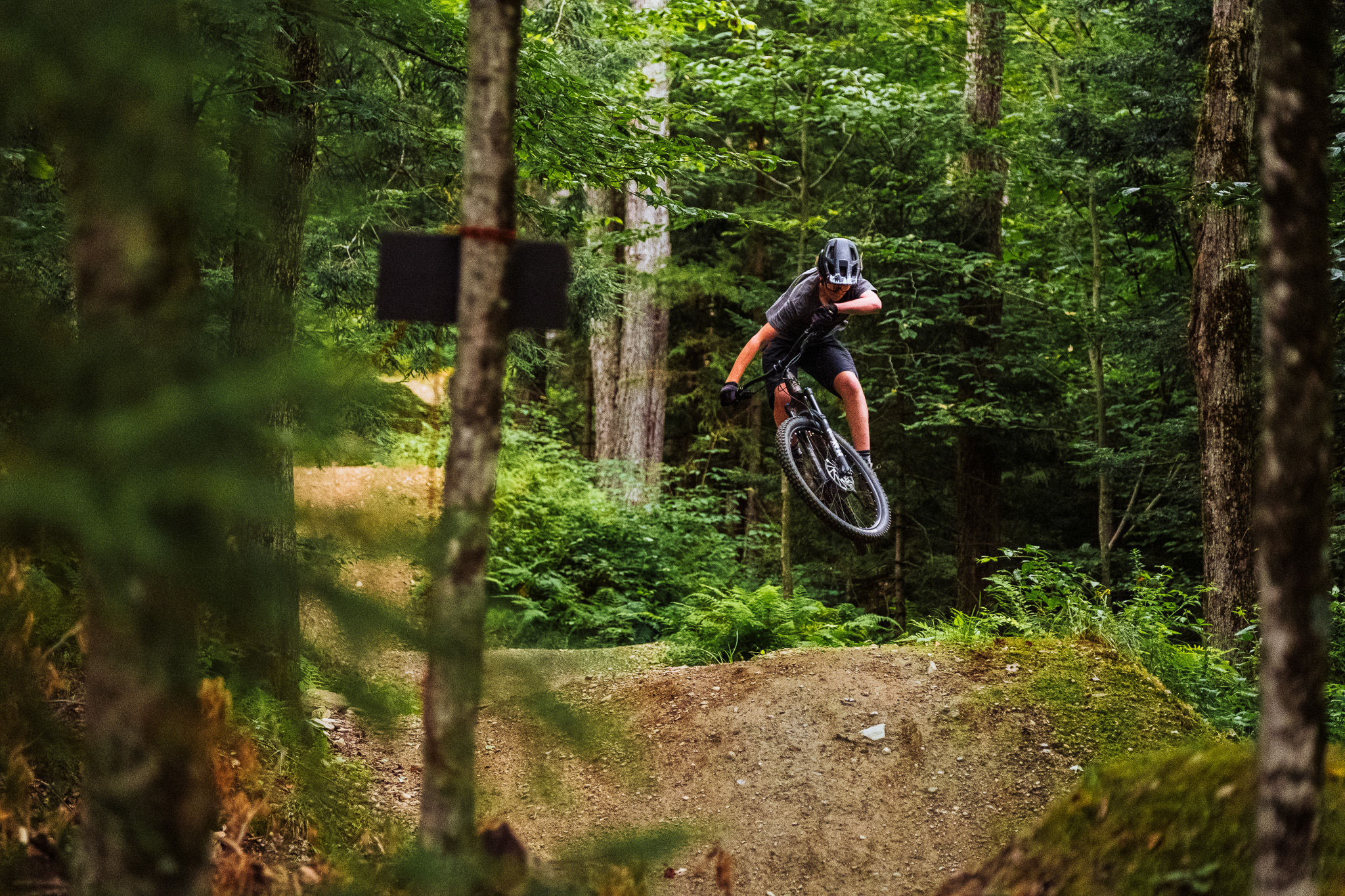
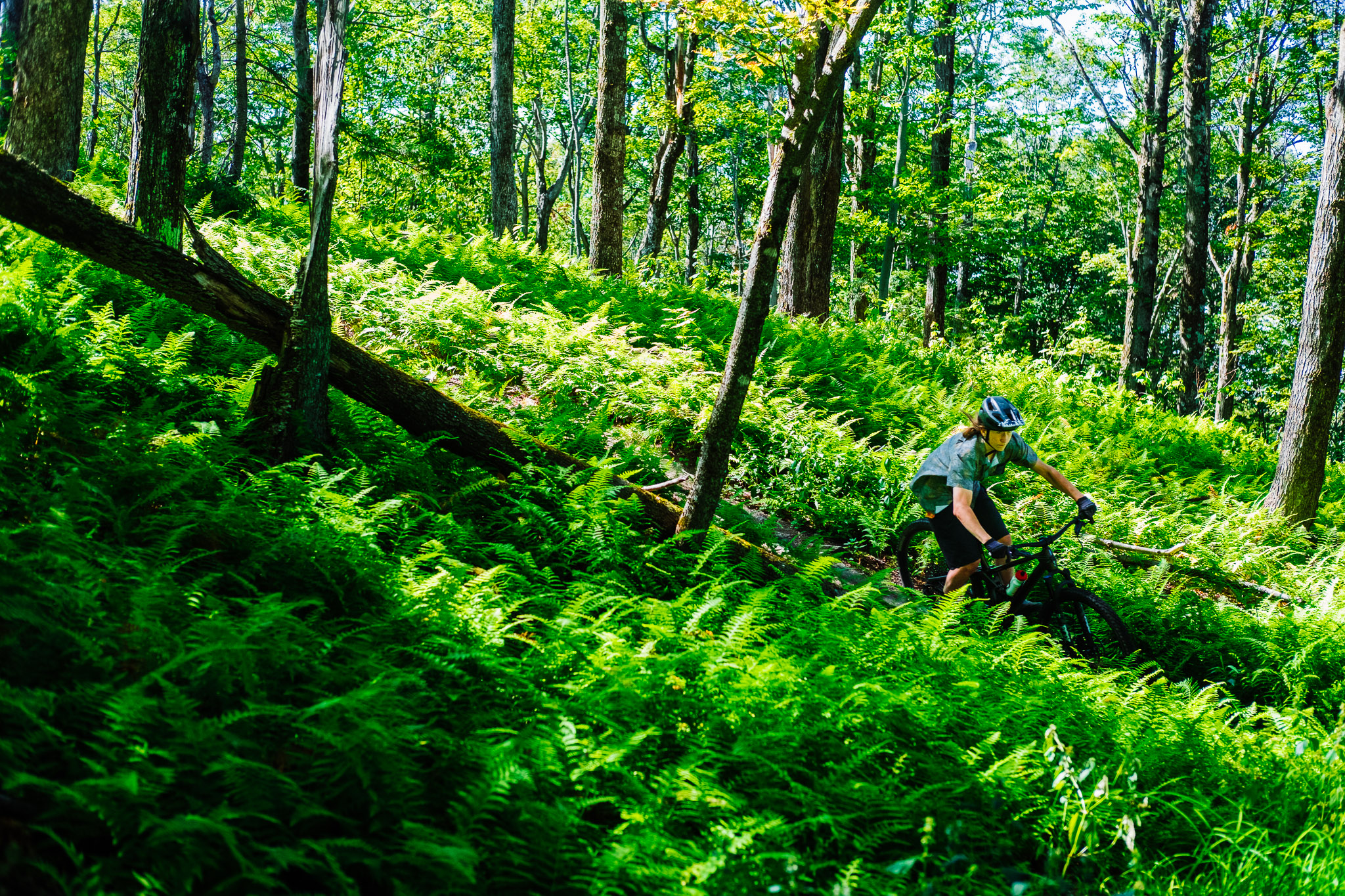
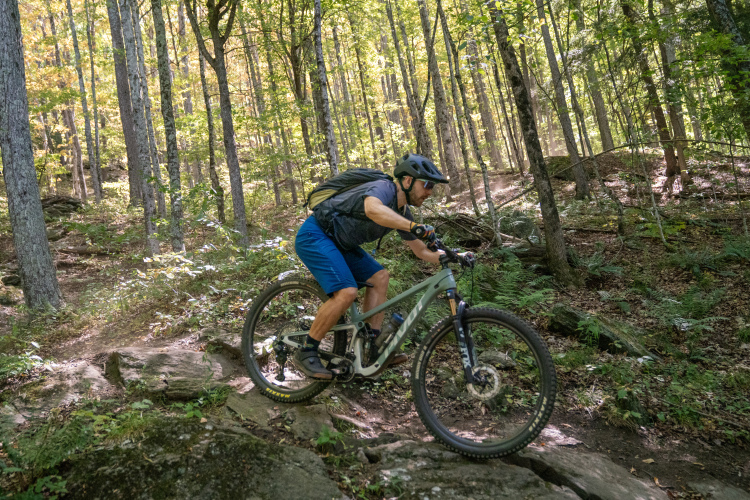
Plum Line, for example, occupies a spot in the pantheon of Mad River—and New England—classics. Mixing technical climbs, high-speed skidders, side-hills, and spicy side-hits, Plum Line is the sort of trail that begs an immediate to ride it repeatedly to unlock all its features. It anchors a tangle of technical singletrack in the Eurich Pond zone—Race, Ridgie, Witches and Bitches Brew—that toss rock features and fast, green-room turns through fields of ferns at riders.
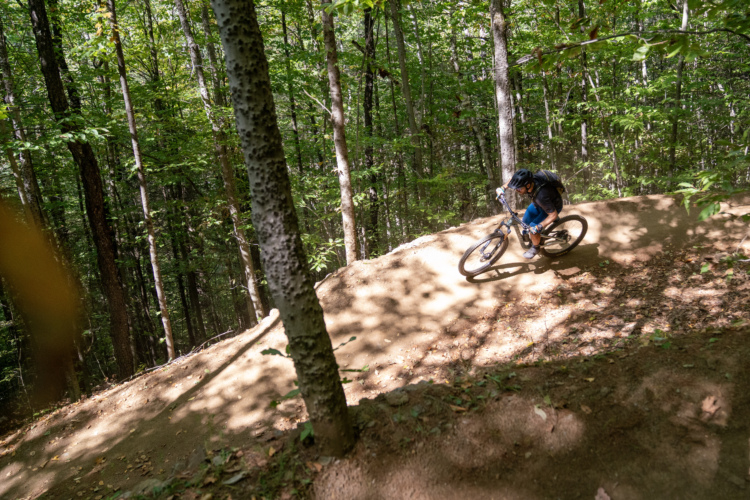
Working with, not against, the valley’s vast deposits of granite, trail builders have also in recent years, begun building flow trails that feel firmly integrated with the landscape. Goodnight Irene, for example, utilizes stacked rocks and outcroppings for jumps and feels more natural, less manicured.
Meanwhile, nearby Blueberry Lake features beginner and intermediate-friendly stacked loops with the best trailside vistas in the valley.
From chunky tech to wood-fired pizza
If Plum Line epitomizes the roots, both literal and figurative, of Mad River riding, Evolution shows how it has branched out.
Curling up the fern-covered forest floor over and around big trees and hunks of granite, Evolution connects the valley to classic upper riding zones via a trailhead at American Flatbread, an award-winning forerunner of the farm-to-table movement. Mountain bikers can tackle chunky tech, swoop down the bermed lower section, dump their bikes in the lawn, and lounge on the grounds with a wood-fired pizza.
That connectivity continues to grow, especially as more local landowners, seeing the ease with which their neighbors have worked with the Mad River Riders, indicate their willingness to cede some of their land to singletrack.
And in recent years, the Mad River Riders has accelerated its collaboration with Mad River Path, which envisions a wide multi-use nonmotorized trail from Warren to Waitsfield and ultimately all the way to Moretown. Ultimately, the path will allow mountain bikers to link singletrack to creemee stand without touching two-lane blacktop.
There’s a plaque on Fuller Hill Road, just outside Waitsfield, marking it as the symbolic population center of the state: if all its residents weighed the same, the state would balance perfectly at this location.
“We’re in the population center of the state, and yet there’s no one around,” says Adler. “But if you were to pick on a map the perfectly geographical center spot for riding in Vermont, it’d be the Mad River Valley.”
Keep up with the latest mountain bike news by adding Singletracks as a preferred source on Google.





1 Comments
Apr 1, 2026