

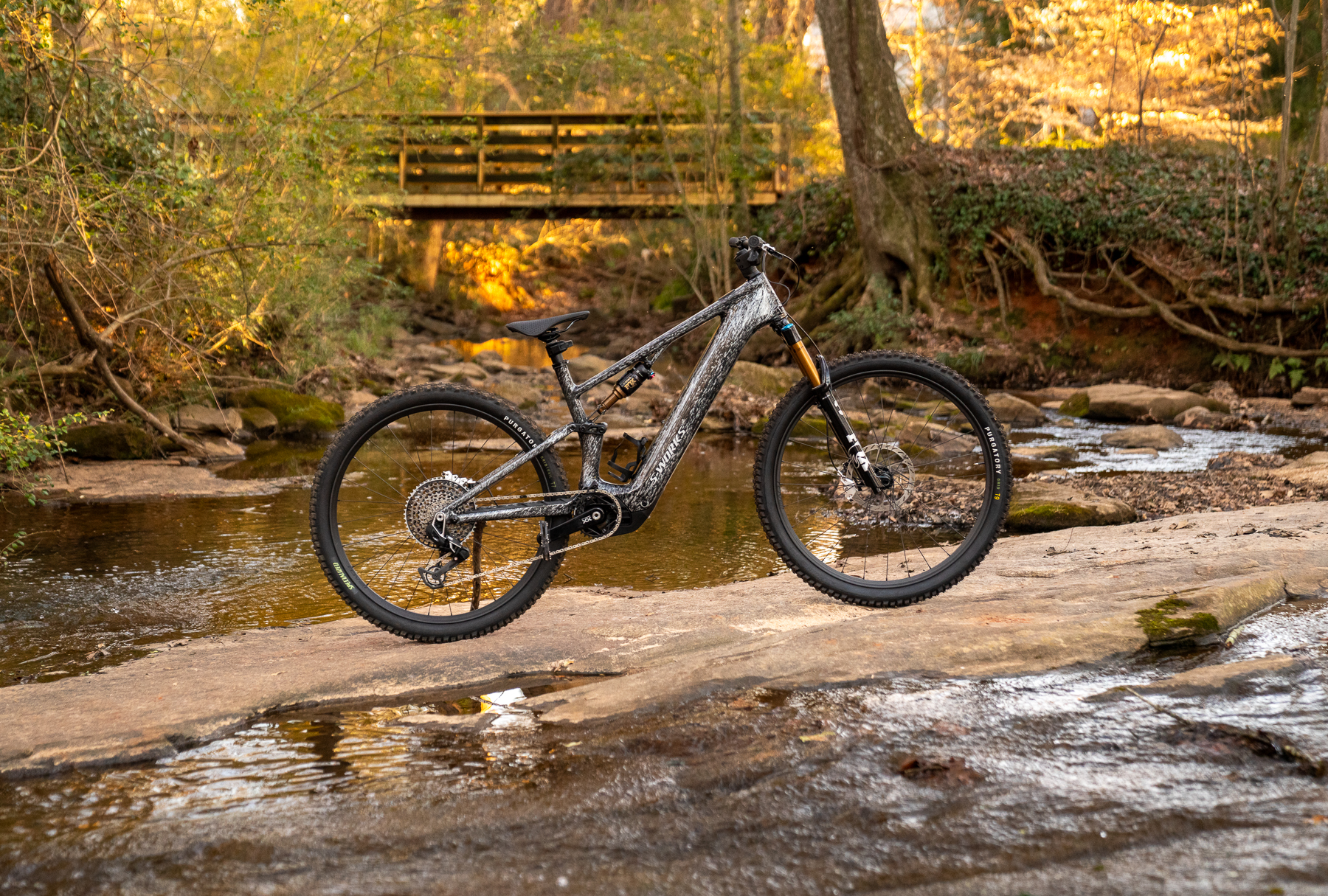
The new Specialized Turbo Levo R, announced today, is not the eMTB we were expecting. Pairing a full-size, 840Wh battery with a short-travel chassis, Specialized says the Turbo Levo R is designed for agility, “playful downcountry terrain, and high-performance flow.” I’ve been testing one for about two weeks now, and here’s what I’ve learned so far.
Specialized Turbo Levo R key specs
- 140/130mm suspension travel front/rear
- 840Wh battery, 111Nm max torque, 850W peak power
- Weight: 48.1lb, S-Works size S5 as tested
- Price: $15,650 as tested. From $9,200.
- Buy from Specialized
The ‘R’ stands for rally
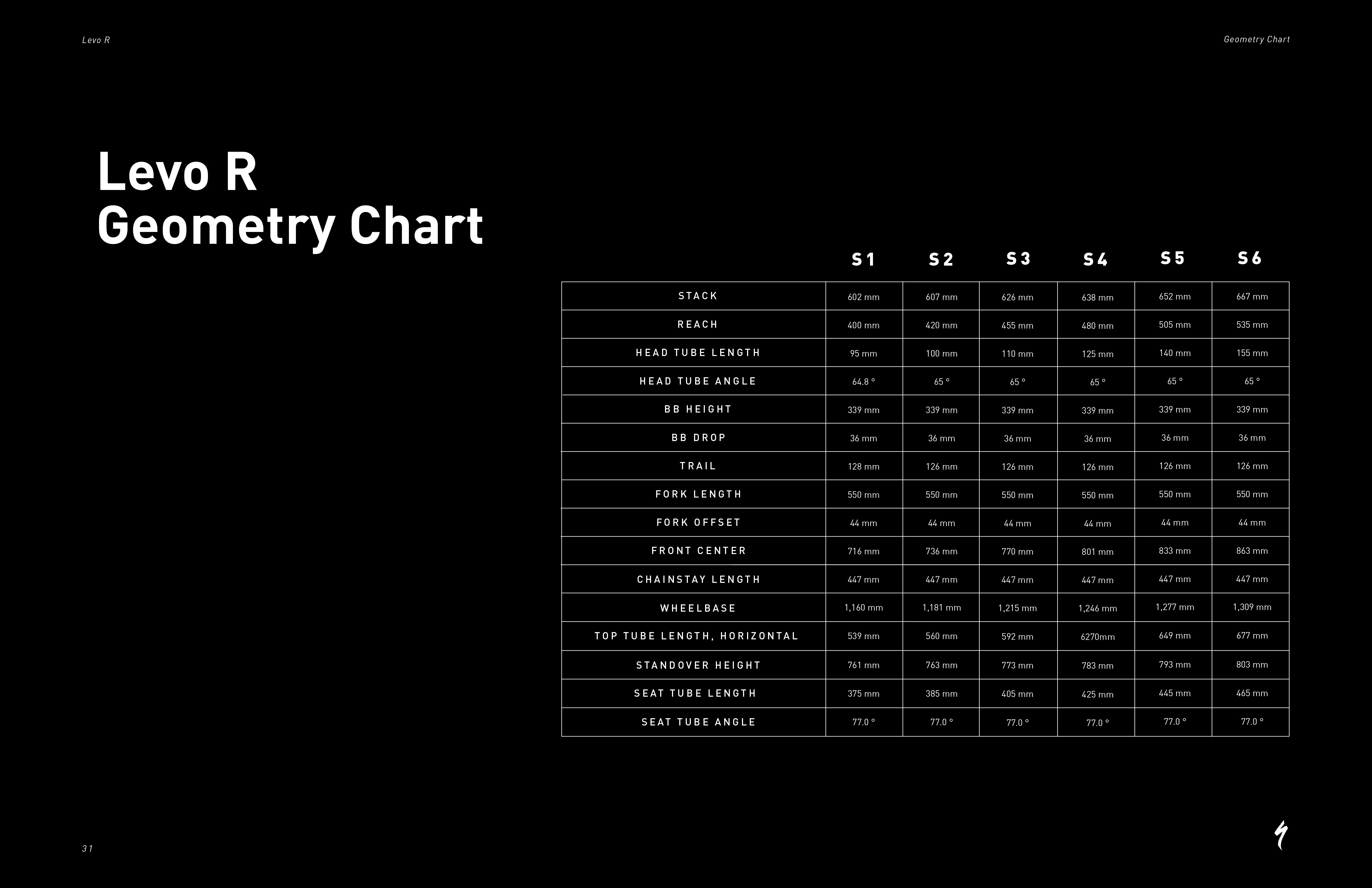
If the Specialized Turbo Levo 4 is an off-road pickup truck, then the Levo R is designed to ride more like a rally car, at least according to the marketing materials from Specialized. The Levo R sees a slightly shorter wheelbase than the Levo 4, though the chainstays are longer at 447mm across all sizes. Specialized also increased the bottom bracket drop by a few millimeters, allowing the bike to hug the ground more closely.
My Turbo Levo R test bike weighs 48.1lb, which is about seven pounds less than the Turbo Levo 4 I tested last year. Still, it’s roughly eight pounds heavier than the lightweight version of the Turbo Levo, the Turbo Levo SL.
On the trail
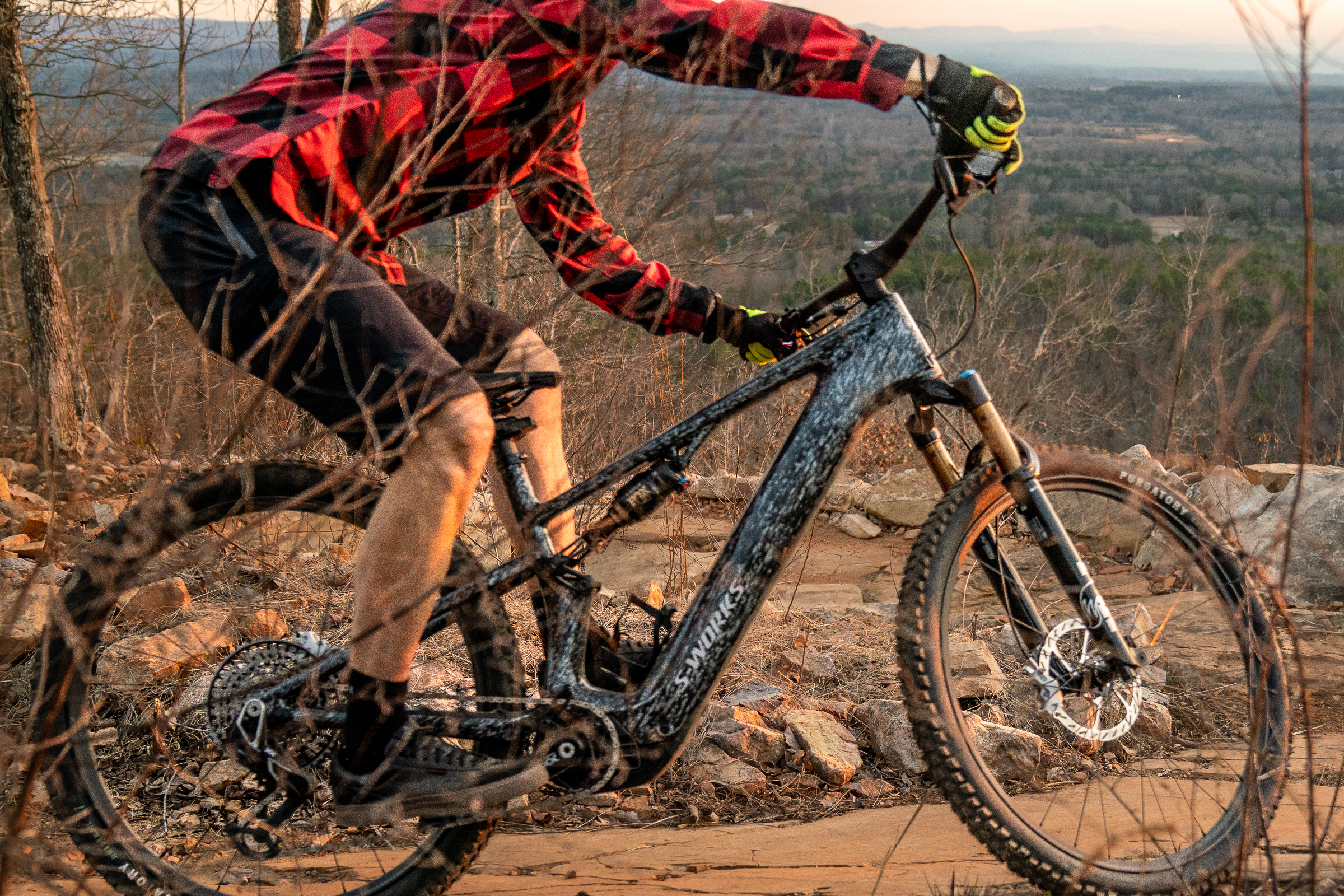
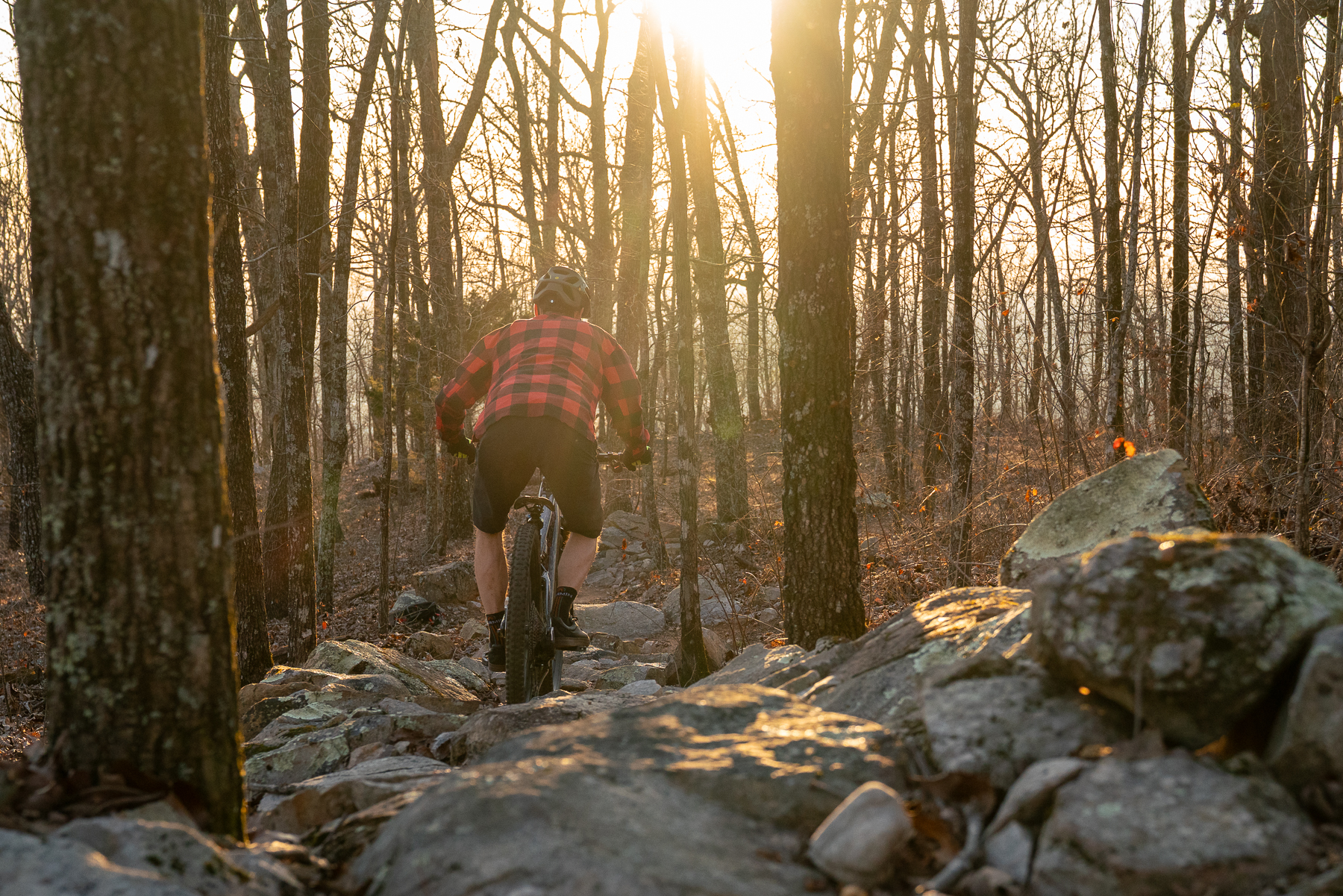
I arrived at Coldwater Mountain about an hour and a half before sunset for my first test ride. My goal was to ride one of the more technical trails, Gazza, and snap a few golden-hour photos for this review. There was only one car in the trailhead parking lot, which meant I would have the trails almost entirely to myself. And it was a good thing I did because the Turbo Levo R begs to be ridden fast, especially uphill.
The joy of the climb
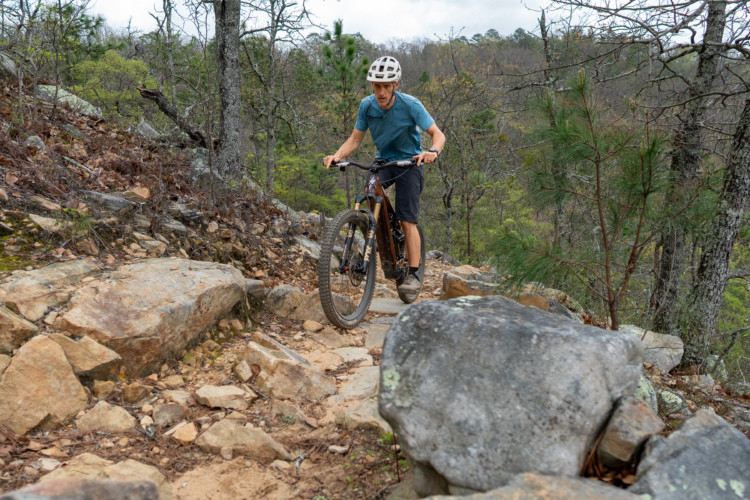
Climbing the Upper Papa Bear and Cassidy trails, the Specialized Turbo Levo R was an absolute animal. With any new bike, it usually takes me a couple of rides to get a feel for the bike. But within the first mile of riding the Turbo Levo R, it felt as familiar as my own, carving fine lines into loose corners, popping off roots, and hugging every dip and rise on the way up the trail.
Reviewer profile height: 190cm (6’3″) weight: 75kg (165lb) testing zone: Southeast, USA
There are three default assistance modes available on the Turbo Levo R — Eco, Trail, and Turbo — and in Trail mode, I felt like I was flying up the loose, rocky trails at Coldwater. The Specialized motor provides a natural feel that’s responsive yet delivers power in a way that’s easy to control. Paired with grippy Purgatory tires and GENIE suspension, the Levo R rallied the climbs at damn near downhill speeds. I’ve never enjoyed climbing on a mountain bike more.
Specialized touts the Turbo Levo R’s ability to conquer low-speed tech, so I made a beeline to Rock Slot and Gazza to see how it would handle pedaling the awkward, square-edged boulders those trails are known for. With the motor responsiveness set to “fast,” the Turbo Levo R barely hesitates from a stop, which is helpful for navigating particularly technical trails. I found Trail mode was too powerful for this type of riding, blasting me into the next rock before I had time to adjust my aim. Eco mode, however, provided just the right amount of power for navigating particularly technical sections without overshooting the next rock.
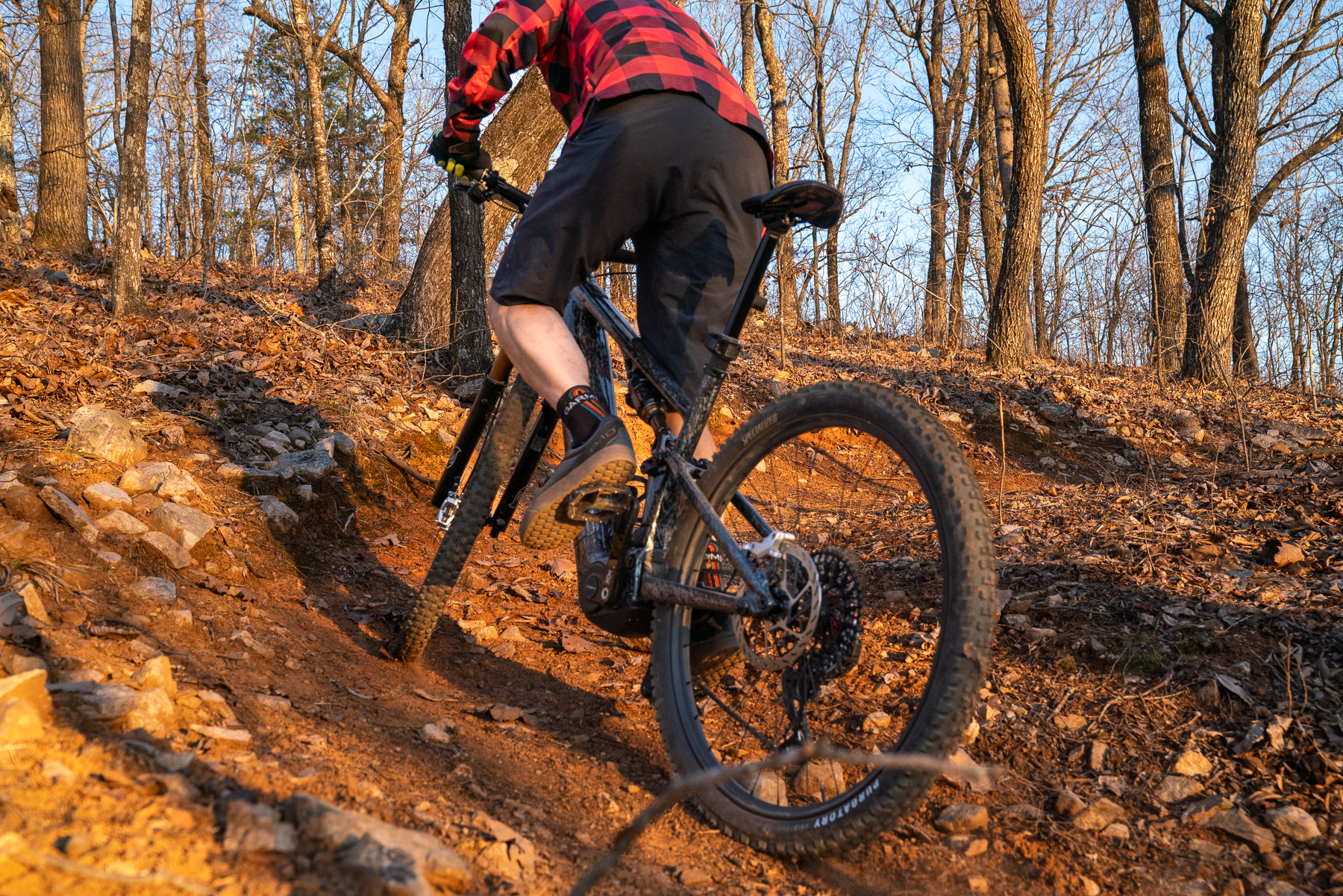
The S-Works model I’ve been testing features the brand’s most powerful motor, delivering 850Wh of peak power and 111Nm of torque. It’s an incredible amount of power that’s overkill in most situations, though it can be nice when you want to accelerate to catch up with a friend or really push yourself into a banked turn, or even set up for a jump.
Though the Specialized “SuperNatural” system handles low-speed tech better than most e-bikes I’ve ridden, it’s not perfect. Starting from a stop in technical terrain can be awkward, and on several occasions, I wished for an even faster, more responsive mode to immediately kick start the bike into uphill jank.
The Specialized Turbo 3.1 system does a great job controlling rear wheel traction. I tried my best to break traction on the trail — in leaves, on pea gravel, through sand — but never managed to get the wheel to spin out in flat terrain. Even accelerating out of loose turns, the Turbo Levo R keeps its composure as well or better than any non-electric bike. Only on the steepest, loosest climbs does the rear wheel finally break free, almost exclusively in situations where I struggle even on my non-electric bike.
I had hoped the Turbo Levo R would be quieter on the trail than it is. Rather than a high-pitched whine, the Levo R sounds more like a dishwasher, albeit one of those fancy low-decibel models. It’s not silent by any means, so there’s no mistaking that you’re passing on an electric bike.
Descending is the most natural of all
On flowy descents, the Turbo Levo R stays super planted thanks to its weight. Through the second half of the Bomb Dog descent, I couldn’t believe how fast I was going, surely setting a PR on that flowy and relatively smooth section of the trail. To be honest, the bike feels best when it’s under the power of gravity, rather than the motor. I suppose it’s no surprise that the most natural feeling moments are those when the motor is disengaged.
Despite its nearly 50lb weight, the bike still pops off rocks and roots in the trail in a playful way. With the fastest response mode, it’s easy to accelerate into kickers and launch the Turbo Levo R into the air.
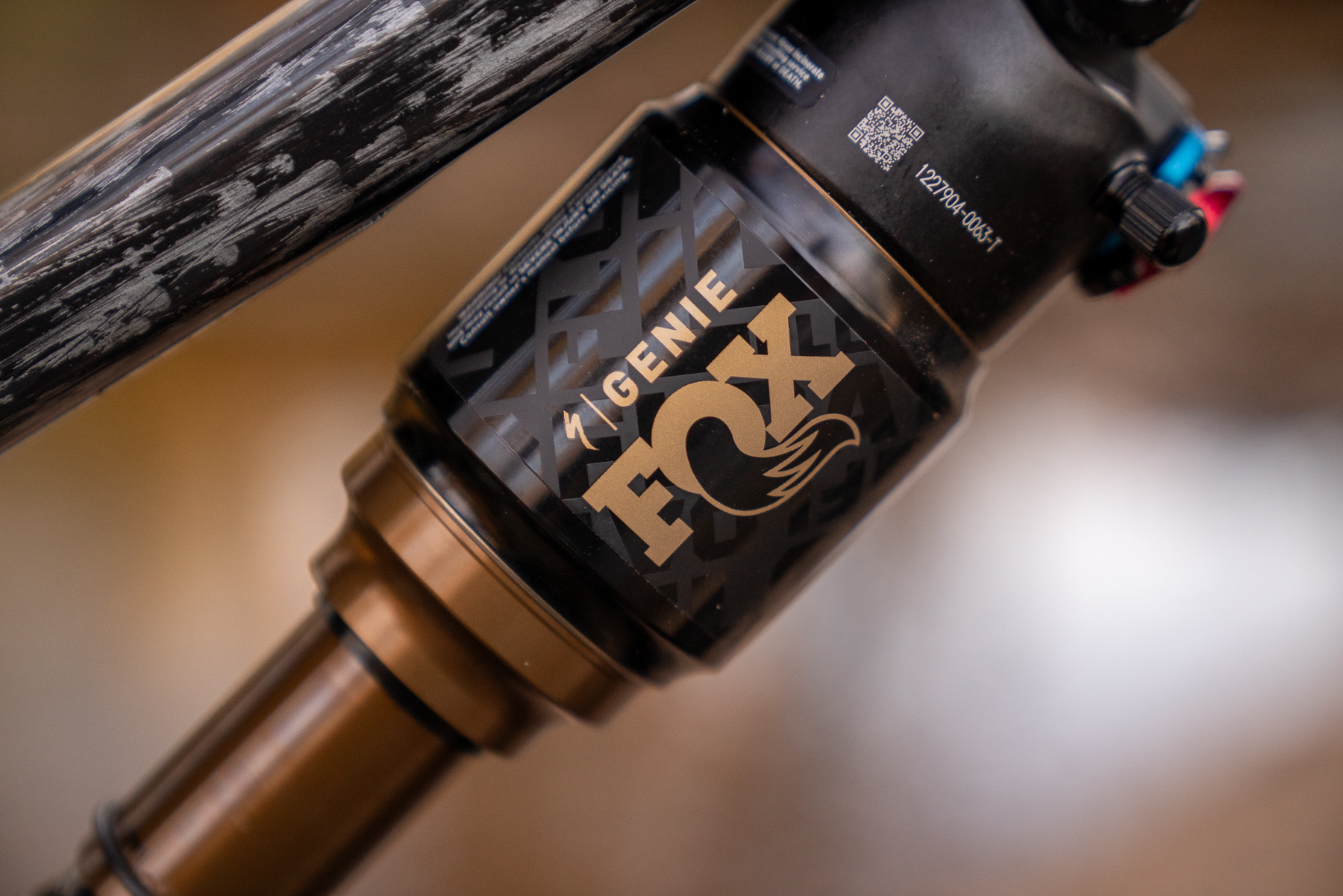
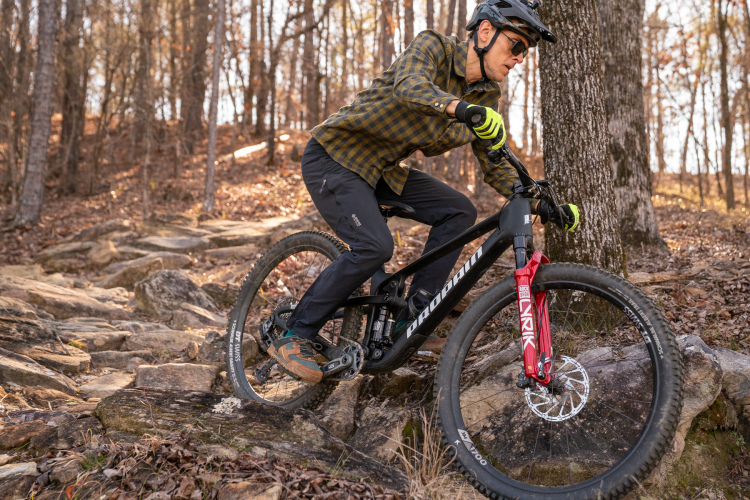
The Turbo Levo R is a 140/130mm trail bike just like my Canyon Neuron. However, with the Genie shock, the Turbo Levo R rides like a much bigger bike. Compared to the longer-travel, Turbo Levo 4 (160/150mm) I tested last year on many of the same trails at Coldwater, the Turbo Levo R feels every bit as capable but with better agility and composure.
The Specialized Turbo Levo R does a nice job transitioning power as you approach 20mph in Class 1 mode (or 28mph if you’re in Class 3). If you’re going downhill, of course, you won’t notice at all since the bike isn’t providing any power. But if you’re pedaling flat or uphill, the assistance gradually fades as you approach the speed limit, unlike on some other bikes that feel as if they’re hitting a wall of wind.
At Coldwater, I rode just over 11 miles with about 1,300 feet of climbing, which used about 45% of the battery capacity. I spent most of the ride in Trail mode, with just a few moments in Eco and Turbo.
Completely drained
The next day, I set out on a local ride with friends, and the battery was at 51%. After just a few miles, I started strategizing how I would make the battery last. Eco mode is an obvious place to start, but what if I turned the bike off for a bit and pedaled completely under my own power? (An alternative would be to select a lower, custom assistance mode, though I didn’t know how to do that at the time.)
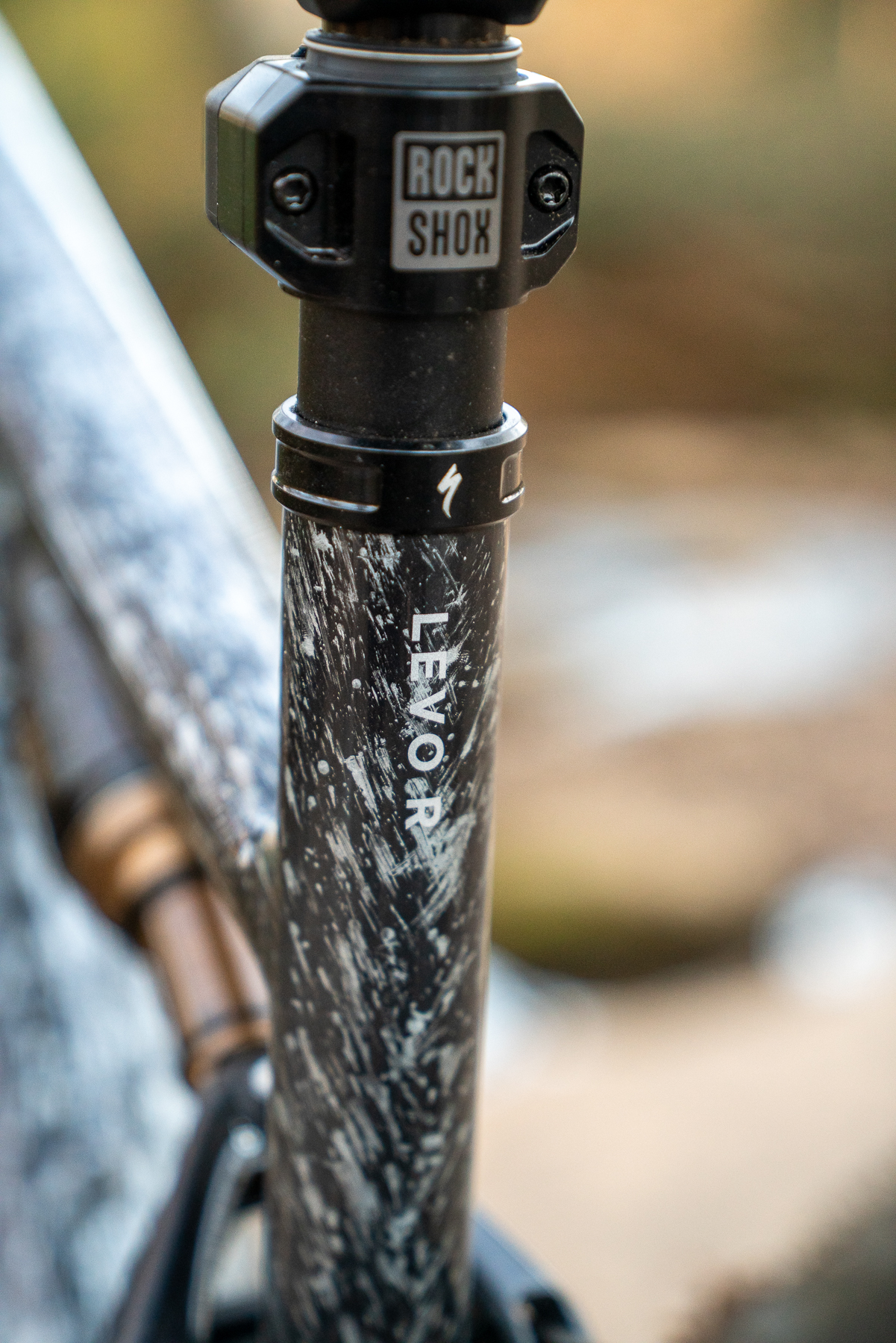
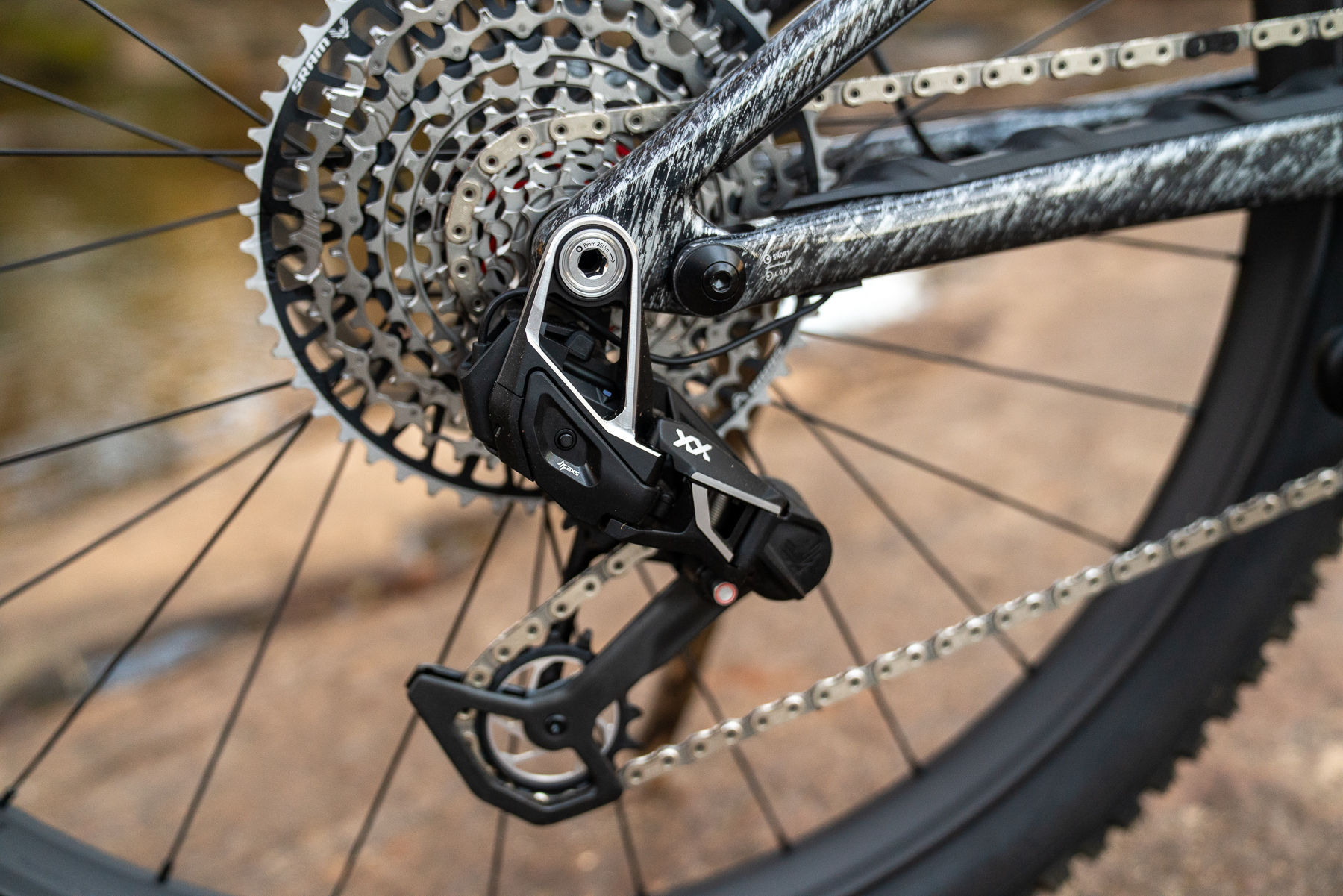
As it turns out, the wired SRAM Eagle AXS Transmission derailleur doesn’t work if the bike is turned off. This made me worry that, if and when the battery died, I would be unable to shift. My backup plan was to snag the AXS battery off the dropper post.
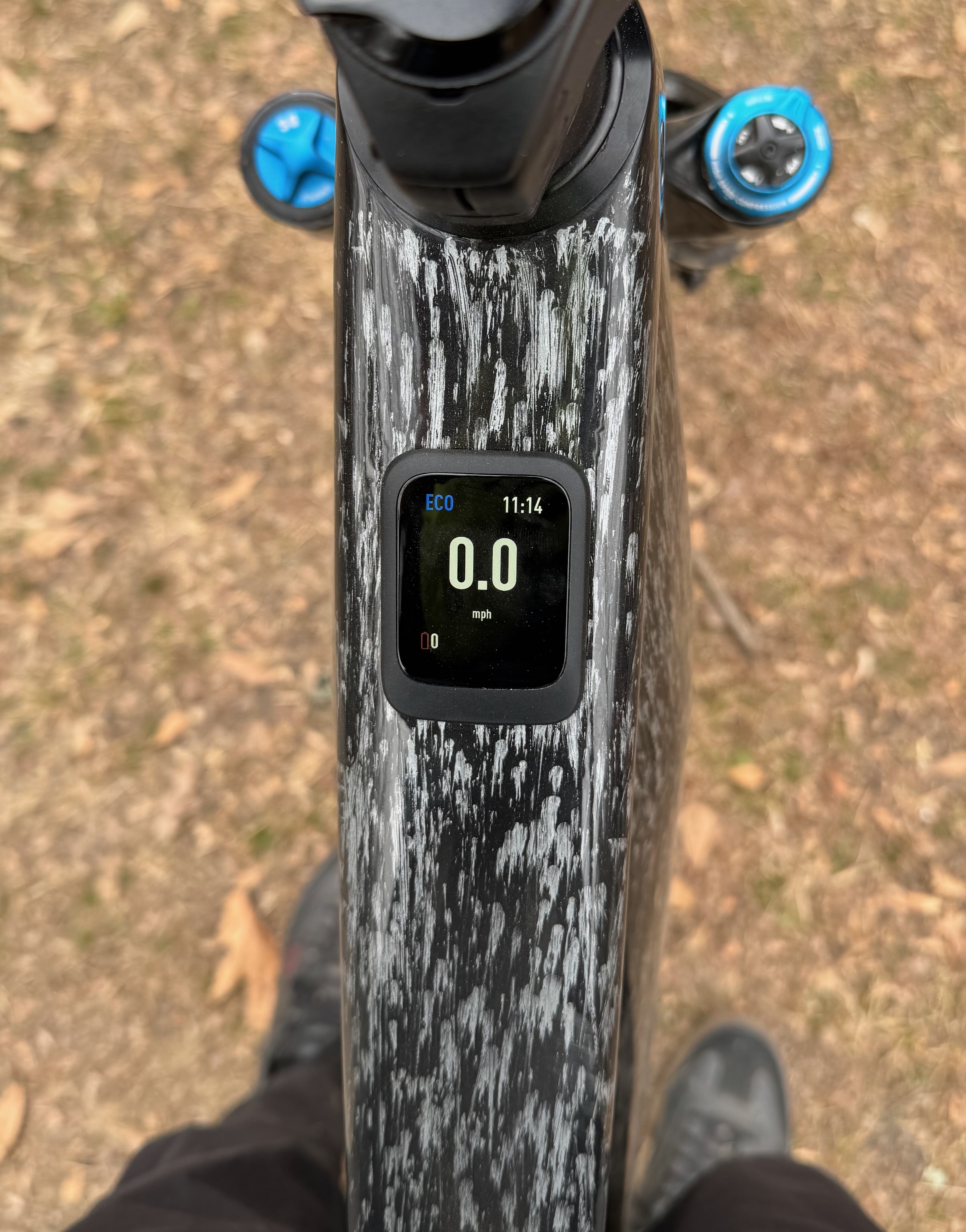
The ride went longer than expected, and I ended up completely draining the primary battery, forcing me to ride the last couple of miles with zero assist. Though the electronic SRAM Eagle AXS Transmission derailleur gets its power from the main battery, thankfully, the Turbo Levo R keeps a bit in reserve for shifting. At 0% battery capacity, the bike no longer provides assistance, but the main display remains on, and the derailleur operates normally.
With the bike turned on, but the assistance off, there’s a notable amount of resistance to pedaling due to motor drag. I managed to keep up with my friends on analog bikes, but it was clear they weren’t working as hard as I was on the final hills. I suppose it was just payback for all the fun I had earlier in the ride.
Share your Specialized Turbo Levo R review
All told, I got about 32 miles of range with about 3,000 feet of climbing on a single charge, with about a third of that mileage in Trail mode, and two-thirds in Eco mode.
On another 15.5mi ride with 1,300ft of climbing, mostly in Trail mode, the Turbo Levo R used about 39% of the battery capacity. I figure the battery should last for a typical three-hour ride in the mountains. Beyond that, my range anxiety will start to kick in.
The Turbo Levo R breaches a relatively small category of eMTBs that pair short travel with a full-power battery and motor. Specialized already has the full-power 160/150mm Turbo Levo, and the lighter-weight Turbo Levo SL with the same amount of travel and a smaller battery. The new Mondraker Scree, with 130mm of rear travel and an 800Wh battery, is one of the only bikes that occupies a similar space to the Levo R.
So what is the Levo R designed for, anyway? It doesn’t have enough travel to be considered a self-shuttling park bike. And it’s not lightweight enough to fool you into thinking it’s a non-electric. In a way, it’s more of a trail bike than the eMTBs that came before it, a general-purpose machine designed for longish days and capable of tackling a variety of terrain. Calling the bike a downcountry e-bike is a stretch (not to mention a mindbender), though the ethos of adding more robust components (motor, tires, suspension, etc.) to a short-travel bike certainly resonates.
Given the size of a brand like Specialized, I won’t be surprised to see other bikes moving into this emerging category over the next few seasons.
Fit and feel
As I noted earlier, I felt comfortable on the Specialized Turbo Levo R from the very beginning. I suppose this could be a case of luck, but looking at the bike’s geometry, it’s hard to critique any of the measurements. Nothing stands out, and depending on your perspective, that’s a good thing… or a boring thing.
The 65° head tube angle? Not too steep, not too slack. The 505mm reach on the S5 I tested? Right in line with most of the other XL bikes I’ve ridden. Perhaps one could argue the 77° seat tube angle isn’t steep enough, but then again, the bike climbs just fine thanks to its motor assistance.
With the available geometry adjustments, the Turbo Levo R should fit riders well, even those who find themselves in between sizes.
Specialized Turbo Levo R frame features
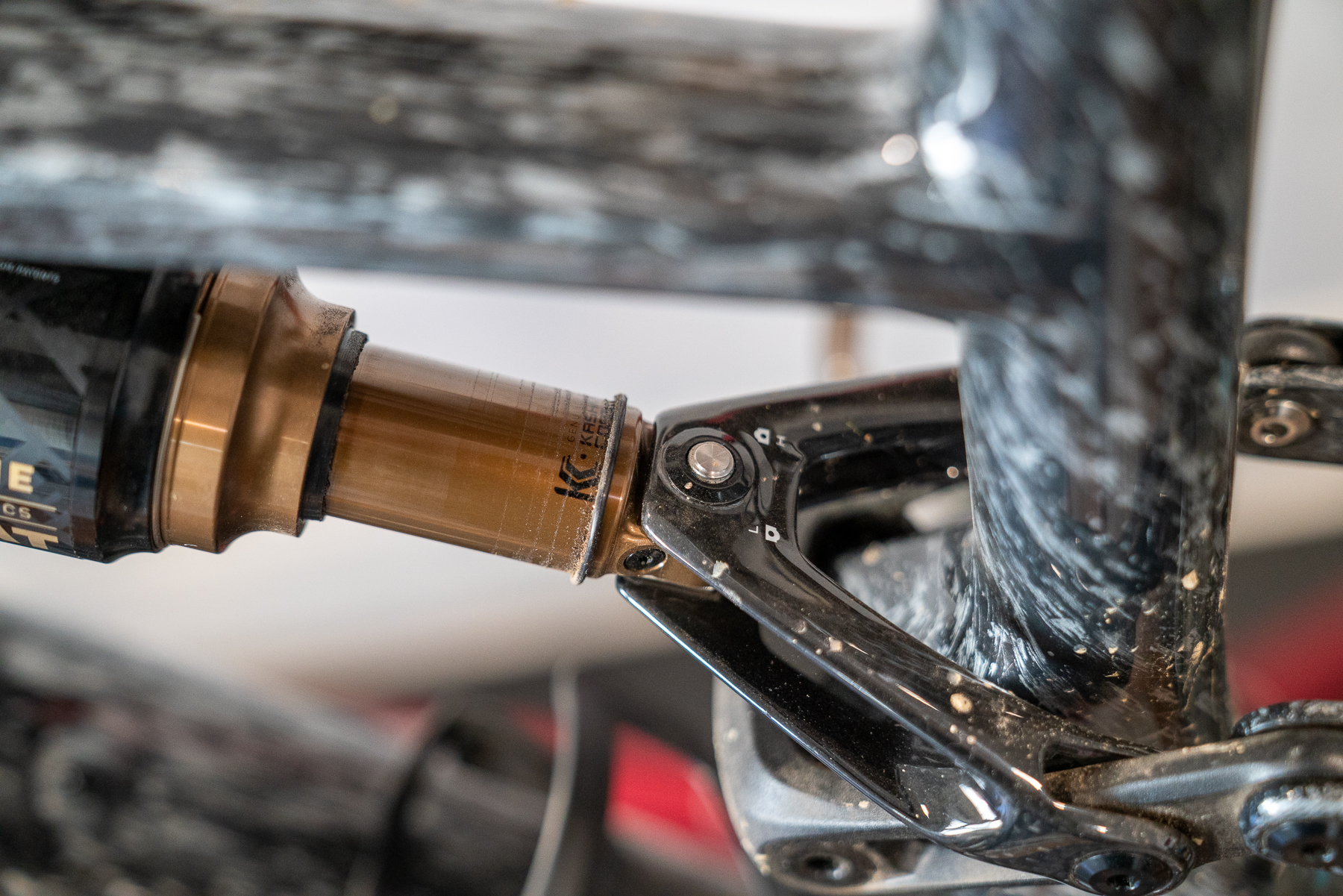
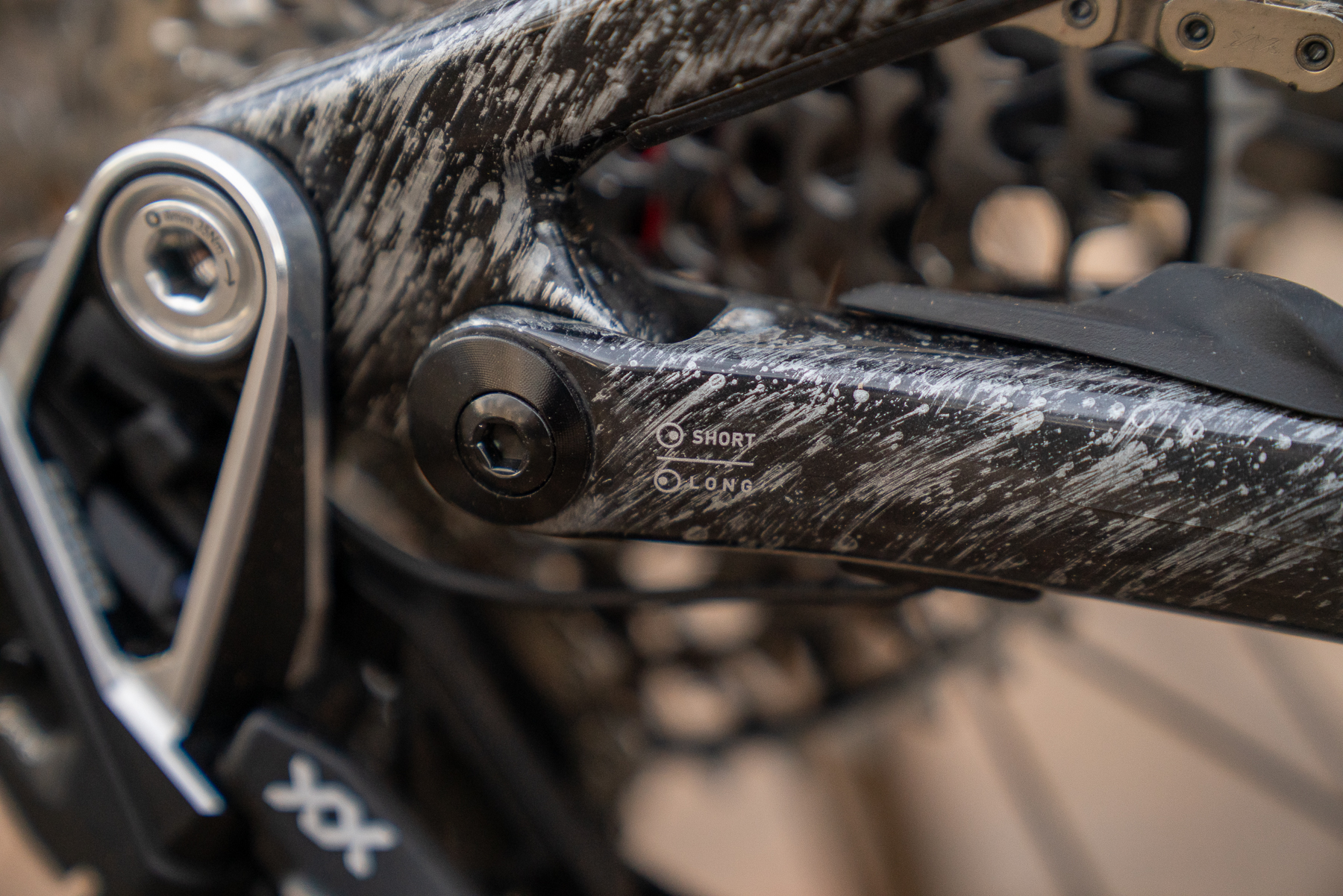
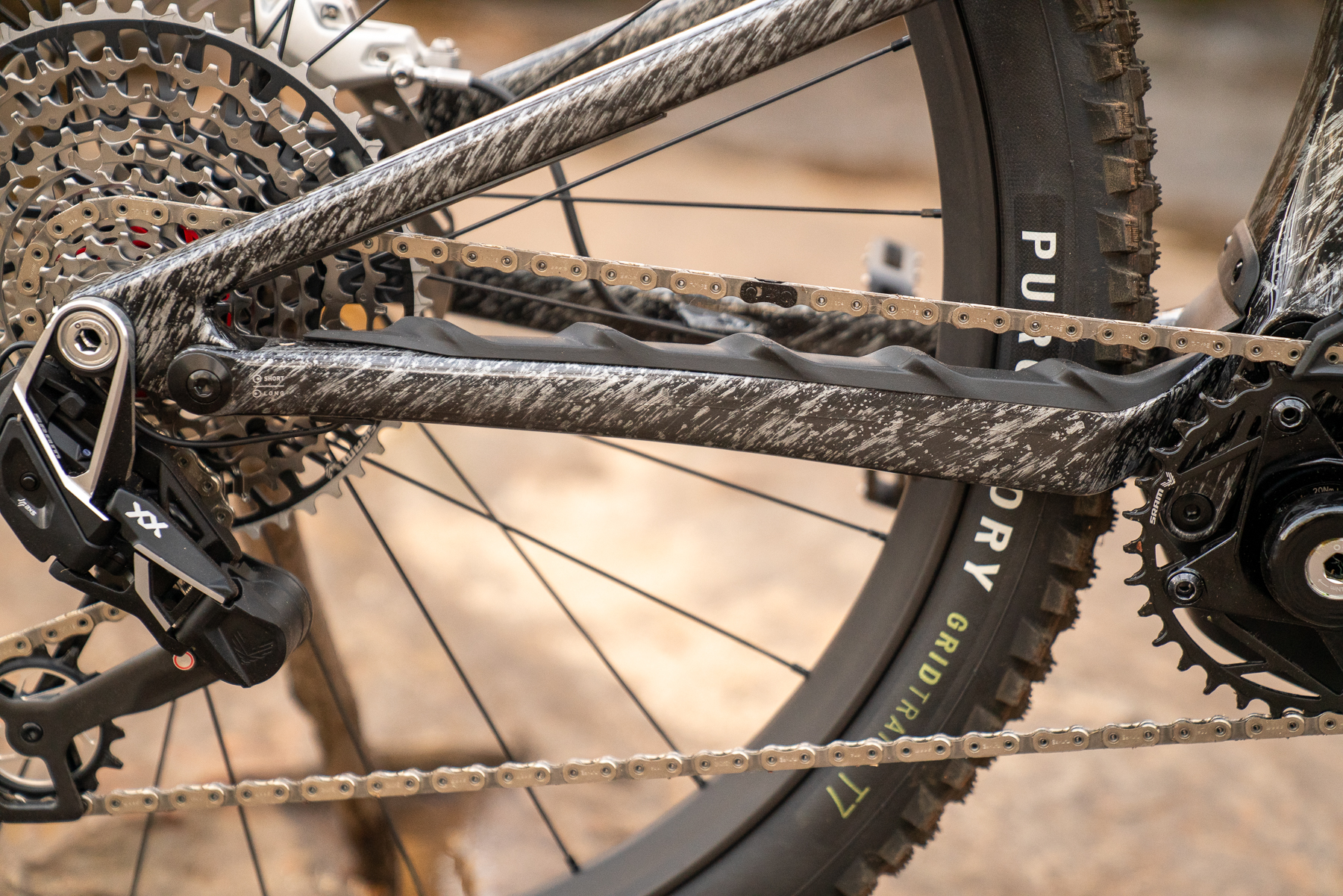
The Specialized Turbo Levo R showcases all the latest advancements in mountain bike frame tech, starting with its three-way geo adjust. There’s a pair of flip chips in the chainstays to increase or decrease the lengths; an angle-adjust headset; and a chip at the shock mount to adjust the bottom bracket height.
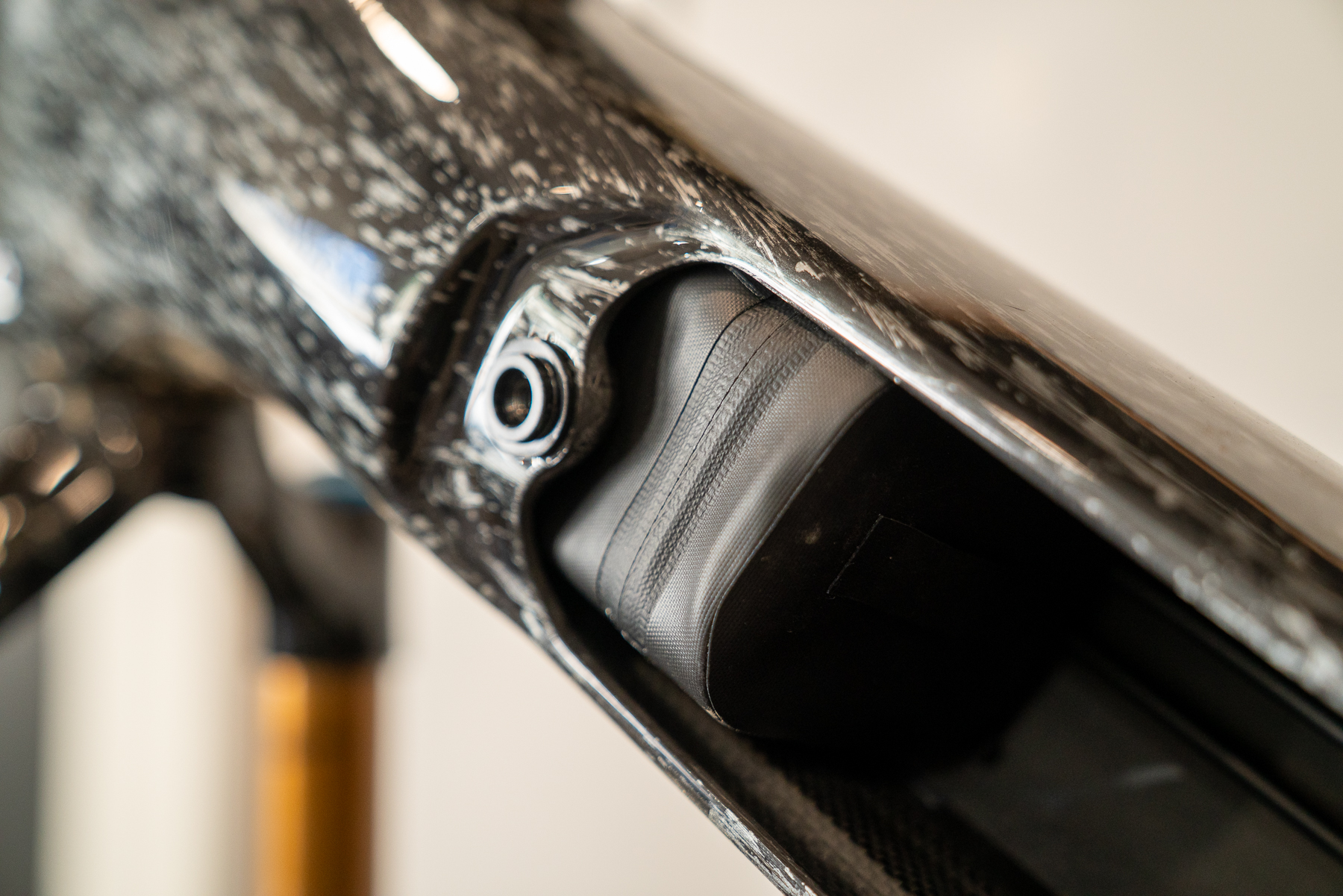
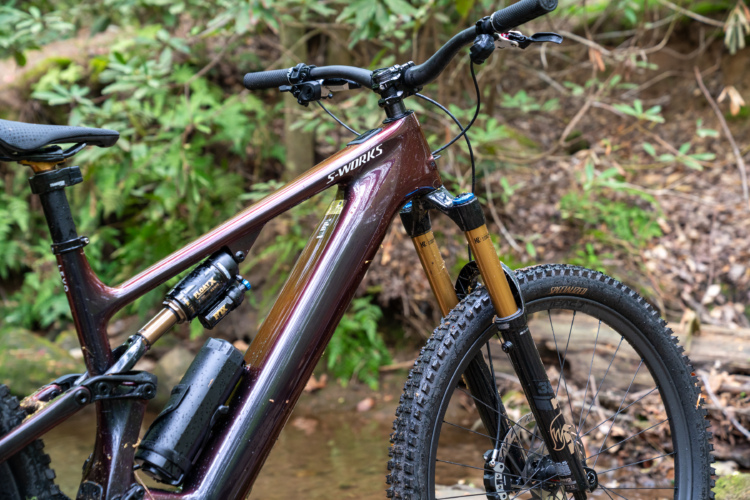
An 840Wh battery fits inside the downtube, and even with the massive battery, there’s room inside for storing a flat repair kit. Unlike the SWAT system on non-electric bikes, you’ll need a tool to access the in-frame storage, and you’ll also need to remove the battery to get to your stuff. For quick repairs, a multi-tool sits inside the steerer tube, accessible at the flick of a finger.
All Turbo Levo R builds ship with the 840Wh battery. Buyers can also pick up an external, 280Wh range extender or purchase a 600Wh internal replacement battery to cut weight and open up a little additional storage space inside the frame for carrying additional gear.
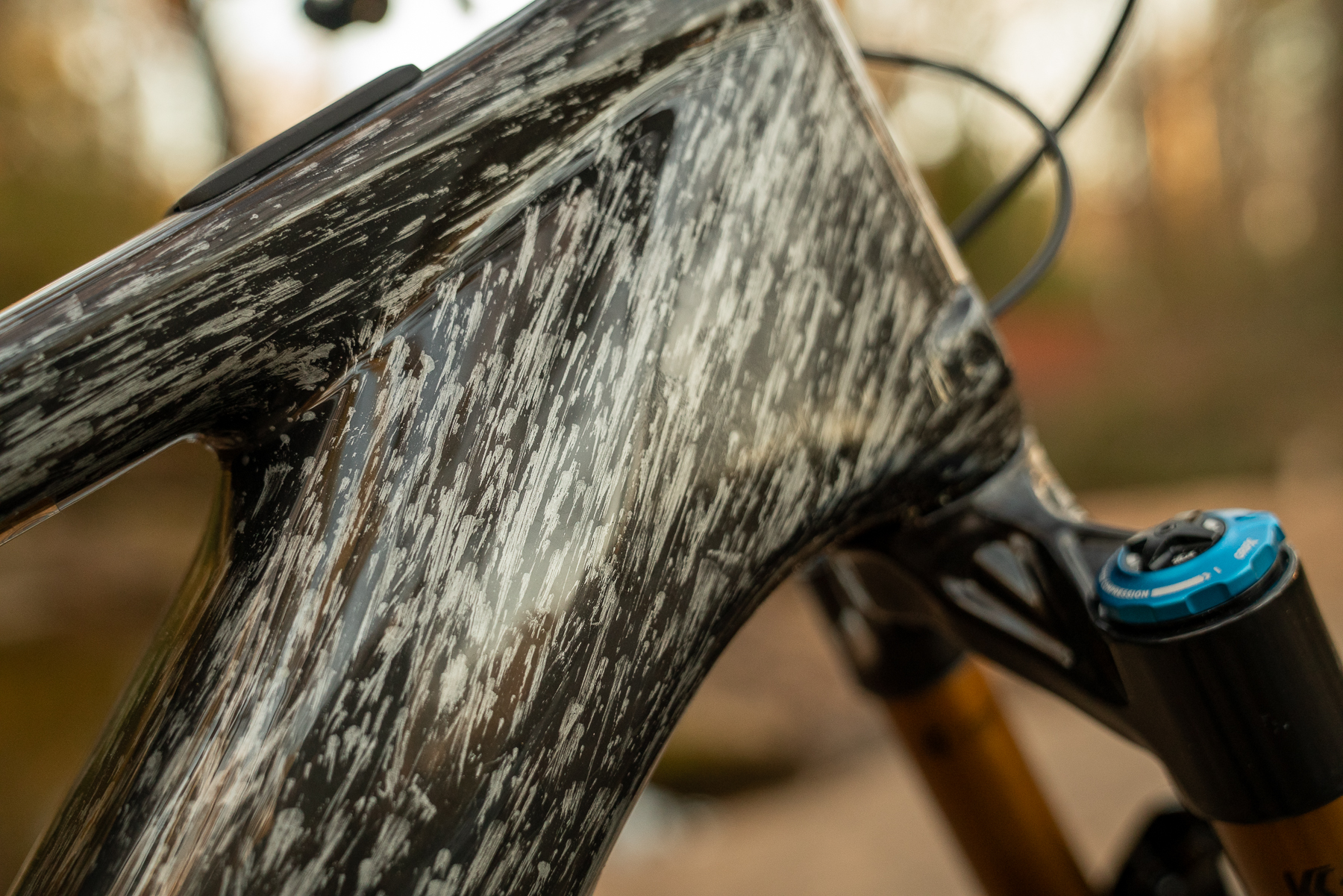
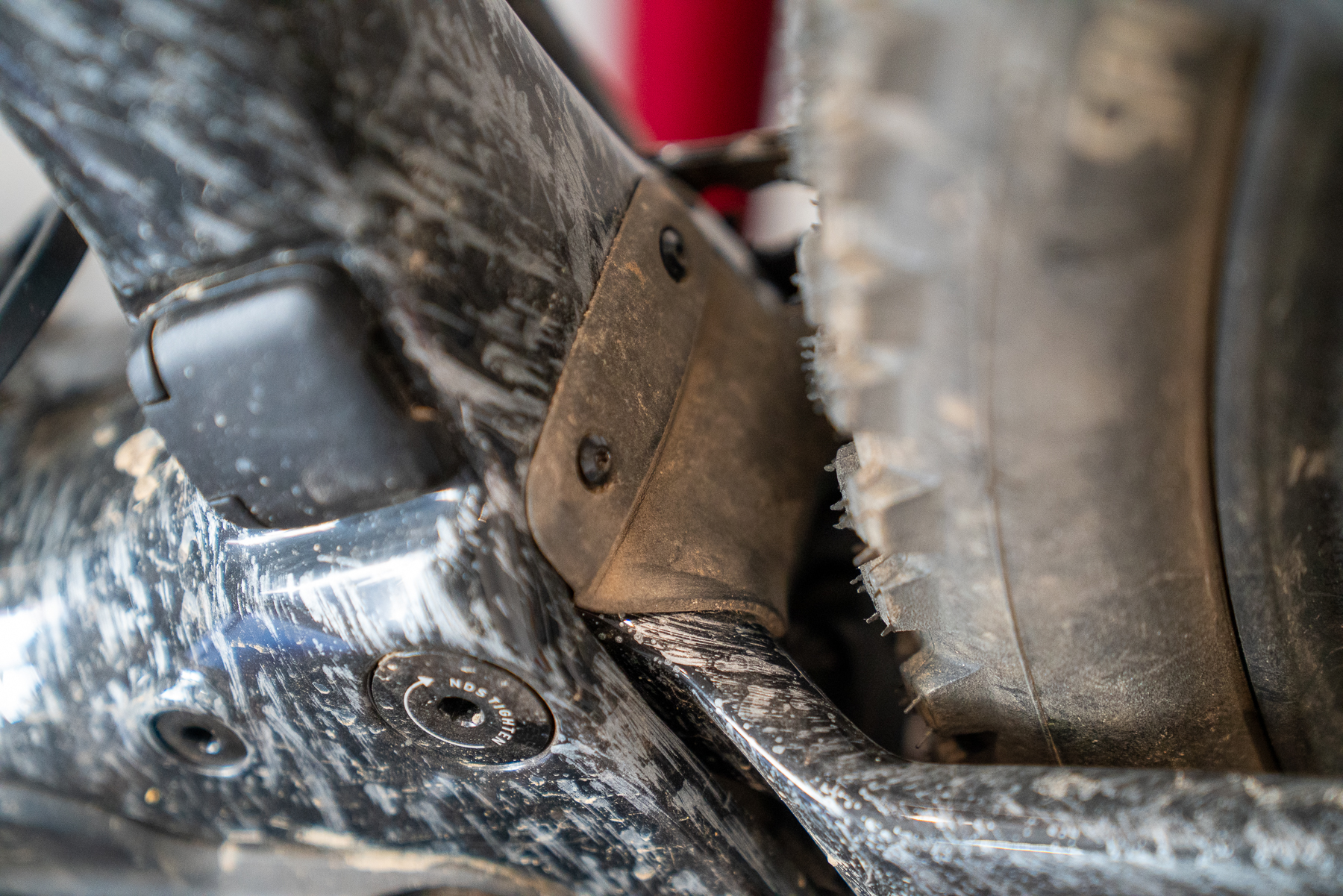
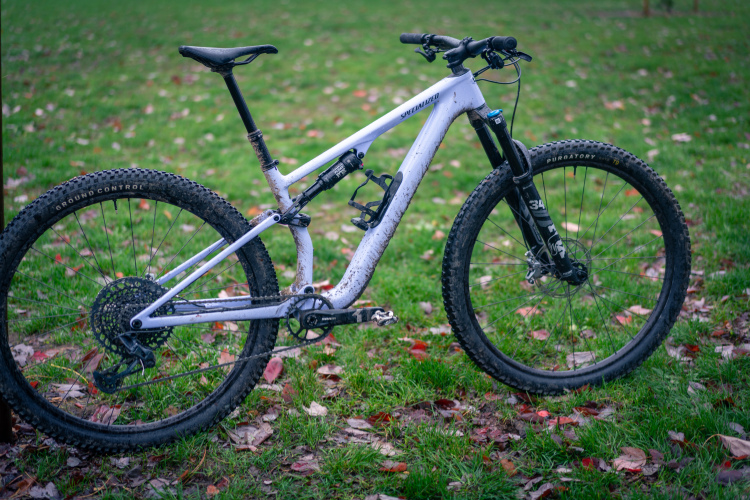
The “Gloss Shadow Silver Blended Speckle Over Carbon / Silver Dust” colorway on my test bike got a lot of comments for its unique look. The organic splatter pattern doesn’t photograph that well, leading one friend to wonder if it was camouflage designed to obscure the bike’s real shape. The downtube, with its own built-in storage attic above the battery, is comically bloated. Ultimately, “blended speckle” just isn’t very slimming and therefore isn’t fooling anyone.
The Specialized Turbo Levo R has Apple Find My built into the bike, and it’s not just an AirTag holder. Understandably, the brand doesn’t say where the chip is located to minimize the chances of the tracker being removed. There’s a “Lost Mode” the owner can activate that allows them to share their contact info in case the bike is found. It’s unclear how, or even if, Android users can take advantage of this feature.
S-works build
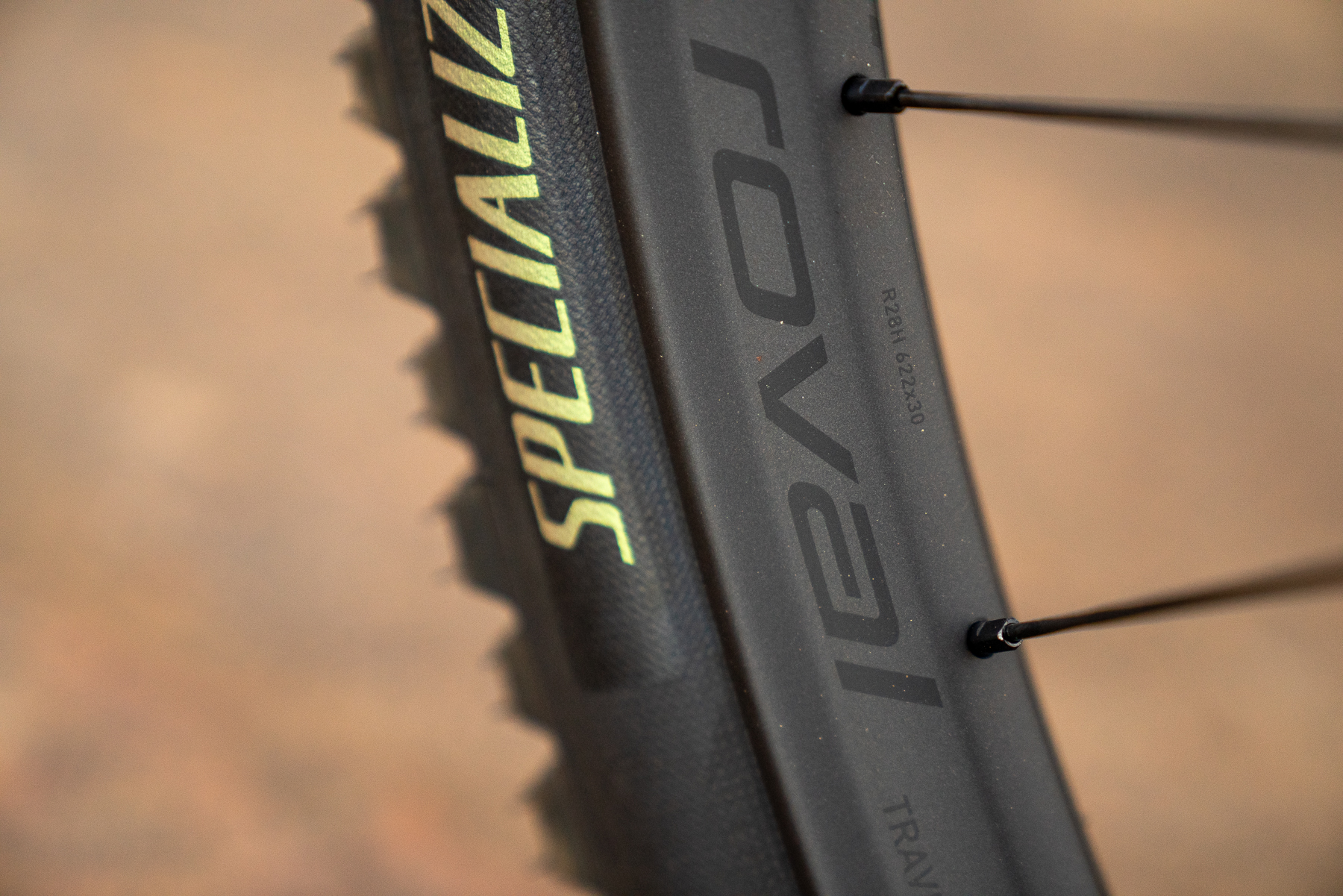
As usual, Specialized went all out with their S-Works build, speccing top-end components from front to back. Highlights include a SRAM XX Eagle Transmission drivetrain, Roval Traverse carbon wheels with Industry 9 Hydra 2 hubs, and a RockShox Reverb AXS dropper post with 200mm of travel (sizes S4-S6).
The Specialized Purgatory tires work particularly well on the Turbo Levo R, delivering predictable cornering and sure-footed braking grip when it matters the most. Though I’ve tested the Purgatory tires on my own bike, this combo with the stickier, T9 tire up front and a long-wearing T7 on the bike works incredibly well.
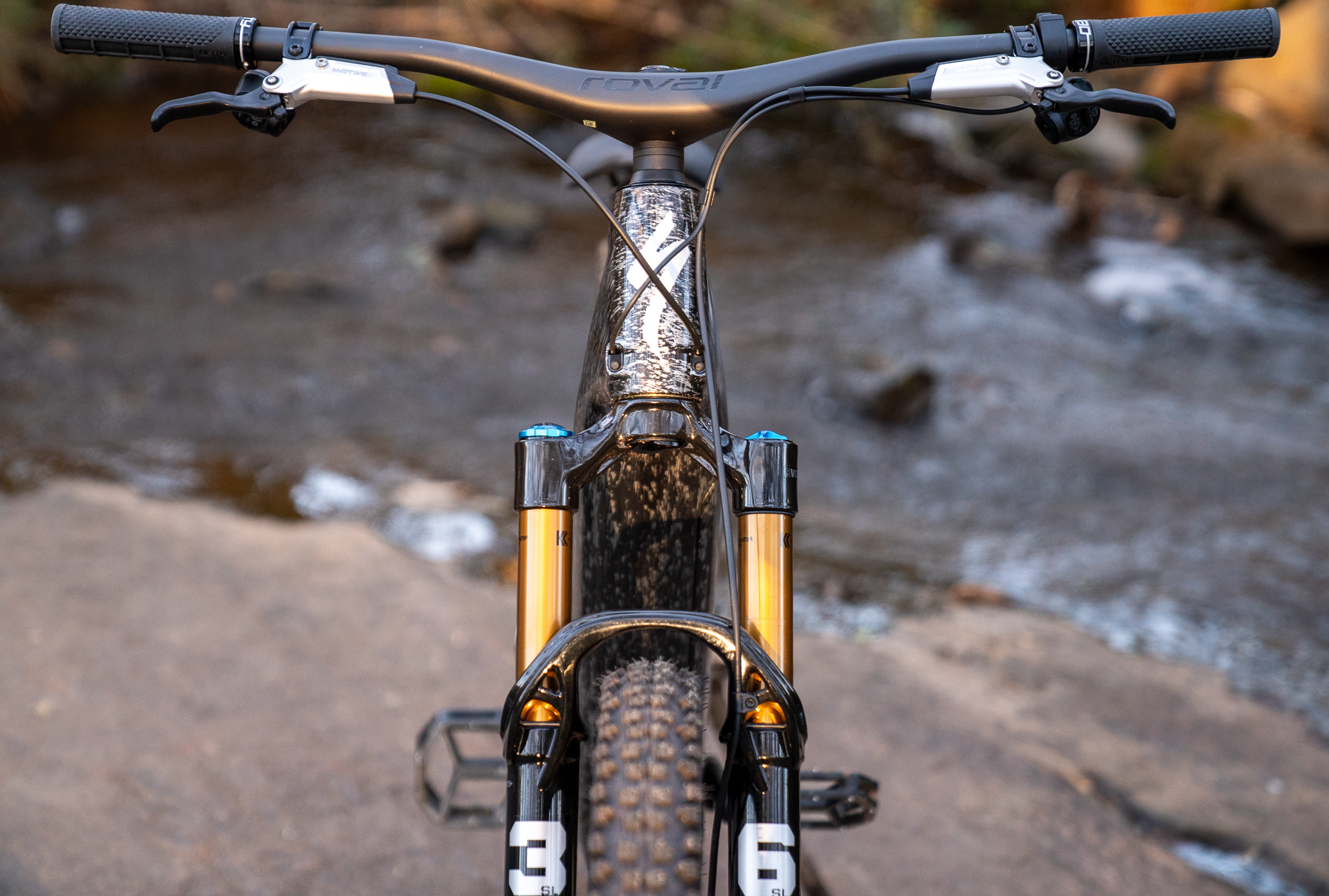
This was my first test of the new Fox Factory 36 SL fork, and it’s proven to be every bit as nimble and responsive as the Fox 34 it replaced. I worried that it might be overly stiff and weighty, but it’s just right for an e-bike. Would I say the same for the 36 SL on a short-travel, non-electric bike? That’s a test for another day.
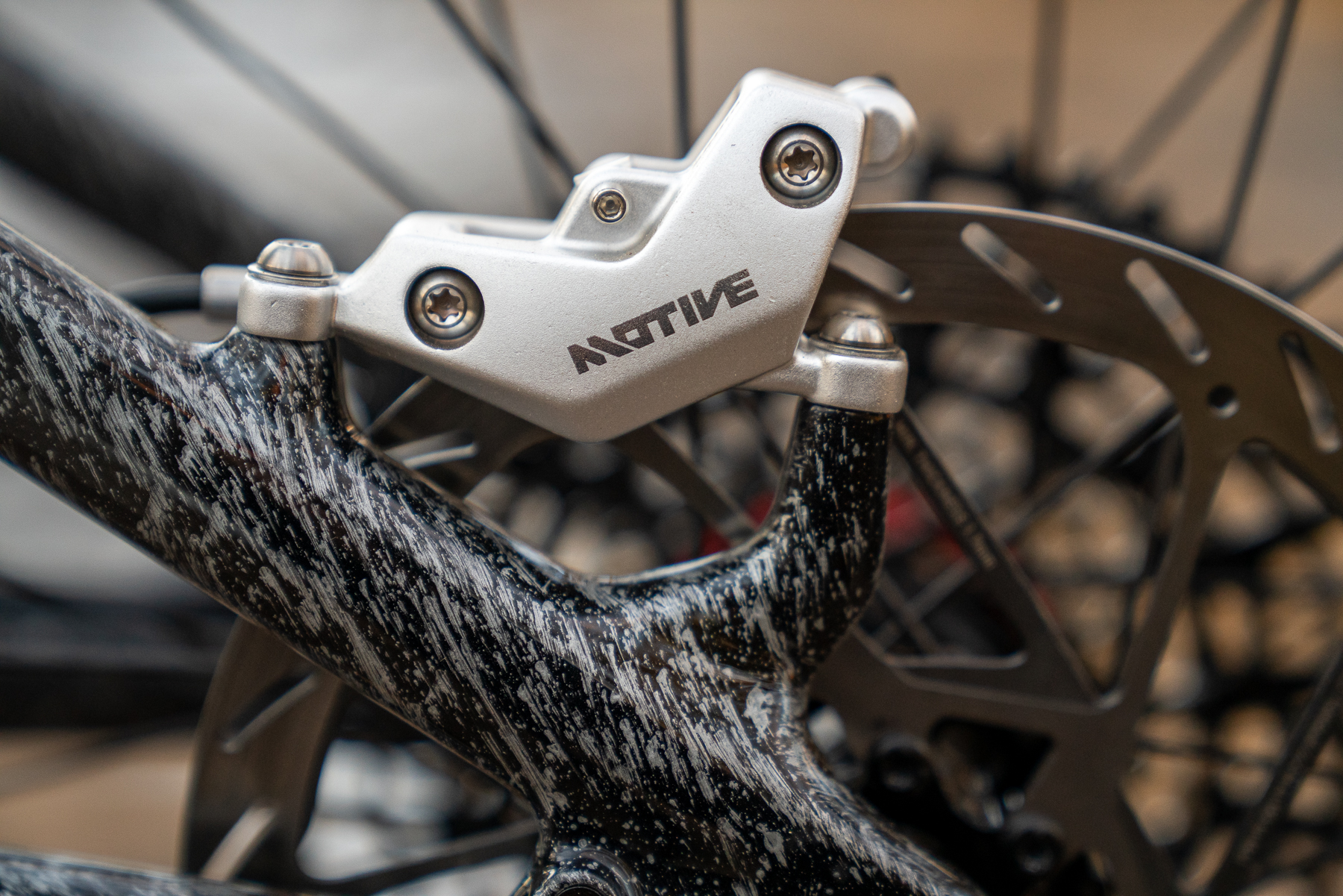
The SRAM Motive Ultimate brakes provide excellent stopping power. They’re not as quiet as the Mavens I’ve used in the past, and the power ramp is noticeably more gradual. I was about to write that I’d be willing to accept the weight penalty for a set of Mavens on this build, until I realized that would add 100g per brake. On second thought, the Motives seem like the right choice here. Reserve the Mavens for the heavier, longer-travel Turbo Levo 4.
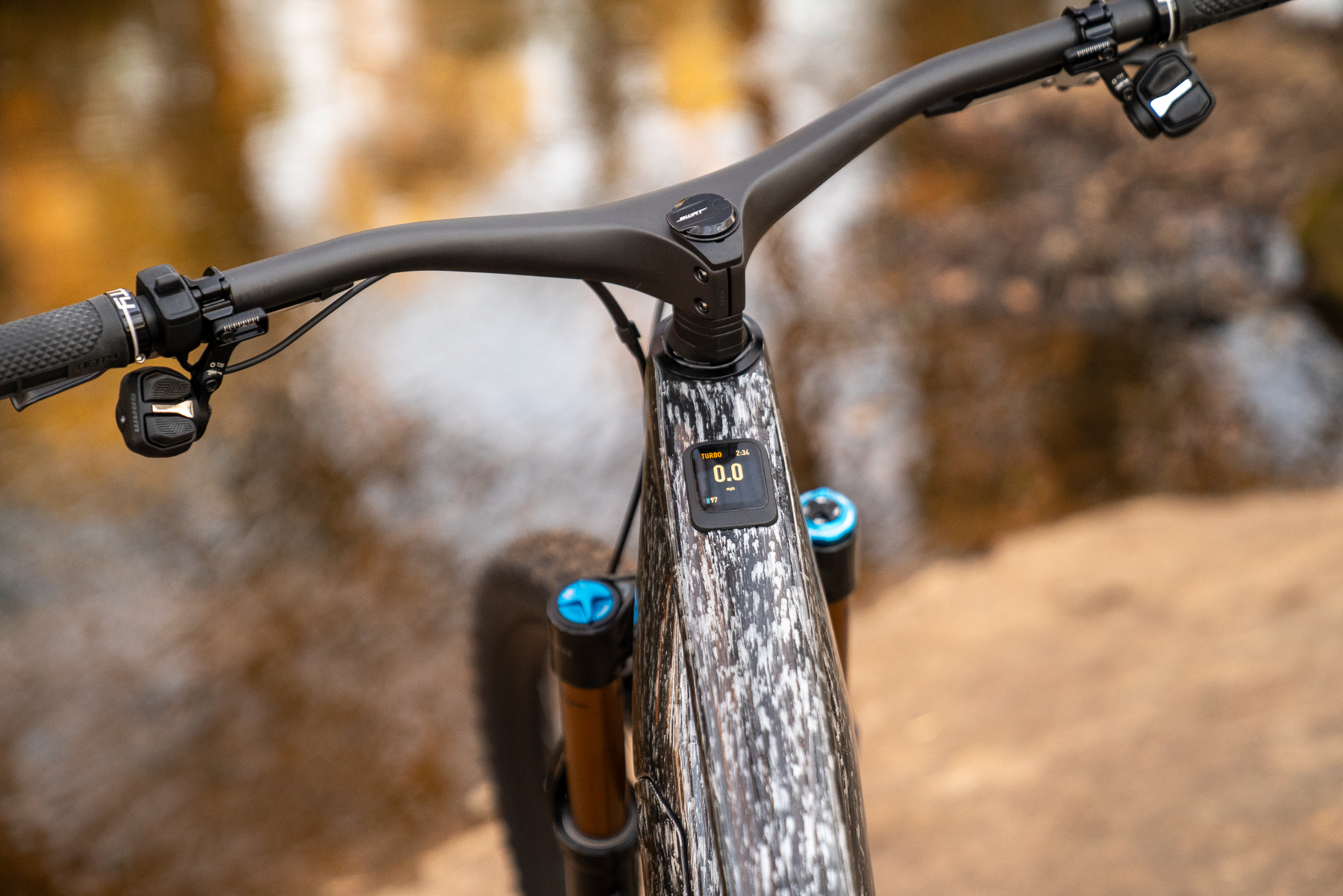
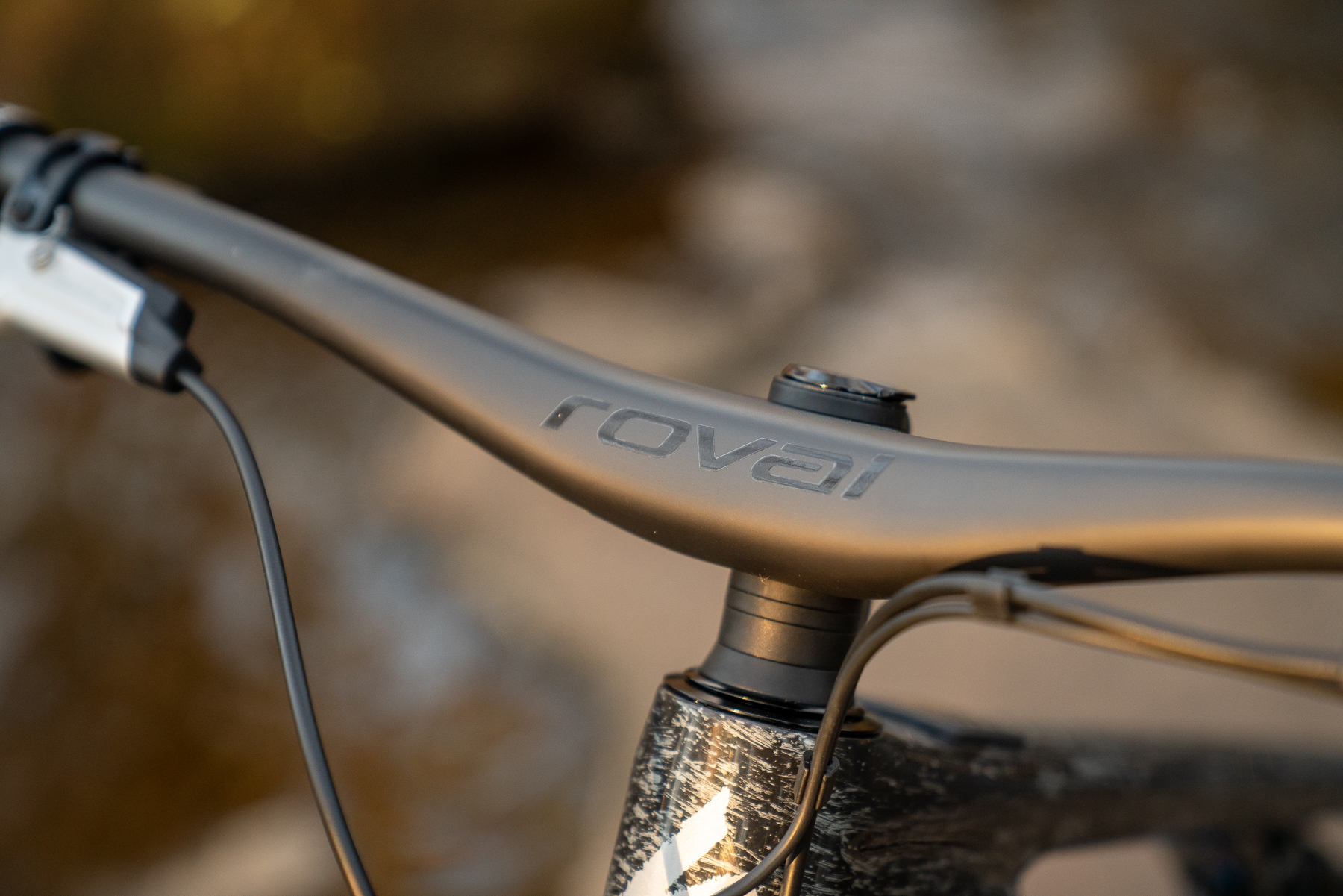
The Roval Control SL RISE Integrated cockpit sits at the helm of the Turbo Levo R, and frankly, it’s not my favorite. For starters, it’s not adjustable. You can’t roll the bars forward to tweak the upsweep and backsweep, or swap out the stem for another length. Because the bars are shaped, and not round near the clamp area, mounting a light takes extra effort. The integrated cockpit certainly cuts a sleek profile, but personally, I prefer a more traditional look.
Specialized specs their 3D-printed Power Mirror saddle, which is a delight. It’s spongier than the traditional saddles I’m used to running and is well-suited to e-biking, where riders spend more time in the saddle, especially on the climbs.
Battery charger
The S-Works builds ship with a premium 12A Smart Charger capable of juicing the battery capacity from zero to 80% in under an hour. (The standard 5A charger takes about 90 minutes.) Unlike a phone charger, the Smart Charger is massive and isn’t something you want to lug around with you.
The Turbo Levo R gives an indication of the charge time on its integrated display. When charging my test bike from 0%, the bike estimated it would take a bit over three hours to charge to 100%.
Class warfare
The Specialized Turbo Levo R is an expensive bike, with the least expensive build priced at $9,200. My test bike, the top-end S-Works model, costs an eye-watering $15,650. It’s hard to ride such an expensive mountain bike without feeling a twinge of guilt, like waltzing to the front of the line at Disney World on a Lightning Lane Pass while the hot and exhausted masses stand and wait for their turn at the ride. There isn’t an alloy version of the Turbo Levo R available at launch, but if and when one is available, that will hopefully bring the entry-level price point closer to $6,000.
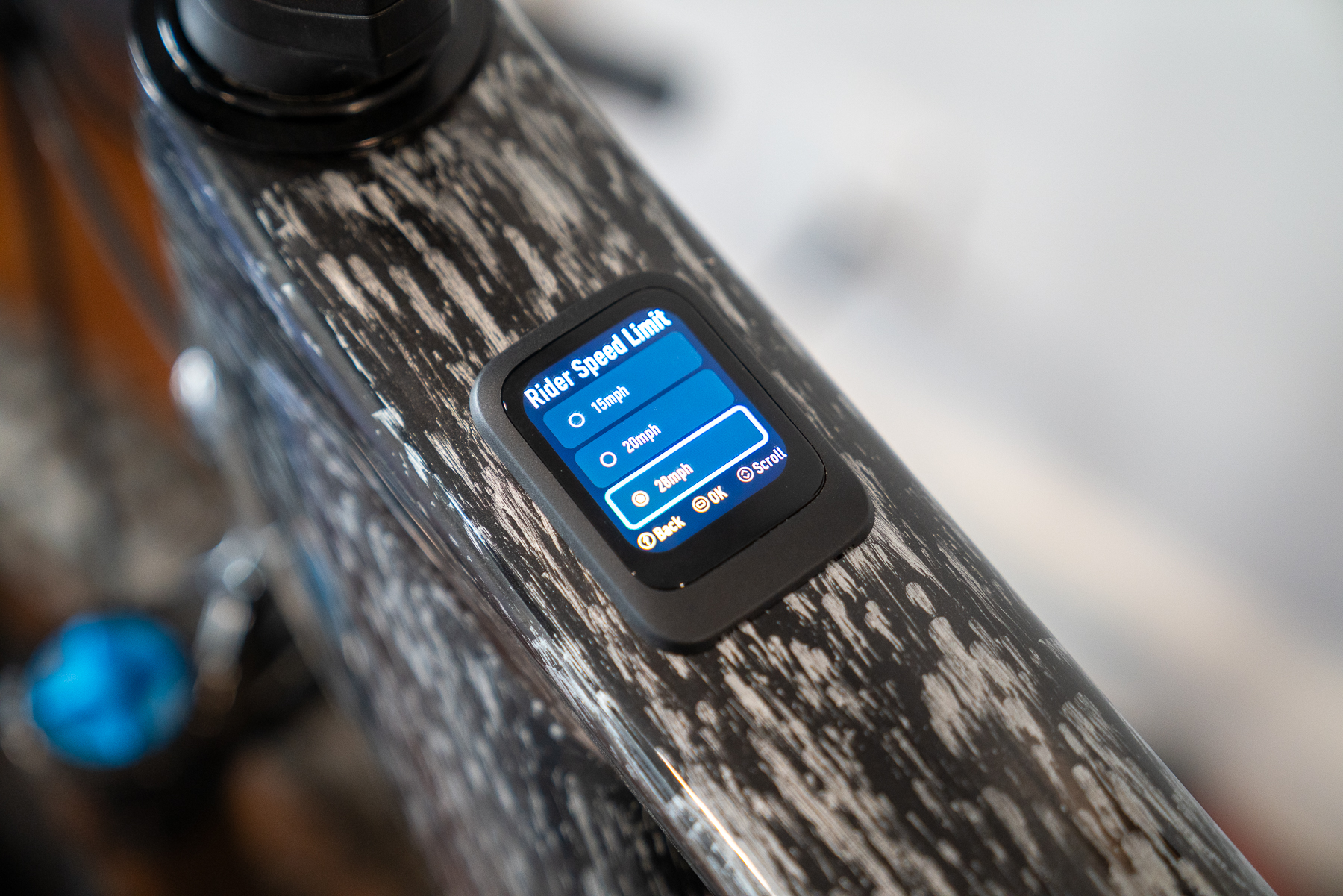
Like the Turbo Levo 4, the Turbo Levo R can be ridden in Class 1 or Class 3 e-bike mode. Most mountain bike trails limit access to Class 1 eMTBs with a maximum assisted speed of 20mph. In Class 3 mode, the bike has a maximum assisted speed of 28mph, which is significantly higher and will certainly be abused by some riders.
Personally, I only felt limited in Class 1 mode while riding on fire roads and pavement. On singletrack, speeds are limited by turns, terrain, and features more so than the speed of the bike. Though it’s possible for riders to “cheat” and use Class 3 mode on trails, I suspect most won’t bother because there are so few situations where you might find yourself able to pedal faster than 20mph.
Pros and cons of Specialized Turbo Levo R
Pros
- Tight and focused geometry plus weight distribution for hugging the trails at speed
- Suspension feels more capable than the 130mm rear travel suggests
- Goldilocks spec pairs a big battery with a more spritely and agile chassis
Cons
- Expensive with unnecessary touches like the integrated cockpit and in-frame storage
- Can get tripped up on technical trails, especially involving starts from a stop
Bottom line
The Specialized Turbo Levo R isn’t the bike we were expecting, but it’s the eMTB we want. Blending the best of both worlds when it comes to e-bikes — a big battery without the full weight of a big bike — it’s a compelling vision that optimizes the trail biking experience for maximum enjoyment.
The news stinks. Why not follow Singletracks on Google News to bring more joy to your day?


2 Comments
Mar 1, 2026
If we only had bikes like a 1988 Rocky Mountain Hammer (had one), or even my next bike, a 1998 Hammer, almost no-one would be riding today’s gnarly trails. Not that such trails would generally exist.
It used to be possible to ride Ontario, Canada mtn bike races on 700x35c tires on a steel fixed-gear w/ drop bars and front brake only. Ask me how I know.
The trails are vastly different now. Only one in a thousand modern mtn bikers would ride today’s gnarly trails on dual-rigid 1990-geometry, thumb-shifting, rim-braked 26er with horrible tubed tires. And toe-clips!
The woods would be empty of mtn bikers. Is that what we want?
Jeff, thanks for another great article. I love your focus on the ride experience, rather than a 3,000 word tech (parts) rundown for the bike.
(68 yrs old, South Vancouver Islander here, Gen 3 Alloy Turbo Levo. And a brain tumour causing me to to be unable to ride my Starling Murmur.)
Also: lifetime subscriber to your fine work.
Feb 26, 2026