
The Teravail brand is known for their lightweight gravel and mountain bike tires, and this spring they’re moving up into the cockpit. Backed by QBP, the massive US-based bicycle distributor, Teravail has just delivered a compelling ecosystem of quality grips, handlebars, and stems to complete the package. I’ve been running the Teravail Lytho grips, handlebar, and stem on my hardtail mountain bike since November, and here’s what I found.
Teravail Lytho grips
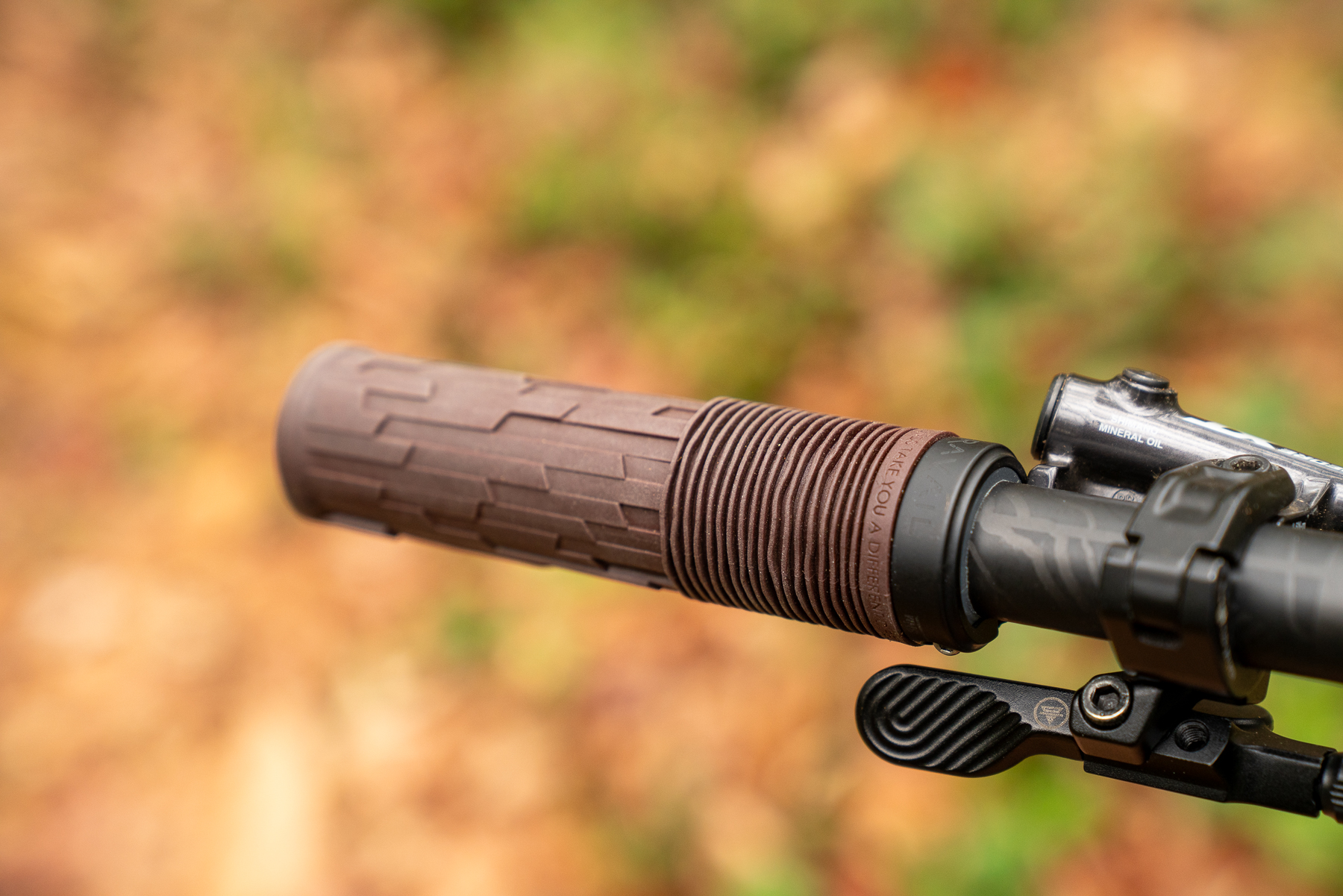
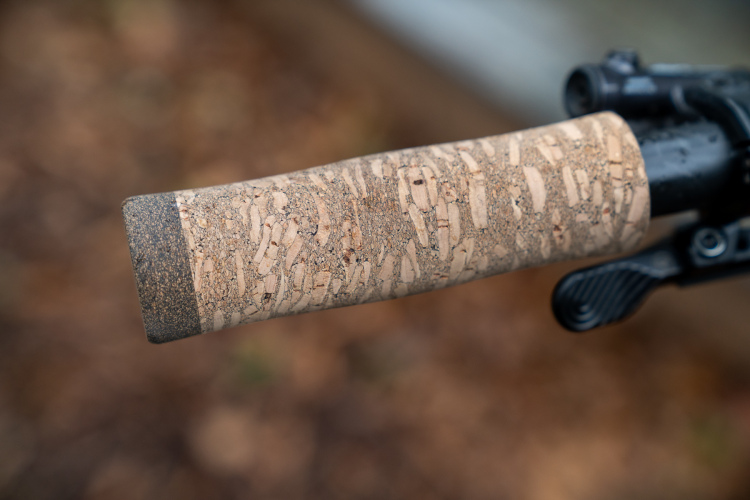
The new Teravail Lytho grips boast a distinctive look. The outer half of the grip evokes an organic and layered bark-like pattern, reminiscent of Sycamore or Pondarosa Pine. On the inside, the mushroom-cap texture is grippy and squishy between the thumb and index finger. These nature-inspired textures are complemented with a selection of earthy tones like Olive Green and Beetroot Red (tested). Of course, matching these particular earth tones to your bike might be a challenge, and unfortunately, Teravail doesn’t offer more popular accent colors like orange, purple, or red.
Teravail Lytho grip specs
- Weight: 130.5g (pair, 35mm diameter)
- 5 colors, 2 diameters (32mm or 35mm)
- Price: $28
- Buy from Teravail
Lytho grips utilize a single-sided lock-on design, which means there aren’t any loose bar ends to keep track of. Buyers can choose from a standard, 32mm diameter version or a thicker, 35mm diameter (tested).
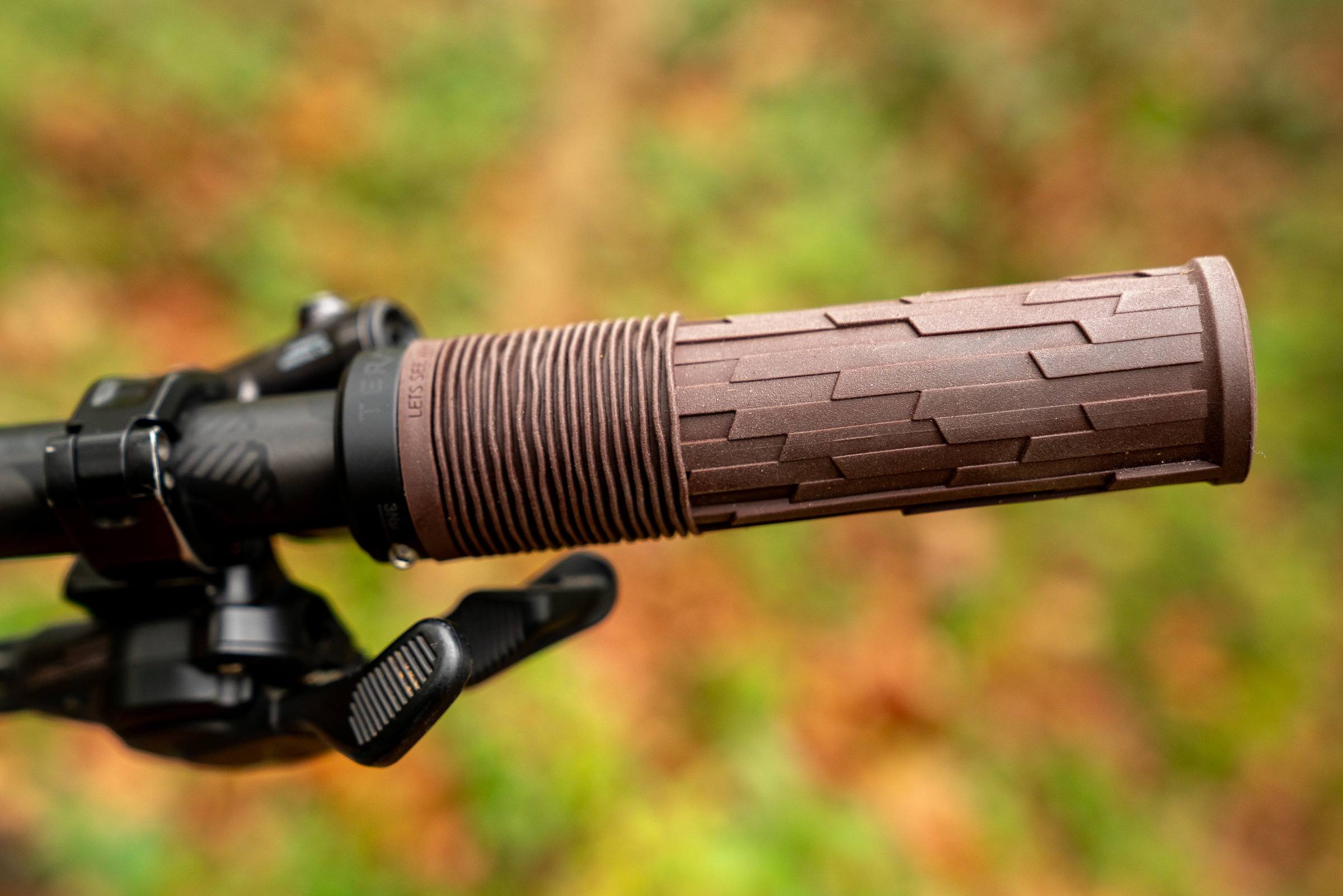
The large diameter, combined with a soft and sticky compound and the textured design, results in an excellent grip. In fact, it’s one of the best I’ve used, second only to the blocky and chunky Oury grips that are my go-to. The Teravail Lythos perform well with or without gloves, wet or dry, providing excellent comfort and control.
Teravail also sent a set of the 32mm version, and I gave them to my friend Paul to see how he liked them. “Good grip, comfortable,” he wrote via text message. “Seems like they will last a while!” He also mentioned that he likes the color of his grips, Caramel Brown.
Handlebar and stem
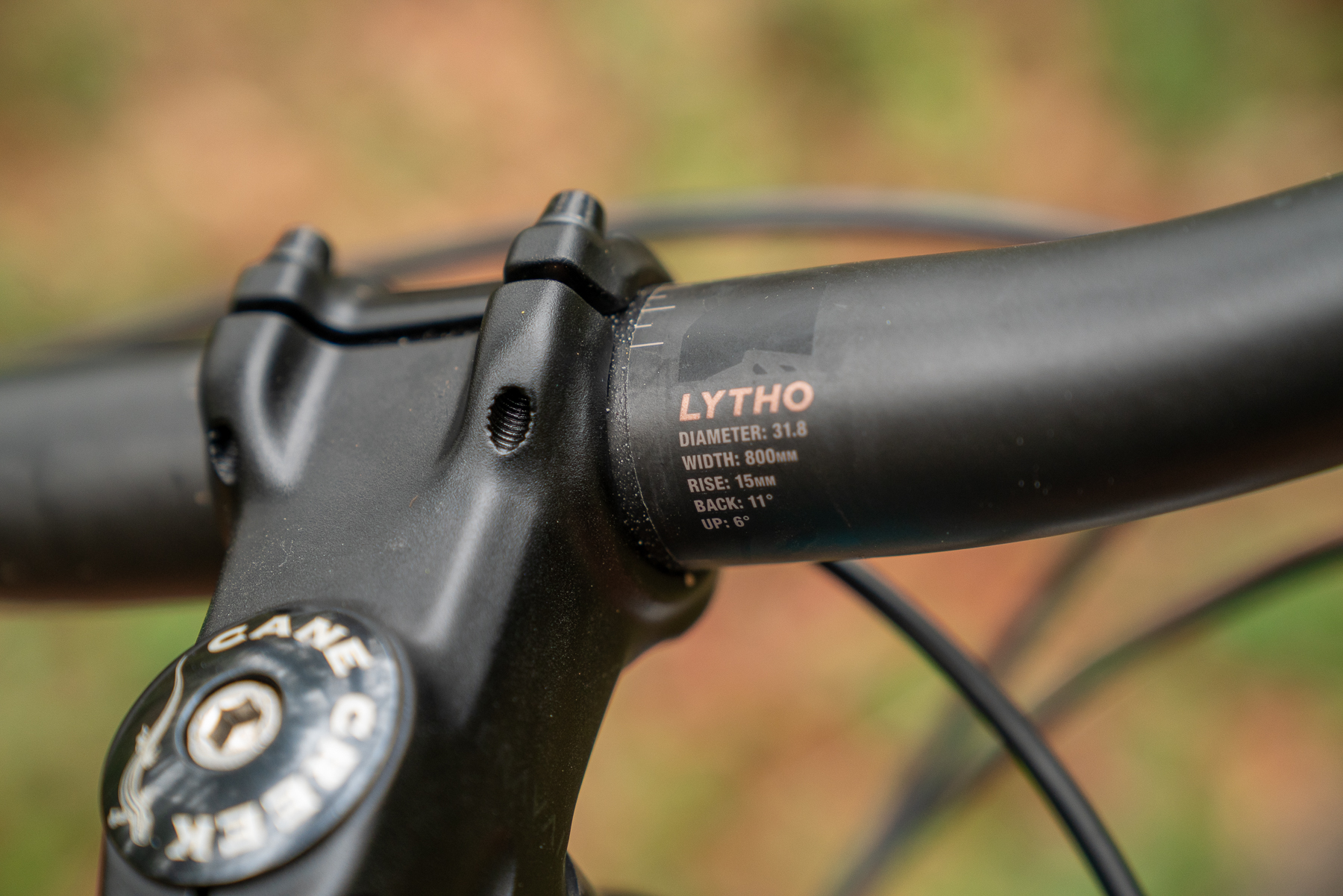
When I first learned about the Teravail Lytho handlebar, one feature in particular caught my attention: a 100mm clamping area. Officially, Teravail positions the Lytho as a bikepacking bar, but the 6° upsweep and 11° backsweep, paired with a slight 15mm rise, make it a good choice for mountain biking too.
Lytho handlebar and stem specs
- Bar: 31.8mm clamp diameter
- Bar shape: 6° upsweep, 11° backsweep, 15mm rise
- Bar width: 800mm (tested) or 760mm, cuttable in 10mm increments
- Stem lengths: 35, 45, 55 (tested), and 65mm. 0° rise.
- Weight: 215g (handlebar) and 159g (stem)
- Price: $150 (handlebar) and $45 (stem)
- Buy from Teravail
Brake levers. Dropper post remote. Shifter. GPS unit. Bike light. Bell. I don’t know about you, but cockpit space is always at a premium for me, even with full-width 800mm bars. And that’s a pain point even for regular mountain bike rides. Bikepacking adds even more stuff, like feed bags and handlebar rolls. Though about half of the Lytho’s 100mm clamp area is covered by the stem, there’s still an extra 3/8 of an inch on either side compared to the other bars I checked.
Going the other direction, there’s more than 10″ of 22.2mm straight diameter tubing for grips, controls, and various doodads before the bar begins its transition to the clamp. And that too is a longer span than the other bars in my quiver offer.
The Teravail Lytho handlebar is made with carbon fiber and weighs a competitive 215g. It’s got a 31.8mm clamp diameter with a textured coating at the clamp, so you aren’t tempted to overtorque the stem. With a 31.8mm diameter — as opposed to 35mm, which is becoming more common — the Lytho has proven to be compliant enough for all-day comfort.
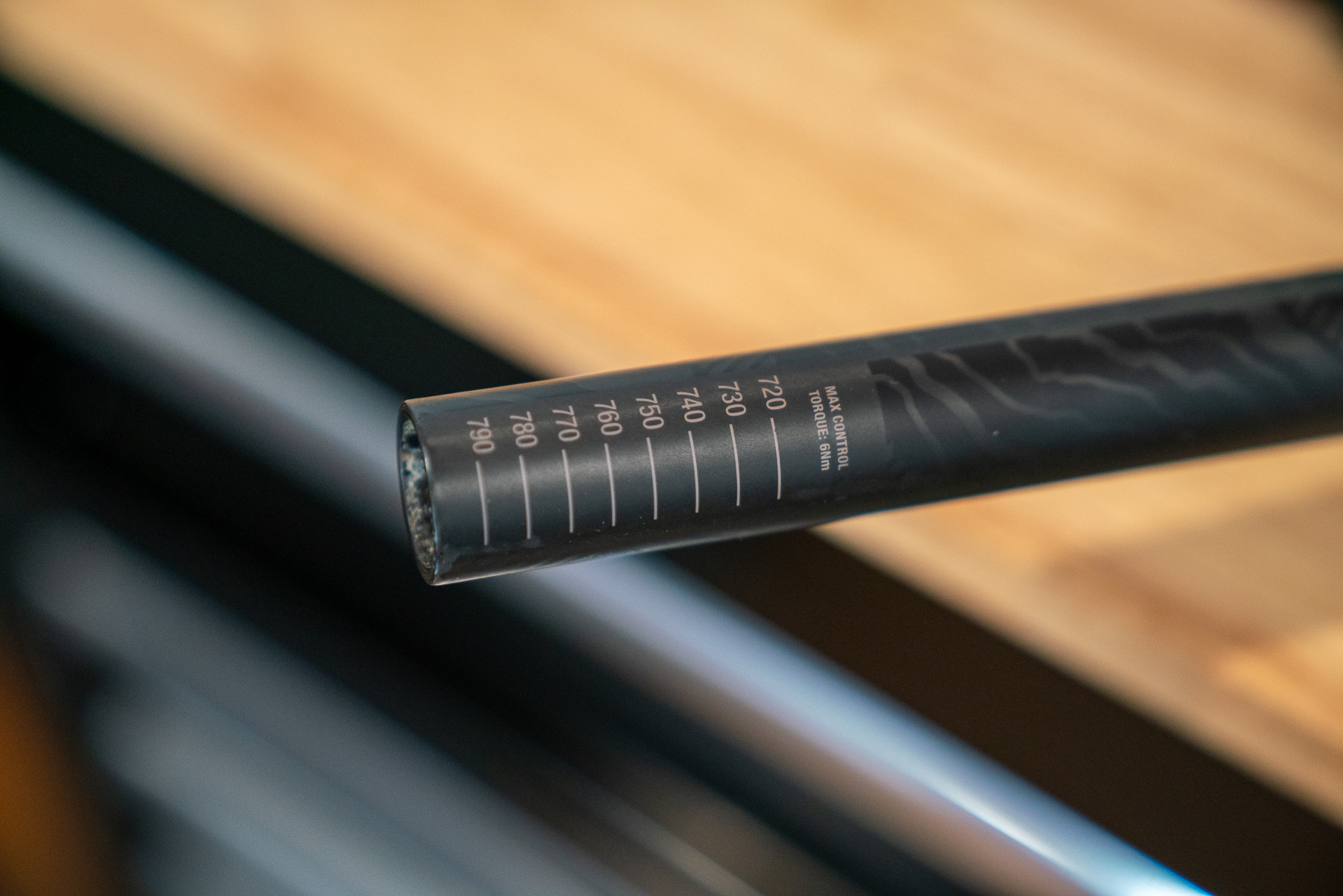
I’ve easily ridden hundreds of miles of trails with the Lytho handlebar so far, from smooth singletrack to technical and rocky descents. It was only while preparing this review that I learned the Lytho is “tested to ISO 4210 MTN for off-road riding and jumps less than 24 inches.” Oops. There’s a very good chance that some of my jumps exceeded 24 inches, fortunately with no ill effects. Jumping certainly has the potential to put a lot of force on the handlebar, but so does loading one up with several pounds of bikepacking gear plus the weight of a tired rider leaning into a gravel road descent in the dark. The Lytho has proven to be plenty strong for everyday riding, and I trust it for bikepacking as well.
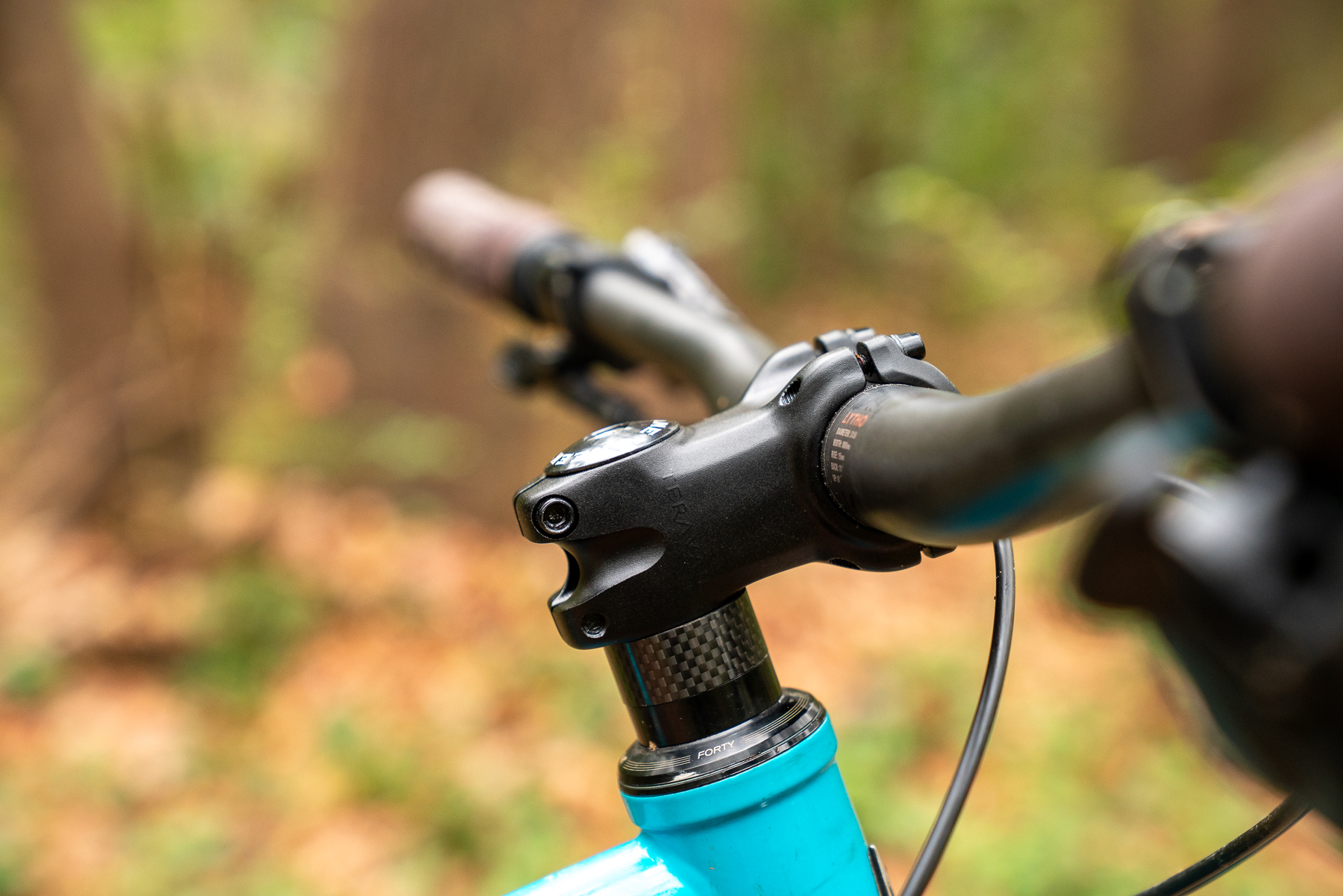
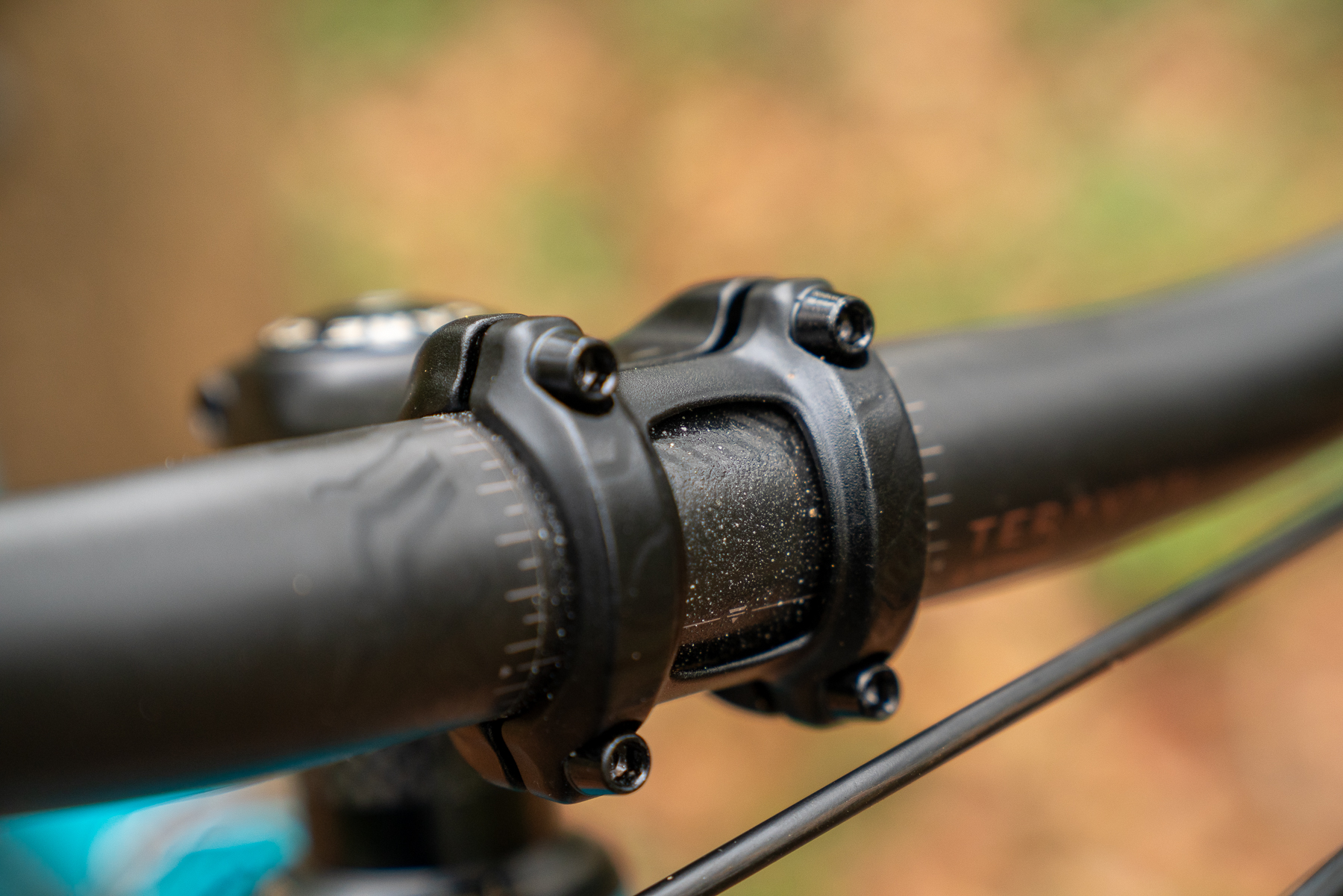
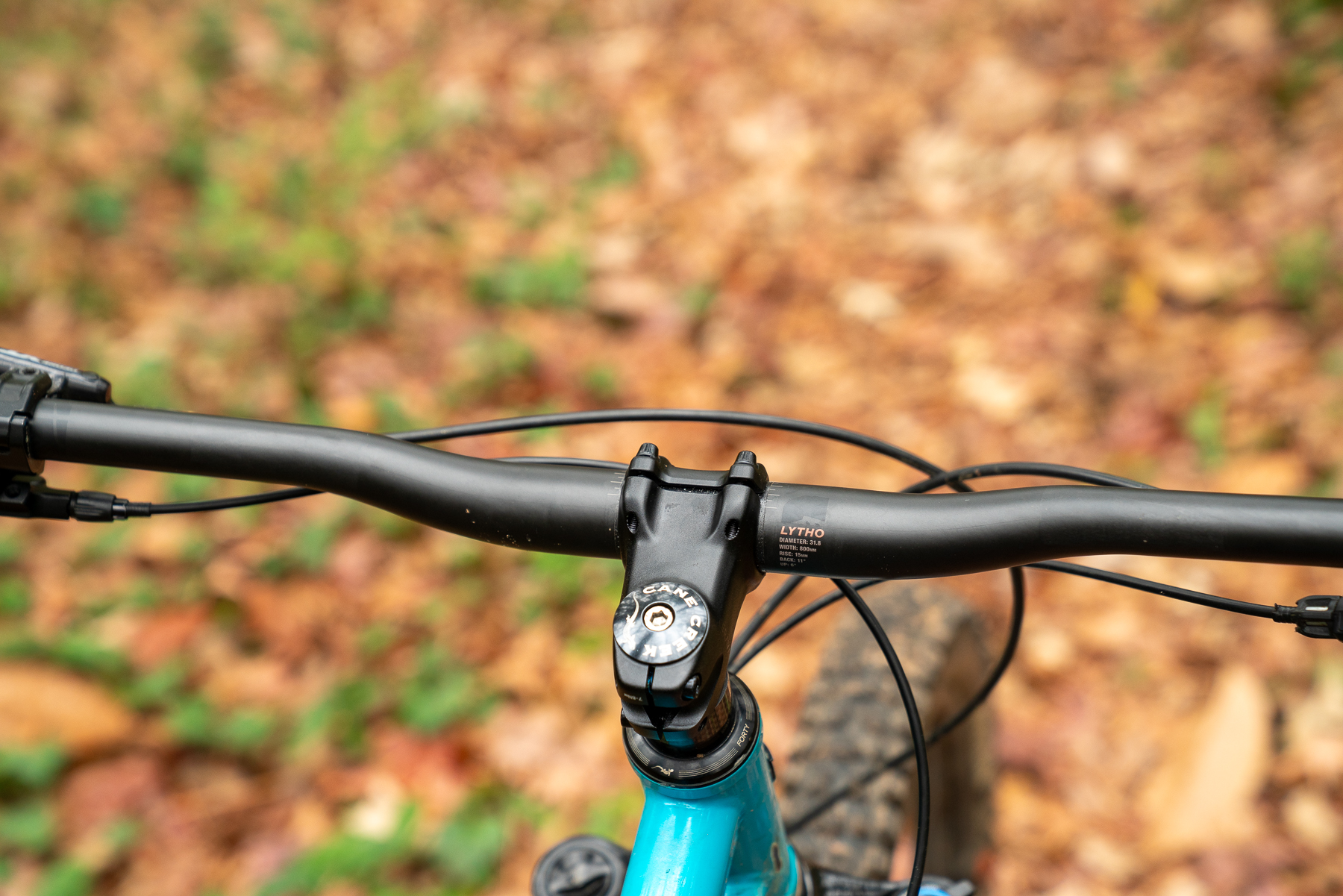
The Teravail Lytho stem… What is there to say about a stem? Honestly, a lot!
For starters, Teravail deserves credit for offering the Lytho in a wide range of lengths. Given the bikepacking focus, it’s not surprising to see 65mm lengths, but the truth is, shorter is not always better when it comes to mountain bike stems. If you’re tall like me, you may be doing yourself a disservice by running a short, 35mm stem. I tested the 55mm Lytho stem, and it feels great on my hardtail, extending my effective reach and giving me some additional leverage over the steering.
It’s disappointing that Teravail didn’t add any center markings to the stem and handlebar to help with alignment. Of course, you can use the Teravail stem with any handlebar, but tighter integration between the two Lytho components seems like a missed opportunity.
The Teravail Lytho stem is designed to be clamped to the bar with an equal gap at the top and bottom of the face plate. That’s pretty standard, but I prefer a stem that is flush-mounted at one end. There’s less guesswork when it comes to installation, and the look is cleaner in my opinion.
The Teravail Lytho stem uses 4mm hex bolts at the steerer and handlebar clamps rather than Torx bolts. It’s not rational, but I like hex better. So thank you for that, Teravail.
Bottom line
The Teravail Lytho cockpit is a smart new option for bikepacking and everyday riding, too.
The news stinks. Why not follow Singletracks on Google News to bring more joy to your day?




0 Comments