
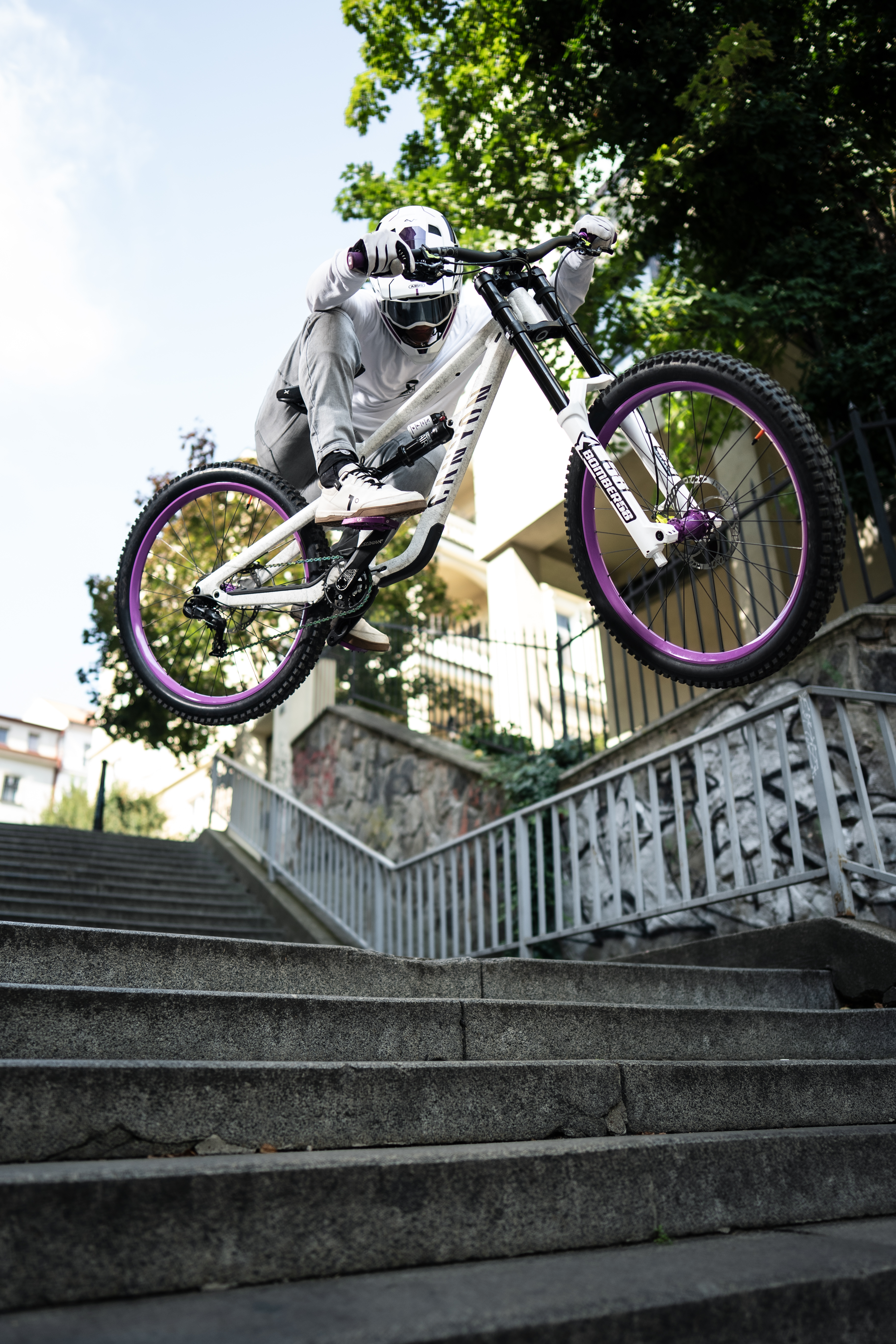
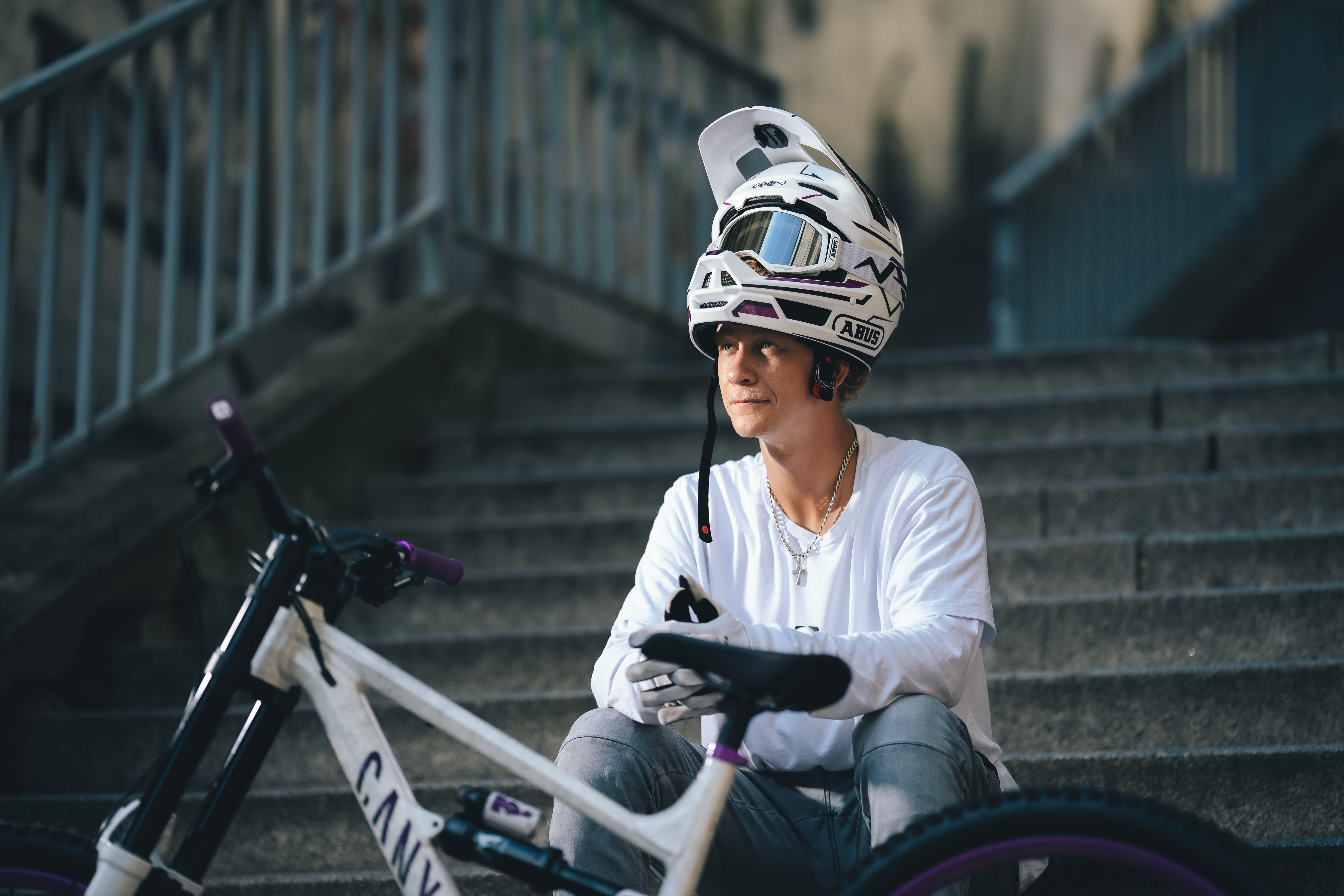
Gabriel Wibmer is a 23-year-old Austrian freeride and trials rider who’s built a massive YouTube following with his creative urban riding videos, including the viral ” Late for School ” series that’s racked up nearly 25 million views. Sponsored by Canyon bikes and hailing from East Tyrol, Austria, Gabriel has proven himself both as a Downhill Racer and as one of the most innovative content creators in mountain biking today.
- How did motocross and trials riding shape your mountain biking style? Who are your biggest influences?
- How has YouTube changed since your “Late for School” video in 2019? Do you think it is harder to go viral now?
- Is it true you came up with the “Wibmer Impossible” concept after having a bike stolen in Prague?
- Do you usually start with a location and build a story, or does the concept come first?
- What was the most challenging trick in “Wibmer Impossible”?
- How is your Canyon Torque DH bike set up? What modifications do you make?
- How did you prepare for the tricks in “Gravel Mania“? Do you ride drop bar bikes regularly?
- What was the hardest part about riding bike park features on a gravel bike?
- Where is your favorite place to ride?
- Do you have interest in racing downhill or trials again? What about urban downhill like Red Bull Valparaíso?
- What projects are planned for 2026?
Follow Gabriel @wibmergabriel on Instagram and his YouTube channel. An automated transcript is provided below.
Support this Podcast
- Review the Singletracks podcast on Apple Podcasts or drop your feedback in the comments below!
- Make a donation to help sustain future episodes.
- Become a Singletracks Pro Supporter.
Never Miss an Episode
- Listen on Spotify
- Listen on Apple Podcasts
- Listen on Google Podcasts
- Listen on Stitcher
- Listen on Overcast
- Get the RSS Feed
- View all Podcast Episodes
Automated transcript
Jeff Barber 0:01
Hey everybody, welcome to the Singletracks podcast. I’m your host, Jeff Barber, and today I’m excited to be joined by Gabriel Wibmer. Gabriel is a 23-year-old Austrian freeride and trials rider who’s built a massive YouTube following with his creative urban riding videos, including the viral ” Late for School ” series that’s racked up nearly 25 million views. Sponsored by Canyon bikes and hailing from East Tyrol, Austria, Gabriel has proven himself both as a Downhill Racer and as one of the most innovative content creators in mountain biking today. Gabriel, thanks so much for joining us today.
Gabriel Wibmer 0:39
Yeah, hello everyone, and thanks for having me. I’m really stoked to do this, and let’s see where this goes today.
Jeff Barber 0:48
Awesome. So let’s start at the beginning. I understand you started with motocross when you were just five years old, and then you moved to trials riding and eventually discovered downhill at age 12 in Leogang. How did those early disciplines shape your riding style?
Gabriel Wibmer 1:06
Yeah, yeah. First of all, I started with riding motocross. As you said, it was like when I was like five or six years old. And Motocross is, like, probably one of the brutal, brutal sports, which is out there, because this is, this is pretty insane, especially Supercross. It’s a pretty tough sport. And, yeah, right, like, I think I rode until, like, when I was like eight or nine years old, because then my parents decided that it might be a little bit too dangerous, because we didn’t really have any training facilities in east of Tyrol.
Jeff Barber 1:48
And did you crash a lot?
Gabriel Wibmer 1:50
I didn’t, but the speed was getting faster and faster. Yeah, there was, there was, like, the main, the main problem, and the training facility. It was like, Yeah, only on weekend. Like, training was only on weekends. And so we, we had to, yeah, change plans a little bit. But it was pretty cool. I think it was a pretty, pretty nice start, because there was, like, the my roots, so to so to say, because, like, it was fast and it was full of adrenaline. It was so fun, and it was really, really, really fun. But yeah, as I said, we all my parents wanted maybe a little bit a change of that. And then we discovered the trials motorcycle riding there was, like, a more playful way to spend your time. And even, like, we had some competition there, and also had Austrian championships, I took part in them. And there was, like, more more chill. But after, like, several years, it was too, like, it was just boring for me. I don’t know, like, when I was like, 11 or 12, years old, and in the meanwhile, maybe it’s important to say that trials motorcycle got me to the trials riding.
Jeff Barber 3:15
I assumed trials was just bikes. I didn’t realize you did trials motocross. That’s that sounds difficult.
Gabriel Wibmer 3:21
Difficult, yeah. It was trials motorcycle. And then, like, the trials motorcycle thing was just too boring kind of because, like, when you start with motocross, you just want to go higher and higher, yeah. And I said to my parents, well, I don’t think I don’t I want to do this anymore, because it’s just not the right thing.
In the meantime, yeah, the Danny McCaskill video dropped, Inspired bicycles. I don’t know what was the exact name, but whatever everybody knows the video. Danny McCaskill, and he actually got me into the street trials thing. And it looked I was so fascinated by what he did. And there was, there was, there was such a cool thing to do because he was so creative, and kind of, I wanted to do that as well, more in this direction, because, like, he inspired so many people. And I was like, I need to, I need to try it. And, yeah, my my parents, yeah, didn’t hesitate to support my dream. And they bought me the street trial. It was more like a kid’s bike, and it was the best thing ever.
But like coming back to the question, how this, all of this, maybe the impact, what it had to my riding style. It was like, still to this date, I think it was the best, like, how to say, like, the best combination of these two different sports. Because, on the one hand, you have the more maybe aggressive and more like high risk, high speed style, and on the other side, you have the technique kind of thing with more patience and and those two combined is the ultimate dream, because, yeah, like, it’s just so important to have a good technique and then having the two.
Jeff Barber 5:45
Yeah, you have, you have the speed. I mean, it makes sense now that those two influence it. When I see your videos, like the Late for School in particular, like when that came out, it was like, Oh, my goodness, this, this guy is, like, pedaling so fast, and he’s riding so fast, and then he’s like, you know, going into these trials moves and like, is totally different style, different from Danny, different from what a lot of other people were doing, yeah, and it is that combination,
Gabriel Wibmer 6:14
Definitely, it’s a combination. And also, when I got into downhill racing, there was the perfect mix. Because sometimes you have, like, slow pace corners or whatever, and then you can use, like, I could use the trial techniques to get around more faster, and overall, like the bike still feels like more like my own body sometimes, because I really know what to do and how it will react to certain things. And this helps me a lot to to progress a lot, but also make it as safe as possible. And that was always like, especially when, I mean in general, maybe when you think about motocross riders. You think like they are insane or whatever, but those people are probably, like, the most calculated people out there, and that’s, that’s what I would say, like I’m really calculated in in in my tricks and in my riding, so that you minimize the chance to get injured or crash a lot or whatever. I mean, crashing is always part of the game. But still, I mean those two, two things combined with the speed, on the one hand, with the motocross routes and then on a trials bike, yeah, it shapes like a perfect combination, which we obviously didn’t know, because no one did this combination before, and that was, that was quite cool to figure it out. Yeah, that was, that was pretty, pretty cool decision. And nice, nice chapter, both of them.
Jeff Barber 7:52
Yeah, awesome. Well, so when you were starting out with trials, when you’re first doing the trials bicycle, like, how much time were you putting into that? I mean, was this, like, hours every day or, like, it seems like that requires a lot of time.
Gabriel Wibmer 8:08
Yeah, definitely, for sure. And I also did, like, when I, when I started with the trials riding, I did the trials competition as well, so the trials cycle competition, and also got Austrian champion in my age category, which was, yeah, which,
Jeff Barber 8:23
How soon before you started, until you were the champion?
Gabriel Wibmer 8:27
Probably, like, two years, two or three years, I don’t know. I’m not sure yet, but there was more like, like, it was so natural, it didn’t feel like a proper competition. Obviously, I did the World Cup, but it was just so fun. And responding to your question how much time I spent, like when I was a kid, I didn’t really count the hours, but after school, every day, every single day. And I mean really, every single day. It was the coolest thing ever. And then my friends got a bike as well, and it was the best thing, because after school we we met up in our village, and then we just spent hours just riding, and not really focused on being the best rider out there, but just having fun, figure it out, just have a good time. And that was the best thing ever after school. There was such a good balance like it was, it was the dream back then.
Jeff Barber 9:34
Yeah, that’s awesome. Well, so one of your earliest videos late for school came out, I think, in 2019 and that was the one that really put you on the map. I’m curious, how has YouTube and the whole content creation landscape changed since then, or has it changed? Are you still kind of doing the same thing?
Gabriel Wibmer 9:55
Definitely, I mean getting 1 million views now is a lot harder, and I think it’s, it’s much more prestige nowadays. If you get 1 million views on YouTube, because you can’t compare Instagram 1 million views or TikTok, 1 million views to YouTube because YouTube is way harder, but way more respected. I would say, much more prestige kind of way, because…
Jeff Barber
It’s like TV now.
Gabriel Wibmer
Yeah, it’s definitely TV. And also the feedback is, is, is it’s not that fast paced kind of way, because, like, the people take time to watch the video, analyze it. So you get, like, really good feedback out of the YouTube comments, which is really cool. You rarely see that on Instagram or whatever. Yeah. So definitely, I would say it’s much harder to go viral these days because there is so much content putting out. And like, compared to the Late for School, it’s still, it’s still one of, the, one of my most viewed video to date, which is, which is pretty wild when you think of that, because, like, the Late for School video, it took us probably five days, or something, four or five days. Maybe not even. It was such a random side quest, in a way, it was pretty cool. Originally, we planned to call it Late for Work, but then somehow we couldn’t find a place to go to a workplace and film there. And then we just took the school in my in my area.
Jeff Barber 1 11:43
You were only, like, 15 years old, anyway, right?
Gabriel Wibmer
Definitely, yes, yes. Exactly.
Jeff Barber 11:50
Were you going to like wear a suit, if it was Late to Work?
Gabriel Wibmer 11:53
Yeah, definitely. But still, you could have, you could have done it. It wouldn’t be that bad. But still, Late for School is perfect. Maybe, if I would do it today, it’s probably like late for you university or whatever. But yeah, as I said, I think, like the 1 million views, it’s much harder to get. I think it’s much harder to start nowadays, because the not even the tricks must be good at all, but the filming and the editing right should be on a pretty high level, so to speak. I mean, still, like if you do POV stuff with a GoPro or whatever, then it’s pretty easy, because POV is usually not that hard to edit, and people love to watch it. But if you do a story-based like the Late for School, if I put this video, like, if I were like, if I if I would be 15 again, and put this video out, it wouldn’t get like, 14 million views, that’s for sure, because it just changed, and it might be harder to get into the business, especially when you need to convince new sponsors to support this project. And because back then, nobody gave us any budget or whatever to create these videos, because we didn’t do it before. Yeah, so yeah, it, I think nowadays it’s, it’s much harder to get into the business, stay into the business, because you need to be pretty consistent, because sometimes you have this one hit wonder, and that’s what I want to prove as well, that if people say, like, Yeah, I mean, it was a nice time, but now there are no more videos coming or whatever, or it’s not the same anymore. And then we still want to prove every year that you can get a little bit more crazy, get a little bit more creative.
Jeff Barber 13:56
Which is what you did with with Wibmer Impossible, yeah, that just came out in December, and, oh my gosh, I love it. Like, definitely my favorite video of the year, really. And, yeah, I love the, like, cops and robbers theme, you know, like, I’m kind of surprised we haven’t seen this before, yeah, because obviously that’s a popular there’s movies, you know, made about the same theme, you know, catch the thief. And I saw in the behind the scenes documentary, you said that you and your team came up with this concept after a bike was stolen while you were scouting locations for the film. Is that true?
Gabriel Wibmer 14:35
Yes, that is true. There was such a wild time we we went to Prague, and then we just did a spot check, because we wanted to see how it is in real life to be there and see all the spots. And then, yeah, we, we slept in, like public place hotel kind of, or at least the parking was pretty. The public. And then I tried to to lock the car with, like, keyless, or like wireless, yeah, and, and then it didn’t lock. That was really weird, because, like, we said, Dude, that that never happened before, and it doesn’t look or it almost, it almost looked like as it is, like, disconnected with the car, yeah, and then, because we had 2 e-bikes in the car. And then I said to my cousin, which is like filming and doing some some editing stuff as well, I said to him, let’s, let’s do one, at least one bike, 1 e-bike out of the car. Because, like, this is, this is getting, like, not lost, no. This is really strange now. And then we put one out of the car and left one in there, and we covered it with, with multiple things, with jackets and whatever. So you couldn’t see anything? Yeah. And then the next day we came back and he said, like, where did you do the E bike? I was like, why? And he was like, Yeah, because there’s nothing in there anymore. And I was like, No way, no way, because I thought I was getting paranoid or whatever out there, because I was like, Yeah, I don’t know how safe it is to leave the bike.
Jeff Barber 16:27
Do you think somebody was jamming the remote?
Gabriel Wibmer 16:31
Yes, yes. Kind of Yeah. We think that that is the thing. Why couldn’t lock the car and after I like, 10 or 20, like, after the 20th try, it locked. Yeah, that never happened.
Jeff Barber 16:46
Because they can, like, steal your code or something.
Gabriel Wibmer 16:49
I don’t know, I don’t know how it works. But that never happened before and never happened after. So it was only thing in Prague, and that’s why i That’s why I only, like, it was stupid to leave, like, one bike in there, anyways. But we said, like, it’s only the last night.
Jeff Barber 17:13
At least you got your idea for the video, so it was worth it?
Gabriel Wibmer 17:18
Exactly, exactly. And then we, yeah, yeah. We were just when we when we went home after having, like, the police, that we went to the police and did all this kind of stuff, and then we were just kidding around, like, on the way home, how fun it would be to have this story, because it just, it’s, it’s based on the real story, kind of, right? And that’s when, with my impossible came to life, kind of, or at least a vision, came to life, and then having this in the behind the scenes makes it just so fun and so natural, because we didn’t have to make up an idea.
Jeff Barber 17:59
Did you have an idea, though? I mean, you knew you wanted to film in Prague, and so did you have some ideas of what you thought you might do?
Gabriel Wibmer 18:07
To be honest, not really or not 100% because we went there and we knew the urban riding must be next level over, over there, yeah, and I already had a pretty sick [Canyon] Torque downhill bike to ride and like the story was still not there, which was not ideal, but we knew we’re going to do freeride in Prague, because it was like such a dream to ride up there and with all these stairs, all these spots, there was such a cool thing. And, yeah, the story, the story was still missing storyline, yeah, and then and that, there was just perfect kind of way would it, was it just Yeah, kind of way it, it wanted it to be like that, you know, yeah, like, great story. And, we were pretty happy to have a nice story. And also, as you mentioned, nobody did it before like this, that the biker, the chaser, and there was, there was a pretty cool thing, and so natural. And even, like now with the behind the scenes, it was really, really fun.
Jeff Barber 19:28
And it’s like, I mean, you could almost do a whole series of it. I mean, there’s like, James Bond has 25 movies that are all the same kind of idea, trying to get the bad guy.
Gabriel Wibmer 19:38
And exactly, yeah, that’s why we came up with the Mission Impossible theme. It was kind of, it all felt like Tom Cruise. Yes, it was like, so easy to get like, like, sometimes you struggle a lot with the idea, and it’s not that natural. But with this one, the title was, was, was really cool in my point of view. And. Also the story and the riding up there was, was unreal. And, yeah, it was. It was really cool to do all that, all that stuff, awesome.
Jeff Barber 20:11
Well, I think I heard that the production took 26 days across kind of four different filming blocks, yeah. So of all of that, what was the most challenging trick or scene to nail? Like, what did you spend the most time on, or, or what was, what was the one, maybe even that you were you’re most worried about?
Gabriel Wibmer 20:30
Yeah, maybe, if I, if I would like to start with the overall problem or not, let’s not say problem. But challenge was that there was, there’s so much tourism going on in Prague, this was really, really wild, because sometimes you’re getting ready for, for take or like, like, riding the stairs, jumping the stairs, whatever, and then you have to, like, when you use, when I’m usually riding, I’m riding like, in a bike park or skate park or whatever you’re getting, like, ready in your mind, and then once I’m ready, I’m going to hit it. And every time I said, like, All right, guys, I’m ready, let’s do this. And then they were like, no wait, there’s someone coming. And that was so hard to regain this focus all over again and all the time. This was, like a proper challenge. But especially, what was a big challenge was, I think it was a step down backflip. There was probably, like the most challenging thing in the video, and no one was in the middle.
Jeff Barber 21:38
I was surprised because that, I mean, that was like, your most dramatic trick, which, you know, usually would be like, at the end of the video, yeah? But this was like, it hits you in the middle, and you’re like, oh my goodness, that was insane.
Gabriel Wibmer 21:52
I like when, when things are not that obvious to think of. And maybe especially when you think in the middle. All right, that’s the middle part. There’s maybe not the big highlight, yeah. And then you see this drop at first, and then back flipping it like that’s kind of between the trees too.
Jeff Barber 22:08
I mean, yeah, hopefully people have seen this, this video now, and if they haven’t, they’ll go watch it before we talk about it. But yeah, what a trick.
Gabriel Wibmer 22:19
Yeah, there was, there was such a big challenge because I didn’t, I didn’t do this trick ever before, like, I’ve never did it before. And there was a big challenge because I didn’t know if I can make it around, like a full backflip, yeah. And I didn’t know how steep the jump needs to be. And it was, and even between, between this, this tree and the run up was horrible because it was so tiny, with the with the block was what was on the left and to hit the handlebars. And there was such a big challenge you can’t really see in the video. And and there was, there was such a, such a wild thing to do, but somehow I was so convinced that it might work. And also like, like, like, let’s start. Let’s start with the big like, let’s start with the beginning of the of jumping, the of building the jump. Yeah, that was also like, that was pretty complicated, because where did you Where can you get the dirt? Yes, it’s not, it’s not official, like you can’t, you can’t make it too obvious that you’re building a jump middle, in the middle, in the middle of the park, right? Because there was like, Yeah, security guys, like, just checking what the people are there, if everything is all right. And then always when they come by, you just have to act like there’s nothing going on.
Jeff Barber 23:46
Did you help build? I assume you, you’re there shoveling dirt, right? I mean, you have a small crew.
Gabriel Wibmer 23:53
Exactly, exactly we did it. But the shovel was really small. It was like, I don’t know you kind of like, it was like that, or whatever, full shovel. No, no, no. We didn’t have the proper shovel. It wasn’t like like a full shovel, kind of, yeah, and it was such a struggle. And then we spent like, two hours or two or three hours to get the chum, or get the dirt. And the chum was, like, 30 or 25 centimeters big, and there was, like, nothing and, and we, we said, like, I don’t know if we should spend our time to get more dirt for a few more centimeters. Yeah, because I didn’t at this point, I didn’t even know if I, if I would do it. There was the main part like, Are we, are we wasting time? Or is it, like, does it doesn’t make sense to continue now? Yeah. And there was, like, a big part because, like, you’re spending a lot of money by spending it on the crew, and they are waiting until. You are ready and and at this point, as I said, I didn’t even know if I, if I would do it, and that was a pretty, pretty hard part for me, and the hard decision to make. But in the end, when the when the jump was all right kind of way, I was like, All right, let’s do one more try, and then I’ll say if I would, if I will do it or not. It was like, until the last second, it was unsure if I will do it. And then I said, like, all right, if everybody is ready now I’m going to do it. So I tried, and then it worked out like a dream. It was perfect. There was so much pressure on myself, not because of anybody else, but because of myself. Basically, I put so much pressure on myself to prove that this wasn’t a waste of time, and to get the real banger and something new, yeah, which is always which is always so special for me, to have something for myself, and I don’t need to prove anybody else to get attention from from anybody else. I just want to do it for myself, to see okay, I am able to do this kind of stuff without like, any like, of course, I’m prepared, but not for a step down backflip, but still, I believe that I can do it. And there was enough for me to believe in myself. And I was so scared, to be honest, I was so scared to do that, but at the same time, I got such a good energy, and I thought, like I can, I can do it with the fear inside, I can still do it and try it and yeah. And it worked. It worked like I imagine it in my head. It was perfect. Honestly, it was a little under rotated a little bit, but in the end, I was so stoked to get it through the trees. Yeah. And at the same time do the first ever step down backflip, there was such a special moment. It wasn’t that like, it wasn’t like, that big to say, like it was 10 meters or whatever, but still, the overall setup was so sketchy, and so, right, yeah. Like I was so afraid to do it every single time, every single test jump because of the circumstances. And once you’re in the urban area, it it stays like that when you’re in a bike park, or when you shape your own trails, you can change this and put this landing a little bit like this, a lot of constraints. Yes, yes, exactly. And if you’re in urban area, it stays like that, and it most likely will not change, and that’s what’s the big challenge, and but in the end, I’m so happy that I did it and worked out like a absolute dream.
Jeff Barber 27:58
Well, after you do a trick like that. Do you ever think about doing it again? Like, like, Oh, I could, I could do it better. Or are you just, like, I did it and I’m never, never gonna try that again?
Gabriel Wibmer 28:12
It really depends. Like on this one I actually forgot to turn on my GoPro. Yeah, that was really wild. And there was a big bummer, once I realized that it was wasn’t rolling because it was recording the whole time. And then the drone was behind me, and I clicked, like play, and it was, I don’t know, I just couldn’t hear if it was recording or not. And then we actually considered if I would do it another time, but it wasn’t really the risk, which I didn’t want to like, the risk would be pretty calculated, because I knew, like…
Jeff Barber 28:51
You were more confident. You were like, I did it.
Gabriel Wibmer 28:55
Yes, I did it. I can do it another time. But the main thing for me was like, I don’t get the same emotions anymore, like, I will not have the same stuff to be acting, yes, yeah, the acting, the acting kind of part, but, but as well as it’s not as special anymore, the wool feeling like, maybe, if there’s still A chance there’s, there is still a chance to get hurt, right? Because you’re never 100% sure, because of the tide rolling with the handlebars and through the trees, there is still a little chance. And we have to think about if it’s worth it or not. And I think in the end, it would be nice to have to go pro. But in the main video, I am not even sure if I would use it, like, yeah, and that was the main thing, which I said, like, maybe, let’s not spend more time here and just move on. Because it worked. We have 90% of the angles. And I’m pretty happy with the FV drone. So it was, it was like a dream, and sometimes you have to know when it’s enough, basically, and just, and just say, All right, let’s take it, even though, if we don’t have the GoPro, it’s not worth it to risk it and and postpone the video like until next year? Maybe, I don’t know, yeah, then that would be a big bummer for for everyone. And that’s what, what nobody sees like, the all the calculations, what is right now? What should we do? What is like? What makes sense? That’s kind of a thing nobody talks about, which is pretty, pretty interesting kind of way, because, like, if you get hurt or whatever, you can’t finish the project, and this means you have to come back next year, and so there will be no video next year, which is like, yeah, it’s a conflict. Yeah, it’s a conflict, but, yeah, it’s not even like the sponsors want the video, but I might like myself it, I would, it would be so annoying to know that I did it. We had all the angles and just for a girlfriend then get hurt, you know, like, sometimes you have to be smart, played smart for a long term, yeah, for long term career, I would say.
Jeff Barber 31:27
Yeah, well, so I want to talk a little bit about your bike setup for Wibmer Impossible. And also so you did, you actually did crash at least once that I saw in the behind the scenes, and in that crash you were, you’re attempting this triple stair set jump, and the wheel, upon landing, just your front wheel just exploded, basically. And I saw that you were running a TPU tube in the wheel. Why? Why are you running a tube. Do you usually run tubes?
Gabriel Wibmer 32:02
Yes, I’m a big tube fan. Honestly, really, yes, I’m a big tube fan. Ever since I raised the downhill, I’m a big tube fan, mainly because, like, we started it because, like, my dad loved to work with tubes much more than with within with Yes, because yes, it is really massive, especially when you don’t really know how to do it. And then when you started, it’s really complicated. But also when I was racing, it felt like all the time when I’m running tubeless, there was, like I was unlucky with losing a little bit of air. And always it was never so there was never such consistency, as with tubes. I would say, okay, because, like with tubes, it was always felt the same. Everyone, every run was nice, like everyone felt the same, and especially now with the tubulitos, I am running the orange tubes, maybe, and they are like the dream. They are extremely lightweight. And really, I had like, one, like that was the only time I had, I had a flat tire in the video, and because the wheel exploded.
Jeff Barber 33:26
That was more than a flat tire. That was a flat wheel.
Gabriel Wibmer 33:30
This was, was more than a flat. But still, I just love to do to run with tubes, as well as on the trials bike. It all, it’s it’s always been that way. And also in racing, when you get down and have a flat tire, it just sucks, because the whole, you mess up the whole weekend basically with training and seating and whatever.
Jeff Barber 33:58
That’s interesting, because I think a lot of you know, just regular trail riders. They don’t, especially the TPU tubes, the Tubolitos, they just don’t trust them that much. Sounds like you do. I mean, you ride harder than anybody else, and sounds like they work well for you.
Gabriel Wibmer 34:15
Yeah, I don’t know. I hear like, a lot of crazy stories, but this never happened to me. I don’t know, maybe, maybe it’s, it’s, it’s a mix out of the tires as well that you need, like good tubes and good tires. Sometimes you don’t have good tires as well. So, but this setup works really, really good for me, and also on the trials bike, because on trials work, you often hit the rim inside, yeah? So this was never a problem, and I’m just so happy to do that. And it feels it would be weird to run tubeless on the downhill bike and tubes on the trials bike, because I like to have still a little bit consistency, even though the trials bike is so much different to the downhill bike, yeah, but, uh. It. I just love the tubes, to be honest.
Jeff Barber 35:02
Yeah, so I guess since you’re running tubes, you’re not running tire inserts, which seems like that would help in an urban environment, especially because you got all those square edged, you know, stairs and things. But yeah, no need for tire inserts.
Gabriel Wibmer 35:17
No, no, no, definitely not. But yeah, maybe would have helped for for the triple stairs, but it was wild.
Jeff Barber 35:23
Well, so you mentioned that you’re, you’re riding the Canyon Torque downhill bike. How is that set up other than the tubes? Is that set up pretty much stock? Or what modifications do you make to the bike?
Gabriel Wibmer 35:41
It’s like, obviously, like, we try to, we try to get the best parts out there or in my kind of, like, what’s best for me with the Magura brakes, they are pretty, pretty aggressive, especially for the part when I, when I did the trial stuff on over the bike stands, yeah or yeah that the brakes are different. Like, we even had, like, industry nine hubs, and I had, like, I, I thought I had the most stable rims, which are out there, yeah, because I wanted to you probably did. I don’t know. I don’t know. I’ve honestly, I’ve never seen a wheel explode, which is aluminum. I always thought that it’s only possible with carbon.
Jeff Barber 36:33
But have you ever done a jump like that before?
Gabriel Wibmer 36:37
No, I didn’t, but, but when I was in the air like when I when I realized that I’m going to hit flat, I didn’t think that this is an there is a chance that the wheel might explode like this, because I didn’t expect the aluminum one was like, it was, it cracked like, on three or four different parts, not just one, like, in the middle. So there was really weird. And I thought I had the best settings on the bike, because, like, I I got, I got the hubs from there, I got the rims there, like, I got some custom parts on it. But still wasn’t, wasn’t that good in the end, maybe, I don’t know, maybe it wasn’t the best parts, but I thought.
Jeff Barber 37:29
You said the hubs were the Industry Nine. Are you looking for, like, really high engagement, I assume, for, for trials?
Gabriel Wibmer 37:37
Exactly, exactly. I mean, on the one side, like, obviously the sound is pretty cool, but on the other side, it’s really functional. And I didn’t, I didn’t try them on the downhill bike, on an enduro bike yet, and that’s why I thought this might be a good opportunity to test them and on a trials kind of stuff there was there really helped me to gather, to get the trials thing more, like, similar to the actual trial bike, yeah, but I mean, I mean, for me, that’s like, minor, minor differences to the stock, right? Because, yeah, like we painted, we painted the rims and hubs, yeah, painted them self made. But, I mean, if you have, like, industry nine in there, or any other, like any other brand, it’s not that relevant. I would say, I think the main things which are, which are different to the stockpikes are really the Magura brakes and the free coaster, basically, this is probably, yeah, what, what we had in there. This is probably, or not even like a free free coaster. It was more like, we just remove the we removed the thieves of the gear, you know. Okay, yeah, we just grinded them away, kind of, and they were like a dream. And, yeah, we always do this kind of stuff. I think that’s the, that’s the two things which, which are different to to the stock setup. I would say, okay, yeah, like, obviously the suspension as well. We it was a pretty, pretty hard suspension for the, for the things, for the for the flip and the trial stuff, and yeah, for this, for the hard impacts, it’s better to run it a little bit more hard. But other than that, it was pretty stockpike. I would say I that wouldn’t, let’s say there wouldn’t be a big difference if I would just have used a stock bike, to be honest, just maybe the look, the look of it, and I would need to upgrade the brakes.
Jeff Barber 39:54
That makes sense, because there used to be, like, dedicated freeride bikes that were separate from downhill bikes. But now it seems like most people are using downhill bikes with just kind of like you said, minor modifications.
I want to talk about another style of bike that you’ve ridden in your videos, which is a gravel bike. So in Gravel Mania, another super unique concept where you’re taking this gravel bike through a bike park in Austria, I believe, you also filmed in Germany and Switzerland as well. But you know, you’re kind of starting top of the mountain, coming all the way down through the park on a gravel bike. So I’m curious, how did you prepare for those tricks on a drop bar bike? Like, do you ride that type of bike a lot? Or was this something that was completely new to you?
Gabriel Wibmer 40:46
Honestly, I didn’t prepare at all. No, I think never. I’ve never been, I’ve never been on a gravel bike before, before.
Jeff Barber 40:57
Whoa. What did you think when you first got on it? Were you like, this is not gonna work, or were you like, this is fine, honestly.
Gabriel Wibmer 41:05
I was, I was in contact with Canyon and I was like, I want to do something this year, because I already did, like, two videos this year, because there was a trial bike, a trial bike video, and another tribe video, which were released earlier this year. And then I thought, like, I don’t know, it feels like we have some time left to have another little project. So it wasn’t that big at all at first. And then I just texted them, maybe it would be nice to do something with a gravel bike, because the gravel, there’s such a big gravel hype going on, yeah? And I was like, maybe that’s the right time to do something. And they sent me, they sent me a gravel bike over. And I was like, yeah, just let’s, let’s bring it to the bike park, to my local park, and then let’s just try how this works. And it worked like an absolute dream.
Jeff Barber 42:06
You look natural on it.
Gabriel Wibmer 42:09
Yes definitely, it was crazy. It wasn’t that far off, like it felt like, obviously, like, not, not as a downhill bike, but also not, like a trials bike, you know, it was, yeah, it was decent. It was really all right. Like, I felt like, that’s like, that might work, actually. And we started with doing small jumps and small doubles, just not, not even filming, just trying, just just playing around. And then I said, like, I went back to Canyon, and I said, like, I will do it. I will do it. I’m going to film, I’m going to shoot a video. And at this point, we didn’t tell them what we’re going to do, because I didn’t want to have that much pressure on me, because I didn’t even know what I will do, and where is this and where is this going to lead. But the first thing, which is really, which really was stuck in my mind, was the scary body position when I had that drop handlebar. Like, yeah, that was so unnatural. And I’ve never had this feeling before. I didn’t even know how to how to change gear. And there was, there was so wild. And as this was my first time, even like I’ve never, I’ve never did road biking before, and it was like, the first time I was using that, these kind of handlebars, yeah, and yeah, there was everything. And then since that, like, since then, it escalated pretty quickly with the stunts and with with all the stuff we did.
Jeff Barber 44:01
I mean, you were flipping on the bike.
Gabriel Wibmer 44:05
Flipping was almost the most easy part to do…
Jeff Barber 44:12
Because you’re so low, or, like, the body position makes it easier?
Gabriel Wibmer 44:16
Yes, the body… No, I actually didn’t use the brakes. I did it. I grabbed it on, on, like, on the upper side of the bar, so that was pretty all right. Obviously, I couldn’t use the brakes, which was a little bit tough, and to to get the speed going, to not be too fast and not battle too fast. But there was the most easy part. I think the most challenging part was definitely. It was the big double. I think it was in the middle of the video, the big double, the whip off in Innsbruck, the Crankworx Whip Off jump.
Jeff Barber 44:50
Wow. I didn’t realize I was part of the Whip Off. Oh, my goodness, on a gravel bike.
Gabriel Wibmer 44:56
It was, it was, and I remember a few years ago, I didn’t… like I was so scared to hit this jump, even on the downhill bike, yeah, and then I’ve never thought that I will come back with a gravel bike and do this kind of stuff, or this, this kind of trick. And there was such a big challenge for me. And as I said, it just escalated at this point because we did the big, like, the jumps got bigger, bigger, bigger, and then I thought, like, we are not far off from the whip of jump in Innsbruck. And we were like, are you really considering that? And I was like, maybe, let’s see. I mean, I have to, I have to try and and then I did a couple of test runs on the actual downhill bike, and it was still scary. So, like, back then, I don’t know how I got myself into this position, but kind of, once I have a vision, I can’t go back. Like I knew it might work. And also I knew at this point we did, like all we did already, the crazy stuff with the drop, it was in surface or Safari, the bike park. There was a drop in the bike park, and we did all this crazy stuff. And at this point, I knew I probably never going to to, or there’s, let’s say there’s never going to be another gravel video, which is that wild? You know what I mean? Because it was already that wild, and I said to myself, I’m probably not going. I can’t make it any further. If I would do a part two, you know? Yeah. And at this point, I was like, maybe, let’s see where is where? Where is the actual limit on the gravel bike? And, wow, there was actually the reason why I went up there, because I knew there’s probably never going to be another gravel video, like this one, because the jump was just so big, and it everything was was pretty alright. Because I’m not, like, I’m not, I would say I’m a pretty light guy, you know what I mean?
Jeff Barber 47:23
Like, yeah, if, like, you ride the bike light?
Gabriel Wibmer 47:27
Exactly, I ride the bike light. But I’m also, like, I’m, in general, I’m not that heavy, you know what I mean. And that was like, a big advantage for me to to get use of the bike, and yeah, to hit the jump. There was such an unreal feeling. I did it twice, because the first time I couldn’t I couldn’t make it over. I had to a check the bike, yeah, oh geez, yes. But it went all right, just a few scratches, and then I straight went back up, because I was in such a different mode with all the adrenaline in me. And then the second time I battled, I battled all I had, and then it, I barely got over it. So it was Wow. It was a really wide moment, and it really stuck with me. And the feedback of the gravel mania was probably maybe still today. It was the wildest feedback ever, because it felt so unreal for for the people who are doing the gravel thing. But they said like, This is unreal, and also the first time, I think it was the first time that we got to, like, we had elderly audience kind of way, because, like, the gravel thing is, like, like, not, not a lot young people do the gravel bike, right? So we reach a whole new audience, which was pretty cool. Even in my, in my, in my home area, there was a lot of people which which never talked to me or whatever, and they said, like, I can’t, I can’t believe what you did on this gravel bike. Yeah. How Does it even work? And so, yeah, it was pretty, we were pretty under the under radar on this one.
Jeff Barber 49:23
Like you said, you did it all. There’s no way to top that. And was that, like, in this case, was that big jump? Was that, like, the last thing that you filmed, where you had, you already had all of, all of what you needed, so you’re willing to take that risk?
Gabriel Wibmer 49:40
It was probably the last third, I would say, of the video, last third part, because in the middle part, I actually got a concussion from falling off the of the gravel bike. Because, as I said, I was like, head first, yeah, I went into a corner, and I slammed my head pretty hard on the surface, on the ground. So I actually we had to break, had a little break in between, and then we went straight back, because I wanted to do it earlier, I think one or two days after, after the crash happened, and then we have to, had to postpone it. So, yeah, it was, it was the first, like the last third, I would say, of the video. And I think that actually last part was actually the start scene. Was the last part, actually, where I was standing on a mountain because we, we just didn’t want to get up there, because it was such a long journey to get up there with the bike and with the heavy drone. And we’re usually a pretty small team, so that that’s why.
Jeff Barber 50:49
No heli drops for you. Just your own power.
Gabriel Wibmer 50:54
Yeah, definitely no. But in general, there was a wild project, as well as for Canyon, because they didn’t know until I sent them a rough cut, they didn’t know what we were up to, and they didn’t even know that we are going to escalate that that much. So yeah, there was some there was a big, big challenge, but I’m stoked we did it, and I can’t imagine at this point that I’m going to top this with a part two, but let’s see. I don’t know, maybe in a few years we will be back.
Jeff Barber 51:26
Never say never.
Gabriel Wibmer 51:30
Yes, exactly. And I like to, like to push myself.
Jeff Barber 51:34
So you’ve ridden, obviously, in some really amazing, beautiful places. What is your favorite place to ride when you’re just riding for fun?
Gabriel Wibmer 51:45
I think, to be honest, at my local park, it just, it’s just so natural. I just go there without any pressure. I just enjoy riding with my friends or people I meet in the park. It’s just just such a cool thing to just chill around, have a good time, have a good flow. Yeah, maybe if there’s a break in between, or whatever, to get off the dust. Or, I don’t know how to say that better, but just to get a good feeling for the bike as well, and I think the local park in my area.
But despite, despite from riding at home, what, what I think, what the sickest, the sickest trail, or the sickest area, which I ever rode was in Utah. I loved, I loved riding in Utah, war, yeah, there was an absolute dream, like the free riding there was so sick because they are living the dream, which I can’t live in Austria, kind of, because they can just go out there and build something, and there’s nobody, nobody doing something about it. You just can. You’re allowed to do that the bigger jump you’ve ever seen. And people will say, hell yes, right?
Jeff Barber 53:08
Austria has a lot of restrictions, right?
Gabriel Wibmer 53:10
Yes, exactly, exactly, even, yes, even if it’s your own property, you’re not allowed to have a big jump or whatever. So this is, this is crazy in a way, but that’s why Utah inspired me a lot. And when I when I was there, I’ve actually been there once, but there was one of the best times I’ve ever had in my life. There was the best thing, the best thing ever. There was actually Utah was right before the gravel video.
Jeff Barber 53:40
It inspired you a little bit. That’s cool.
Gabriel Wibmer 53:44
I don’t know, but I was so I was so comfortable with riding my bike, and maybe that’s, that’s why I started with the gravel thing. But yeah, Utah was unreal place with all these trails and the big jumps and the community, the MTB community there, was so friendly and so welcoming, and you really fell in love again with riding bikes.
Jeff Barber 54:11
Yeah, that’s awesome, yeah. Well, I mean, we started the conversation talking about, you’re competing in downhill and trials early on, and you had some really impressive results, like top 10 finish in the UCI mountain bike world championships Junior downhill race, in addition to your trials wins. So do you have interest in competing in these types of races in the future or maybe even something that’s like, you know, the Red Bull downhill, urban downhill race that’s in Chile every year. Like, is that of interest to you?
Gabriel Wibmer 54:52
So let’s say I’m still racing in a way, but not like in World Cup way. I’m still, I’m still racing the national champs and, like, not the World Cup itself, but still I’m doing some races. So I’m not, like, far, far from racing. I think racing is still part of, part of me, because, like, I love to do that, as you mentioned the World Championship and all this kind of stuff, so it still lives inside of me, which is pretty cool. But when it comes to like that was the hard part in my career, I would say to choose between, do I want to continue making the videos, or do I want to raise the World Cups, and because, like, there was that was hard to do both, I’m sure they yes a lot of time, and yes even concentration, yes, it worked. It worked pretty all right, until like, 18, I would say 17 or 18, it worked pretty good. It worked like a dream, because I did my videos and they, they were like, like, they went viral, the videos with the with the late for school thing, and besides, of that the racing, it was really good. Like, not that I would say that, yeah, no, it was really, really good results. And I was happy on the bike, and it felt really good, and I had my own sponsors, but at one point you see other riders, which usually are slower than you like compared but they have a new team, and when they have a new team, then they went faster. They went a lot faster. And I knew like there is some hidden potential inside of me, because, like with a with a team, with actually racing team, you just get faster. It’s, it is like that. It’s, it’s really hard to to have your own sponsors with the rate, like with racing, that was actually the hard part, because I had, I had sponsors which were interested in me, and I didn’t have a Team Racing, basically, and that’s and and I got offers from from teams as well, from racing teams. But then I had to make the choice between, do I want to have my own sponsor, or do I want to be in a team? And that’s, that’s when I had to make the decision if I want to continue racing or do the content. And that’s that that was like, where I knew I’m never going to leave my sponsors like, because they helped me a lot to get here and now being in a team, of course, if I want to continue racing, I had to do it, but I just couldn’t give up on on this one. And honestly, it feels like I’m too creative for racing. That was the main problem, because, like, the creative part was always inside of me, and also, like, I still edit my videos, or most, like, mainly edit my videos myself. So I’m still, like, still such a creative guy, and I just didn’t want to lose it over racing. But still racing was fun, but to make this choice, to leave them and go to a racing team and not being able to try bike anymore because you’re Downhill Racer, there was a wild thing to think about. And there was, yeah, there was actually, when I, when I said, Honestly, I just, I think I want to inspire people, and the best thing to do that is the videos, is the video making and this kind of stuff. Because people in my area probably don’t know who is the best Downhill Racer, but they know, but they know me, you know, like, it’s just you get a whole new audience of people, and people who usually don’t usually watch races are watching YouTube.
Gabriel Wibmer 59:13
Usually they don’t watch biking content. But then there’s a random guy with a random story, and then coming around and they say, like, I want a bike. I want to do that as well, but maybe not in this, not that extreme, but they still want to experience this kind of stuff. And then, yeah, that’s what kept me going, to entertain the people and inspire them to start with with with biking. Because on the one side, we have the biking audience, MTB, the MTB community, but on the other side we have people who’ve never touched a bike in their life, which is so cool. We just get to inspire them and get to watch my story. I mean. Nowadays, it’s, it’s even erasing. It’s a big part, like the content is still, is a big part nowadays. But back in the days, I think I was like, it felt like I was the, one of the few people who took it seriously. And, yeah, I don’t know, I feel like I think it was a right choice, because both things. I just, I just couldn’t do both things at once, because it got much more dangerous at this time, because I couldn’t train them enough to to race good and then I had a bad race. And it just was, overall, not, not a good thing to do. And, yeah, I think it was the right choice to get more into the YouTube kind of stuff, but still have the racing background and still do some races. So that’s, I think that’s a pretty, pretty nice, that’s a pretty nice solution for me, and I’m pretty happy with that to inspire people. And maybe, I don’t know. Maybe if I would, would would have continued with racing, I wouldn’t be on the podcast.
Jeff Barber 1:01:13
It definitely seems like it is the right fit for you, like you said you’re very creative, and to have that independence and the freedom and just watching the behind the scenes video with you and your crew, it was like, you know, it was obvious that you were all just having a blast. I mean, it was like hanging out with your friends and, you know, it’s the dream for a lot of us, I think, to be in that position and then and then to have it like show through in the work. I think that’s just like the best of both worlds. And so of course, we have to talk about your family connection. Your your cousin, Fabio Wibmer, is also a big name in free ride with a massive following. So what’s it like having a family member that kind of does the same thing as you do. Do you two ride together? Do you collaborate? What’s that like?
Gabriel Wibmer 1:02:06
Yeah, we used to, we used to ride a lot back in the days, as I, as I said earlier, like in our village, we just used to ride bikes, basically. And I think, I think, to be honest, one of the main things which, which really changed our skills was actually our trampoline at home.
Jeff Barber 1:02:31
Oh, yes. That’s been in some of both of your videos.
Gabriel Wibmer 1:02:35
Exactly, exactly. So the trampoline like my, my dad bought it back in the days I was like five or six, probably, yeah, and like, we used to do like, like in official contests, like village contests, and do these kind of tricks, also with Fabio. So basically, it’s just, he’s just like a normal cousin, probably, like, obviously, is one of the best in the world, most known in the world, but he’s still like, like a cousin, you know, yeah, and like, when you grow like, when you grow up in the same area, you just have, yeah, You just have same interests and same hobbies and the trampoline thing was really a was really a big thing in our village, because you learned like this air awareness and the tricks and the backflips and all of that. So I think that even Fabio, like had a huge profit from our trampoline as well. So there was, it was pretty cool to grow up with him. And also, also we, back in the days, we did a, we did a video together. So there was, there was pretty cool. And actually, my first YouTube video. It’s like 10 years old, trial right as you can look it up on YouTube. It’s still on Fabio’s YouTube channel. Oh, cool. That’s pretty fun, because he we used to help each other with the filming, and we like for your YouTube video. And then he said, like, Do you want a YouTube video? And I was like, yeah, why not? Like, it might be, might be pretty cool. And then what did you know? Yes, little, little did we know? And then there was, there was pretty cool. But at the same time, we both didn’t know where this can lead all this kind of stuff, because, like you obviously, back then, you couldn’t live off of YouTube. We couldn’t even like type it correctly or pronounce it correctly. So probably the, yeah, there were some YouTubers out there which could make a living out of this, but we didn’t know that, because we just had the passion. And we just, we just rode together and had a good time with, with, with all my other cousins. But. Back then he he used to do, he used to do motocross, like, longer than than I did. But besides from that, it was pretty similar. And we both were inspired by Danny McCaskill with the with the inspired video. And, yeah, there was, I don’t know, it was just a natural thing, and he’s just, like a cousin, like everyone else, kind of, basically, yeah, just just to say that, yeah, we were just pushing each other a little bit, like, maybe not each other. He was way older than me, and then, like, when we started, and he had, like, more power and more this kind of stuff. But it never was like that we going to do a proper training session, or, like, with tips to give each other bike between you two. Not really, no, it was, it was, it would be fun now to do one, but just for entertaining reasons. But back then, it was no competition at all. And still no competition at all. Just cool, just just two guys who just hanging out. Yeah, just two guys hanging out. Now everybody’s gonna get a trampoline after this, I think all the all the young kids you know, listening and watching your videos are gonna say, I need a trampoline. That’s for sure. For sure, both of us. It had. It helped a lot for us both, 100%
Jeff Barber 1:06:32
Yeah, well, so you’re, you’re 23 years old. Where do you see yourself in 10 years?
Gabriel Wibmer 1:06:39
That’s a pretty hard question, to be honest.
Jeff Barber 1:06:42
That’s a hard question for anybody at any age.
Gabriel Wibmer 1:06:46
Mainly, I think the main goal is to still have fun in what I do, what I do for a living, that I’m still happy to ride bikes, healthy, hopefully. Yeah. So that’s the main goal, to just have fun and anything else like, I think if you have fun and you have a proper passion, it will it’s a good life. I would say, yeah. But to get in this question, more specifically, I think what would be cool to have, like a wife and yeah, maybe some, some kids, maybe, and the house, maybe a skate park in front of the house.
Jeff Barber 1:07:29
I didn’t know that you skateboard. Or are you thinking about the kids? The kids are going to be the skateboarders?
Gabriel Wibmer 1:07:34
I think actually, for myself, a skate park, but not skating in this like a skate park, more like a skateboard park, yeah, escape bike park, exactly. Yeah. That would be pretty fun. But also, I would love to, like, still be in the scene and maybe still, still do the YouTube videos. Maybe, I don’t know where, where we can push from that, but it would be fun to still be in the MTB kind of category or in the scene, but maybe when I’m when I’m older and can’t push myself anymore, it would be cool to maybe help others to reach their potential, maybe in the mindset kind of way, because I like when I go riding with with friends or other people, I like to give them some tips and some some help. I just, I just love to help other people and help them to reach their goals, a little bit like as far as it goes, but it’s, it’s that might be pretty cool to consider that to help other people to make a living out of this, and especially, I would say I have a pretty good eye in seeing other people’s potential when they when they’re on a bike, because I really know what it takes to be a good biker, yeah, but also the work, what is behind all this bike thing, because nowadays it’s pretty cool. You don’t have have to be the best biker, but you have to be the best in being seen. You know, like, right?
Jeff Barber 1:09:12
Yeah, like a talent scout for bikers, it seems, I don’t know if that job exists, but it should, and it seems like you would be perfect for it.
Gabriel Wibmer 1:09:21
Yeah, it would be. It would be pretty cool to do something like this, because every time I see someone, I just know if someone’s good on a bike or if someone’s really, really good on a bike. So there’s a good, good difference, a little difference in between, and maybe in this kind of direction, it would be fun to do, but I don’t think that there is an actual job. But maybe I would like to help people to have a passion and get better with this passion and actually make a living. And yeah, as I said, the main part, or the main goal, is to stay healthy and. And be happy on the bike or whatever I’m going to do in 10 years. S
Jeff Barber 1:10:10
I mean you’ve inspired so many people, and I know that you’ll continue to do that in whatever you do. And yeah, so this has been awesome. I really appreciate you taking the time to chat. Before we wrap up, where can people follow you and what’s the best way to stay up to date with your latest videos?
Gabriel Wibmer 1:10:30
Definitely Instagram. You can just type in wibmergabriel, I think that’s the that’s the best way to connect with me and stay up to date and but also YouTube. This will be a main goal for 2026 to to continue with big media project, but also smaller projects. I just love to entertain people, inspire people to get on the bike, get outside. It’s so important, especially these days, it’s so it’s so important to go outside. Have something to pursue in life to get better in life. So I think Instagram and YouTube will hopefully be, yeah is and hopefully will be the main platform I’m going to entertain people and update people what’s going on and inspire them.
Jeff Barber 1:11:17
Yeah, awesome. You have projects already planned, I imagine, for this year, for those channels?
Gabriel Wibmer 1:11:23
Yes, we have some plans going on. It’s nothing 100% sure yet, but maybe something with e-bike could be fun. But also, I think with the Spectral it’s like the Enduro from Cayon, that might be really fun. And because we want to always mix the bikes, kind of, because last year we had, we had the downhill…
Jeff Barber 1:11:55
You had the two extremes, you had the gravel and downhill. So yeah, there’s a lot in between those two.
Gabriel Wibmer 1:12:01
But also we had a trial bike. So it feels like it would be natural to do something with the Spectral because I always want to change things up a little bit because, like, a year, apart from another project, is not that long, and to progress in this, like, short amount of time, it’s pretty hard. So that’s why I love to always, yeah, change the bikes a little bit, and do a progress in different ways, and have different goals to reach. Because if I would do every like every year urban downhill video, it would be boring.
Jeff Barber 1:12:36
I wouldn’t get bored. I would love to watch every single one of them, many, many times.
Gabriel Wibmer 1:12:42
Probably more boring for myself. Let’s say that, because I just love to play around and find new things. So a spectrum might be a hot take, but yeah, let’s see. I’m not sure, as I said, I want to focus on, on the YouTube kind of thing to maybe get more consistent, because it just takes, it takes so long to get this big video projects done, and just, it’s sometimes it’s just so it just takes so long. It’s like there’s so much going on people don’t see even with music licensing and all this stuff, it just takes so long and so many, so many problems until the video is actually live on YouTube. So yeah, let’s see. I would like to to get a little bit more consistent, like, I don’t know, Sam pilgrim or something. He is really inspiring. He’s a he’s a fun guy, let’s see. Let’s see where it goes. But the Spectral or e-bike might be pretty fun for this year. Let’s see. Let’s see.
Jeff Barber 1:13:48
Awesome, looking forward to it. Well, thank you again for joining us, Gabriel. We really appreciate it. It’s been lots of fun.
Gabriel Wibmer 1:13:55
Thank you very much. It was a pleasure to be here, and, yeah, fun to be part of this one.
Jeff Barber 1:14:02
Great. Well, thanks to all of you for listening to the Singletracks podcast. We’ll catch you on the next episode.


0 Comments