

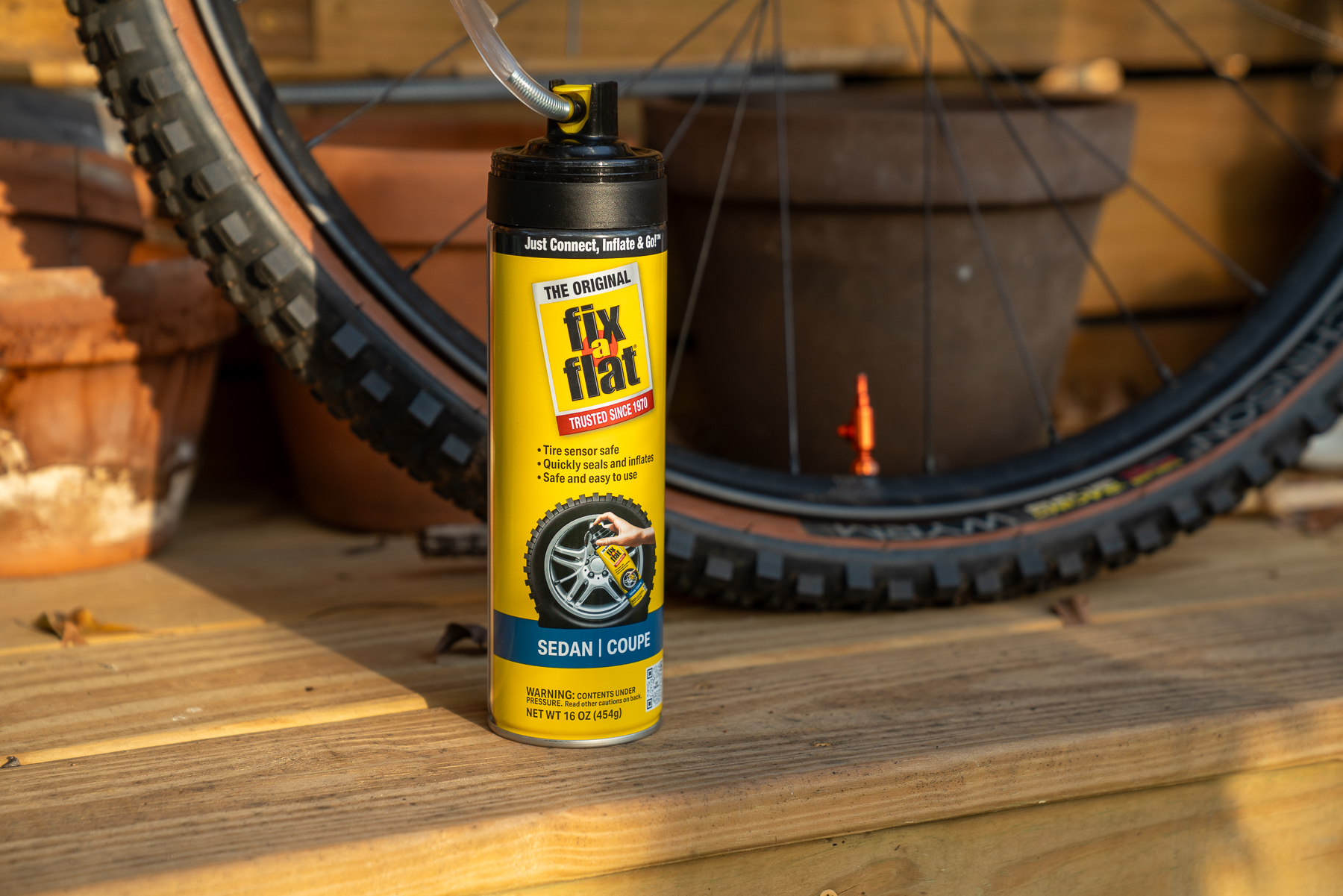
When it comes to mountain bike tires, tubeless is the way to go. Though the whole thing might’ve sounded a little mysterious the first time you heard about it, the fact is that car and truck tires have been tubeless for a long, long time. For that reason, I shouldn’t have been surprised to find that a product designed for car tires — Fix-a-Flat — works for bike tires too. But I was surprised nonetheless.
What is Fix-a-Flat?
Put simply, a can of Fix-a-Flat “quickly seals and inflates” a vehicle tire. It’s designed to be used in emergency situations involving a flat tire, and the stuff has gotten me out of several jams over the years. My Volkswagen didn’t even come with a spare tire, just a pressurized can of sealant in the trunk. That and a prayer will hopefully allow me to avoid calling a tow truck the next time I get a flat.
Fix-a-Flat combines liquid propellant and latex to inflate a tire and at the same time coat the inside to seal any holes. A 16oz can will generally inflate a normal car-size tire and seal it enough to drive to a repair shop for a more permanent fix.
You can find Fix-a-Flat at automotive stores, department stores like Walmart, and even grocery stores. I bought a 16oz can at my local Wally World for $8.49.
Seating and inflating a fresh mountain bike tire
Though Fix-a-Flat is designed for flat tire repair, I wanted to see if it could seat a fresh tubeless mountain bike tire. I started with a used Hutchinson Wyrm tire and a Roval wheel with a Muc-Off Big Bore valve installed. A normal Presta valve, with the valve core removed, would probably work too, but you would need to put a finger over the valve once the tire is inflated to keep the pressure inside while carefully re-threading the valve core. The Big Bore has a simple on/off ball valve that fully opens and closes with the flick of a lever.
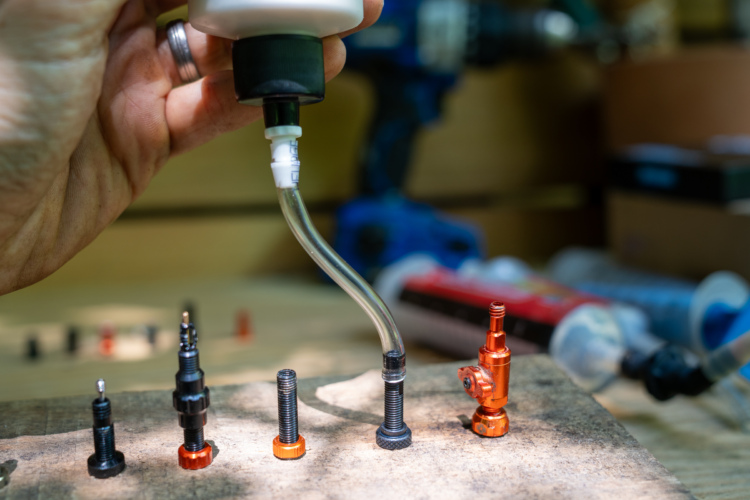
Because Fix-a-Flat is designed for car tires, the hose comes with a screw-on Schraeder valve attached. It would be interesting to test this with a Schraeder valve on a bike tire, though you rarely see those on tubeless tire setups — only tubes — in which case you’re not worried about seating the tire anyway. I cut off the Schraeder connector, leaving just the clear plastic tube to be fitted over my Presta-compatible valve.
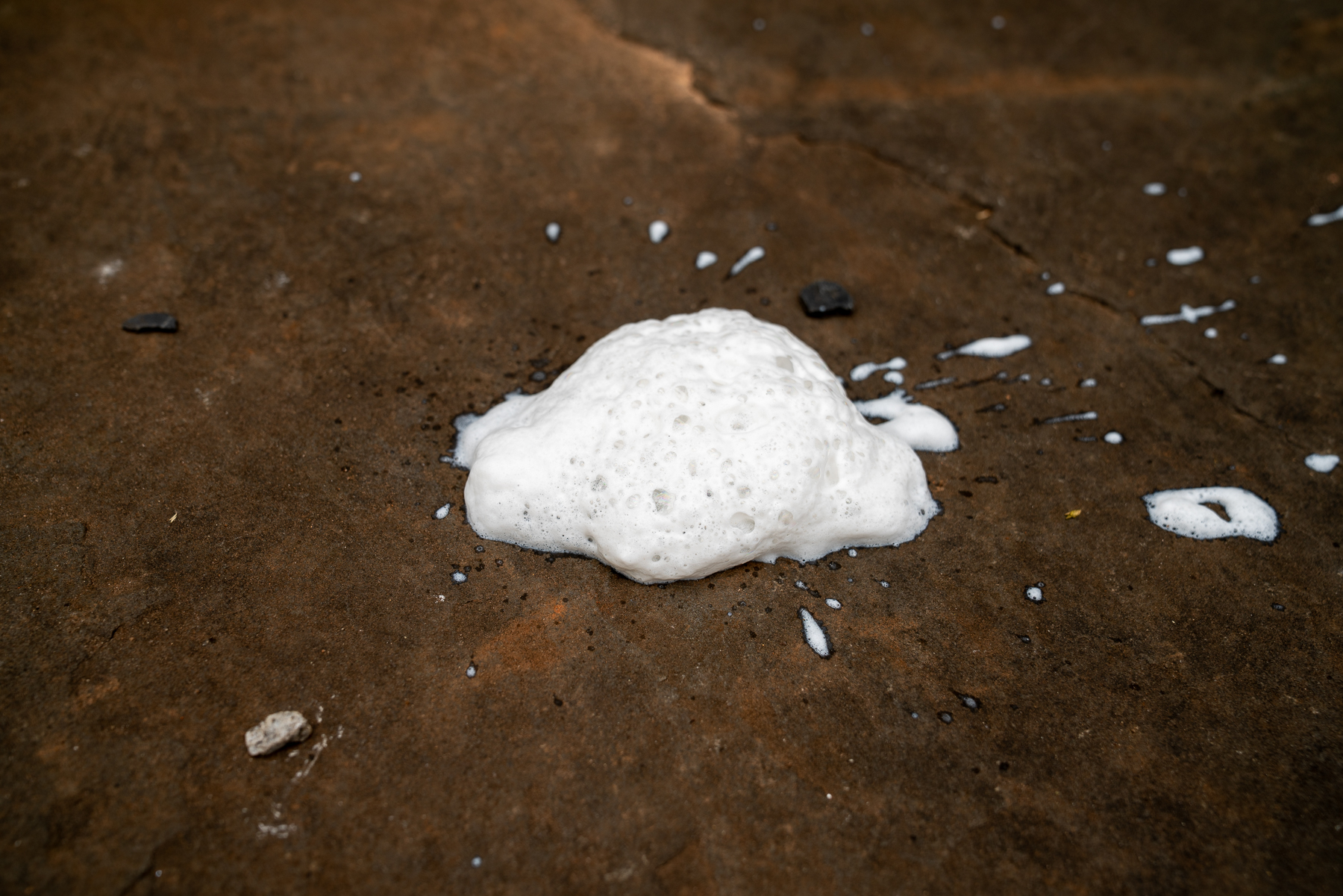
The Fix-a-Flat hose is pretty fat, and I couldn’t get an air-tight fit with the Big Bore valve. Still, once I hit the trigger, a blast of liquid sealant began to fill the tire. It didn’t leak too much at first, but as the pressure built up inside the tire, the foam began leaking all over the place. I recommend using gloves if you’re trying this at home or say, in a Walmart parking lot.
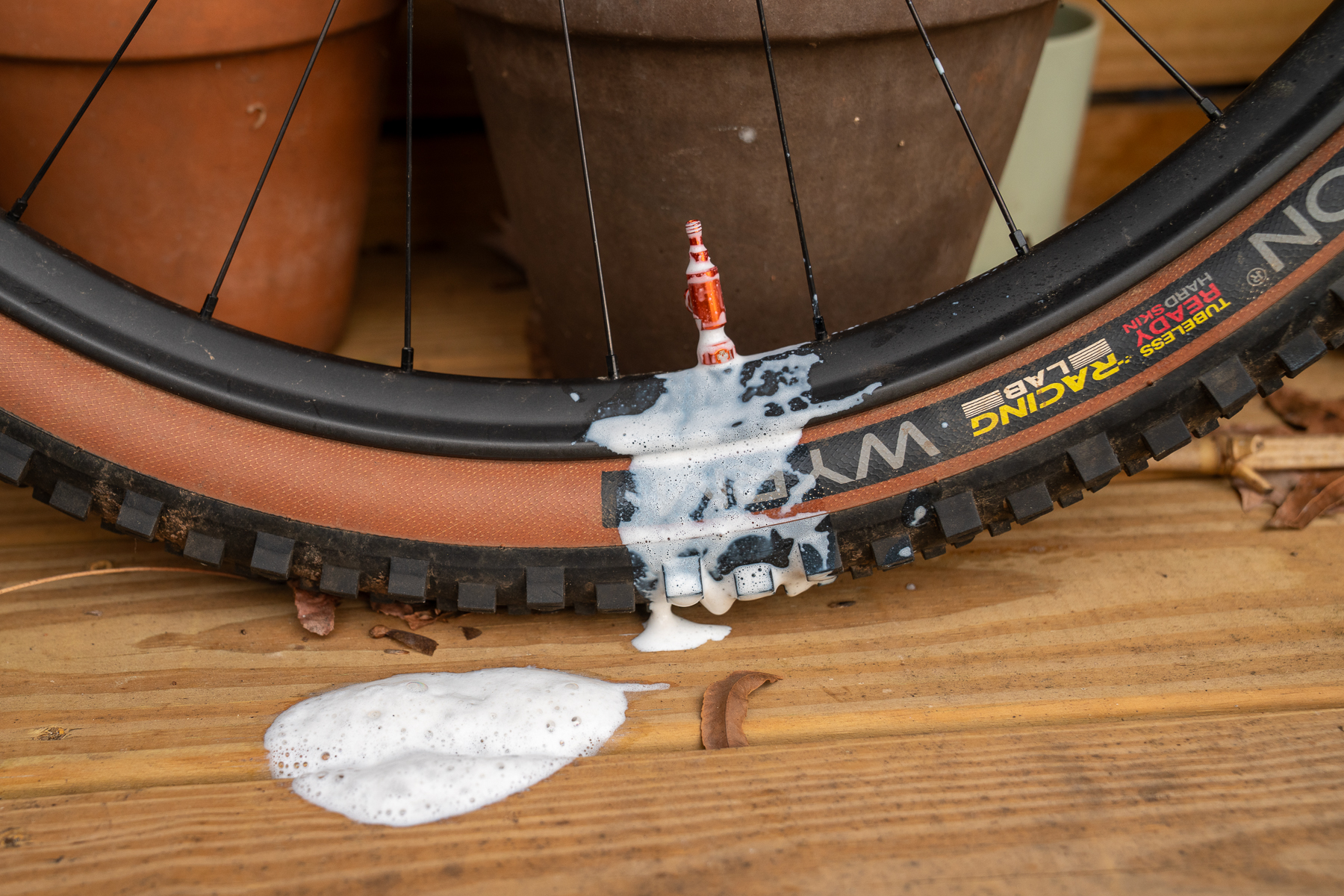
Mess aside, the Hutchinson tire seated onto the Roval rim, though just barely. In the video, you can hear the telltale pop of the bead, just not the loud pop I’m used to hearing. With about half the can emptied, and a growing blob of sealant at the valve, I closed the Big Bore valve and gave the tire a squeeze. It was inflated and holding air!
Still, it was obvious the tire wasn’t fully inflated, and I was pretty sure the bead wasn’t fully seated all the way around the tire. I attached my floor pump and was surprised to see the tire had about 8-9psi in it, more than I figured. Pumping the tire up the rest of the way to 25psi, three loud pops let me know the bead was seated securely.
I gave my wheel a good shake immediately after installation, but couldn’t hear anything sloshing around inside. Usually, after adding a few ounces of liquid sealant, you can hear it and even feel it moving inside the tire. In contrast, the Fix-a-Flat that ended up outside my tire was incredibly foamy, closer to soap suds than whipped cream from a can.
Sealing a puncture
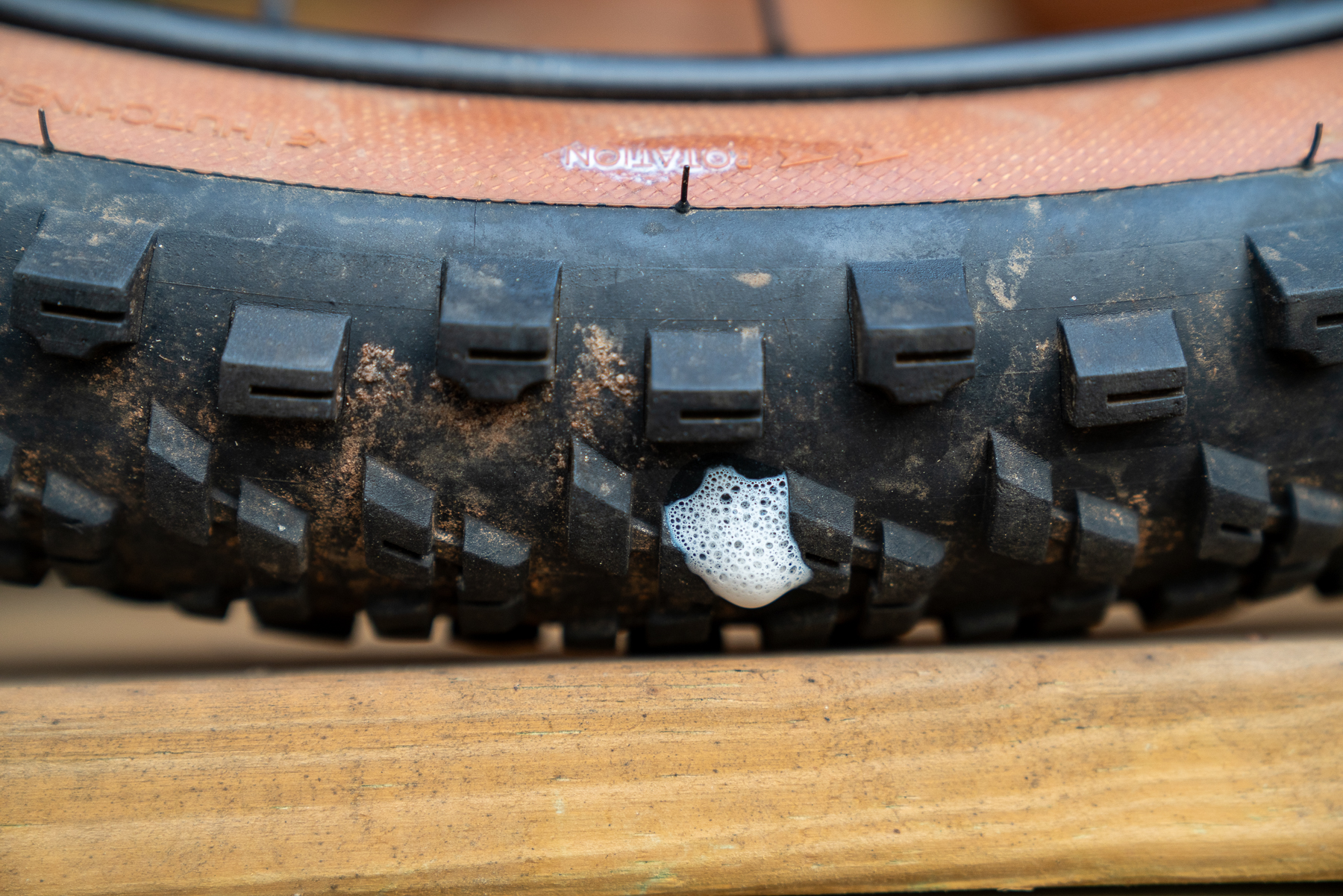
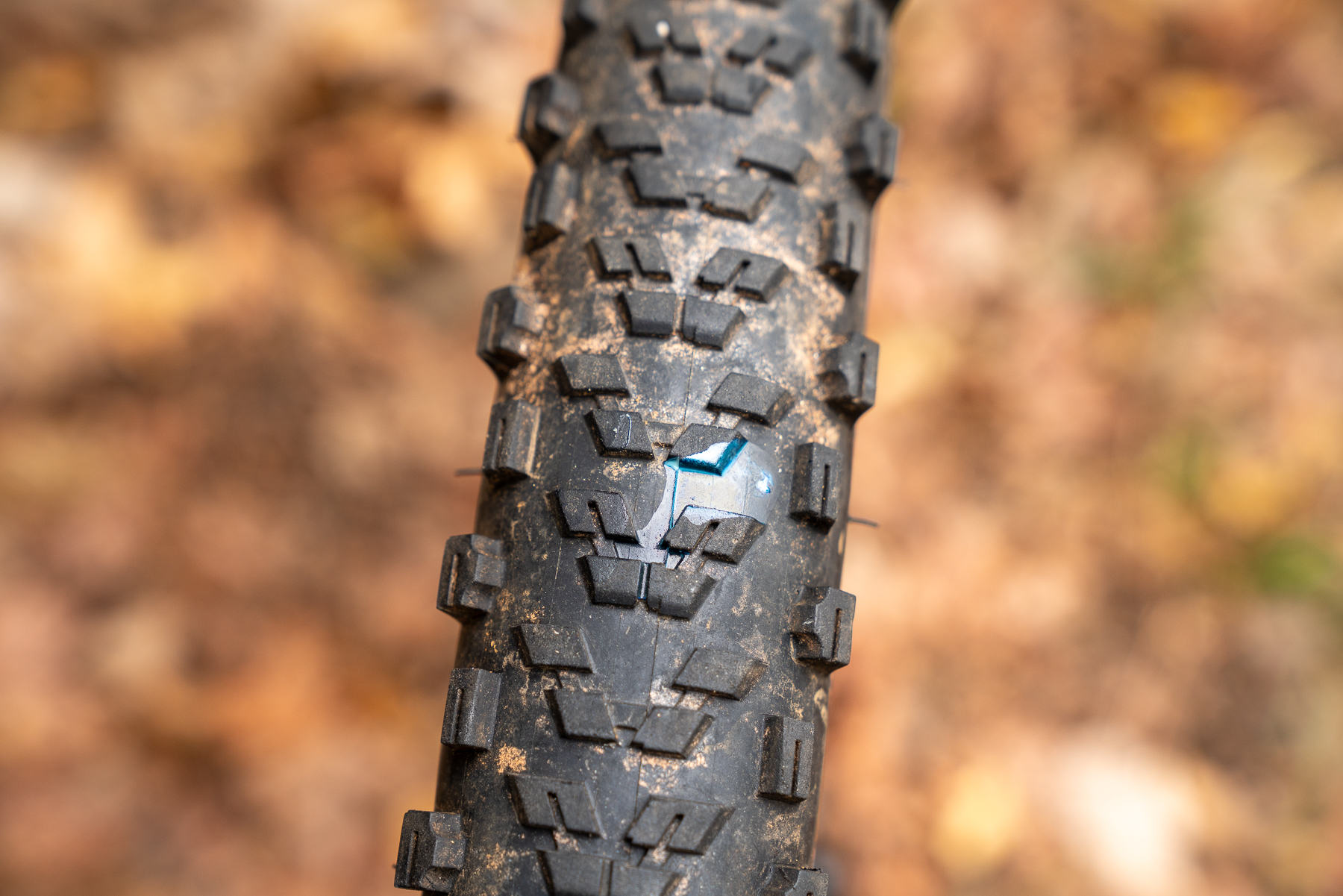
With my tire inflated to about 25psi it was time to see how Fix-a-Flat would handle a roughly 2mm hole, basically the size of a thorn. I poked a hole using a pick tool and immediately air began escaping the tire. I spun the wheel so the hole was at the bottom and waited to see what would happen.
Sealant immediately began oozing out of the tire, still bubbling and foaming as it escaped. After about ten seconds, the hole appeared to be sealed.
I let the tire sit overnight, and the next day I found it had lost very little pressure. The sealant, which appeared white in color the day before, had dried to a silvery blue.
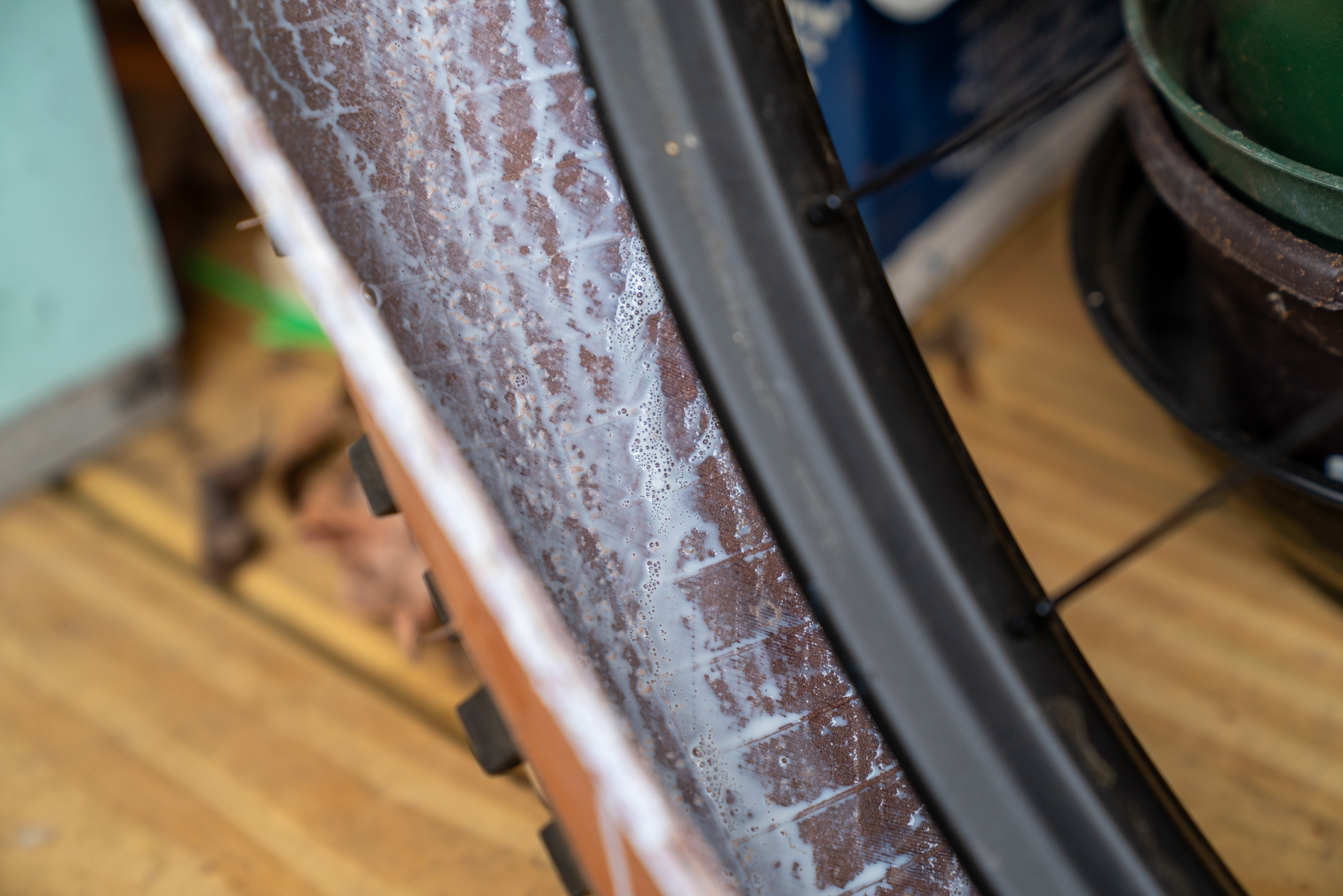
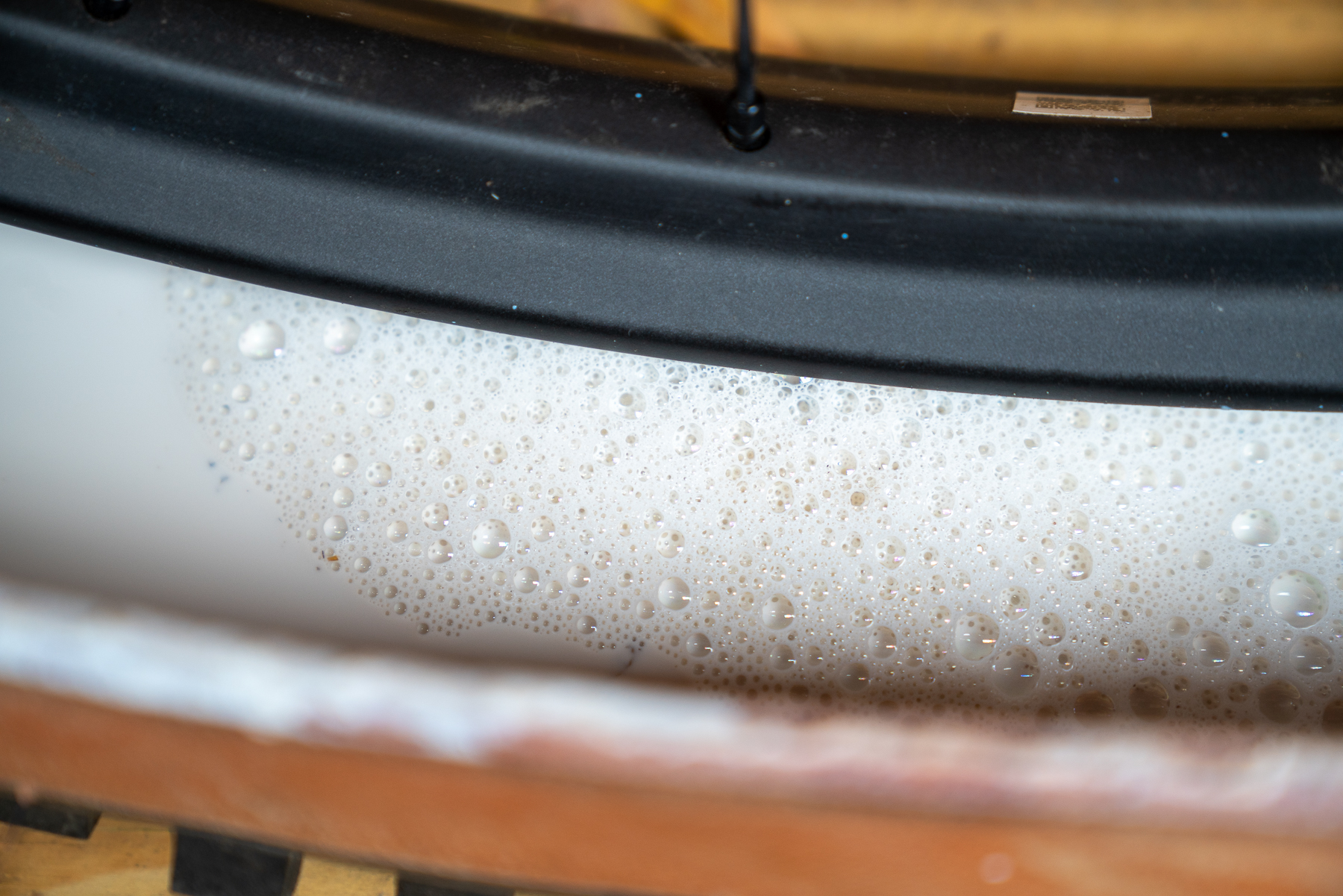
Giving the tire a shake 16 hours after initially filling it I could hear the liquid sealant sloshing around inside. Removing the tire revealed about three ounces of liquid sealant and a bubbly, foamy coating inside the tire. At this stage, the sealant was less viscous than I imagined it would be, much closer in consistency to whole milk than Elmer’s glue. In a test several years ago, I found sticky sealants don’t seal as quickly as less viscous ones, though the flip side is the runny stuff isn’t as good at plugging big holes.
Though Fix-a-Flat is said to contain latex, I didn’t notice a fishy smell when I removed the tire, like I often do with traditional mountain bike tire sealants.
Is Fix-a-Flat bad for tires/rims/rim tape?
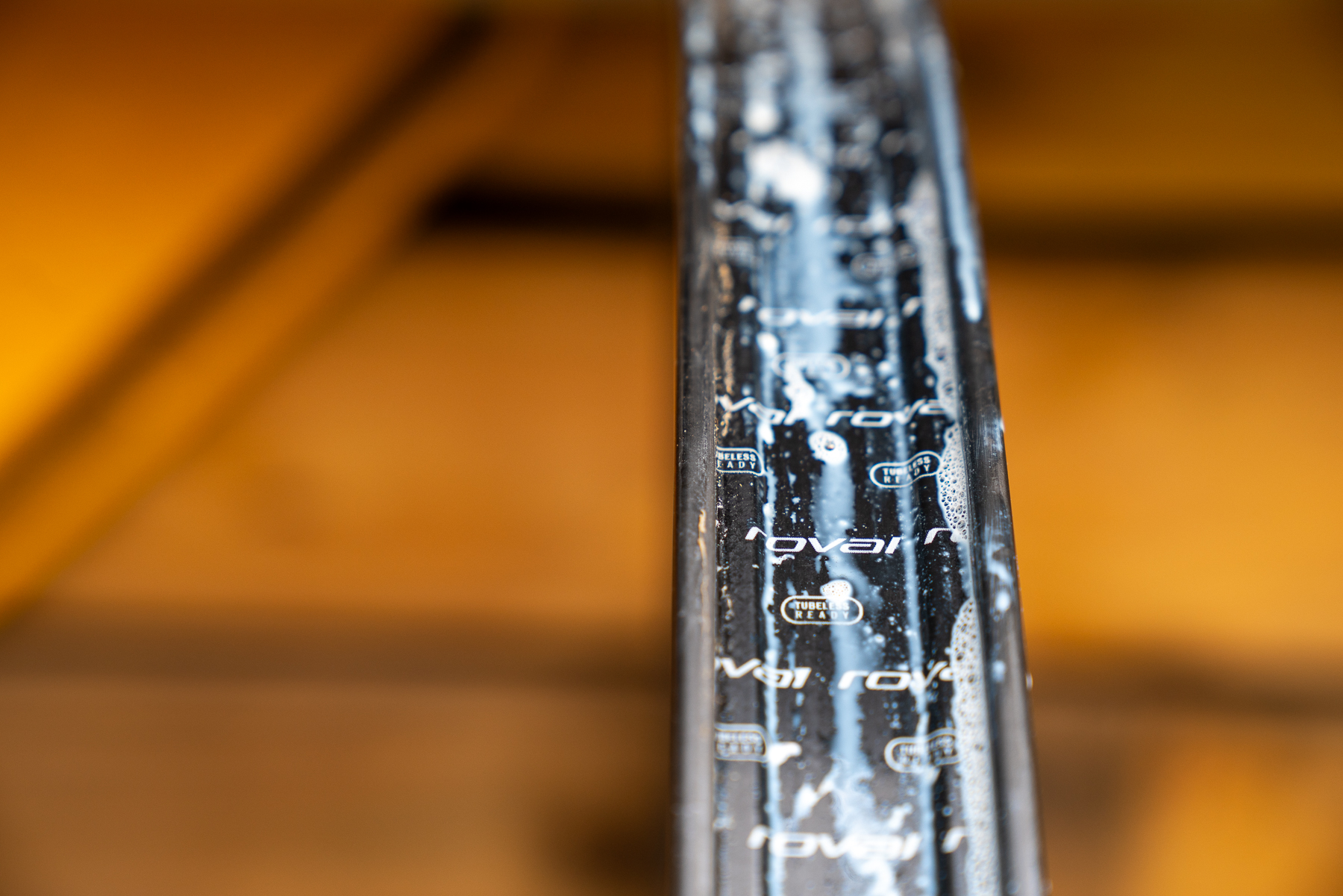
Maybe! According to this safety data sheet for Fix-a-Flat, the formulation contains between 0.01% and 0.1% isopropanol, a flamable solvent that can be used to dissolve sticky adhesive residues. You know, like the glue that sticks rim tape to the rim. Though I didn’t see any evidence that my rim tape was affected in this short test, that’s not to say that problems won’t develop over time.
The liquid sealant washes off easily enough with a hose. However, the dried material proved to be harder to clean off my rims and tire.
Though I would never carry a can of Fix-a-Flat on a trail ride in case of emergency — the can is large and heavy, after all — I might consider using it as a last ditch effort to get a mountain bike tire seated. On a camping trip to Pisgah this spring I made the questionable decision to mount two brand new tires without access to an air compressor. After spending more than two hours and running through all the possible solutions — mini inflator, floor pump with a charged air chamber, bungee cords, and loads of sealant — I was desperate for anything that would work. I would have gladly shot the tires up with Fix-a-Flat for a couple of days of riding, followed by a thorough cleansing back at home of course.
Though Fix-a-Flat is cheap and convenient, it isn’t the only option for sealing and inflating bike tires in one shot. I’m also testing a product from GÜP Industries designed specifically for bike tires that’s portable and hopefully less messy too. Stay tuned for my review!
Keep up with the latest mountain bike news by adding Singletracks as a preferred source on Google.



7 Comments
Jan 1, 2026
Dec 27, 2025
Dec 27, 2025
Dec 27, 2025
Dec 29, 2025
Dec 28, 2025
Silca sealant is essentially glue, and given enough time, you can even pull the Presta valve core out and it will still hold air pressure. It’s the only sealant I’ll run while bikepacking, and I remove it immediately at the end of the trip.
Dec 27, 2025