singletracks is mountain biking
Sign In | Create Your Account | Site Map | Help  


Twenty6 Gear for 2012: Pedals, Stems, and More

Wednesday, November 2nd, 2011

Who is Twenty6? I met with owner Tyler Jarosz at Interbike and, judging by our conversation, he is highly passionate about riding and his products definitely reflect that. The company is based in Bozeman, Montana, surrounded by some of the best biking in the country which clearly influences Twenty6 designs.

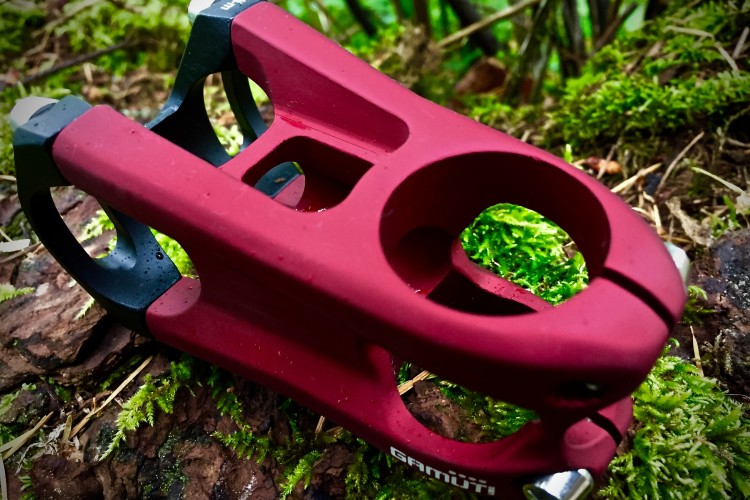
From pedals to brake levers, everything from Twenty6 has design appeal as well as function. After picking up my pimped-out package of the new Predator pedals, F1 stem, and Dualie levers, I was stoked to get back home and install these parts. Looking at the gear from Tyler, you can truly see the level of his CNC skills.

Predator Pedals

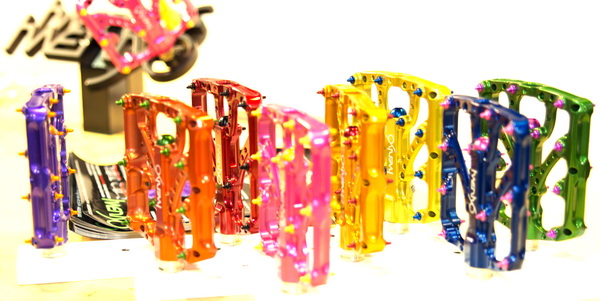
The Predator pedals have seen significant changes over the previous model (the Prerunner). For one thing, the body has been increased in size, with a bit more meat towards the outboard of the pedal. Not only did the body size get larger, but the pedal’s profile has actually changed with a more pronounced concave shape that provides better pin placement and traction. Speaking of the pins, Tyler explained to me the importance of his pins: these are not run-of-the-mill hex pins… they are engineered to have a break-away point to prevent damage or pull through.

The axle features an Enduro bearing near the axle root and a turcite bushing at the other end. Making sure everything stays mostly clean and running smooth, a Quad O-ring is designed to keep the crap out and provides a measure of pedal resistance (i.e. you can control the spin of the pedal). To keep the weight down, you have the option of either a titanium axle or a chromoly one. At a weight of 320 grams (ti axle) or 390 grams (chromoly), both options are very light for their size.

F1 Stem

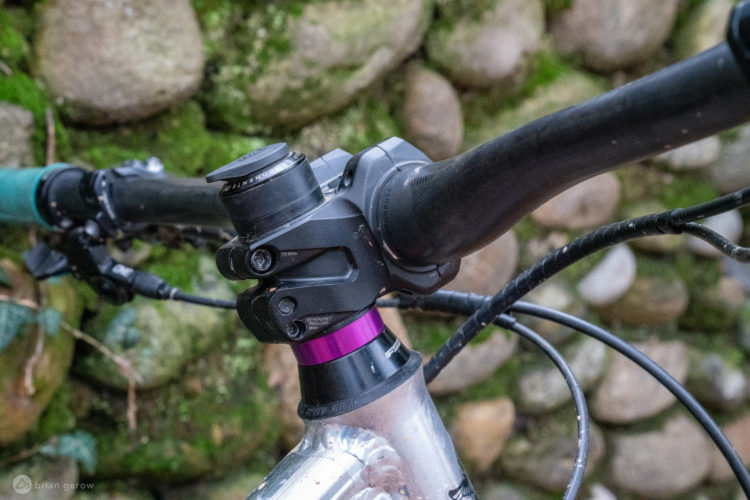
The F1 Stem has been revised for this year with a one-piece mount to the upper crown while still keeping the same front cap. The added support stiffens the stem, preventing possible bending when you do case it, and it gives the rider more feedback. The stem is offered in two lengths with a choice of 40/45mm or 50/55mm and weighs ±150 grams, slightly heavier than the previous model as a result of the stiffer design. The F1 has a clamp diameter of 31.8 only, so installing your older 25.4 bar won’t work here. It mounts easily to any 4 bolt direct mount fork.

Dualie Levers

Small parts like a brake lever can easily be missed and taken for granted, but Tyler went to the trouble of coming up with some great levers for many a brake, including the Avid Codes that I reviewed earlier this year. The Dualie levers are machined from billet 6061 T6 aluminum and weigh about 50 grams (depending on the model). The attention to detail that went into the two finger design is impressive, with the machining both reducing weight and enhancing grip.

Installation

I had an easy time installing the new gear on my bike. The most work went into installing the levers on the Codes because you have to make sure that you engage the spring and carefully swap out the reach adjuster. A tip here would be to apply a bit of grease to the small hole where the spring and detent ball is installed then carefully slide the adjuster nut sideways, ensuring the detent ball stays put (use a toothpick or a slender tool to hold in the ball). The pedals and stem installations were no-brainers. The stem is a plug and play affair with a very straightforward install – just remember to torque everything down evenly (6Nm).

Predator Test

I used both the Predators and F1 stem on my Opus Nelson and the Dualie levers on my Banshee Legend, and they work great! The pedals had excellent grip, with no issues. My foot felt firm and balanced on the pedal and the large platform worked well even when it got really messy. The pin pattern on the Predator worked great at holding the shoe yet allowing me to rotate my foot without too much resistance when I needed to use some body English. You would think that the large pedal would strike every rock in sight (and I thought that too), but that was not the case. I make it a point to keep my feet at the 3 and 9 o’clock position when traveling through rock gardens and rock drops (places that will destroy most pedals if you’re not paying attention). Even so, I still thought that these would strike. They didn’t though… as long as I was upright. Even in the berms I was paying attention to see if I was close to striking, but I had no issues. The very thin profile of the pedal keeps it away from most everything, though I did strike a few times on an exceptionally large boulder section aptly named “The Coffin” at Blue Mountain.

To keep the pedals fresh, Tyler has an extensive choice of replacement pins, and he even has a repair kit available.

F1 Stem Test

The F1 stem worked well, holding the bar firmly in place without even a hint of creaking. Even after going down hard on a few occasions, I was impressed to see that the bar and stem remained perfectly aligned without a hint of movement or bending.

Dualie Test

I instantly loved how the Dualie levers felt over the stock Code levers. They provide a definite improvement in feel without any hint of slipping: I never had to use a second finger to stop the bike. Speaking of feel, the machining on the levers grab the finger nicely, even with wet gloves on. All this equates to a better, more confident braking experience with the Dualie levers. If you are looking for a major upgrade on your levers, look no further.

Bottom Line

All in all, Tyler’s Twenty6 products are definitely worth checking out. They easily offer the most color choices around! So what will all these cost? For the Predator Ti pedal you’re looking at $269 – $289 (white). The F1 stem comes in at $129 – $139 (white) and the levers are priced at $74 – $79 (white). Some of these parts may be a bit on the pricy side of things, but these are not your run-of-the-mill components!

I would like to thank Twenty6 for sending the gear down for review.

Nukeproof Warhead Bar & Stem + Element Grips

Friday, August 12th, 2011

Some of you may not be familiar with the name Nukeproof but the company has actually been around since 1992. Nukeproof started off in Grand Rapids, MI producing high quality carbon bar ends and titanium/aluminum and carbon/aluminum hubs. Now owned and distributed by Hotlines in the UK, Nukeproof is really making a name for themselves once again, this time with a full complement of MTB gear. I recently got my hands on a complete set of Nukeproof cockpit equipment for testing: the Warhead flat bar, Warhead direct mount stem, and the Element skinny grips.

Warhead Handlebars

I tested the no-rise flat bar version of the Warhead (medium and high rise versions are also available) at 800mm wide with a 9-degree  back-sweep. These bars are meant to keep you low on the bike with plenty of control and torque. A 760mm version is also available for those who would prefer to trade torque for lower weight and better clearances.  The 7075 aluminum is strong and quite stiff – hey, as the name implies, these are nuke proof. Talk about tough.

Warhead Direct Mount Stem

Complimenting the Warhead flatbar is the Warhead direct mount stem. The version I tested was the BoXXer direct mount (also works with Manitou, Fox, and anyone else who shares the 4-bolt pattern). This stem is made from 6061 aluminum and has been CNC machined to reduce as much weight as possible while maintaining strength (136grams). With a 31.8mm diameter bar (Nukeproof only produces 31.8mm diameter products) the 4-bolt face plate makes for a solid connection. Having a 45mm reach and just enough rise to clear most forks, this stem allows you to ride a bit further back on the bike than some other stems on the market.

Element Skinny Grips

The Element Skinny grips tie everything together and connect the rider to the bike. Using a familiar locking arrangement, these Kraton-clad grips have a fine knurled pattern and a relatively small diameter for maximum control, even in wet, muddy conditions. The 7000-series aluminum lock rings and end cap ensure nothing comes loose when it counts. The solid end cap with the logo also really helps prevent injury and eliminates “core samples” on the trail (think sharp bar ends penetrating the skin).

Installation

Installing the gear took about 30 minutes and two tries. While bolting up the bars and stem I did come across a small defect in the design. I noticed that if you clamped down one end of the stem then the other, the bars did not mate well. What you have to do is loosely assemble the bar and stem, then tighten down the gear. I found that the hard way when I noticed that the bars didn’t sit straight on the first go. Once I changed the way I mounted the parts, things worked much better.  The grips were a piece of cake to install and I had no issues there.

On the trail

On the slopes I enjoyed the control and ease of steering that I had with these mammoth 800mm bars. It was easy to handle my DH bike through everything that crossed its path. Even round rocks on the rock gardens didn’t alter the bike’s path thanks to the great grip and leveraged positioning of my hands. Throughout my test I didn’t hear a noise or feel anything slip when riding. My positioning on the bike (lower and back) was great when things got really rough, offering good weight distribution over the bike.

The only negative thing I can really say is the bar is a bit too stiff for me. I did get a lot of feedback into my hands which over a full day of riding got to be a bit numbing. My suggestion: ride this bar with padded palms (I didn’t).

Overall the Nukeproof gear is on par with other brands out there as far as price vs. performance ($100 MSRP for the stem, $85 for the bars, and $25 for the grips). With three colors to choose from (black, silver and yellow) you can really trick out your bike. Check out Nukeproof for yourself and see what else they have in store.

Thanks to the Martin at Hotlines and the folks at Nukeproof for providing the gear for review.


Easton HAVEN Components: Bars, Stem and Seatpost

Tuesday, July 26th, 2011

There have been some pretty great products coming out of Easton lately and after getting hands on with the Haven wheels (26 and 29er) we were interested to see how the other Haven components stack up. I got a chance to check out the Haven bars, stem, and seatpost recently and this is my review.

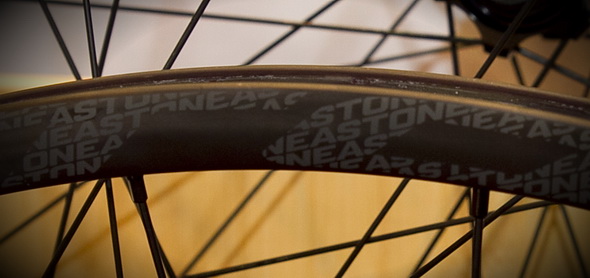
This year Easton introduced Haven bars, stems, and seat posts to go along with the high power wheels intro’d last year. Not only does this allow riders to put together a cohesive look for custom builds but the company is also building on the high quality finishes and materials (uni-directional carbon and Easton aluminum) found on the wheelsets. The upshot: matched graphics and anodizing plus even more ultra-precise machine work .

Haven Carbon bars

The Haven Carbon bars weigh in at a svelte 170 grams which is pretty good considering they’re lighter than some XC alloy bars yet stronger than many DH bars. With a 711mm width and a low rise of 20mm, these are ready for some serious steering. The Haven bars are offered with a clamp diameter of 31.8mm and feature a near perfect 9°degree back bend with a 5° degree up-sweep which leaves my wrists pretty straight on the bar with just a slight inward twist.

Compared to other carbon bars on the market, Easton didn’t waste resin to flash a fancy weave on the outside; instead, the uni-directional fiber construction yields a smooth matte finish.  What makes this bar so light and strong is the taper wall construction which varies the wall thickness along the bar. Also found in Havoc and EA series bars, tapered walls are thicker where stresses are greater and thinner where there’s not as much stress. As an added benefit, the bar doesn’t feel overly stiff. At $160 MSRP, this is definitely a premium cost for a lightweight bar.

Haven stem

The all new, all-mountain Haven stem takes everything Easton knows and tosses it into this lightweight yet strong stem. Using their proprietary CNC aluminum, Easton pulled out all the stops to make this jewel for your ride. The highly machined (both in a out) stem uses Easton’s tried and true 4-bolt top lock technology (where the top edge of the stem and face plate meet), ensuring very little stress on the bar at that point. Easton claims this design has the best stiffness to weight ratio to date.

The stem comes in four lengths to best suit your needs and body style (55mm, 70mm, 85mm, 100mm) with a 0° degree rise (sorry no choice there). Like the bars, this stem is only offered with a 31.8mm clamp diameter. Depending on the length, the stem weight varies from 143 grams and up. With two color choices (either black with mag cap or mag with black cap) you can match up your ride and look pretty smart. $105 MSRP.

Haven carbon seat post

The final item on the list is the Easton Haven carbon seat post. I’m pretty sure many of you are thinking a carbon post on a AM bike is a little crazy – but believe it or not this post is stronger than the aluminum counterpart. Once again Easton went to great lengths manipulating the tubing thickness to get the maximum strength into this taper-walled constructed unit.

Unlike the EC90 post which is totally carbon (minus the bolts), the Haven has an ingenius featherweight alloy top cap that resembles the landing gear support braces on a jet. Using the same two-bolt design allows for an index-free, infinitely adjustable saddle. Weighing in at 240 grams (31.6mm x 400mm), this post is about 50 grams heavier than the EC90 but to put that into perspective, only 10 grams heavier than the lightest post RaceFace has to offer. So I would have to say that the Haven is very light for AM or even for a trail bike for that matter. With three diameters (27.2mm, 30.9mm, 31.6mm)  and a 0° degree set back, this should fit a large selection of bikes out there today. Of course all this high technology has a cost: $140 MSRP.

Installation

Well once the gear arrived from Easton it took very little time to get everything installed. Because the gear is carbon or is being attached to carbon, it’s essential to apply the correct amount of torque. I always use my Topeak D-torq DX wrench to apply the correct amount of force to every bolt. The very last thing I want to do is crush the carbon… that would be bad.

With the stem and bar it’s a matter of following the clear instructions supplied by Easton. Do yourself a favor and pick up a good quality carbon grease while you’re at it, preferably one that does not use “grit” in it to provide friction. A Carbon grease like Motorex is a great idea to prevent slip and it reduces the amount of torque needed to get things tight. The key thing to remember with carbon gear, especially with seat posts, is to make sure there are no metal burs on your seat tube that may scratch or damage the carbon. Double check before installing anything.

On the trail

On the trails I really enjoy the feel of carbon. As stiff as it can be, a properly designed fiber-oriented bar really takes the sting out of the hits and these Haven components are no exception. The 711mm bar with the 55mm zero-rise stem is a perfect width / reach for my 5.5″ Opus Clutch. The shorter stem and wider bar helps me breathe better and keeps me a bit more upright and back on the bike. When conditions get rough I have ample control over the front wheel without going over.

I really love the fact that even on those long rides my hands don’t get fatigued thanks to the combination of the natural vibration dampening of the bar and optimal bend. Over the duration of the test the bars, stem, and seat post never came out of adjustment or slipped in any way. Even with rocks and debis flying about, the finish never got damaged despite an over the bar experience (or two).  I did a bar tap or two on some saplings on a tight trail but nothing that caused too much alarm. The wider bars are definitely a good choice for an amazing amount of steering control.

I would like to thank the folks at Easton for sending down the gear for review.

Syncros FRIC FR/DH Stem Review

Monday, July 11th, 2011

Every so often, someone in the bike industry comes up with something really unique… something truly revolutionary… something that’s just FRIC’n cool! Tom Ritchey and the folks at Syncros / Ritchey have had more than their fair share of these types of products and a little while back I got my hands on the new FRIC stem which I tossed on my bike right away.

The FRIC is intended for the FR/DH crowd. With a patented forged design, you’re getting a super strong stem that’s shockingly lightweight. How light? My stem weighed in at 123g according to my scale, which matches the claimed weight from Syncros. But how is this stem different from all the others on the market?

For one thing the steering tube clamp bolts are forward of the steering tube, adding precious space for the family jewels, just in case you find yourself in a bad situation. Sure, a few other brands have forward set bolts (or forward facing pinch wedges) but that’s not all. What really sets the FRIC apart is the revolutionary 260-degree 4-bolt wrap clamp. With this patented design [Intelligent Clamp (IC™ )] you thread the bar into the Fric and then use the small segments to fasten down the bar. This method applies more uniform force around the bar, reducing the chance of cracks and fatigue.

As far as fit goes, the FRIC is only offered with 45mm of extension, which is a pretty safe choice for most AM-DH bikes but may disappoint those looking for more options. The zero rise on this stem may require you to add spacers if you’re finding yourself a bit down and over the bars so if you’re installing this on a fresh fork, keep a bit of extra length for spacers until you find the perfect height (or bar rise).

Installing the FRIC did take a bit more patience than a standard stem as the clamp makes you thread the bar through rather than placing it in. A note to people with painted bars: due to the tight fitting clamp, lube up your bar with soap to allow it to slide in easier. The added layer of paint makes for a very tight fit, though carbon and anodized bars should be fine. I installed an Easton Havoc carbon bar with no issues or scratches. For those of you with full rise bars (40mm+), bring them to the store with you to make sure the FRIC can pass the bends (just in case). After you thread the bar it is a matter of following the installation instructions and warnings. Torque the stem clamp bolts first, followed by the handle bar clamp bolts. It may take two tries on this to get your bar position just right, but it’s well worth the added time taken.

Using the FRIC I have to say that I truly loved it and not just because the compact design makes for a very clean look. What I really appreciated was the silent operation of the stem with no slippage or creaking to be heard. Even on the roughest rockgardens I didn’t observe any signs of flex or twist. That’s pretty impressive considering the size and design of this stem.

Now for $79.99 MSRP you’re definitely getting your money’s worth. The only bad thing here is the fact that you only have one steering tube size so for those with the 1.5″ steering tubes you’re outta luck (for now). The Fric comes in either white or black and as I stated before, visit your LBS to make sure it fits your bars.

I would like to thank the folks at Syncros for sending up the FRIC for a review.

Factory Tour: Thomson

Friday, April 22nd, 2011

The LH Thomson Company, simply known as Thomson to most cyclists, is located in Macon, GA and has been around for over 30 years in one form or another.  It’s founder, Ronnie Thomson, opened a contract machine shop in the 1970′s and it was eventually purchased by Boeing.  After a few months he decided he wanted to be his own boss again and started the modern LH Thomson Company.  Ronnie ran the company until he passed away in 2008, and his son now runs the company.

Today Thomson has two sides of their business: contract machining and cycling components.  Most of their work, about 65%, is contract machining, mostly for the aerospace industry.  Their clients include Boeing, Cessna, Gulfstream, and Trane just to name a few.  The other 35% of their business is cycling components: seat posts, stems, and seat post collars.  I had a chance to visit their factory recently and head bicycle marketing man David Parrett gave me a tour and told me about the history, and future, of the company.

HOW THEY GOT INTO CYCLING

In the early 1990′s Ronnie’s daughter was on the cycling team at Carnegie Mellon University and during spring break she brought the team home to Macon with her so they could ride.  Ronnie had been looking for something to produce under his own brand and two of his daughter’s teammates told him seat posts were a place he could make a difference in the cycling industry.  As it happened, one of those teammates was Gary Klein’s neighbor, and one thing lead to another and in 1995 Thomson seat posts were being spec’d on Klein bicycles.   David describe this as “the best advertising you could get” at the time.  The first stems were produced in 2001 while the seat post collar just came out a little over a year ago.


Seat posts part of the way through production.

QUALITY

Thomson’s reputation for super high quality is a result of their involvement in the aerospace industry and their refusal to put anything to market until it meets their high standards.  For example, they spent over three years developing the seat post collar!  All the quality control practices and procedures they use on their aerospace work is also used on their cycling components.  Every single part is checked for dimensional accuracy and cosmetic imperfections after each machining process.  Several parts from each material lot are put through destructive testing to verify the quality of the raw material and machining work.  They test for both ultimate strength and fatigue life.


A few jigs used to check a part after a machining process.  Thomson produces all of their own jigs.

MADE IN THE USA

All Thomson parts are 100% made in the USA.  The raw ore comes from Canada and is extruded into their custom shapes in Minnesota.  The seat rail clamps are forged in Cleveland, and the bolts are produced in Chicago.  They do all of the machining in their plant in Georgia and then send the parts to Pennsylvania for anodizing.  Once the parts are back in Georgia, Thomson uses a CO2 laser to apply their logo, they put all the parts together, and ship them out.  The only thing that doesn’t come from North America is the bag the parts ship in which comes from China. :)

WHAT’S NEXT?

Due to their reputation for quality, cyclists have been clamoring for more Thomson products for years.  However, simply keeping up with new standards keeps the company pretty busy, coming out with new size offerings for existing products and all of the manufacturing and inspection jigs required to produce them.  Currently they’re working on a 75mm 1.5″ stem, a 55mm direct mount DH stem, then a 40mm direct mount, and a new 36.4mm seat post collar for Trek.  They’re also working on a quick release version of the seat post collar.


Prototype QR seat post collar.  The lever works similarly to a DT Swiss ratchet QR.  The final production item may have a more traditional cam style QR however.

One part in particular customers have long requested is a Thomson handlebar.  They have been listening, and should get their first batch of prototypes in the next week or so.  I wasn’t given too may specifics, but here is what I do know:  it’s a flat mountain bike bar and it’s made of titanium.  David told me “titanium isn’t the only answer to the handlebar question, but it is one answer.”  He expects an aluminum bar to follow.  He also said they will start experimenting with carbon fiber in the next few years which is necessary to stay competitive in both cycling and aerospace.  They’re already doing some machining on carbon aerospace parts.

PICTURES!

Here’s a collection of pictures I took while in Macon, be sure to click for larger views.

I’d like to thank David Parrett and all the other good folks at Thomson for spending a few hours to talk to me and show me around the plant.  To learn more, check out their cycling website.


David’s cubicle, getting a DH project bike put together.  This bike will be traveling to a few events, including Crankworx, to show off Thomson’s new direct mount DH stem.


Looking out over part of the plant.  Note how clean it is.


A machine operator removing seat post collars after their first machining process.


The collar after the first machining process.


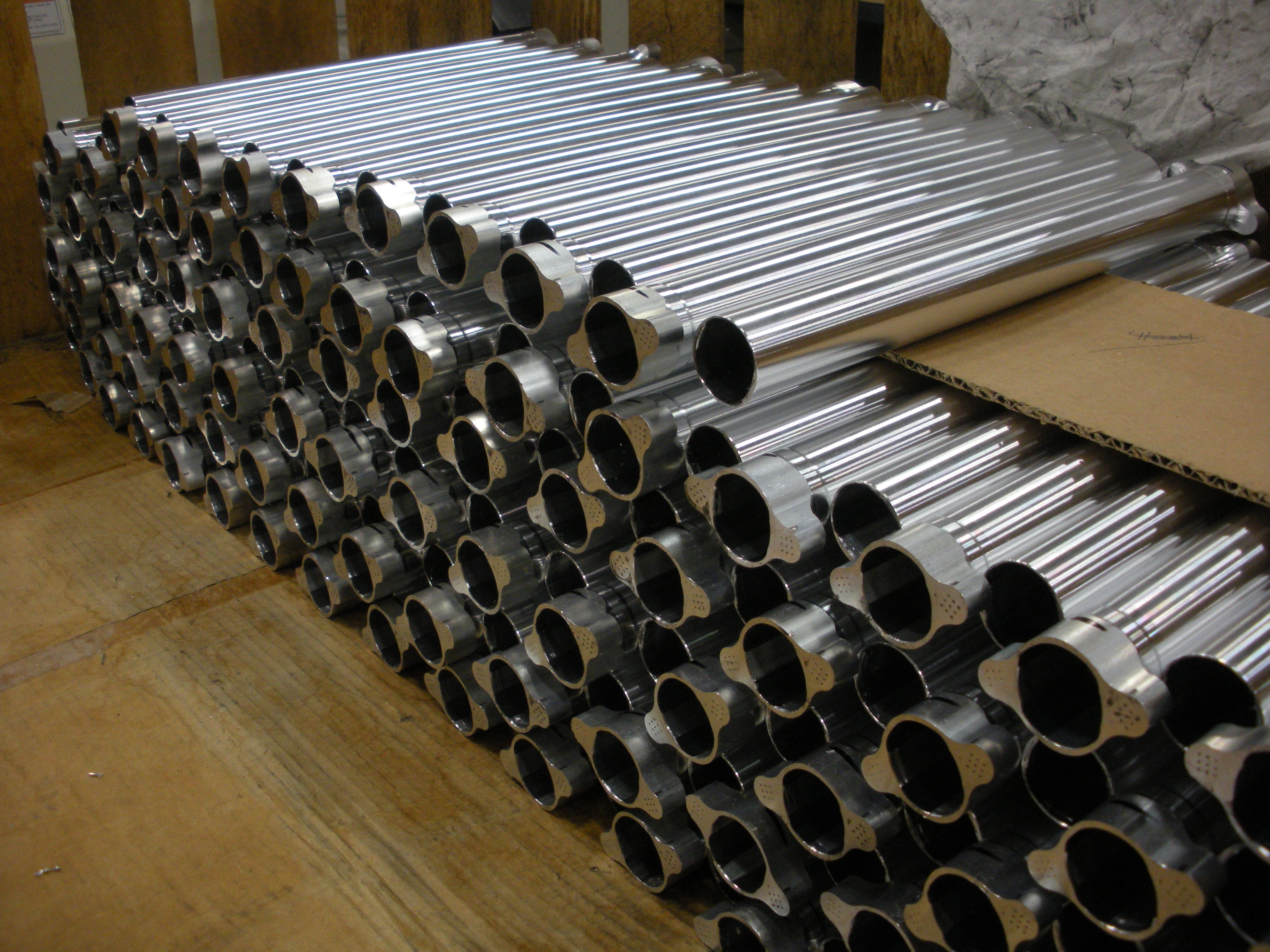
This is how all the seat posts begin life – as a custom shaped extrusion.  This allows Thomson to make the post out of one solid piece  for more strength and less weight.


All shavings, chips, and scraps are collected and then sold to a recycler.


Checking a seat post after the first machining operation.


Rejects – parts that didn’t meet Thomson’s standards.  Many of these had problems with their anodizing, tiny spots I would have never even noticed if David hadn’t pointed them out.  They are really picky about what goes out the door.


Hard to see, but this is the CO2 laser applying the logo.


Aerospace parts waiting to be shipped out.  The small parts on the table each weighed about 1.5lbs each and were produced out of a solid 31lbs chunks of billet steel.


Completed parts boxed up and ready to shipped to distributors all over the world.


This is a knock-off Thomson seat post found on eBay. Other than a very few special edition parts, Thomson products only come in black and silver.  This fake one got the logo right, but the head and clamp is all wrong.  In fact, this is a two piece part, the head is pressed into the post.


A seat post ready to be tested for ultimate strength.  A hydraulic press applies pressure 6″ behind the clamp until the post fails.


A stem after a fatigue test.  This one survived 116,499 stress cycles. Thomson’s minimum standard is 80,000 cycles.  When deciding what they wanted the minimum requirement to be they doubled the average life of other cycling components they tested.

Loaded Precision MTB Components: AmX Stem & Bars + X-Lite Seatpost

Monday, March 28th, 2011

While talking with Tony Elsworth at Interbike back in September, Jeff and I were introduced to Paul and Michael from component company Loaded Precision. It turns out Tony loves including Loaded products on his Ellsworth bikes and we could instantly see why: these components combine equal parts bling and high quality shredding potential. Loaded Precision prides itself on producing components that are good looking, lightweight, and precisely constructed.

Rather than just taking Tony’s recommendation at face value, I snagged a stem, bar, and seatpost to test and review (it also helped that the colors match my Banshee Legend II almost perfectly). Loaded Precision’s dedication to quality components is evident in the fine details like the chamfered edges on all the cuts as well as titanium bolts included standard on the seatpost.

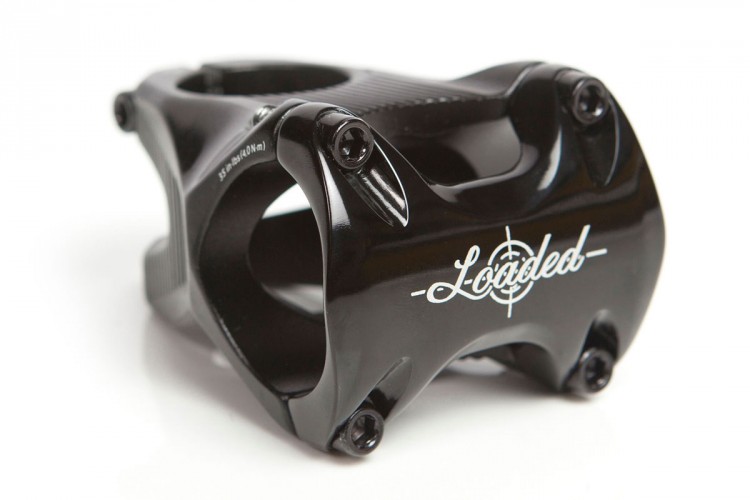
Beyond its super model good looks, Loaded Precision’s AmX Direct bolt-on stem ($90 MSRP) isn’t all show. At 154 grams it’s one of the lightest stems out there for the type of high speed gravity abuse it’s designed to take. The bolt pattern works for all Fox, Rockshox, and Manitou forks with a direct mount 4-bolt pattern. Manufactured using a CNC machine, each stem is constructed to the same exact dimensions as the one before it for repeatable precision and performance.

Since the AmX stem is a three piece unit, precision is certainly key. This stem requires careful attention when installing: first, the upper fork crown must be installed before anything else happens. This step is crucial as the bolt clearances on the stem are tight with very little room for error. With a stem like this, the best thing is to snug up the bolts on the bar and make sure everything is lined up before torquing anything down.

Speaking of handlebars, I’m also rocking the AmX bar which is designed to take whatever ill-gotten evil you find in your way. A full 31″ wide (790mm), this bar looks like it can span the Mississippi! As such, the AmX bar is definitely a freerider / DH oriented bar. Made  from 7075 aluminum, the AmX handlebar combines high-performance strength and durability with lightweight construction – it weighs just 328 grams. With a one-inch rise and 8 degrees of back sweep and 4 degrees up sweep, I’ve lucked out with the perfect bend, keeping my wrists comfortable and in control.

The X-Lite seatpost ($80 MSRP) is a single-piece post and unlike most, it hasn’t been bonded or welded together. The X-Lite is first 3D forged and then CNC turned and milled, making it one seriously state-of-the-art post. A two titanium bolt clamping system gives you a nice way to fine tune your seat angle. At 280 grams it’s pretty light too; the two titanium bolts are equal in weight to one single steel bolt. The post is 400mm long so it was a pity to cut the post down to size to fit my bike but you gotta do what you gotta do. I topped off the X-Lite with my WTB Valcon (titanium rails) for a creak-free set up.

Loaded Precision components come in no less that seven colors to match your build and they also produce wheels, headsets, pedals, and seatpost binding clamps. Check out Loaded components today and see what may just be on your bike tomorrow. You’ll be surprised at what a bit of color can do for your ride!

Thanks to the folks at Loaded Precision for sending down the components for review.

Answer 2011 -ONE MTB Stem Review

Friday, March 18th, 2011

Here’s a pretty cool solution for those of you who want your bars as low as possible: Answer’s direct-mount -ONE (minus one). The -ONE looks similar to Answer’s DH stem and shares the same wide front cap (at 62mm) but this three-piece bolt on stem also has the ability to change its reach from 50 to 55mm. It’s a neat trick for sure and necessary for Dorado fork owners.

If you look back my previous review of the Answer DH stem, you can see the two stems are strikingly similar. The biggest difference is where the bar sits. On the -ONE stem pictured above you can see half of the bar is below the top clamp of the Dorado fork. This gives the rider more bar choices and also offers lower body position on the bike for improved front-end grip in the corners. I’ve been using the Answer 780 DH low rise bar at 12.7mm for a while now and with the -ONE stem it feels like I’m using a flat bar (unfortunately Answer doesn’t have one yet). As you can see below, the Answer DH stem holds the bar up a bit higher compared to the -ONE.

The attention to detail on the -ONE is great and the time Answer spent reducing weight is much appreciated. The back half of the top cap has been milled out, keeping the mass as low as possible at 160 grams.

Installing the stem on any BoXXer style 4-bolt pattern fork is a piece of cake (Fox, Manitou, Rockshox). When you do install the bar, remember to have the fork crowns correctly torqued before you tighten the stem down. I snugged up all the direct mount bolts first, then aligned the bar before torquing down the top cap as per the included instructions. The final step (which I highly recommend) is to torque the bolts down using a torque wrench, especially if you have a carbon bar. The last thing you want is to crush your bar.

On the trail the -ONE provides a super strong connection to the fork with no creaking or play. By lowering my hand position on my DH rig I was able to extend my fork legs a touch more, giving me a bit more wheel base for better stability at high speeds. The lower position also placed me closer to the bike which felt great in corners. I did have to play a bit with my body positioning to get a comfortable feel when taking air as the lower bar position tended to bring my front end up a touch. At least I have a bit less fear of dropping the front too much!

At $70 MSRP you’re getting a good quality stem with the ability to change the way you ride and yet another dial to tune your bike.

Thanks to the folks at Answer for providing the -ONE for review.

Easton is Control! The New Havoc Stems and Bars

Monday, March 7th, 2011

Easton has been very busy indeed: new for 2011 is the totally revamped Havoc component line up. On the control side of things, Easton looked at what mountain bikers wanted in quality parts and boy did they deliver! This line is stocked with highly machined components, both inside and out, super sexy lines, cool graphics, and solid products just waiting for riders to send it.

Havoc Stem

The photo above offers just a peek at what Easton has in store for 2011 – the Havoc 50mm stem. Easton is offering the 1 1/8″ version in three reach choices (35, 50, and 65 mm) while the 1 1/2″ steering tube version comes in 50 and 65 mm lengths.

The new graphics are a big departure for Easton and in this case, beauty isn’t just skin deep – it’s also in the details. I’m big on proper machining practices because you can destroy a perfectly good component by not following good engineering practices. Clearly Easton understands this. All the machined surfaces flow together well with no sharp points or sudden thickness changes. Everything has a radius or chamfer to minimize stress risers and all the exposed surfaces are clean and burr free.

Easton’s four bolt DST bar clamp system works a little differently than other stems on the market. The top two clamp bolts are tightened all the way in, leaving no gap, while the bottom two bolts are torqued down afterward with a gap. This feature spreads load across the stem, reducing stresses which could lead to damage.

Havoc Bolt-on Stem

Taking a look at the sub-140-gram Havoc Bolt-on stem you can see that a ton of consideration went into saving weight as well as keeping the strength up. The Bolt-on version will work on BoXXer, FOX 40, and Dorado forks without a hitch.

The Havoc Bolt-on offers three positions at 45, 50, and 55 mm, making this stem very versatile (10mm either way for a DH rider will make a considerable difference). Unlike the standard Havoc stem, the bolt-on features a 5-degree rise; that is, the bar is mounted a bit higher than the fork crown. This configuration is perfect for those who want to keep their center of gravity low. The Havoc Bolt-on is a two piece stem unlike some other brands that offer direct mount stems made from three pieces. In terms of mounting, a two-piece stem is easier to install – the Havoc Bolt-on literally too me just a few minutes to mount.

Havoc Carbon and Aluminum Bars

Along with the new stems, Easton also added a duet of new bars in the Havoc line up: a super slick carbon bar and an equally sexy new aluminum bar. Now what is really awesome about the carbon version is the fact that it’s lighter than most all-mountain carbon bars. At 235 grams and 750 mm wide, the Havoc carbon is impressively light as well as tough.

The Havoc aluminum bar is pretty light as well, weighing in at 315 grams. This version is made from tough 7050 aluminum (high strength with just enough flex to it) and features Easton’s Taperbore technology. Taperbore doesn’t just mean the center is thick and the ends are thin; Taperbore actually tunes the thickness of the bar throughout to ensure there is sufficient material where it needs to be, improving vibration and stiffness characteristics. The chart below shows how the bar thickness varies over the length of the bar.

Both bars have the same bend at 9-degrees back sweep and 5-degrees up sweep with a 20mm rise. What does all that mean? With a bar at 750 mm (29.5″) wide and my shoulders at 520mm (20.25″) wide, this places my wrist in a very neutral position without feeling uncomfortable at all. A slight inward bend is perfect when traveling through the rough stuff and for hitting jumps or needing more control, the width really stands out and gives a major boost in both precision steering and torque. The good thing is you can always shave some width off the bars if you find it’s too much. For me the extra width even worked on my trail bike – the wider bars allowed me to breath easier on the climbs.

Installation

Installation is a breeze thanks to the instructions from Easton that are easy to understand with pics to back everything up. When playing with new products such as these, it’s important to torque everything down per the instructions – you don’t want anything to fail due to installation errors. In the case of the carbon bar I added Motorex anti-slip for carbon on my stem before installing. This adds a measure of safety and increases friction to prevent galling if the bar were to rotate. Swapping the Easton parts between my FR, trail, and DJ bikes I had no issues with fit or installation.

The Ride

Playing on my DJ and FR bikes with both bars and stems, hitting jump after jump on the progressive tables I felt really comfortable without any real shock to my hands when landing. Everything stayed tight with no hint of creaking. Of the two bars I did enjoy the carbon Havoc better as it transferred a bit less shock to my wrists and hands.

On the trails I noticed improved control over my front wheel (750mm provides ample torque). The added width may take a bit of getting used to, especially if you’re upgrading from bars that are 660mm (26″) wide or less but in the end, it’s worth it. On my FR bike the Havoc bars are similar in width to what I had been running so the lighter weight is a big bonus, especially when you consider that the front end can get heavy near the end of a day’s riding.

My only complaint so far is I’d like to have a slightly larger clamping area on the stems. Seeing that everything held up well during my tests, I wouldn’t say this is a problem – it’s really just a style point.

So, how much is all this high performance gear going to cost? Well, considering the quality or workmanship, the damage isn’t too bad: the stems are both priced at $90 MSRP (black or orange) and the aluminum bar comes in at $75 MSRP (black, orange or gray). The carbon bar is a bit pricier at $150 MSRP (matte black). All these products will also match the new Havoc wheels (review on that later) which come in grey or orange hubs.

Thanks to the folks at Easton for sending down the new Havoc components for review.

Race Face Respond Bar, Stem, and post.

Wednesday, June 23rd, 2010

respond4

Back in May I wrote about the high performance Race Face Respond crankset which really exceeded my expectations for the price range. Now I’ve had a chance to test other components in the Respond group and I’m ready to share my reviews. For me nothing beats setting up a bike all with a single component group because it gives the bike a nice clean look with matching graphics. In addition to the crankset, Race Face offers a riser bar, stem and seat post to complete the Respond group.

Race Face Respond Handlebar and Stem

First up are the Respond bar ($54.99 MSRP in white) and stem ($56.66 MSRP also in white). With a full 28″ bar width (710mm) and a choice of either 1.5″ or a flatter 0.5″ rise, you have two decent positions to set yourself on the bike. Unfortunately the bar is only offered with a 31.8mm diameter so if you’re considering a new bar but only have a 25.4mm stem clamp you’re outta luck. The upshot is most bars are now migrating to the 31.8mm size, with the exemption of some XC race bars.

These bars are clearly meant for the AM / DH crowd where riders need the strength of a fatter bar at the stem. As far as weight is concerned, the bar comes in at 370g  for the 1.5″ rise version and 335g  for the 0.5″ rise version – not too shabby for the price. If you’re looking for weight savings and still want mega strength, you can always grab the 700mm wide Atlas AM bar at 270g or the strongest bar from Race Face, the Atlas FR (340g /780mm wide.)

Coming around the bends with this bar is awesome and speaking of bends the Respond has a very comfortable 9 degree rearward bend with a 4 degree rise. The bars naturally keep your wrists pretty straight with a slight tuck inward, but not too much. Although the Respond bar is made from aluminum it doesn’t ride harshly; instead it has a comfortable amount of flex. While this 28-inch wide bar isn’t the widest around, it works equally well for the AM rider and the FR or DH junkie. I personally love the Whitemare finish, but for folks who just like a simple black Race Face has you covered there as well.

respond5

The Respond Stem shown above is the larger 1.5-inch diameter steering clamp version (there’s also a 1 1/8 inch option). Both sizes are set up with a 10 degree rise and you can choose from 45mm or 60mm lengths. Looking at the stem up close you can see even at this price point Race Face puts a lot into quality of workmanship and aesthetics. Most of us may not think about it but keeping a stem looking good while remaining rigid and strong is not an easy task; yet Race Face manages to pull it off well.

Without divulging too many trade secrets, the Respond stem is forged out of 6061 aluminum and is then machined to its near final shape. The stem is then media blasted to relieve stress and harden further before it’s sent out for beautification. To minimize the chance of cracking a bar at the junction where the bar meets the stem, Race Face completed engineering analysis and reduced the stress riser. They also designed an interlocking face plate resulting in a U-shaped clamp. This design transfers more loads through the stem rather than the bolts where they may break. At 195g for the 45mm and 215g for the 60mm, these stems aren’t breaking records but they will ensure your bar stays in place without breaking off on that large huck that you’ve been sessioning all day long!

respond7

Respond Seatpost

Rounding out the Respond group is the twin bolt seat post ($47.99 MSRP). The great thing about this seat post is that it can take a massive amount of abuse and hard landings without creaking, complaining, or slipping. This is thanks to the super strong 6061 aluminum head that has been forged and CNC-machined to exacting standards. I particularly like this design due to the fact that both bolts are easily accessible and the grooves which hold the post allow for small incremental adjustments between seat positions. The upshot: it’s easy to dial in that seat angle and keep your lower bits happy.

respond6

The hinge on the head of the seat post allows for easy saddle removal and allows for either 7mm or 8mm seat rails. If you ever manage to trash your seat or need to change things up, the hinge makes for quick and painless changes.

The Respond seat post is 350mm long which is more than enough for the AM rider and those who ride DH/FR may even want to trim it down a touch. Just in case you’re wondering, the set back (offset) of this seatpost is 19mm which does give the rider a little extra room (many of the posts on AM/DH bikes are 12mm set back or none at all). The Respond seat post is offered in 4 diameters (27.2, 30.0, 30.9, and 31.6mm) which may limit those whose bike doesn’t fit one of those sizes.

Overall I have to say reviewing the Respond components was great. Good looks, not too expensive, and everything performs well with no issues. I personally like a slightly wider bar for DH but who knows, maybe a wider Respond bar will be available in the new year. If you have a chance, try out a bike that has the Respond components on it – I am sure you will like them!

A big thanks to the folks at Race Face for sending up the Respond components for review.

Answer ProTaper Bars and DJ Stem Review

Tuesday, April 27th, 2010

answer

After clocking dozens of miles over the past few months with Answer products on all my bikes, I’ve finally come to grips with my love (pun #1) for the ProTAPER 780 DH ($65 MSRP + $10 for white) and the ProTAPER 720AM bars ($60 MSRP). I’m also smitten with this gem of stem, the Answer DJ stem ($72 MSRP). The all new 2010 line up from Answer really fills the needs of the modern DH / FR / DJ and AM rider and responds to the wider bar with shorter stem trend that more and more riders are discovering. Having spent a lot of time with both the longer/narrower set-ups and the shorter/wider combos, I have to say I’m sold on short and wide.

answer-8

ProTaper Bars

The ProTaper AM and DH bars share a few vital characteristics. First up, both the AM and DH bars are designed with the same 4° up sweep and 8° back sweep. When paired with a slightly shorter stem, this gives the rider a great comfortable wrist feel without over-flexing the forearm. The DH bars are offered in a 25.4mm rise configuration or a shallower 12.5mm rise for those DH riders who like to keep their weight a little lower up front. The AM bar is also offered with 25.4mm rise or a deeper 50.8mm. I decided to roll with the same 25.4mm rise on both the AM and DH bars.

Both ProTaper bars are made from 7050 aluminum which is very strong with just enough flex to take the edge out of those hard square-edged rocks and drops. At 335 grams and 315 grams respectively for the 780 DH and 720 AM, these are not massive weight savers nor are they overweight lead pipes.

answer9

With a choice of black, red, gold (DH only), gray (AM only), and white, Answer offers a decent selection of colors  to choose from.

answer10

DJ Stem

With all this talk about handlebars stemming from Answer (pun #2) I really have to talk about a jewel of a component that looks amazing. I dare you to pick up a DJ stem from Answer and try to find a flaw. This stem looks as if it was cut and shaped by a professional diamond cutter. Thanks to precise machining practices, you won’t see any tooling marks on this stem.

Another thing that really caught my attention was the detail that went into the finishing of the DJ stem – every consideration to both safety and weight was clearly considered. The underside of the top cap was even machined a bit to remove unnecessary weight. The use of tapered head bolts instead of regular rounded ones adds to the effect that Tom Porter and the wizards at Answer wanted to give us. Answer also opted to go with a 61mm wide face plate and attachment area that spreads the loads across the bar, securing the bar to the stem like a starving anaconda on fat cow.

The DJ stem weighs in at 210 grams for the 35mm reach and 250 grams for the 50mm reach version and both stems are designed for 31.8mm bar diameters (24.5mm is not offered). The DJ stem is made from stiff, durable 7075 aluminum, the same stuff used to make aircraft landing gear. A cool thing about the DJ stem is that it also comes in four top cap color options (black, white, red, and gold) to coordinate with your bar. With the DJ stem, Answer also includes a 10mm stainless bolt which allows you to run a line through it for a clean, tangle-free brake connection. Perfect for those who intend to to bar spins or styling on those progressive jumps.

answer11

Performance

I tested the bars on all three of my bikes (AM, FR, and DJ) and the DJ stem on my jumper. Bottom line: these bars really rocked. Once I got the feel for the wider bars I found it very difficult to consider going narrower; in fact, I won’t consider riding a bar less than 700mm anymore. For a guy like me with wide shoulders and a medium build at about 5’9″, these bars are perfect. I got back a whole bunch more control plus more power to steer and control the bike over the nastiest of terrain. Speaking of nasty, when going over rocky and rooted trails, the ProTaper bars took a significant edge off the vibration as well as the shock (thanks in part to the patented technology on board). These bars keep the weight where it should be and are the perfect wall thickness under the palms of your hands.

Try the ProTaper bars and the DJ stem for yourself – you won’t be disappointed.

I would like to thank the folks at Answer for providing the ProTaper bars and DJ stem for review.

Syncros FL 7075 Riser Bar and FL Stem Review

Friday, February 13th, 2009

Have you ever held a bike part in your hand, and the only thing you could think of was how beautiful and elegant it was? I rarely get that way over mountain bike parts because they usually they have a rugged aesthetic that leans more towards tough and burly rather than flowing and smooth. The Syncros FL stem stands apart from other mountain bike parts: It has a gently tapered bi-oval shape that conveys both strength and elegance, and all the clamp areas are smooth and well rounded, ideal for use with carbon parts. In use the bi-oval design is stiff – no visible flex, even during hard out-of-the-saddle efforts.

The Syncros FL 7075 Riser Bar continues the look with a smooth transition from the oversize clamp area to the gently swept bar tips. Opt for the Black Grunge color scheme–both parts have splatters of color that Jackson Pollock would admire.

On my bike, the stock bar and stem were okay, just boring and clunky. Ever since I installed the Syncros parts, I feel like I’m riding a much finer machine. Both parts are very affordably priced for the quality and workmanship, especially when you stand them next to other aluminum parts that cost 30 to 50% more.  While the FL series is intended for aggressive XC use, Syncros offers an AM and an FR line for Downhill, All Mountain an Free Riding. Amazingly, the stem weighed exactly the advertised weight (this never happens) of 137 grams. The handlebar weighs a respectable 250 grams, much less than the 375 gram OE grade bar that I took off my bike.

The FL stem has an MSRP of $83.95, on sale now from Outdoor Outfitters for $82.99. The FL 7075 Handlebar has an MSRP of $70 and can be purchased from Competitive Cyclist.

Ritchey WCS 10 Degree Sweep Flat Bar and Pro 4AXIS Stem Review

Friday, January 9th, 2009

See if you can wrap your head around this: the Ritchey WCS 10 Degree Sweep Flat Bar is essentially a riser-less riser bar. If you like the shape and sweep of a riser bar but need the lower, more aggressive riding position of a flat bar this is just the bar for you. For me, the extra-wide 700mm width was a treat that made my little steel hardtail feel all beefy and powerful, like I was driving a Mack Truck. The WCS 7075 10 D Flat Bar is made with Ritchey’s proprietary XR50 triple butted aluminum: thick in the clamp sections and where strength is needed, thin everywhere else to save weight. Lightweight and strong, this 260 gram bar had no detectable flex, even when cranking hard out of the saddle on climbs.

Usually stems are just a piece of hardware to me; with a good one you install the right size once and never think about it again. A bad one though, will leave you with a slipping bar and taking the stem maker’s name in vain. Ritchey’s 4AXIS face plates ensure that once your bar is clamped in place you can forget about it, just like you should. Instead of 4 widely spaced face bolts the 4AXIS design groups the bolts close together and incorporates a high-precision forged face plate. The face plate evenly distributes clamping stress over a much wider area – just what you need for lightweight alloy and Carbon handlebars.

Installation was easy and all my components transferred right over. Dialing in the bar angle took a little experimentation; I found I preferred the bar tips rolled up about 2 degrees. Ritchey has nice hash marks on the bar clamp so it’s easy to make adjustments and fine tune your fit. The 4AXIS face plate bolts were easy to adjust. Ride quality was unchanged and predictable since I switched most of my mountain bikes to Oversized bars in 2005 and I’m accustomed to the extra stiffness and steering precision. The way Ritchey has shaped the handlebar your hands are the same distance from your saddle as they would be with a 5 degree sweep bar – the bar swoops forward before sweeping back. This gives the bar a striking appearance as well as eliminating the need for a longer stem.

I found the extra sweep to be nice on seated climbs where I was pulling on the bar to keep the front wheel mostly unweighted as I roll over roots and rocks. The extra wide width provided more control on rough sections, and even though my hands were a good 2 inches further apart I was still relaxed and comfortable. The Ritchey Pro 4AXIS stem earns my highest praise – I quickly forgot it was there. My bar stayed in place. The stem did not flex. The clouds parted, the sun came out and the birds began to sing.


Site Map | Advertise | Partners | Contact Us | Terms | Privacy
Campground Reviews | Hiking Trails | Trail Running | Skiing / Snow Sports | Mountain Biking
Copyright 2012 Blue Spruce Ventures LLC | Atlanta, GA
singletracks.com is yet another slick Review App