Sign In | Create Your Account | Site Map  

Interbike Eye Candy That I Almost Forgot

Monday, October 19th, 2009

picture-1

So this may be a bit on the late side but seeing that most of this stuff still hasn’t hit the stores yet I thought I’d share these pics. What I have here is a compilation of my favorite photos from the show with some brief commentary so sit back and enjoy!

By far the coolest frame set I saw (next to the Banshee Legend) is the Intense 951 pictured above. I found myself just staring at this bike for far to long and almost missed my next appointment. Up close to this frame set you can see the quality work that went in to making this one of the most desirable DH frames around. With 150mm G3 rear axle spacing, one point five head tube, and over 8 inches of travel provided by an ohhh so nice Cane Creek double barrel rear shock this bike looked delicious.

picture-3

Above, the same Intense 951 in red. Still nice, and this one was built up with Shimano Saint components and an Industry 9 wheel set with a Fox 40 RC2 up front and a DHX RC4 in rear. Can you say Sweet?!

picture-2

Here is something that I personally want and not just for the red and orange anodized finish. The Ellsworth Rogue is a freeride bike with attitude. Not only does it look great but I had a chance to test ride one like this at Bootleg and it was super fun (the only down side - the run was too short). With 8 inches of rear travel and the Fox 40 RC2, this bike is a kick-butt machine.

picture-4

It was hard to stop looking at Intense with all their models so close yet oh so far away. Here we have a pair of Uzzi frames. The Uzzi in blue has a Fox DHX Air 5 and the Red has the standard DHX 4 coil. You can also get this bike with the Cane Creek double barrel, at a cost of course.  For those who plan on taking big hits and hitting the park all day long you may not need look any further than the Uzzi.

picture-5

This Ibis above boasts builds in the 25 pound range with 5.5 inches of DW link rear travel for those who want a quicker, snappier ride on a bike that won’t punish you too much after riding all day long. The Ibis can be ordered in various trim levels from Sram XX or X-9 group parts to Shimano XTR, XT or SLX.

picture-6picture-7

I love cut-aways of bike stuff and there were plenty at Interbike to ogle. Here you can see a cut-away of the Fox RP23 with boost valve technology on your left, the new improved DHX AIR RC4 in the middle, and a 32mm F series front fork with Fit technology (borrowed from the 36 and 40mm forks) on the right. The Fit damper now allows the engineers to further save weight on the 32mm line-up by reducing the amount of fluid needed in that damper housing. Get close to a new 32mm fork and you will also notice that the engineers changed up the way the fork works as well by placing the rebound adjuster on the bottom (previous models placed the lock-out on the bottom). Check out FoxRacingShox.com for further information.

picture-8 picture-9

Walking around Interbike you couldn’t help but notice the Mavic display. Looking at the line up for next year they have really improved the wheels, especially for the trail and enduro riders out there. The new Crossmax ST wheels are even lighter than before, now at just 1615 grams. Mavic also changed up the graphics on the rims.

The new Deemax Ultimate at 1915 grams a set is absolutely crazy light for a full-on DH wheel set. These wheels come with all the bells as whistles to make them both strong enough and light enough for the demands of the DH circuit. The Deemax wheels also sport my favorite ITS4 cassette body and ISM (inter spoke milling with central spine) which reduces mass on the rim without loosing strength.  Check out Mavic.com for more info on these and the rest of the line up.

picture-10

Here is just a random photo of the new carbon Ellsworth Enlightenment. What caught my eye here is the fine machine work on a part that just holds the brake and rear wheel. This attention to detail is second to none.

picture-11

This bike was another one of those that you had to stop and drool over for a while. The Banshee Rune pictured here was shown in flat black and bright orange components. The Crankbrothers Iodine AM wheels along with Race Face AM cranks and bars (not shown) really made this bike and the components just added to the already awesome construction of this frame. You have to check out the Banshee website for more information on this bike as well as the rest of their line-up.

picture-15

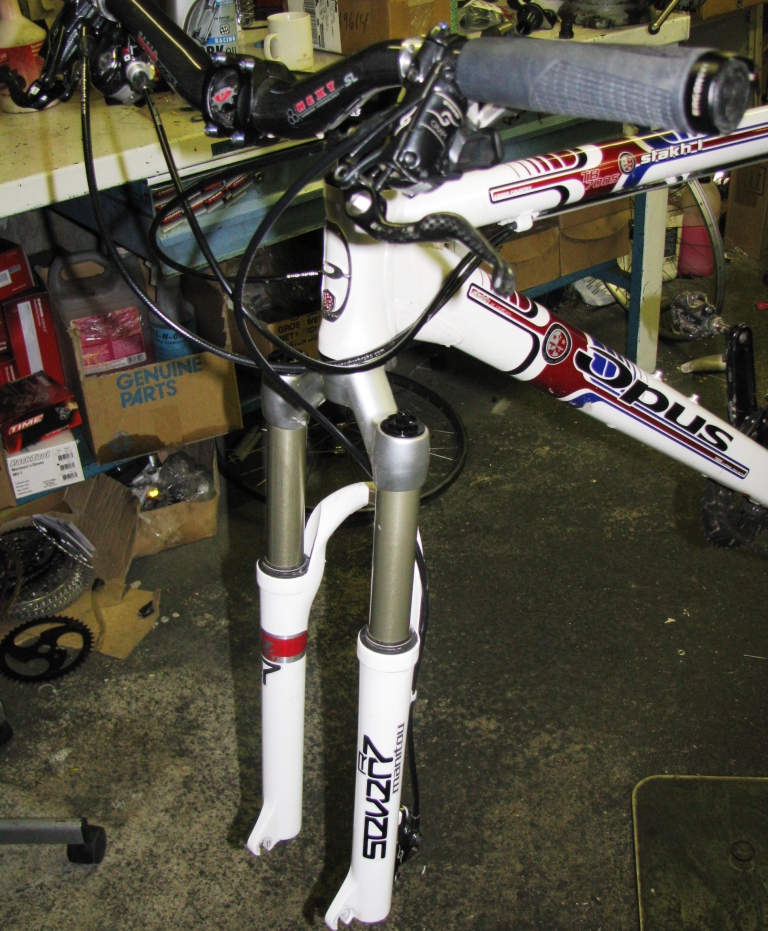
Hubba hubba… umm sorry. But just in case you have no clue what this is, this is the new aluminum version of the Dorado DH fork from Manitou. I am dying to do a review on this unit. This fork has everything a racer would want: high and low speed compression, rebound, and top-out and bottom-out control. To top it all off, these forks are assembled right here in the States. With 36mm stanchions and an inverted design this fork will take a kicking and keep on bouncing.

picture-14picture-13

Answer is back with all new products this year. New thin and stout pedals, super wide 780mm DH bars, and 720mm AM bars are also available. The bars will come in two versions: a one-inch and two-inch rise for the AM Bar and half-inch and one-inch rise for the DH bar. A direct mount stem for the Dorado allows you to change the reach from 45, 50, 55mm while providing a strong grip to the bar with its wide face plate.

picture-17

Sun-Ringle has totally revamped the line-up with new hubs, rims and colors that promise to impress everyone. The hub shot above gives just a taste of what you can expect to see in 2010. Straight pull spokes, anodized hubs and aluminum cassette bodies.

picture-18

What’s not to like about the new Hayes Stroker Ace look for this year? Now in jet black with bronze-ish piston covers, this is one great looking, high performance brake set. Along with the Stroker Ace the entire line up now boasts new graphics and now the Stroker Grams come in all white.

Well that does it for my list of favorites from Interbike - hope you enjoyed the pics!

Mountain Bike Fork Servicing (Manitou)

Wednesday, September 16th, 2009

picture-294

Believe it or not, this article can save you from visiting the dentist. Nope, this isn’t about brushing your teeth (though a toothbrush is involved) - it’s about servicing your mountain bike fork. Servicing your mountain bike fork is important yet it’s often overlooked until it’s too late. Your MTB fork owner’s manual should state the service intervals and it’s a good idea to follow the recommendations to get the maximum life and performance out of your fork. Some forks really work the fluids hard which will cause the them to break down slowly meaning won’t be able to tell the difference from one day to the next. But if we place two forks side by side and one was run for 75+ hours and the other was fresh, you will definitely feel a difference.

For this article I’ll be talking specifically about Manitou forks that utilize TPC and Absolute damping but many of these tips will be applicable no matter which fork you ride (just remember to check the owners guide that came with your fork for specifics).

Continuing to run a fork past its service interval will cause excessive wear which can cost more to repair. Lets face it: in today’s economy, no on can afford to spend needlessly. As a licensed technician in Canada, I always tell my students and former customers: You can pay a little now…. or a lot later. Servicing your MTB fork yourself will save you a bunch of cash in the long run. This is actually a pretty simple job and believe it or not there is only one special tool that you may need depending on your fork.

WARNING: Before attempting any work or opening the fork, make sure you release any pretension or air pressure.

CAUTION: When re-assembling your fork, follow all manufacturer-recommended torque procedures. If you don’t own a torque wrench, now may be the time to invest.

DO it right…FIX it right….DO not over tight!

Who should attempt this task? If you’re not afraid to change your tires or make minor repairs, this job really isn’t that much harder. All you have to remember is to take pictures of the deconstruction and follow your service guide. Changing the fork seals and fluid is actually easier than it sounds - just make sure you have a clean place to work and a solid work bench. Please remember to go over the list of necessary equipment before you start the job.

Tools and materials required

picture-295picture-29620mm and 11mm socket or wrench
8, 6, 5, 4, 2mm Allen wrench or socket
Soft face hammer
1/2 dowel
Graduated cylinder or fluid measuring cup
Graduated syringe
Pick tool or fine flat screwdriver
Small zip lock bag
O-ring kits (order for your year fork)
Dust wiper kit (the Manitou R7 uses a 30mm kit)
Fork oil (5 wt is standard for the oil bath)
Semi bath oil (5W40 synthetic)
Prep M grease (synthetic)

MTB Fork Removal

picture-297picture-298picture-299picture-300

So you got all your parts together (seals, fluids, tools) and are ready to go. The first thing is to remove your front wheel and front brake from the fork. You will need a 6 or 5 mm Allen socket or wrench to remove the brake completely from your fork (you may also need to cut the tie wrap that holds the brake line.) Once the wheel and brake are removed you can concentrate on removing the top cap and stem. Once again, most bolts will require either a 4, 5, or 6mm socket or wrench.

picture-301picture-302picture-303picture-304

Be sure to hold the fork when you are ready to take the stem off your bike; otherwise, the fork may fall on the ground when the stem separates from the steering tube. Once the bar and stem are free, let the fork hang carefully. Now remove the fork and make sure to grab the lower bearing and seal and place them with the other bolts that you removed thus far. You should have a top cap and bolt, two bolts and washers which held the brake, spacers, and the lower bearing. Place all those components somewhere safe. To finish this segment off, place the fork in a stand (if you don’t have a stand you’ll have to hold it or have someone assist you at times).

MTB Fork Cleaning

You are now at the stage where it becomes very important not to contaminate the inside of your fork. Sand particles inside your fork will ruin things very quickly, so it’s time to thoroughly clean the outside of the fork. I use a bike specific cleaner (you can simply use dish soap and warm water solution if you like) to wash off all the sand and crud. Using an old toothbrush to agitate the dirt, I make sure that all the grim has been removed, especially around the seals. Once you have removed all the dirt and the fork is dry, it’s time to start taking things apart.

MTB Fork Disassembly

picture-305picture-306picture-307picture-308

Just in case you missed the warning. THE FIRST THING TO DO IS RELEASE THE AIR PRESSURE. The following instructions apply specifically to Manitou forks like the Minute, Drake, and R7. If you have a different fork, consult your owner’s manual.

Underneath the black Schrader cap on the LEFT fork leg (in the saddle looking at your fork) is the pressure release valve. You can use any thing to depress the valve; note that there may be a little bit of fluid that comes up which is normal. You will also notice that when all the air is released the fork will slightly compress which is also normal (this is the negative spring in the left leg).

Now, on the bottom of the RIGHT leg you have to first turn the rebound knob all the way in (clockwise), then remove the 2mm Allen bolt and adjuster knob. With an 8mm Allen key, turn in the damper shaft (same side) clockwise all the way until it is disengaged from the lower casting. Have a container ready to catch the little bit of oil that will come out of the lower legs. Moving back to the LEFT fork leg (still upside down), use an 11 mm wrench to remove the bolt that holds the compression rod in place. Turn the fork right side up (legs down) to catch all the fluid (approx. 2oml) and you’re ready to remove and clean the lower assembly.

picture-309picture-317picture-317apicture-318

Start by removing the seals with a large wrench. Be careful to grab only the seal, then pry it off gently. I usually replace seals after 100 hours of riding since they are cheap and offer great insurance against any crud getting inside. Once the seals are off you can remove the foam seals which are just under the wipers. Use a mild soap solution to clean out the oil residue inside. If you have a lint free rag, wipe out all the rest of the residue and let dry. Set the fork lowers aside for a moment while you work on the fork uppers.

On the LEFT fork leg you are now going to remove the air piston and the compression rod. To remove the compression rod and piston, use a 20 mm wrench and turn the black nut on the bottom counter-clockwise until the rod is free, then clean it up a bit and set it aside. Pay attention to the bottom-out bumper - if it looks squashed, it’s time to get a new one.

picture-321picture-319picture-320picture-324

On the top of the LEFT leg you can remove the black nut with Schrader cap using a 20mm wrench (counter-clockwise again). Once the cap is removed, take a look at the seal and make sure it is not ripped or dry. At this point you can see the air piston in the fork leg. To remove it, slide a dowel from underneath to push the piston all the way out. The piston has orientation with a blue square seal on top and a black round seal on bottom so keep that in mind when placing it back (remember what I said about taking photos?). Inspect both seals to make sure they are not scratched or cracking.  I like to apply a small amount of synthetic shock oil to the piston and place it in a bag until I am ready to reassemble the air spring side of the shock. Final step on the LEFT leg is to clean the bore out of the fork leg using a solution of warm soap and water followed by a rinse of Speed Clean. Towel dry the tube and that’s that for the LEFT leg.

picture-325picture-326picture-327picture-328

Moving on to the RIGHT leg, it’s time to grab a graduated cylinder that is totally clean. Use a 2 mm allen key to remove the top TPC / Absolute adjuster cap. BE CAREFUL when lifting up the cap underneath - there are 2 ball bearings and 2 springs inside. Carefully collect the pieces and place them somewhere safe like a plastic baggy. Once the springs and bearings are removed you’re ready to remove the damper using a 20mm socket or wrench.

With the damper loose, make sure the fork has its legs facing down and remove the damper. Once the damper is out you’ll need to measure the amount of oil inside and there are two ways to do it. I like to use a graduated cylinder to catch all the oil and record the amount of fluid. Alternatively you can use a measuring tool and look up table supplied in the owners service guide to find the correct oil level. I prefer the first method for the first time doing the service (factory fill is correct - see example chart below). Once the damper is out, turn the fork over and collect all the oil (the photo above shows about 100ml of oil that came out of my fork). Cycle the damper shaft a few times to remove the remaining oil. Clean the piston assembly with a lint free cloth and put it aside.

MTB Fork Reassembly

seals-picpicture-344picture-345picture-346

Starting with the lower assembly, install the foam seals and add some semi bath oil (5W40 synthetic P/N  85-0022) to get the foam seals good and wet (I use a heavier duty synthetic lube from Red Line called Shock Proof Heavy). Next, install the seals using a large socket that fits over the entire seal to seat squarely in place. Once the seals are in you can add a bit of Semi bath oil in each leg to lube the DU bushings.

Set the lower legs aside and start assembling the upper assembly, LEFT fork leg first. Lube up the compression spring with a bit of synthetic grease (prevents noise), then install it into the assembly, and add about 20 ml of semi bath oil. Torque the end cap to 80-100 in/lbs.

picture-324picture-330picture-320picture-321

Turn the fork so that the fork legs are facing down and install the piston into the LEFT fork leg (remember the direction of the piston **blue seal up**).  Now place the lubed piston squarely on top and add a bit of semi bath oil to help push it past the first few threads on the top of the fork. Once you get it past the threads you can push the piston in a bit more and add about 3 cc of semi bath fluid to the top of the piston (I use the heavier-duty Red Line product there as well). Replace the top cap using a 20mm socket wrench and torque to 60 - 80 in/lbs.

picture-347picture-348picture-349picture-350

Now it’s time to assemble the damper side RIGHT fork leg. First thing we have to do is set the fork legs facing down, then fill the fork leg 1/4 of the way up with damper fluid (P/N 85-0023) which is a 5wt oil (depending on your weight you may want to add a heavier oil). I weigh about 185 lbs plus another 6 lbs for gear I am at 191 lbs so I use a 10wt oil in my fork which allows me to really back off on the compression and rebound adjusters.

With the leg 1/4 of the way filled, cycle the damper rod slowly a few times (removes the air) then fill the leg to the correct level - in my case the Manitou R7 needs 105mm. Once the level is correct you can place the compression rod and torque it to 80 - 100 in/lbs.  Finish off the task by placing the small springs and bearings opposite each other under the adjuster knob and tighten with a 2mm Allen wrench. Torque to 4 - 6 in/lbs.

oil-heightspicture-317picture-307picture-308

Orient the fork so it’s tilted at a 45 degree angle and carefully slide the lower fork legs onto the upper assembly. Please be careful - the seals must not get folded or they will leak. Slide the lowers down until they just about touch the compression rod and rebound damper. Inject 16cc of Semi-bath fluid in each fork leg and slide the fork in further so you can tighten them in place. For the RIGHT leg you will need the 8mm Allen socket to tighten it in place (counterclockwise  30 - 40 in/lb); replace the rebound knob (blue knob 2mm Allen bolt 4 - 6 in/lbs). On the LEFT leg, use the 11mm socket wrench and tighten it to 45 - 55 in/lbs

Once the fork is all assembled you can simply install it on your bike and you’re good to go. All you have to remember is the orientation of the bearings and remember to make sure that the brake bolts are torqued in place and the brake disk is drag free. It feels good to avoid the dentist :)

2009 Manitou ISX-6 Review

Thursday, September 3rd, 2009

picture-269

Not only does Manitou make a decent MTB fork, but you have to check out Manitou’s line-up of ISX dampers. I was lucky enough to get my hands on an ISX-6 and I must say it shows some promise to be a great damper. Out of the box it has all the things I need and want in a damper and none of the things I don’t need - kinda like it was custom made for me! Anyhow, the Manitou ISX-6 (MSRP $609) is made for those who fall into the all-mountain to gravity range of riders where weight is not too much of an issue (my 190 x 50mm unit weighs 418grams with spacers). Even at that weight it’s still as light if not lighter than some of its direct competitors.

The Manitou ISX-6 rear shock comes with independent high and low speed compression dampening adjustments, rebound adjustment, volume control (which controls spring rate near the end of travel), and spring rate (air pressure). These are all the controls you need for everything from stuttery, rutted, rocky trails to big drops that would normally cause your bike’s rear end to bottom out.

picture-275

Installing this unit on the bike really should be done by a person who knows what they are doing, mainly because you need to know which adapters are required for your bike (all shocks are sold without adapters). Once you or your mechanic install the correct mounting hardware, you’re ready to get busy setting up the damper.

First things first: set the sag by following the instructions supplied with the shock. The instructions are very specific and require you to set the shock by adding air into the reservoir first (red cap). Pump that side up to at least 150psi to start. Next, make sure the high and low speed circuits are fully open as you add air into the main chamber. Adjust sag by adding or taking away pressure from the main air spring (black cap). Although this part sounds complicated, Manitou includes a handy measurement chart for dialing sag in exactly. Serious riders know that sag measurement is critical for optimizing travel path and positioning and once you have it dialed in correctly, it’s nirvana.

After setting the sag I worked on adjusting compression. To be honest I found the compression settings a bit difficult - I ended up with the high speed compression (black knob) 3 clicks from full on and then fiddled with the low speed compression (red knob) only. My goal in setting high speed compression is to find the point where coming off a drop won’t cause the wheel to blow through its travel too quickly. For the low speed compression setting, I found the point where there was as little pedal bob as possible when sitting and pedaling.

Once the compression was set, I worked on rebound (blue knob) to find the point where bumps don’t buck me off the saddle. During ride one I played with the rebound - two clicks +/- here and there - until I found the perfect setting. With the ISX-6 dialed in I could launch off drops with a controlled compression and even return without overshooting or bouncing too much.

The final control is the volume control which controls the shock at the end of its stroke. There are four settings and I ended up at the 3rd setting which ramps up spring rate for the 6+ foot drops I was taking.

On the trails I felt confident with the ISX-6 controlling the rear suspension. I found on fast descents and hitting multiple roots and drops that the rear end of the bike was far more stable than with my previous shock.

At this point I’d like to pause and offer a brief physics lesson. If you consider the saddle as a level or a gauge of how your bike is tracking, when the saddle goes up on a bump this means the suspension is working but not fast enough (my old shock did this). The transfer of energy is not complete and the wheel is following the disturbance and forcing the bike to move instead than the shock. This can also be an indicator that you are near the limit of the shock’s travel.

With the ISX-6 I noticed far less bike movement and the saddle was more stable than with my previous set-up. This made a big difference in the overall ride quality for me - more plush, yet fully under control without that wallowy feeling.

picture-242

Taking the ISX-6 to the limit, I hit a few of my favorite rock garden waterfalls. These sections are 50 foot long steep descents of just rock and trees where you have to change direction at least 4 times as you thread yourself between some large trunks. This can be a daunting task, but with the help of superb ISX-6 enabled tracking in the rear it was a piece of cake with tons of control. These sections are great at measuring wheel control and the ISX-6 passed with flying colors!

All in all, the ISX-6 is a decent shock with great small and large bump compliance. It’s light enough for long leg trail bikes and tough enough to take bigger hits and thread rough terrain.  Many thanks to the folks at Manitou for tuning tips to unlock this shock’s potential!

Cheers.

Manitou R7 Elite 100mm Fork Review

Monday, June 29th, 2009

picture-137

Hey weight weenies, I got another one for you! Actually, this is for everyone who’s into lightweight XC gear: The Manitou R7 Elite 100mm (MSRP $450) is the perfect choice for those who are looking for an affordable, lightweight, XC performance suspension fork. The R7 Elite comes in both 100mm and 80mm travel configurations and has great features everyone will appreciate while ditching the unnecessary features that inflate weight and cost.

For starters, this fork is very light - just a touch over 3 lbs. The R7 Elite includes post mounts for disc brakes (no V-brake mounts) and the post bosses where you mount your brake are already machined flat with no paint (very important for installing brakes properly). The controls are simple and well thought out and can be manipulated without removing a glove. The R7 also gives you independent compression and rebound controls.

Installation

Installation is fairly straightforward and you can use the fork installation guide that I posted previously for details. Otherwise, here’s the short version: First, remove the old components as an assembly. Record the steering tube length of the old fork and then mark the new fork with the same measurement with a fine felt-tip marker. After confirming the measurements a few times, cut the steering tube to the correct length using a very sharp pipe cutter. Once the steering tube is cut, remove the burrs and don’t forget to install a fresh star nut (use a nut setter such as the TNS-1 from Park tools).

Setup

Once the wheels, brakes, and stem bolts are all torqued in place, the next step is to air up the fork and set the sag. Manitou asks that you use about 50% to 60% of your body weight, in my case 110lbs as a starting point of pressure for the fork’s air spring pressure. Then measure the distance from the front axle centerline to the bottom of the crown when no one is sitting on the bike and write down this measurement. Next, sit on the bike and measure the same distance as before (it’s important to be in the normal riding position, weight centered, with your feet on the pedals). Subtract the second measurement from the first and the result is the sag. Seeing that this is a 100mm fork and I wanted a 15% sag, I chose a measurement of 85mm. After all, this is an XC fork designed for racing meaning I’ll want as little bob as possible, yet as much tracking as I can get. Following the recommended procedure for setting sag will make a huge difference in performance.

Compression

This fork comes with independent compression and rebound adjustments. The method I always follow for adjusting fork settings starts with a quick ride around, bouncing the fork here and there to get the fork’s internals well lubricated. Once that is complete I hit the trail to see how the fork is reacts to the terrain. Specifically I’m looking for excessive dive when braking or bigger hits (remember this is an XC fork so a big hit here is about a foot). Based on my observations I dial in compression to the point where I get minimal dive when hitting the brakes but not enough that I feel the impacts are jarring my wrists. Once I’m comfortable with the compression setting I concentrate on rebound.

Rebound

The procedure for finding the right rebound settings is very much like the procedure for compression - it’s all about adjusting to your feel. Here I take the bike over a bump and feel for the speed at which the fork returns back. I adjust the fork so that it returns in a controlled manner and not too quickly (which often feels like a stinging sensation on your wrists). With a slow rebound setting the fork “packs down” (does not return fast enough before the next bump on the trail) and limits travel.

picture-138

XC trail riding

Once the fork is set and after a few hours of breaking in the seals I hit my favorite XC trails at the DVP and Albion Hills where they host some of the 24 Hour events here in Ontario. Both Albion and the DVP offer a variety of trail conditions including heavily rooted and washboard sections - a good challenge for any fork!

My first impressions with the R7 were pretty much what I anticipated: fast, responsive, and stiff. On the trails with the R7 I felt everything and knew exactly where the fork was going; the R7 is basically a point and shoot affair. The fork tracks without flexing even when riding off-camber sections or in any other situation for that matter. When hitting roots and ruts on the trails the R7 soaked up the hits well and did a great job at keeping the tire in contact with the ground at all times, even over washboard sections.

This fork is not equipped with a lock out (yet) so to use the R7 effectively you should remain seated while climbing and stay slightly forward on the bike during steep climbs. When holding that riding position, the fork works great at preventing unwanted bobbing. Riding one to two foot drop offs I found the fork absorbed the hits well and returned to ride height under full control.

Rating the R7 Elite

Tracking and steering 8
Rebound control 8
Compression control 8
Construction and quality 8
Trail worthy 1 For light XC, 10 For extreme FR/DH 4
Overall performance quality out of 10 8

Thanks to the folks at Manitou for the chance to review the R7  Elite. For further information on Manitou’s  products check out the website which is now updated with all the new forks as well as a wealth of information for all their gear.

Cheers!

R7 Elite Specifications

Damping: TPC
Adjustments: Compression, rebound, preload
Spring: TS Air
Stanchions: 30mm, Aluminum
Casting: One piece, Reverse Arch™, Magnesium
Steerer: Aluminum, 1 1/8″
Crown: Hollow Crown ™
Wheel Size: 26″
CONFIGURATIONS
Travel Color Axle Brake Mounts Weight (g) Weight (lbs) Ride Height
80mm White Quick-release Disc Only (post-mount) 1516 3.3 456
100mm White Quick-release Disc Only (post-mount) 1557 3.4 476

Manitou Minute Elite TPC 140mm, 20mm axle

Wednesday, June 17th, 2009

picture-131

Well folks here I am, back at it again. I’ve been spending some time lately checking out what Manitou has to offer in the all mountain/ XC categories of forks. The biggest thing I have to say about the Manitou Minute Elite TPC (MSRP $650.00), is WOW - what an awesome fork right out of the box! No mods are necessary for this one, just a few pumps on the high pressure shock pump to get the correct sag and this fork was hauling up slopes, ripping the trail apart, and soaking up 6 foot drops like they were curb hops.

To help me evaluate the performance of MTB products, I’ve found it best to change just one part at any given time and to use the same test course for consistency. Once again, the course that I chose for my test of the Manitou Elite TPC was Kelso Conservation Area. The course offers singletrack, rock gardens, high G turns, and drops up to 10′. Kelso is also a stop on the DH circuit here in Canada which makes it the perfect setting to thrash this fork.

Installation

First up, I removed my old fork unit, making sure to remove the bottom crown race from the old damper with care. I then measured the steering tube twice to get the correct length and then marked the Minute with a fine felt marker. After measuring a third time I finally cut the steering tube to the correct length using a very sharp pipe cutter. You could go out and purchase a specialized tool such as the SG-6 from Park or you could use a hack saw with a fresh blade in a pinch. Either way is correct, just be sure to finish the job by removing any burrs.  Also, don’t forget to install a fresh star nut (use a nut setter such as the TNS-1) and finally place the fork on the bike (look for a more detailed post on the procedure coming soon). The whole process took me about 35 minutes and after installing the 20mm axle and brake I was good to go.

Setup

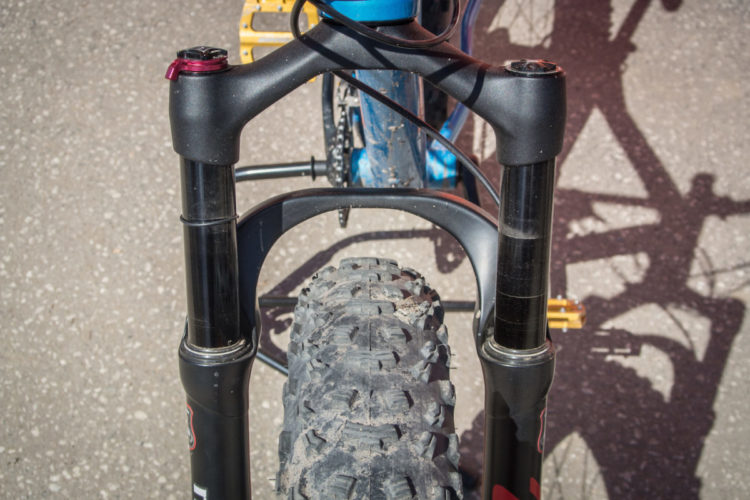
A quick ride revealed that I needed to add a bit more pressure in the fork (too much sag). For those who don’t know, sag is the fork compression you get when sitting still on the bike, hands on bars. I set the compression to mid-way from full left and set the rebound to mid-way as well - with the Manitou Minute the ideal sag is about 25%. Whenever setting the sag on the fork it’s a good idea to have the gear and water you will ride with on you, otherwise you will be off. On my first ride I also had to change the compression and rebound settings to compensate for the slight bobbing I got on extended climbs. This particular model is not equipped with a lock out.

Compression

Riding around finding drops and doubles can be exhausting but luckily Kelso makes it all accessible. Right away I found the Minute features plush, smooth control of the fork through it’s entire travel with a bit of ramping (increase in air spring rate) and the end of its stroke. What you get is a fork that is predicable when going off drops and controllable without coming to a dead stop when you touch down. Hitting rock gardens was equally as fun - the fork went through them with no issues, taking each bump equally well.

If you remain seated in your saddle when climbing the levels set with the control knobs will more than compensate for the pedaling forces you generate and will keep you from losing energy. Now with a fork like this, there will be some movement when pedaling but certainly not enough to annoy you. Using the compression knob you can dial out most of the slow shaft speeds that are associated with this, just don’t dial out too much. The great thing about the Minute is its ability to maintain ground control when climbing and braking.  Once you dial in the right settings you’ll want the fork to set about a half inch while under braking but no more than that.  One reason this fork offers such great control is that it produces very little static friction.

Rebound

The rebound circuit on the Minute will control the behavior of the fork when it is returning back to its ride height. Use the control located on the bottom of the fork to control how quickly the fork returns after compression. You know when you’ve got this right when the fork comes back controlled, without wanting to toss you off the bike. Luckily the rebound circuit on this fork works very well once set. Going through rough terrain and watching the fork follow the trail smoothly without beating on my wrists was a definite indicator to me that the rebound and compression circuits are working well.

picture-132

Overall Impressions

The Manitou Minute Elite is one of those forks that, once you spend the time setting it up correctly, you’d be hard pressed to find another fork that performs as well in the same category. I was very impressed with the fork’s performance, particularly its ability to take both large hits (up to 6 foot drops) and rock gardens. I don’t think I’ve ever ridden a fork that inspired as much confidence as this one has, especially in the 140mm class. The fork always felt smooth, tracked extremely well, and kept me in control. Under braking and climbing the fork maintained wheel contact and never felt like it was blowing through its travel.

The only thing I *might* change on the Minute Elite TPC is the hex bolt through axle configuration. Even though it is very stiff and strong with no chance of damaging the fork, a tool free version would be a welcome addition.

Manitou Specifications:

Damping: TPC
Adjustments: Compression, rebound, preload
Spring: MARS Air
Stanchions: 32mm, Aluminum
Casting: One piece Reverse Arch™ Magnesium
Steerer: Aluminum 1 1/8″
Crown: Hollow Crown™
Wheel Size: 26″

For those of you who like a more objective rating system, here’s how I rate the Manitou Minute Elite TPC on a 10-point scale:

  • Tracking and steering                                                           9
  • Rebound control                                                                    8
  • Compression control                                                             8
  • Construction and quality                                                      8
  • Trail worthy (1 for light XC, 10 for extreme FR/DH)     7
  • Overall performance & quality                               8.5

I also received a press release on Manitou’s latest damper unit that will be available on the 2010 year models and can be added to existing 2007  R7, Minute, and Drake forks. The unit is called the Absolute + and it allows you to more finely tune your fork. The Low and High speed compression circuits can be tuned independently from one another plus the unit includes a lockout feature. Manitou will also be releasing a lockout lever called the MILO which will be available in a right hand version only.

So stay tuned - who says you can’t make a great fork even better?

Just a quick thanks to the folks at Manitou for the chance to review their product. Oh yeah - and be sure to check out the new Manitou website - it’s updated with all the new forks as well as a wealth of information for all their stuff.


Site Map | Advertise | Partners | Contact Us | Terms | Privacy
Camping | Hiking | Trail Running | Mountain Biking
Copyright 2009 Blue Spruce Ventures LLC | Atlanta, GA
singletracks.com is yet another slick Review App