singletracks is mountain biking
Sign In | Create Your Account | Site Map | Help  


Putting on the Brakes @ Interbike: Avid, Shimano, Formula, and Ashima

Monday, September 26th, 2011

At Interbike this year we saw a number of mountain bike brake refinements along with a few interesting new developments from companies like Avid and Formula. Here’s what we found.

SRAM / Avid

One of the biggest deals at the show was Avid. The company is revamping their rotors this year and changing them to even sizes in line with the industry which is a big step for them. The new rotors are the HS1 (all stainless) and the higher-end HSX (two piece with aluminum center) in 140, 160, 180, and 200mm sizes. The new hexagonal-shaped rotor has been cross-drilled instead of having the rotor milled out. The smaller, more numerous holes will run smoother with less “growl” as the pads do their job bringing your bike to a stop.

The entire line of Avid brakes that feature taper bore (Elixir, XO, and XX) have been tweaked internally with a revised bladder to reduce air permeability. The new design adds an air trap system to prevent air from entering the reservoir and an O-ring just in front of the air trap to further improve the feel of the brake and maintain consistency. The new Elixir 9 also gets an improved contact point adjuster for 2012. Along with that, the World Cup brakes lose the tri-align system in favor of weight savings, bringing them down to 277 grams (weight includes lever, caliper, and 160mm rotor and hardware).

Shimano

Shimano had a see-through XT brake set on display with windows into the caliper and lever assembly (pics below). The complex lever design fits great for one finger operation and the adjustment on the lever works well at setting reach as well. The simple linear piston and return spring with its relatively large volume should perform nicely. However, even in this cutaway you can see how air could be trapped in the piston area of the master cylinder. Just be sure to have the reservoir pointing up and full when bleeding the system out and it shouldn’t be a big deal.

The brake caliper itself looks great with a simple, elegant design that makes it easy to remove top-loaded pads. But having the bleed port below the hose means you are doing a caliper-to-lever bleed only. Not a bad thing but with visuals like this you can get a better idea of what you’re dealing with. Now if only these would work in the real world I would be sold!

Formula

Formula has refined their mountain bike brake line-up as well. The new oval piston DH monster, the Formula RO, has a totally redesigned lever and master cylinder with more volume than the current THE ONE. Along with a redesign, the unit is also more robust. Stroke reach adjustments are built into the lever and the RO can also be had with optional FCS (contact point adjustment).

The top-load design makes for easy removal and servicing of the pads and pistons. The calipers on the RO are forged one-piece designs to keep weight to a minimum. The bleed port is located in the middle of the caliper making it easy to flip flop the calipers if you decide to run “Moto” style.

At about 361 grams per wheel, these are heavier than THE ONE brakes but heavier duty as well (not that there was anything wrong with THE ONE). The robust design as shown above and the redesigned levers scream DH.

THE ONE with reach adjust on the lever.

And when I saw the latest idea from Formula I was screaming like a little girl at a Justin Bieber concert. Formula is working on a new hydraulic brake hose quick release fitting. Coming from a race background and using zero loss quick releases before I was super stoked! Talk about making some jobs easy. The best part of the quick release is that the hose end is just slightly larger than the hose itself, opening up a bunch of possibilities for routing.

Ashima

Ashima Brakes has been coming up with inventive ways of making brake rotors run cooler and lighter. Wayne Moore let me in on some ideas that have been floating around, some of them a bit crazier than others but you never know.

The photo above shows a test concept that uses a simple fan that would pump air through the rotor to cool things off a bit. Simple, somewhat effective, and lightweight. Usually nothing gets in that space anyhow. Another idea Ashima is working on is a three spoke aluminum rotor core with carbon reinforcement (for added stiffness) and steel braking surfaces for compatibility. Of course this is still under development but it should make for a lightweight rotor.

Due to time constraints we didn’t get a chance to hit everyone else but believe me, Hope, Magura, Funn and others were also showing off their goods as well.

More to come…

Interbike MTB Suspension Report: Fox, Rockshox, Marzocchi, and More

Wednesday, September 21st, 2011

Mountain bike suspension manufacturers seem to have raised the bar yet again this year. Everyone from Fox and Rockshox to DT Swiss and Marzocchi to newcomer Formula was proud to show off their latest and greatest.

Fox Racing Shocks

Stopping off at Fox first, I spent some time talking with Josie Jacques-Maynes, an accomplished mountain bike racer in her own right, about their 2012 line up. Fox is splitting the line into three categories: Factory, Performance, and Evolution with Factory being the highest end with all the latest and greatest. The entire 2012 line up gets new SKF low friction seals which improve sensitivity. The rich Kashima coating still finds itself on all the Factory line forks and now on the RP23, RP2, DHX Air 5.0, and the DHX- RC4 shocks.

Fox is also coming out with an all new longer travel 29er fork for 2012. There are two versions: a Float with 140mm of travel or a TALAS with 110/140mm travel. Up close you can tell FOX took their time to evaluate this fork before bringing it to market with careful consideration to both weight and strength. Coming in at 4.54lbs (TALAS taper steerer 15QR) this fork is begging to be tossed on a Yeti SB95 or similar long-travel 29er.

Fox is also nearly ready to release their version of the dropper seat post. So far what is clear is that it will come in two sizes (30.9mm and 31.6mm) and will feature a remote lever (natch). Checking the test model I did the wiggle test and lo and behold, this one had nearly zero side-to-side play compared to others on the market. Am I waiting to test one… YES.

As for the rear shocks I am stoked on getting ready to give a full review on the 32mm TALAS and RP23 shocks. This year’s RP23 has what Fox calls Adaptive Logic which provides a greater range of ProPedal tuning and increases the Boost Valve effectiveness.

Fox previewed a new technology still early in development that uses any Android device or Garmin GPS along with a special pump (with built in ANT+) to set up the fork. First you scan the QR code on the fork , then hook up the pump and the app tells you what to do next. Seems like a neat concept for setting up the fork correctly. The program even gives you recommended compression and rebound settings. This unfortunately is still under development but if executed well I can see it helping many riders get their suspension set up right.

Rockshox

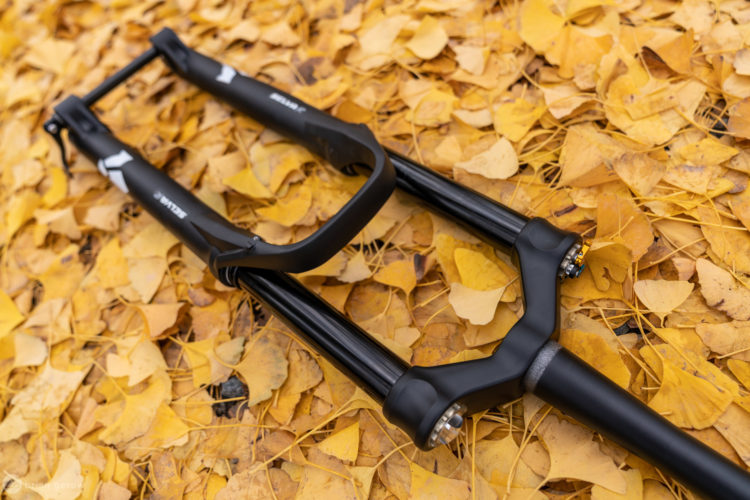
Swinging by Rockshox and talking with Tyler Morland about everything SRAM, we went through all the numerous tweaks that Rockshox has made for 2012. Lower friction damper cartridges, Keronite on the top models, and tapered carbon steering tubes are just the start of what Rockshox has to offer this year. The really big news for Rockshox is the expanded offerings in the 29er markets. You can now get your hands on a SID, Reba, Recon, Revelation, and the lower cost XC versions for big wheel rigs. With travel options from 80-140mm, Rockshox is making sure you’re covered.

The all new Motion Control DNA damper cartridge is lighter and features greater adjustability and improved sensitivity. For all you gram counters, the lightest 29er SID weighs in at just 1450 grams – pretty damn light for sure. Jeff has posted a few articles about longer travel 29ers bikes and the Revelation 29er with its 32mm uppers and 20mm maxle will surely find its way onto many a Trail 29er soon.

On the longer travel side of things, the Lyrik gets major upgrades with a choice of a BoXXer-derived Mission control DH damper, a Dual position air system that will drop the travel down 30mm in just one 110°degree sweep, or the BoXXer-style solo air spring. Stiff 35mm stanchions and three choice of steering tubes will  round things out. The BoXXer gets tweaked as well with further improvements to sensitivity as well as some weight savings with the lowers coated in Keronite rather than paint. The Keronite is a very hard uniform surface, much like a ceramic compound which helps reduce weight while keeping strength high.

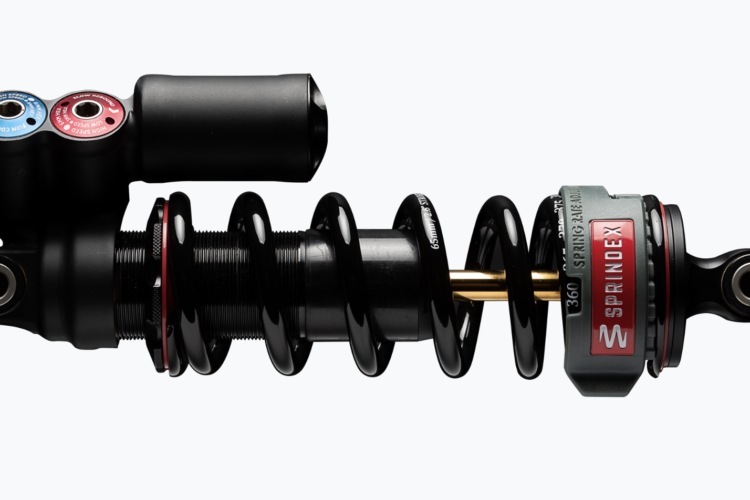
At Rockshox it doesn’t end with new forks. The photo above says it all. There are now white color options on the Monarch and Monarch Plus shocks and even a new carbon option on the Monarch which gets some versions below 200 grams. The Monarch Plus is now available and will pair nicely with a Lyric on those longer travel Trail or AM bikes.

Another new item from Rockshox this year is the Kage rear shock. The Kage matches the Domain series of forks and is a lower priced option to the Vivid line up. The Kage RC has pre-load, compression, and rebound adjustments and comes in at 402 grams (no hardware and no spring, 216mm length).

DT Swiss

DT Swiss also made an appearance at Interbike this year to show off their suspension tech. The forks all have a very uniform look to them which could be a bit confusing but other than that you’re looking at a solid choice. For one thing the XRC 100 Single shot comes in at just 1170 grams with a carbon steering tube (with an unique internal rib for stiffness). The lowers are carbon as well with a reverse arch much like Manitou forks. The biggest fork is DT’s EXM 150 coming in at 1675 grams.

The EXM 150 features a magnesium lower with a polished center bridge called the torsion box. Controls on the EXM are much like many platforms with a threshold control and independent rebound and compression circuit adjustment (Launch Control). The ABS (Auto Balance System) is used for the damper which makes it easy to set up the air spring. The positive and negative air chambers set themselves automatically.

DT Swiss also offers the incredibly light XR carbon rear shock. At its shortest length, 165mm, you have a shock that is 142 grams. Pretty crazy but yeah, talk about light. The XR also gets a new air spring with the same ABS platform as the forks for precise set up. What I find unique about this shock is the threaded carbon canister. To date I believe this is the only carbon component that has threads right in the material. Using an aluminum damper shaft for the rest of the construction and carefully placed seals should keep this damper working for some time.

Manitou

Unfortunately Manitou was not at Interbike this year but they have a few refinements on the Dorado and R7. The big news for them is the release of the Marvel, the first for Manitou with a QR15, using the familiar hex that has been used successfully on their 20mm through axles. In addition to the Marvel, a tuning kit is being offered that will allow everyday riders to tune their suspension to perfection. For the rear suspension a tweaked Revox shock is coming this year. Stay tuned for a review on that soon!

Formula

Formula is making a debut this year with their very own fork design using 33mm stanchions for a good mix of stiffness and weight savings. Add to that a pull spring for small bump compliance and a main air spring for the bigger bumps and this promises a sensitive shock. The display models were QR9 with post mounts and it wasn’t clear if a 15QR is on the way. What you can see in the cutaway is the thin lowers and even the lower DU bushing, all designed to keep things as light as possible.

Marzocchi

Marzocchi was at the show showing off their latest line of extensive forks along with a display of legacy fork models. The line up has been revamped with new models and changes in the damper cartridges. The new Corsa Superleggera Carbon 29er fork features a one-piece tapered steering tube / upper crown and a weight that rivals some 26er forks at 1650 grams. This fork offers three travel lengths (80, 100, and 120mm) and is internally adjustable using a new hydraulic travel adjust system (Switch TA) that works completely independent of the damping system. Relying on hydraulics, the optional travel change of 40mm (on the 55 series) or 30mm (on the 44 series) automatically re-extends without pulling back up on the bars.

On the bigger side of things, the 66 hasn’t changed much over the last year, but the 888 RC3 Evo gets a new and improved cartridge and finally a 4-bolt mounting system for the stem.  The Roco line up of rear shocks sees a color change, now in black to tone things down a bit.

Unfortunately we didn’t have enough time to check out everyone at the show – we missed Suntour and X-Fusion – but hopefully next year we will stop by and check that out for you. Stay tuned for more coverage from Interbike!

The DH Machine – It’s Alive!

Monday, February 28th, 2011

This is pretty much it. My little red rocket. The Dream Machine. The Monster. Here is the Banshee Legend II that I finally have all built up and ready to rip. It took me a while to get it (nearly) complete – I’m actually still waiting on two items that should be arriving shortly. But other than that, it’s done. I can’t wait until the slopes open for the season.

I first managed to get the bike together and out on the trail late in the season last year where I tested out some great products from Rockshox, Avid, and SRAM. Since then I added the final touches of bling from Loaded as well as Deemax Ultimate wheels from Mavic. Those early test rides on the Easton wheelset and Answer products really whetted my appetite for the main course.

The frame is a Banshee Legend II in medium:

Head angle: (63.8°) Seat angle: (70.5°)
Wheelbase: 1171mm / 46.1″
Bottom bracket height: 348mm /13.7″

If you don’t understand those angles and measurements, let me break it down for you: this frame is a purpose-built DH racer, designed for speed and fast cornering. The ultra-low BB keeps the center of gravity down low while the long wheelbase is great for stability.

The suspension arrangement is what Banshee calls their VF4B (Virtual Floating Four Bar) suspension. Now you might say it looks like someone else’s design but let’s face it: unless you have a single pivot, multi-link, suspension configs almost all look alike. However, there are actually small differences in pivot placement that make a big difference in performance. The virtual center region where the Legend II pivots is also different from other bikes. The short lower link, positioning of the links, and lengths of the links make for an ideal axle path. This path starts arcing up and to the rear (perfect for absorbing square edged bumps) in the first bit of travel; from the middle to the end of its path, the axle goes up and forward (reduces chain growth and pedal feedback).

Up front I’m running the Manitou Dorado Pro. I did have the BoXXer WC on there, but for now I’m running the Dorado Pro. I just received the Loaded AmX Rizer bar, a beast of a bar at 31″ wide and 328 grams. The AmX Rizer features 8° back sweep and 4° up sweep which is just right for me. Connecting the bar to the Dorado I have the Loaded AmX direct mount stem set at 45mm length (adjustable to 50mm as well).

Completing the controls, I’m rocking Formula’s ONE brakes (I also run the 2011 Avid Codes) and I love the levers because they take up virtually zero room on my bars and have a great feel (never mind the power and excellent modulation). The shifter is  a SRAM 10spd X0 (presently my favorite) with 1×10 gearing.

Now let’s talk about the high performance drivetrain. The Descendant cranks are from Truvativ and I’ve added the e*thirteen SRS+ chain retention device to keep the SRAM PC 1091 chain in line. For now the pedals are Xpedo XMX12ACs which have a great feel and provide a wide foot plate. I’m also looking forward to trying Spank’s new Spike pedals soon. Although I don’t plan on doing much sitting on this bike, the saddle is a WTB Valcon mounted on a Loaded X-Lite seatpost.

On the back I have the SRAM X0 short cage 10spd derailleur on an OG1090 11-25 rear cassette. Talk about great shifting. Despite the fact that the rear cassette is the road version, it works great with the X0 rear derailleur. Wheels are the iconic Mavic Deemax Ultimates (12x150mm rear) which are super light for DH (under 2,000 grams) and oh so smooth.

Now all this is tied together by two other important things: the rear shock and tires. I’m running the Rockshox Vivid Air which provides an excellent feel while controlling the wheel nicely. For tires I went with the ITS Invader 2.5″. At about 1100 grams each, they offer a decent mix between weight and durability. The Invader is also what is considered an all conditions tire, perfect for the Ontario landscape where I do most my riding. Lately I’ve noticed North Shore type features popping up around here so I’m excited to see how these tires perform in a variety of conditions.

In its current state the bike weighs in under 40lbs. – 37 lbs. to be exact – and it’s still bulletproof. Weight savings come from several areas, starting with the innovative Interspoke milling on the Mavic rims. Banshee carefully selects tubing thicknesses and machined shapes while including titanium pivot hardware. The Vivid Air and the Sram OG-1090 rear cassette shed massive amounts of weight over competing products, accounting for a whole pound of savings together. The final little bits of weight fell off by replacing stock hardware bolts with titanium and alloy parts.

In case you’re interested here are the build details:

Frame: Banshee Legend II
Fork: Manitou Dorado Pro  / Rockshox BoXXer WC
Rear shock: Rockshox Vivid Air (240mm x 76mm) (9.5″x3.0″)
Seatpost: Loaded X-Lite
Saddle: WTB Valcon (Silverado Syndicate on order)
Cane Creek XX II headset
Stem: Loaded AmX direct mount / Answer -ONE (not shown at this time)
Bar: Loaded AmX riser bar (790mm / 31″) / Answer ProTAPER 780 DH
Bar Grips: ODI Ruffian
Brakes: Formula ONE 208mm rotors F/R / Avid Code (not shown)
Shifters: SRAM XO 1×10
Wheels: Mavic Deemax Ultimate
Tires: ITS 26 x 2.5″ Invader tires
Cranks: Truvativ Descendant / GXP BB 83mm 165mm lengths
Cassette: SRAM OG 1090
Chain: SRAM PC1091
Pedals: Xpedo XMX12AC
Extras: Alloy rotor bolts from Ashima, Titanium hardware for brakes, Titanium hardware for rear shock.

Based on a few early test rides I’ve found this bike loves all the lightweight components; in particular the lighter Deemax wheels actually showed increased precision and tracking. I love pitching the bike in corners and the feeling of control I get with the bike in the air. In the hands of a pro rider I can imagine some spectacular whips coming outta this bike!

One interesting thing I noticed so far is that for my body type (5’9″, 190lbs with 31″ inseam and regular arm length), a 50mm or 45mm stem works well with a riser bar; otherwise, running a 55mm stem with a flatter bar works equally well. A 30-31 inch bar seems to offer a good mix between control while limiting over-steering.

Speaking of control, I found with a properly tuned suspension I didn’t get a lot of the diving I normally expect from a long-legged trail machine. Keeping my weight centered or further back and nailing the brakes coming into sharp corners, the bike remains civil without that pitch feeling I’ve had on other machines. The front and rear suspension work well together to keep this ride stable (time spent setting up the shocks is key!). And when things do get rough, I absolutely understand why so much time was involved in the development of this bike. The Legend II feels pretty forgiving – hitting rocks didn’t seem to be much of an issue. The bike tracked nicely over that kind of stuff.

Once I get more seat time in and experiment a little with settings and parts, I’ll post further updates. Stayed tuned for more!

Mountain Bike Build: A Legend is Born

Wednesday, November 17th, 2010

Ohhh yeah! Finally, after what seemed like ages of waiting, my Banshee Legend II is ready to ride – and this past weekend I got to break it in. After the final parts arrived on Wednesday while I was work, I spent the evening getting everything cut, measured, installed, and torqued in place (more on that in a few).

A project bike like the Banshee Legend II is not something you can slap together and hope for the best. It’s important to look at what you’re going to be doing with a bike like this before you even spec the first part. Flying over rock gardens, drops, step ups, and almost anything else, you gotta make sure the bike (and you!) survive.

Just after arriving home from Interbike back in September, I was stoked to unbox the Banshee Legend II frame. At that point I already had some of the major components handy so I got most of the bike assembled. I installed a Cane Creek XXc headset and moved my Dorado fork over to the new rig. With a frame that’s worth a lot of $$, you may want to get a pro to do this part of the build, or at least invest in a headset press. I added an Answer DH direct-mount stem and my favorite handlebars, the Answer 780 DH, which pretty much completed the front end.

For stopping power I installed a set of Formula ONE brakes and the like-new Havoc DH wheel set I had on hand from last year (gotta hand it to Easton for building such a great set of wheels).

Then, a few weeks back a nice box of components arrived at my doorstep from SRAM with X.O shifting and the new Descendant crank (same one Peaty rides with). Now some may wonder why I decided to put a 10-speed drivetrain on a DH bike (many riders may argue a 9 or even 6 speed cassette is good enough). Three reasons: I’m not interested in butchering a cassette just to get a six-speed drivetrain, 10-speed spacing is tighter so shifting speed increases, and, perhaps most importantly, I’m no pro so I need a few extra gears when I actually have to pedal on the flats. :)

After another long night of installation and getting all the gears perfect and shifting amazingly on the stand, I had to wait on a rear shock and possibly a matching front fork. Well just last week a rather large box arrived, once again from SRAM. I got everything I needed to finish up the Legend plus two other bikes I’m building for next season (get ready for some interesting reviews and great products). This delivery added the new Vivid Air RC2, the BoXXer WC, and the new Code brakes. So yup, I had work to do. Off with the Dorado and on with the BoXXer as well as installing the Vivid and the new Codes. Looking at the bike I realized that this is turning out to be an almost all-SRAM DH bike.

Finishing off the bike with pedals, grips, saddle, and seatpost, I was still a few hours away from completion. Getting the cable and hose lengths just right is important and shouldn’t be rushed. After all, perfection is in the details so I ended up using Gore cables (love those so much!) for the rear derailleur to make sure the shifting is as smooth as possible. In fact these cables from Gore are a bit different from previous versions; unfortunately I can’t tell you how yet (they’re still top-secret). Anyhow, I also spent some time bleeding the Codes after I shortened the hoses; now I was ready for testing!

This weekend I took the Legend II to a local area where I could do some DH pre-testing (rock gardens, step downs, jumps, gaps and table tops abound). After a few runs I realized many of the components need a break-in period before they’re operating at full performance. Needless to say I still had a blast and I can’t wait to get more serious test rides in on my project bike.

I am very greatful to everyone who helped make this bike happen. Folks like Tyler Morland (Avid, Rockshox) Morgan Meredith (SRAM), Jay MacNeil (Banshee), Lois Mabon (Gore), Richard Travis (Manitou), Tom Porter (Answer), Christoph Vogl (Formula), Toby Henderson from THE, and Mark Reidy who reps Easton.

Stay tuned for more reviews on these great products and hopefully some more great AM-DH reviews on other items not yet installed!

Cheers

Formula Brakes + Wheels & Forks for 2011

Tuesday, September 28th, 2010

Formula is already known for designing incredible mountain bike brake systems and this year the company is applying power, technology, and design to an even wider range of products. While going over the current line with Chris Costello at Interbike last week I couldn’t keep my eyes off the new mountain bike items that will be available in 2011.

We started out by talking about some small changes in the Formula line-up for this year. For 2011 there will be two top-of-the-line brakes, the R1 and The One, followed by The One FR and the RX. Formula felt there was some confusion over the difference between the Mega and the FR so the Mega has been discontinued resulting in a simpler, more refined brake line-up.

In terms of tech and design, the brakes really haven’t changed much since my review of the 2011 R1 lat month. However, as I stated in my review, Formula has added stroke and reach adjust to the R1. When you purchase an R1 or The One you get the new features but you can also purchase a kit to upgrade existing models as well.

In case you’re wondering how the stroke adjuster works, it’s a simple piston (no more than an o-ring with a spring behind it). When you apply the brake you will force the o-ring onto the spring until it bottoms out which then activates the brake. The position of the o-ring relative to the spring determines the amount stroke in the system.

New this year from Formula are some super cool two-piece rotors that will not only add bling to your rig but will actually aid in heat dissipation. Since aluminum conducts heat better than steel, heat will migrate from the steel rotor contact surface to the aluminum center where it will dissipate more quickly. In addition to managing heat, the highly machined centers also stiffen up the rotor without adding too much weight.

Beyond brakes, Formula is really branching out this year. The company is set to launch wheels for 2011: tubular and clinchers, 26- and 29-inch wheels. Right away I noticed the highly machined hub surfaces and minimalist look – classic Formula styling. With features such as scandium rims, 24 straight pull spokes, and weights starting at 1417 grams, these are sure to turn some heads and open more than a few eyes.

Not only is Formula venturing into wheels but they’re also getting into suspension forks. The company is starting off with XC forks in the 80 – 115mm travel range but hopefully (for me) they’ll move into longer travel forks shortly after that. The Formula Thirty3 models on display below are not the final products but give a good indication of the level of fit and finish we can expect from Formula. Being a company that built its reputation on great products I’m sure Formula will deliver the goods with their new suspension forks!

2011 Formula R1 Mountain Bike Brake Review

Tuesday, August 17th, 2010

r11

Now here’s a scoop for all of you tech heads: Formula Brake Company was cool enough to send me a set of 2011 Formula R1 brakes for a review. I was actually expecting to get the the 2010 model so when these babies arrived I was stoked!  The R1 is basically the pinnacle of the accumulated technology behind Formula which means these brakes are up there in cost but they’re dripping with superior modulation in a super strong, lightweight package. To me these brakes may well be worth their weight in gold.

r16The first thing you’ll notice about the R1 brakes is the forged and compact master cylinder (similar to Formula’s the ONE). The master cylinder (MC) takes up very little bar space and is radially constructed. Featuring a convenient flip-flop design, the R1 allows you to bleed the brakes on either side (dual ports) while the split clap allows you to install and remove the brake without disturbing other components (nothing drives me crazier than having to remove unrelated parts unnecessarily). Inside the MC is a high capacity reservoir that surrounds the piston.

The R1 master cylinder body is forged and then machined for maximum strength and minimum mass. Speaking of mass, you can get these brakes down to 263 grams±. This is very light indeed for a brake that can be used safely by AM riders (Enduro) who want to keep their rigs in lightweight climbing condition.

The 2011 R1 model adds reach adjustment as well as pad contact point adjustments.  The reach adjust (red knob) on the lever makes it easy to adjust how far out you want the levers, with plenty of room for adjustment. The contact point adjuster, which is radially mounted before the brake line, adjusts the volume in the line to compensate for pad wear and engagement points. Reach adjust is retrofit-able to 2010 models.

The bright red bits are all-aluminum fasteners to further reduce weight on the R1 brakes and torx heads on all the bolts reduces the risk of stripping the bolt heads. With the R1 it’s important that you follow the installation instructions to the letter and torque all the bolts down to stated values.

r14

The R1 caliper hasn’t changed this year (probably because it’s hard to improve on perfection) and features the same forging process as the master cylinder. The upshot: a compact, lightweight, and stiff structure. What is hidden from view is the 22mm pistons and larger-than-expected brake fluid capacity behind the patented cap design. All of this increases the fluid capacity (reducing the chances of boil over) and reduces the physical size of the caliper (as well as weight).

r12The calipers are post mount in design and can handle rotors up to 220mm. However, keep in mind these are not DH brakes (those would be the ONE or the ONE FR). Earlier I mentioned how I dislike removing parts for no good reason and with Formula’s top load design, removing pads and springs can be accomplished without disturbing caliper alignment (see image right).

The stock R1 brake pads sport organic material backing on aluminum to further reduce weight but you can get the sintered pads on steel backing plates if you want a more aggressive set-up.

Installing the R1 brakes on my OPUS Stahk was a piece of cake. Following Formula’s instructions and recommendations it took all of about 30 minutes to get both front and rear brakes installed. I’m sorta particular so I shortened the hoses a bit and then re-bled the brakes (15 minutes per wheel). In the package you get extra fittings to get the job done without having to hit up your LBS for parts. Remember to torque everything down properly – the last thing you want to do is snap a bolt or even worse have something come loose on that 15 mile loop you’re hitting.

On the trail the R1′s have a similar feel to the ONE’s which I’ve been rocking on my DH bike. The modulation on these brakes is second to none. The R1′s don’t engage like on/off switches; rather they come in with an amount of stopping force proportionate to the lever pressure. I only use one finger to grab the levers and that is more than enough with these brakes. On descents or technical spots where I find myself dragging the brakes, the overall characteristics of the brakes didn’t change much due temperature increases on the rotor and pads.

The amount of braking force the R1′s generate is certainly less that its bigger brother the ONE but clearly the R1s sport a much more compact and lightweight package. These brakes release very quickly without a hint of drag which to me is a great thing. This is especially important for competitive riders where every second counts – the last thing you want is a system that slows you down when you don’t want it to. Valuable energy can be lost when brakes drag and fortunately the R1s don’t.

r1chart

If you go back and read my review of Formula’s the ONE you can see that both sets are very similar in performance aside from overall braking force. Pricing is also similar with the R1′s landing at $330.90 MSRP. These are incredible brakes for XC and AM use and you’ll have a hard time finding higher performance in a mountain bike brake package anywhere close to this weight and build quality.

r15Although it’s not shown here, Formula does offer the direct mount MiXmaster for your XX/XO/X9 shifters, both left and right side to clean up your bars a bit. They can be had for about $33.60 each; carbon levers and titanium bolt kits are offered as well.

Take a look at the Formula website for further details. Shout out to the good folks at Formula for providing the R1 brakes for review!

Formula The ONE MTB Brake Follow-up Review

Wednesday, May 26th, 2010

f1

Now that I’ve had plenty of time on these stoppers I’m ready to give you all the late breaking (pun intended) news on these brakes.  A little while back I introduced The ONE and talked about the specs and the type of riding they’re designed for so now it’s time to talk performance.

At just 309 grams these DH brakes are really impressive and stop like a son of a you-know-what. The ONEs also feature excellent modulation which allows the rider to come to a controlled stop every time. This makes The ONE perfect for trail and AM riders who run on super technical trails as well. These brakes develop a ton of stopping force that does not fade away which is great for those shuttle runs that go on forever before you gotta shut it down in a hurry and toss the bike sideways.

I got a chance to install these brakes on nearly all my bikes to see how they work on long-travel FR rigs, shorter AM bikes, and even DJ bikes. In every case, the brakes rocked. Make sure you use only the recommended T15 Torx bit to tighten the brake lever in place and follow all the precautions for these high performance brakes. As always, torque all the bolts using the instructions provided and give yourself a good 30 to 50 stops at medium force to burnish and bed the pads in as well. Overall install time should be about 30 minutes.

f2

Using The ONEs on my FR bike with 203mm F&R rotors, I really got some eye popping performance that other manufacturers will have a hard time matching for while. For starters, these brakes run ultra-quiet, even when they’re wet. The ONEs also develop a serious amount of torque to really slow you down, allowing you to execute multiple high speed stops without any fade or pump up (where the fluid expands and causes your lever to engage earlier).

Looking at these brakes you might guess they’re fragile based on the small size of the lever and cylinder. Well, don’t judge a book by its cover – I can personally attest to the strength of these brakes. Even after casing a drop down badly (see the Epic Stealth Cam Review for the crash footage), not a single bolt or lever was bent or tweaked (to my relief).

Perhaps the best thing about these brakes is the outstanding modulation. The rider has total control over speed without the jerky feeling that may be experienced with other systems. The bite is exactly proportional to the amount of force placed on the lever, which is actually pretty rare on hydraulic MTB brake systems.

I put together a quick chart characterizing performance of The ONE below.

theone1

Looking at the chart you can see that you really can’t go wrong with these brakes. The “worst” item on this chart (an 8 out of 10) is noise and even then am I being very critical. You can see that a premium brake (at a premium cost) is worth the extra dollars that you worked hard to earn.

If anyone asked me on the trail if I would go out and get another set of these, I wouldn’t hesitate to say yes. For now these are in my top three favorite brakes (that is until something else comes along) and I could say to anyone who wants powerful brakes, that these are some of the most reliable and powerful ones out there.

Specs from Formula

MASTER CYLINDER

  • Forged radial master cylinder (M/C)
  • Patent-pending high capacity, integrated reservoir
  • Removable handlebar clamp
  • Flip-flop master cylinder assembly
  • Dual M/C bleed ports for easy-on-the-bike-bleeds
  • Forged aluminum lever blade (optional carbon)
  • Laser etched logos
  • MiXmaster available

CALIPER

  • Patent-pending forged one-piece post mount caliper
  • Huge 24 mm caliper pistons for amazing power
  • Top vented caliper allows for wheel on pad changes and eliminates overheating effects
  • Bottom vented caliper pistons provide additional cooling
  • Laser etched logos
  • Top loading pads simplify pad changes

Thanks again to the folks at Formula for providing The ONEs for review.

Formula TheONE MY10 MTB Brakeset Preview

Tuesday, February 2nd, 2010

theone2theone3

Hi folks, not too long back I wrote about the Formula RX brake set and since then I have really been enjoying the great modulation and awesome power. I recently installed a set of sintered pads in place of the stock organic ones and the performance has been pretty amazing. But wait, this little article isn’t about the RX brakes but the new 2010 THE ONE brake set. If you thought the RX brakes were impressive wait until you take a look at these!

THE ONE brakes utilize a patented forged caliper that encases huge 24mm caliper pistons to generate über amounts of stopping force. I am sure that those of you who follow what’s new and hot on the the slopes and World Cup events have heard about THE ONE. For those of you who haven’t, these are Formula’s top dog, no-holds-barred brakes for DH racing. At just 308g these are lightweight – very lightweight to be exact. In fact, with some brands it’s tough to find XC brakes this light! With rotor sizes of 160mm, 180mm, 203mm, 220mm, you’re sure to find the size you need.

Once I get these on my test bike I will have a chance to see how well they perform on the mountain. Formula claims THE ONE brakes modulate extremely well and if the RX is any indication I’m pretty sure these brakes will blow me away.

theone1

Taking a peek at the construction I have to comment on how small and tight the overall package is. Talk about really shaving weight where you can – the forging process allows these brakes to achieve a small form factor without loosing any strength. Compared to other brakes, THE ONE’s forging process results in tightly squeezed metal molecules, resulting in a more dense, stronger, and uniform material to start the machining process. The only drawback to this is the higher cost of manufacturing and thus final retail cost. Once the weather gets better I will give everyone the skinny on THE ONE’s.

Here are some of the highlights:

MASTER CYLINDER

  • Forged radial master cylinder (M/C)
  • Patent-pending high capacity, integrated reservoir
  • Removable handlebar clamp
  • Flip-flop master cylinder assembly
  • Dual M/C bleed ports for easy-on-the-bike-bleeds
  • Forged aluminum lever blade (optional carbon)
  • Laser etched logos
  • MiXmaster available

CALIPER

  • Patent-pending forged one-piece post mount caliper
  • Huge 24 mm caliper pistons for amazing power
  • Top vented caliper allows for wheel on pad changes and eliminates overheating effects
  • Bottom vented caliper pistons provide additional cooling
  • Laser etched logos
  • Top loading pads simplify pad changes

Thanks to the folks at Formula brakes for providing these brakes for the article.

Formula MTB Brakes: The New 2010 RX Reviewed

Tuesday, November 17th, 2009

picture-53picture-52

Formula started producing motorcycle brakes and wheels in 1987. By 1993 they were the first to produce and distribute a disc braking systems for mountain bikes and they’ve been refining their MTB products ever since. The Formula RX brake set is the perfect example of that commitment.

Borrowing technology from Formula’s top dog THE ONE and R1 brake sets, the RX is a pared down, less expensive alternative(MSRP from about $189.00 each). The first thing you’ll notice is the RX calipers are not forged like THE ONE and R1 calipers and the RX features a master cylinder with a single bleed port (the other brakes feature two). While those features are nice to have, the tradeoff is a higher price for the high end brakes. Fortunately these differences don’t make the RX brakes any less capable for the XC to light freeride mountain biker.

Formula RX brakes have some really cool features that should pique any rider’s interest. For starters, the brake caliper is a one piece design which makes it relatively lightweight and stiff. The one piece design also supports the perfect alignment of both cylinder bores which ensures even pad contact and rotor wear.

Stopping force is generated by two 22mm pistons. With the RX brakes you can change up the pads without removing the caliper from the bike which is actually my favorite feature. The caliper is equally advanced in design, using a radial cylinder and integrated high capacity reservoir (more fluid = longer fluid life). The caliper can also be used on either side of the bike thanks to its flip-flop design. The weight of each unit including a 160mm rotor is 351g which is a decent weight considering the R1 tips the scales at 270 grams – not too far off.

Installation and Configuration

When ordering these brakes, be sure to get the correct hose length and adapter for your intended application. Because the RX brakes can be used in a wide variety of conditions, follow this simple guideline: XC riders will do well with 160mm rotors front and rear; trail riders should use 180mm front and 160mm rear; and all-mountain (enduro) or light freeride folks may want to consider the 203mm up front and the 180mm rear. On my AM bike I went with a 203mm disk on the front and 180mm disk on the rear and the installation only took a few minutes – nothing too strenuous.

When installing items like brakes, be sure to follow all safety precautions as well as all the included instructions. Most importantly, use a torque wrench when installing any brake set. If you’re using carbon components like a carbon frame or carbon bar, do not even consider installing these (or any other) brakes without a torque wrench. All the proper torque values can be found in the instructions. The last thing you want to do is crush your tubes by over-torquing. I also recommend turning your handlebars to their limits carefully after installing the brake levers. Make sure that the lever blades don’t strike your top tube.

On the trail

Out at Kelso and a “secret” spot about 40 minutes from my place (my new favorite place for testing), I did the usual routine of breaking in the pads. This involves stopping with medium force about 20 – 30 times on straight, level ground followed by riding with a finger on the brake to generate some friction. Once the pads are burnished in and seated nicely, I really hit the trails hard.

The first thing I noticed during my test was the nice, crisp feeling of the brake lever. Even using one finger on the lever I got decent force along with a comfortable feel to the brake. The lever action is silky smooth with no hang-up whatsoever and there’s no excessive lever travel with the RX. On a full squeeze the lever blade was just about parallel with my handlebar, right where it should be, and felt rock solid – not spongy at all. Lever position is adjustable with a 2mm allen key.

picture-32

On the rougher side of the trails with steeper descents and rocky, rooted areas I got a good measure of how well the RX brakes perform. On steep descents I found these brakes brought me back to sane speeds quickly, but the stock organic pads needed to heat up a touch. Unlike some other braking systems, these brakes didn’t pop my eyes out of their sockets on short stops but their performance was pretty damn close.  The RX brakes offer more than enough braking force for your AM bike or Trail bike.

I also really enjoyed the modulation on the Formula RX brakes. These babies came on gradually with consistent braking force and released pretty quickly without a hint of pad drag. Running these brakes with sintered pads rather than the stock organic pads should increase stopping power even more. In low temperatures and dry conditions the brakes didn’t make a sound.

Overall the Formula RX is a decent MTB brake set with good power and excellent modulation. For those who plan to shuttle these brakes I say switch up the pads to  sintered but for those who will be riding technical trails the RX brakes are good to go. The performance chart below is based on using the stock organic compound pads; sintered pads would add another point on braking levels.

capture

Technical data from FORMULA:

  • Radial master cylinder
  • High capacity, integrated reservoir
  • Removable handlebar clamp
  • Flip-flop design
  • 1-piece caliper design with 22mm pistons
  • Post mount
  • Top loading pads
  • Matte black / Gloss White
  • Organic pads
  • 351g complete with 160mm rotor and hardware

Thanks to the folks at Formula for providing the RX brakes for review.

2010 Formula Brake Offerings

Saturday, September 26th, 2009

picture-370

While walking around Interbike I had to swing by Formula Brake and chat with Christoph Vogl about this year’s line up. It looks like they did so well on improving the line last year that there are no major changes this year other the introduction of the new RX series brake which is great for all types of riding (except DH). At about 351 grams the RX brakes are nothing to sneeze at and with 22mm pistons these will generate some serious force.

picture-371I was especially interested in learning more about THE ONE, a brake set designed for everything from enduro to DH. As far as the Formula line is concerned these are just awesome brakes – super powerful with 24mm pistons and a low weight to performance ratio. (just 308 grams, lighter than many XC brakes you may be familiar with). What makes these brakes special is that both the master cylinder body and the caliper are forged, allowing the engineers to remove unwanted material while creating a stronger brake.

picture-372

If all goes well I’ll be performing a full review on one or two of these brake sets in the near future. In the meantime, check out formula-brake.com for more info and details on other great brake sets.

Cheers.


Site Map | Advertise | Partners | Contact Us | Terms | Privacy
Campground Reviews | Hiking Trails | Trail Running | Skiing / Snow Sports | Mountain Biking
Copyright 2012 Blue Spruce Ventures LLC | Atlanta, GA
singletracks.com is yet another slick Review App