
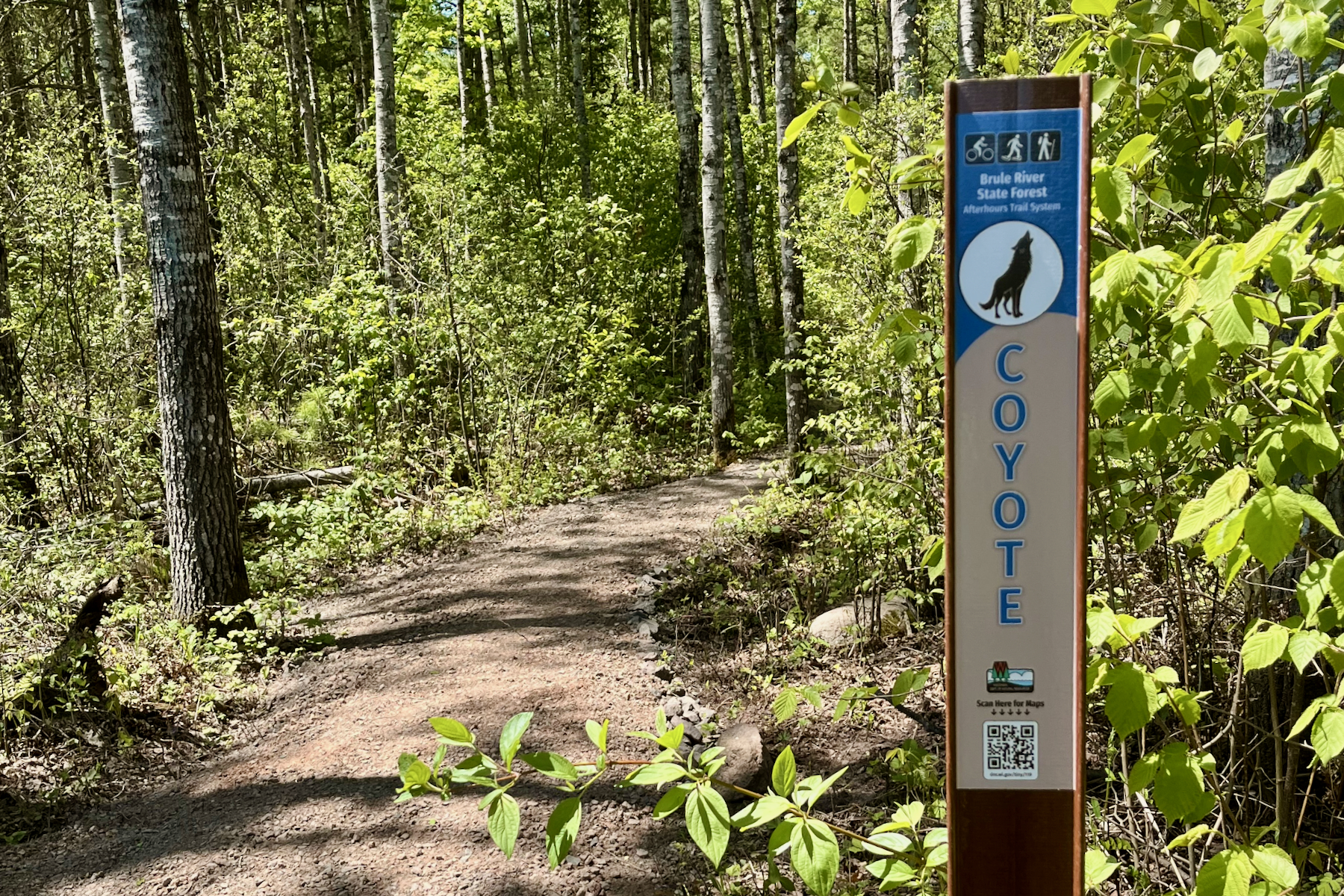
Wisconsin continues to fill in the gaps around the state, providing trail systems in areas where residents once had to drive hours to find singletrack. Those living in Brule and the area surrounding the Brule River State Forest had hiking and snowshoeing trails, but nothing for two wheels. Mountain bikers traveled nearly an hour to CAMBA’s trail systems near Hayward or drove northwest toward Duluth.
But not anymore. Over the past few years, the trails at Brule River SF have officially opened to bikes, with more singletrack added as popularity has grown. Now the multi-use trail system is nearly complete, with another two-plus miles of fresh trail joining existing singletrack this year. Once that mileage is added, Brule River SF will total roughly 9 miles and be open for year-round use.
“New” trails at Brule River
The trails are just off Highway 2, a major connection between places like Duluth and Superior in the west, and Ashland and Washburn further east. Other than the trails at Brule River, there aren’t any nearby opportunities for mountain biking. Wisconsin wanted to change that.
“The Wisconsin State Park System had been strategically planning for years to incorporate singletrack multi-use trails into their properties to better serve the visitors of their properties,” Matt Leischer told us. “Use was identified to be growing in popularity from internal requests and probably other nationwide studies.”
Leischer is the Property Manager for the Parks and Recreation Management program at the Brule River and, as such, was deeply involved with the project. The project stretches back just shy of a decade, to when Brule River SF opened an existing trail, Coyote, to mountain bikes. Coyote, which stretches over two miles and climbs and descends nearly 200 feet, was originally open only to hiking and snowshoeing.
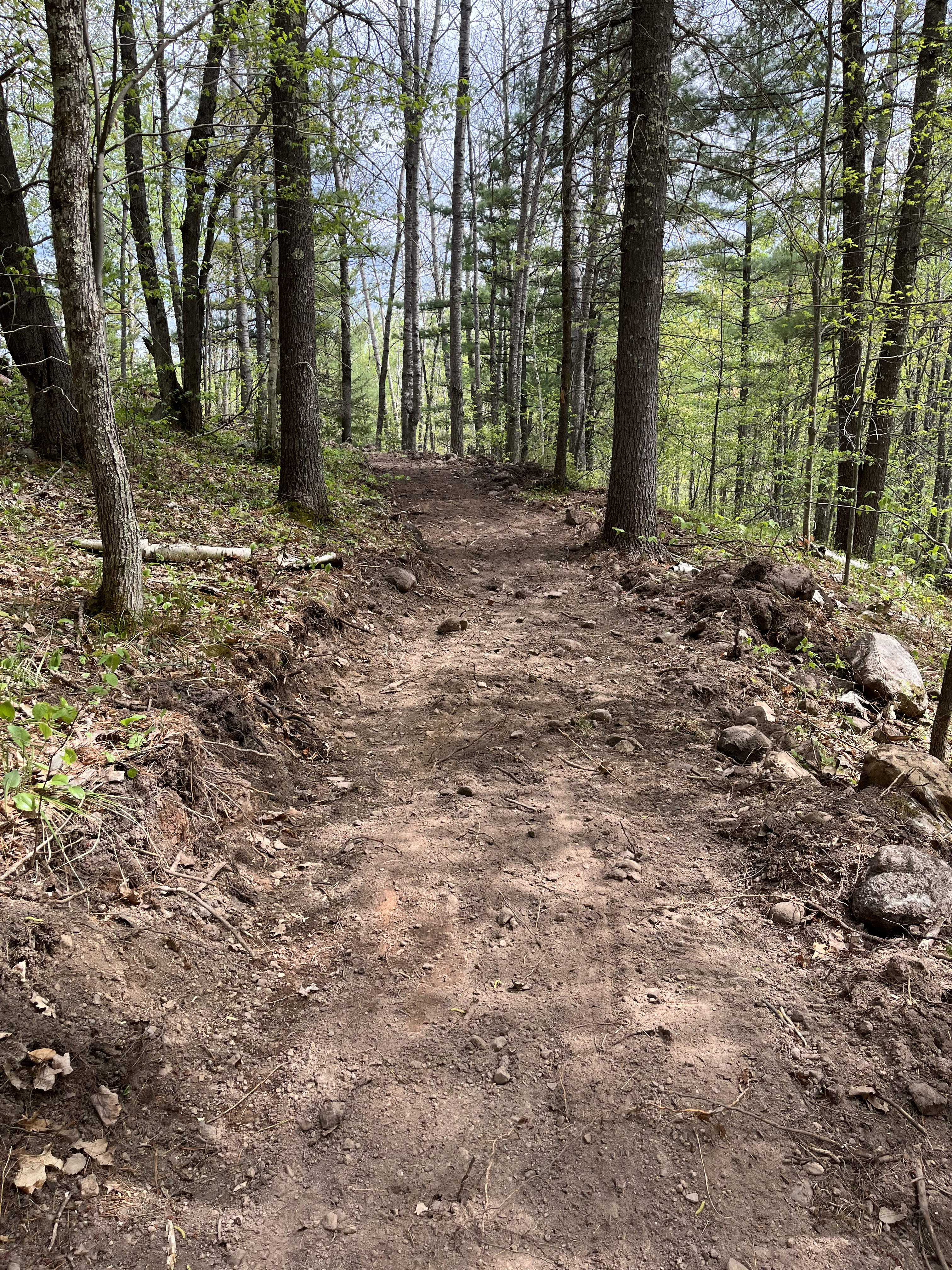
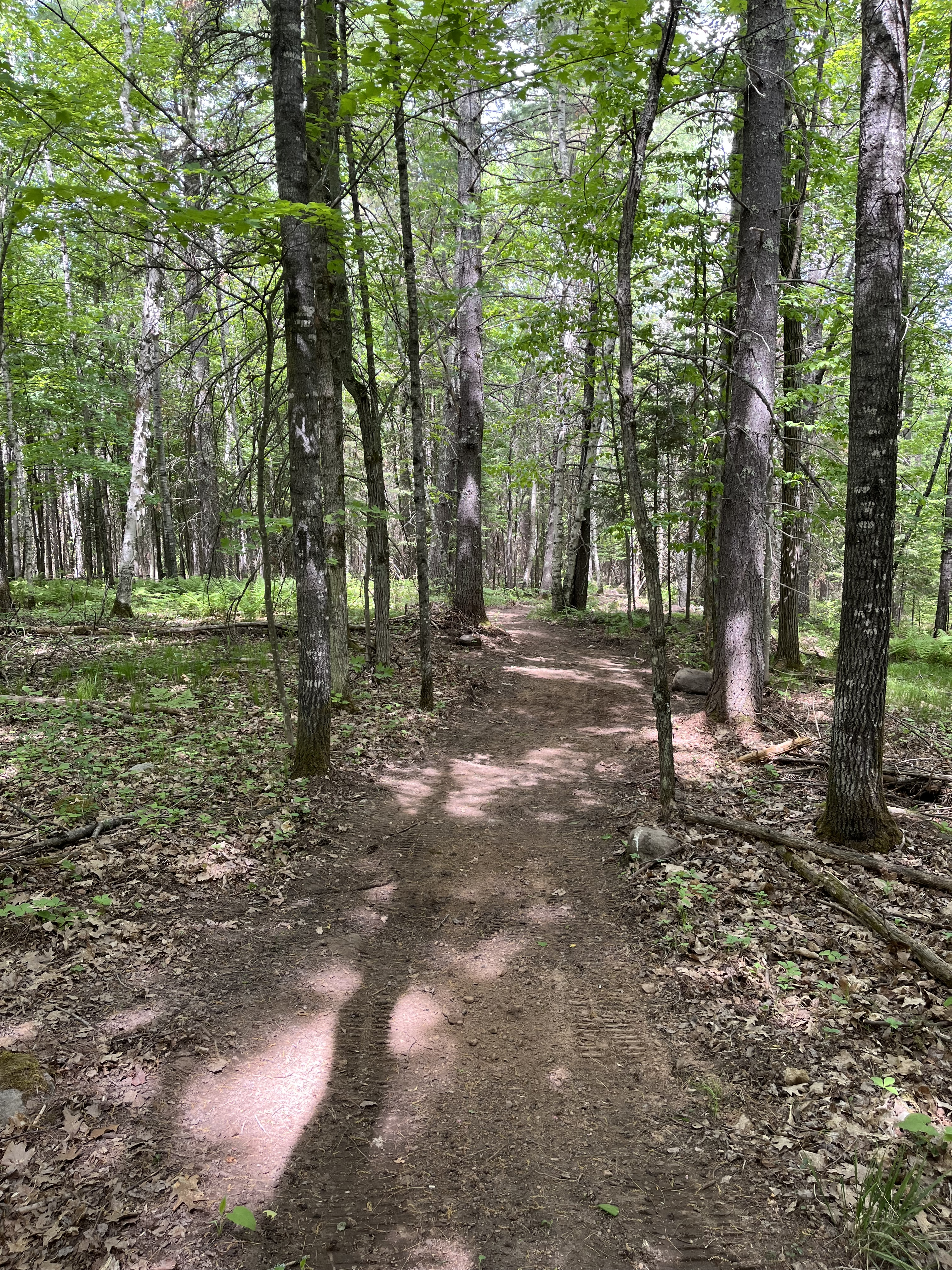
Brule River SF staff and members of the Brule Valley Ski Club began work on Coyote in 2018. To accommodate more user groups beyond foot traffic, the trail would need to be widened, which would mean trees and bushes would need to be cut back a bit. They also added some woodwork – ladder bridges to get riders up off of sloppy sections closer to wetlands that don’t dry out well.
And, Coyote was a success. Albeit a quick loop, locals no longer needed to factor in two additional hours of commute time to ride singletrack. So, Brule River SF kept building.
From 2020 to 2022, they worked on more bridges and stream crossings, replacing beat-up existing ones and adding new ones. In 2022, Brule River began work on new singletrack for the first time. Not only was the addition of new trails exciting, but it also allowed them to establish a solid process to add more trails quickly. The trail builders with Brule River SF, like so many other trail builders we’ve spoken to, used machinery for the rough-in, followed by an army of volunteers, doing hand-work.
“This was establishing the standard of development we were looking to move forward with throughout the rest of the system-wide work,” Leischer told us. And the trails came fast.
New trail work began in 2022 and was completed in 2023, adding the Fox and Snake trails. 2023 brought the beginnings of Bear trail, which was wrapped up in 2024, along with the flagging of a new trail, Eagle (maybe you’re seeing a naming theme here). Eagle was wrapped up last summer, along with a bit of extra machine work on Bear.
This summer, Brule River SF is working on 2.5 miles of additional trail that will connect to Coyote trail. The new trail’s completion is slated for later this summer, perhaps stretching a bit into the fall.
“Coyote trail is the core loop trail that starts and ends at the trailhead,” Leischer said. “It is the trail we will eventually tie into at the end of our construction to make the trail feel more complete.”
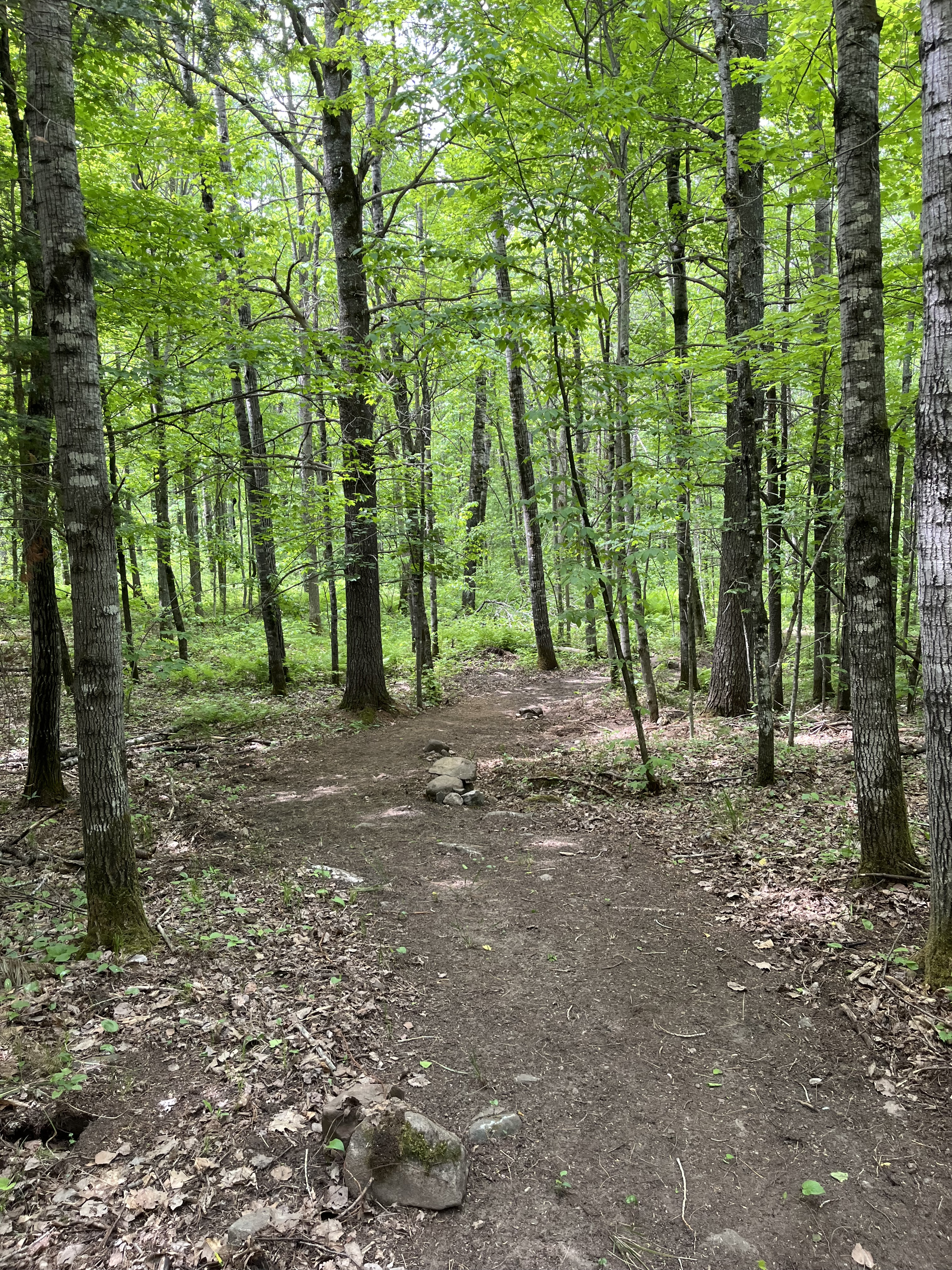
Engaging the most riders
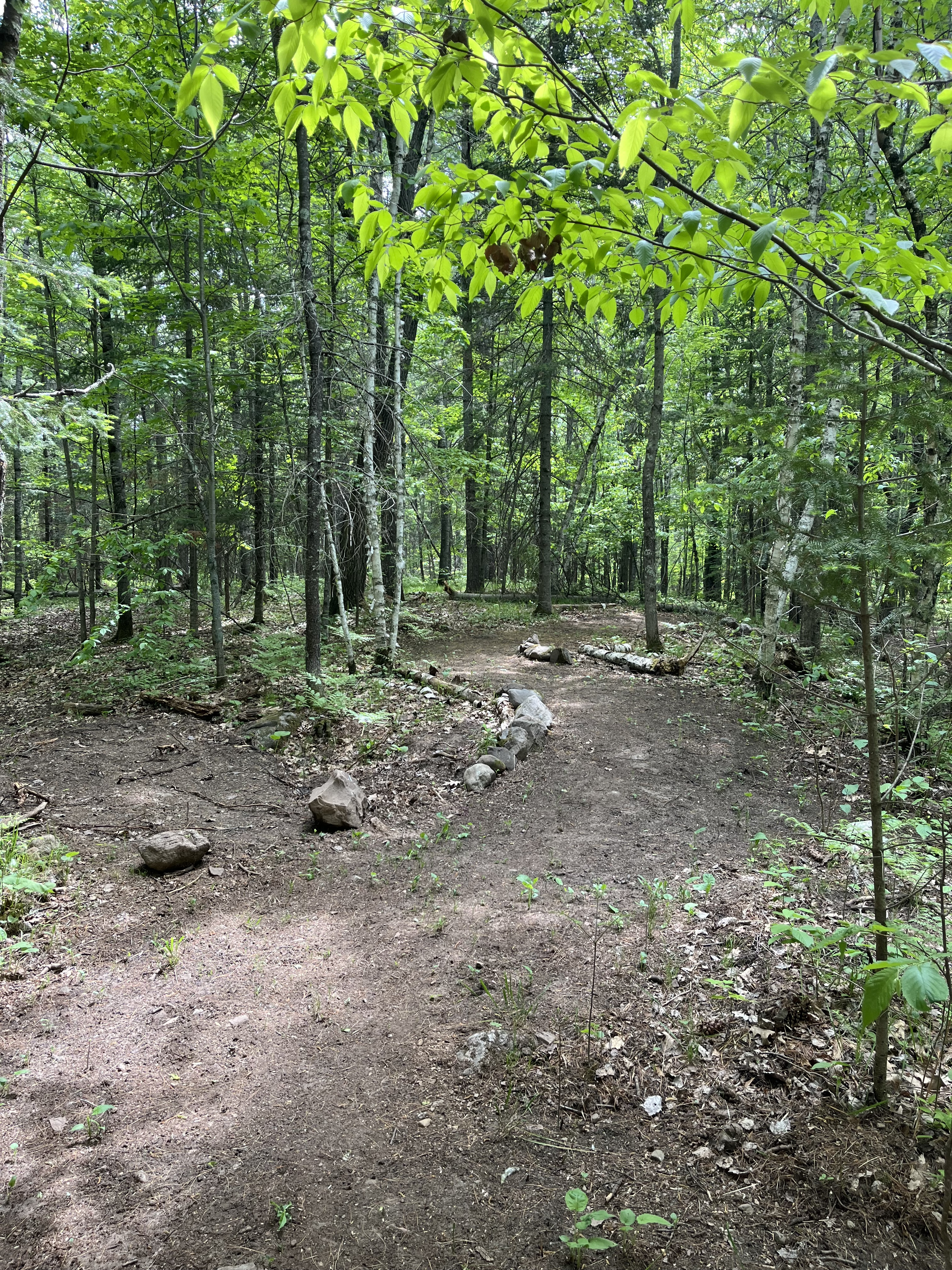
The majority of the current trails at Brule River SF fall into the intermediate category. Trail difficulty ratings are a spectrum, and while all the trails may be “blue,” terms like “light blue” or “dark blue” likely apply.
Leischer also said the trails can be ridden in either direction, which changes the character and potential difficulty of different sections. A challenging climb may be an easier descent, and vice versa.
Fox and Snake fall into the “lighter blue” category, as they are shorter and don’t have nearly as much elevation gain or loss. Leischer told us that Fox is a fairly flat, flowy trail with some good corners. While being a fun trail on its own, at just over half a mile, its current main purpose is to connect Coyote to the new trails.
Snake has a similar vibe to Fox and also stretches about half a mile. The loop starts and ends at the intersection of Fox and Bear and incorporates flowy turns and natural rollers.
Eagle steps things up, especially depending on the direction it is ridden. The trail can either climb or descend over 250 feet. At two miles long, the climb can be a bit of a grind, but ridden in the other direction, Eagle passes by rather quickly.
Leischer said that Bear trail is appropriately named, as it is a bit of a, well, a bear. The trail reaches elevation gains and losses of over 300 feet in just over two miles, with quite a few punchy climbs. The new trail that Brule River SF is currently working on will be even more difficult than Bear, adding many rocky sections to an already classic Wisconsin XC trail system.
More to come at Brule River
Trail building is expensive. New trail development typically takes one of two routes: pay professional trail builders up front for a quick turnaround, or play the long, less expensive game of volunteer-built trails.
Somehow, Brule River SF was able to get the best of both worlds. While Leischer didn’t have the exact numbers, the project cost was in the tens of thousands, not the hundreds of thousands. Much of this was due to the hard work of the Brule Valley Ski Club, which made up most of the “hands” as far as volunteers go.
Leischer also mentioned that owning the machines they used significantly reduced potential costs.
In celebration of National Trails Day on June 6, Brule River SF officially unveiled the newly constructed trail system. Leischer said that after the newest trail is completed this summer, he expects to start flagging new trails this fall.
The news stinks. Why not follow Singletracks on Google News to bring more joy to your day?
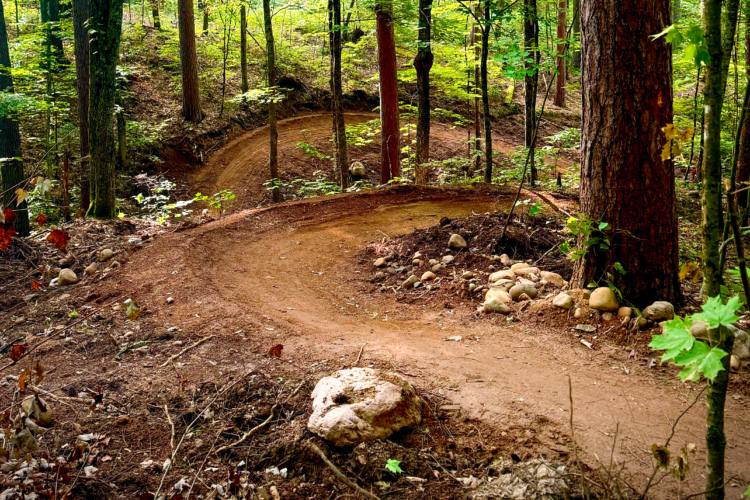
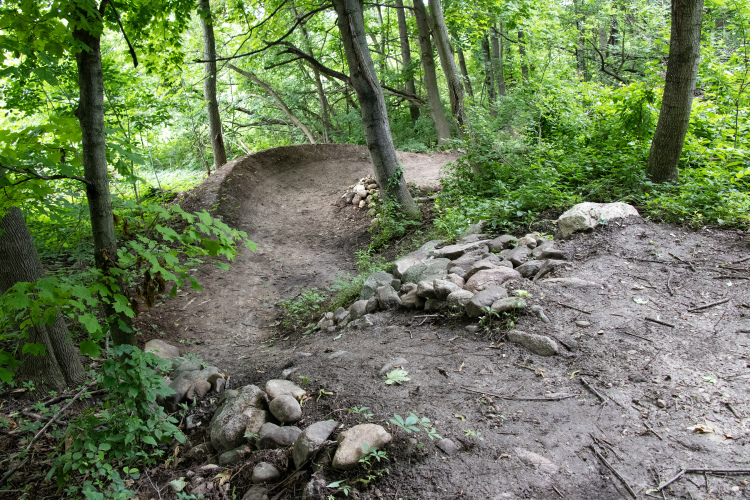
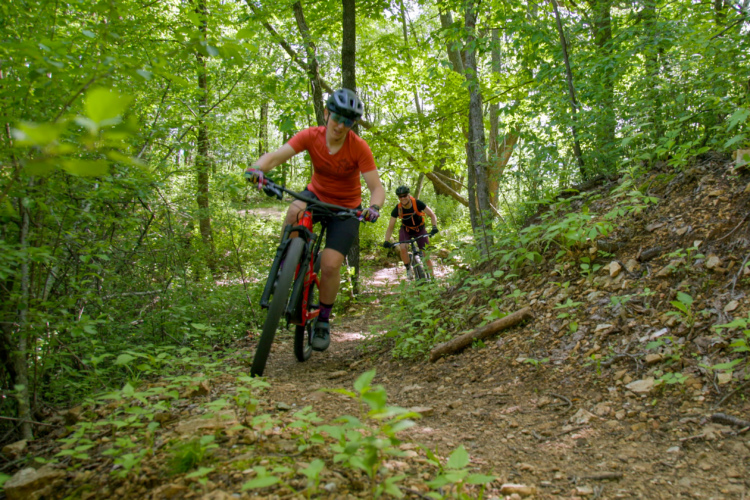


0 Comments