
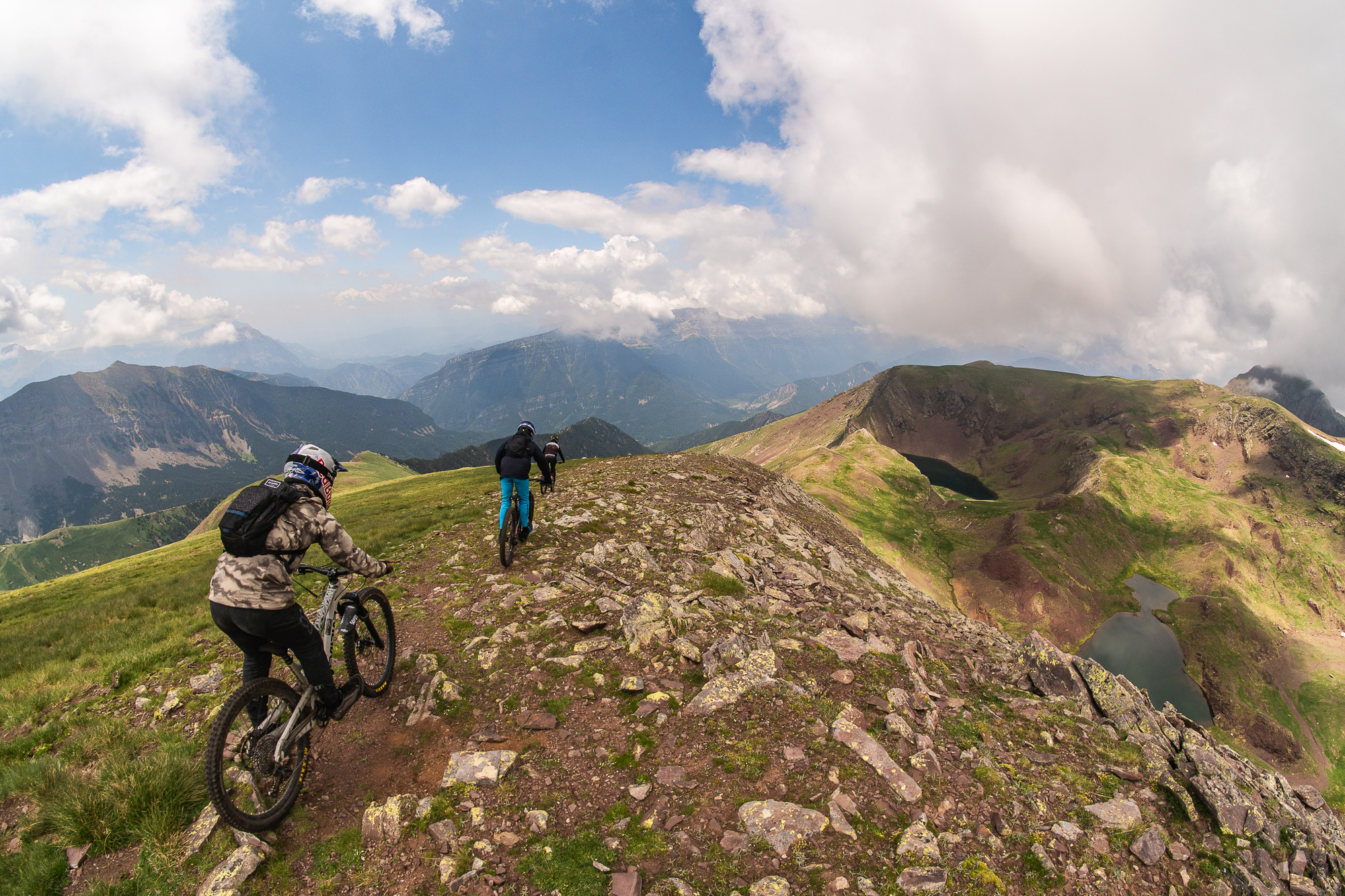
Bielsa is quickly emerging as one of the Pyrenees’ most compelling riding destinations, tucked into a valley that looks like a Swiss postcard — snow-capped peaks, crystal-blue rivers, and cascading snowmelt included. It sits beneath the towering presence of Ordesa and Monte Perdido National Park, whose peaks top out at 11,000ft, looming above the ridgeline singletrack and loamy forest trails below. As one of the wetter valleys in the high Pyrenees, Bielsa delivers unreal alpine terrain paired with consistently tacky soil, making the big alpine descents unforgettable.
What was once known primarily as a gnarly enduro destination is now getting its first machine-built flow trail, set to open this summer — and it could change everything about how riders think about this place.
The Pyrenees divide and connect
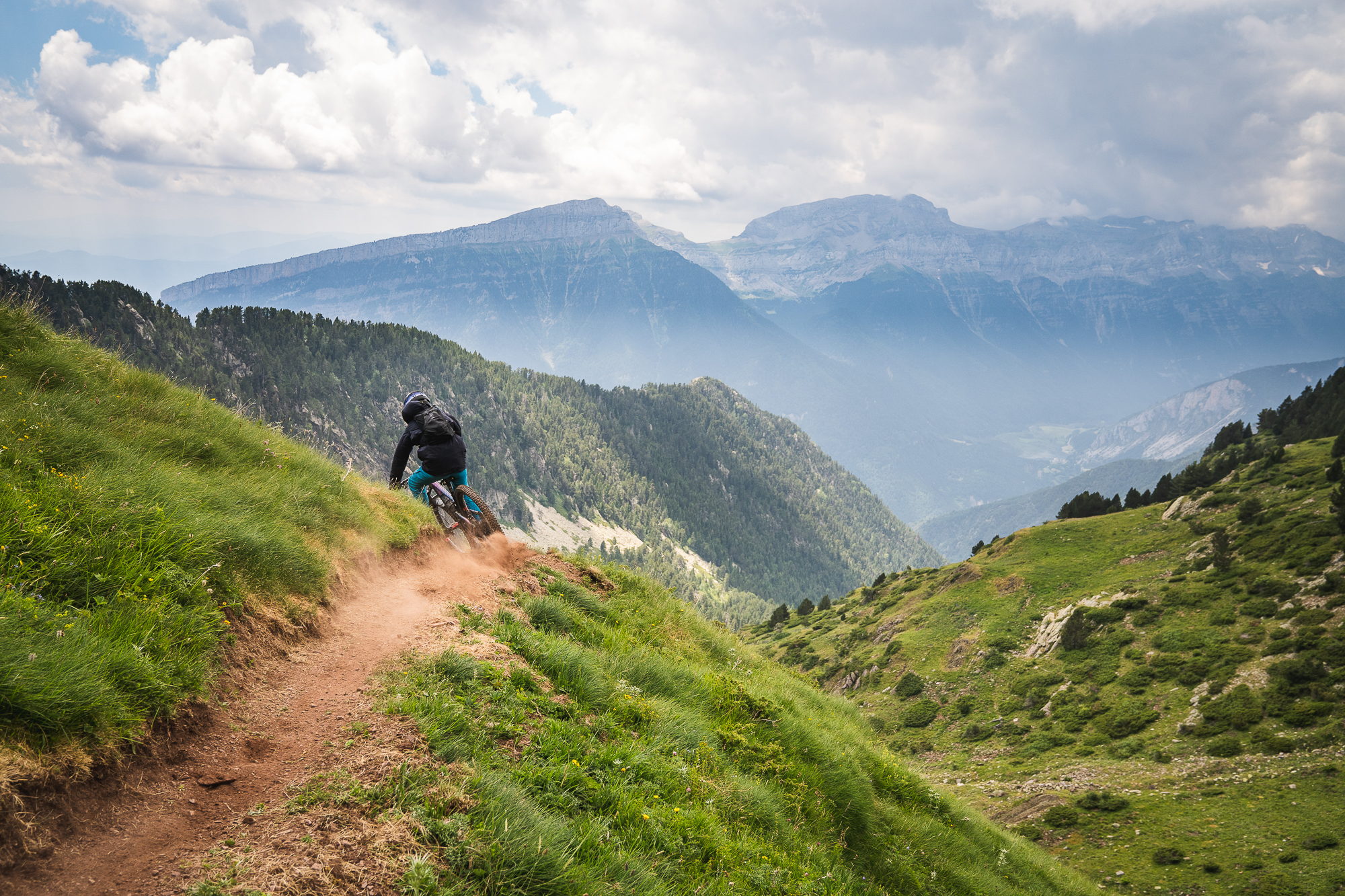
Stretching from the Atlantic in the northwest to the Mediterranean in the southeast, the Pyrenees are a formidable mountain range. The sheer steepness of the range not only forms the watershed divide, it also forms the backbone of the millennia-old border between France and Spain. It connects the Basque Country and Catalonia, which straddle both sides of this border, each with its own unique language and traditions. Aragon sits between the two, the autonomous community where Bielsa is located.
Many mountain bikers overlook the Pyrenees in favor of the slightly higher Alps. The Pyrenees also have glaciers and technical alpine terrain, but without the crowds of Morzine and the Dolomites. Some may have heard of Andorra, the tiny Pyrenean country that hosts World Cup races each year, but it is much more built-out, with valleys transformed into cities connected by gondolas. Bielsa is a different animal entirely.
The mountains seem a bit wilder and more remote along the border of the Iberian Peninsula, especially within the National Park and connected ecosystems, far from the more populous Spanish cities. Monte Perdido is the third-highest peak in the Pyrenees, at 11,007ft, and the highest limestone peak in Europe.
Don’t expect the Alps-style infrastructure of chalets and berghaus huts atop every peak — Bielsa doesn’t even have a ski area. There are more signs of human influence here than in the remote American Rockies, but the overall feel is refreshingly untamed.
From loose rock to loamy flow
All of that geography translates directly to the trails. Bielsa and the surrounding mountains are composed of two distinct soil types that define the riding zones: above treeline, with alpine loose limestone, and below treeline, with dark organic duff.
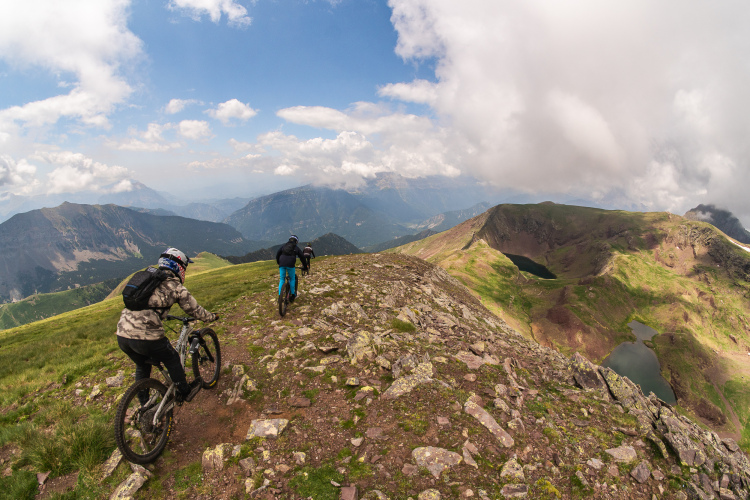
The trails above treeline are raw and rugged, often just slightly formalized goat paths and hiking trails. The Crest of Comodoto is a must-ride for the incredible views of the ridge that connects to Monte Perdido. Keep your eyes on the trail, though; the mellow ridge quickly turns steep and loose, which may be a short hike-a-bike for some.
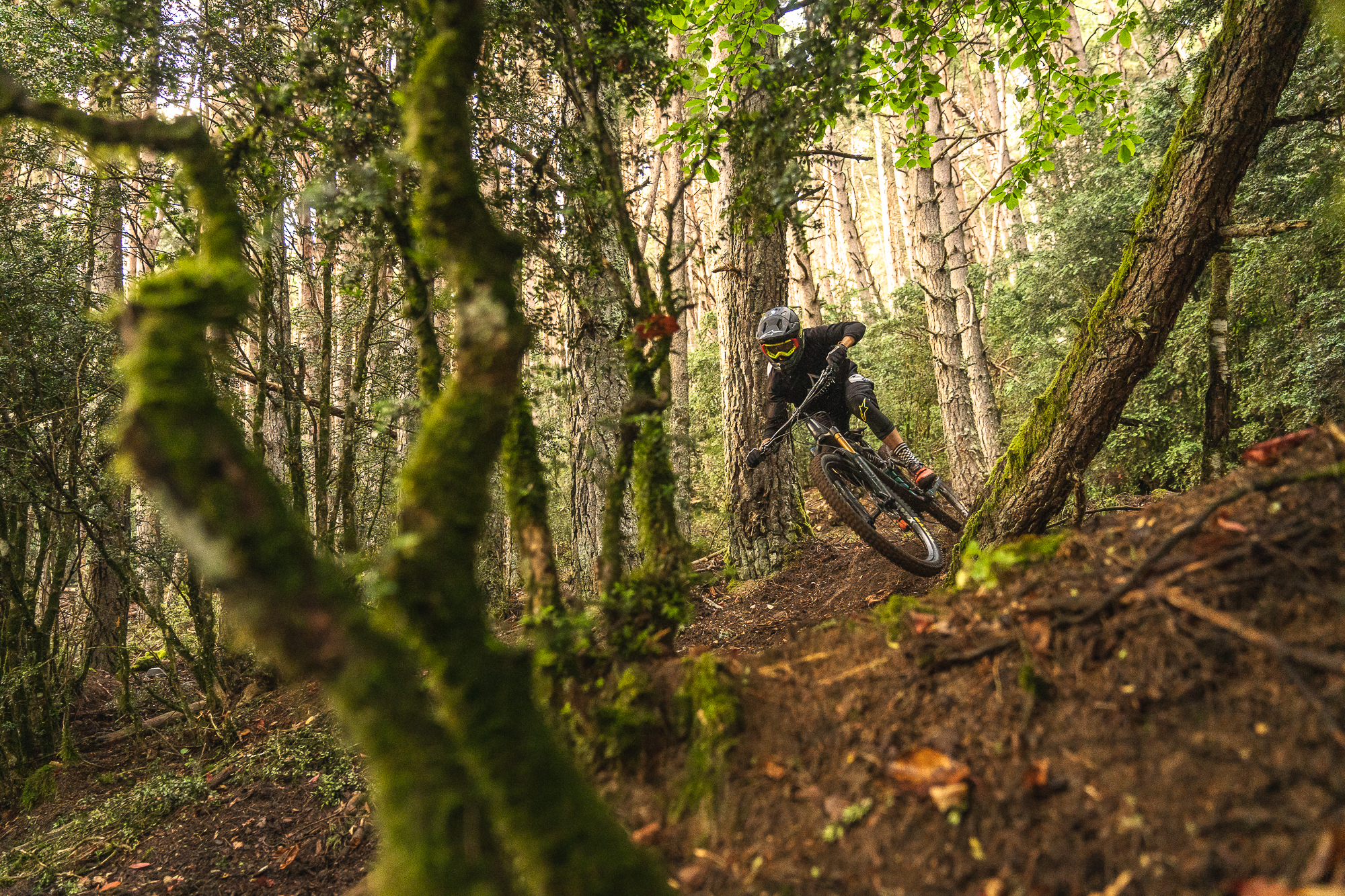
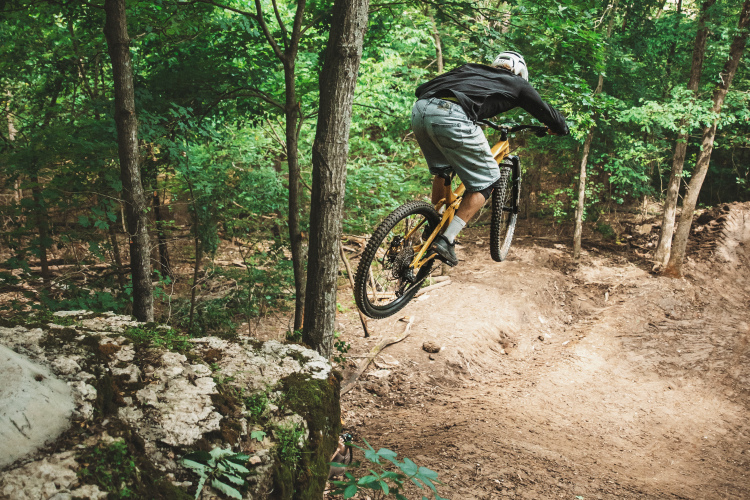
Drop below treeline and everything changes. The trails become grippier and more supportive, perhaps even slightly more forgiving. The dark, moisture-rich soil provides so much traction that berms often feel unnecessary, especially compared to the loose, unpredictable surface above.
A brand-new flow trail in the Pyrenees
That’s about to change. Currently under construction is an intermediate, 2km (1.2mi) machine-built flow trail — the first of its kind in the area. It drops over 300m (1,000ft) of vert as it carves across the Pyrenean contours. Pablo Irigoyen, Founder and Director at Altitude Rides, rates it a blue-red — the European equivalent of an upper-intermediate trail — making it a step up from a standard blue but well short of the most technical terrain in the area.
Across Spain, professionally designed and machine-built trails are still relatively rare, making this a notable addition. Plus, it’s not just any flow trail: the machine operator, Joel Dunkl, was contracted from just over the border in France, where there are two incredible trail centers – Ens and Fabian Bike Park. Dunkl is working alongside the team at Altitude Rides, composed of Irigoyen, Daniel Bosque, and Daniel Soriano. While flow trails can sometimes feel tame, expectations are high that this one will carry enough speed and creativity to keep advanced riders engaged.
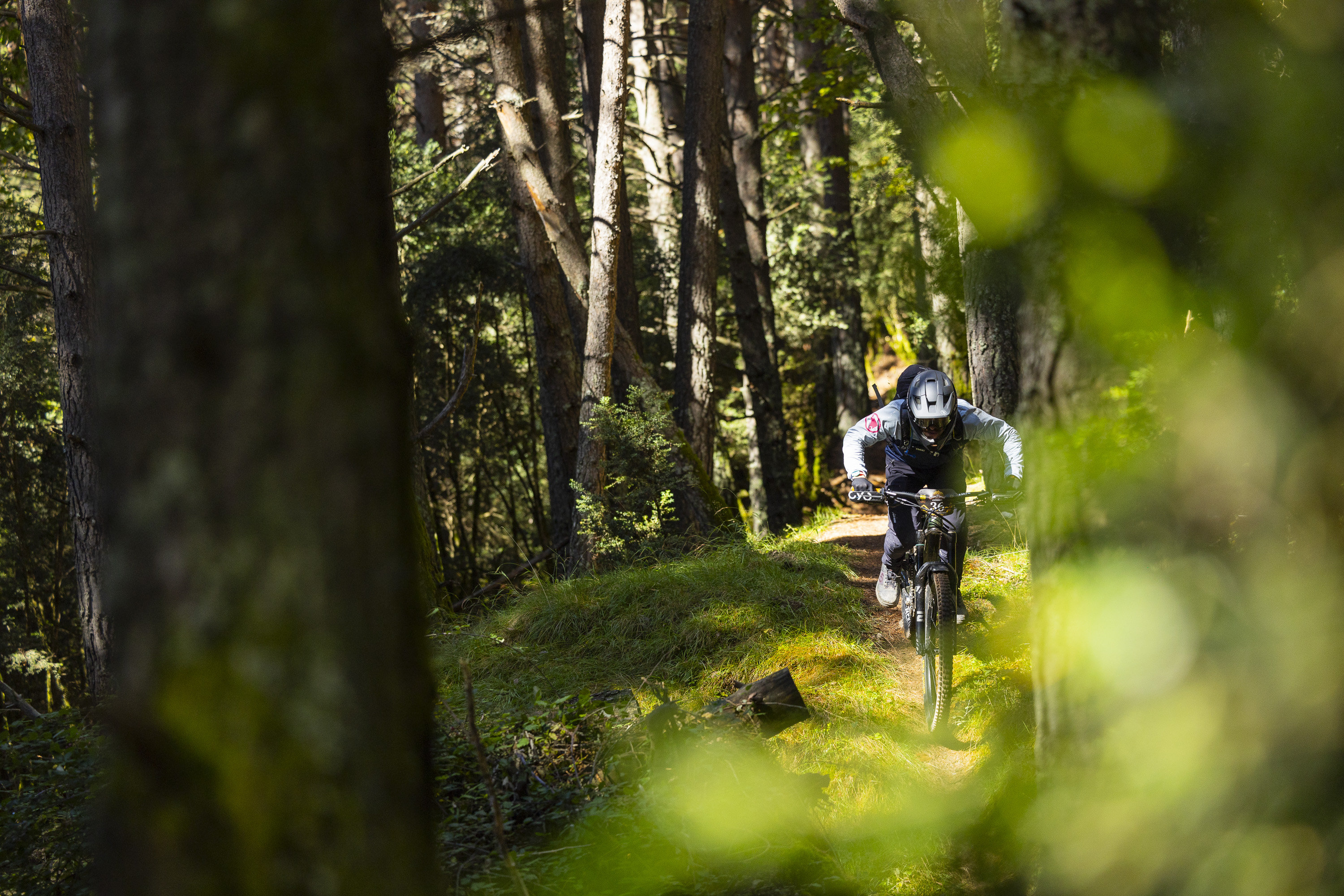
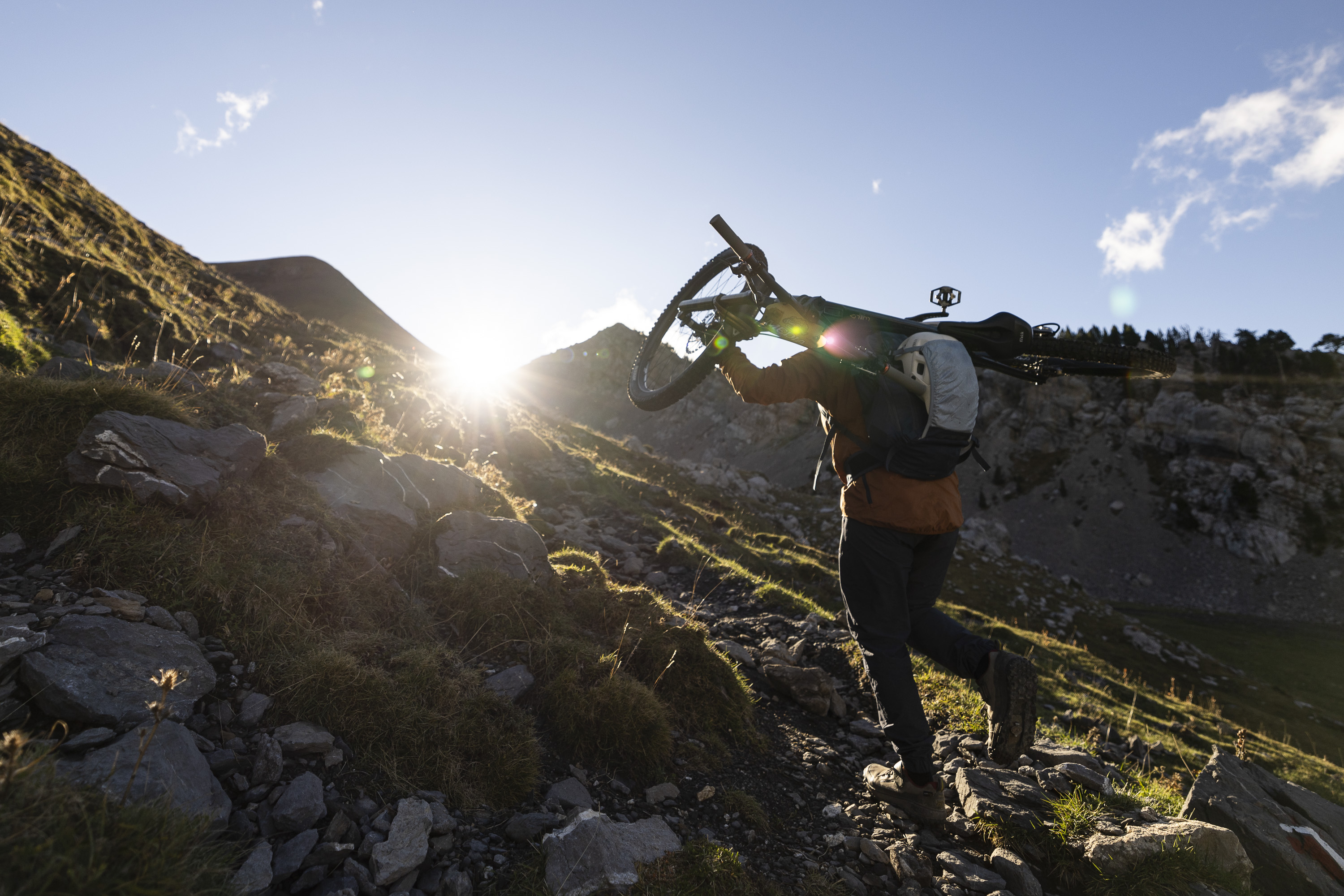
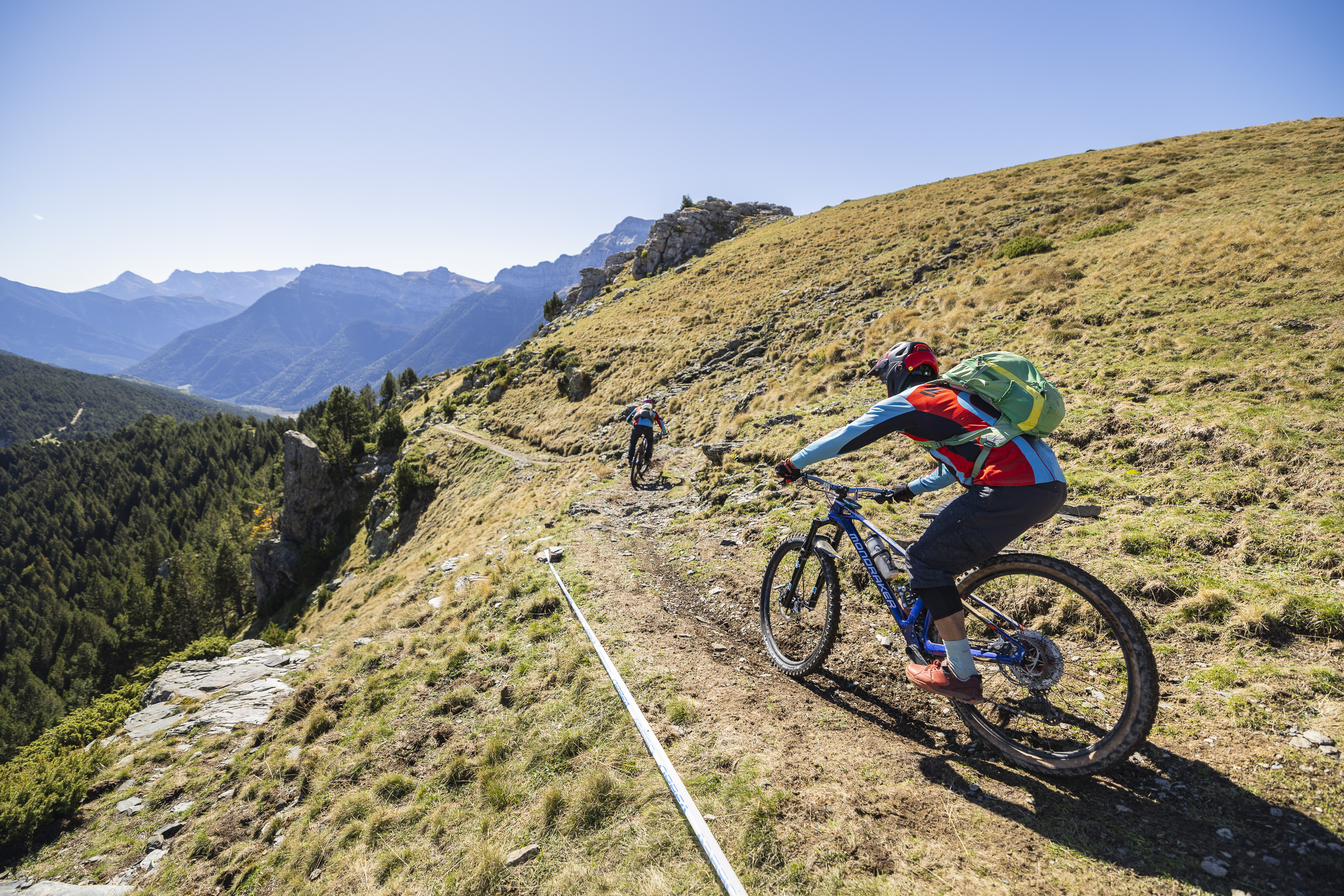
Between the tape on the Trans-Nomad. Photos: Trans-Nomad
How Bielsa is building its trail culture
Trail development here is a collaborative effort. The town of Bielsa is supportive of the trail development, while local guiding company Altitude Rides helps coordinate between municipalities, riders, and builders. “The majority of the land here is public, managed by the municipality of Bielsa,” said Irigoyen. “We are lucky to have the local government’s support in MTB trail development.” The new trail is funded by Bielsa and by Orbea’s Trailtales initiative. The local trail organization, Bielsa Trocs, is currently formalizing as an official association, similar to a nonprofit in the US.
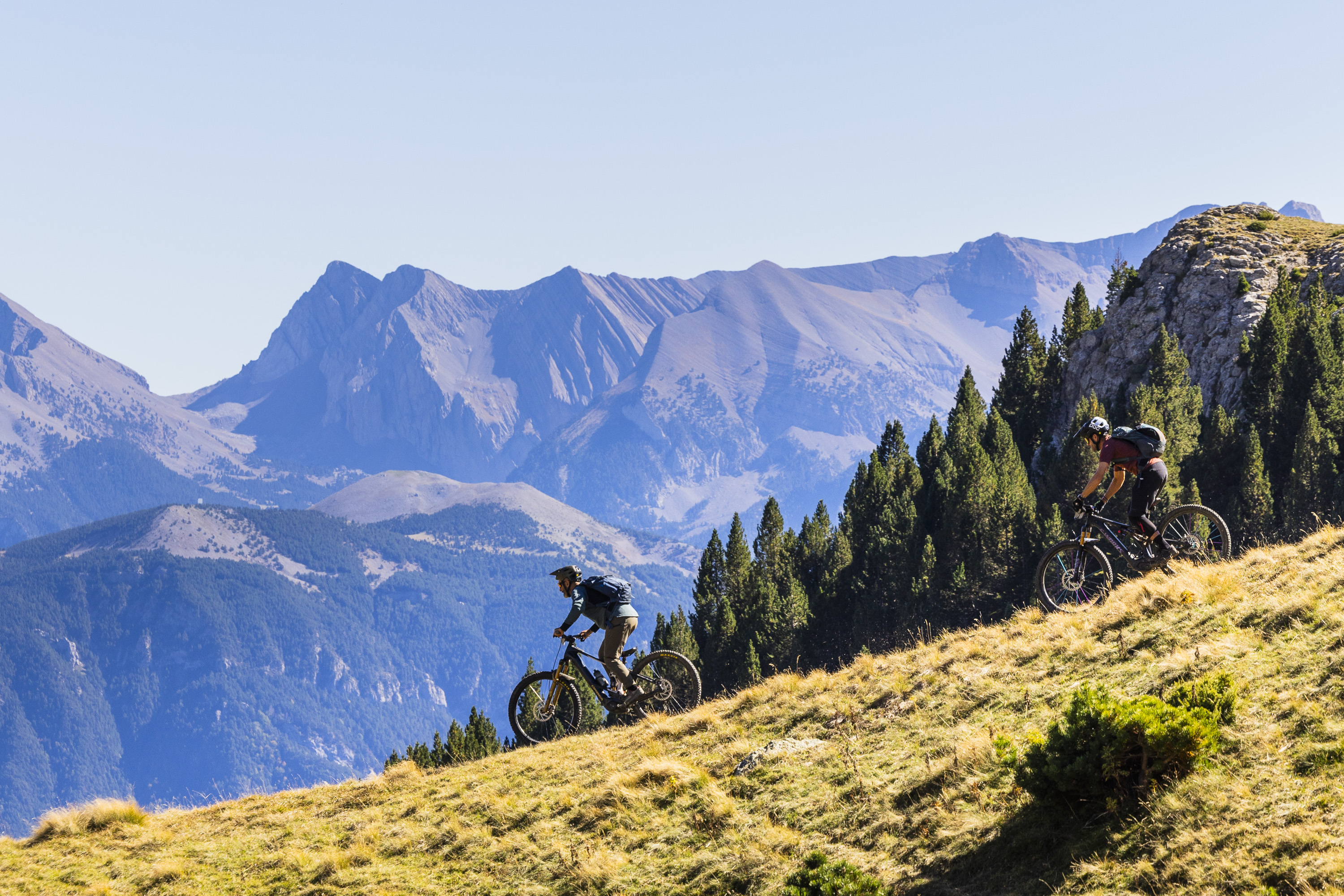
Events like Trans-Nomad — a multi-day blind enduro race — have also played a major role, often serving as a catalyst for new trail construction. Trans-Nomad draws a mix of elite racers and adventure-focused riders, with an emphasis on exploration over outright competition. One standout descent often featured in the event is Cazadores, a steep, south-facing line cut through dense forest. It’s classic euro enduro: tight turns, off-camber sections, and roots and rocks layered into dark, loamy soil. By the bottom, you’ll be equal parts wrecked and ready for another lap.
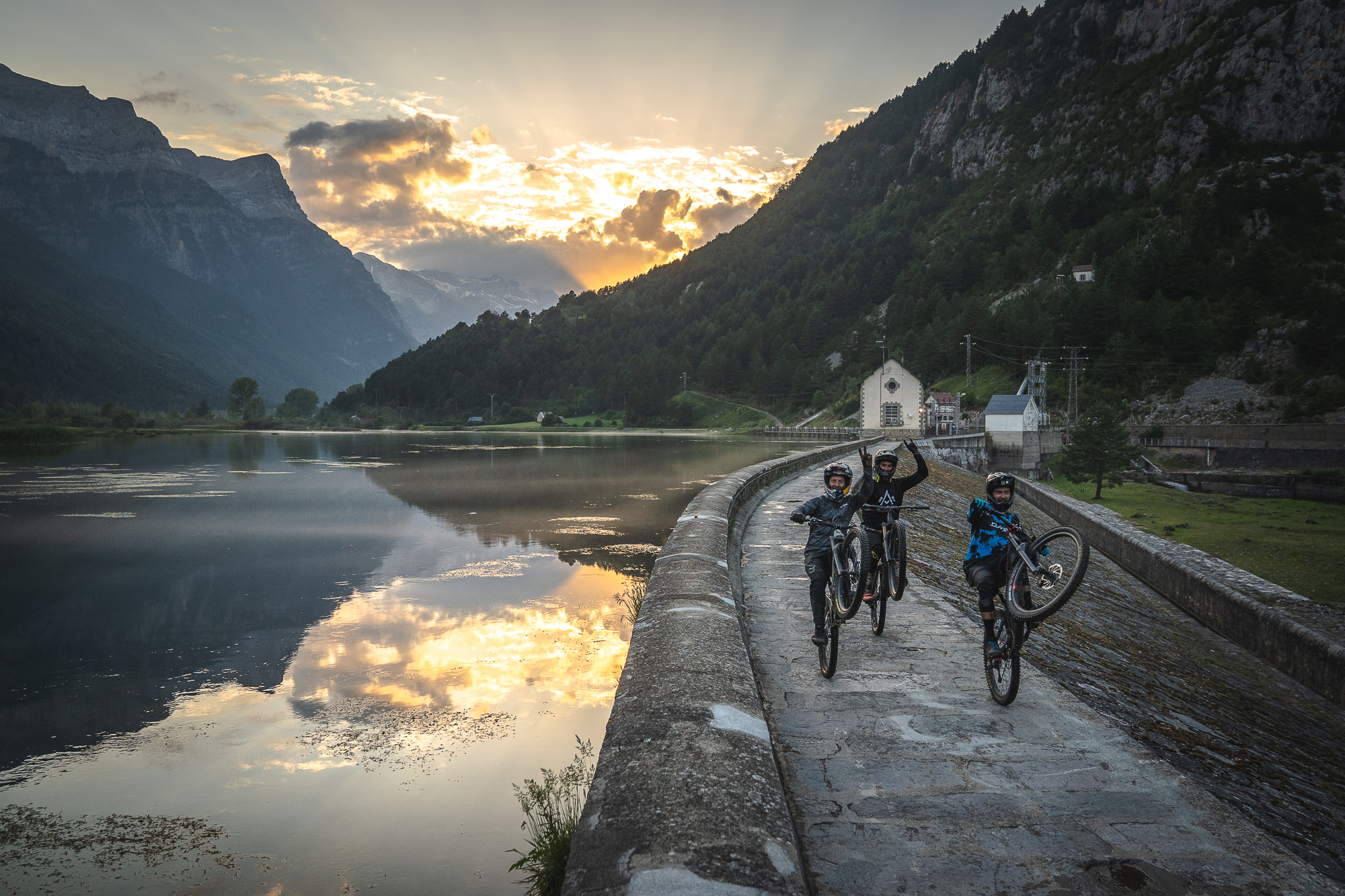
Plan your trip
Summer is prime time in Bielsa. Sitting at over 900m (3,000ft) and surrounded by peaks exceeding 3,000m (10,000ft), the area stays cool while much of Spain bakes. Winters are cold and snowy, but that moisture pays off in summer with loamy trails and consistent grip, often refreshed by afternoon storms. Most trails are rideable from April to November.
For riders used to Spain’s drier regions, Bielsa feels like a different world. Temperatures are often 10–20 degrees Fahrenheit cooler than areas just an hour south, and it’s rare to see highs above 27°C (80°F). Up high, it’s even cooler.
There’s also flexibility in riding options nearby. Just 30 minutes south lies Zona Zero, a pioneer of rural MTB tourism in the Pyrenees. If weather rolls in at elevation — or if you’re looking for a change of pace — the terrain shifts dramatically. Where Bielsa feels like the Pacific Northwest, Zona Zero is more akin to Utah: dry, rugged, and sculpted by erosion. The area’s reputation was cemented further when it hosted the 2025 IMBA Europe Summit.
Altitude Rides offers shuttles and guiding depending on your comfort level. Just be prepared: accessing alpine terrain often involves some hike-a-bike, or “porteo,” as it’s known locally. With 80km (50mi) of trail spread across the network, there are enough options to match whatever style of riding you’re after.
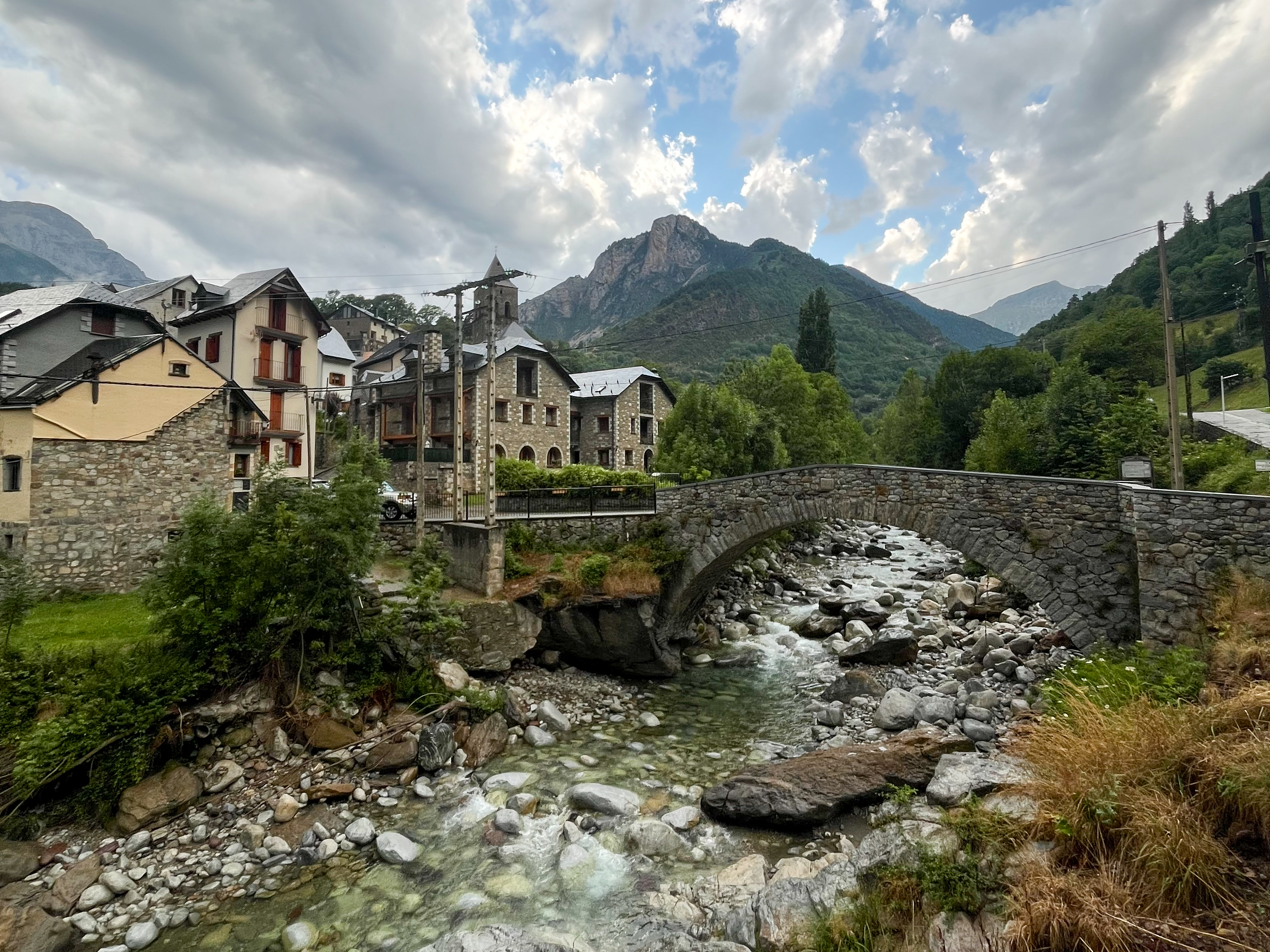
While remote, Irigoyen also stressed the importance of the town’s resources. “Bielsa is a small, peaceful town, but it has very good hotels and restaurants. Plus, the proximity to France provides many options to ride in one country one day and the other the next, with different culture, food, trails, and more.”
While the Pyrenees have other phenomenal trail towns, few have a National Park right next door, and none are currently building new trails of this caliber. That’s good news for anyone who’s been sleeping on the Pyrenees — and after a lap on Cazadores, you won’t be sleeping on them for long.
Know about a new trail project we should cover? Whether you’re breaking ground on the next must-ride destination or putting the finishing touches on a neighborhood flow trail, we want to hear about it. Drop us a line at [email protected] with high-quality photos of your build, plus details like trail mileage, location, difficulty, and what makes it special. We’re always on the hunt for the next great trail story, and there’s a good chance your project could be featured in an upcoming article.



0 Comments