

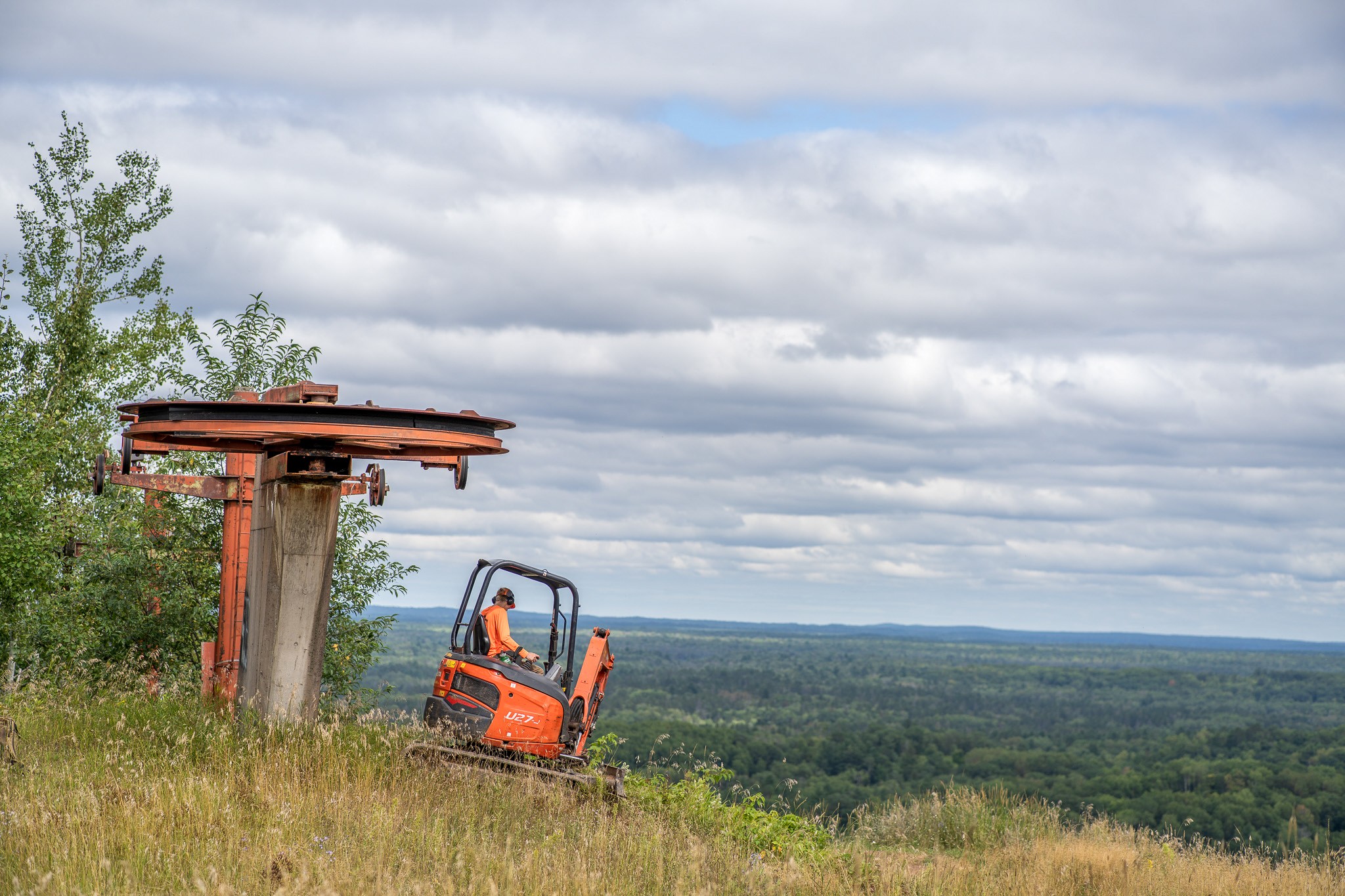
Across the USA, rusting lift poles stand forlornly above abandoned ski slopes that haven’t heard the laugh of a child in decades. These decrepit lifts and open clearings through dense woodlands are slowly being reclaimed by the dense forest overgrowth until eventually, they disappear entirely.
It’s hard to imagine now, but in the 1960s, approximately 1,000 different ski areas operated across the United States. Today, that number has been cut in half, with roughly 487 resorts still operating. But those numbers don’t even tell the whole story.
In the Northeast, at least 670 ski resort closures have been documented by websites like the New England Lost Ski Areas Project, with another 31 closures documented in the Mid-Atlantic by DCSki. The Midwest has seen about 483 ski areas close over the years, according to the Midwest Lost Ski Areas Project. While many resorts have closed across the Western USA, the Midwest and Northeast have been disproportionately affected. Western states like Colorado have lost ~137 ski areas, while California has lost 134, 48 in Washington, 72 in Idaho, over 57 in Oregon, 12 in Utah, 10 in Wyoming, 10 in Nevada, and even more in states like Arizona, New Mexico, Montana, North Carolina, etc.
For those keeping track, that’s at least 1,664 ski resort closures — much higher than the ~513 drop from peak operation to today. Note that the 513 number is a net loss nationwide. As some resorts have closed, others have opened — but the overall trend has been toward fewer ski areas, and it doesn’t look like it will let up anytime soon.
While over 1,600 resorts have closed, the recreational outlook isn’t all negative. Many of these once-abandoned plots of land are now finding new life as premier, purpose-built mountain bike trail systems.
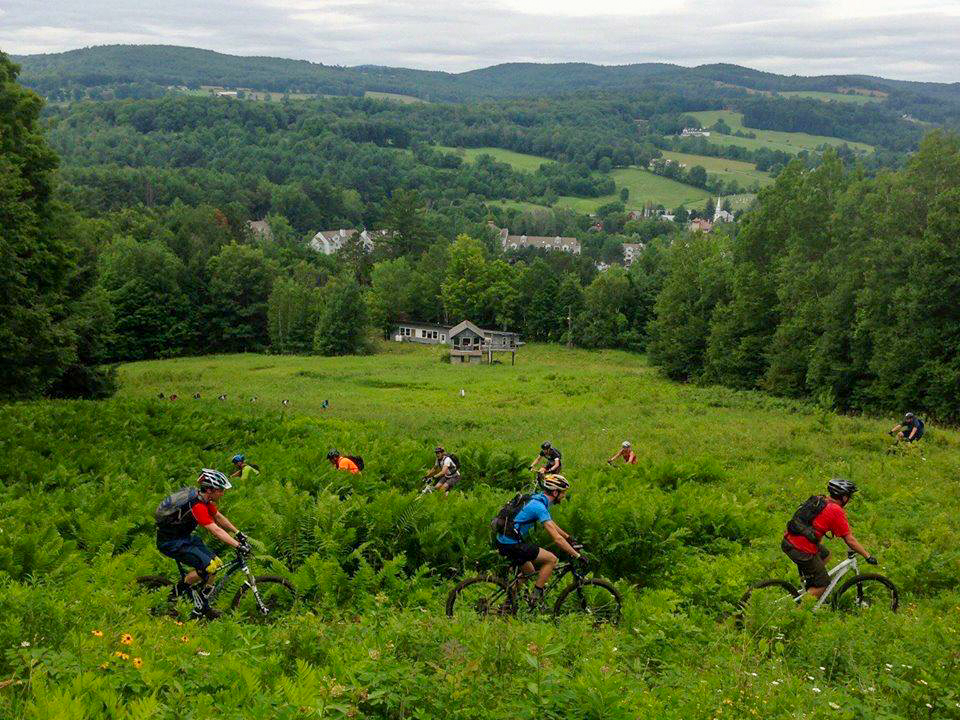
But first, why all of the closures?
Five major factors have coalesced to make operating a small local ski resort difficult, if not impossible: climate change and snow reliability, the snowmaking imperative and infrastructure costs, the liability crisis and insurance costs, economic pressures and business model challenges, and regulatory and operational barriers. We recently covered the massive insurance liability risk affecting Oregon ski resorts, but the overall upward trend of insurance prices is nothing new — it’s been underway since the 1977 case of Sunday v. Stratton Corporation.
By far the biggest factor affecting these small ski resorts is climate change. Research examining more than 220 ski areas across four U.S. regional markets found that the average ski season has shortened by between 5.5 and 7.1 days during the 2000-2019 period compared to 1960-1979. And this trend is accelerating: projections suggest seasons will shorten by an additional 14-33 days by 2050 under various emissions scenarios, with some locations experiencing reductions of 27-62 days by that timeframe.
Climate change affects areas differently. While higher-elevation resorts in the Rockies and Sierras might only face shortened, inconsistent seasons (which still cost the U.S. ski industry an average of $252 million per year), the results for low-elevation ski resorts in the Midwest and Northeast are catastrophic. This is precisely why these regions have seen the most ski resort closures over the years.
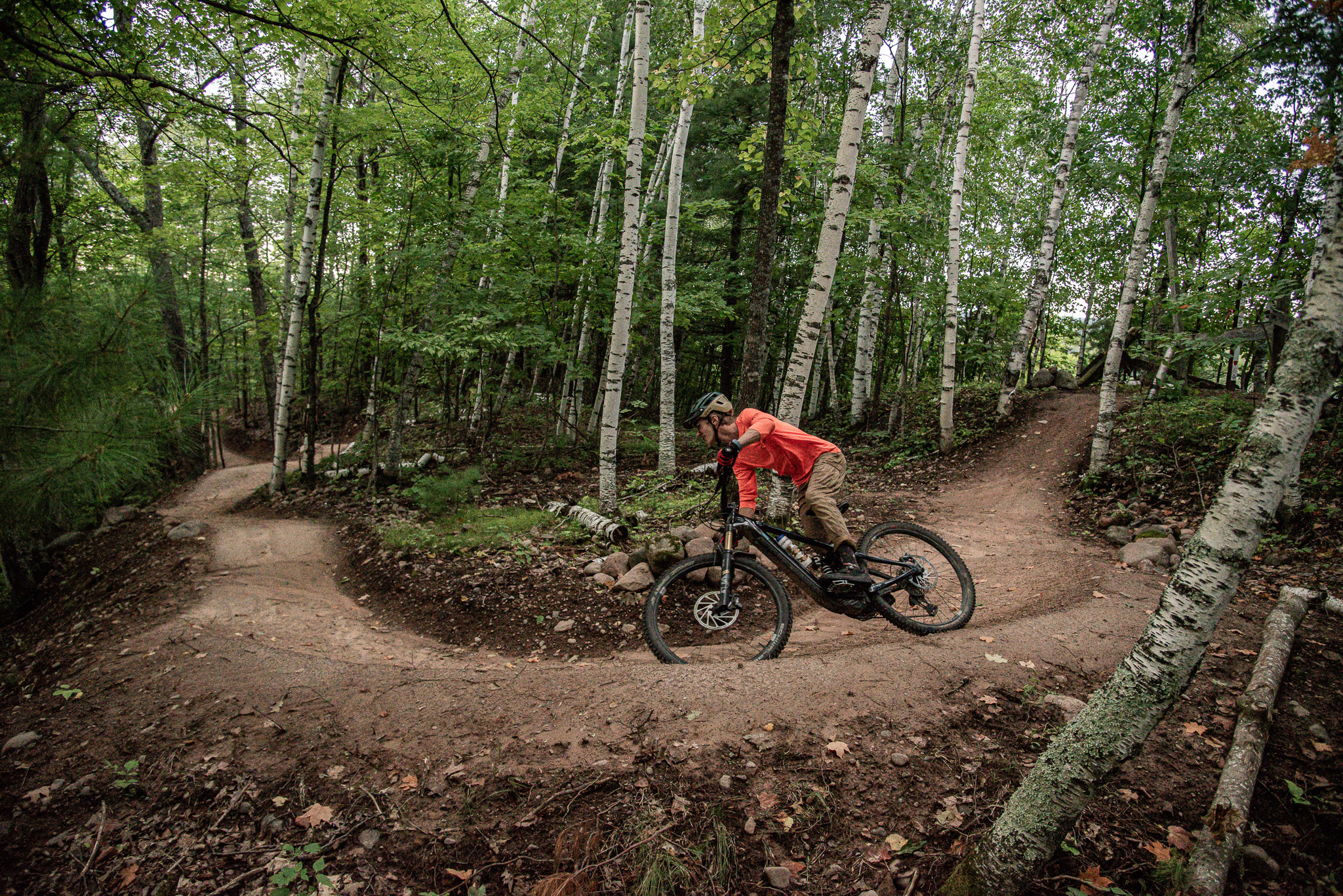
A new type of recreation boom: mountain bike trails
While the time of small mom-and-pop ski areas may be long gone, it’s now the golden age of mountain bike trail building, and singletrack stretches across dozens of these long-abandoned ski resorts. All across the country, we’re seeing these plots of forgotten land being revitalized as the next-best regional mountain bike destination, thanks to modern mountain bike trail development.
At first, we saw just one or two of these downhill ski area to trail system conversions, but now, it’s a veritable flood. As I reviewed the trail development coverage on Singletracks over the past two years, I found at least seven examples of these conversions, and further research uncovered at least six more that we haven’t profiled on Singletracks. And undoubtedly, there are many more across the country
After reviewing these modern trail conversions, three common threads stood out.
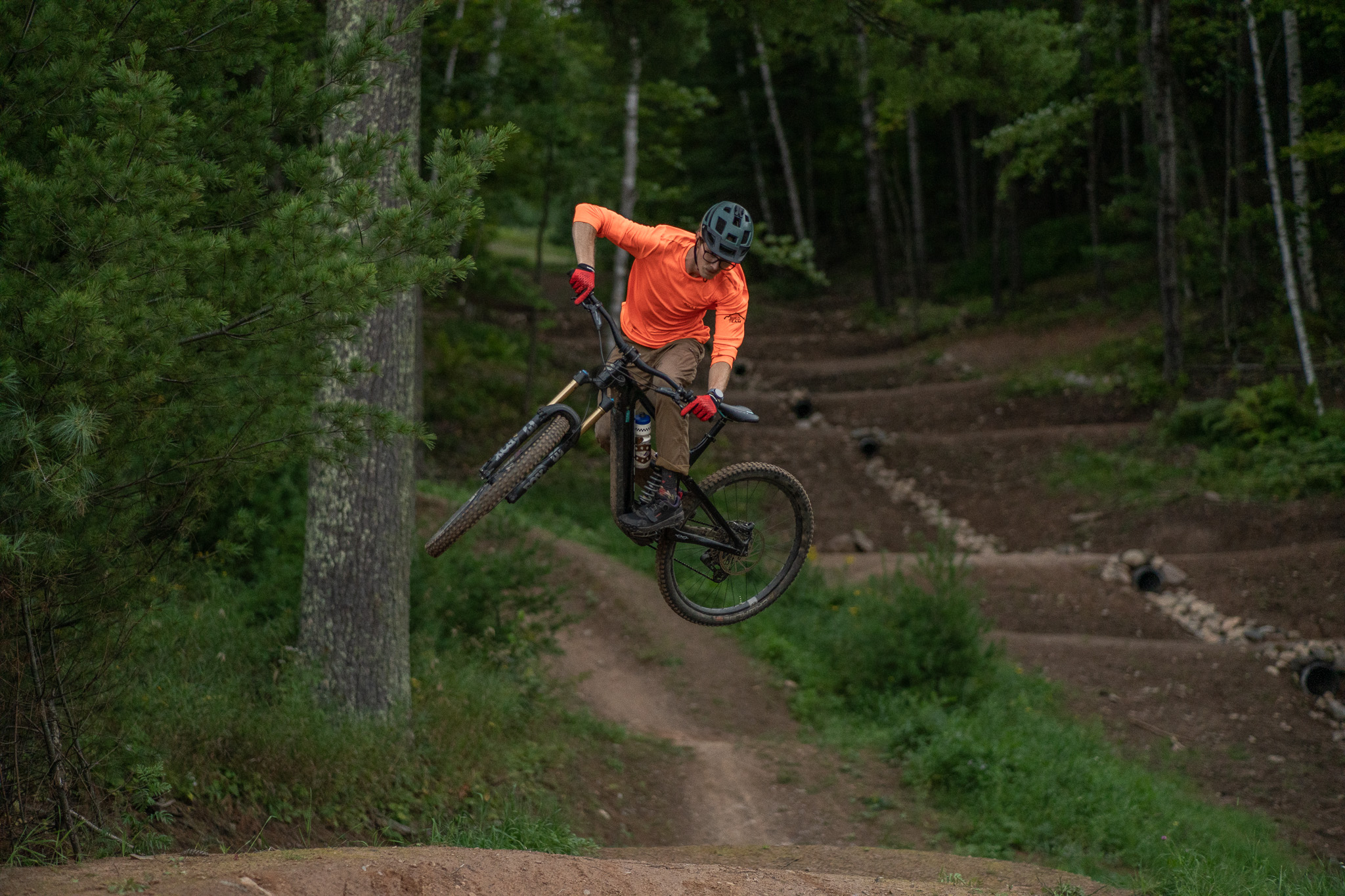
Pedal-driven flow trails at defunct downhill ski areas
Yes, one or two of these ski area to bike trail conversions — like New Hampshire’s Highland Mountain Bike Park — offer lift service, but most of these new trail developments are pedal-accessed only. Historically, many mountain bike trails were built adjacent to and criss-crossing existing cross-country ski areas. But these new developments are different. Instead of building rolling XC trails through mellow terrain, these new trail developments are often constructed on the tallest and steepest piece of land in the region.
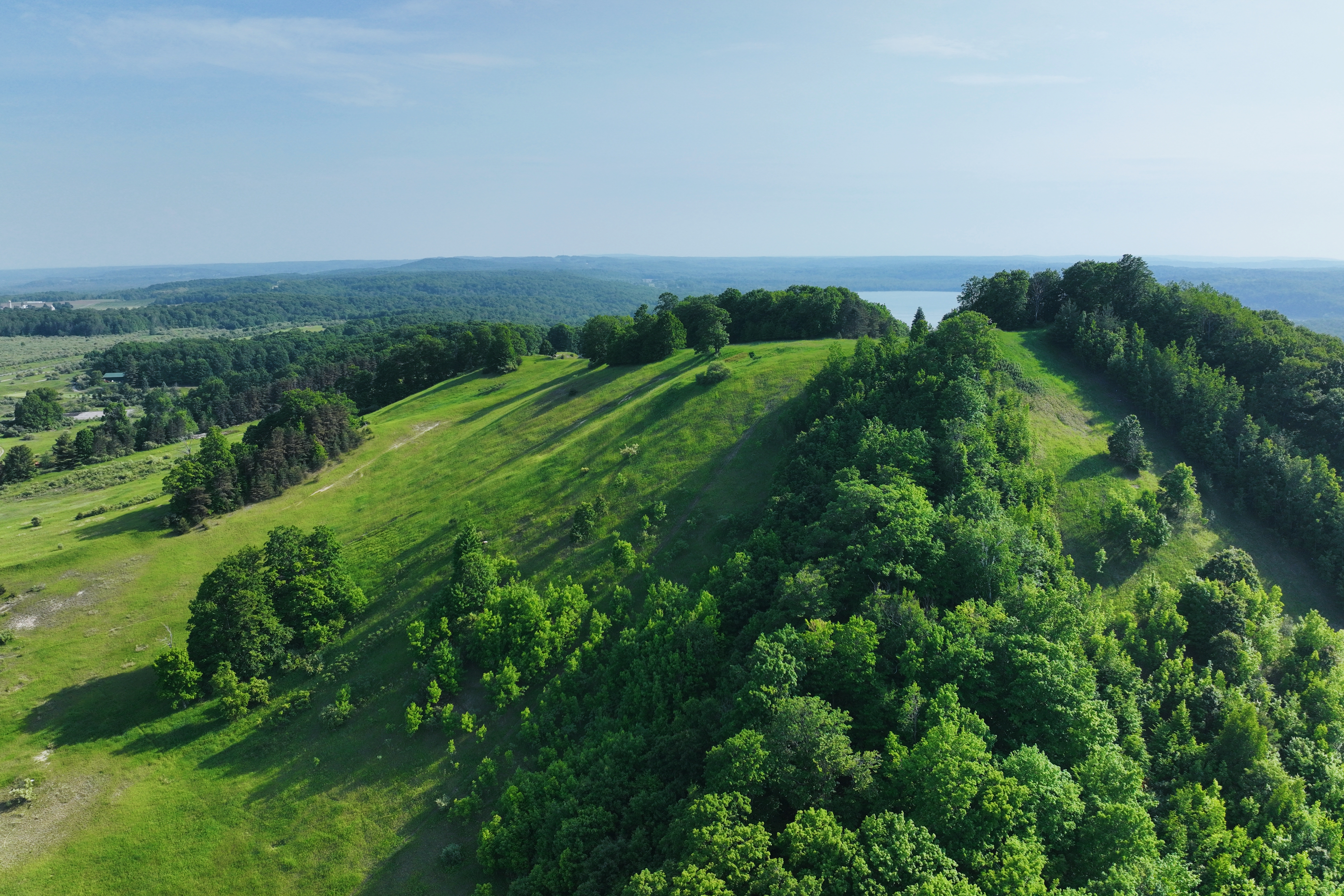
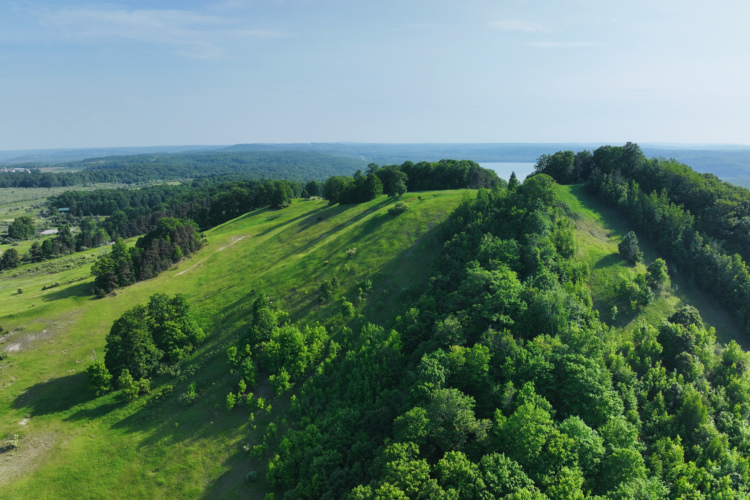
Take the new trails coming to Sugar Loaf Mountain in Leelanau County, Michigan. The 490-foot-tall “mountain” is one of the most prominent points in the region, with steep hillsides that rise dramatically above the surrounding landscape. This terrain is distinctly different from where MTB trails were often developed in the 80s and 90s.
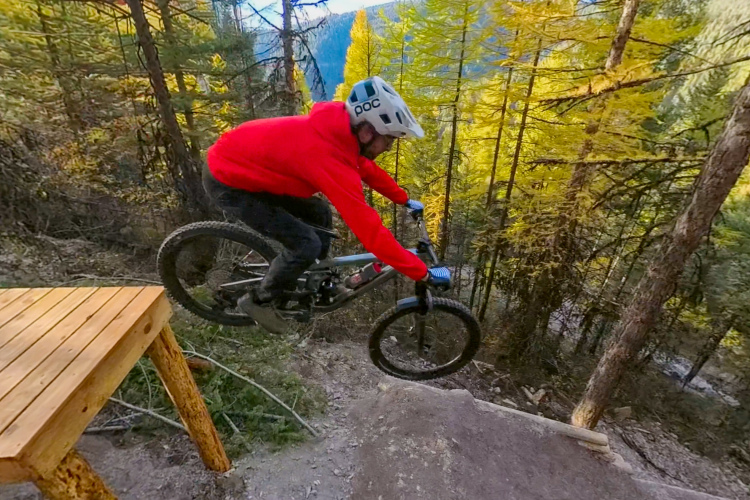
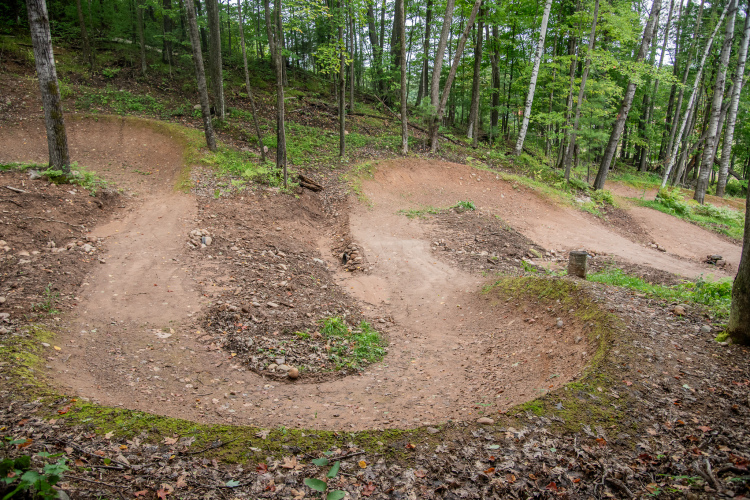
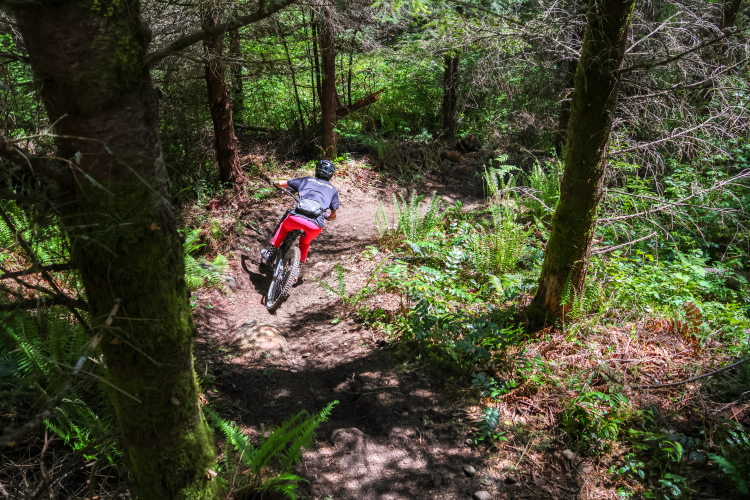
These steep hillsides provide the perfect terrain for building modern bike park-style trails served by one or two climbing routes, where the focus is on the downhill flow and technical challenge. The free public bike park being built on Mt. Telemark in Northern Wisconsin exemplifies this trail building style. While Northern Wisconsin is home to hundreds of miles of rolling cross-country bike trails, Telemark now provides some of the region’s first high-speed downhills, including berm- and jump-filled flow trails.
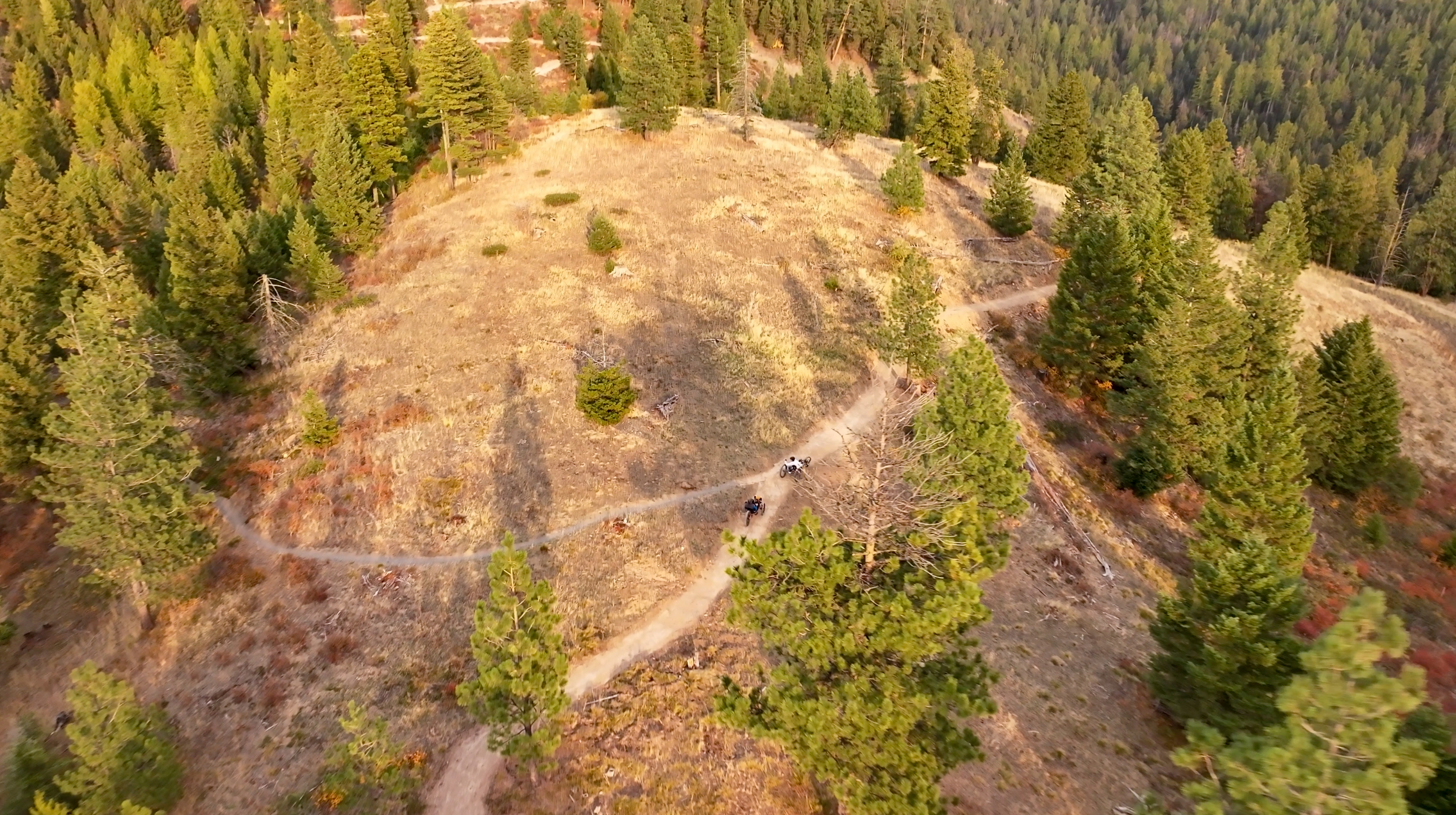
Building trails on public land is getting more difficult, so many local advocates are buying private land instead
It’s becoming increasingly difficult to build mountain bike trails on public land. While states with massive swaths of public land, such as Colorado, Utah, Arizona, et al., have historically been the nation’s leaders in mountain bike access, now states like Arkansas, Vermont, and Michigan are leading the charge by developing trails on privately held or acquired parcels of land. This has created a fundamental shift in where the best mountain bike trails are being built.
While some of these ski area conversions are on land where the ski area may have operated under an easement, most have occurred on parcels of private land, which have subsequently been acquired by public land trusts or local governments. Sugar Loaf Mountain and Marshall Mountain in Montana are both examples of this private-to-public process. While in many cases it’s just a matter of raising the necessary funds, in some — such as Marshall Mountain — the process is fraught with drama, lawsuits, local politicking, and conflict.
Yes, sometimes the process of opening this land for trail development can be challenging, but in the end, the effort is always worth it!
Most of these conversions are found in the Midwest and Northeast
While some of these projects — like Marshall Mountain — are located in the West, the vast majority are found in the Midwest and Northeast. And while I’m focusing on the USA here, central and eastern Canada are home to plenty of these downhill ski area conversions, too. Manitoulin in Ontario and Mont SM in Quebec both jump to mind.
During a trip to the Adirondacks in 2024, I rode some ripping singletrack through an area known as Scott’s Cobble. I wouldn’t have realized that it was a defunct ski area unless my local guide had pointed out an old rope tow tower hidden in the dense undergrowth. The verdant Northeast forest was so thick that I could barely tell a ski run had even existed before! Once you knew what to look for, it was obvious, but without the tip, I would have just blown through without a thought.
That made me wonder: just how many old ski areas have I pedaled through without even knowing it? And how many trails out there actually traverse old ski runs, but nobody thinks to mention it — or the memories of these ski areas have faded along with the people who once enjoyed them so many decades ago?
While the realities of climate change and our quickly disappearing winters are sobering, the expansion of purpose-built mountain bike trails is a bright spot in an otherwise dark and depressing environmental landscape. While our opportunities to downhill ski and snowboard may never be the same again, at least we can keep riding our mountain bikes.



34 Comments
Jan 22, 2026
Jan 23, 2026
Jan 23, 2026
Jan 22, 2026
Jan 24, 2026
Jan 23, 2026
Jan 23, 2026
Jan 23, 2026
I considered spending more time on the other reasons why the ski resorts closed, but the point of the article for a mountain biking audience isn't an exhaustive historical analysis of ski resort closures — it's the fact that they're being turned into mountain bike trails, which is why I spent the article focused on... mountain bike trails.
Jan 23, 2026
Jan 23, 2026
Jan 23, 2026
Jan 24, 2026
Jan 23, 2026
Jan 23, 2026
Jan 22, 2026
Jan 23, 2026
Jan 24, 2026
Jan 27, 2026
As for the ridiculous comments concerning climate change- just stop. It's real and getting worse every year. I have lived in Michigan the vast majority of my life and have seen the effects on our winters. Less and less snow each year. And more ice storms causing greater damage to homes and the electrical grid. While certain areas of the state are able to maintain their ski slopes, many more parts of the state are seeing winter sport venues close from the diminished snow fall. My family in the Reno/Tahoe area have talked about changes affecting the skiing and snowmobiling in their area too.
So while you may not agree with the numbers or tenor of the article, you can't argue the changing climate and its effects on the various outdoor business that are weather dependent. Or you can and show us just how ignorant you are.
Jan 23, 2026
Jan 24, 2026
Jan 24, 2026
Do you see the disconnect? Or did you not read the article you linked to?
Jan 23, 2026
Jan 24, 2026
Jan 24, 2026
Jan 23, 2026
Jan 24, 2026
Jan 23, 2026
Jan 23, 2026
Jan 23, 2026
Jan 24, 2026
*rope tow only
Jan 23, 2026
Come help me dig out a foot of snow in southern Missouri.
Jan 23, 2026
Jan 23, 2026
Jan 24, 2026