

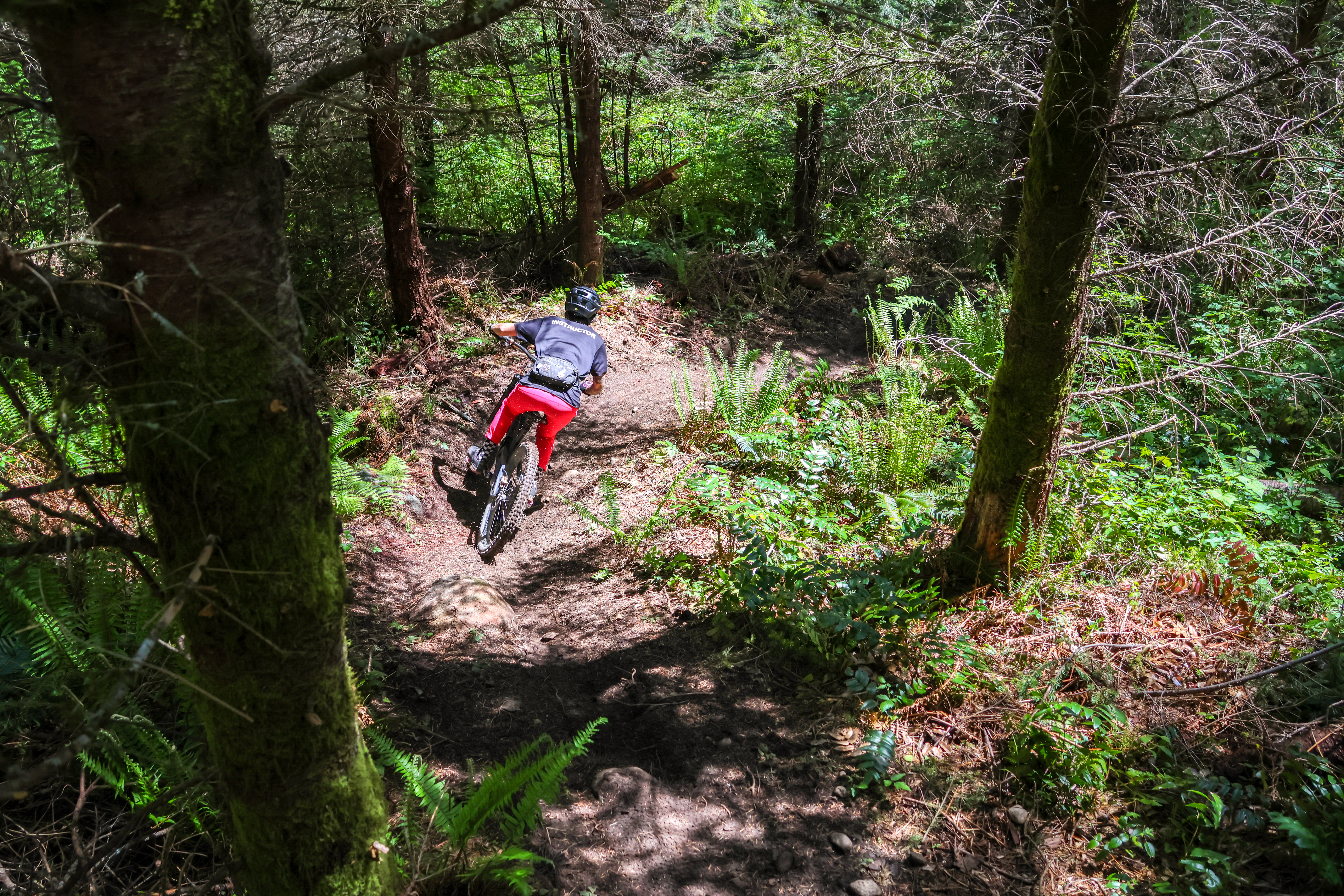
The singletrack mountain bike trails in Washington state have long been renowned as some of the highest quality and best-maintained in the country. This high regard is due in large part to the exhaustive work by the Evergreen Mountain Bike Alliance and Whatcom Mountain Bike Coalition. Much of Evergreen’s maintenance work is paid for by contracts with local land management agencies (more info here). One of the major agencies Evergreen partners with is the Washington Department of Natural Resources (DNR), and several of the state’s most popular trails — like Tiger Mountain and Raging River — are located on DNR land.
Unfortunately, the DNR, Department of Fish & Wildlife, and State Parks have had $7 million cut from their funding in 2025. Of that $7 million, $3 million — $1 million per agency, a 20% funding cut — was eliminated from their operations and management budget, which goes to trail and facility maintenance.
And more cuts could be on the way in 2026. According to a press release issued jointly by all three agencies, current budget proposals could cut funding by almost $3 million more per year, with the DNR specifically losing an additional $750,000.
The DNR’s “recreation program has been operating at a deficit for at least five years, according to Courtney James, a communications manager with the agency,” King 5 reports. And with these cuts, it’s only going to get worse.
The DNR has warned that facility closures are imminent, but trail closures are unlikely
In a press release, the DNR said that continued funding cuts would likely lead to the closure of campgrounds and recreation sites because they simply won’t be able to maintain them. The announcement has made waves across the state, causing concern among local residents who are passionate about outdoor recreation.
However, when I spoke with Jesse Cunningham, the Advocacy Lead for Evergreen, he made it clear that closures, if they do happen, will primarily impact campgrounds — facilities with gates that can be closed easily. “There’s no real way of gating those [trails] and closing them,” said Cunningham. “And DNR staff have told us that they’re not really interested in necessarily closing trails. They’re just reducing services to areas where it’s easy for them, like a campground.”
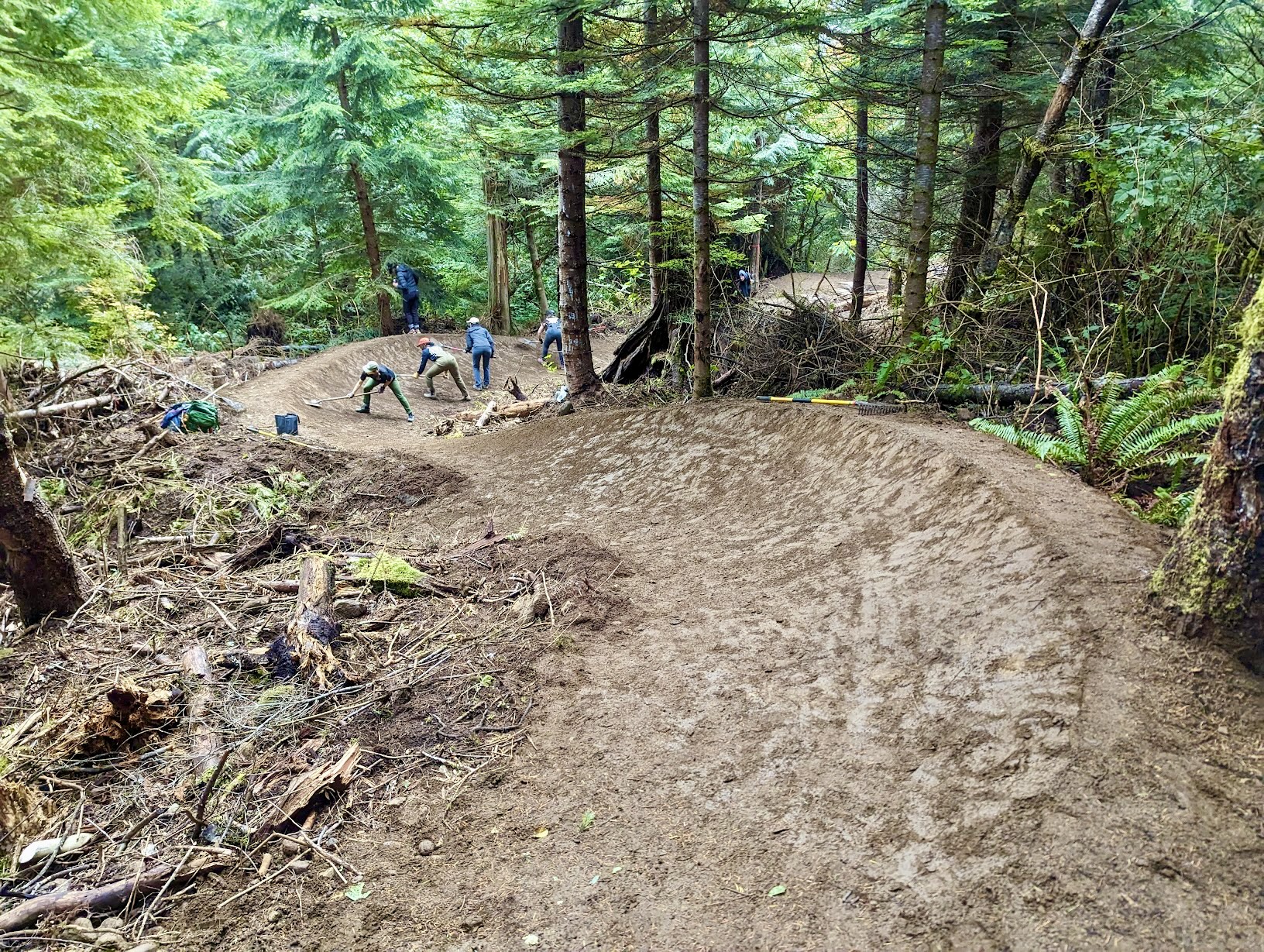
Budget cuts are making it impossible to adequately maintain trails
While trails might not be fully closed, it’s likely that riders could experience a degraded trail experience in the future due to this drastic reduction in maintenance funding. Even though the DNR was operating at a deficit for years, the cuts in 2025 turned the situation into a crisis. These cuts eliminated the funding these agencies used to hire the Washington Conservation Corps young adult crews, which “accounted for nearly half of the total field capacity available to DNR for trail and campground maintenance,” according to the Washington DNR.
“At current staffing levels, DNR Recreation has 60 field staff across the state; meaning there is only one staff person per every 21.6 miles of trail, 50,000 acres, or 333,000 visitors to DNR-managed lands,” the DNR continues. “Further cuts will continue to be detrimental to the program and recreation access across Washington.”
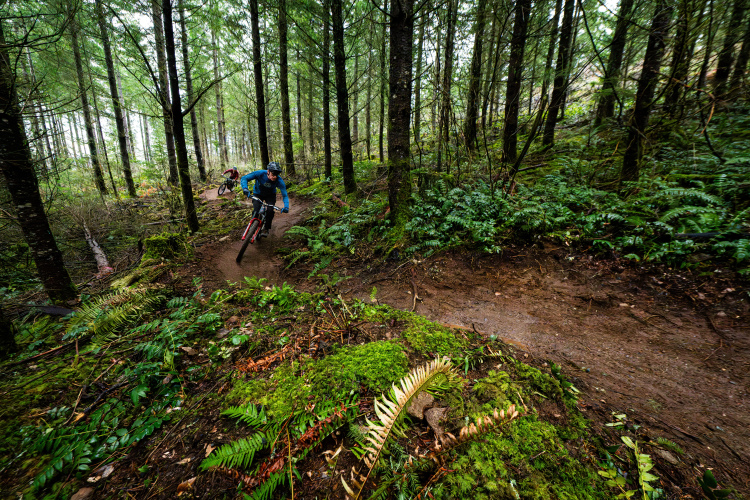
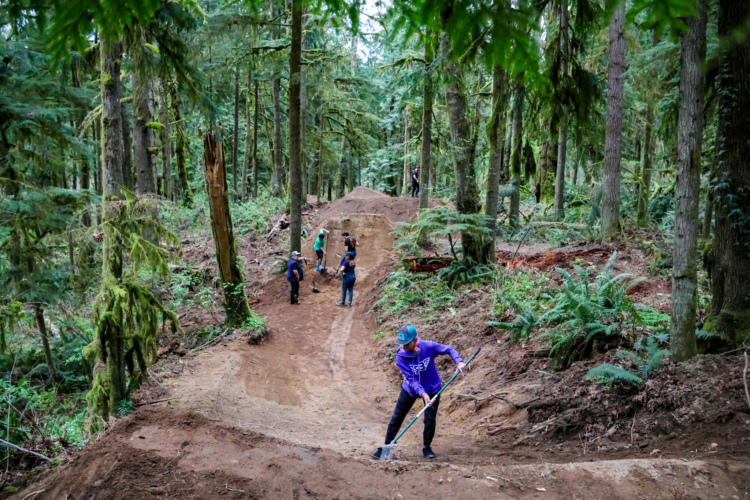
Two of the most popular trail systems in the state, Tiger Mountain and Raging River, could be severely impacted by these funding cuts. These trails see hundreds of riders per day, and to keep them in tip-top shape, Evergreen employs professionals to handle maintenance with funds from a DNR maintenance contract. Due to these cuts, “[the DNR’s] ability to contract with us to do maintenance work is reduced,” said Cunningham. “They’re trying to find a way to still support that. But it’s not the path that it was; it may be less money, and it may at some point not exist, but they’re really trying hard to because those areas are so well used.”
Cunningham went on to clarify that even if Evergreen can secure a maintenance contract, they definitely won’t be bringing in as much funding. “We’re going to try to provide as much service as we can, but there’s certain things that we’re going to have to cut back on, because we just don’t have the resources. So we don’t know what that exactly looks like yet either.”
While Evergreen will try to galvanize volunteers to help with maintenance, even before these cuts, they already relied on volunteer labor to keep up with trail maintenance. There’s only so much volunteers can accomplish, and Evergreen doesn’t expect volunteer labor to pick up all the slack.
“The burden of that [maintenance] falls on us as an organization,” said Cunningham. “It stresses our financial resources more to have to pick up the slack there.”
While Cunningham wasn’t sure exactly how much maintenance would slip, the DNR communicated that the lack of maintenance will result in “unsafe trail conditions, including storm damage and illegal trash dumping [which] will not be addressed due to staff capacity.”
Bathrooms: the unsexy part of trail access
The Washington state agencies warned that these funding cuts will result in “unsafe or unsanitary conditions at many shared natural spaces.” The unsanitary conditions are largely due to overused and undermaintained bathrooms.
We’ve all probably used a trailhead pit toilet that’s been absolutely filthy with every type of bodily fluid and excrement imaginable. Pit toilet maintenance across the nation has gotten so bad that I almost always bring my own roll of toilet paper, expecting the bathrooms to be totally cleaned out.
It’s no different in Washington, and the bathrooms at popular trails like Raging River “are often in bad shape,” according to Cunningham. “That’s just a reflection of [the fact that] they get so much use, and there’s only so much maintenance that happens there, and they get used and abused.” Cunningham clarified that it’s not just mountain bikers using the bathrooms, but that even under the current budget, the bathrooms have been atrocious. With even less funding, “unsanitary conditions” might not begin to cover it.
Anecdotally, I’ve found that recent funding cuts to federal agencies have led to some bathrooms simply being closed at BLM and Forest Service trailheads and other sites. This only exacerbates the issue, forcing users to find alternatives and rarely following Leave No Trace principles.
All three of these Washington agencies are urging the state government to fund their maintenance needs, and while Cunningham agrees, in our conversation, he was clear that systemic issues are causing these problems. In 2025, the state cut funding across numerous agencies and initiatives — trail maintenance was not singled out. Washington state, one of nine U.S. states that don’t have an income tax, currently struggles to raise revenue to fund these services. Analyzing this nuanced issue is beyond the scope of this article, but it’s clear that there’s no easy answer.
So what can riders do? “I think it’s good for legislative representatives to hear from their constituents about what’s important,” said Cunningham. “So even if they’re not weighing in on a specific bill or piece of legislation, I think it’s still worthwhile, if you care about stuff like this, just to be like, ‘Hey, I care about funding for these agencies that support recreation.’”



1 Comments
0 minutes ago