
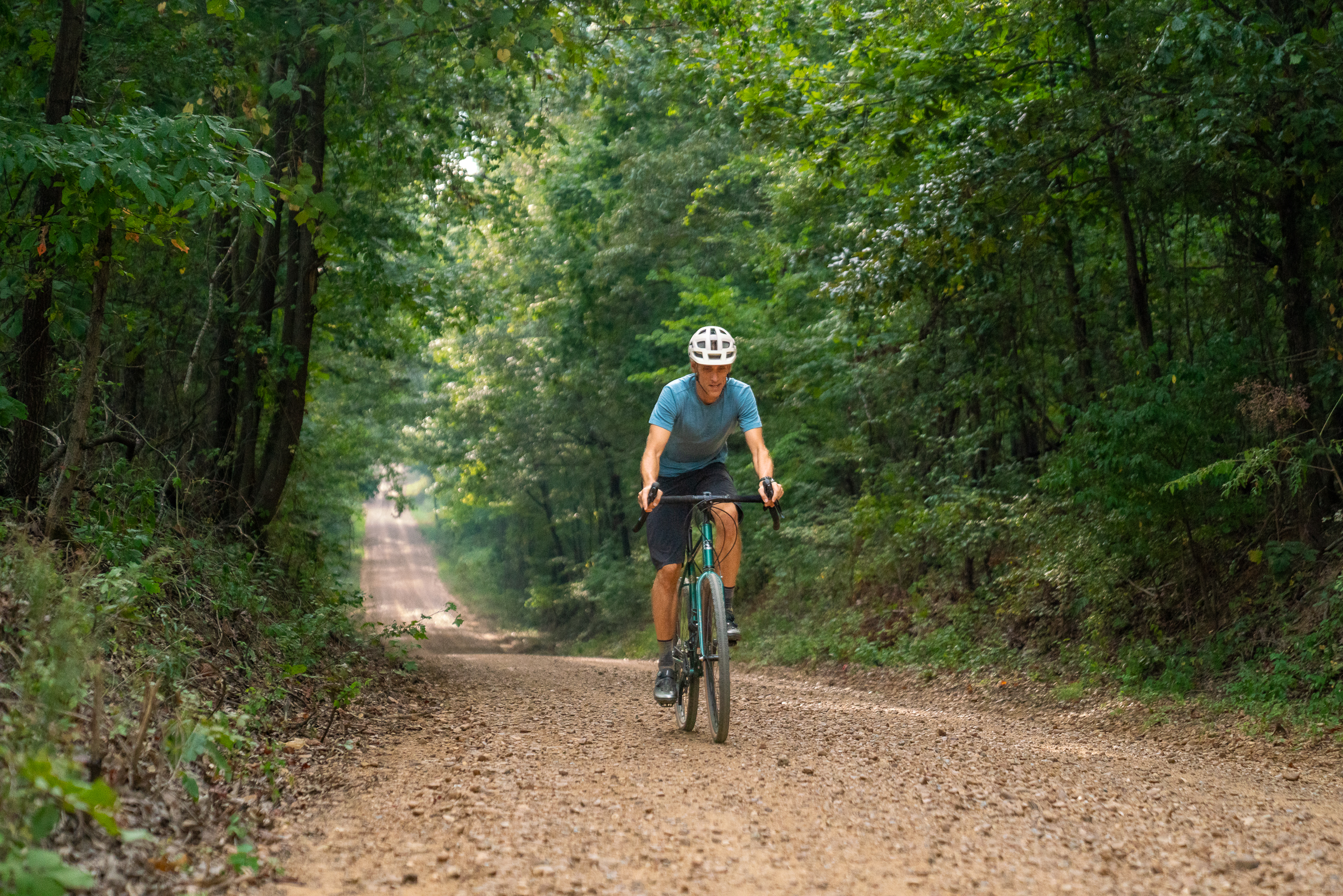
Following years of investment in trails and bicycle infrastructure, Northwest Arkansas has become known around the world as a top mountain bike destination. The initial vision for that development focused on improving the quality of life for residents, and as word about the trails spread over time, tourism naturally followed. Now that the model has proven to be wildly successful, it’s being replicated throughout Arkansas, with the Delta region in the eastern part of the state now poised to become the next great gravel biking destination.
With seemingly endless gravel roads that traverse vast cotton fields and rice paddies to rolling, forested hills, eastern Arkansas has a lot to offer riders. Two epic routes have been established to help riders navigate a sea of excellent gravel biking options, while a handful of races and events bring riders from across the US to experience the unique culture found in the Arkansas Delta region.
Crowley’s Ridge Gravel Trail
The Arkansas Delta region is characterized by flat and fertile farmland bordered by the Mississippi River to the east and the Highlands region to the west. Bisecting the Delta is a geographic anomaly known as Crowley’s Ridge, which holds perhaps the best-kept secret to gravel riding in the Central US.
“You’re on this 250-foot-tall weaving ribbon of trail with these peekaboo views of this ocean of farmland,” Ammen Jordan, the Director for studioDRIFT, told me. “It’s a totally unique experience most people in the mid continent have never had.”
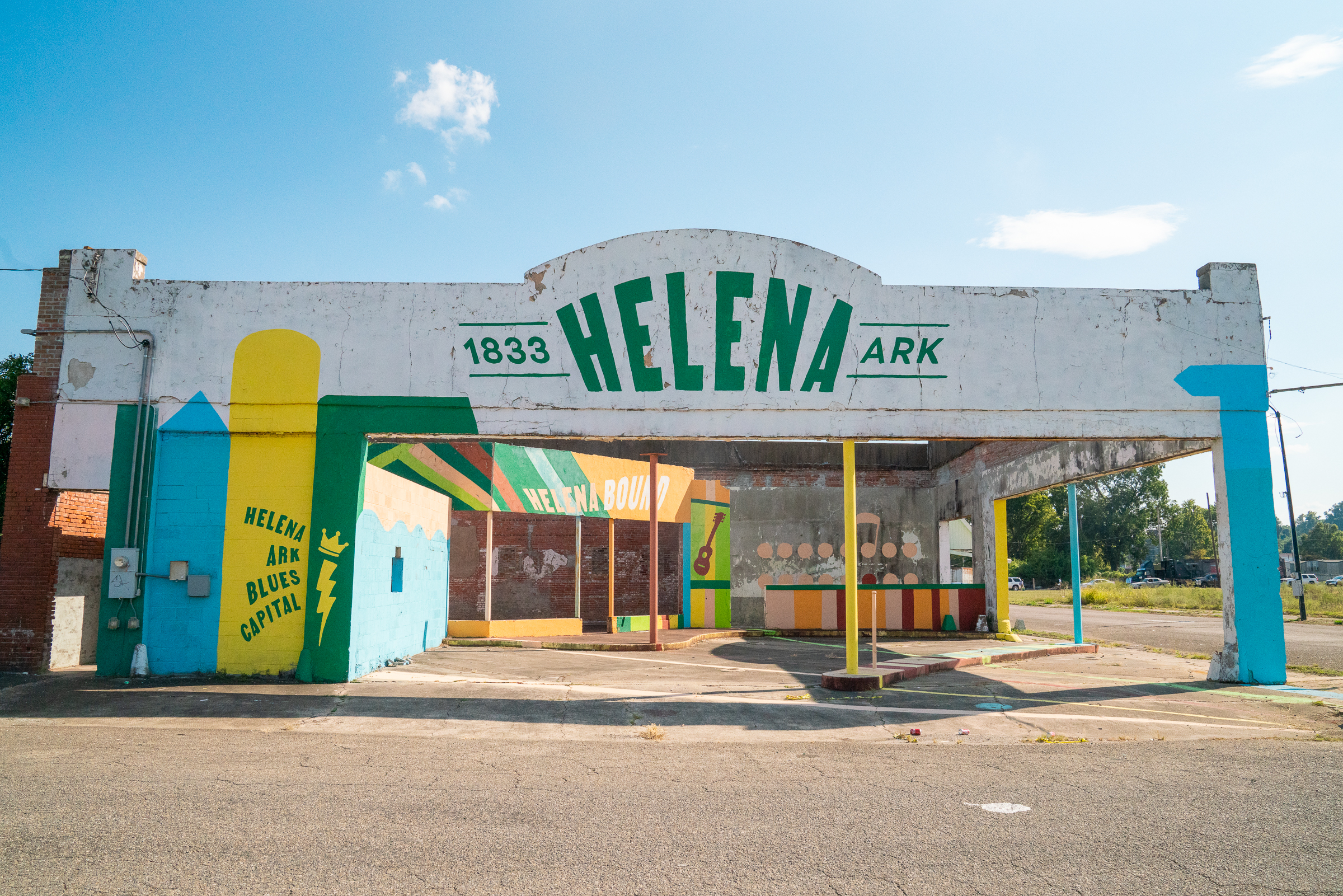

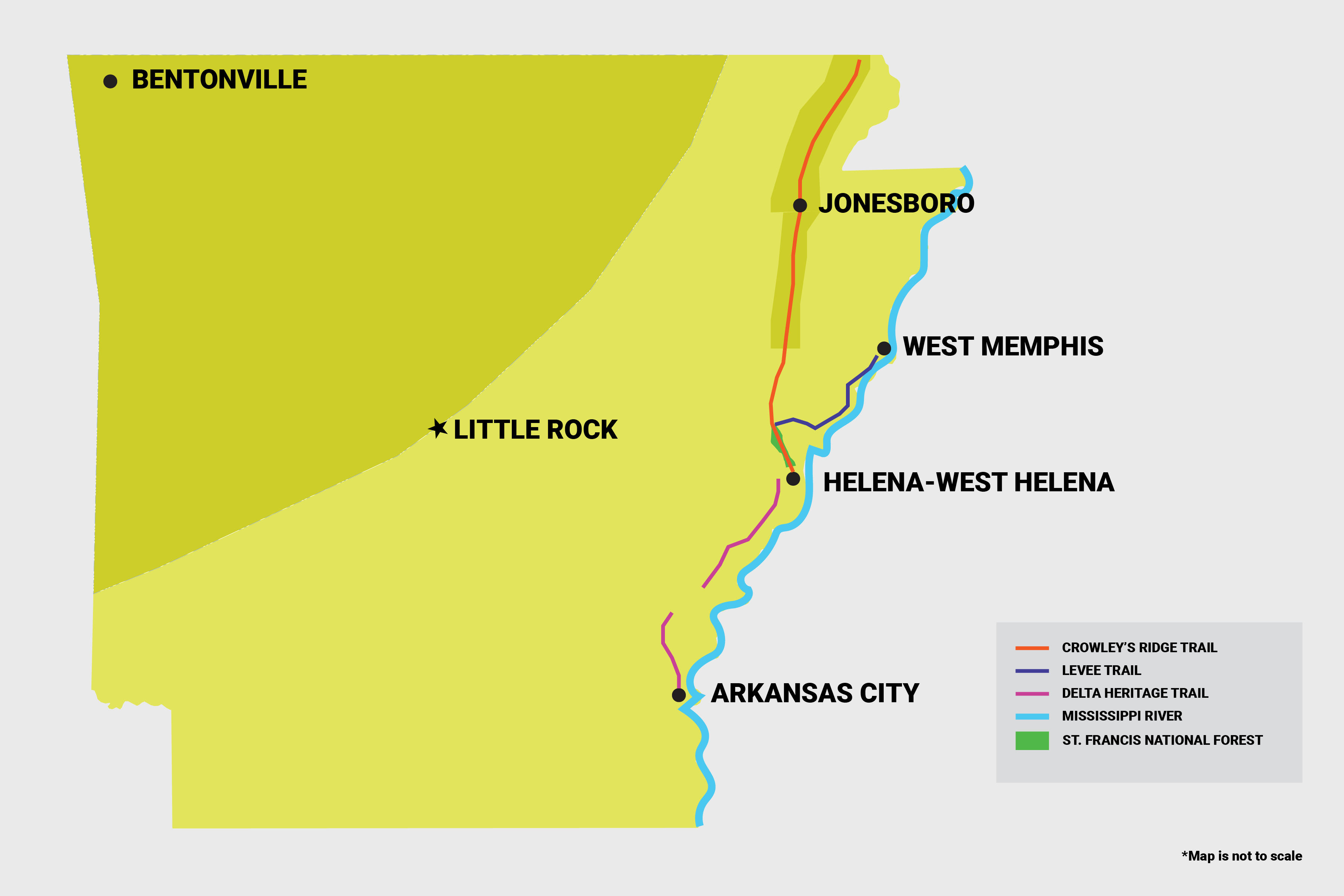
The Crowley’s Ridge Gravel Trail begins in the town of Helena-West Helena, which is located along the banks of the Mississippi River. The town is home to the Delta Heritage Museum, which highlights the region’s culture and history. Beginning in the 1940s, a local radio station hosted a program called King Biscuit Time, featuring blues music from regional musicians that went on to popularize the genre worldwide. Museum exhibits also explore the region’s agricultural history and the town’s occupation by Union soldiers during the Civil War.
Although the town of Helena-West Helena has suffered economic hardship over the years, bicycle tourism is growing. In addition to serving as the southern end of the Crowley’s Ridge Gravel Trail, the town hosts various cycling events throughout the year, including the popular Mile Zero Delta Outdoor Festival (formerly the Delta Grind) and Tour Da Delta Bike Ride.
Today, Helena-West Helena is home to Delta Dirt, which is said to be the only black-owned, farm-to-bottle distillery. There’s also excellent BBQ to be found at Delta Que & Brew, located on Cherry St. downtown. The restaurant has a fully stocked bar and a stage for hosting live music.
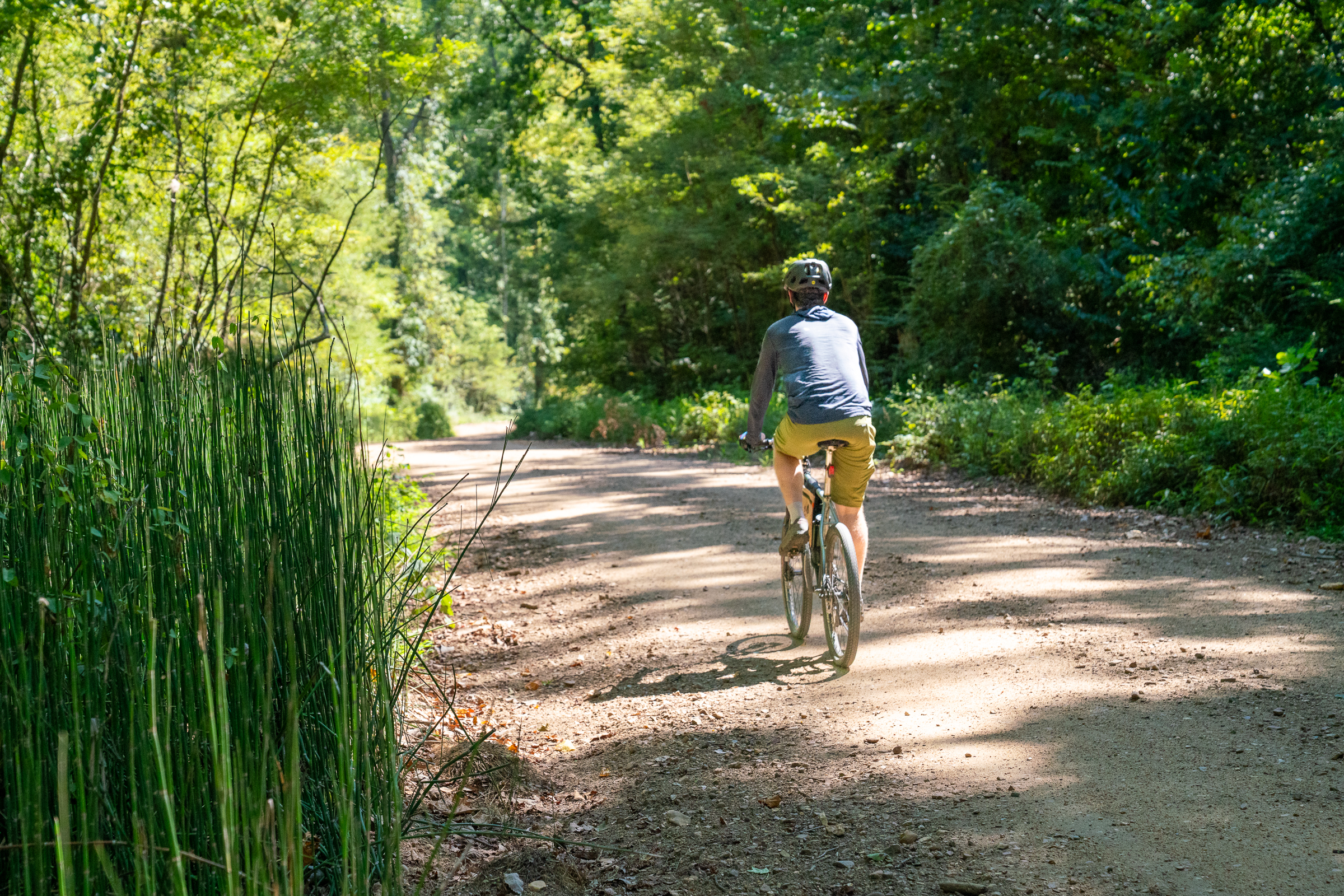
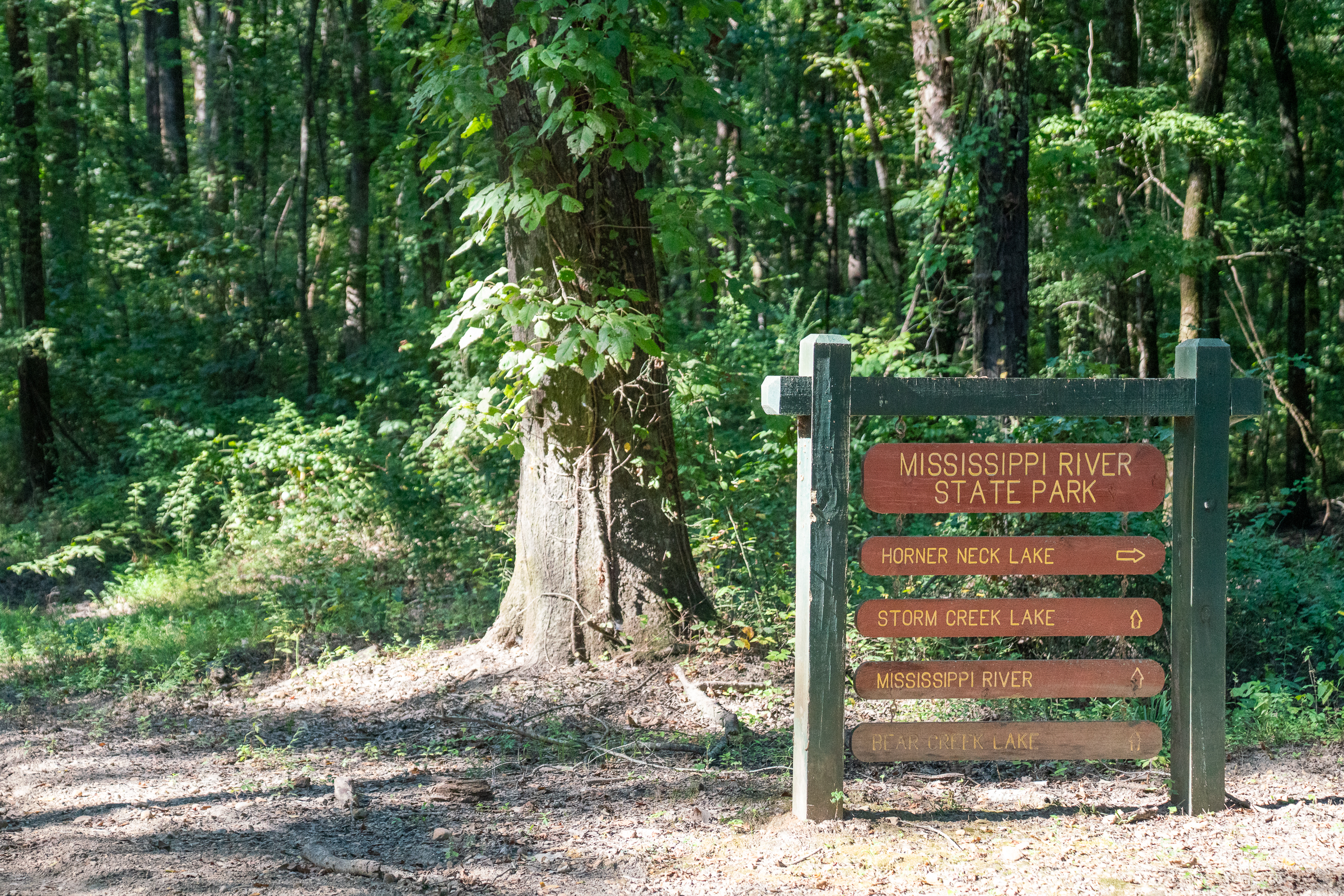
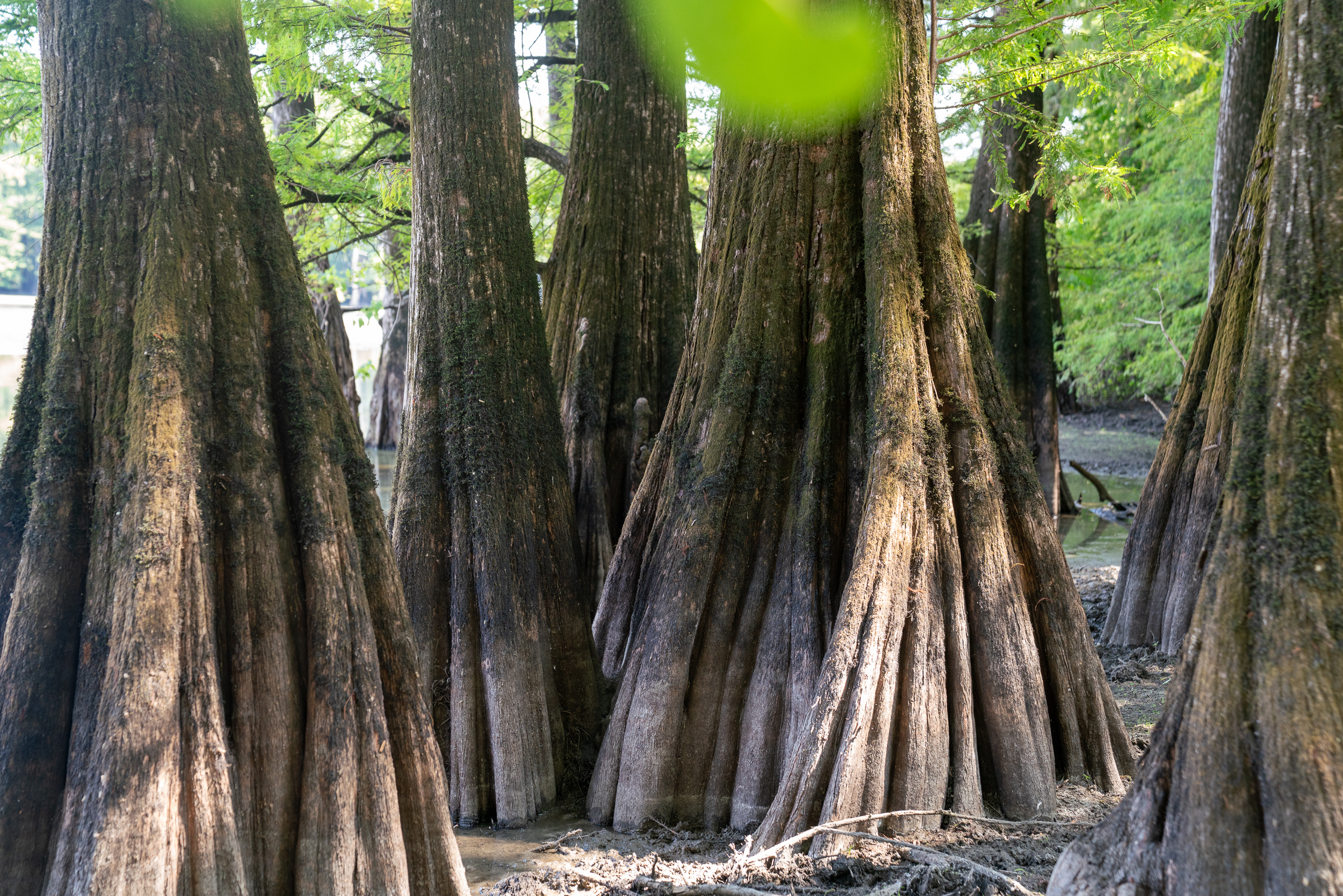
After traversing a short levee section heading north out of town, riders quickly find themselves enveloped in the St. Francis National Forest, where bottomland forests provide a surreal backdrop to the quiet, traffic-free roads. During a Singletracks visit in September, we didn’t see a single vehicle along a ten-mile stretch through the forest.
Past Storm Creek Lake, the road is paved and roughly follows the ridgeline. This section in particular feels not unlike the Blue Ridge Parkway in North Carolina and Virginia.
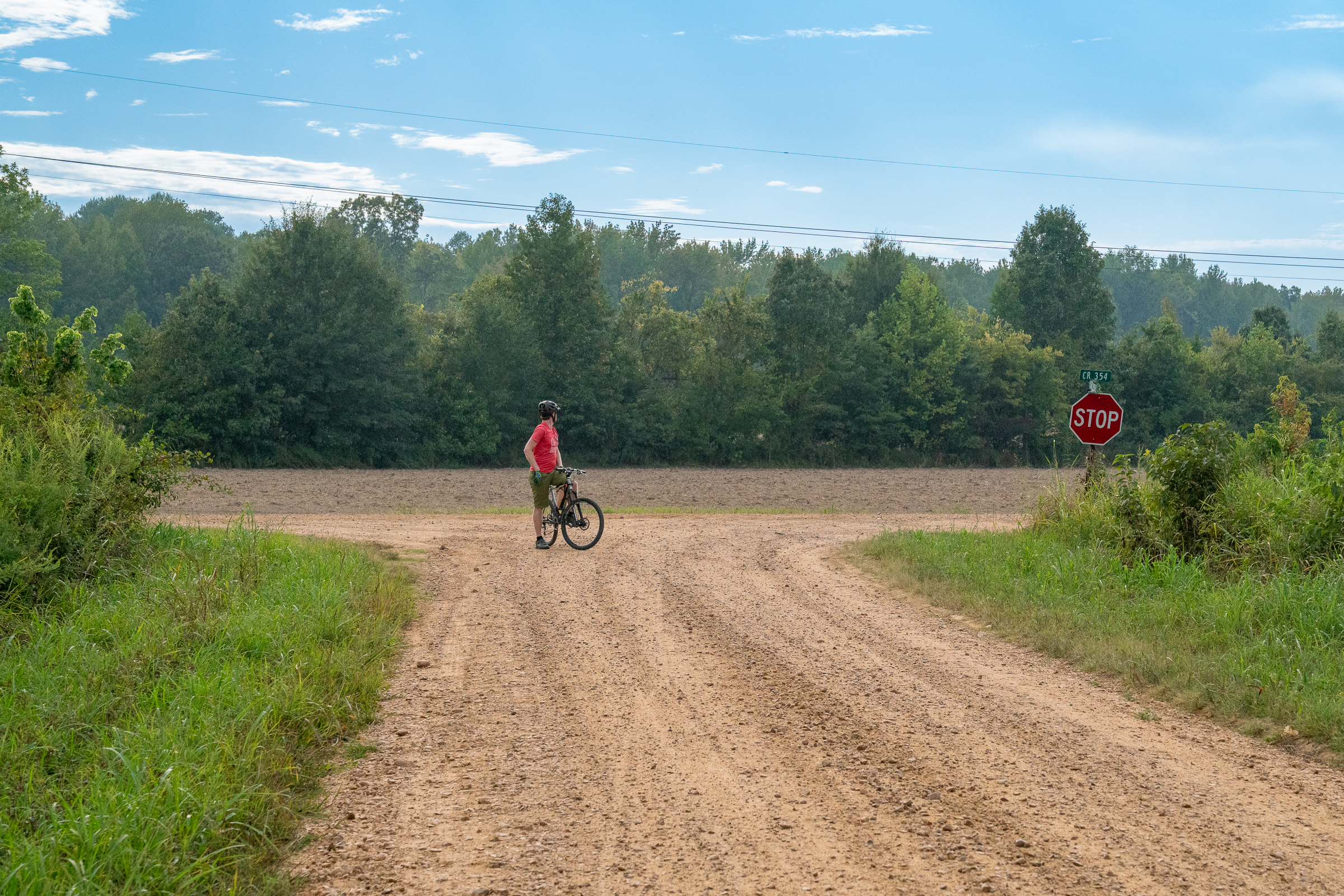
After exiting the St. Francis National Forest, the route takes riders through the small town of Marianna and north through Forrest City and other communities located along the edges of vast farmlands. This section, between Marianna and Jonesboro, traverses several counties, including Cross County, which has more gravel roads than paved roads.
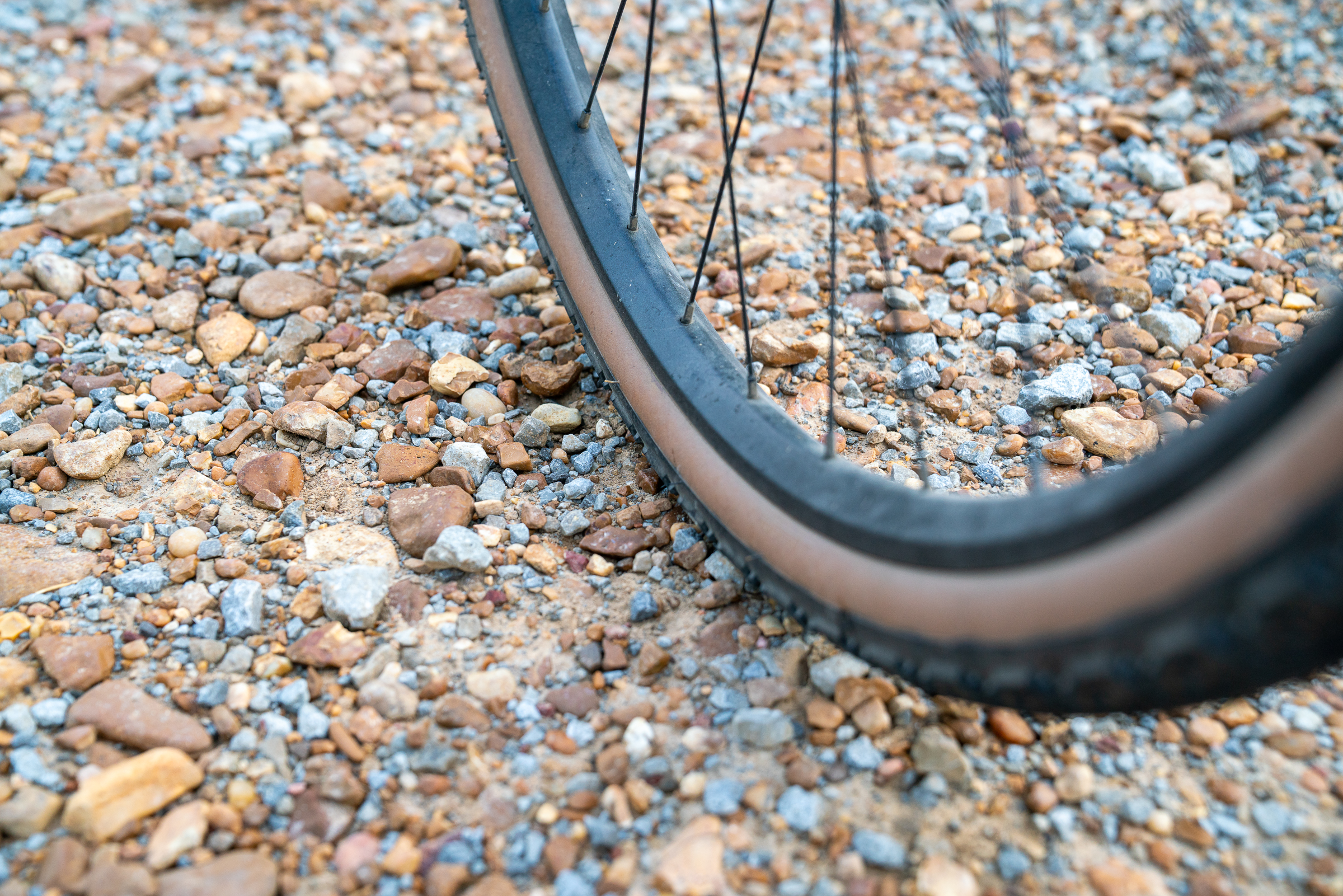
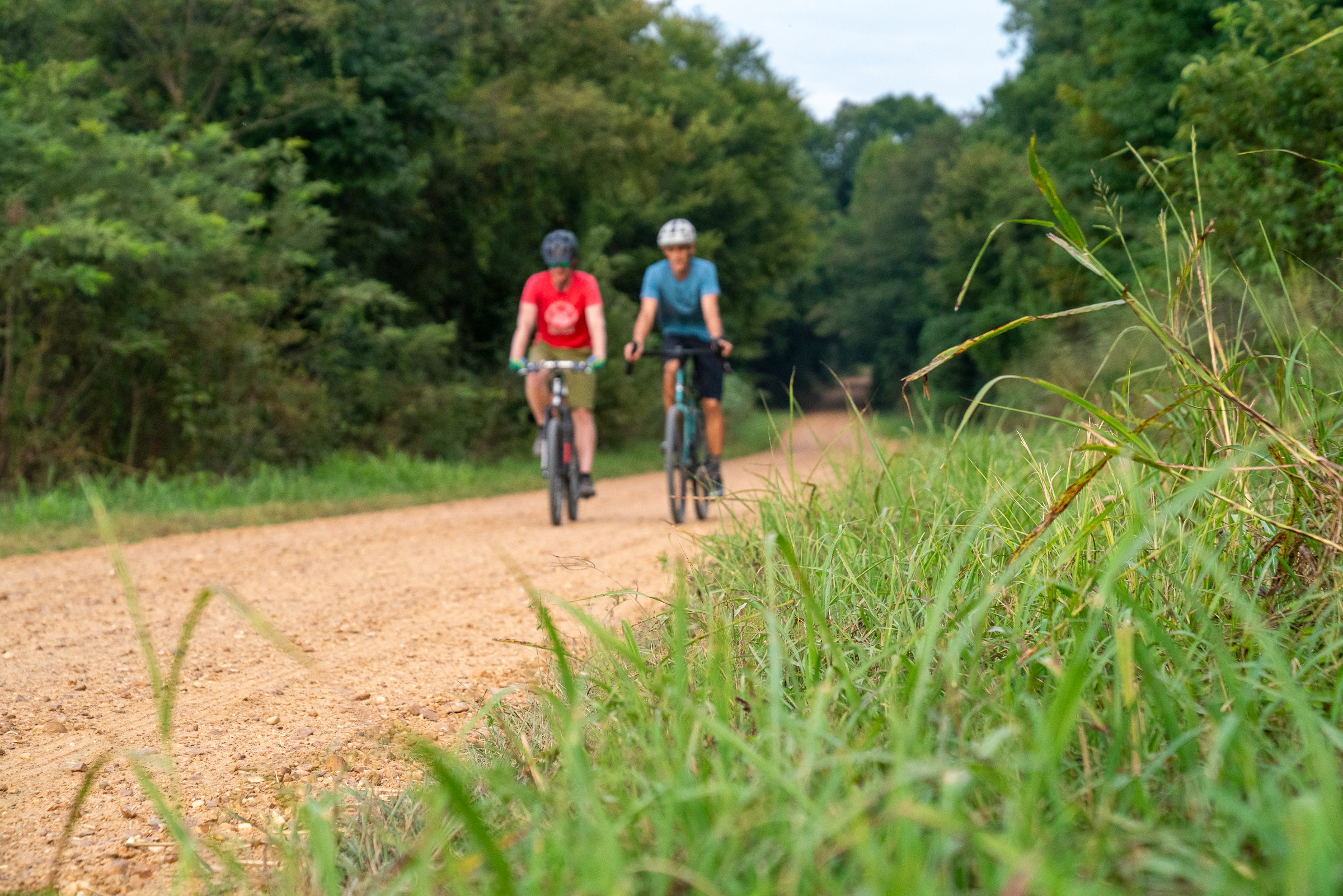
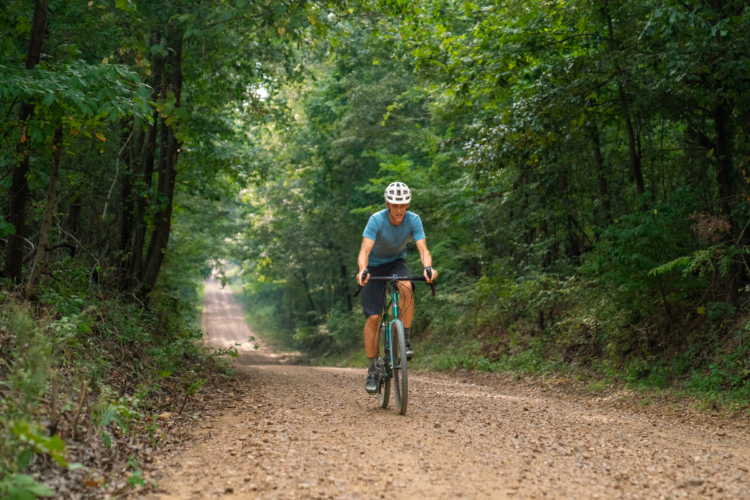
The gravel surface in this zone is generally well-packed, a mix of semi-smooth river rock and sand with a pleasant, warm, orange tint. While riding a section between Vanndale and Cherry Valley, only a single vehicle passed us.
In November, the Birdeye Gravel Festival will bring cyclists and trail runners to Birdeye Farms, located on the east side of Crowley’s Ridge just outside Cherry Valley. The festival promises live music, food, camping, rides, and runs along Crowley’s Ridge. This year, organizers are promoting a 450-mile self-supported gravel bike challenge called the Birdeye 500. Riders will traverse Crowley’s Ridge Gravel Trail twice for the complete Eastern Arkansas gravel experience.
“We’re getting people in from St Louis. We’re getting people in from San Antonio. They marvel at it because everything is different than what they’re familiar with,” said Jordan.
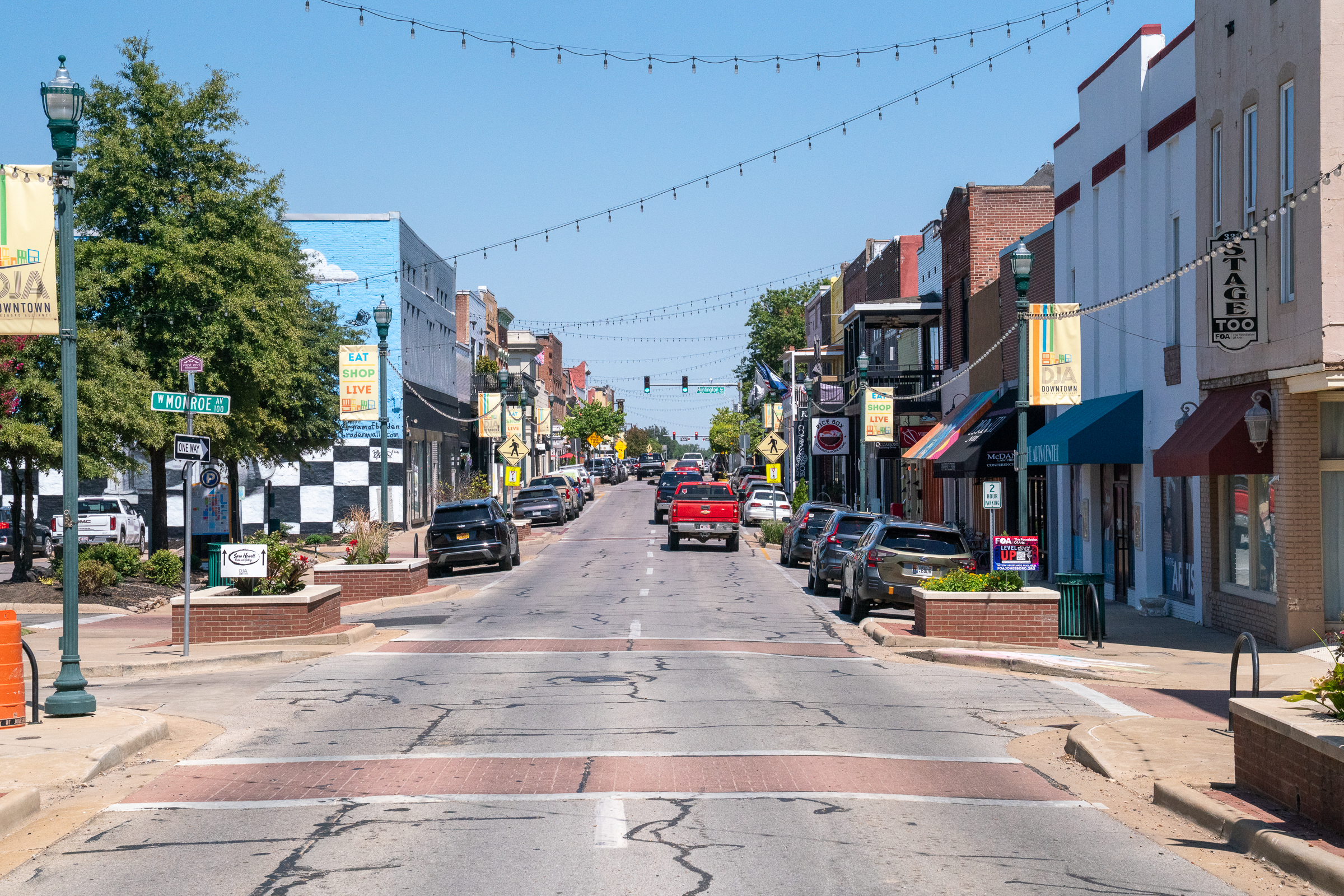
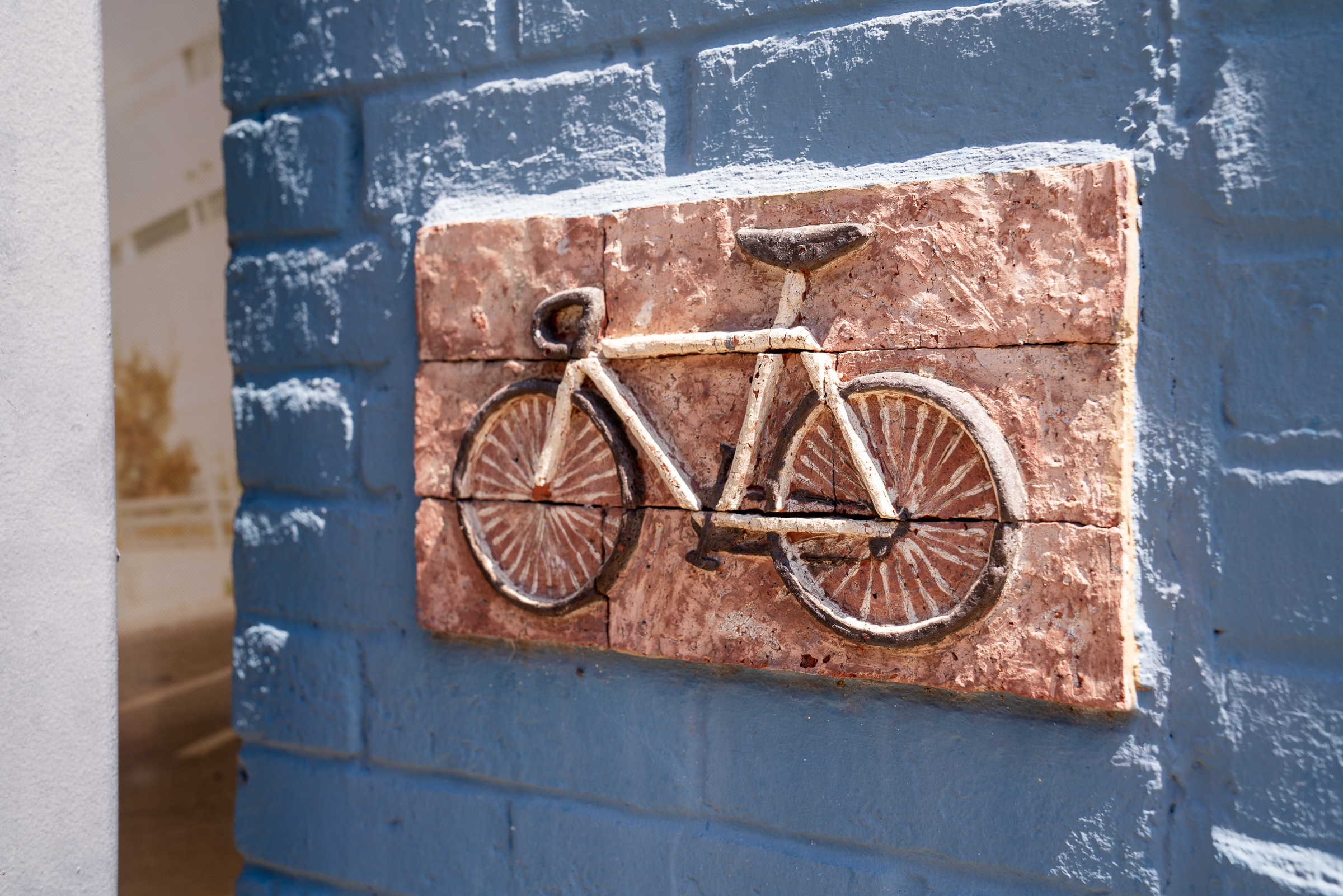

A college town on the delta, connected by gravel
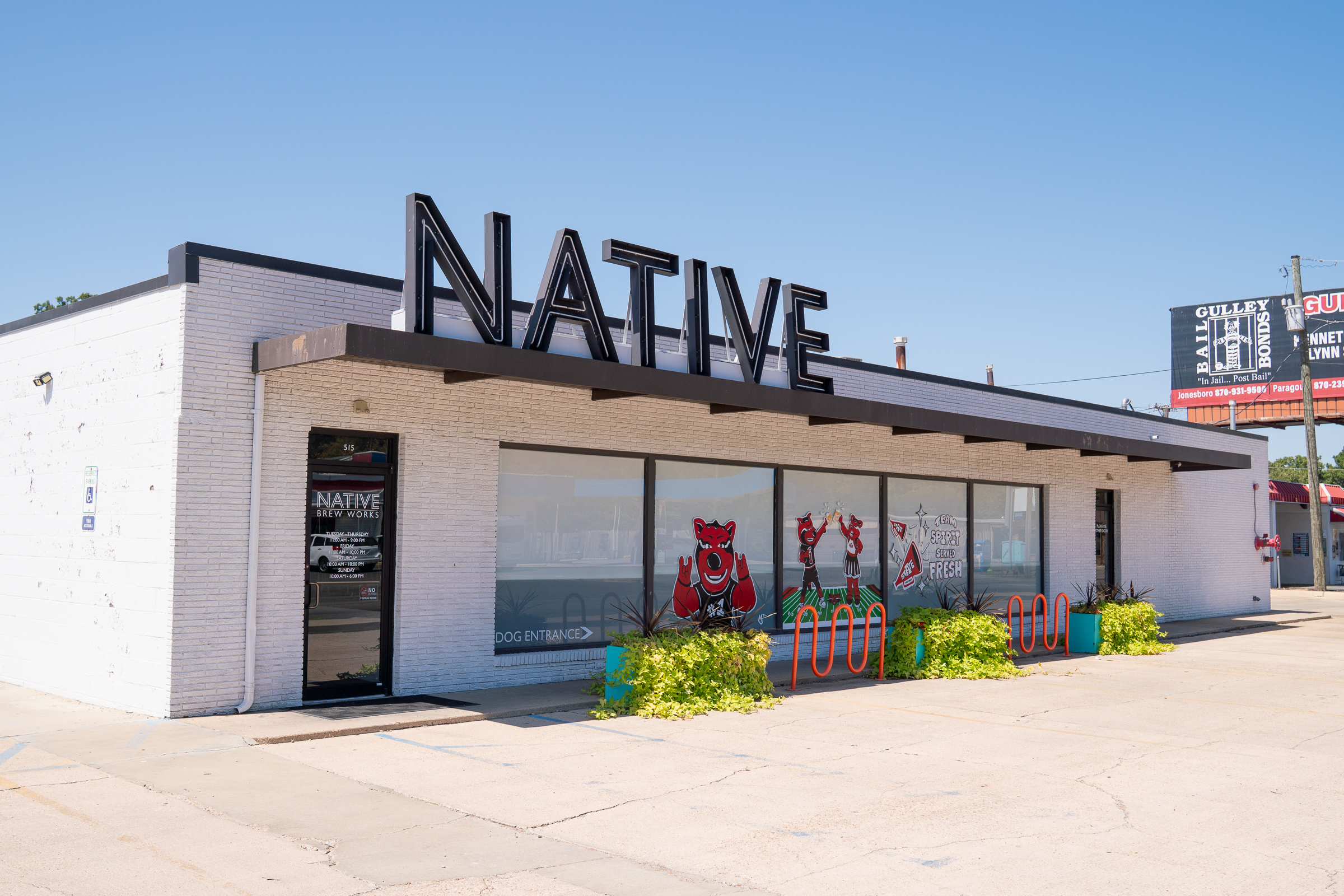
Jonesboro is home to Arkansas State University, with an enrollment of about 18,000 students. It’s here that you’ll find Native Brew Works, a popular brewery with a lunch and dinner menu featuring tacos, nachos, quesadillas, and burgers. Lemonade House Grill is popular with students and visiting parents alike, and we found delicious Pho and Bánh mì at Viet Kitchen on South Main Street. Gearhead Outfitters, just a block away, operates a full-service bike shop in town. Though the Crowley’s Ridge Trail route doesn’t take riders directly along South Main Street, it’s worth a short detour. And for those who want to ride more dirt, there’s a large network of freshly reworked singletrack bike trails available just off route at Craighhead Forest Park south of town.
In May 2025, Jonesboro hosted an all-new gravel race known as The Skirmish. Produced by All Sports Productions, the race drew hundreds of riders from Memphis, Little Rock, Kansas City, St. Louis, and Nashville. Unlike other parts of the Natural State, the mild, rolling terrain around Jonesboro is incredibly accessible for families and riders who are new to gravel biking, and the Skirmish offers riders various course lengths, ranging from 24 miles all the way up to 100.
In 2024, the Arkansas Graveler, a multi-day gravel ride and festival, visited Jonesboro, and the 2026 edition will begin in the town, leading riders along the Crowley’s Ridge Gravel Trail and the Delta Heritage Trail. Registration for the Graveler opens April 2.
Jonesboro makes for an excellent basecamp for gravel day trips as well, with some of the most scenic gravel roads located south of town.
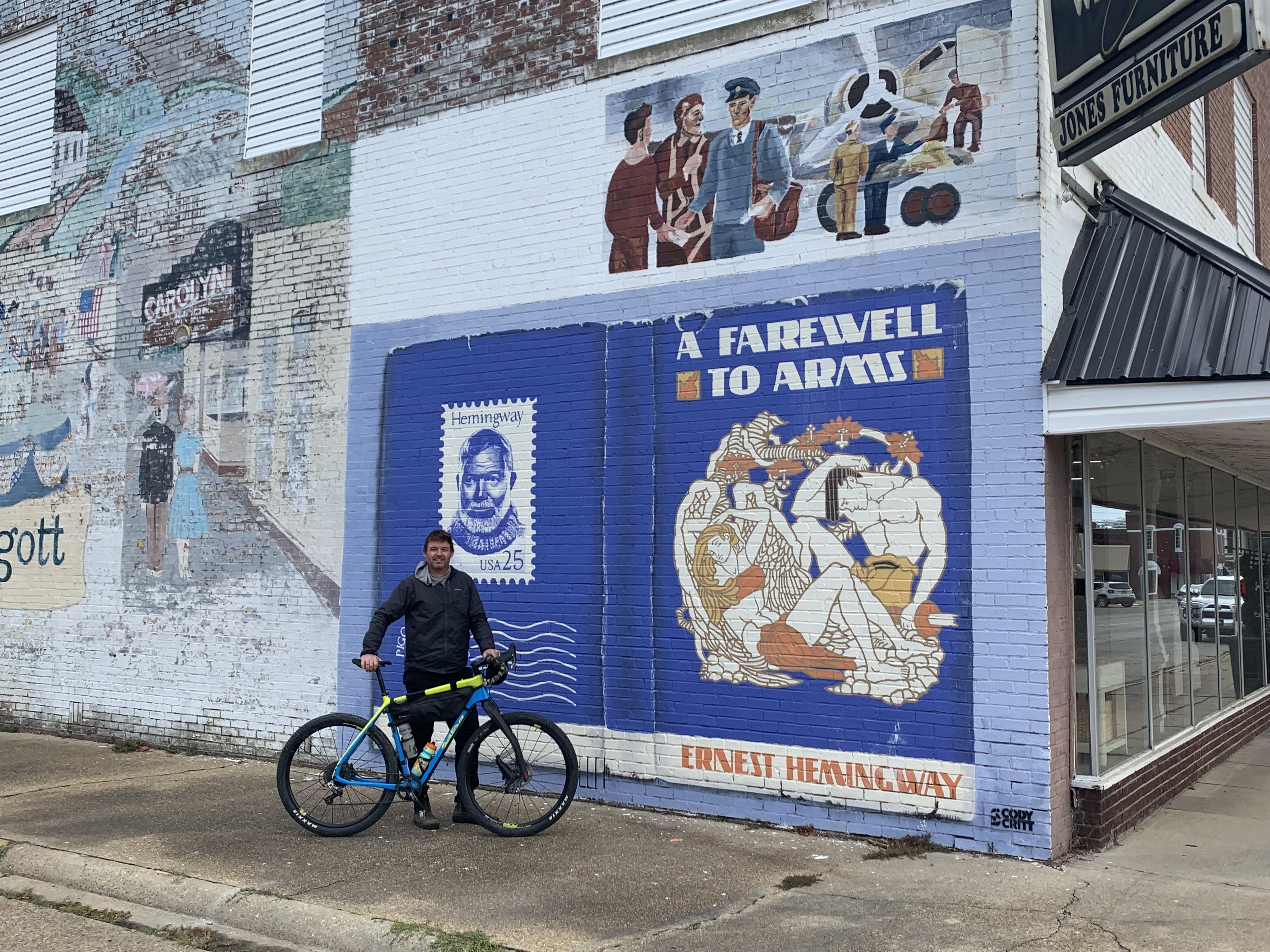
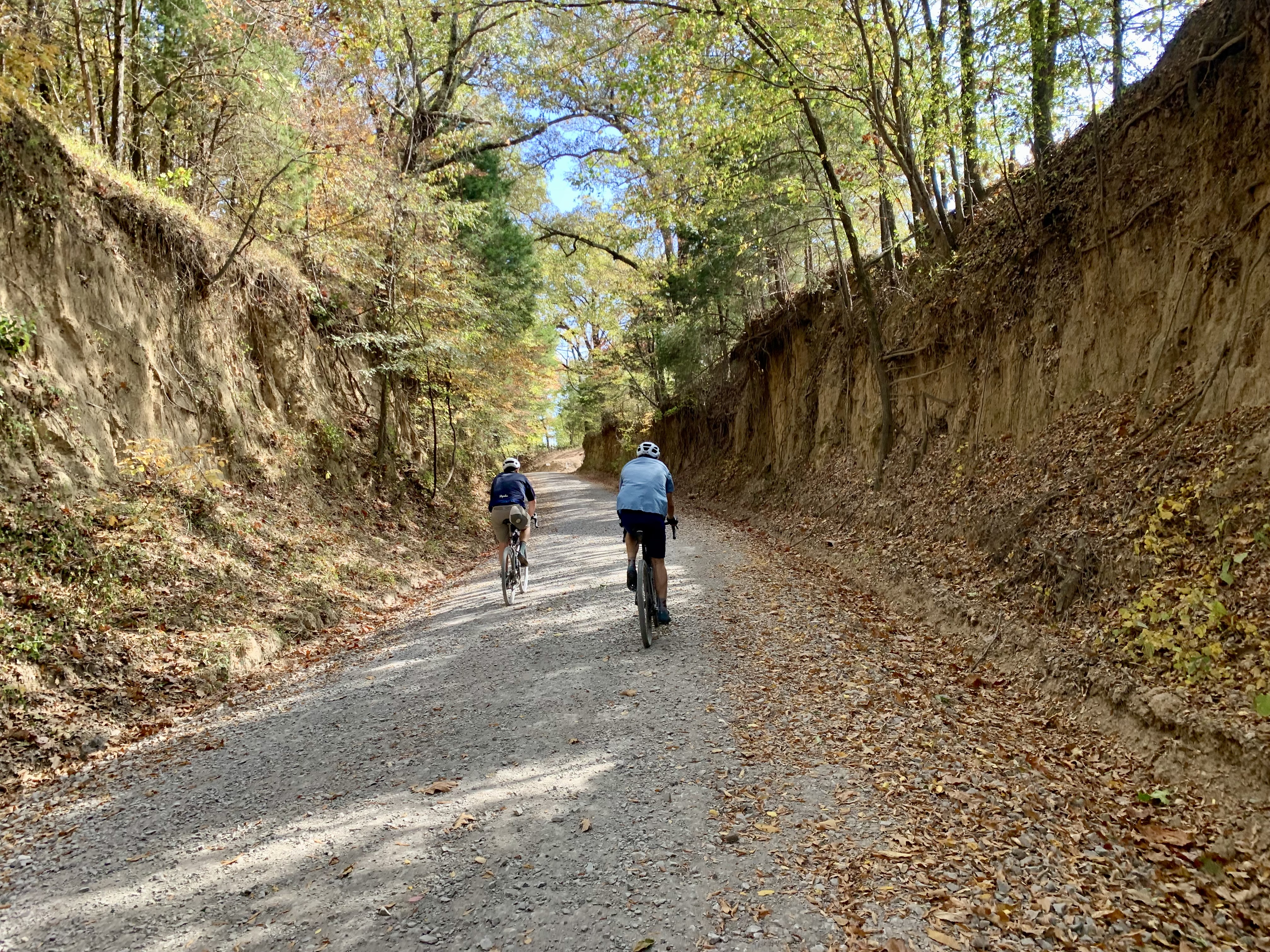
Heading north from Jonesboro, Crowley’s Ridge Gravel Trail leads riders through Lake Frierson State Park and Crowley’s Ridge State Park, where camping and swimming are available. The route ends in Piggott, Arkansas, a town where Ernest Hemingway and his family spent a significant amount of time in the late 1920s.
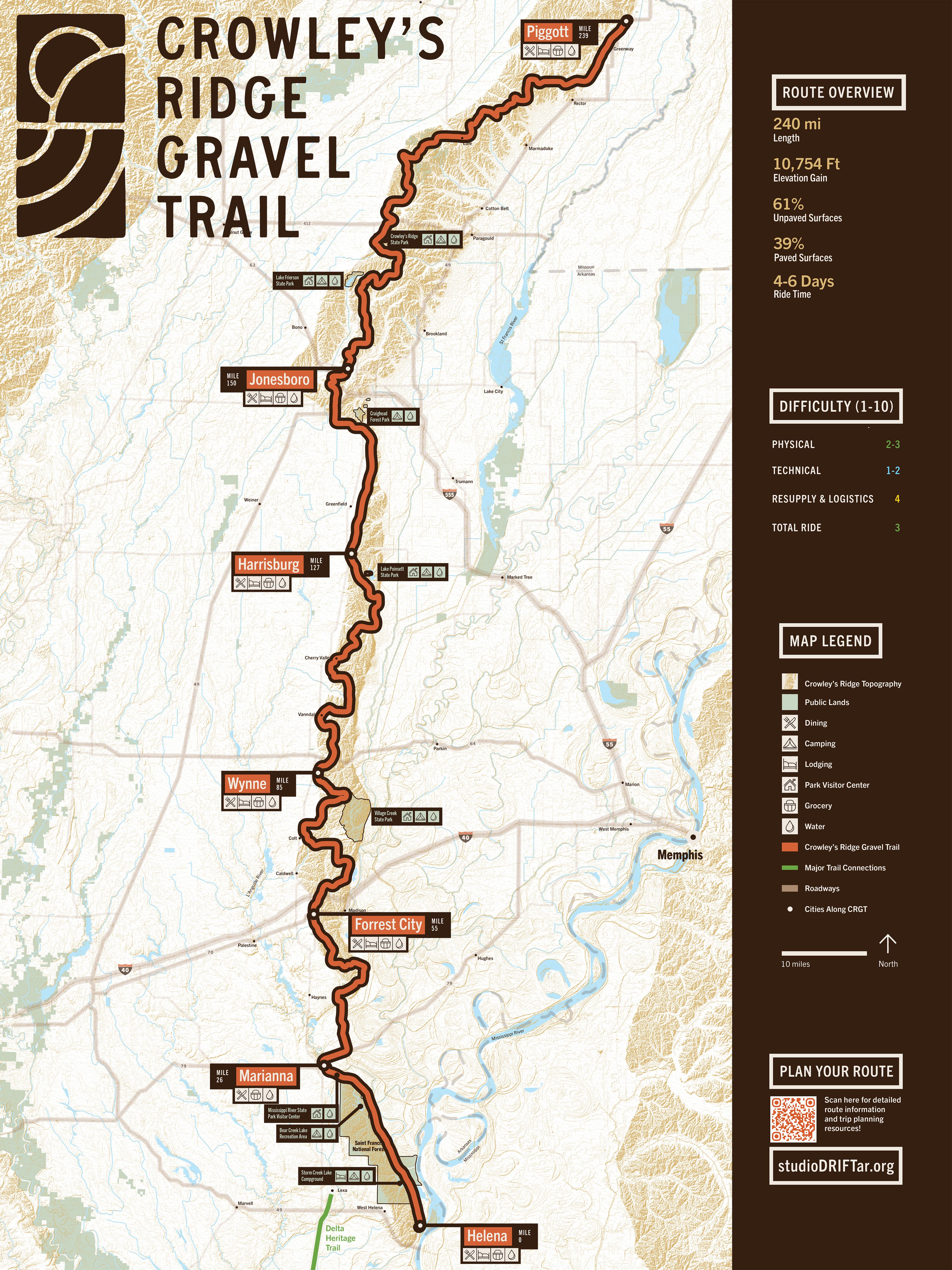
All told, riders will visit 18 towns, seven state parks, and one National Forest along the Crowley’s Ridge Gravel Trail. The majority of the roughly 240-mile route is unpaved, and though the biggest climb on the route is only about 200 vertical feet, the moderately hilly traverse delivers more than 11,000 feet of climbing in total. According to Jordan, the route works well in either direction, so you can start and end wherever you like.
For those who choose to tackle the entire trail, there are many options for camping and lodging located directly along the route and marked on the map above. Jordan told me he rode the Crowley’s Ridge Gravel Trail last fall and didn’t pack any food, relying on restaurants and DoorDash deliveries to survive. Most riders will want to plan four days to complete the trail, which averages out to about 60 miles of riding each day.
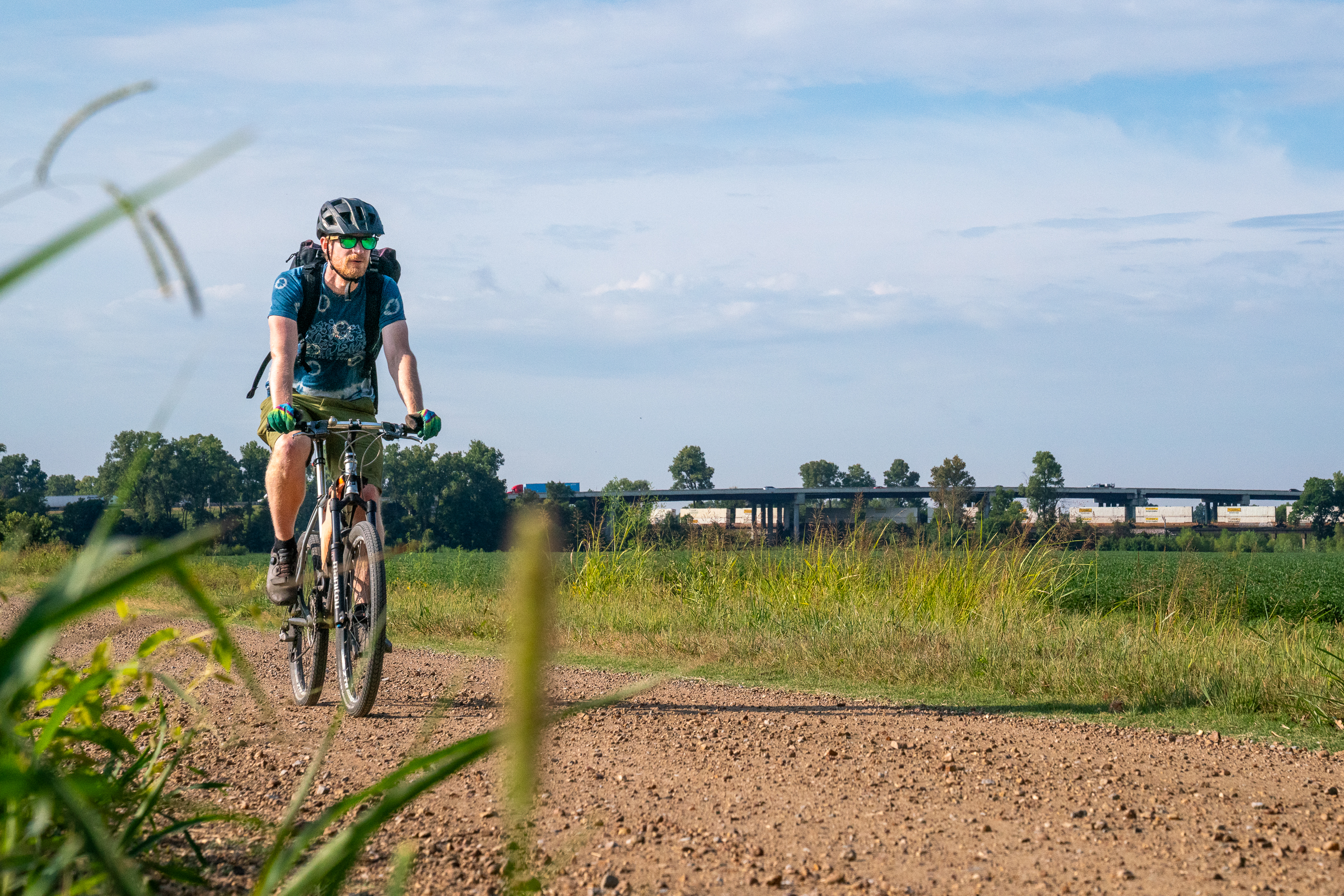
100+ miles of gravel from West Memphis to Arkansas City
The city of West Memphis, Arkansas, sits directly across the Mississippi River from Memphis, Tennessee. The two cities are connected via Big River Crossing, the longest public pedestrian cycling bridge across the Mississippi River. Amtrak train service to Central Station in Memphis drops riders off just a few blocks from the bridge where the off-road adventure begins!
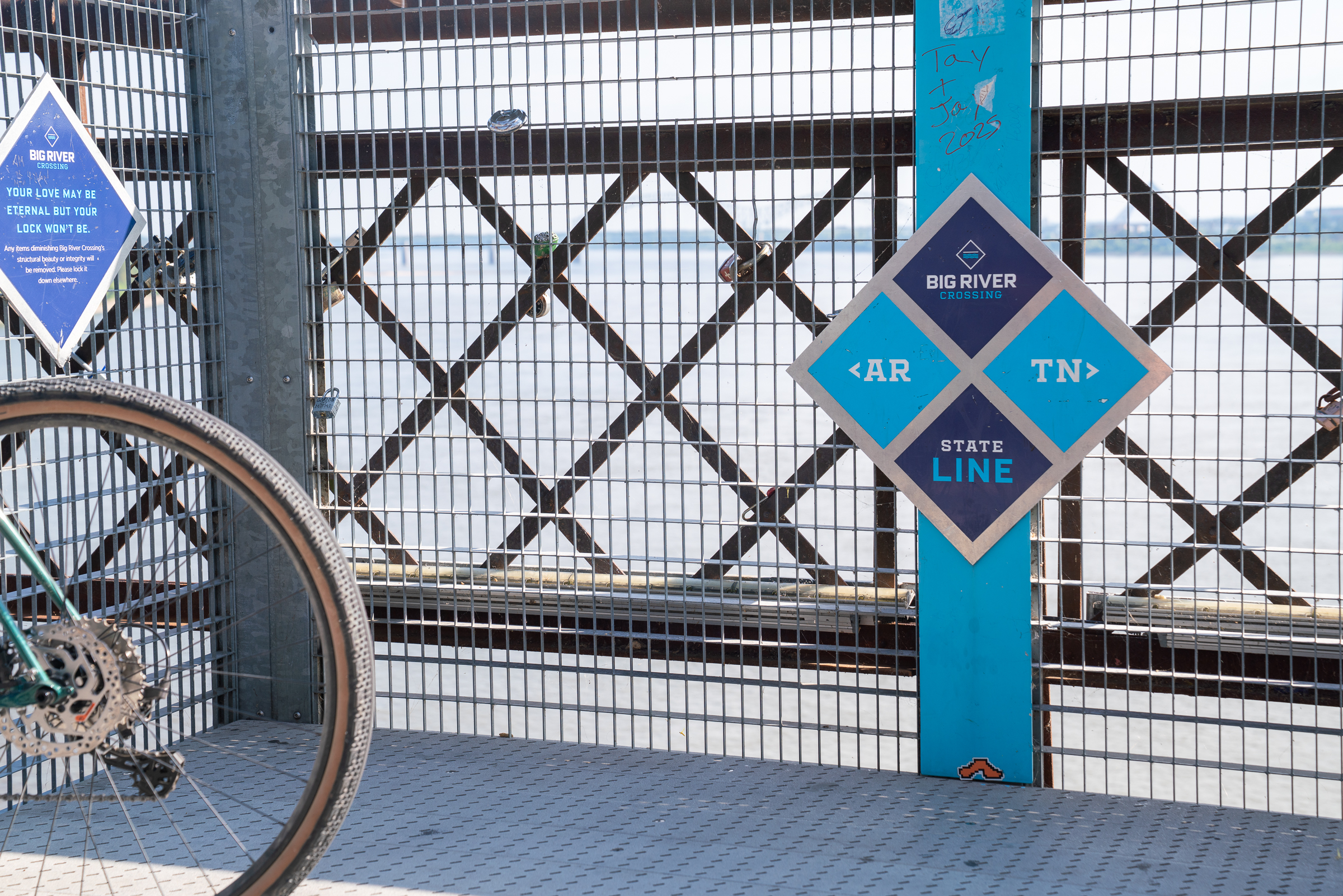
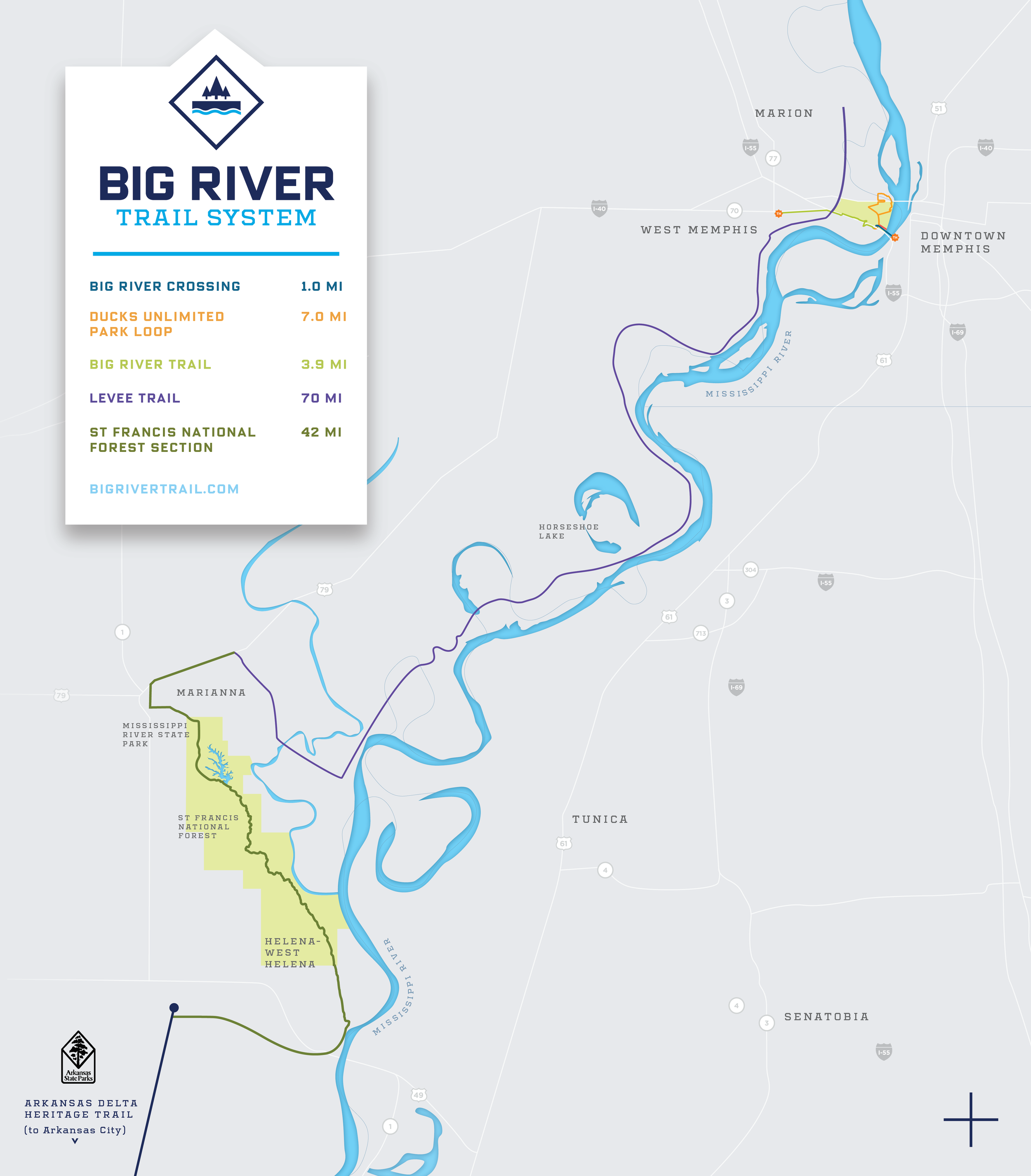
Big River Trail System
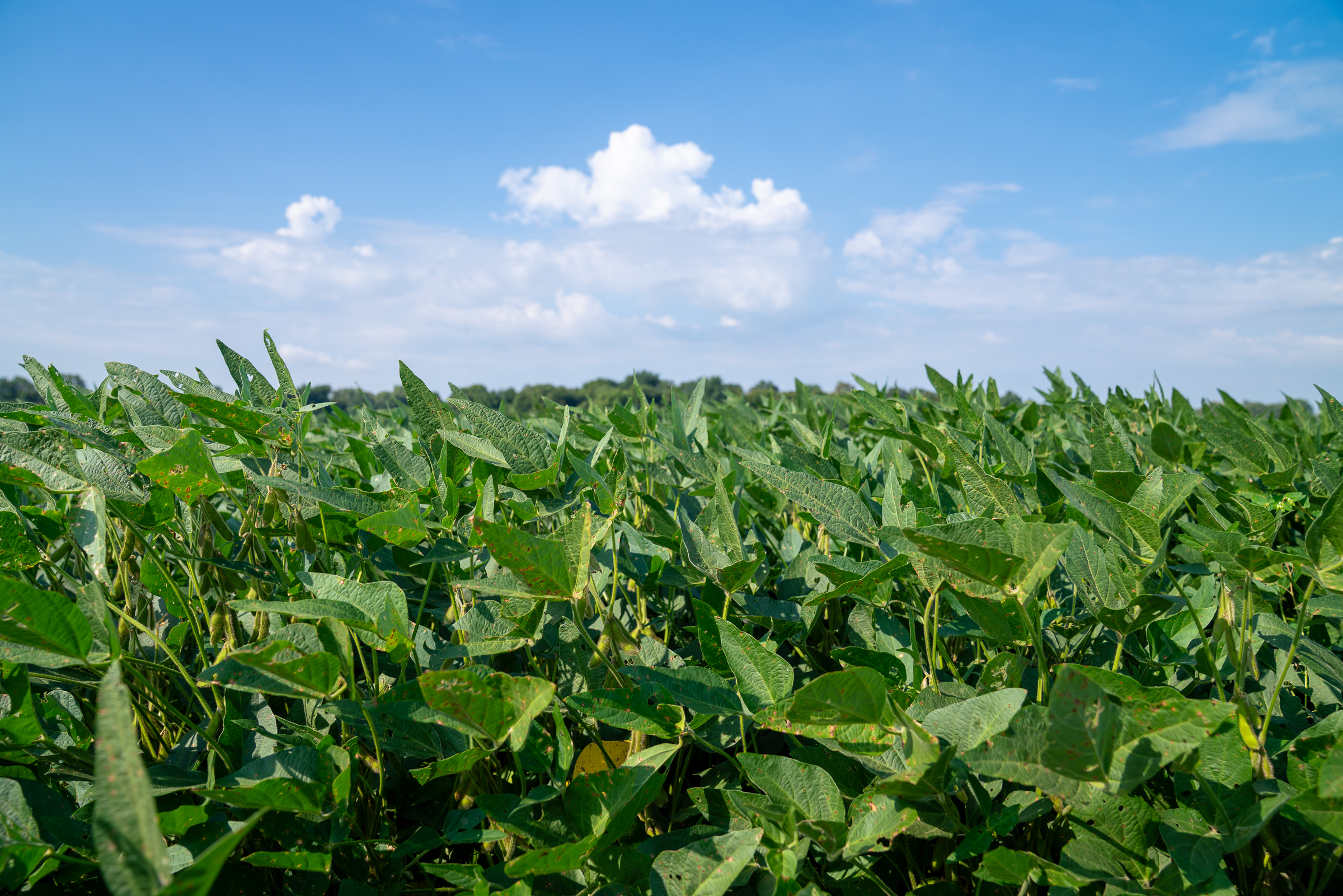
The Big River Trail System includes a seven-mile gravel loop in Ducks Unlimited Park that begins at the foot of the bridge on the Arkansas side of the river. Located close to downtown Memphis and between two interstate highways, the Ducks Unlimited Park loop is surprisingly peaceful and scenic. Soybean fields give way to glances of the Mississippi River through a narrow strip of trees, with the city of Memphis visible in the distance.
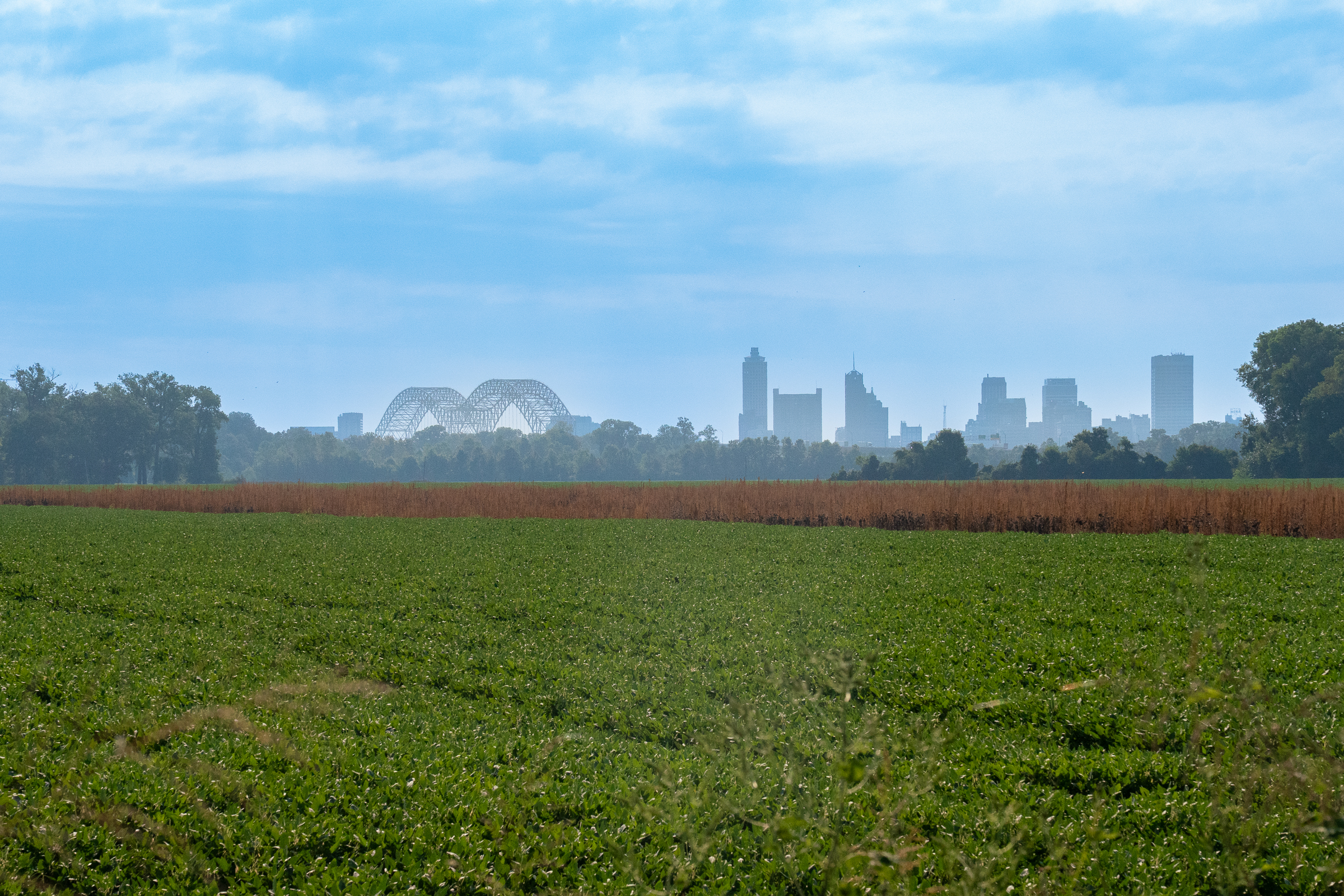
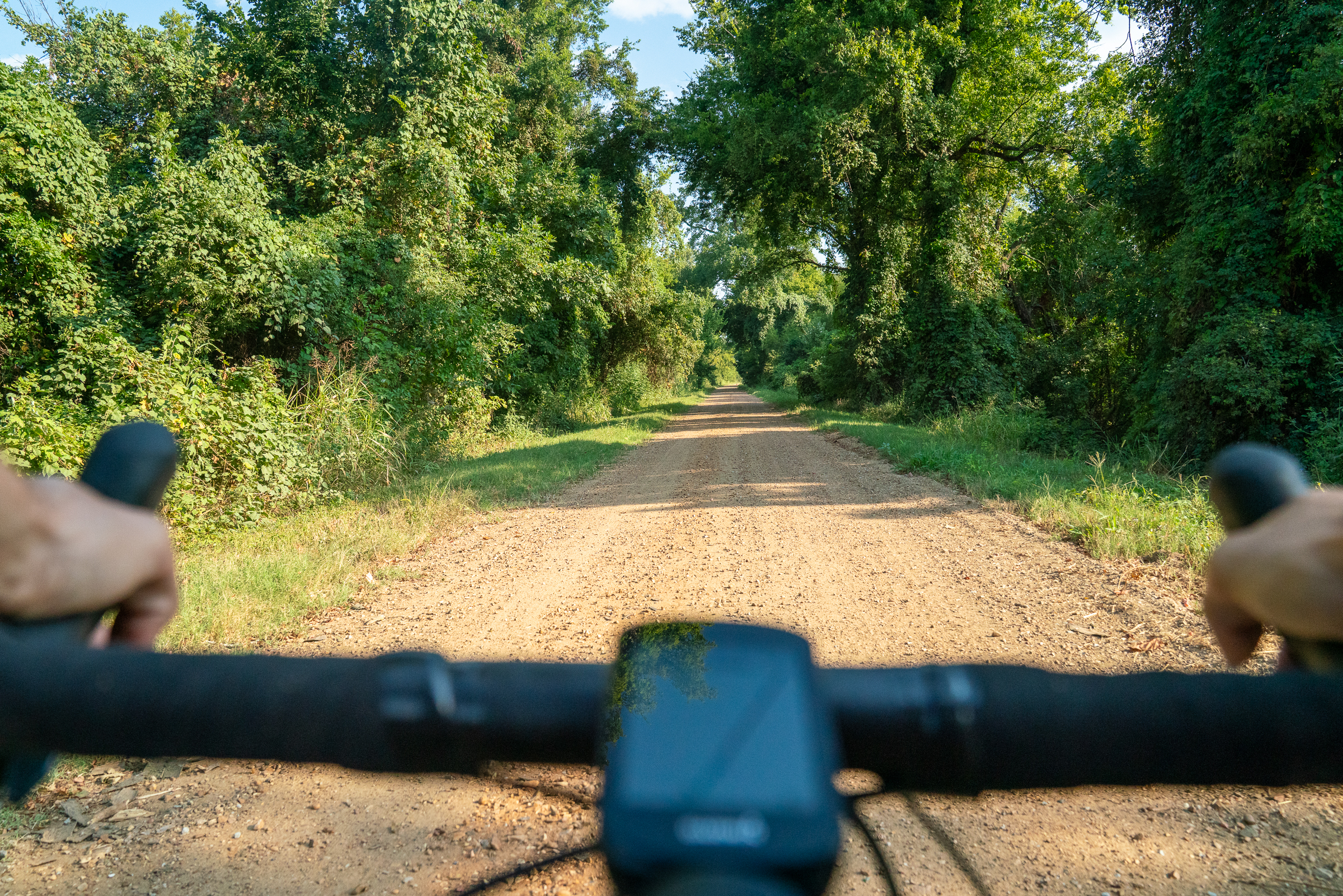
From here, the Big River Trail connects riders to the 70-mile Levee Trail before continuing into the city of West Memphis. The Levee Trail roughly follows the contours of the Mississippi River, with little discernible elevation change along its length. The longest segment within the Big River Trail System network, the Levee Trail ends in the town of Marianna, where it coincides with the Crowley’s Ridge Gravel Trail through the St. Francis National Forest. Riders will roll into the town of Helena-West Helena and can choose to continue onto yet another excellent gravel trail, the Delta Heritage Trail.

Delta Heritage Trail State Park
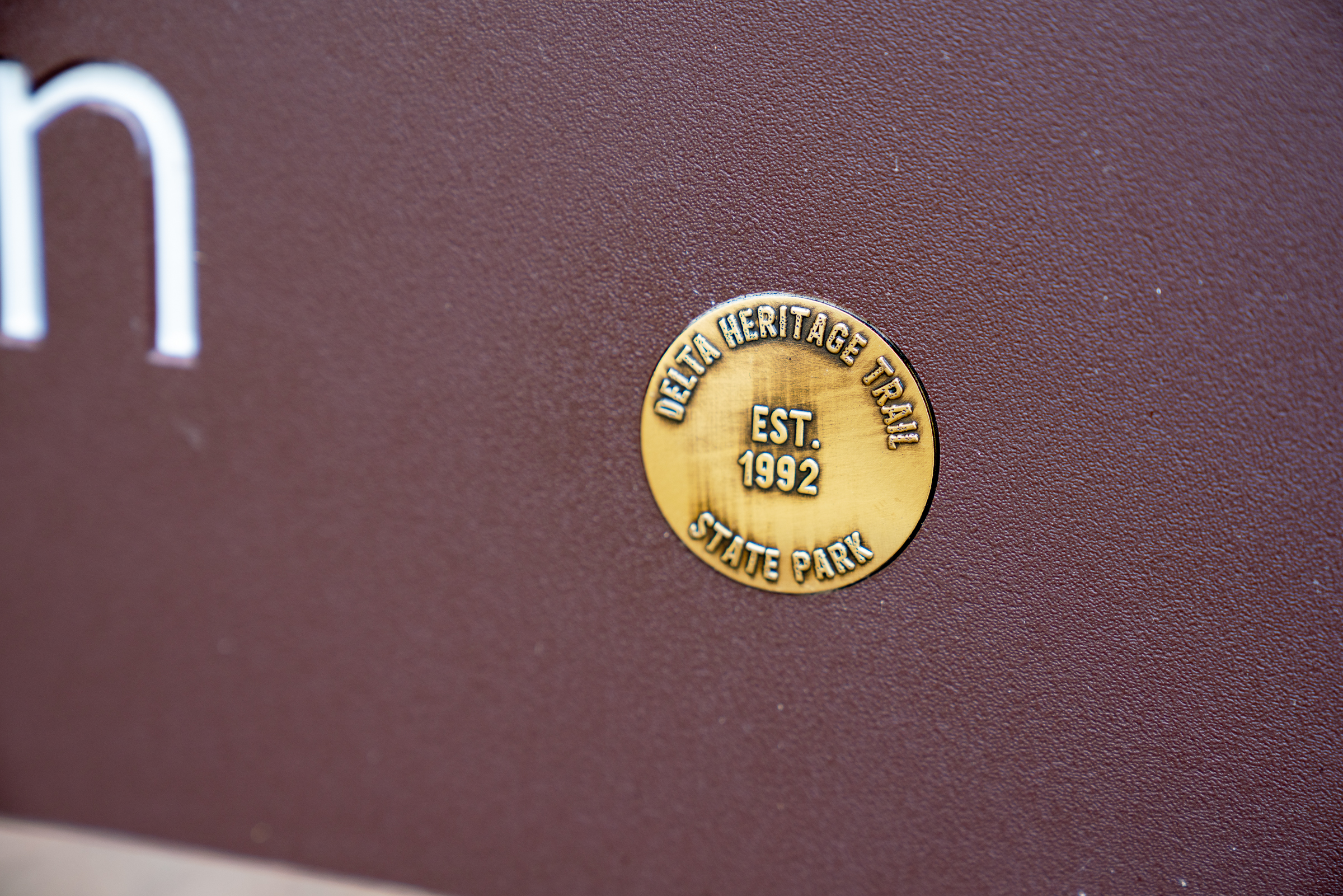
The Delta Heritage Trail is a major rails-to-trail project that, once complete, will span nearly 85 miles from the town of Lexa to Arkansas City. In 1992, Arkansas State Parks took over the project with plans to offer visitors top-notch amenities, including water, restrooms, and eventually cabins available for rent along the route. Over 74 miles of the Delta Heritage Trail are open for riding today, including the newly completed Yancopin Bridge spanning the Arkansas River. A bridge crossing the White River is currently under construction and once complete, it will link the north and south ends of the trail. From the end of the Big River Trail and Crowley’s Ridge Gravel Trail in Helena-West Helena, it’s about a 10-mile ride to the Delta Heritage Trail.
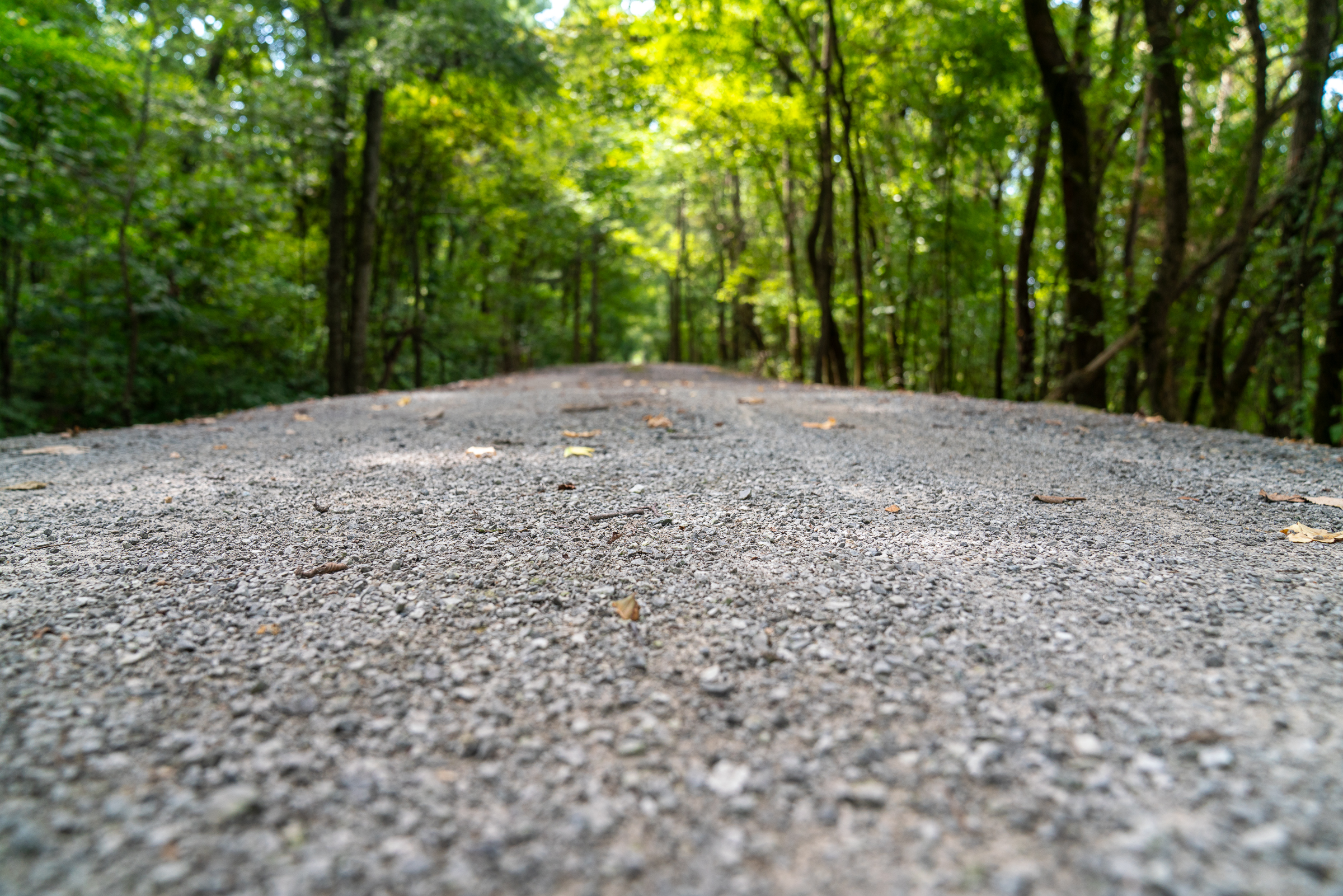
As an old railroad corridor, the Delta Heritage Trail is almost completely flat with a finely crushed gravel surface that rolls fast. Though this part of the state is characterized by open fields and farmland, a narrow strip of trees provides shade along much of the trail.
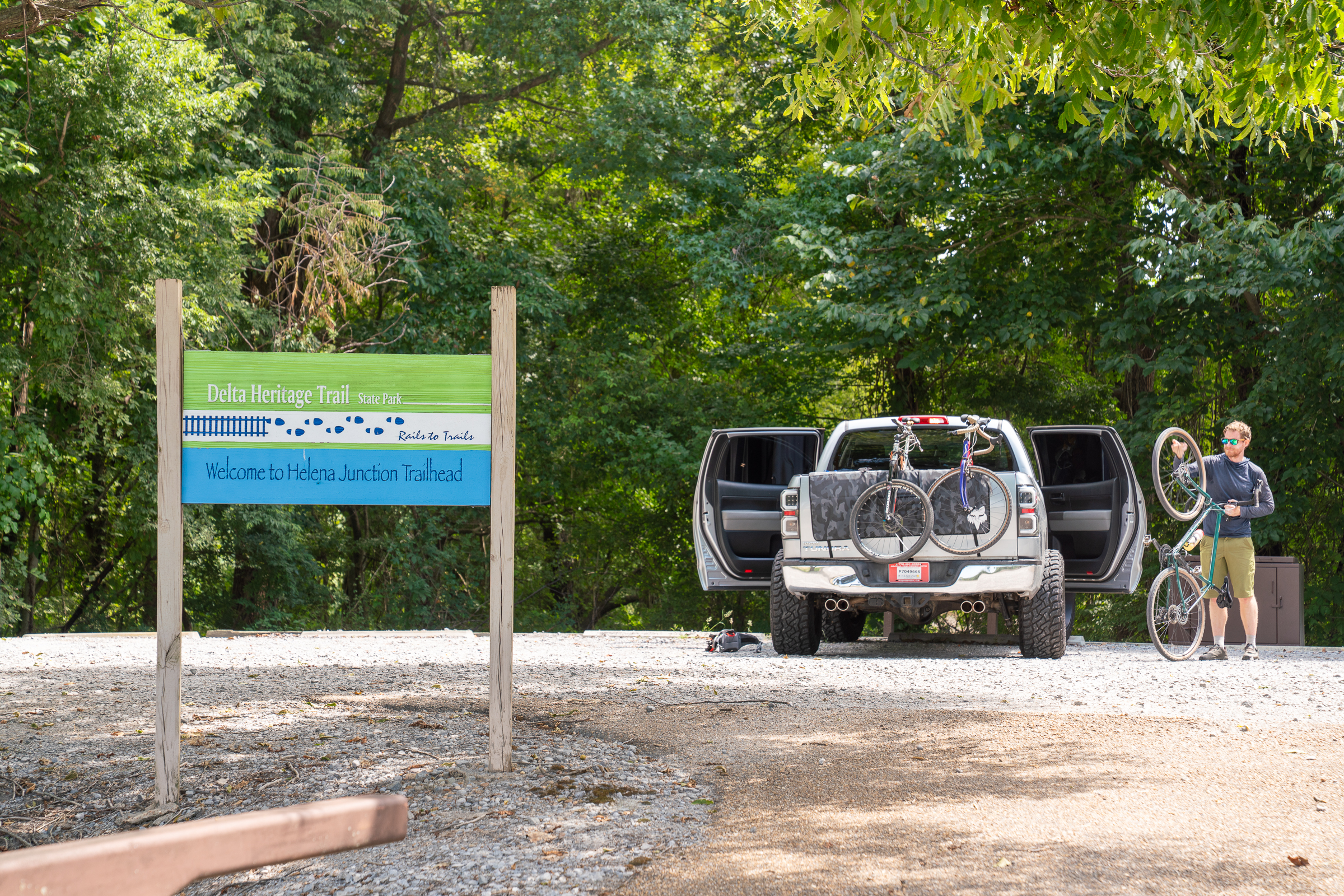
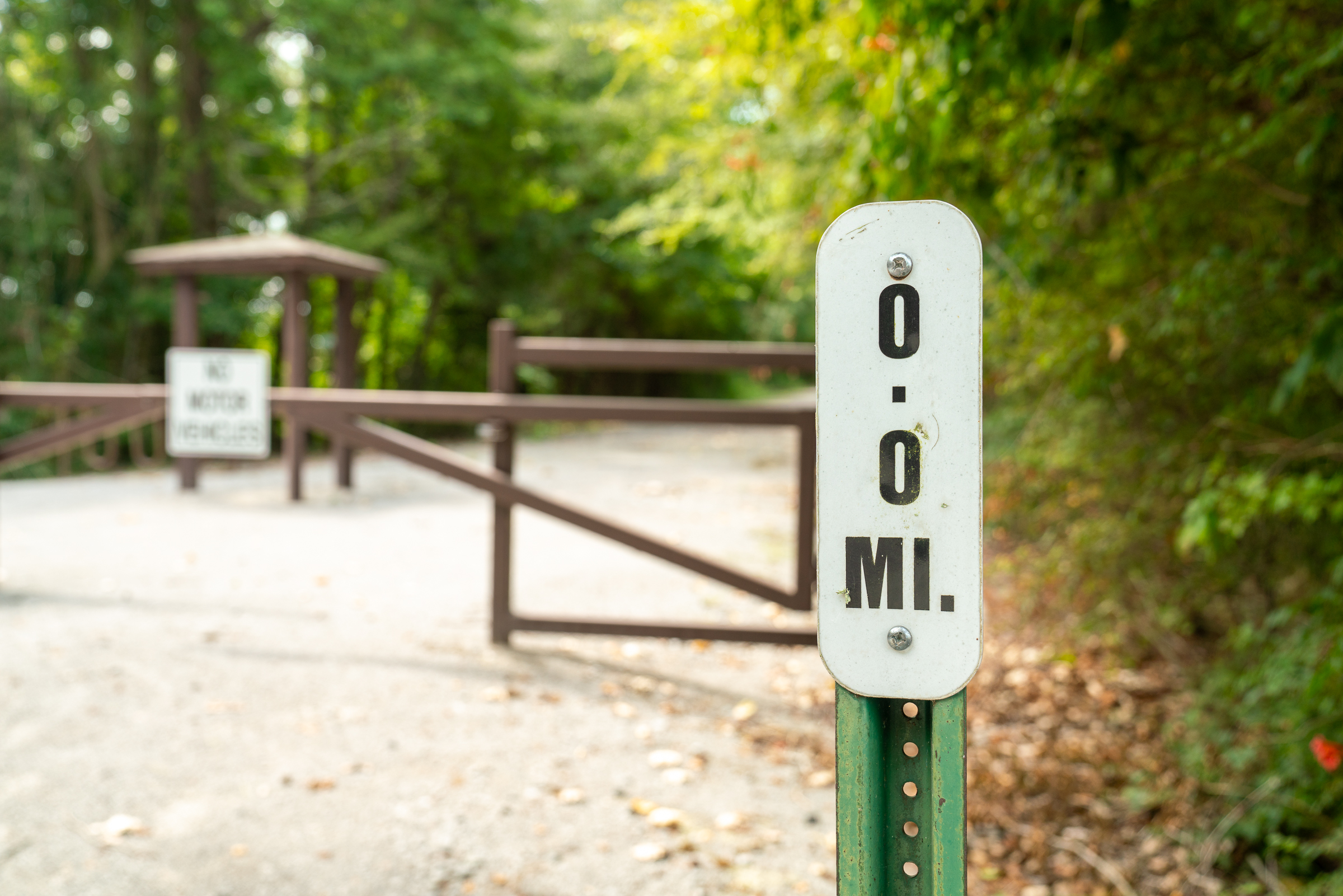
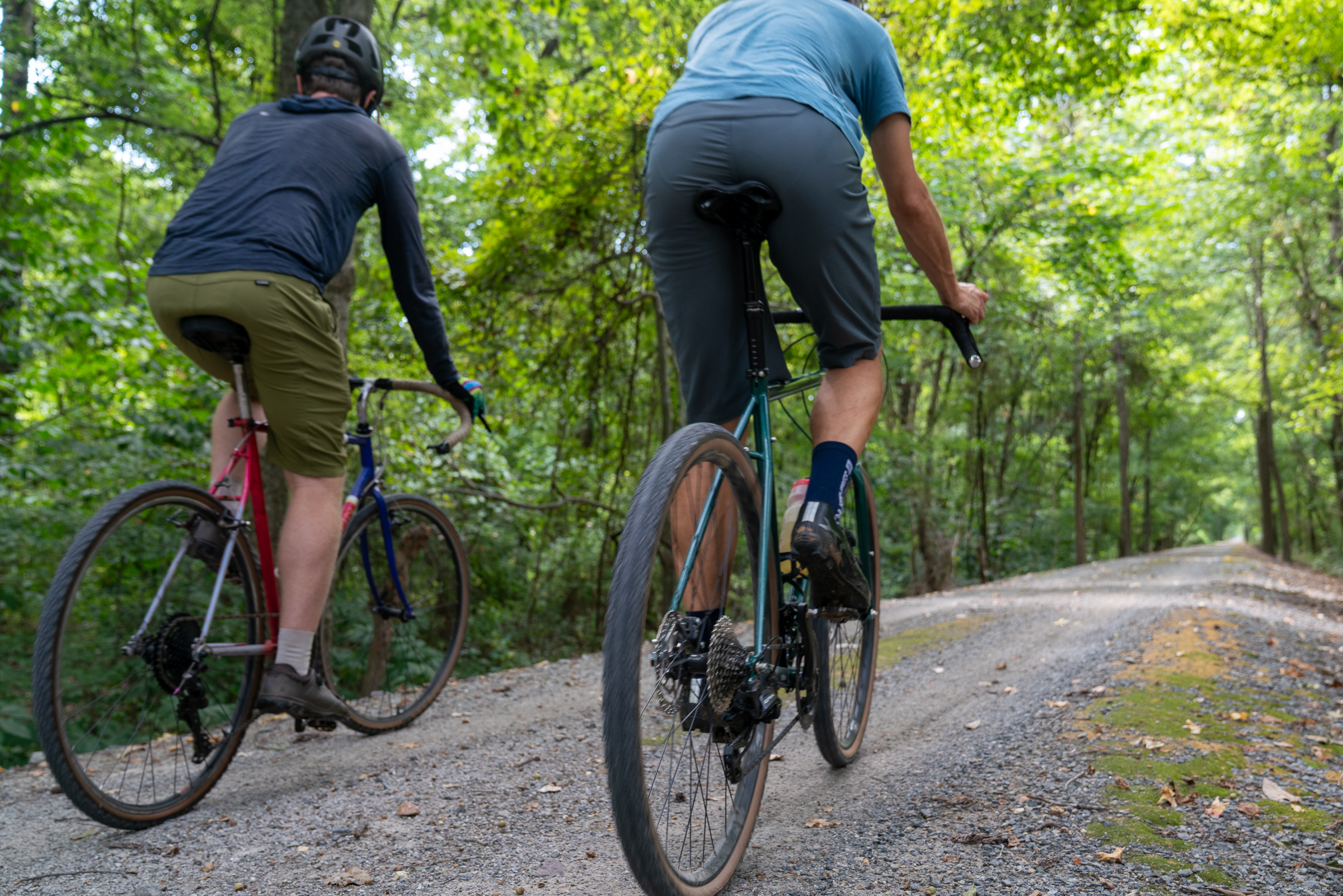
The Helena Junction trailhead, located just south of the town of Lexa (population 207), is mile marker zero. This is the northernmost point on the Delta Heritage Trail. The park’s headquarters is located just two miles down the trail in the town of Barton, and here riders will find a bike repair station, water, and access to five primitive walk-in campsites available on a first-come, first-served basis.
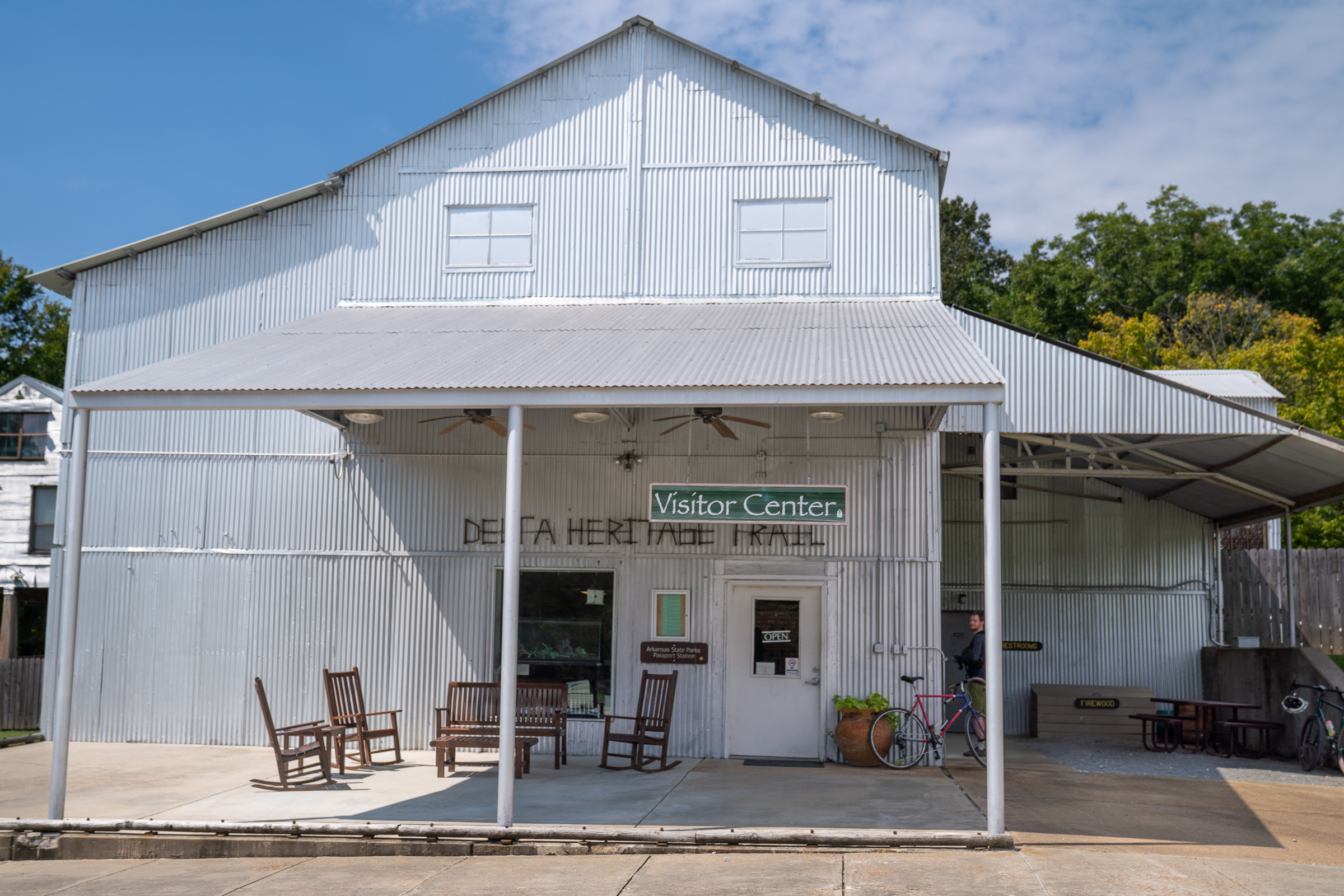
From Barton, the trail rolls through Lick Creek, where a “small skirmish” took place during the Civil War, and into the town of Elaine, the site of deadly racial violence that took place in 1919. At the trailhead in Elaine, visitors can view interpretive signage that details the town’s painful history and how the community is moving forward today. The trailhead also has a water fountain and bike repair station.
Nine miles south of the Elaine trailhead, restrooms, water, and another bike repair station are available at the Mellwood trailhead. A general store with a small restaurant is located across the street from the trailhead.
Next, it’s about 12 miles to the Snow Lake trailhead, which is essentially the end of the northern line — for now. Snow Lake is quite remote, tucked inside a bend of the Mississippi River and close to the confluence with the White and Arkansas rivers. There’s only one main road in or out of the area.
A section of the Delta Heritage Trail between Snow Lake and Yancopin, Arkansas, is currently under construction. Two massive railroad bridges are being re-purposed to carry bicycle traffic over the White and Arkansas rivers, and once complete in 2026, they will be a highlight of the route.
Picking up the trail again in Yancopin, riders roll through the small town of Watson before arriving at the Rohwer trailhead. The Rohwer Heritage Site, located nearby, was the location of a Japanese-American internment camp during World War II.
From Rohwer, it’s a 15-mile ride to the southern terminus of the Delta Heritage Trail in Arkansas City. At the trailhead, riders can access restrooms and water, along with two non-reservable tent pads available for camping on a first-come, first-served basis. In town, there’s a restaurant and a bed-and-breakfast known as the Furr House where visitors can reserve one of five bedrooms.
The Delta Heritage Trail is an excellent choice for a family-friendly bikepacking trip, or as part of a more ambitious Arkansas Delta gravel tour combining the Big River Trail and/or the Crowley’s Ridge Gravel Trail. Once complete, the Delta Heritage Trail by itself will make for an excellent out-and-back overnight bikepacking route, especially for first-time bikepackers.
Eastern Arkansas has gravel biking for days
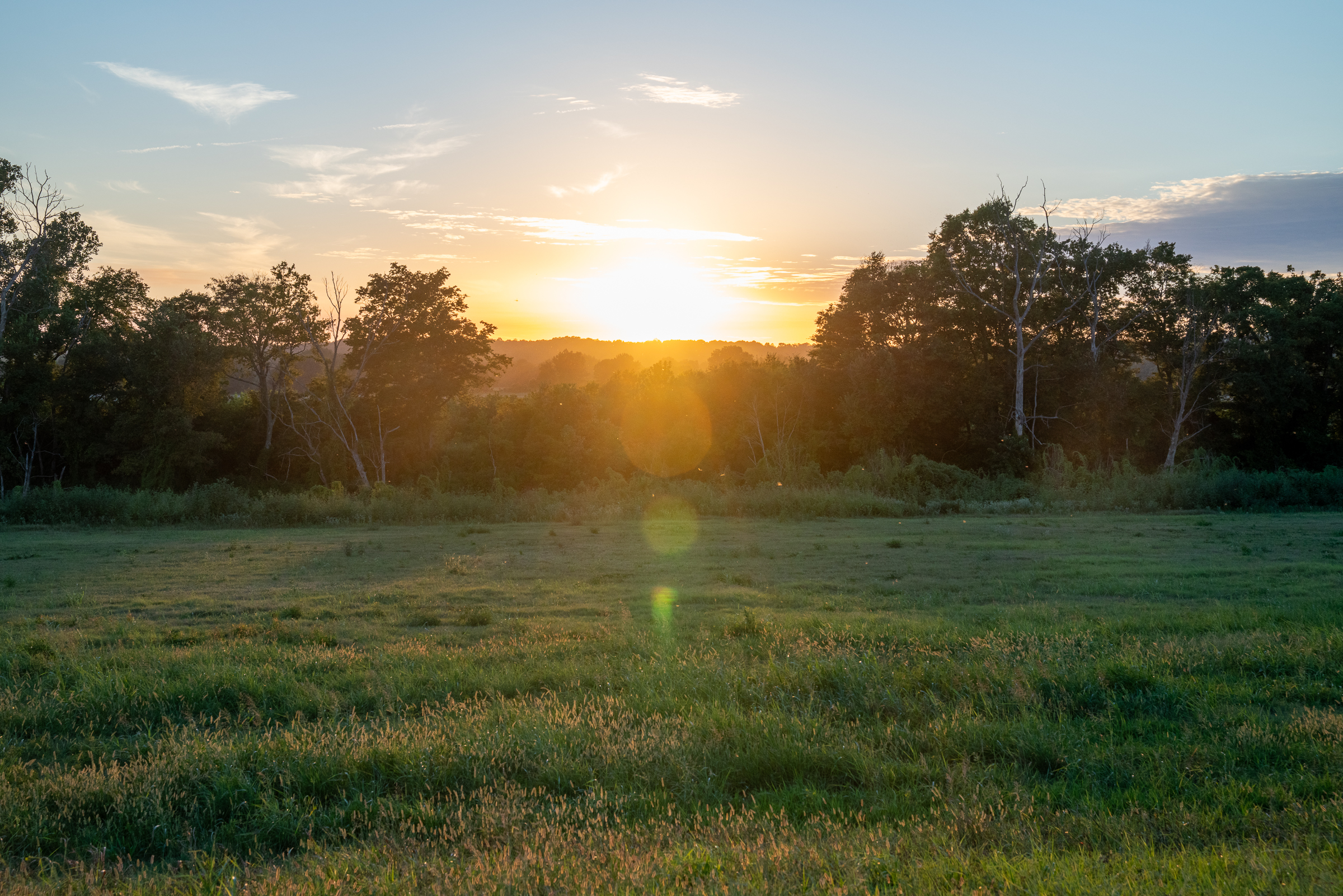
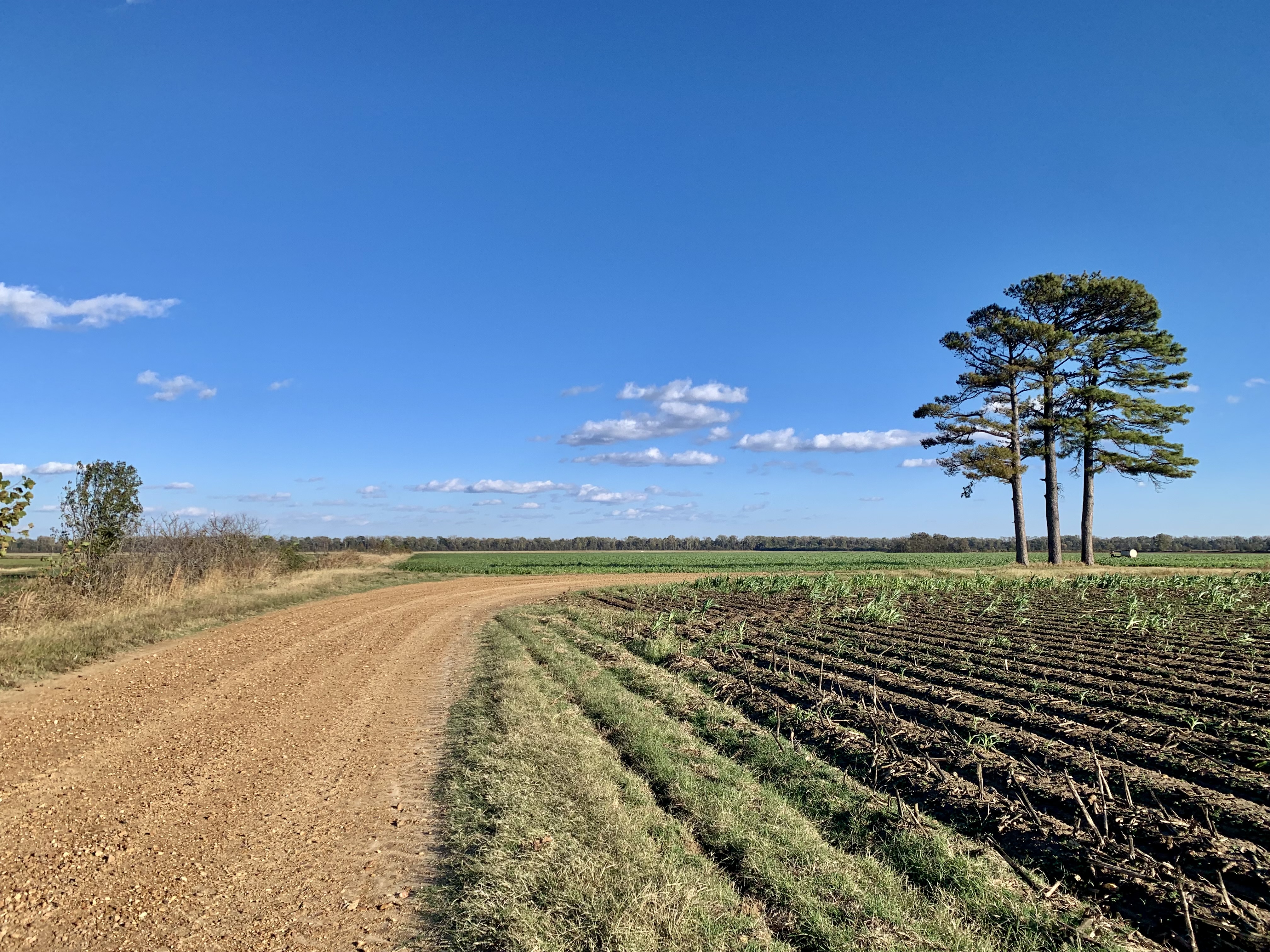
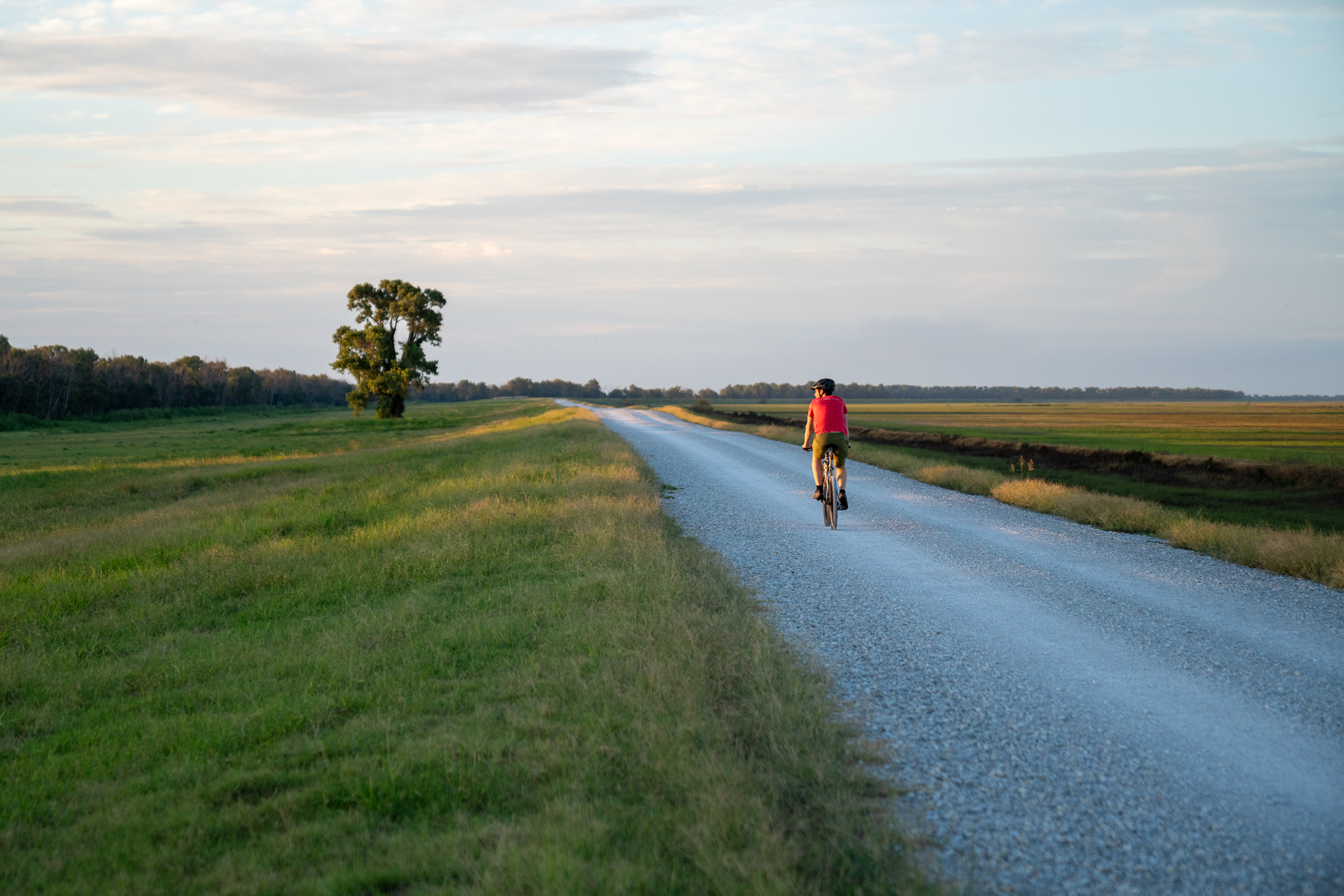
Though I highly recommend following the established gravel trails highlighted in this article or signing up for an upcoming race or festival, that’s not to say riders can’t just roll their own route in the Arkansas Delta region. Thousands of miles of low-traffic farm roads and levee trails crisscross the region, leading riders to scenic vistas and unexpected discoveries like the one shown in the photo above.
The Arkansas Delta is on its way to becoming a regional — and perhaps even national — gravel biking destination. Come with your gravel bike to see what it’s all about before the secret gets out!
Upcoming eastern Arkansas gravel races and events
- Mile Zero Delta Outdoor Festival: April 10-12, 2026
- The Skirmish: May 28-31, 2026
- Arkansas Graveler, Delta Blues Edition: October 6-10, 2026



0 Comments