

Like many small mountain towns in Oregon, the Oakridge economy was built around timber until the sawmills shut down. Years later, the struggling town realized that the same mountainous terrain it had once harvested for lumber was ripe for trail infrastructure, and it quickly became a must-ride mountain bike destination in the state.
While many seek the backcountry, primarily advanced-level trails offered in Oakridge, options like trails closer to town, climbing trails, and beginner trails are hard to come by. Oakridge Trails Alliance (OTA) hopes to change that by proposing more than 40 miles of new trails to make the established trail town even better.
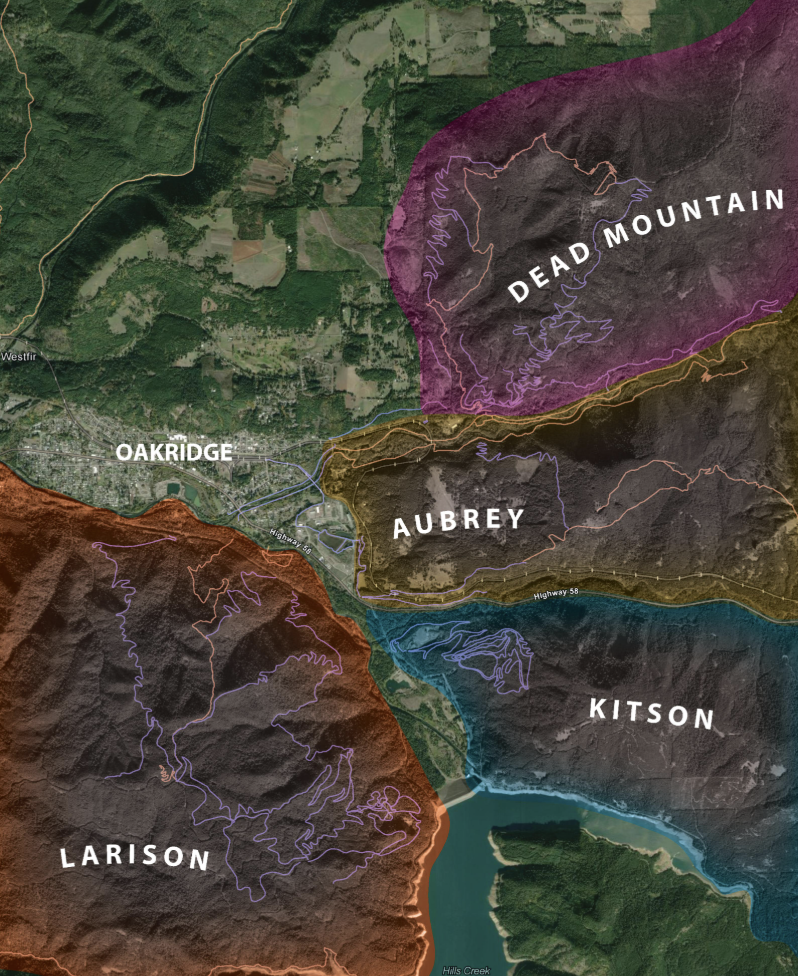
Many new trails proposed at four distinct areas in Oakridge
The East Oakridge Trails Plan identifies three established trail zones and one potential new one for trail development. As the name suggests, the four zones fall on the east side of Oakridge, with areas such as Dead Mountain, Larison, and Aubrey likely sounding familiar to those who have ridden in Oakridge.
A new zone — Kitson — would be home to a proposed bike park. “There will be everything from a toddler track all the way to a technical descent and black diamond eMTB climbing route,” Matt McPharlin, OTA Board President, told Singletracks.
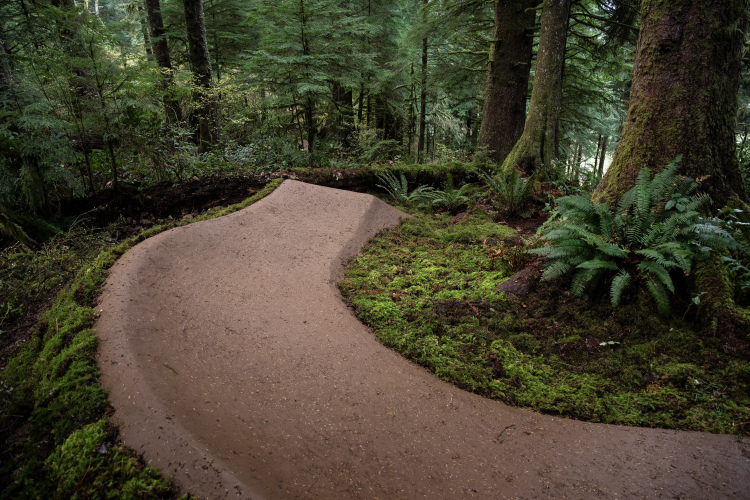
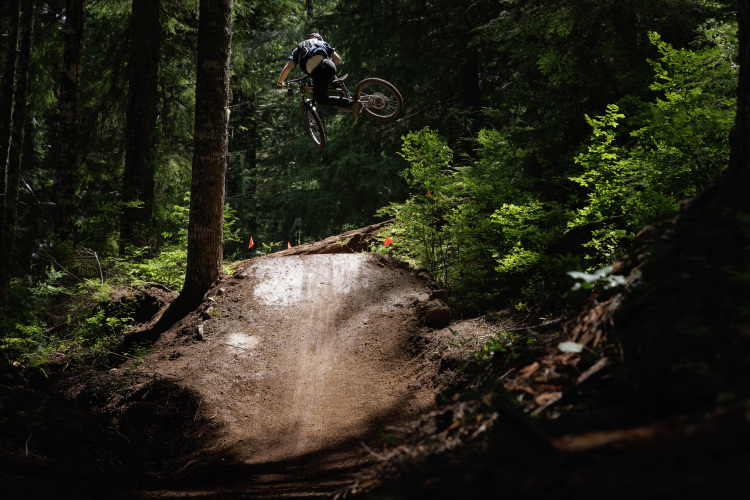
The proposal goes beyond that. OTA is proposing green, blue, and black jump/flow lines, along with a more technical black descent. The proposal also features amenities such as a trailhead gathering area to serve as a central hub.
Currently, options for families to ride are few and far between in Oakridge, unless all members can ride at a high skill level. McPharlin explained that they hope Kitson Ridge Bike Park could be a place for families to gather and for young and new riders to build skills and progress.
The East Oakridge Trails Plan also mentions significant development in two of the more popular zones in Oakridge — Dead Mountain and Larison. The areas already have popular descents that share their names. Both are blue (dark blue, really), with the Larison Rock trail dropping over 2,200 feet in three miles while Dead Mountain descends nearly 2,600 feet in six miles.
OTA proposed at least two new descending-only green trails at Dead Mountain, along with two (maybe three; it is hard to tell from the map) descending-only blue trails. This is followed by what looks to be two descending-only black trails.
At Larison, a new trail hub and skills area is proposed, along with what looks to be three “advanced gravity trails.”

Providing what Oakridge currently doesn’t have
“Currently, if you look at our ridership demographic, it’s basically all advanced riders,” McPharlin said.
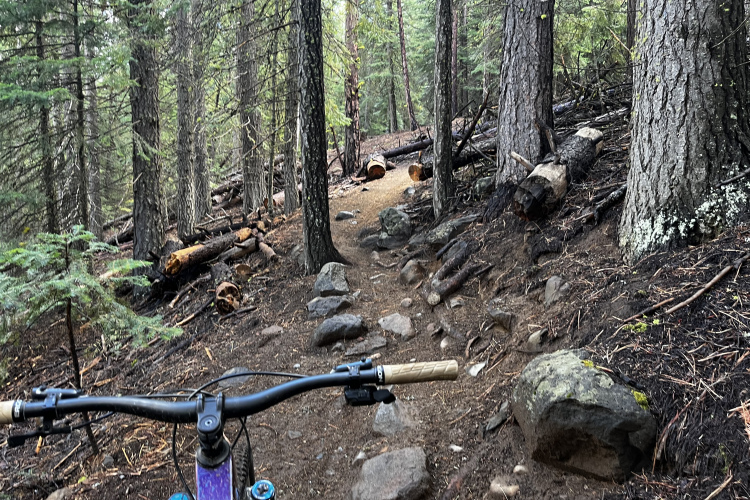
Now, to be clear, McPharlin and OTA obviously want advanced riders to keep coming to Oakridge. Much of the draw of the current trail system is built on just that: difficult trails that take a certain amount of skill to ride. People come to Oakridge for exposed bench-cut traverses, intertwined rooty chutes, and steep, rocky descents.
As someone who has ridden in Oakridge, I can say from experience that even the blues are spicy. The terrain is rugged, and the trails are fast. And while most are just a handful of miles from the town, they feel significantly more remote than you would expect.
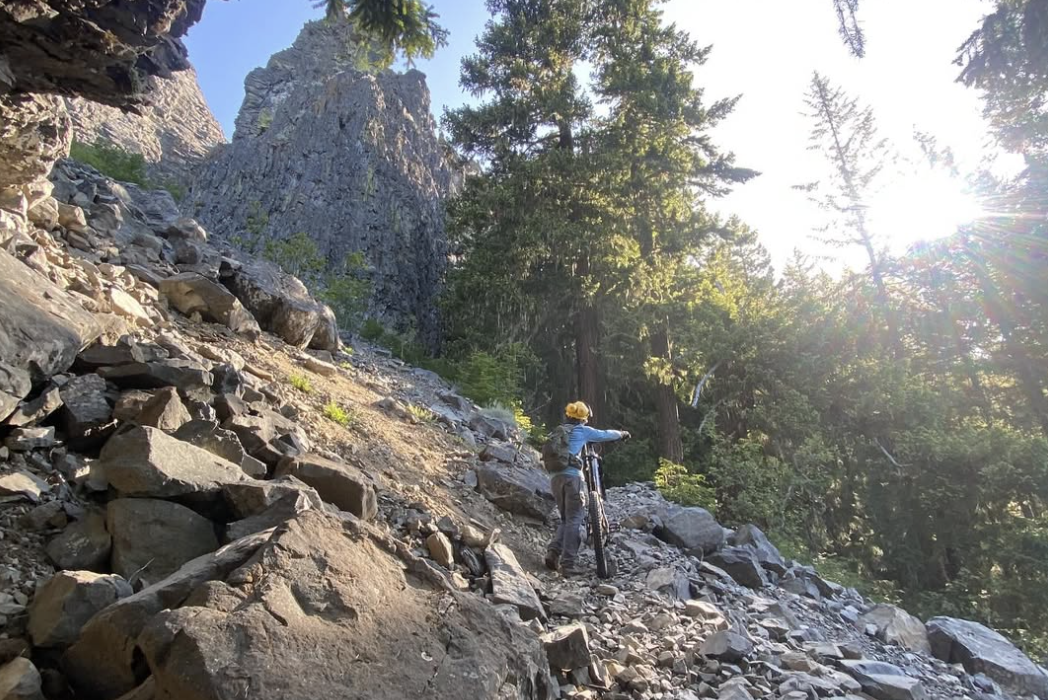
People will keep coming to Oakridge for the advanced option. But McPharlin and the folks at OTA have noticed that, even with the town’s phenomenal trails, fewer riders seem to be coming and staying for extended periods. While there may have been a mountain bike boom in Oakridge roughly a decade ago, OTA has seen the numbers slowly diminish. That initial boom likely came from what Oakridge offered mountain bikers. Now, the decline is likely because of what it doesn’t, such as beginner-friendly options like the green trails proposed at Dead Mountain.
Another thing that Oakridge is short on is adaptive trails. “Ideally everything would be adaptive,” McPharlin said, “except for probably some portion of the black trails.” OTA is factoring in adaptive ratings on the proposed trails to gauge whether an adaptive rider would need support in specific sections.
Connecting to the town of Oakridge and adding climbs
While developing the East Oakridge Trails Plan, OTA sought to connect with locals and visitors to understand what they would like to see change regarding the trails. Of those who participated, a large majority cited access to trails from town as high on the list.
The plan proposes town-connecting trails in areas like Dead Mountain, with a green trail connecting to other proposed “close to town” trails in Oakridge. Aubrey Mountain also gets a similar connection, with an additional route added to the current Heckletooth trail.
Anyone who has ridden in Oakridge knows that it is undoubtedly a shuttle town. And while the shuttles aren’t going anywhere, survey feedback indicated that people want more direct climbing options to get them off the shuttle roads. So, OTA is proposing more singletrack climbs.
Both Dead Mountain and Larison have multiple proposed climbs, both green and blue. McPharlin explained that these will be “multi-use,” meaning bikes go up only while other user groups climb and descend.
That said, the plan still looks out for the shuttle companies, better establishing three drop-off points in the Larison area. McPharlin also mentioned that OTA will likely never add climbing routes to the even more advanced areas of Oakridge, such as Hardesty Portal.
Staying an IMBA town
In 2015, IMBA recognized Oakridge as a Gold-Level Ride Center. They’ve carried this recognition for over a decade, but know work needs to be done to maintain a trail town designation.
“[IMBA} basically gives you a recipe,” McPharlin explained. “You’ve got to have a percentage of beginner, intermediate, and advanced trails. You’ve got to have backcountry; you’ve got to have front country. You’ve got to have pump tracks, bike parks, purpose-built trails, machine-built trails, flow trails, jump trails, adaptive trails.”
Aside from maintaining IMBA recognition, OTA recognizes that people are going elsewhere to find what Oakridge lacks. OTA and McPharlin believe that Oakridge can provide a unique trail experience for every rider, from every background.
“Trails are that little ribbon of dirt that connects all of us as communities,” McPharlin added.
The news stinks. Why not follow Singletracks on Google News to bring more joy to your day?


0 Comments