

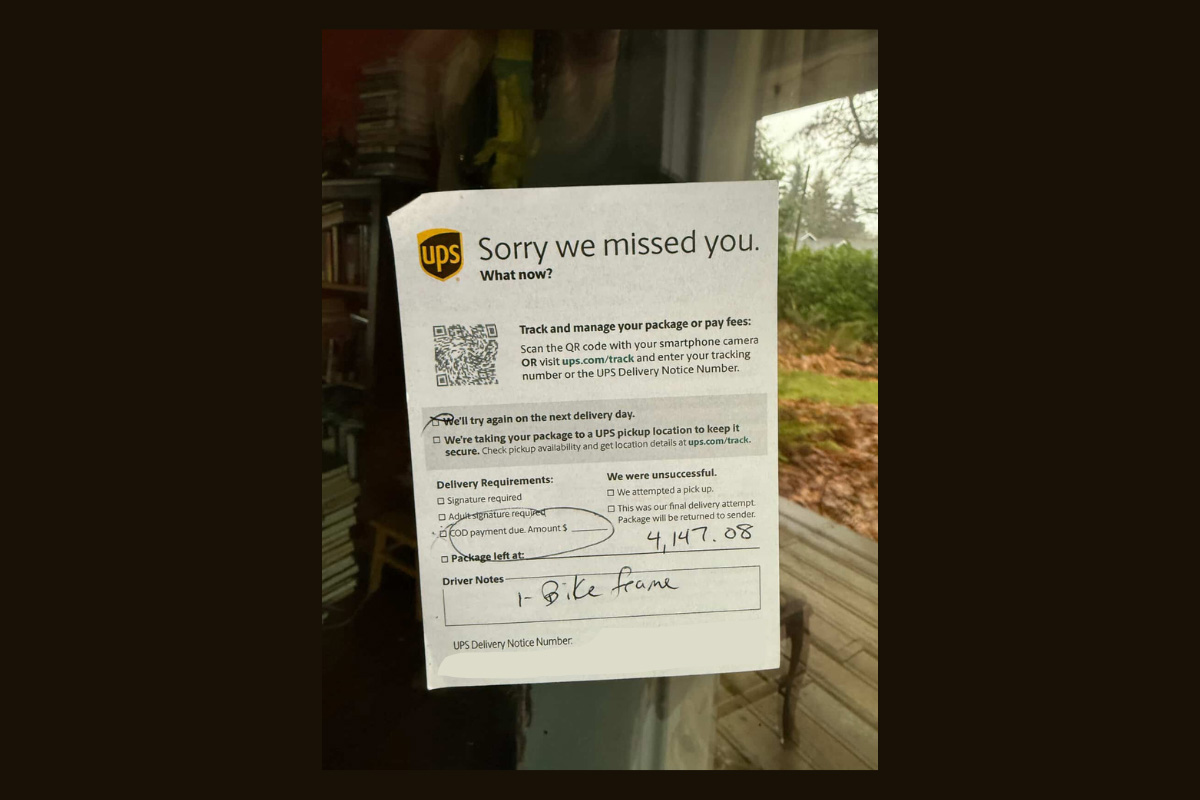
Some bike buyers in the United States are getting a surprise with their new-bike-day deliveries: a tariff bill. Though the bill itself may not come as a surprise, the amount can be shocking, especially when the tariffs aren’t calculated correctly. The complexity of the global bike industry adds to the challenge of properly assessing and collecting tariffs, though buyers of other goods are facing similar hiccups, too.
A $4,147.08 tariff for a steel bike frame
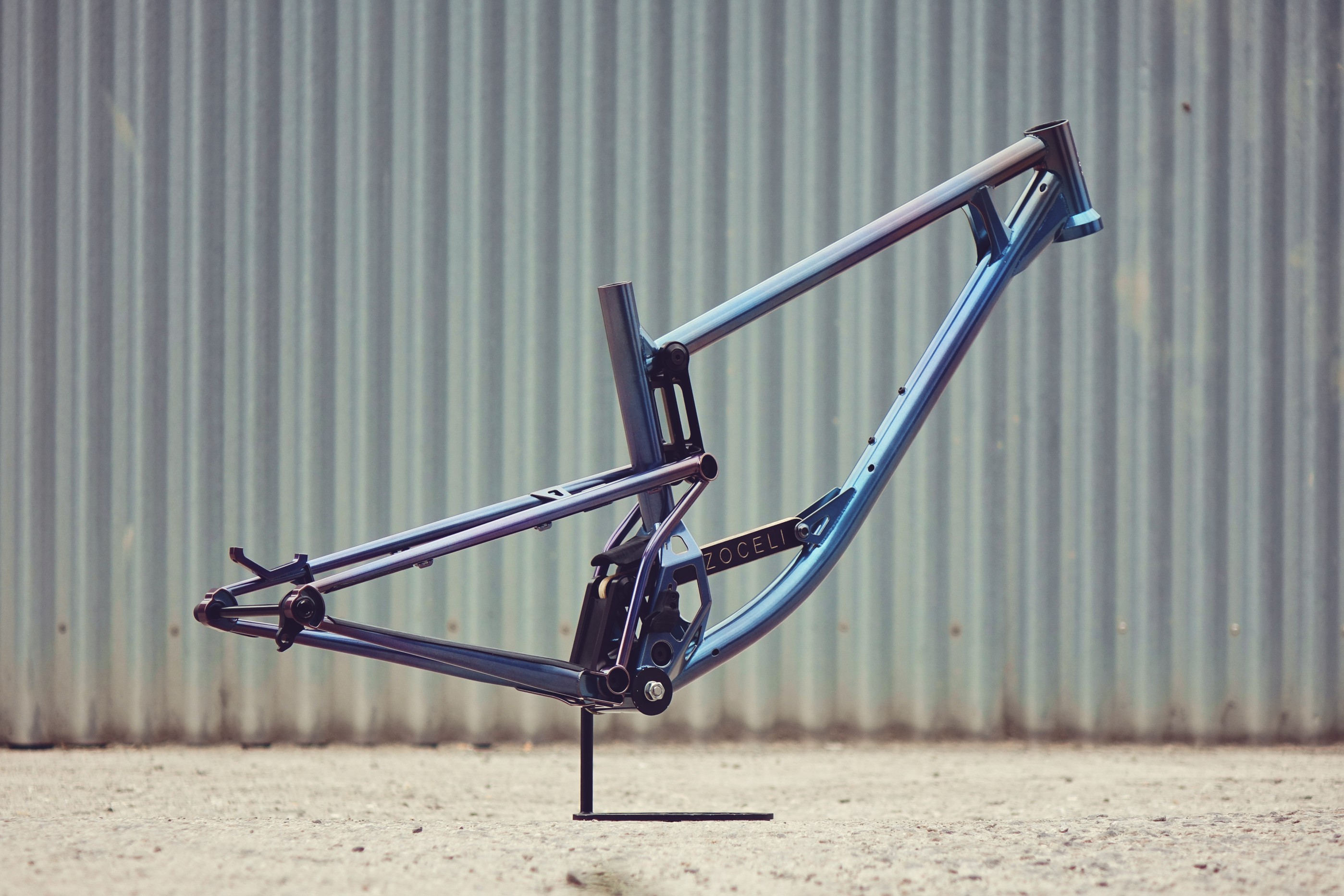
Gabriel Tiller placed an order for a gorgeous Zoceli Naosm mountain bike frame to replace a bike that was stolen from him last summer. The new frame, handmade in the Czech Republic using chromoly and Columbus steel tubing, is priced at around 2,800€, depending on options.
But when the bike arrived this week, he was told he owed $4,147.08 to cover the tariffs.
“[I] actually had the box in my hands yesterday, but they loaded it back on the truck,” Tiller told Singletracks in an Instagram message. Given the price of the bike and the origin of the frame, he estimates the correct amount should have been between $300 and $400. Tiller lives in Oregon and heads the Orogenesis Collective, a group that is working to map and promote a long-distance bike route from Washington State to Baja, Mexico.
Though the amount Tiller was told he owed was almost certainly miscalculated, shipping companies are unable to release a package until the tariffs have been paid in full. Tiller has been in touch with UPS customer service to straighten out the issue, which he’s hoping is resolved by correcting the trade classification used for the shipment and recalculating the tariff that’s owed.
Small businesses struggle to comply with new regulations
Small bike businesses outside the USA are working to adapt to updated US tariff regulations. At the heart of each tariff calculation is a Harmonized System (HS) Code that tells customs agents about the items in each shipment. The system is standardized around the world, and countries can add their own extensions. For example, 8714.91.10 is the international harmonization code for bicycle frames, while 8714.91.30 is the code for forks.
Customs agents use the harmonization code, the value of the items being shipped, and the origin of each item to calculate a tariff amount.
Larger and more experienced international sellers typically calculate tariffs on their own, and many collect the tariff at the time of sale. Some of these sellers build the tariff into the price shown at checkout, while others list it as a separate line item. In either case, buyers know the total amount they are paying for an item. The seller collects the tariff payment from the customer and pays the tariff at the time of shipment. Then, carriers like UPS deliver the package as usual.
If a seller prefers, they can provide their shipping carrier with the harmonization codes, value of the goods, and country of origin information, and the carrier will calculate the tariff, which they then collect at the time of delivery. This generally works fine — unless the information provided leads to an incorrect tariff calculation, or if a buyer is unaware that tariffs haven’t already been paid.
The Zoceli website clearly states that shipping and customs fees are not included in the price of their bikes, and buyers “can find out the amount of customs fees according to the customs conditions in your country.”
Tiller, for his part, knew to expect an additional tariff on his order, but he wasn’t expecting such a ridiculous fee. If he can’t get the fee straightened out, he tells Singletracks he’ll be forced to have the frame returned to Zoceli. Unfortunately, this is typically the buyer’s best option; paying an incorrect tariff and trying to resolve it after the fact risks losing the buyer’s cash, which in Tiller’s case, represents thousands of dollars.
Tariffs are nothing new, and over time, buyers and sellers are sure to adapt to the latest regulations and future changes. But that’s not to say mistakes won’t be made. The key for bike buyers is to be prepared for tariff fees and to ensure that what you’re being asked to pay is the correct amount.
Have you experienced an unexpected tariff fee on a bike order this year? Tell us about it in the comments below.






8 Comments
Dec 10, 2025
Dec 11, 2025
Dec 11, 2025
Dec 11, 2025
Dec 11, 2025
Dec 11, 2025
Dec 10, 2025
Dec 16, 2025
On another note these tariffs are not even legal since as far as I know congress has not approved it. I understand Costco and others have litigation in progress to put in check these illegal tariffs. When they win, i wonder how or even if we would all get our money back? Not holding my breath, but paying upwards of $1000 in tariffs this year so far is not my idea of a good time... and that doesn't even include what I've paid indirectly through price increases of everyday items. Don't let them fool you.. a Tariff is effectively a tax.