
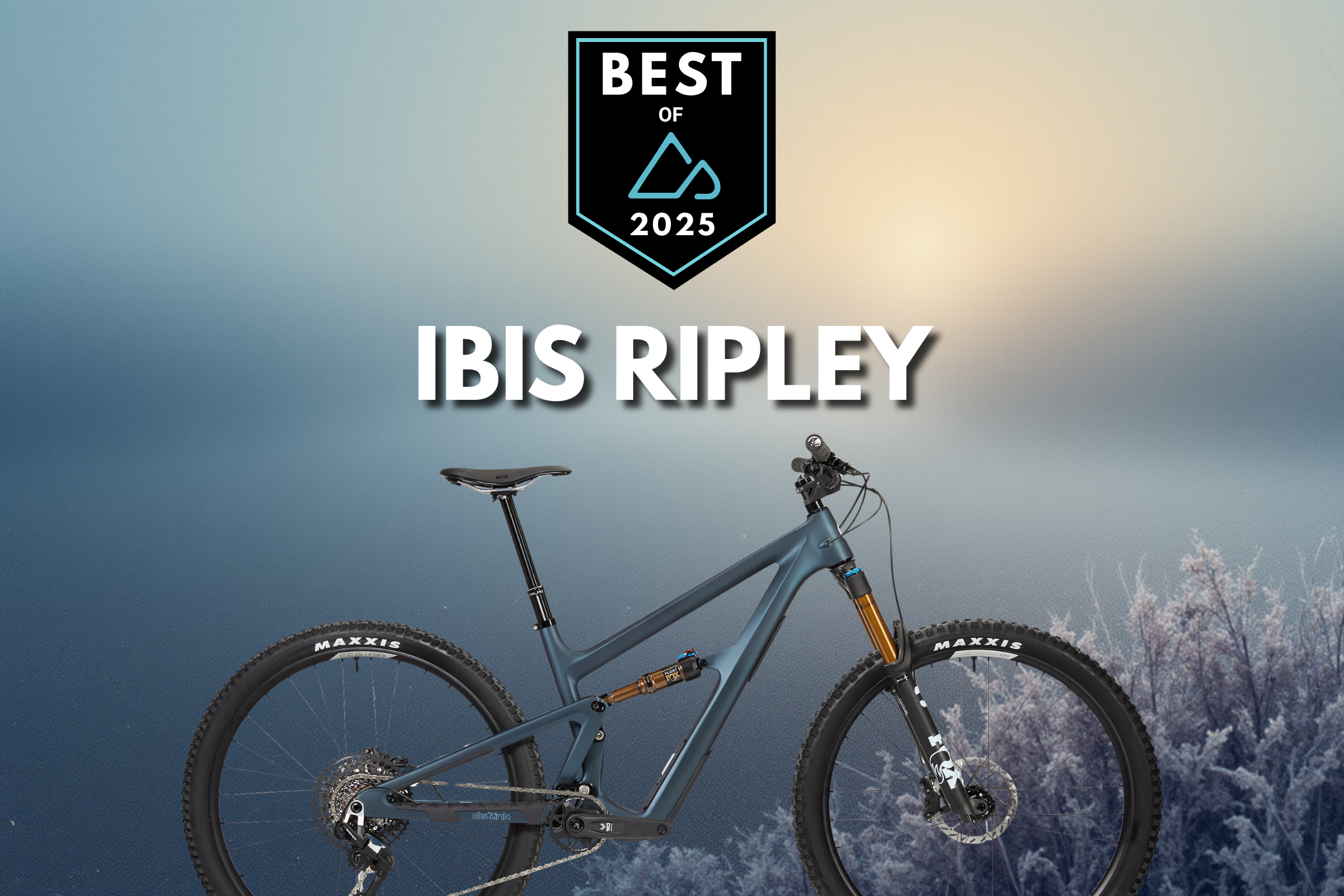
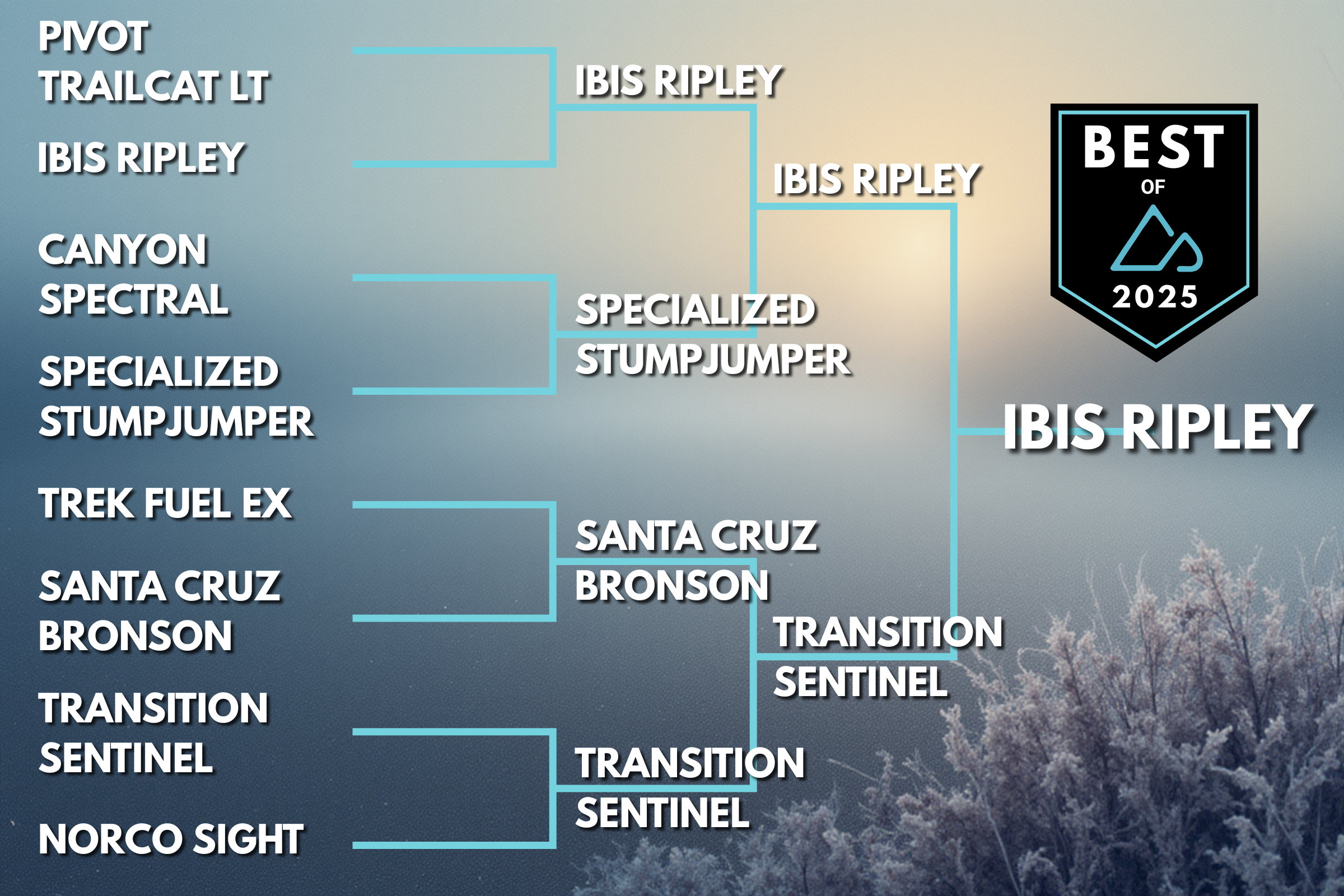
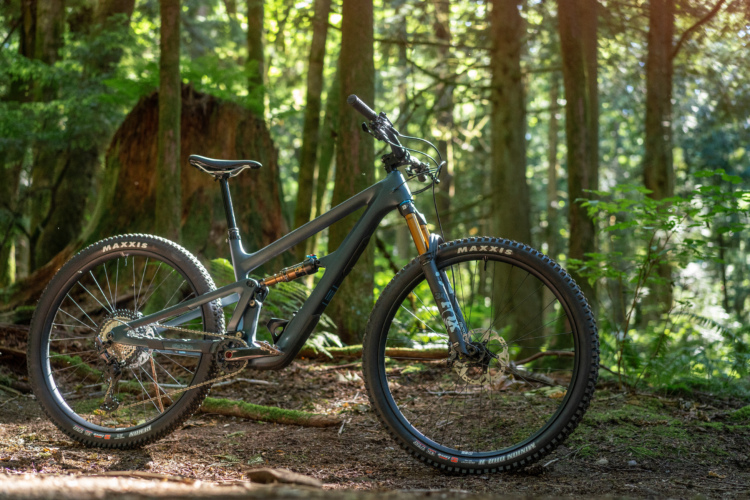
Singletracks readers have spoken. Over multiple rounds of competition and thousands of votes cast, the Ibis Ripley is the 2025 Trail Bike of the Year. With 140/130mm of suspension travel front/rear, a DW-Link suspension design, and both aluminum and carbon models to choose from, the Ibis Ripley is one hell of a bike. And yet somehow, it barely made it past the all-new Pivot Trailcat LT in the first round.


Readers were torn between the Ripley and the Trailcat LT, with just a few votes separating the two. Both bikes utilize the DW-Link suspension design, and both offer less than 140mm of rear suspension travel, the lowest among all the bikes in this year’s tournament. Given that the 130mm Ripley won the whole thing, it would be interesting to see how the Trailcat LT would have fared against some of the longer-travel trail bikes in the competition.
Perhaps what gave the Ripley an edge over the Trailcat LT — upgraded suspension components at a similar price point — is what helped it defeat the Stumpjumper and Sentinel, too. It’s hard to argue with the value Ibis offers with their builds, and giving buyers the option of an aluminum frame further broadens the Ripley’s appeal.
However, looking at value alone doesn’t tell the whole story, and quite frankly, it undersells the Ripley as a high-performance trail bike. The geometry is unabashedly long, giving riders more reach than any other bike in the competition. Over the past couple of seasons, we’ve actually seen brands pulling back on reaches, while at the same time bumping travel higher from one generation to the next. The Ripley, in its current form, sticks with more well-established trail bike norms, norms that are themselves an evolution from the previous generation.
The final matchup between the Transition Sentinel and the Ibis Ripley trail bikes was controversial, given the difference in travel numbers, especially since both brands offer separate models with 130mm and 150mm of rear suspension travel (the Ripley and Smuggler, and Ripmo and Sentinel, respectively). The difference between the Ripley and Sentinel is that the Ripley can transform into a Ripmo, though it requires a new fork, shock, and clevis, which isn’t cheap. That type of adaptability wasn’t enough for the Trek Fuel EX to win over the Santa Cruz Bronson at the other end of the bracket, but it may speak to the fact that trail riders want the best of all worlds.
In his review of the Ripley last summer, Gerow wrote, “This is a true trail bike, not one of those mid-travel rigs that can tackle all the big-bike terrain.” Indeed, this tournament shows the Ibis to be the standard bearer for trail bikes over longer-travel trail bikes that seek to bridge the gap to enduro.
What even is a trail bike?
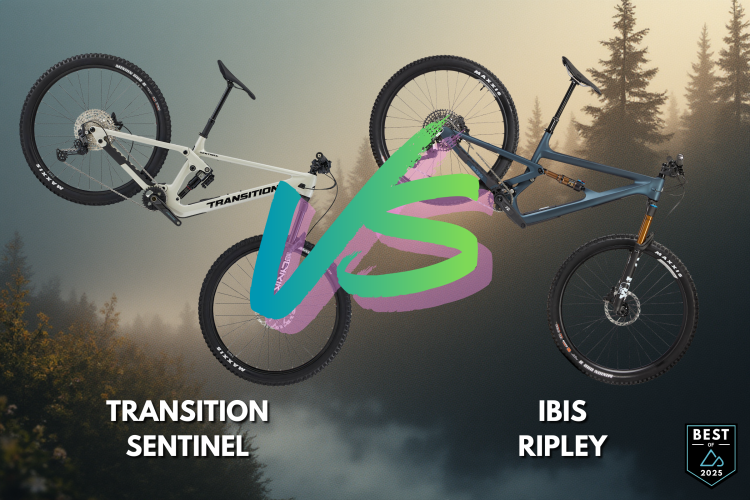
The final matchup between the Ibis Ripley and Transition Sentinel caused a real debate among readers. “How is a bike with 130mm of rear suspension travel competing against a bike with 150mm of travel for trail bike of the year? They’re way too different for both to be considered in a single category!”
One thing that’s certain is that everyone has a slightly different definition of what makes a bike a trail bike. Looking at the extreme ends of the mountain bike spectrum, it’s much easier to categorize cross-country (XC) and downhill bikes. The top cross-country race bikes have between 80-120mm of rear travel, while downhill bikes are all pretty much 200mm. Enduro bikes tend to be pretty easy to identify based on their travel numbers, which most riders and manufacturers agree start at 160mm. This number has been surprisingly stable since at least 2017.
That leaves just three multiples of ten — 130, 140, and 150mm — for trail bikes. That range is even narrower than the one for XC bikes.
| Bike | Front travel (mm) | Rear travel (mm) |
|---|---|---|
| Ibis Ripley | 140 | 130 |
| Pivot Trailcat LT | 150 | 135 |
| Canyon Spectral | 150 | 140 |
| Specialized Stumpjumper 15 EVO | 160 | 145 |
| Fuel EX Gen 7 | 150 | 145 |
| Santa Cruz Bronson Gen 5 | 160 | 150 |
| Transition Sentinel V3 | 160 | 150 |
| Norco Sight V5 | 160 | 150 |
And yet, this range feels too broad to describe ALL trail bikes. Twenty millimeters — less than an inch — makes a big difference! Depending on where you live, a 130mm trail bike is either just right, or not enough. For the latter, 150mm may be the answer. And if you travel with your bike a lot, it could be that the sweet spot for trail riding is somewhere in between.
In a way, this likely comes down to a matter of philosophy. Some believe in the quiver-killer, while others need to have a different arrow for every mission. But if you didn’t have a trail bike at all, which one would you buy first? What if you could only buy one mountain bike for all of your “just for fun” rides that don’t involve racing XC, or downhill, or enduro? That, by definition, would be the best all-around trail bike for you, the one that balances the pros and cons, the limitations and the capabilities.
Ibis Ripley v4: 2025 Singletracks Trail Bike of the Year
Singletracks readers have spoken. The fourth-generation Ibis Ripley is the 2025 bike that best balances fun and efficiency, performance and value, yin and yang. That’s not to say everyone will agree; in fact, there are a LOT of readers who told us they prefer the Transition Sentinel over the Ripley. Truthfully, any one of the eight bikes in this year’s tournament is an excellent choice.
In the end, you have to choose the bike that gives you what you’re looking for, not what a pro rider, or an editor, or what everyone else says is the best. The best approach is to compare bikes one-on-one and see which bike comes out on top.



0 Comments