

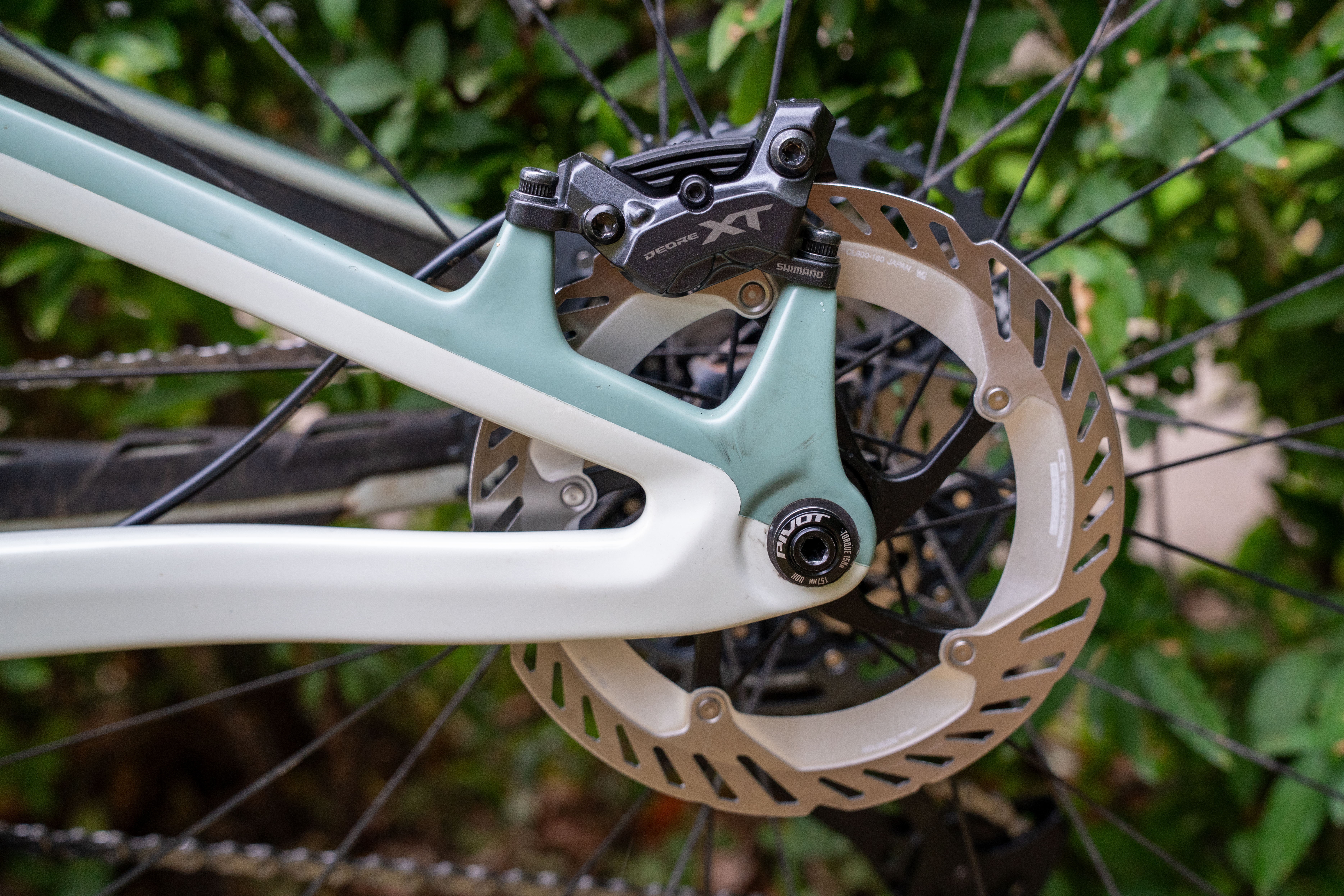
Shimano XT brakes have always been solid performers, but they’ve never been perfect. For years, riders have complained about two persistent issues: an inconsistent bite point and brake pads that rattle like a can full of pennies on rough descents. In fact, I flagged both of these issues in a previous XT brake review.
In the latest iteration of their venerable workhorse brake, Shimano listened to consumer feedback and addressed these two pain points. While the M8200 might look like an incremental update on paper, out on the trail, these refinements add up to the best XT brakes Shimano has ever made.
Shimano DEORE XT M8200 brakes key specs
- Four-piston and two-piston options; four-piston tested
- New ERGO Flow lever design
- New low viscosity mineral oil
- Redesigned brake pad pin hole
- New resin pistons
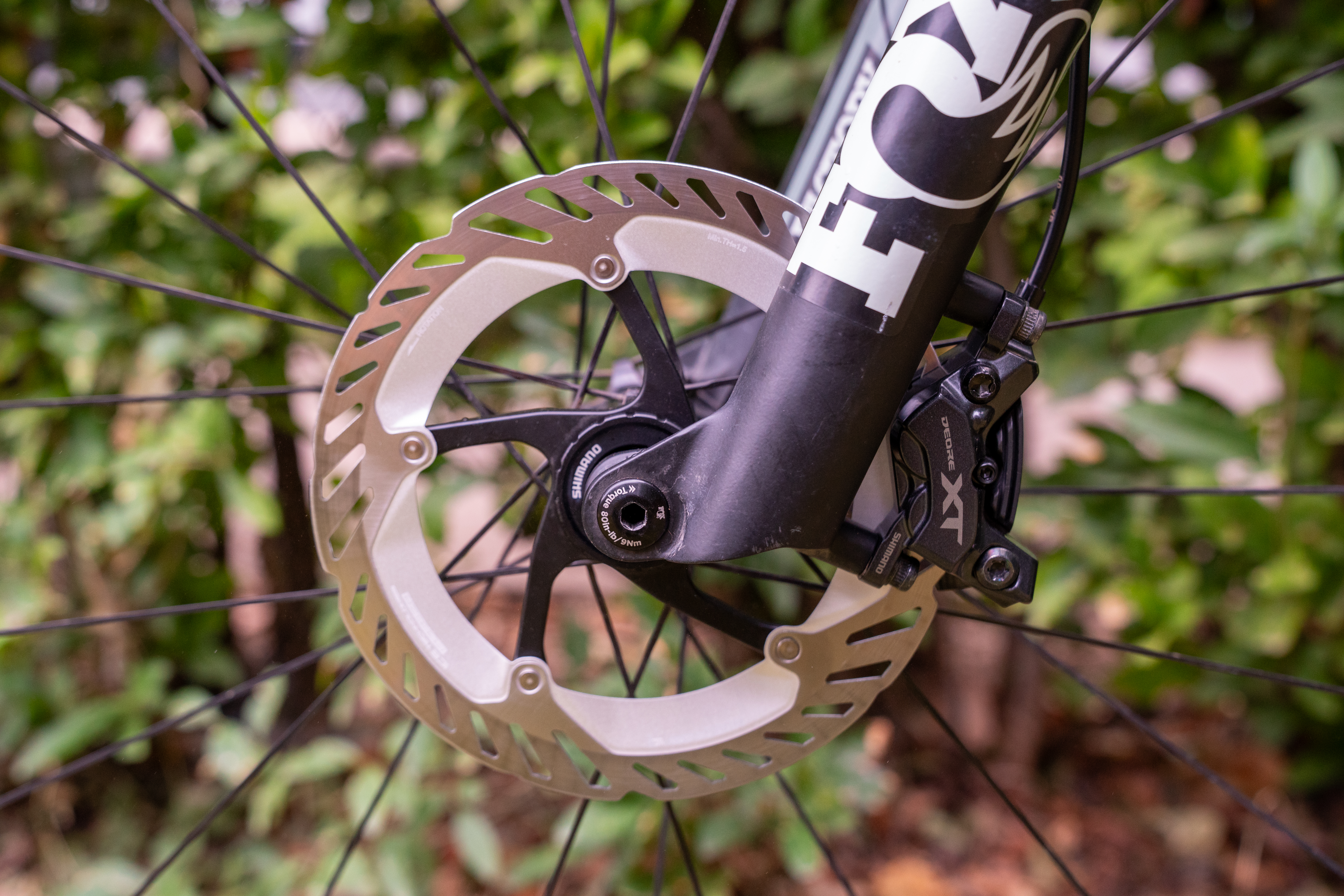
- 140mm, 160mm, 180mm, 203mm, and 220mm rotor sizes; 180mm Ice Tech rotors tested
- Claimed weight: 310g with 1,000mm hose
- Price: $265 per brake, $70 per rotor
- Buy from Jenson USA
Improved bite point consistency
The top complaint from Shimano XT brake users has long been an inconsistent bite point, and I specifically harped on this issue in my 2016 XT brake review. Shimano has heard riders loud and clear, and to address this issue, they’ve switched the brakes to a low viscosity mineral oil. “The major difference here is that the new mineral oil is more consistent over a broader range of temperatures, which translates to consistent brake performance in all conditions,” according to Shimano. Note that the new mineral oil is not backward compatible with the older brakes, as Shimano had to completely redesign the seals for the new fluid.
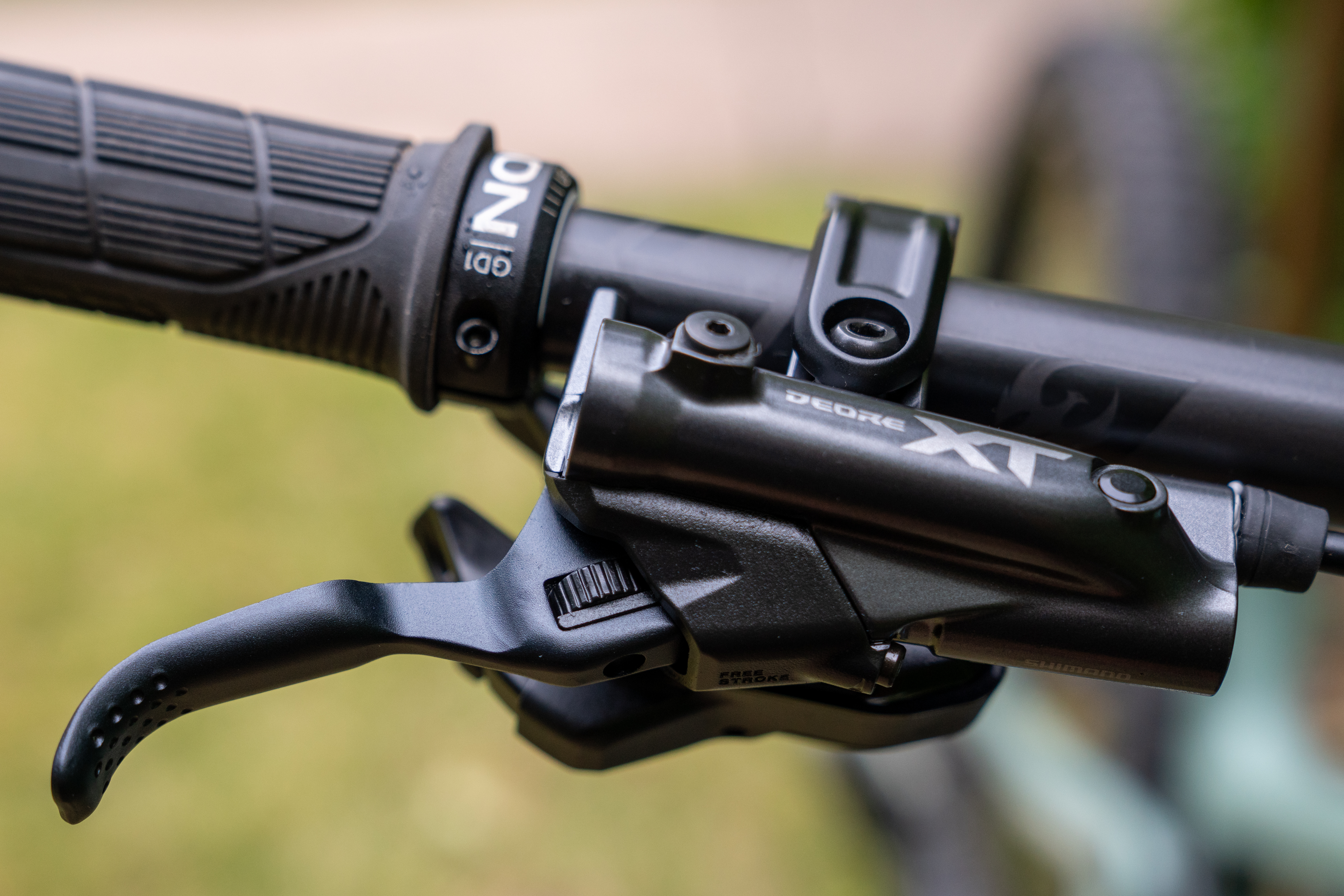
Along with the new mineral oil, Shimano has introduced a new brake lever design, known as “ERGO Flow technology.” This updated lever design “allows the pivot point of the brake lever to be as close to the handlebar as possible, which allows the sweep of the lever blade to pull in a more natural direction towards your knuckle, rather than curving slightly away from the knuckle,” according to Shimano.
Share your Shimano Deore XT M8200 brakes review
To effect this change, Shimano changed the cylinder from a push cylinder to a pull cylinder. While the servo wave mechanism and piston sizes are the same between M8120 and M8220 brakes, according to Nick Murdick, Shimano’s North American MTB Product Manager, “We squeeze a bit more power and solid feel out of the new generation with a stiffer caliper and more efficient power transfer at the lever. More of the rider’s effort at the lever is being turned into pressure on the pads now. It’s a small but noticeable difference.”
Pad rattle has been eliminated
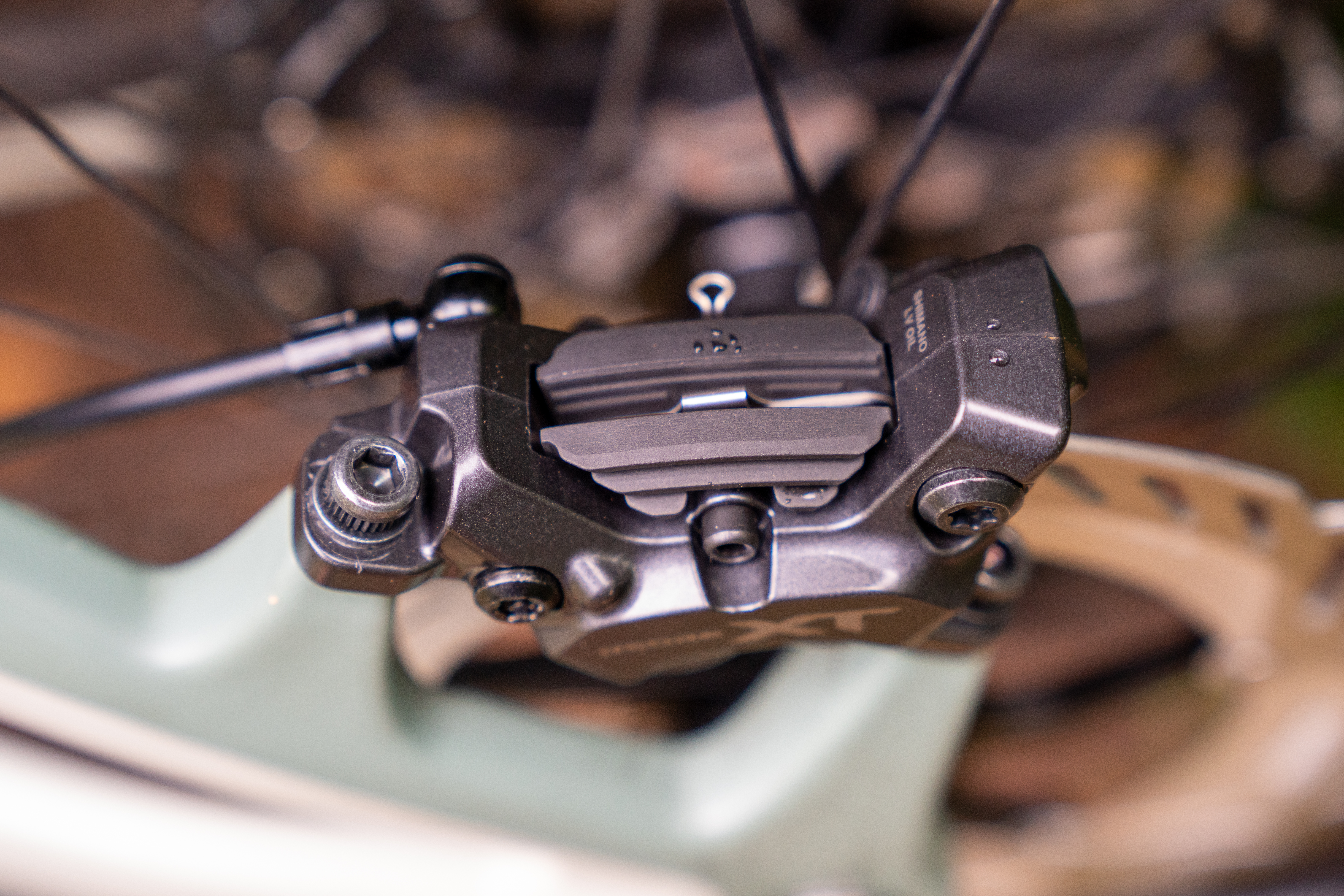
XT brakes used to suffer from brake pads that rattled in the calipers on descents, which was, frankly, pretty damn annoying. To compensate, I used to bend the brake pad springs outward, reconnect the pads, and then shove them into the calipers. This hack helped push the pads tight against the pistons and solved most of the noise issue, but it wasn’t ideal.
Shimano investigated the problem and found that the pads were rattling on the retaining pin. They’ve now ovalized the retaining pin hole and tightened the pad fitment in the caliper, completely resolving the pad rattle. But unlike the mineral oil, the rattle-free pads are backward compatible, so riders with the previous generation four-piston calipers can now enjoy a rattle-free ride.
Finally, Shimano has switched the pistons from ceramic to a resin construction. This increases the durability of the pistons, which previously could crack if a metal tool was used to spread them apart.

Out on the trail with Shimano’s latest XT brakes
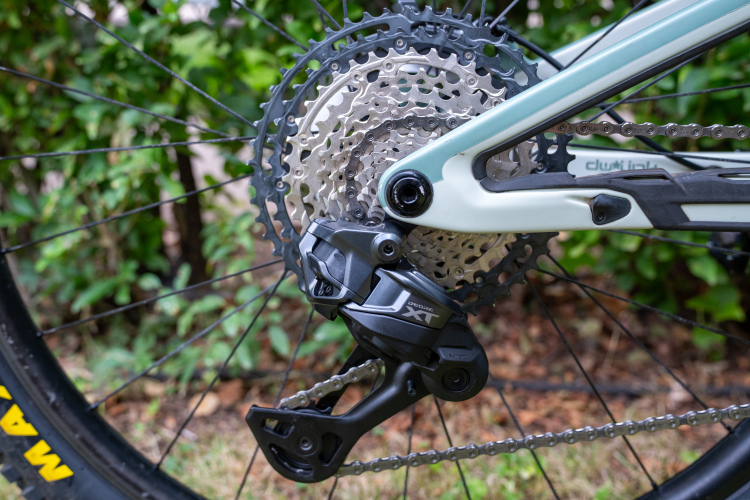
While I’ve shared all of the nitty-gritty tech details on the front end, I have a confession to make: I didn’t read any of this information when I installed the Shimano DEORE XT M8200 brakes for testing. I already had XT brakes on my 2025 Pivot Trailcat SL, and as I swapped out the brakes and drivetrain, I was most interested in the performance changes of switching from mechanical to electronic wireless shifting.
But going into this review blind provided a perfect apples-to-apples comparison from the previous-generation brakes to the current model. And my independent, unbiased test confirmed many of Shimano’s claims.
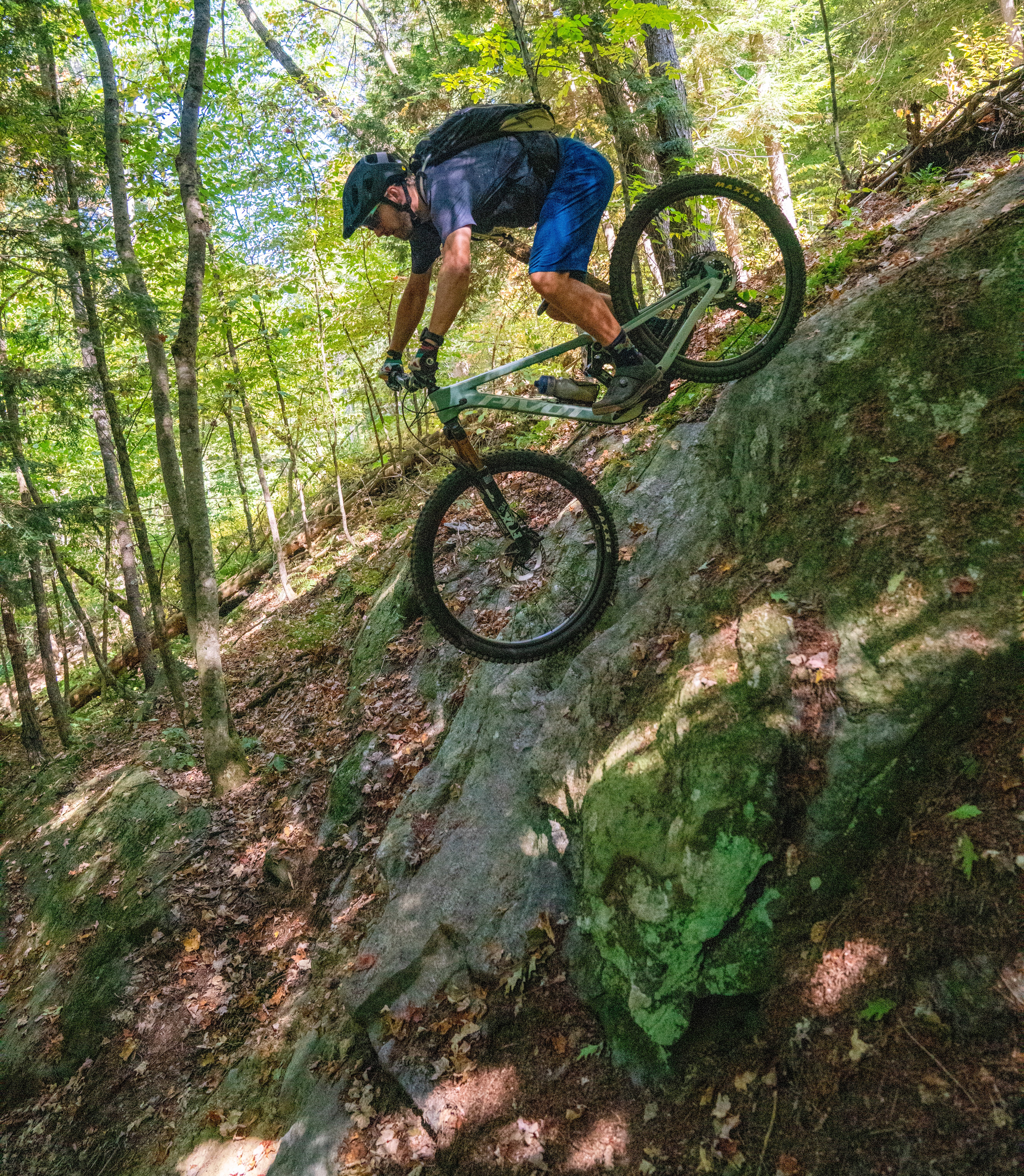
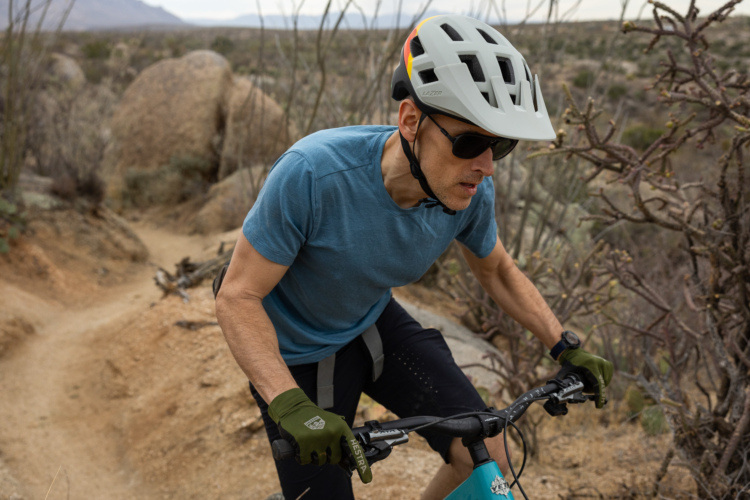
Since I installed the XT M8200 brakes, I’ve ridden hundreds of miles of gnarly singletrack ranging from the high mountains of Colorado to the deep forests of Vermont and the arid deserts of Utah and Arizona. I’ve punished the brakes on thousands of feet of steep descents in conditions ranging from dusty to wet. Despite running these four-piston brakes on a 120/140mm downcountry bike, I’ve dropped into descents that put racing stripes on the inside of my pants and made me wish I was riding my Switchblade instead. And through it all, the new M8200s were flawless.
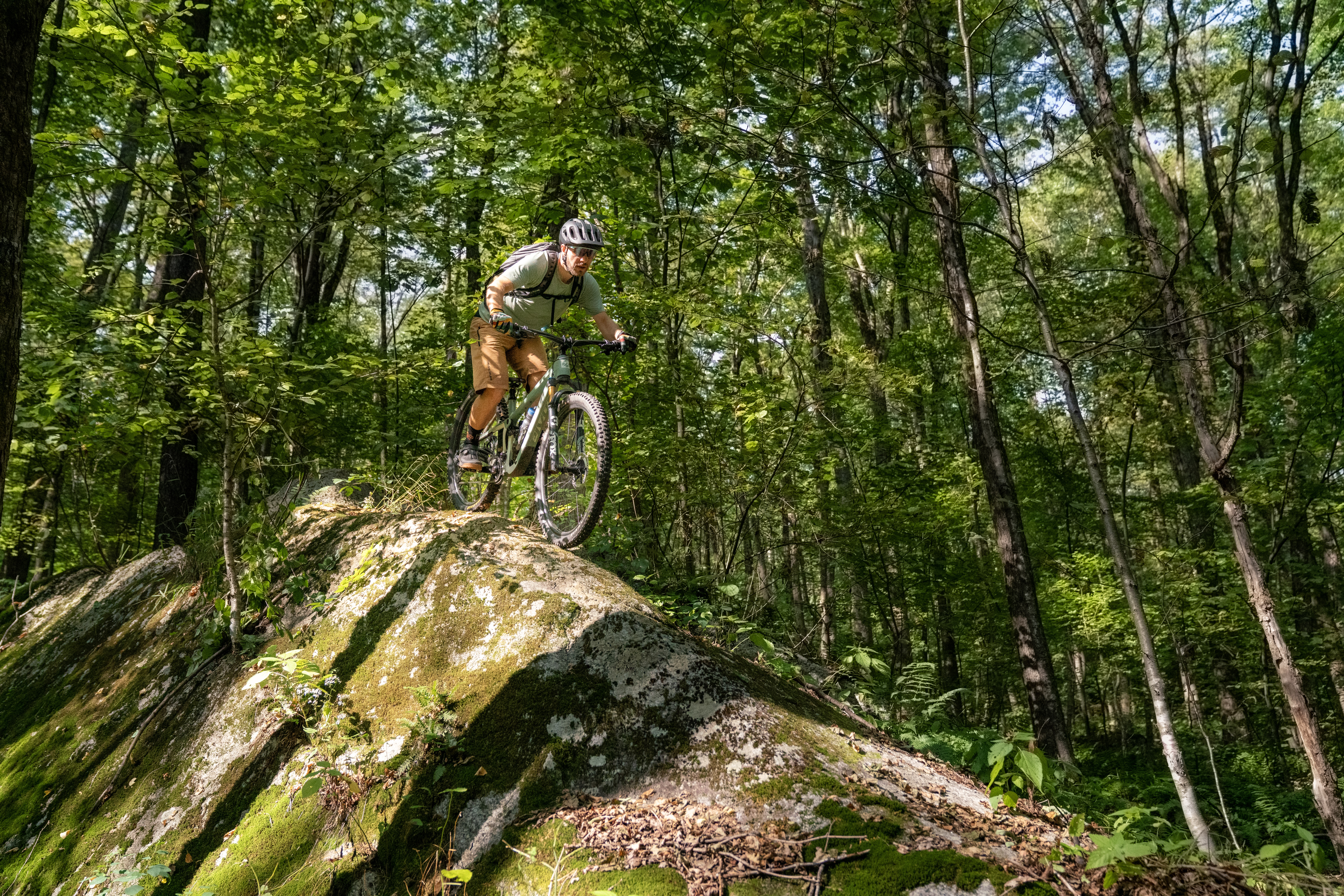
Even before digesting Shimano’s detailed technical explanations, I told Jeff in one of our meetings that the main change I could feel was “a slightly more consistent bite point.” Initially, I figured that this bite point consistency was simply due to the fresh pads and brake line fluid. Many factors affect bite point consistency, and regular maintenance is one of the most important things you can do to keep your brakes running reliably. But as the months and miles have ticked by, the new M8200 brakes have remained shockingly consistent and bomb proof with zero maintenance.
While I could tell that the lever moved slightly differently, frankly, it’s a pretty subtle change. While you can likely tell the difference when jumping back and forth between the new brakes and the previous gen, once you install the new M8200s, you simply take the change for granted.
I was excited to hear that the new M8200s have finally resolved the rattling brake pad issue, but to be honest, I didn’t have nearly as much rattling from the M8100s that came stock on my Trailcat as I did during my 2016 M8000 review. But I’ll definitely take the pad upgrade, and thumbs up for backward compatibility.
One final brake pad note: I greatly appreciate that the brakes shipped with finned metallic brake pads. I always run metallic pads for maximum stopping power, and the fins make a big difference for dissipating heat on extended descents. It’s great to see these as the default setup on the four-piston M8200s.
If there’s one thing I would change with this brake setup, it’s my front rotor. I tested the same 180mm/180mm rotor setup that came stock on the Trailcat SL, but in some situations, I found myself outriding the brakes by coming into corners faster than the brakes could shed speed. I now plan to bump the front rotor up to a 203 to compensate. In my opinion, this says more about the capability of the Trailcat, even with a mere 120mm of rear suspension, to punch way above its weight class in technical, high-speed terrain than it does about the XT brakes.
Pros and cons of Shimano Deore XT M8200 brakes
Pros
- Top-notch bite point consistency
- Great brake lever ergonomics
- Low maintenance
- Rattle-free brake pads
Cons
- None noted

Bottom line
Going into this back-to-back brake test completely blind was an eye-opening experience. Shimano has actively listened to feedback from riders and reviewers like myself and diligently worked to resolve their issues. With the new XT M8200 brakes, they’ve fixed all of the major complaints from riders around the globe.
With such fantastic performance, I can unequivocally recommend the latest XT brakes for trail bike use.
A year ago, I raved about SRAM’s Maven brakes, calling them “the standard by which all mountain bike brakes will be measured.” So how do the new XT brakes measure up to the Mavens?
Two differentiators are the weight and the price: the XT brakes weigh a claimed 330g with a 1700mm hose for the rear brake, while the rear Maven weighs a claimed 362g. In addition, the MSRP for the SRAM Maven Ultimates has risen to $330 per brake, compared to Shimano XT’s $265. While perhaps the XT brakes don’t offer quite as much raw power as the Mavens, with the right rotors, there’s plenty of stopping power to be had! And at 32g less weight and $65 less per brake, you’ll save both weight and money when buying the XT M8200s.
That combination is tough to beat.



7 Comments
Dec 14, 2025
Dec 15, 2025
Dec 13, 2025
Dec 13, 2025
Hydraulic brakes are not rocket science. Many other companies have been providing non-wandering, non-rattling brakes for decades.
What a joke. But hey, it's the mtb industry. All hype, no brains on the consumer's part.
I'll be surprised if the resin pistons last anywhere near as long as ceramic ones.
Tell me again why coated steel isn't good enough for mtb, but my motorcycle can stop from 250kph over and over with plated steel pistons?
Dec 15, 2025
The best new feature is that the bleed nipple is recessed and there is a separate screw that open the circuit when bleeding, so no more twisting the Syringe hose when opening and closing. Makes things very easy…
Dec 15, 2025
Dec 15, 2025