
Last summer Shimano announced their most affordable wireless electronic mountain bike drivetrain yet, Deore Di2. Dropping at the same time as the mid-range workhorse XT group, Deore was overlooked by many riders, myself included. Since the beginning of the year, however, I’ve been testing Shimano Deore Di2 on my eight-year-old hardtail, and it’s proven to be a worthy upgrade.
Shimano Deore Di2 drivetrain key specs
- Weight: 601g (derailleur and shifter)
- Price: $650
- Buy from Performance Bike (on sale for $534.87 at time of publication)
A smooth upgrade path to wireless electronic shifting
I decided to test the Shimano Deore Di2 drivetrain on my 2018 Orange P7 hardtail, a bike that has several thousand miles on it and that had been running a mechanical Deore drivetrain for many years. I chose the P7 because a Di2 upgrade promised to be simple: just replace the derailleur and shifter, and keep the cassette, chain, and crankset. Plus, since the bike doesn’t have UDH dropouts, SRAM’s Transmission electronic drivetrain wasn’t an option.
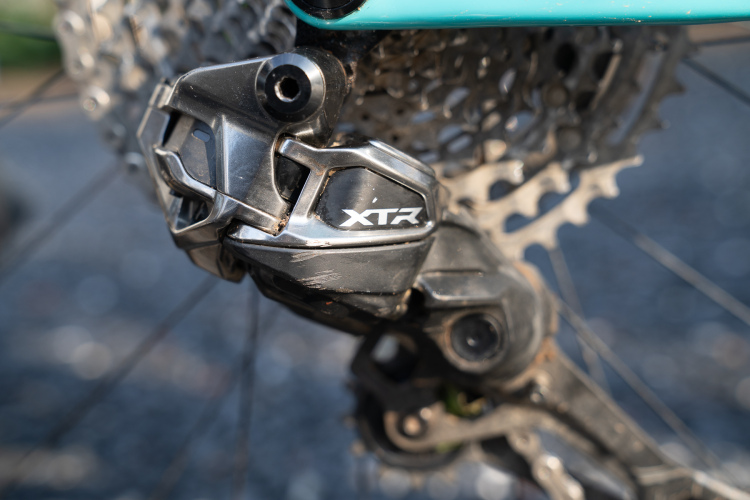
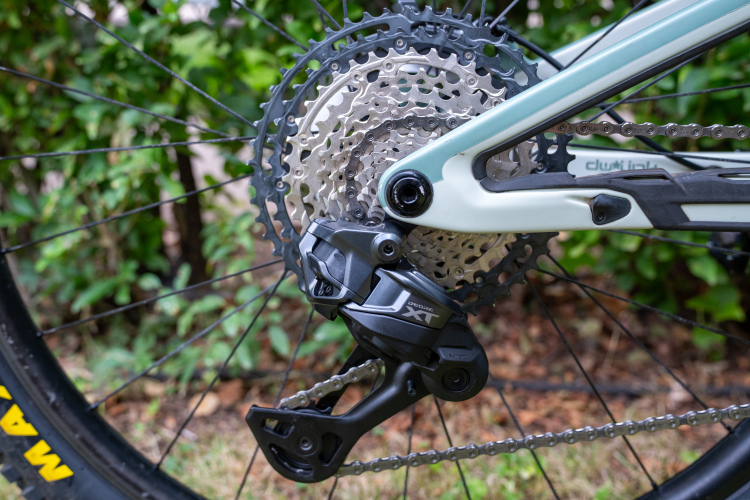
Unlike the higher-priced Di2 XTR and XT derailleurs, the Di2 Deore derailleur is only offered with a long cage. This means it’s designed to work with wide-range, 12-speed 10-51T cassettes only. (There is a wired e-bike version of the Deore Di2 derailleur that’s designed for 11-speed cassettes.) With XTR and XT derailleurs, buyers can select a medium cage that works with tighter 9-45T cassettes. Most riders will prefer the 10-51T cassette since it offers a slightly wider gear range.
Fortunately, my mechanical Deore setup was already running a 10-51T cassette, so all I needed was a Di2 derailleur and shifter to go wireless. Since it had been a while since I replaced my chain, I decided to put a new one on at the same time, though this isn’t necessary for compatibility.
Reviewer profile height: 190cm (6’3″) weight: 75kg (165lb) testing zone: Southeast, USA
Perhaps the most time-consuming part of the Deore Di2 installation was removing the mechanical system. I threw a fresh derailleur hanger onto my frame to ensure everything was to spec, and attached the new derailleur. Then I mounted the shifter using the I-SPEC EV hardware and installed the chain.
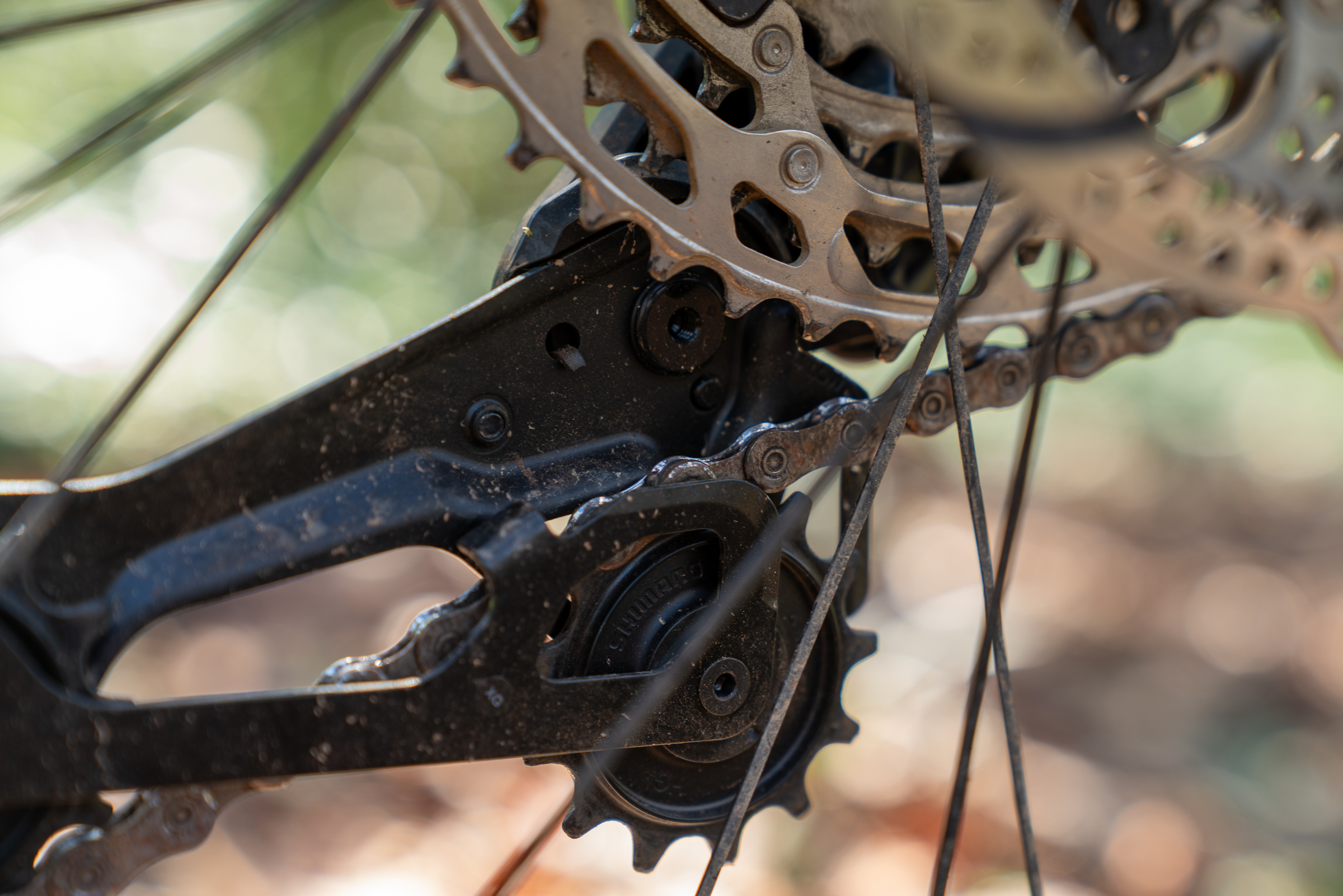
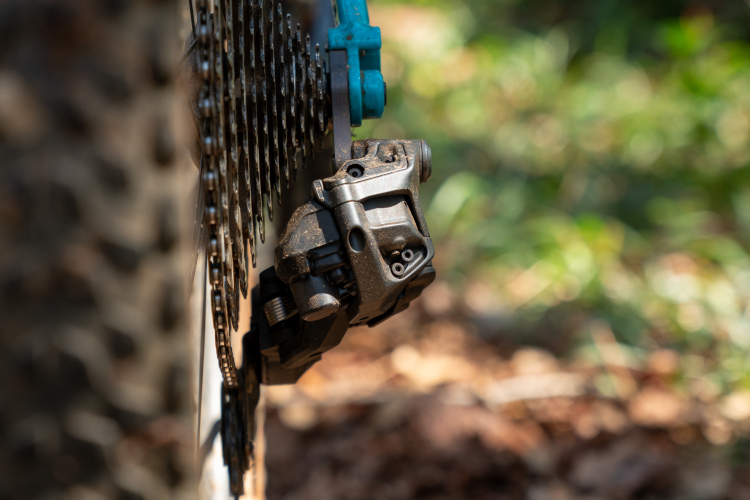
Right away, the derailleur shifted surprisingly smoothly, though I needed to make a couple of micro-adjustments using the trim function built into the derailleur. Shimano says the outer plate of the derailleur cage should align “with the tip of the tallest tooth on the largest sprocket” of the cassette. After adjusting the B-screw to its limit, my derailleur was still a couple of millimeters short of proper alignment. Ultimately, this didn’t affect my shifting over months of testing, though first gear does feel a little crunchy. (More on this later.)
I also needed to adjust the high and low limit screws. Shimano says to set the screws so they just touch the limit stoppers. That’s simple enough with little ambiguity; however, getting myself into a position where I could actually see the limit stoppers required lying flat on the ground beneath my work stand with a flashlight in hand.
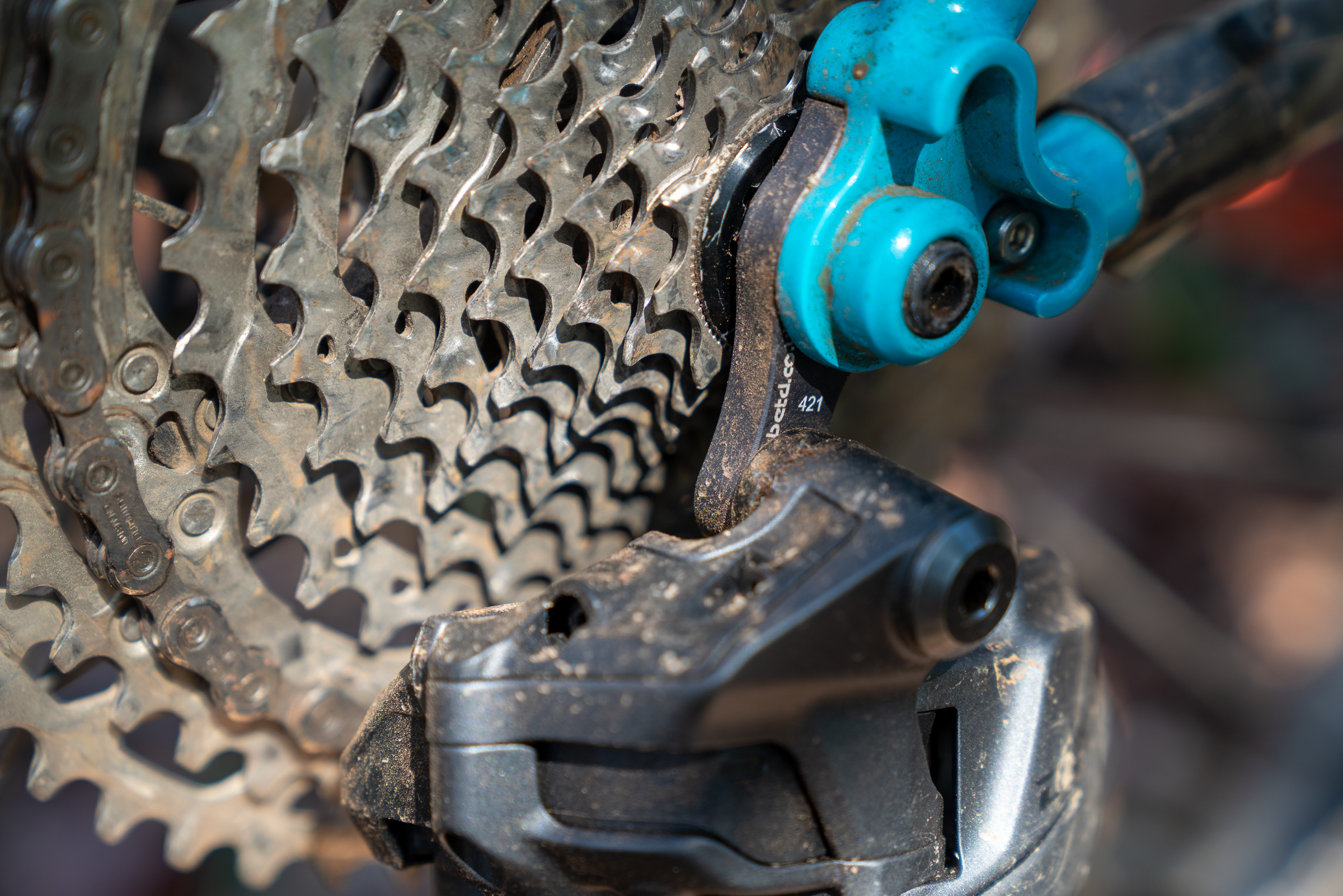
I’m stoked that the latest Shimano wireless electronic drivetrain goes onto an eight-year-old bike that was produced before UDH was even a thing so easily. For a while there, I was worried my hardtail was on its way to obsolescence, but this drivetrain upgrade has given it new life.
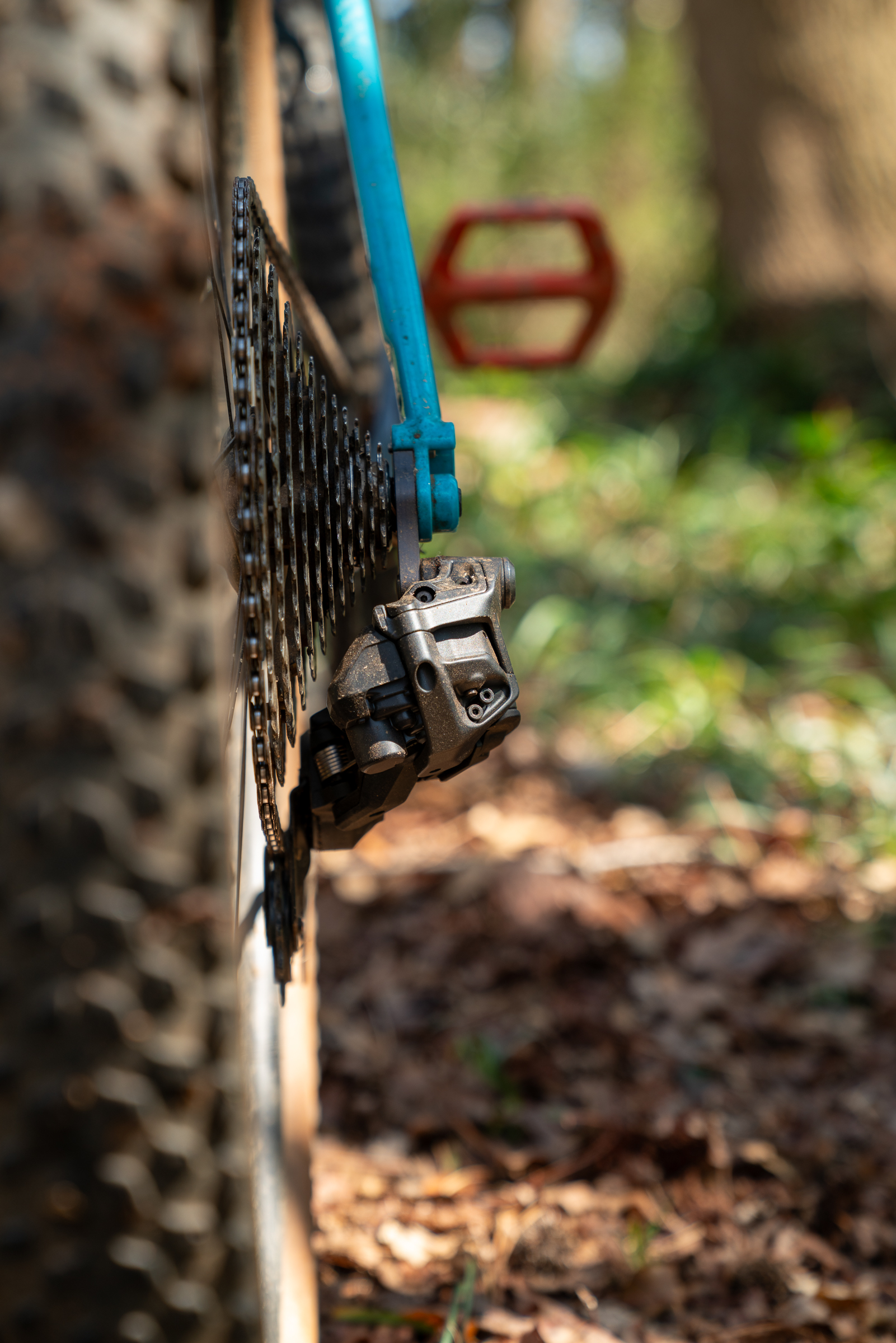
Shimano Deore Di2 performance on the trail
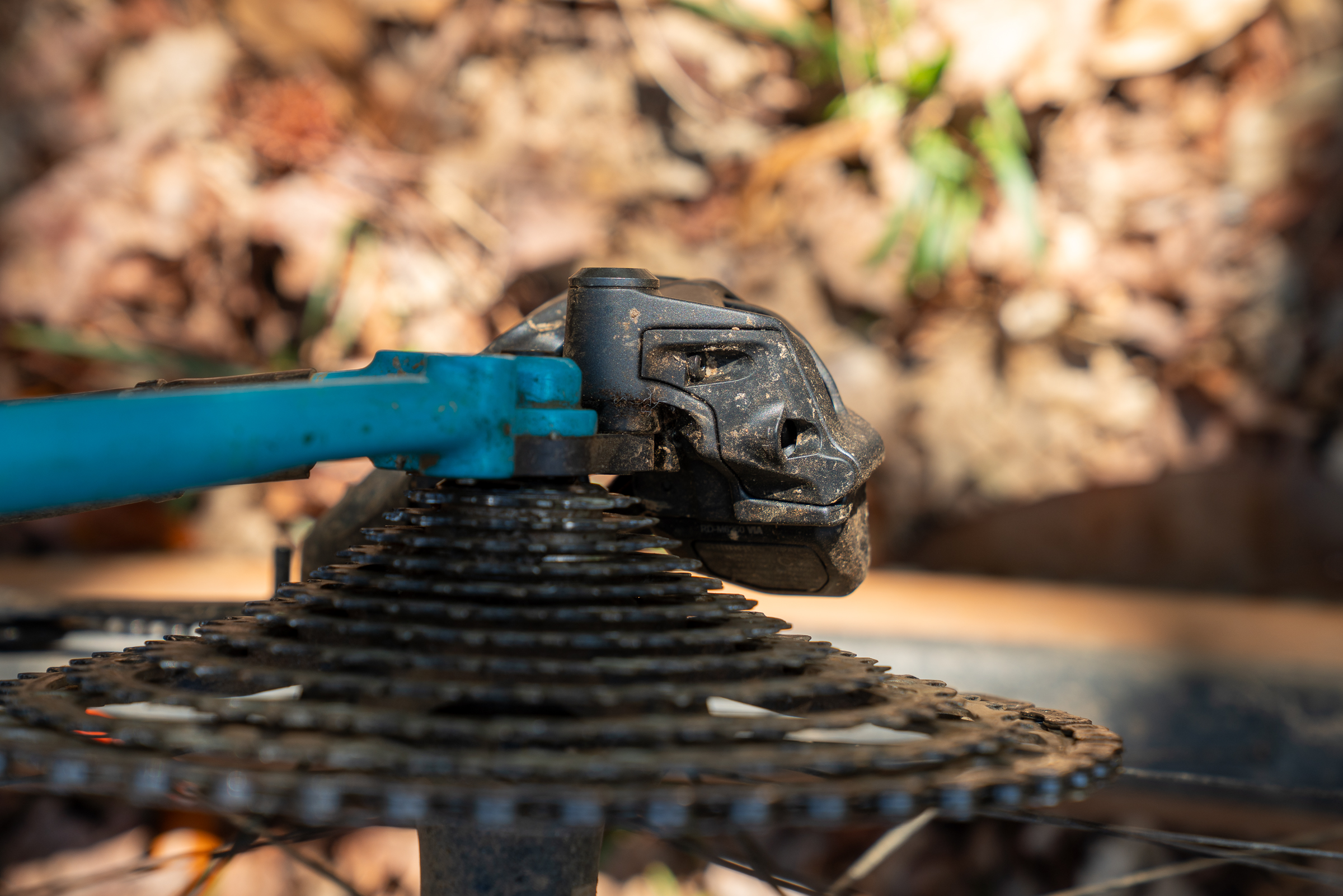
On the trail, the Shimano Deore Di2 derailleur has proven to be as smooth and reliable as the mechanical Deore derailleur it replaced. Shifts are fast and crisp, just with an audible “wheek” instead of a silent cable pull.
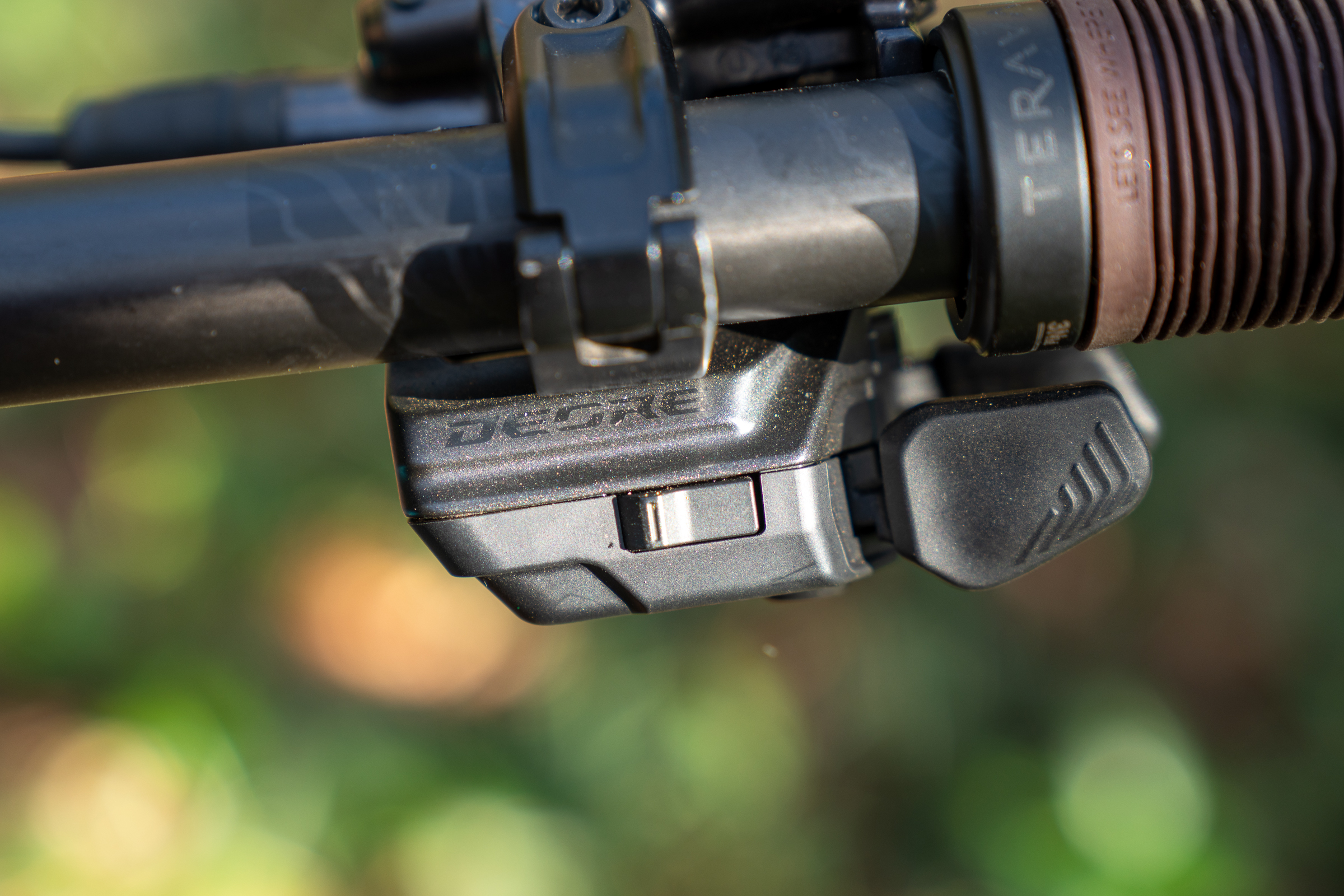
The Deore Di2 shifter (technically the “shifting switch,” per Shimano) doesn’t offer adjustable lever positions like the more expensive XTR and XT versions. Of course, you can adjust the position of the unit inboard and outboard, and also the angle of the shifter, but the individual trigger positions are fixed. This isn’t unlike previous mechanical systems, so most riders probably won’t miss this feature. Coming from XTR Di2, I found the fixed positions a little awkward at first, but adapted to them over time. My takeaway is that the adjustable levers are a nice-to-have feature, but they’re not make-or-break.
Deore shifters are missing rubber pads on the lever paddles and are made of plastic. A grooved pattern provides some grip, though when riding gloveless, there’s some slippage compared to the XTR shifter paddles.
One advantage of the simplified shifting switch for the weight weenies out there is that Deore Di2 shifters weigh less than both XT and XTR shifters. Of course, the extra weight of the Deore derailleur more than takes away from any gains, but for the truly weight-obsessed, pairing an XTR derailleur with a Deore shifter will be tempting.
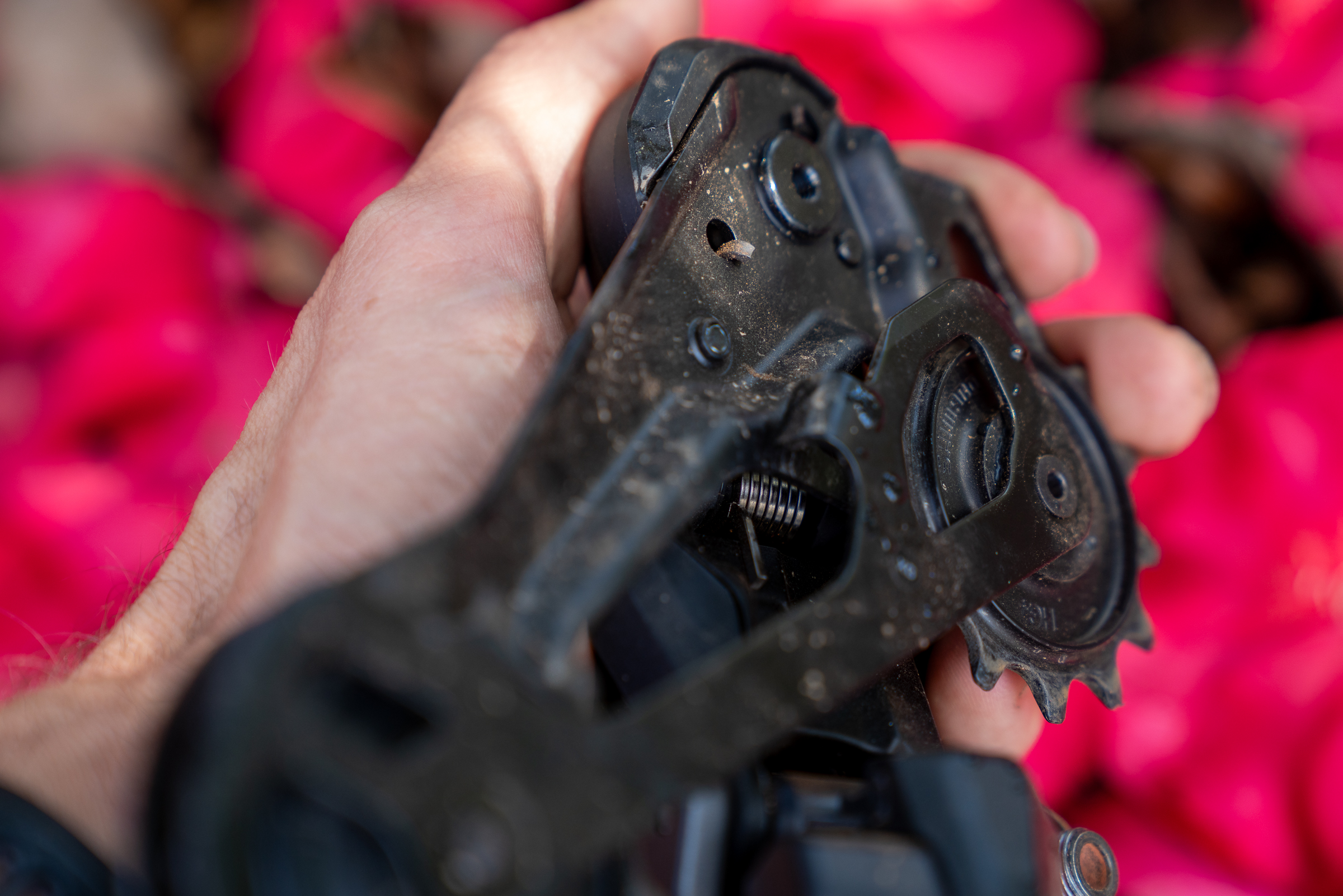
Like the other Di2 derailleurs, Deore doesn’t feature a clutch. Instead, the derailleur uses a dual-spring chain stabilizer. The stabilizer feels tighter on the Deore than my XTR derailleur, and a quick-and-dirty test with a fish scale shows it resists with about 10% more force. Of course, it’s quite possible that the springs inside the XTR derailleur — which I’ve been running for more than a year — have become stretched over time and have lost some of their spring tension.
As far as I can tell, the automatic impact recovery function works every bit as well on the Deore derailleur as it does on the XTR. Since the Deore is on my hardtail, which I choose to ride on the jankiest trails, it’s chewed through a lot of sticks and grass, fortunately with zero complaints.
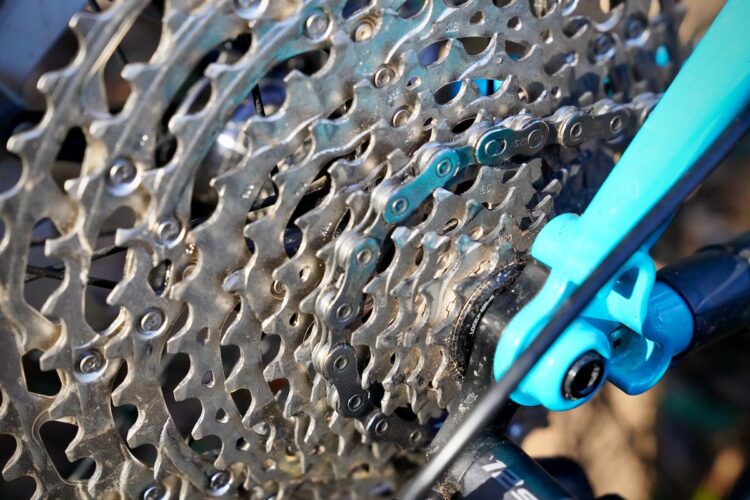
In first gear (biggest cassette cog), the drivetrain feels a little crunchy and makes a low grinding sound. I suspect this could be related to the B-screw fit issue I mentioned above, but on further observation, I noticed the same thing with my XTR derailleur on a different bike that doesn’t have a fit issue. In both cases, the derailleur shifts just fine, and the chain drives the cassette without skipping. None of the other gears on either bike has this issue.
Share your Shimano Deore Di2 drivetrain review
The Deore’s multi-shift function works great, and shift speeds are excellent with the Hyperglide+ system. Battery life for the Deore Di2 derailleur is on par with XTR in my experience, and as far as I can tell, the batteries are identical.
How does it compare to Shimano XT and XTR and other wireless electronic drivetrains?
Long-time riders will notice that Shimano does not offer an SLX version of their Di2 wireless electronic components. Traditionally, SLX sits between XT and Deore, with a 7000-series designation. Officially, Deore Di2’s product designation is M6250.
Looking at the specs and prices for Di2 components, there’s certainly room for an SLX group in terms of pricing, though, as far as weights are concerned, the range is already tight as it is.
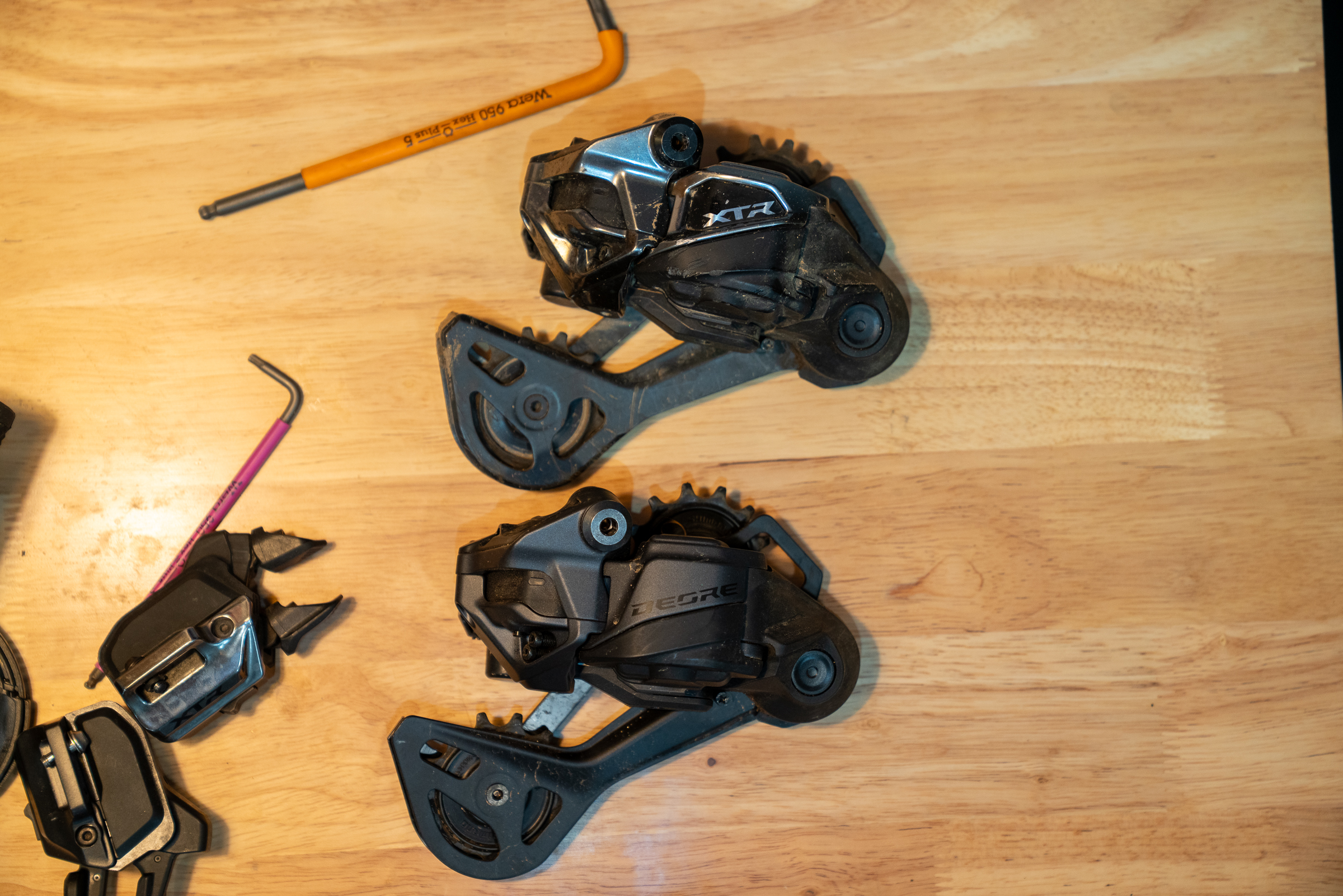
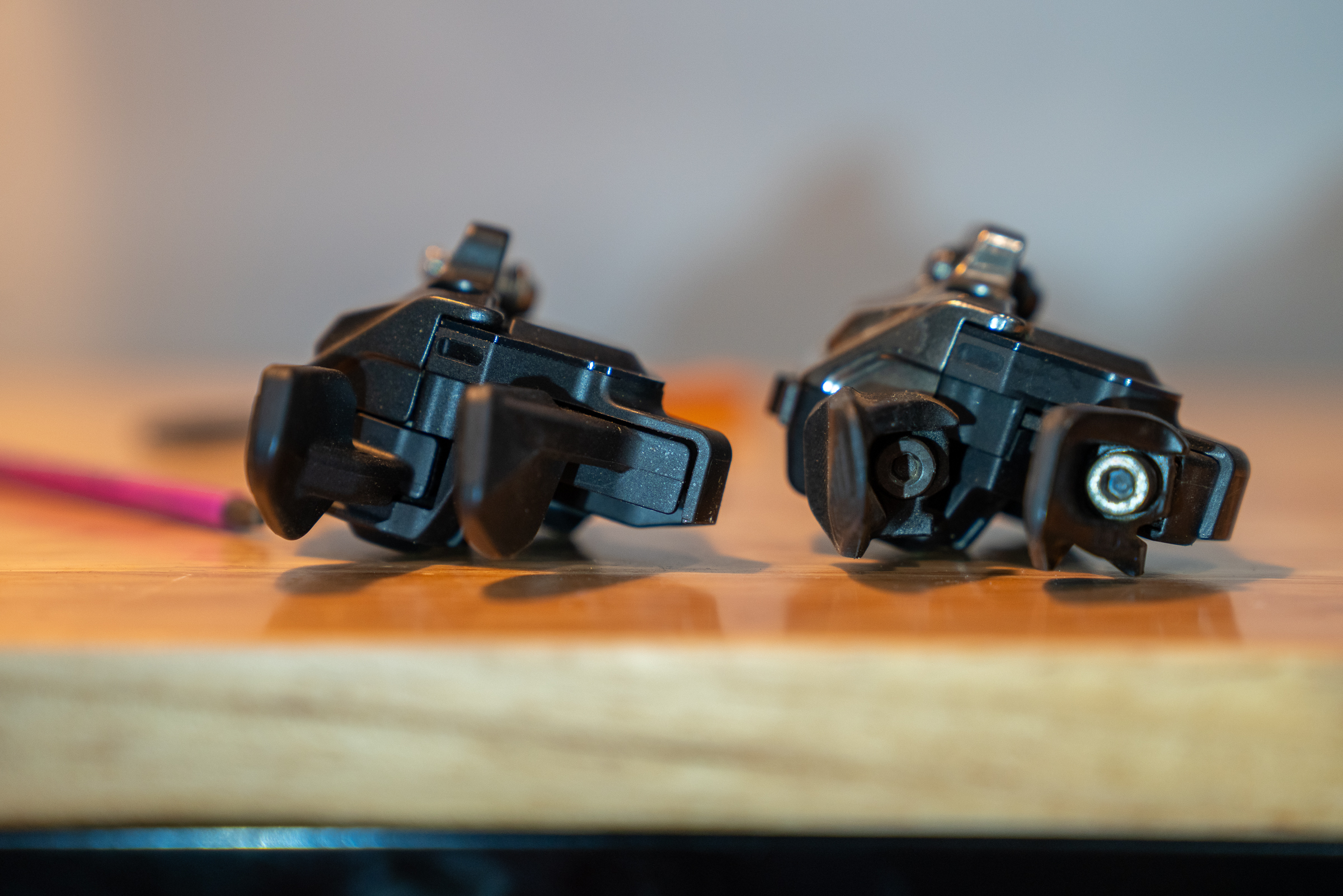
| Deore Di2 | XT Di2 | XTR Di2 | |
|---|---|---|---|
| Derailleur weight | 516g | 375g* | 415g |
| Shifter weight | 85g | 97g* | 98g |
| Total weight | 601g | 472g* | 513g |
| Upgrade price | $650 | $860 | $985 |
| Shifter | Non-adjustable levers | 3-way adjustable levers | 4-way adjustable levers |
“Upgrading” from mechanical Deore to Deore Di2 results in a pretty significant weight penalty. The mechanical Deore system I replaced weighs 535g, which includes the derailleur, shifter, cable, and housing. Only by going with a pricier XT or XTR Di2 setup can riders beat the weight of the inexpensive Deore mechanical system.
Compared to SRAM Eagle AXS Transmission wireless electronic components, the Deore derailleur and shifter are considerably heavier than even the least expensive S1000 components. Based on our tests, SRAM’s S1000 derailleur weighs 471.6g while the shifter remote is a feather-light 45g. However, Shimano’s XT and XTR derailleurs weigh less than the SRAM X0 derailleur.
Where Shimano has SRAM beat is on price, especially for buyers who are already invested in Shimano’s drivetrain ecosystem. Though the $605 GX Eagle Transmission upgrade kit is priced a few bucks lower than the Deore Di2 upgrade kit, most riders will need to purchase a T-type compatible cassette, chain, and crankset. If you’ve already got a 10-51T Shimano cassette, a Shimano chain, and a Shimano crankset, the upgrade kit is all you need.
Pros and cons of Shimano Deore Di2 drivetrain
Pros
- Simple upgrade from Shimano mechanical drivetrain
- Smooth and reliable performance
Cons
- Heavy derailleur — well over a pound! It’s enough to make me seriously consider a single-speed drivetrain.
- Might not be able to achieve the proper spec with some bikes. As a result, the first gear is slightly crunchy due to a B-screw limitation with our test bike.
Bottom line
For those seeking the advantages of wireless electronic shifting — simple installation, robust impact protection, and a clean cockpit — Shimano Deore Di2 offers an easy and inexpensive upgrade path.


0 Comments