
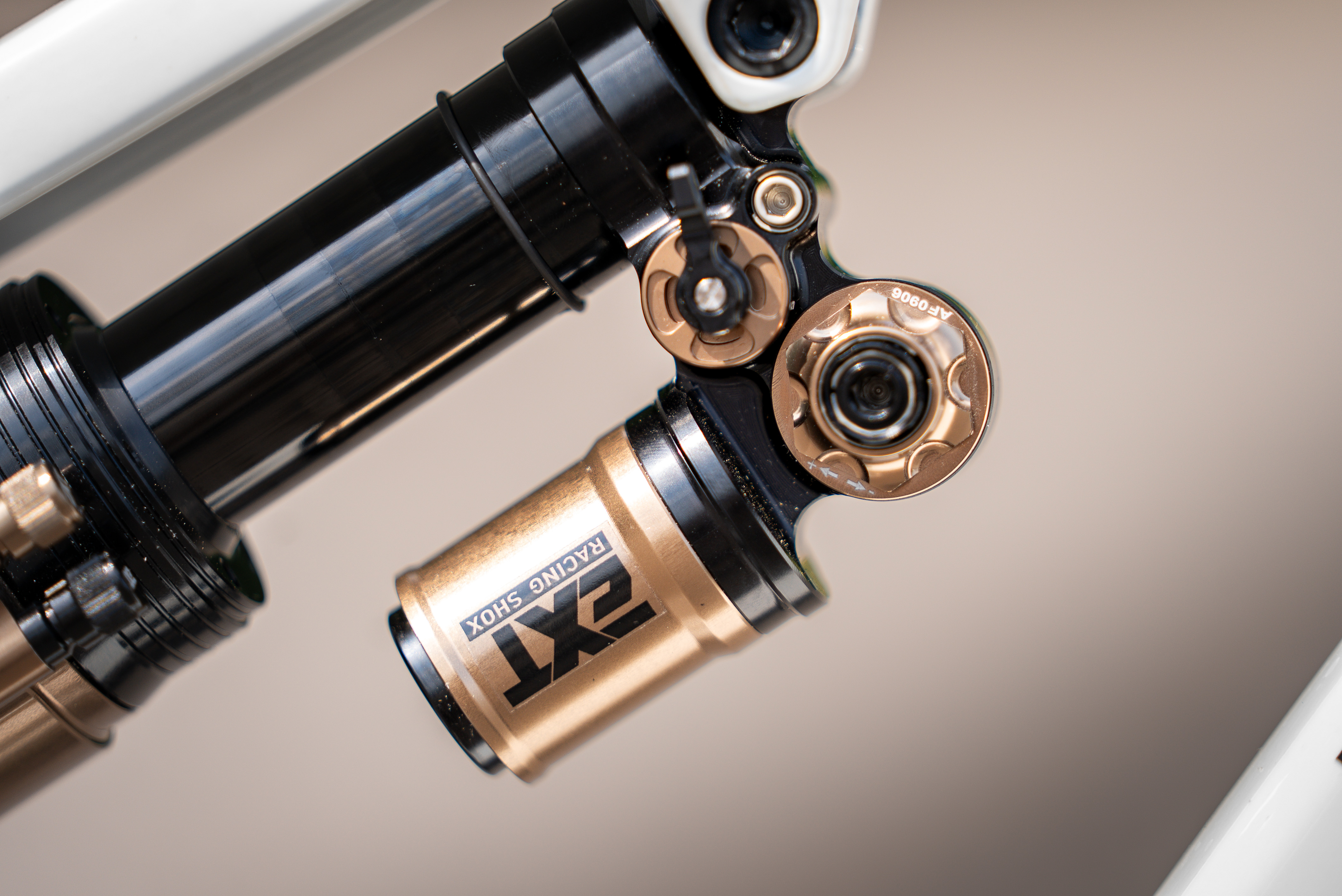
In early 2023, EXT released the Aria — the brand’s first air shock (in fact, aria means “air” in Italian). Given the brand’s coil-first reputation, it was no surprise that the Aria used dual chambers to mimic the suppleness of a coil spring. But it was two positive, independently adjustable chambers rather than the positive-and-negative setup so many air shocks are built around.
The Aria V2 still uses the same positive air chambers but changes to a new design to fit more bikes.
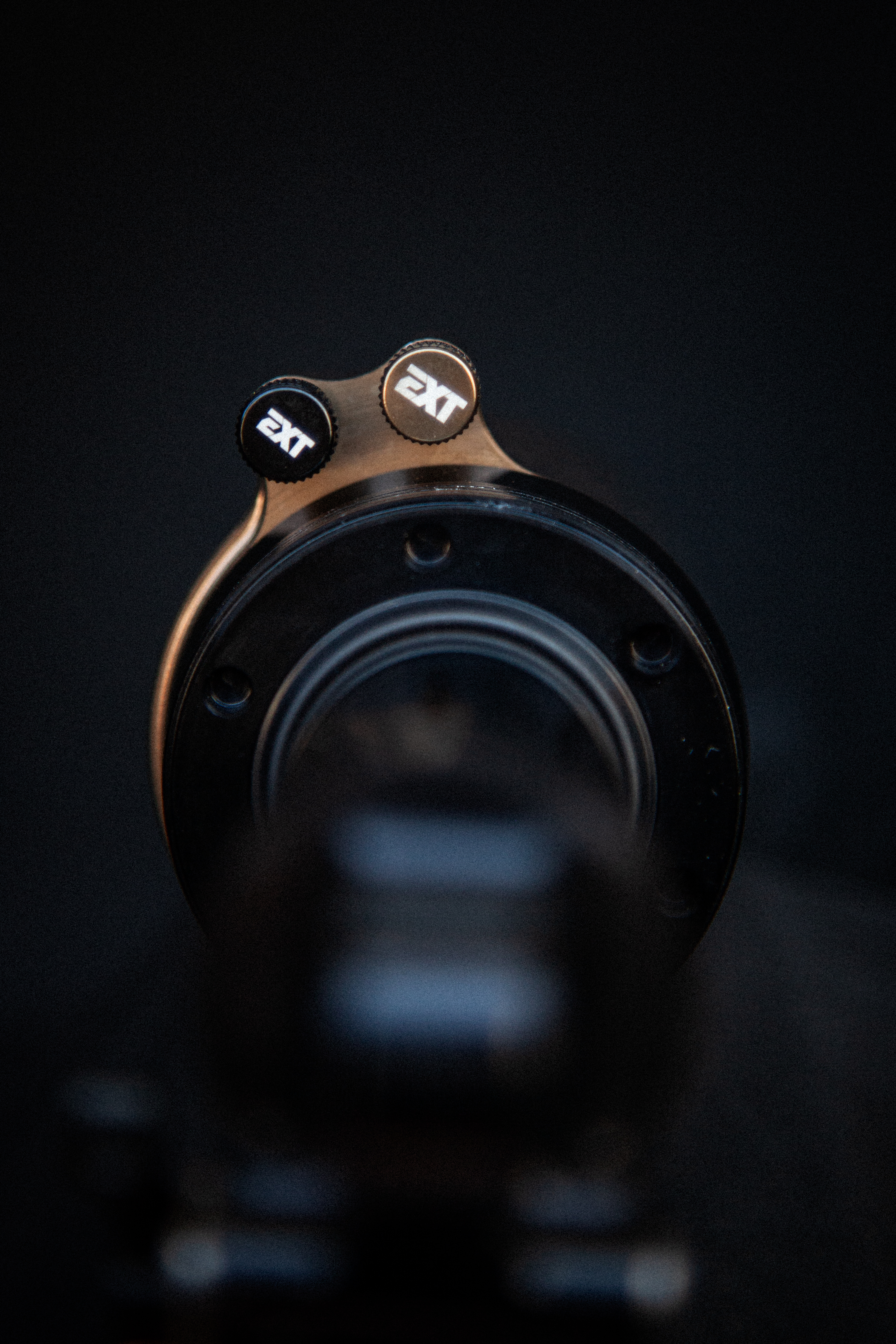
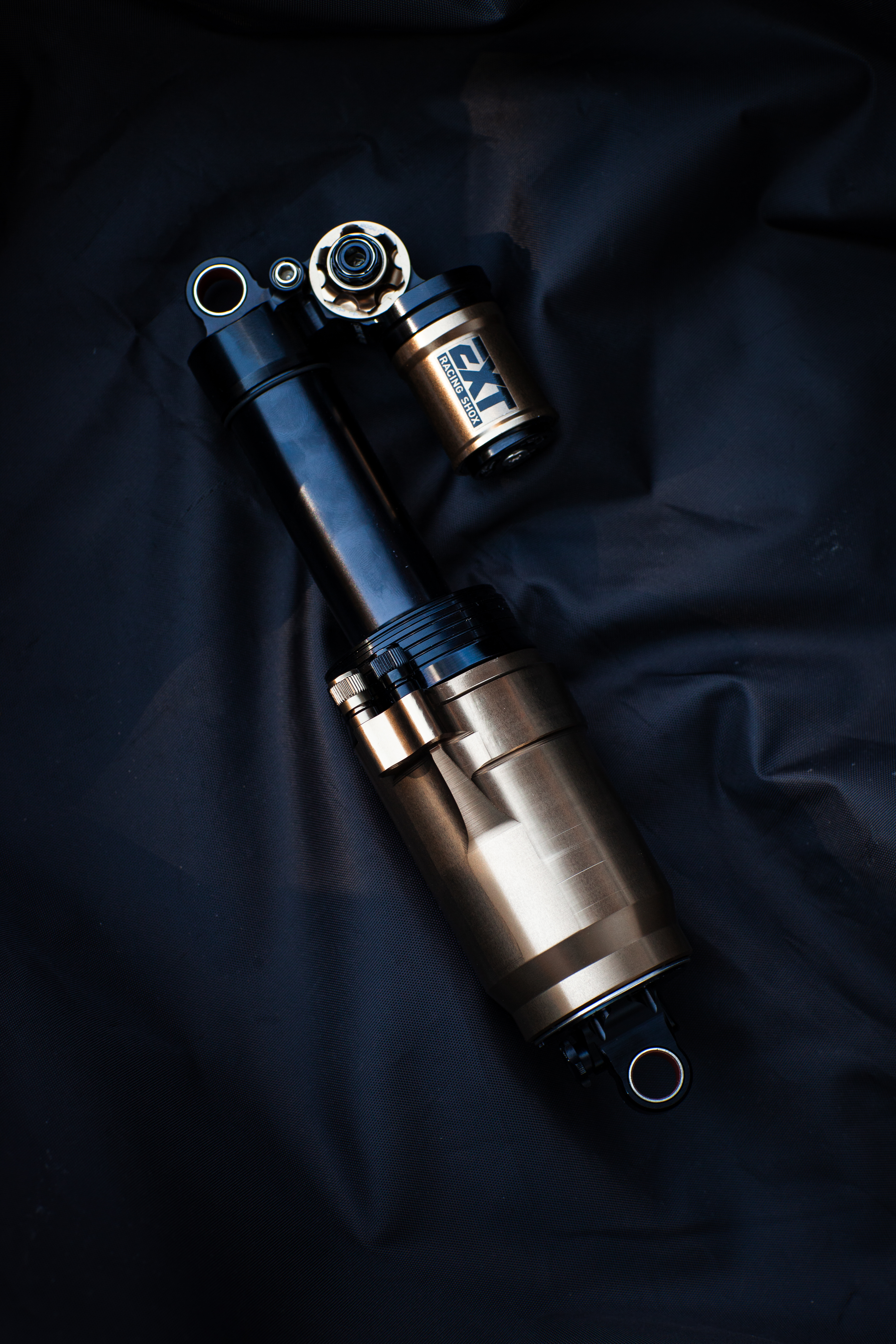
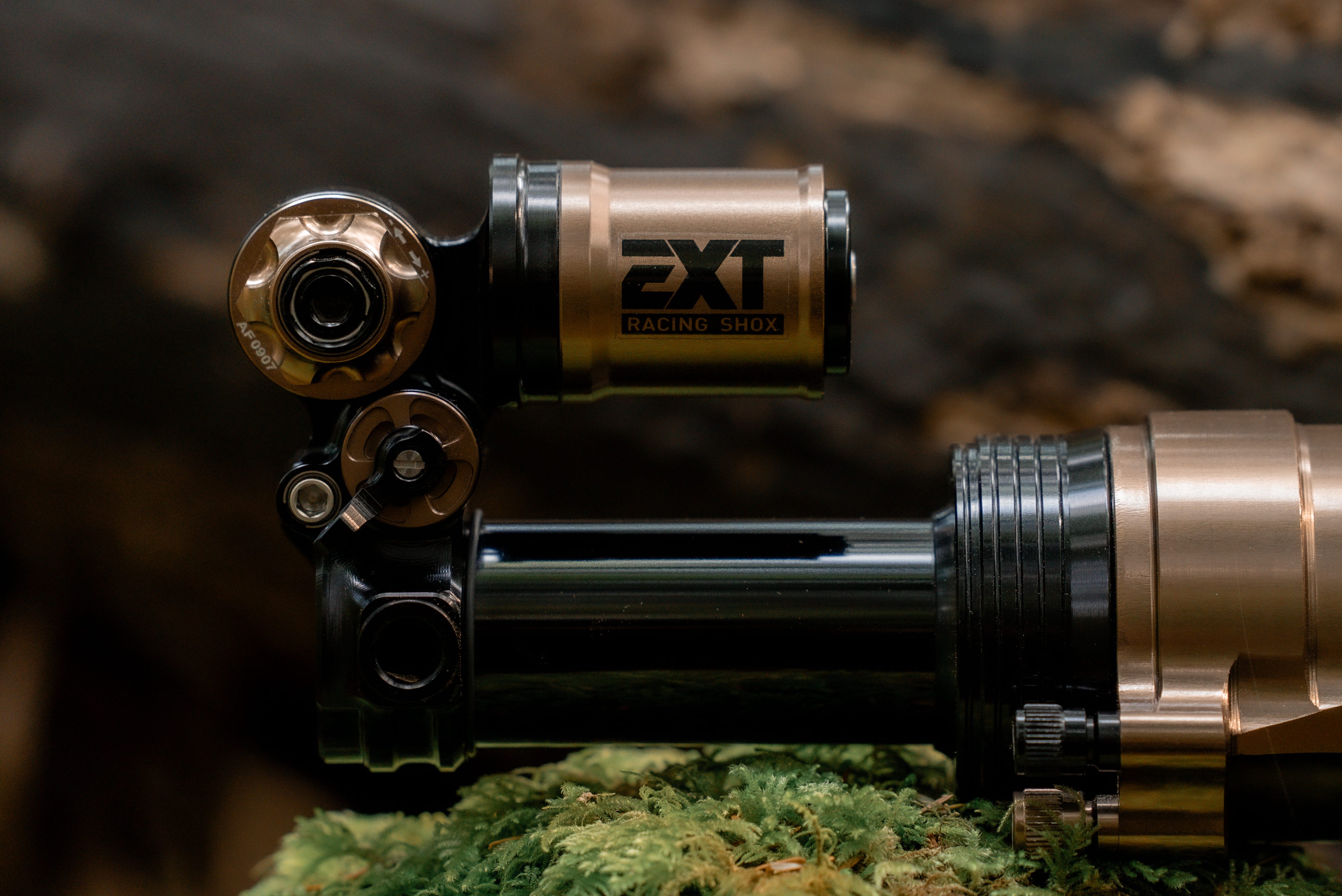
EXT uses a +chamber and ++chamber on the Aria V2
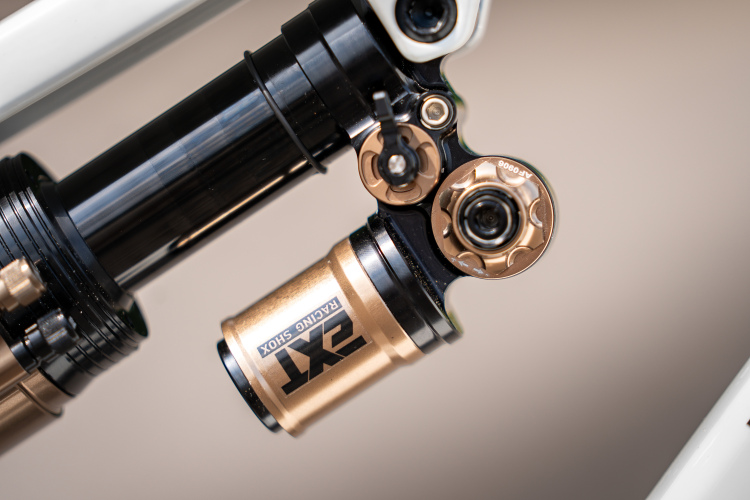
To be clear, the Aria V2 (and the original Aria, for that matter) still has a negative air chamber, working with the positive chamber as all air shocks do. What makes the Aria unique is that it has two separate positive air chambers — +chamber and ++chamber — affecting different places of the shock’s stroke. This is EXT’s “AS3” technology.
EXT explains that the +chamber is responsible for roughly the first 60% of the stroke, while the ++chamber handles the remaining 40%. These chambers have separate valves — black and nickel, respectively — allowing the rider to adjust and fine-tune each chamber.
Why? “By separately adjusting the pressure in the two positive chambers, the rider can control both the degree of progressivity throughout the travel and the exact point in the stroke where it begins to build,” EXT explained in its Aria V2 press material.
Basically, changing something about the initial stroke doesn’t have to affect the end stroke.
EXT further explains that any “fine-tuning” of other shocks typically comes in the form of volume spacers. Need more support in the mid-stroke? Add a volume spacer, but likely pay the price. “You will inevitably end up with a much more progressive behavior and a harsh ramp-up toward the middle and end of the travel, preventing you from using full travel.”
On the flip side, ditching the volume spacers can leave the initial and mid-stroke too soft and insufficiently supportive. The +chamber of the Aria lets you keep the initial and mid-stroke supple and supportive, while the ++chamber lets you dial in how much progresivity and ramp-up you want at the end of the stroke.
Essentially, the adjustability is “endless,” according to EXT, because you are fine-tuning with air rather than chunks of plastic.
The Aria V2 also features hydraulic bottom-out
We often associate bottom-out adjustment with shocks like the RockShox Vivid. However, EXT developed the hydraulic bottom-out control system (HBC) for the mountain bike industry. The brand introduced the technology in 2018 with the release of the Storia V3.
According to EXT: “HBC consists of a secondary piston mounted below the main piston. As it approaches end-stroke, it enters an inner tube, forcing oil through a calibrated orifice that determines the progressivity of the final portion of travel. HBC acts hydraulically on the last 15% of the shock’s stroke.”
Essentially, HBC helps the Aria avoid harsh bottom-outs.
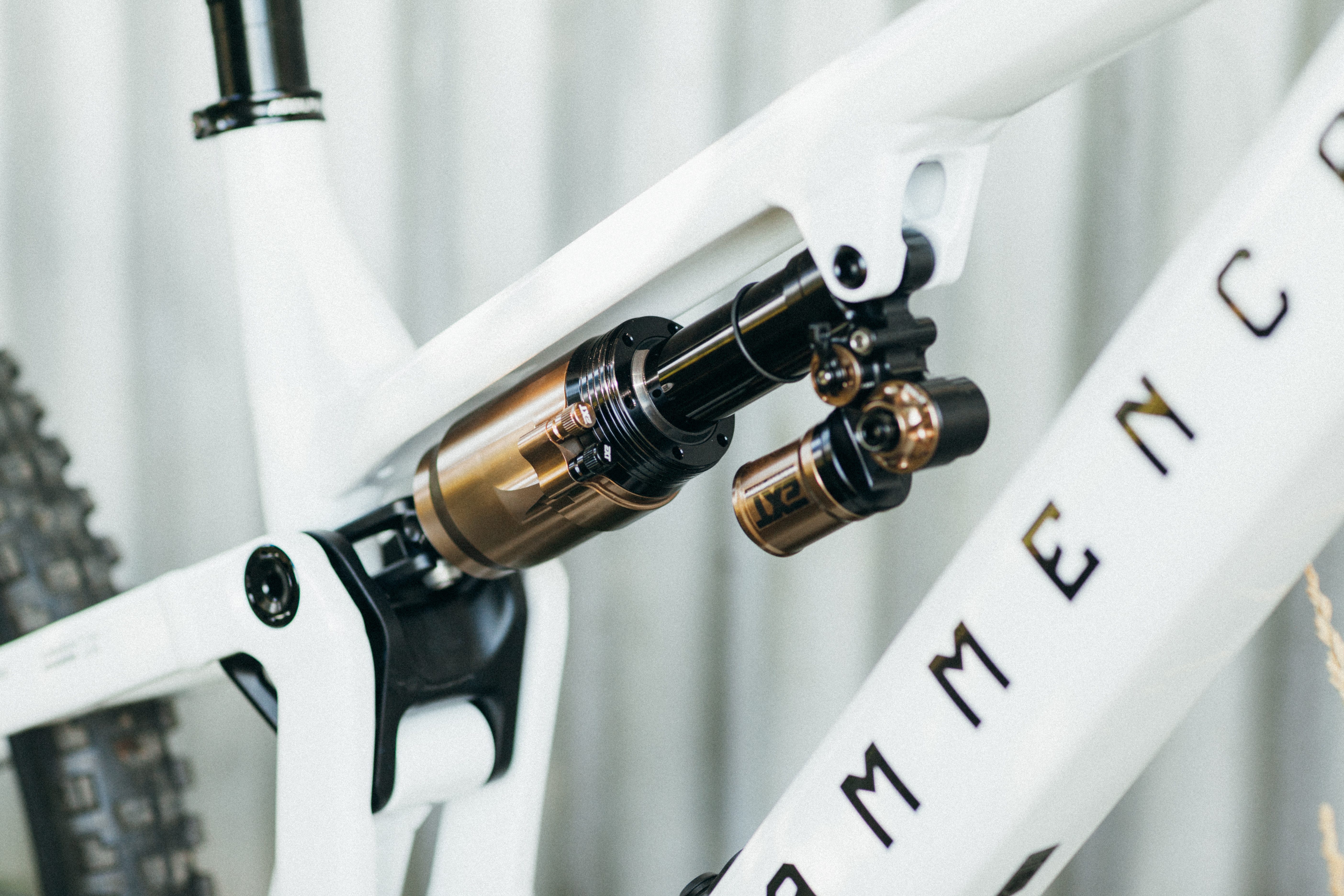
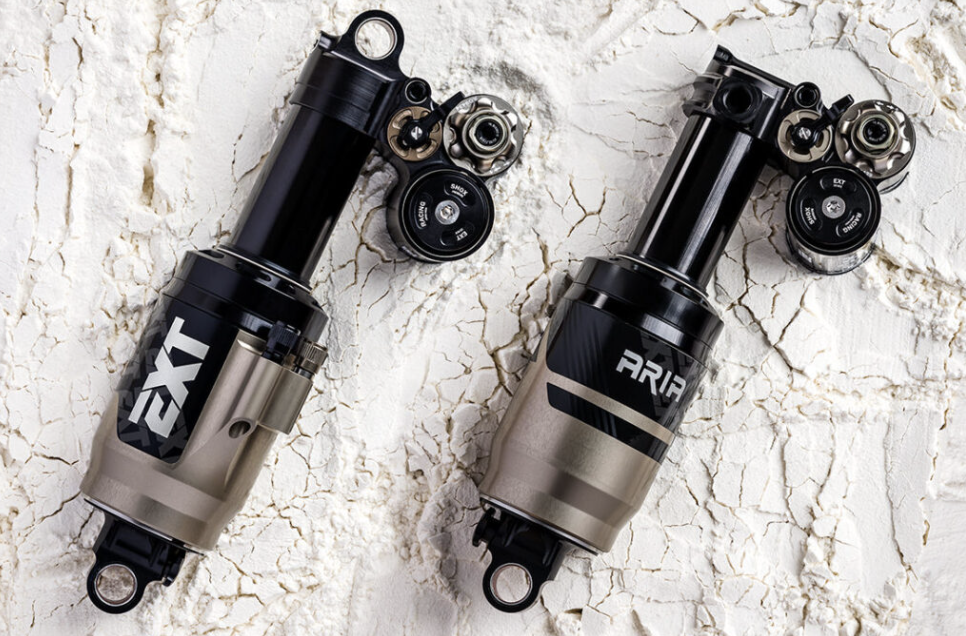
A bit of a redesign made the Aria V2 fit more bikes
EXT had some issues with the original Aria fitting certain bikes. Well, a good portion of bikes, that is. EXT has a fit chart on its website to see if a specific frame will accommodate an Aria shock. For example, the EXT Aria shock will not work with the Specialized Enduro (2023), Scott Genius and Ransom (2023), Santa Cruz Megatower V2, or the 2023 Propain Spindrift, Hugene, and Tyee, among other bikes.
If the Aria does work on a specific frame, it may only work on larger sizes. For example, the Aria fits a size large 2023 Trek Slash. The same bike but a size medium? Nope.
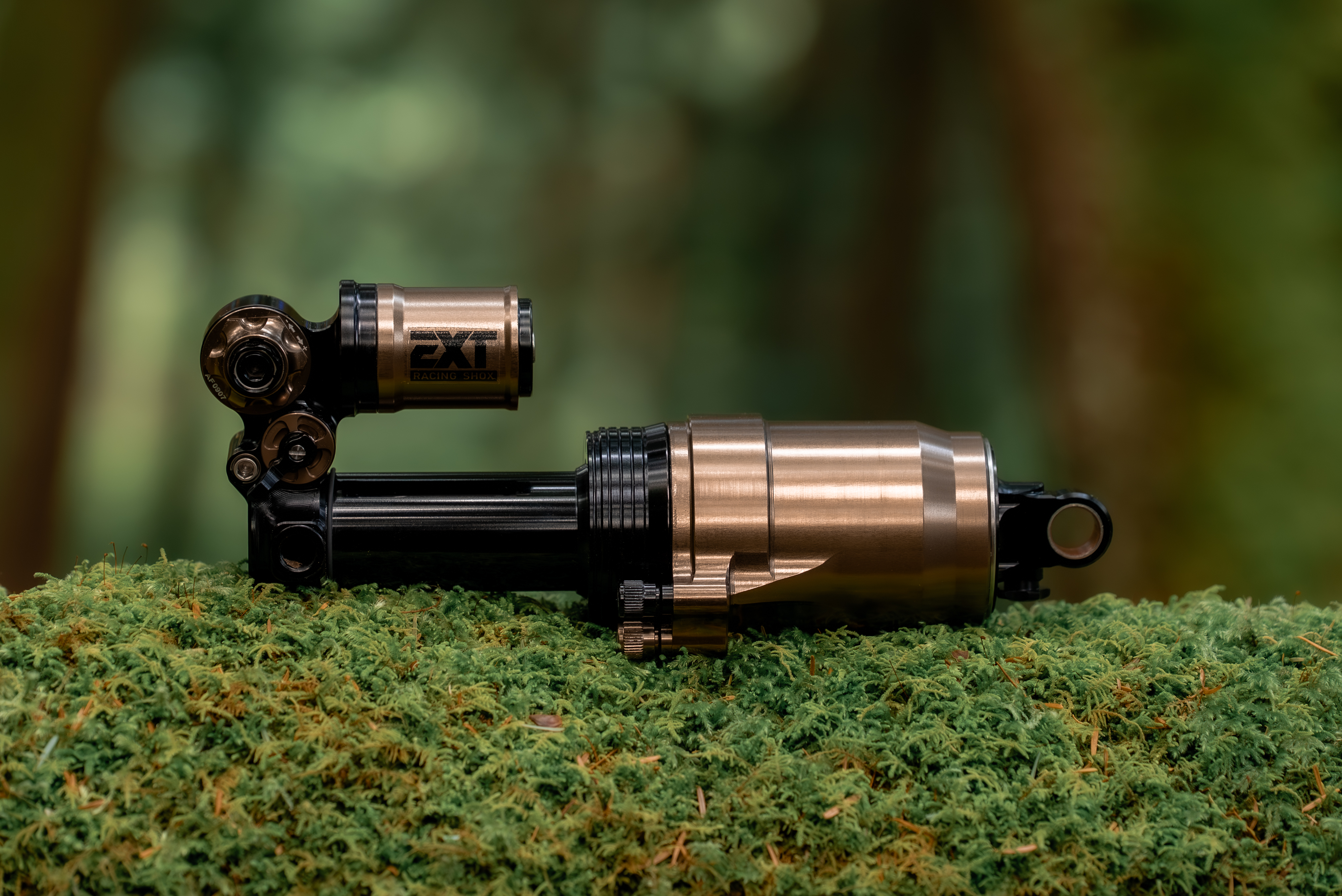
Many of the fitment issues were due to the orientation of the Aria’s piggyback reservoir — horizontally rather than vertically. The result is a shock that’s too wide, making it difficult to squeeze between linkages, which checks out considering the suspension layouts of the bikes mentioned above.
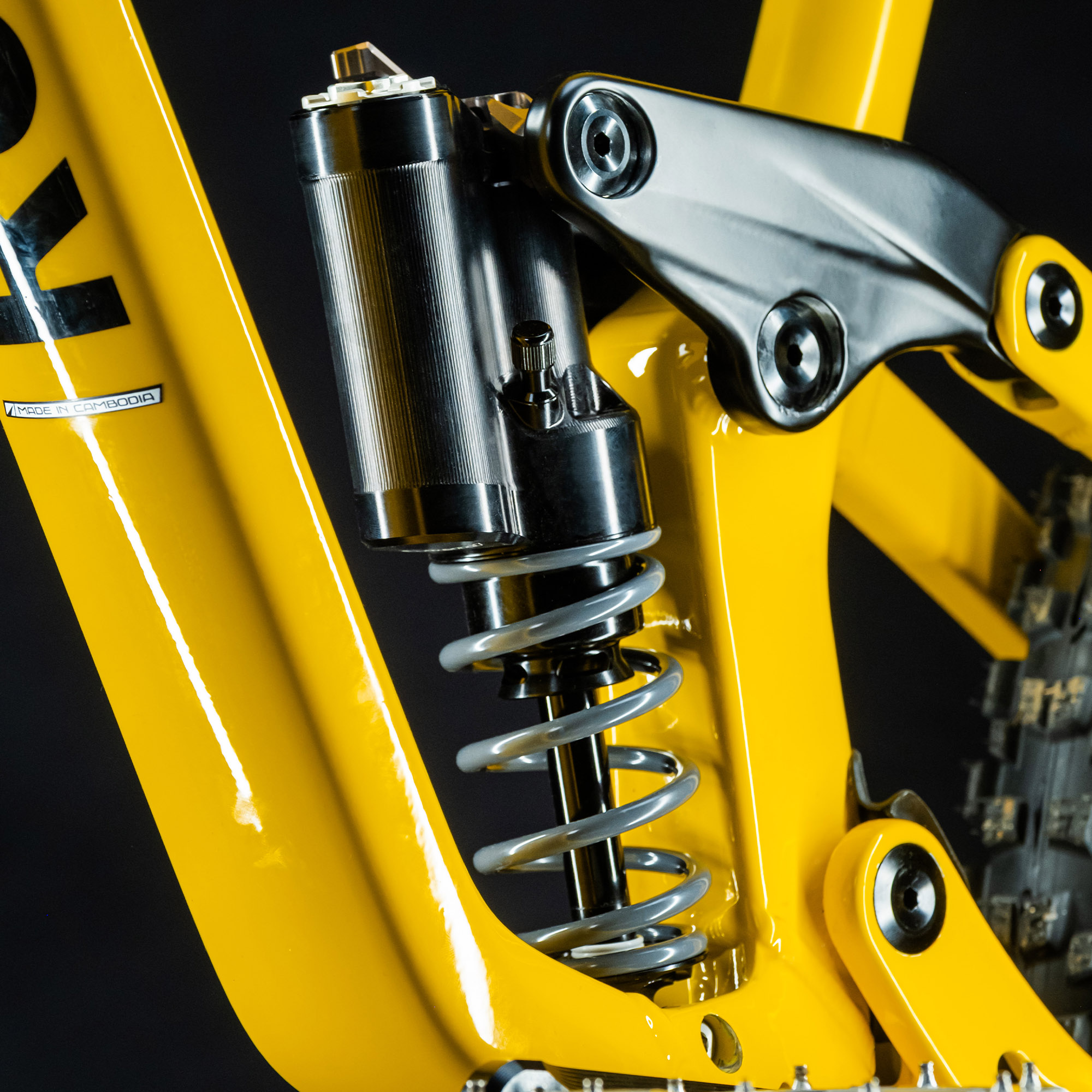
So, EXT reoriented the piggyback to sit vertically. They also reduced the valve block’s footprint for a slimmer overall profile. While EXT doesn’t say whether the new Aria V2 shock will now fit the aforementioned bikes, they claim the design changes “expand installation possibilities.”
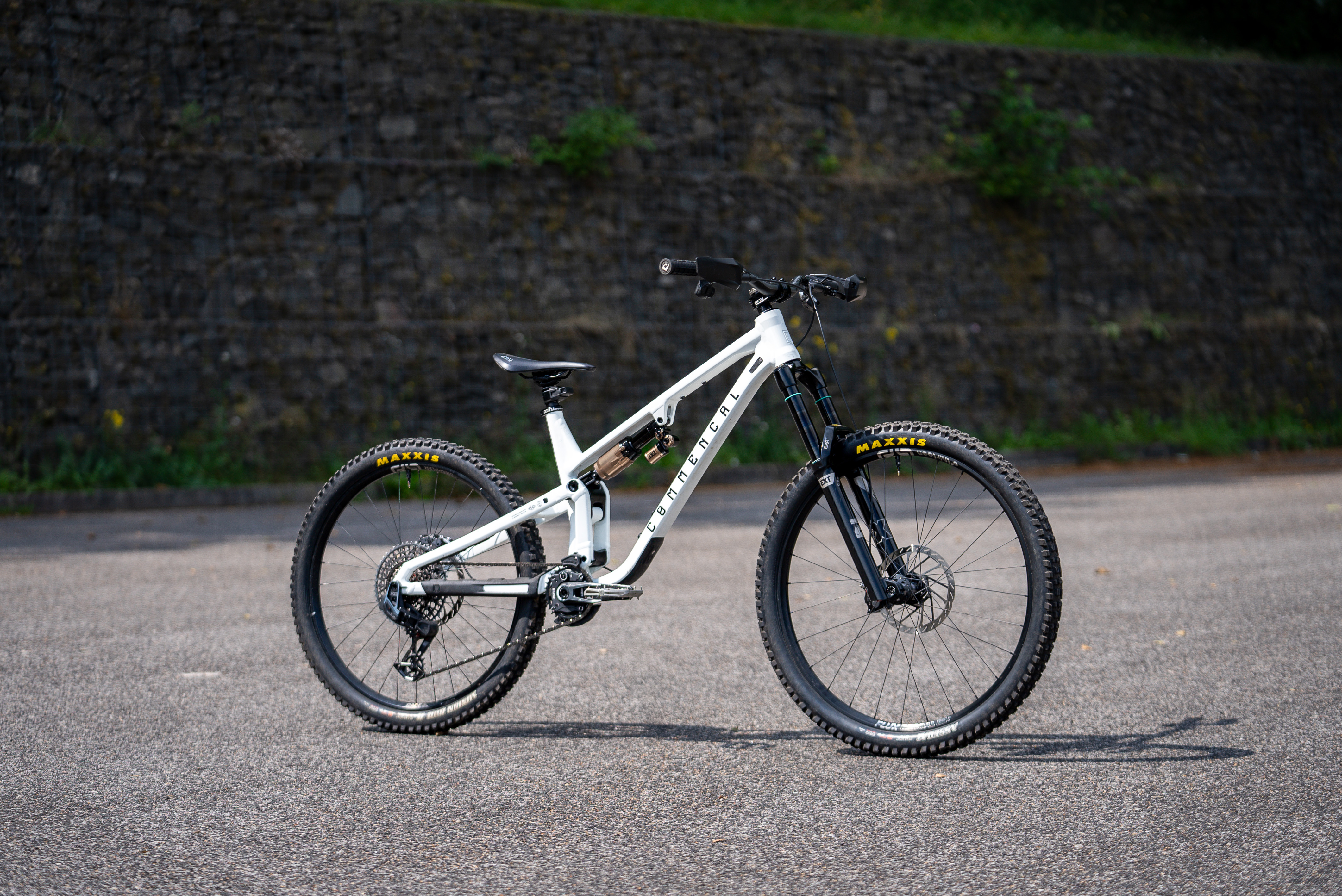
Trail/enduro/eMTB and DH/freeride options
EXT offers two variations of the new Aria V2 shock. The first is the Aria V2 designed for aggressive trail and enduro riding. They also say this is the shock for e-bikes.
EXT lists the details as follows:
- AS3 Technology: dual positive chamber design
- Monotube design with High-Speed and Low-Speed compression and rebound adjustment
- LOK 2.0 Technology: independent and customizable lockout circuit
- HBC (Adjustable Hydraulic Bottom-Out Control)
- Same compression valve as the V4 series
- Ø14 mm chromoly steel shaft for maximum system stiffness and durability
- EV2S Fluid: ultra-high viscosity index fluid with an exceptional viscosity ratio
- High-volume bladder reservoir: pressurized to just 55 psi
- Actual weight: 622g (210 x 55 mm)
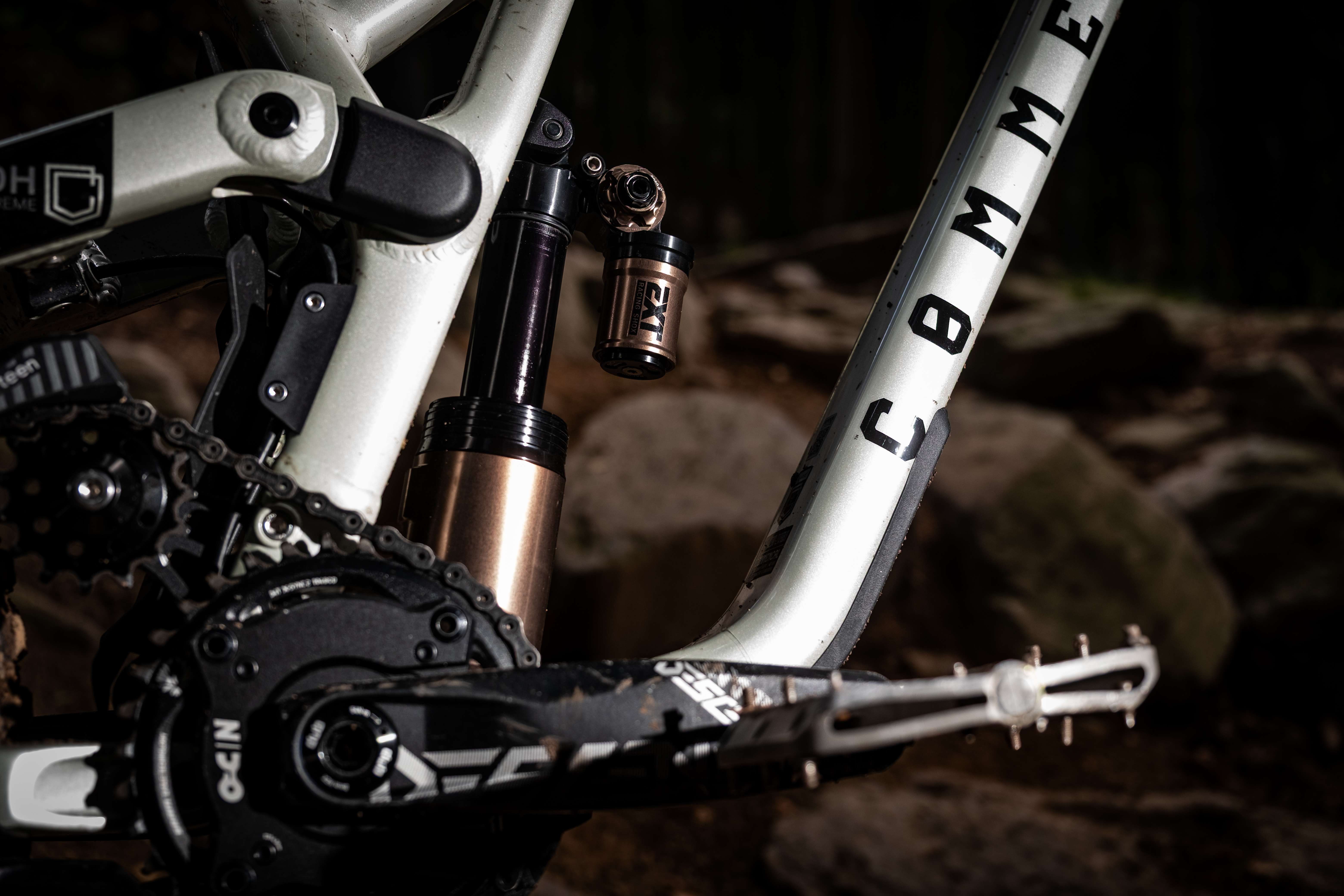
The DH/freeride-specific Aria V2 has the following features:
- AS3 Technology: dual positive air chamber
- Monotube design with high- and low-speed compression and rebound adjustment
- Same compression valve as the V4 series
- Ø14 mm chromoly steel shaft
- EV2S fluid: an ultra-high viscosity index fluid with an exceptional viscosity ratio
- Large-volume bladder reservoir: inflated to only 55 psi
- Actual weight: 667 g in 250×75 mm
EXT also specifies that the DH/freeride Aria V2 incorporates a “DH-specific Hydraulic Bottom-Out Control, capable of generating 20% more force at the end of the stroke.” Both versions are available in multiple sizes, in both metric and trunnion.
One thing that the EXT press material doesn’t mention is price. Several websites list the original Aria at around $1,200, and we imagine the Aria V2 will cost as much, if not more.
Keep up with the latest mountain bike news by adding Singletracks as a preferred source on Google.

0 Comments