

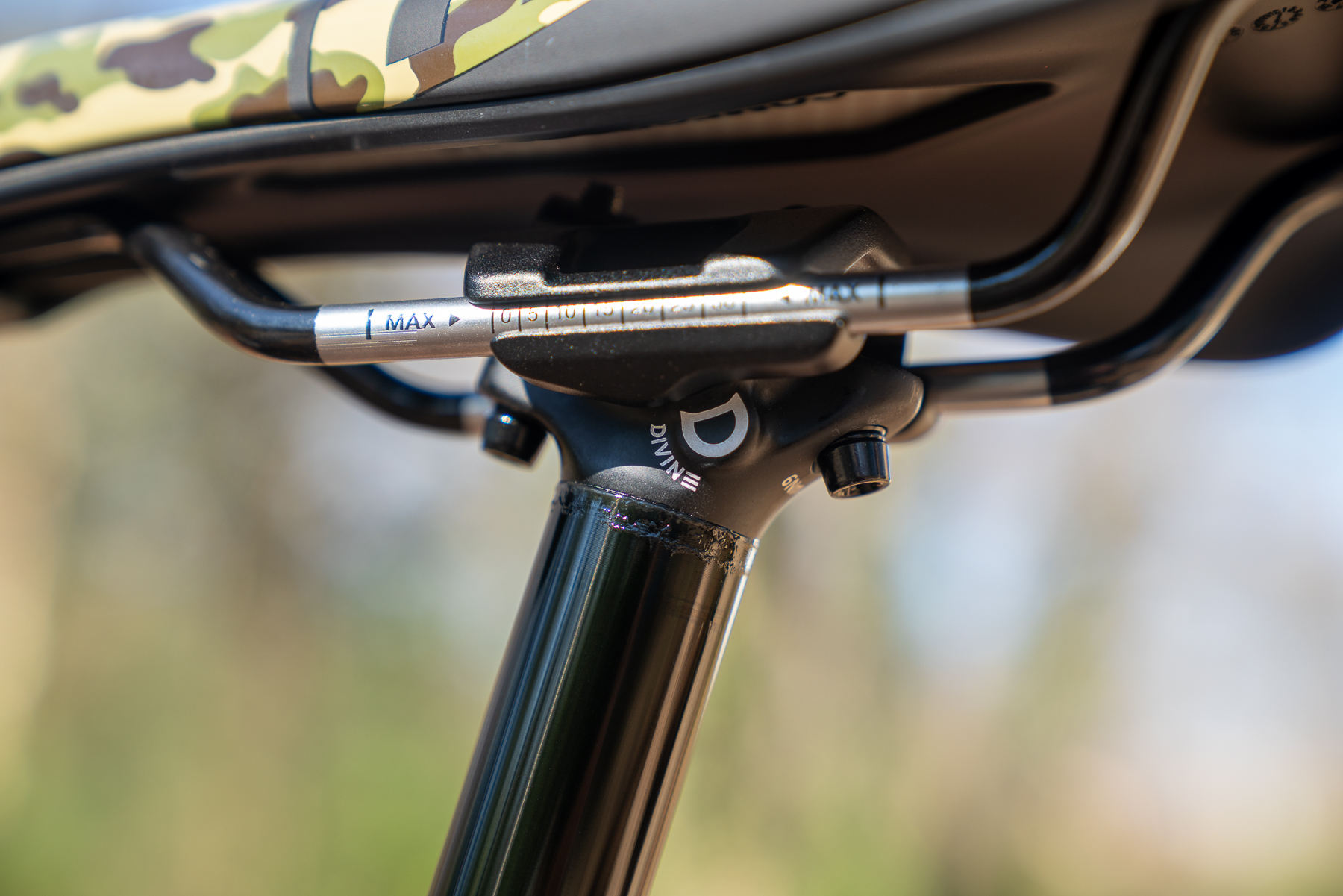
The BikeYoke Divine 2.0 dropper post has been more than half a decade in the making. Designed to be a more affordable alternative to the brand’s well-regarded Revive line of dropper posts, the Divine refresh is a meaningful update that got caught up in all the supply chain nonsense of the early 2020s. I got my butt on a sample ahead of today’s official launch, and here’s what I’ve learned.
BikeYoke Divine 2.0 key specs
- Sizes: 30.9, 31.6, and 34.9mm diameters; 125, 160, 185, and 213mm travel options
- Adjustable pressure and travel; auto-bleed function
- Weight: 626.2g for 30.9x213mm (tested)
- Price: $260 (remote not included)
- Buy from BikeYoke and BikeYoke retailers
BikeYoke Divine specs and setup
I installed the BikeYoke Divine on my Canyon Neuron trail bike, replacing the BikeYoke Revive 3.0 post I had been running for nearly two years. That post is still going strong, which suggests to me that the Divine is also built to last.
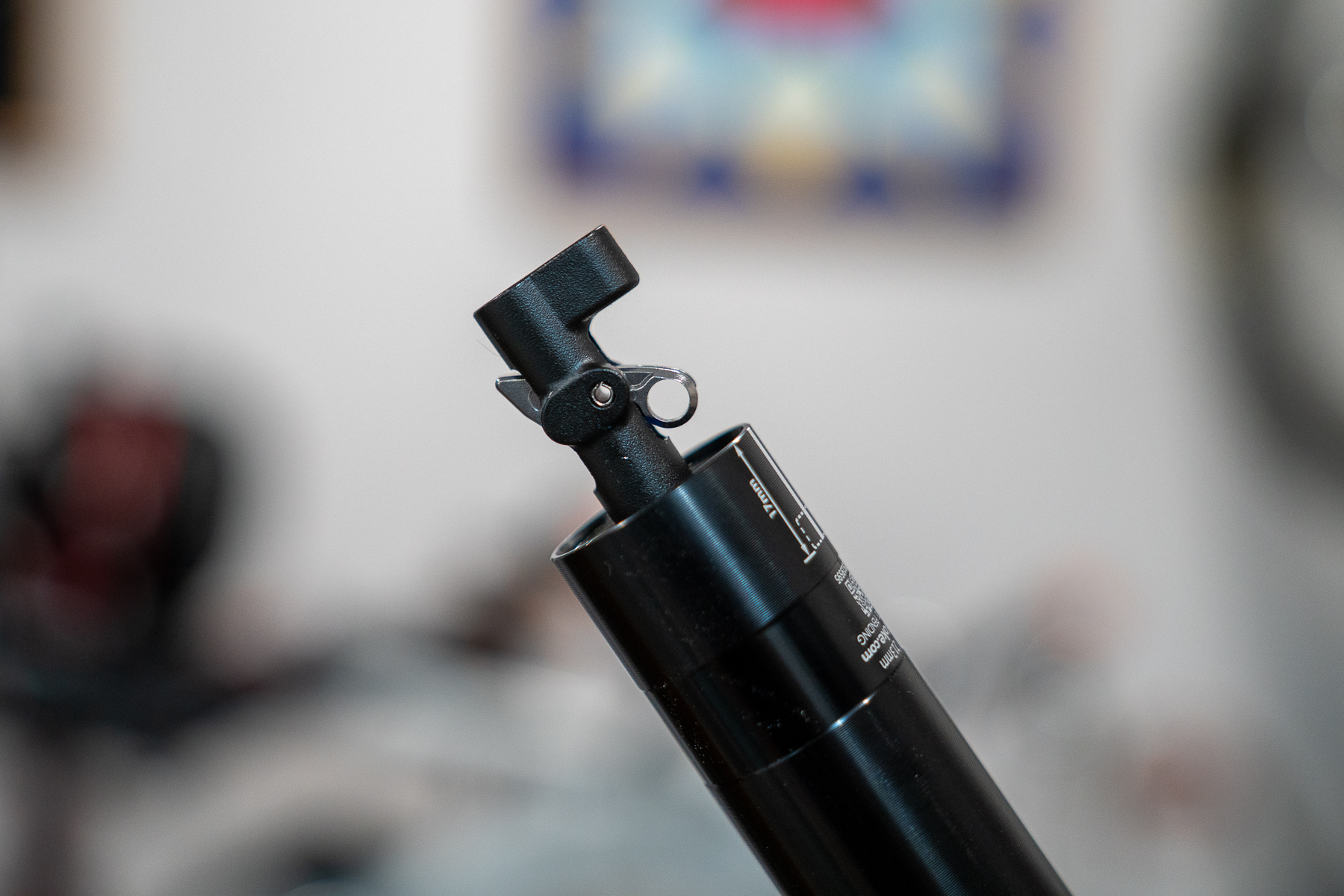
Starting at the bottom of the post, the Divine 2.0 features a foot that rotates 360°. This helps if the seatpost insertion depth is limited by a bolt or if the cable is coming in at a funky angle. The actuator on the Divine is 11mm longer than on the Revive 3.0, so for those who are counting millimeters to fit the most travel, the Revive is probably still the better option.
The Divine uses the same internals whether the post has a 30.9mm or 31.6mm diameter, which means buyers can swap the body if they change bikes down the line. In addition, BikeYoke now offers the Divine in a 34.9mm diameter.
The included spacers make the travel adjustable in 5mm increments. Of course, no one wants less travel out of their post, but sometimes it’s necessary to get the right fit depending on the bike and rider.
What’s new?
- 5mm shorter stack height
- New longer, 213mm travel option
- 34.9mm diameter version
- Lighter remote feel
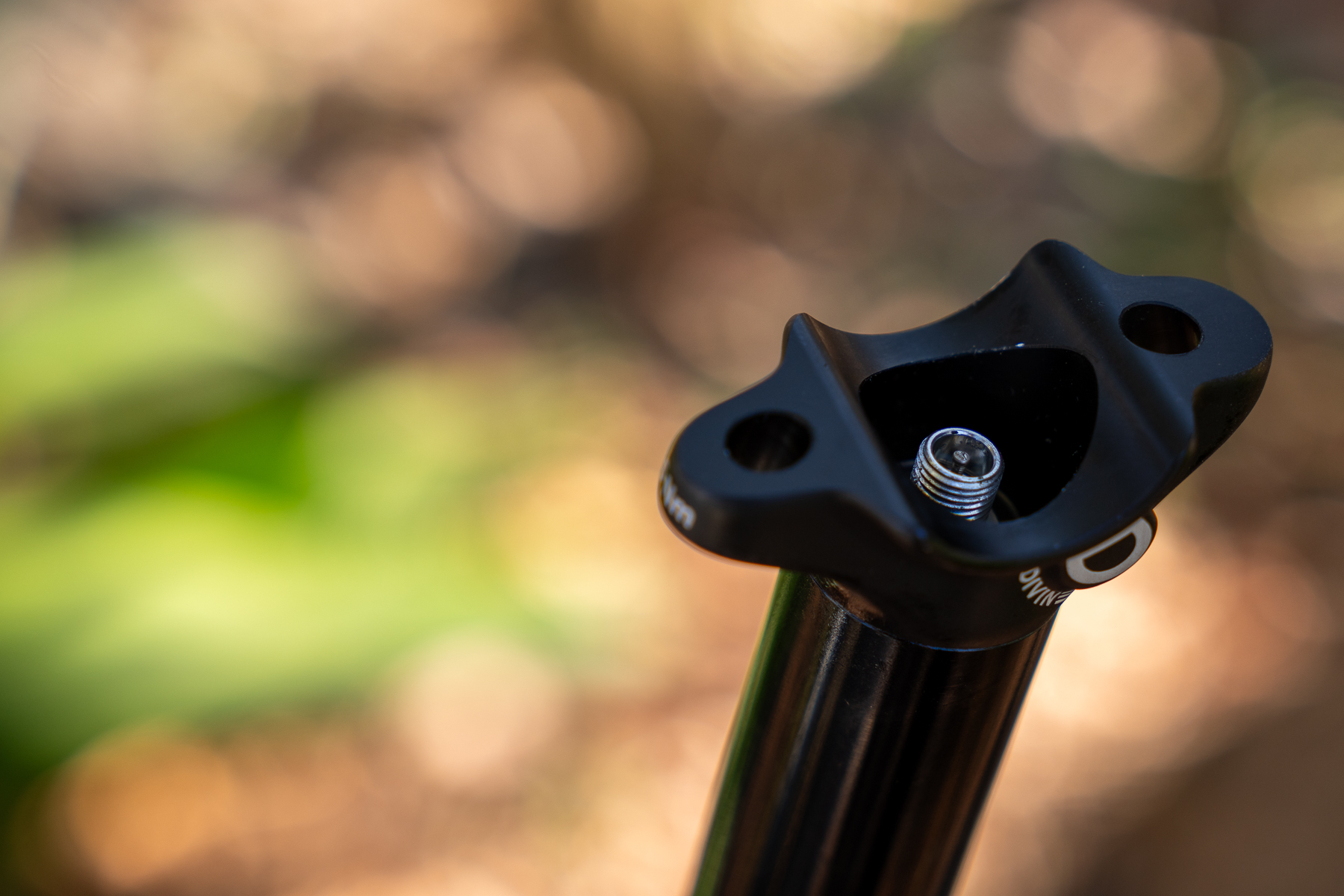
At the top of the post, there’s an inlet that allows you to add or release pressure, which affects the post’s return speed and ability to support weight. Most posts in this price range — like the OneUp V3 dropper — make use of a sealed air cartridge that doesn’t offer pressure adjustments. Because a sealed cartridge isn’t adjustable, it there’s less tinkering involved, which is a good thing or bad thing, depending on your prefernces. However, once a sealed cartridge loses air, it’s landfill-bound because it can’t be repaired.
BikeYoke is known for the bleed feature on their premium Revive posts, which releases, at the turn of a bolt, any air mixed with oil inside the post. The Divine doesn’t have a manual bleed bolt, though it does claim to deliver an “auto bleed” feature that does the same thing.
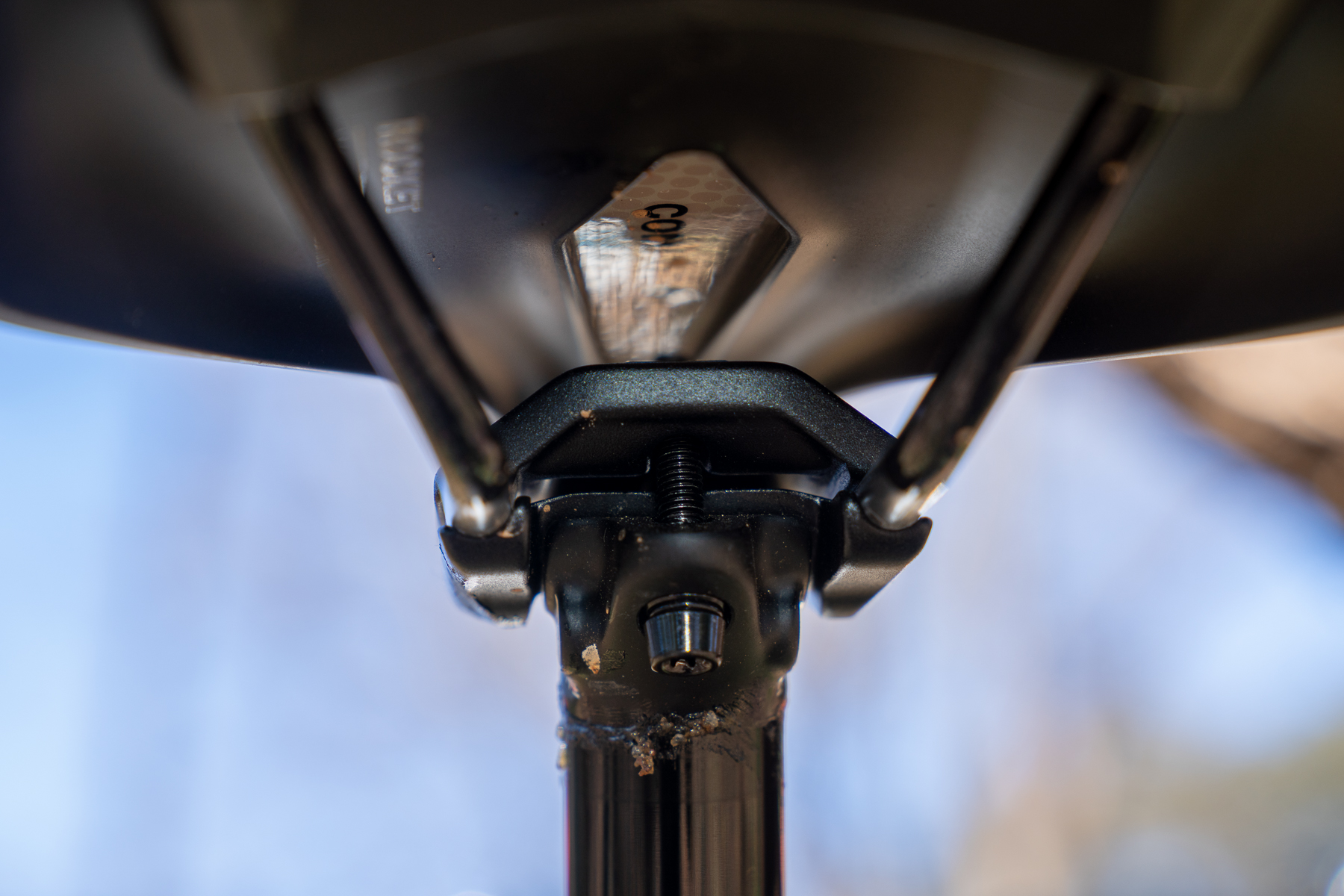
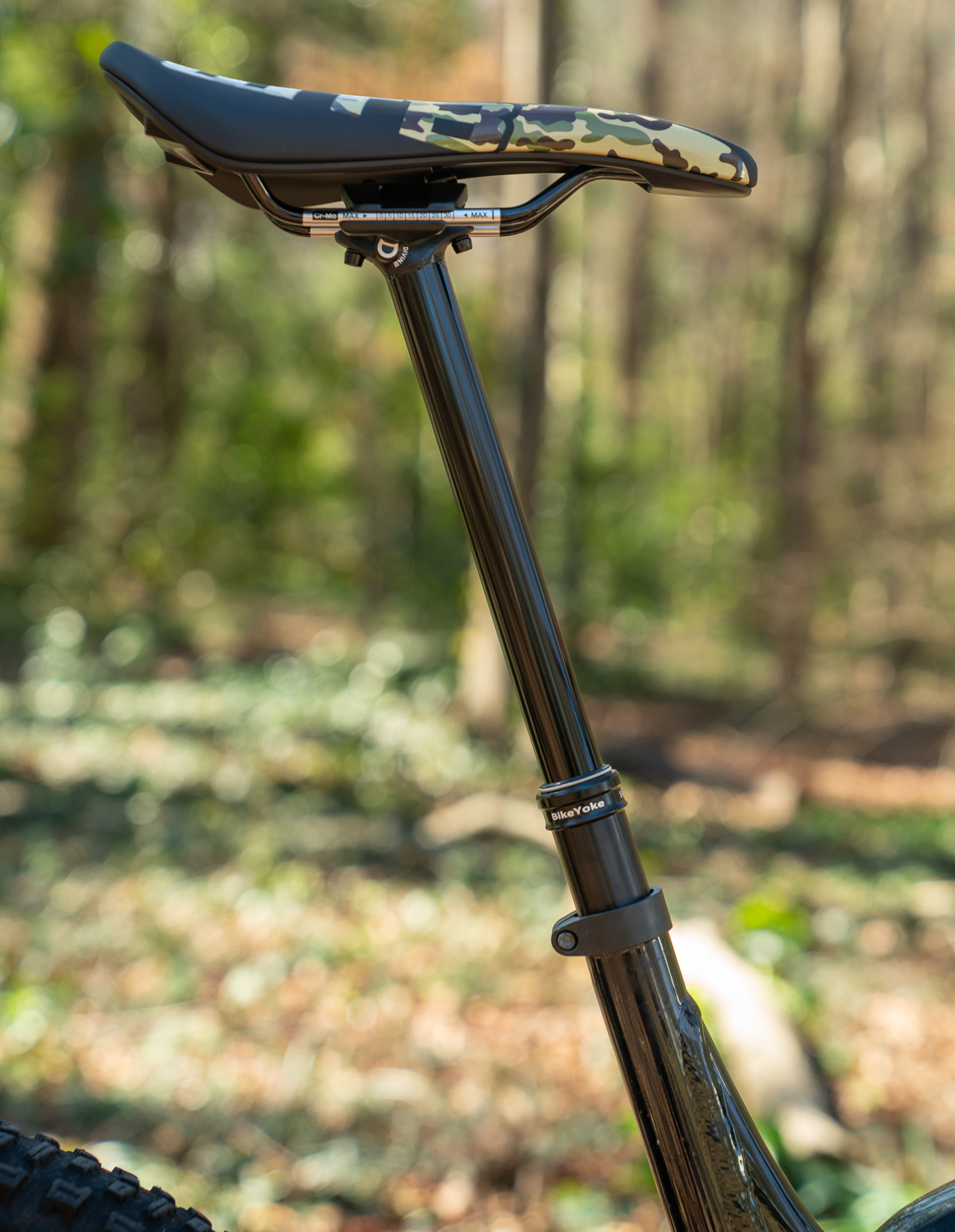
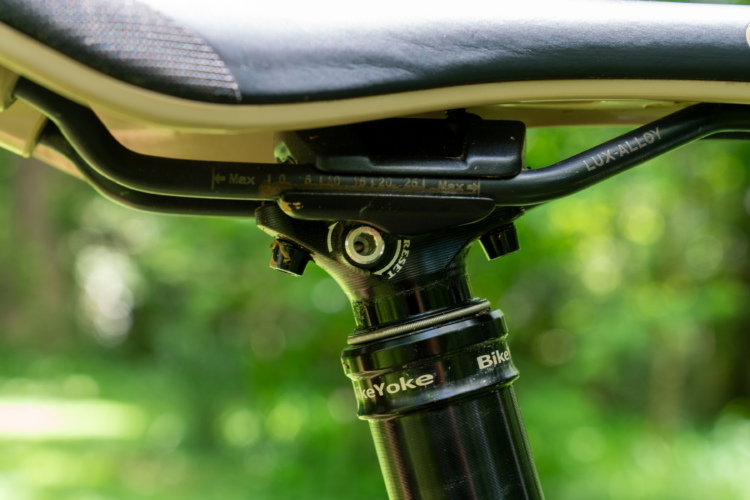
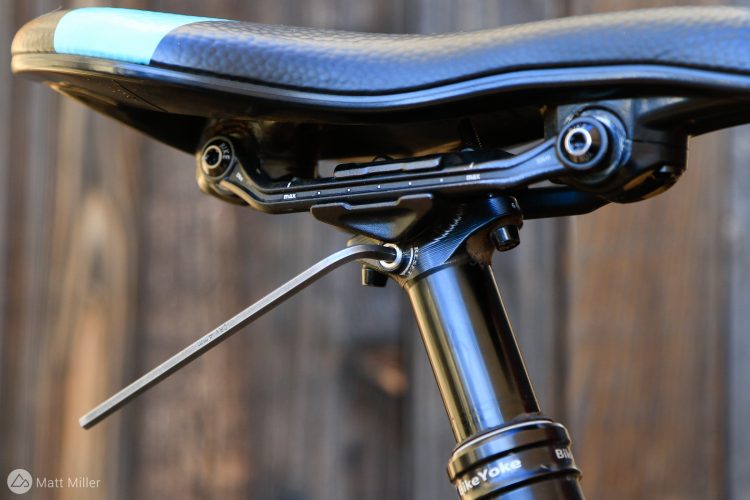
The Divine uses a similar seat clamp apparatus that’s fairly straightforward. For the 2.0 version, BikeYoke reduced the stack height by 5mm, which could be all that some riders need to upgrade to a longer post.
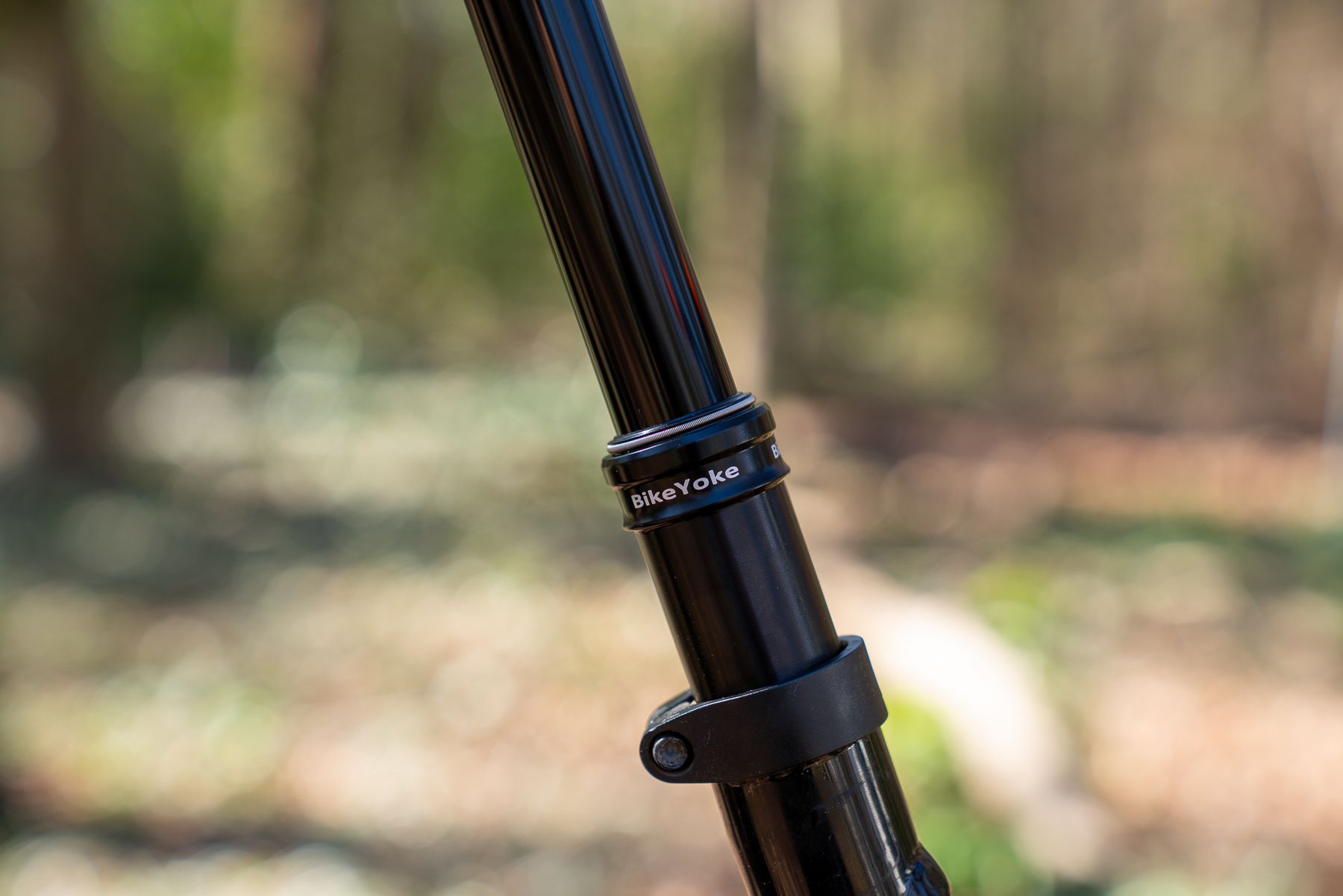
As you can tell from the photo above, the BikeYoke Divine ships well greased and lubed from the factory. Essentially every part of the Divine post is serviceable and rebuildable, and BikeYoke offers an impressive array of service and replacement parts on their website.
On the trail
Though I was only able to test the BikeYoke Divine on a few rides, I got a good feel for how it compares to the Revive and other posts on the market as well.
Out of the box, the Divine isn’t quite as snappy as the Revive. The return speed started slow, and got a bit faster through the first ride as everything settled in. One of my test rides saw temperatures dip below freezing, and it was clear this slowed the post further. The Divine is rated for “sub-zero functionality,” and I can confirm that it is indeed functional at low temperatures, though not fully so. At more reasonable temperatures, I’d rate the return speed between medium and medium-slow.
Of course, the nice thing is that if the post is too slow for your liking, you can add air pressure to it. The Divine runs higher pressures than the Revive, between 300 and 400psi. My shock pump maxes out at 300psi, so if I want to add more pressure to the Divine, I’ll need to upgrade my pump.
Of course, adding pressure could make it harder for lightweight riders to get the post to drop. The Divine takes more butt-force than the Revive, so there’s a definite tradeoff when it comes to finding the right pressure. However, I appreciate having the option to dial the post in the way I like it, especially on a dropper at this price point.
BikeYoke concedes the Divine isn’t as fast or as quiet as the Revive. Indeed, the post makes a distinct squishing sound, especially when lowered.
Share your BikeYoke Divine 2.0 review
“Heavier” tends to follow “cheaper” too, though in this case the penalty isn’t too bad: the Divine is just 20g heavier than the same size Revive I tested.
The BikeYoke Divine 2.0 is said to have a 20% lighter remote feel through changes to the internal valving, though it’s not clear how the brand achieved this. There are several factors involved, from the remote itself, to the cable and housing, to the actuator at the bottom of the post. To me, the Divine definitely has a heavier feel than the more-expensive Revive post. Though the lever feel itself is quite light, the Divine requires more cable pull per valve travel, according to the Stefan Sack, BIkeYoke Overlord of Operations.
Looking at other posts on the market, the BikeYoke Divine is priced $10 less than the OneUp V3 dropper post. The OneUp has the Divine beat on return speed and trigger feel, and I’d say the two are tied when it comes to serviceability, with perhaps a slight edge to the Divine. Two things the Divine offers that the OneUp does not are the auto-bleed function and the ability to top off the pressure inside the post.
The BikeYoke Divine feels most similar to the PNW Loam, another excellent post that’s competitively priced. The PNW is about $30 cheaper, though like the OneUp, it doesn’t offer auto-bleed or adjustable pressure.
The Triggy Alpha lever remote is an upgrade for any post
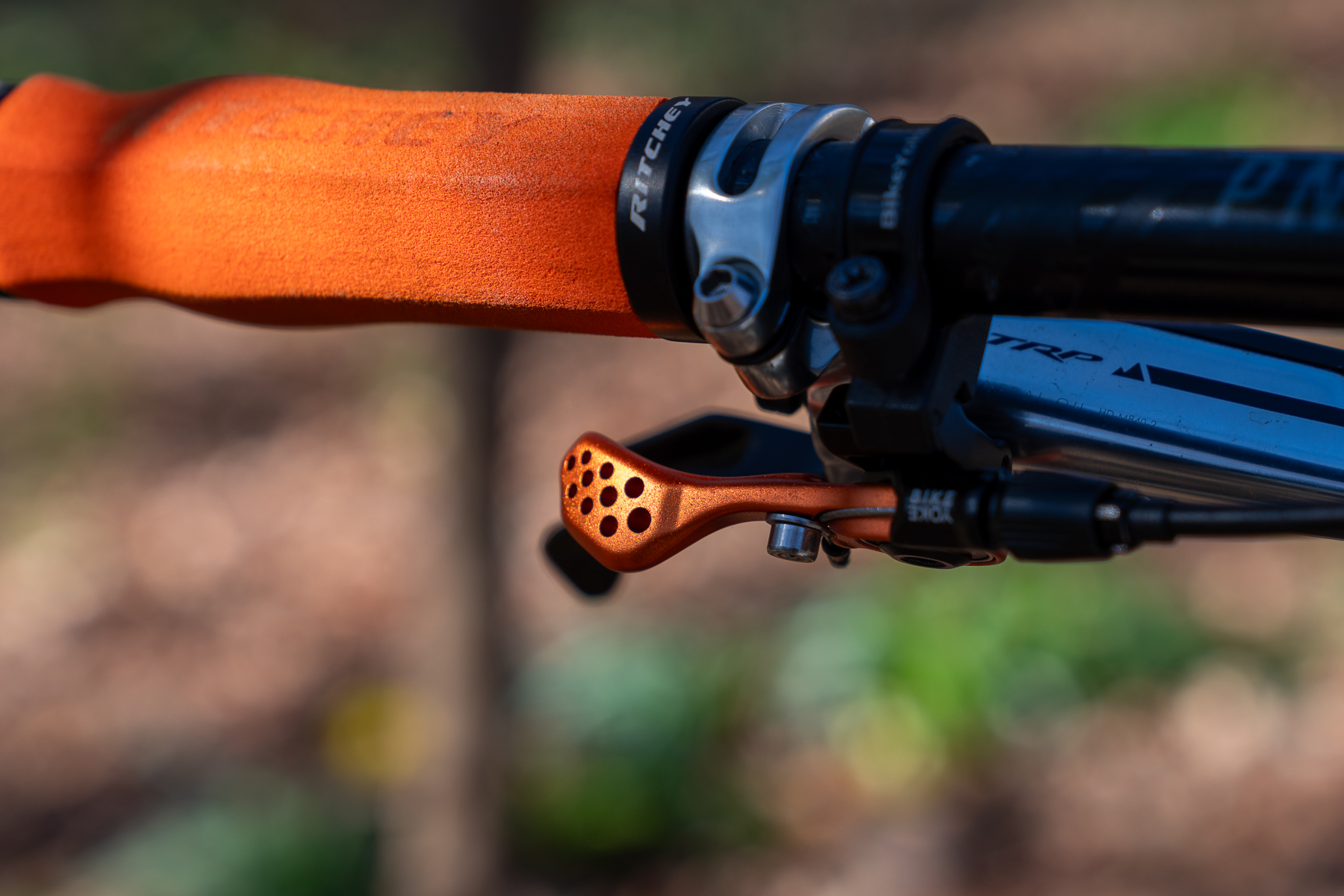
Is it just me, or do dropper post remotes keep getting better and better? The $69 Triggy Alpha isn’t actually new, but it’s definitely worth a look if you’re in the market for a lever upgrade. The aluminum paddle is available in a variety of colors, and it features an oversized bearing for satisfyingly smooth action. Underneath, there’s a handy notch for wrangling the free end of the cable.
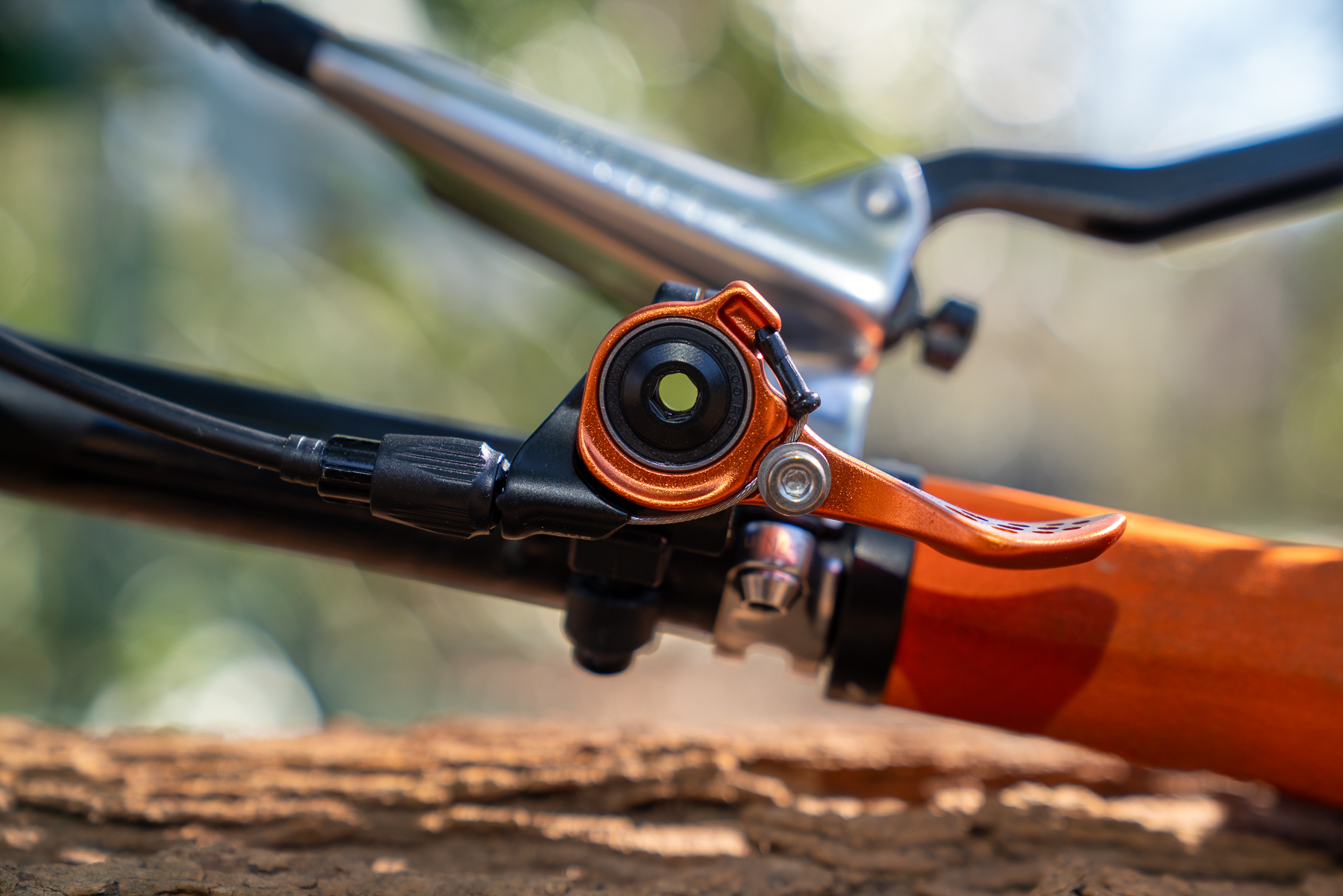
Beyond the build quality, what sets the BikeYoke Triggy Alpha apart is its adjustability. Two mounts allow you to move the remote inboard or out, and you can rotate the whole thing about its top axis to push the lever closer or farther away from your thumb.
The Triggy Alpha, combined with the Divine 2.0 post, offers more throw than I’m used to. That is, initially it felt like I needed to push the lever farther to get the post to activate. However, I only needed to adjust the lever’s starting position to bring it closer to my thumb, which the Triggy Alpha allows. And if that’s not enough, or if you have a small hand, there’s another version of the Triggy Alpha with a shorter lever.
Pros and cons of BikeYoke Divine 2.0
Pros
- Fully rebuildable with adjustable pressure
- Up to 213mm of travel; adjustable in 5mm increments
- High-quality design and construction
Cons
- Return speed is below average
- Heavy/long lever to activate
Bottom line
Though it may not be as responsive as more expensive posts, the BikeYoke Divine 2.0 delivers a good value thanks to its rebuildable design, adjustable pressure, and auto-bleed function.




3 Comments
Feb 5, 2026
All our dropper clamps clamps and bolts are designed so you can install the saddle without taking off the bolts.
First, install clamps and bolts without the saddle so that the screws are just about 1 turn in the threads of the barrel nut.
Then you insert one rail on one side, move the rail towards the center of the post and flap the saddle over.
https://photos.app.goo.gl/A2JRQXTwEZFJRtnF7
This also works with 10mm rails, as shown in the video.
I can't say that I remember a saddle that couldn't be installed this way.
Feb 4, 2026
Feb 6, 2026
All our dropper clamps clamps and bolts are designed so you can install the saddle without taking off the bolts.
First, install clamps and bolts without the saddle so that the screws are just about 1 turn in the threads of the barrel nut.
Then you insert one rail on one side, move the rail towards the center of the post and flap the saddle over.
https://photos.app.goo.gl/A2JRQXTwEZFJRtnF7
This also works with 10mm rails, as shown in the video.
I can't say that I remember a saddle that couldn't be installed this way.