

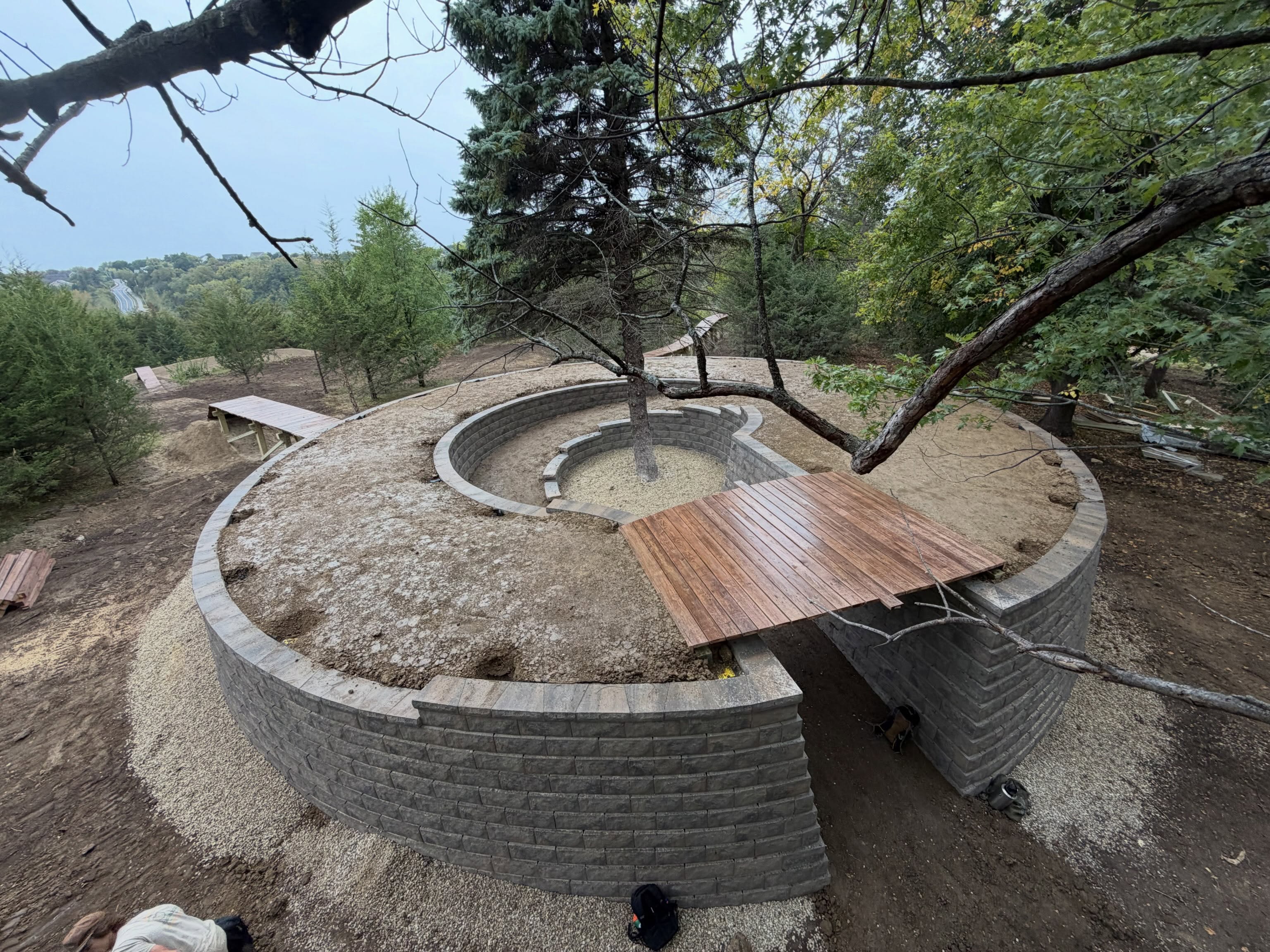
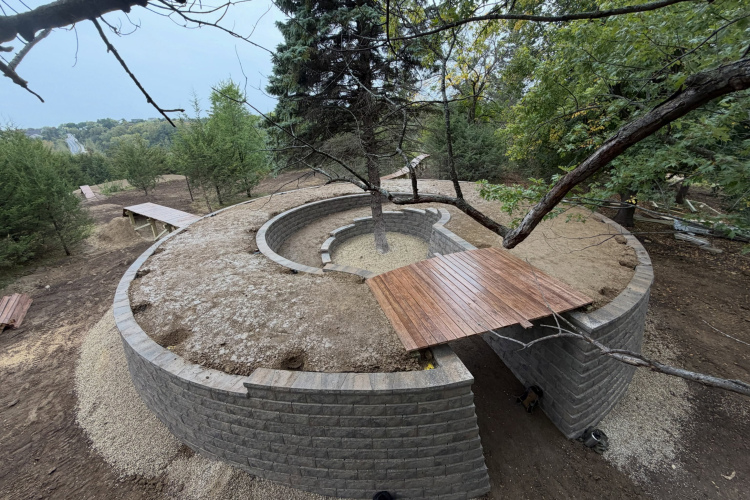
A few weeks ago, we saw some incredible pictures of a trail hub on Pathfinder Trail Building’s social media. The elevated trail hub surrounds a tree, with the up-trail cutting through the middle and spiraling around it, and it includes a wooden bridge over the hub entrance. All told, the hub stands about eight to ten feet off the ground and is truly spectacular work.
But from the pictures, we could also see at least two trails coming off the hub, each with its own woodwork. Naturally, we had to know what was beyond the hub and down those trails.
The Tree Fort
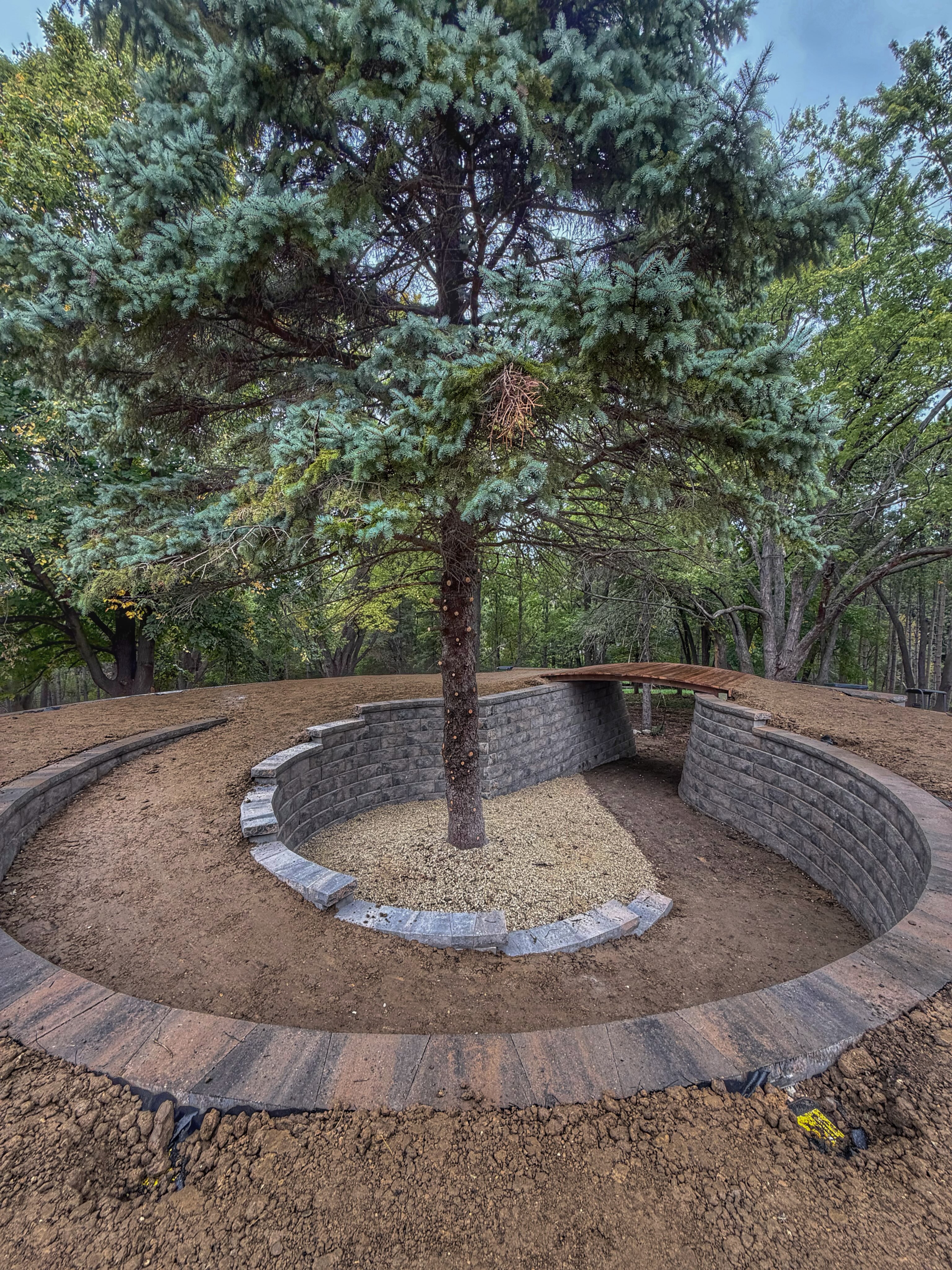
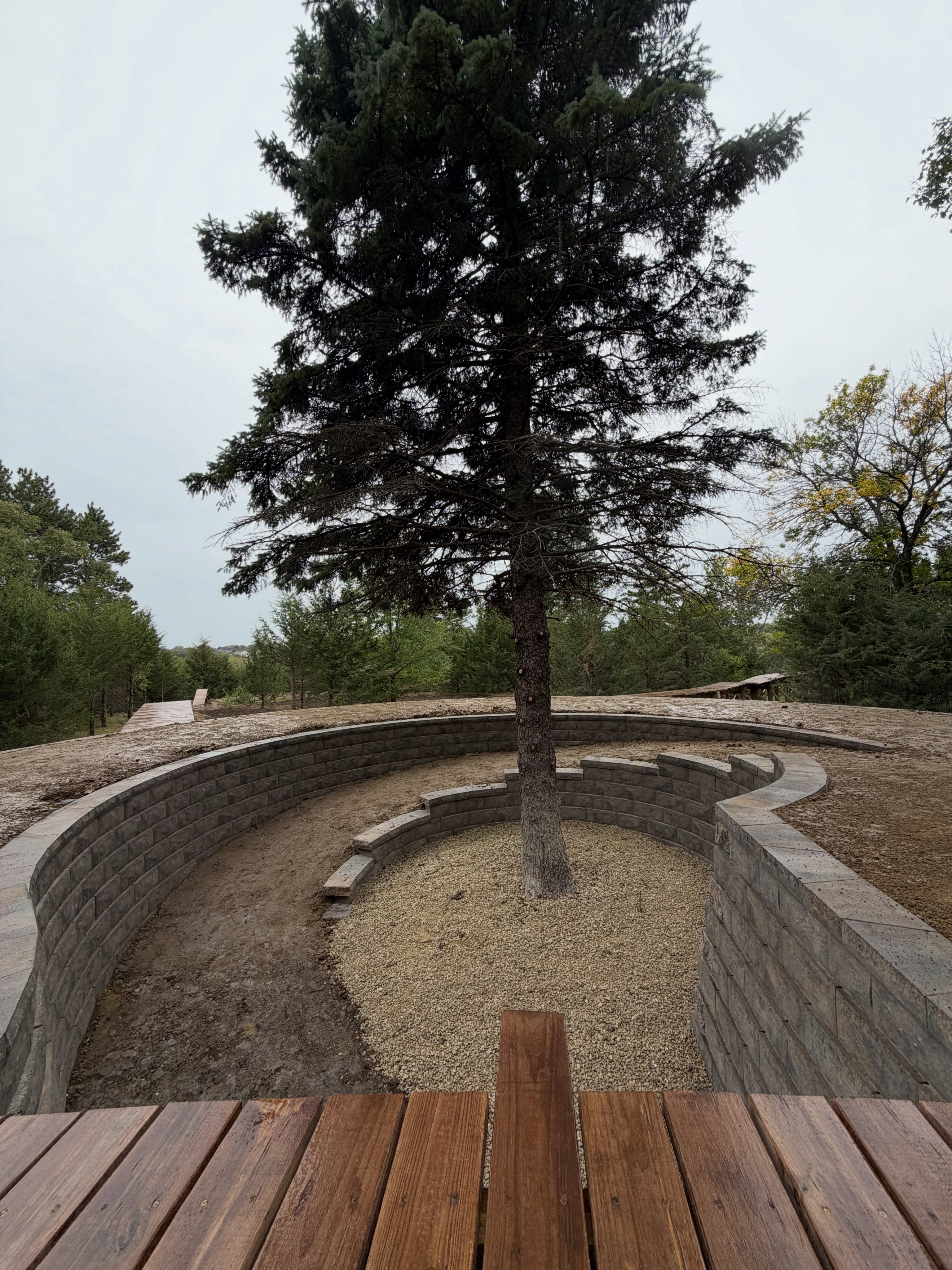
“We’re calling it the Tree Fort,” Adam Buck, Owner of Pathfinder Trail Building, told Singletracks, referring to the hub. The photo above, and the other photos we first saw that caught our attention, show the hub before guardrails were added. With a nearly 10-foot drop in some places, they added a railing before the grand opening, which was just last weekend.
The photos also only show two trails heading off from the Tree Fort — Buck told us that there are actually four. And all four are more advanced options, with two blues and two blacks dropping from the hub. The blue options consist of two flow lines — a “jump line” and a “drop line,” while the black trails consist of one tech option and a jump/drop option.
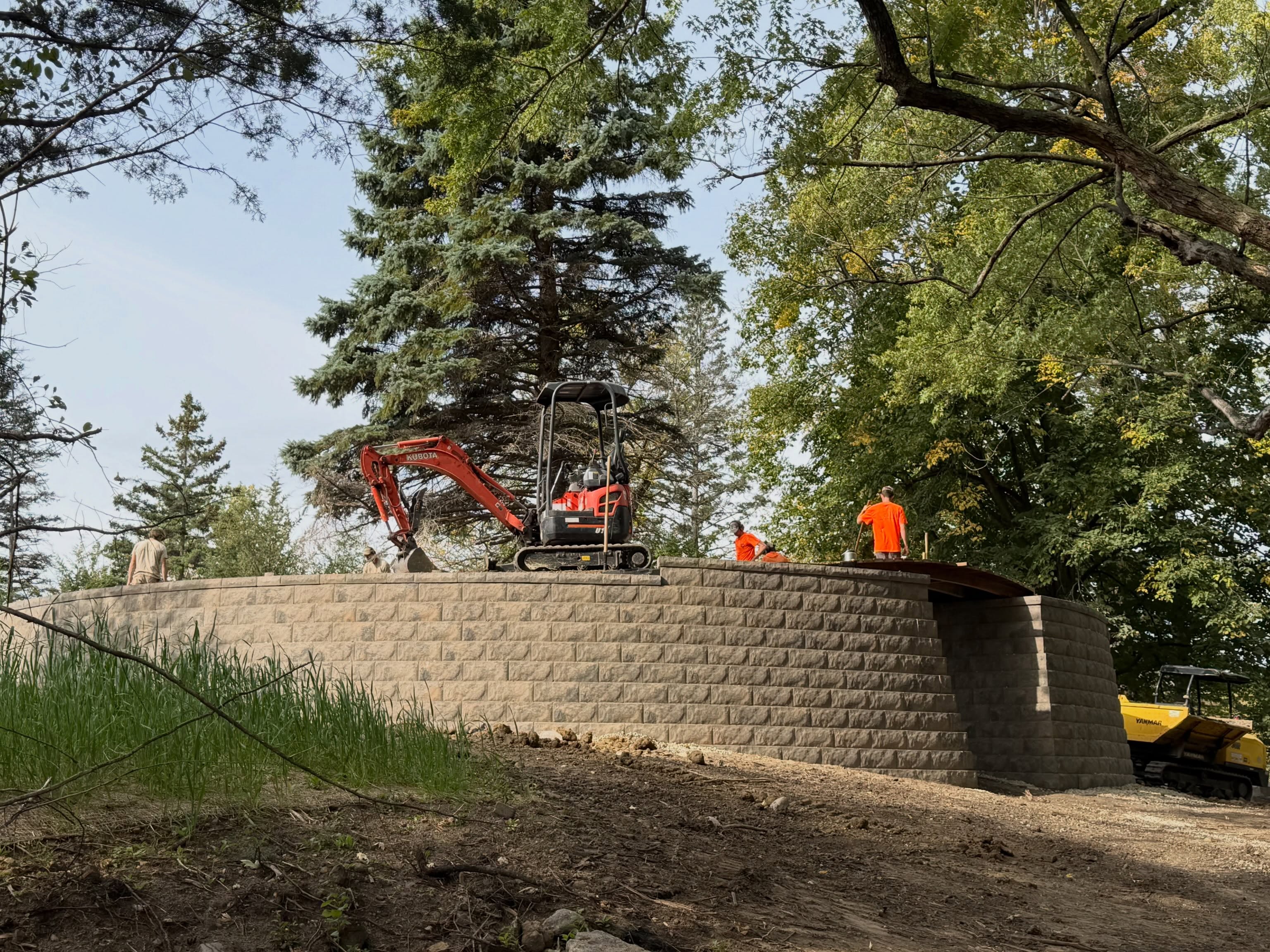
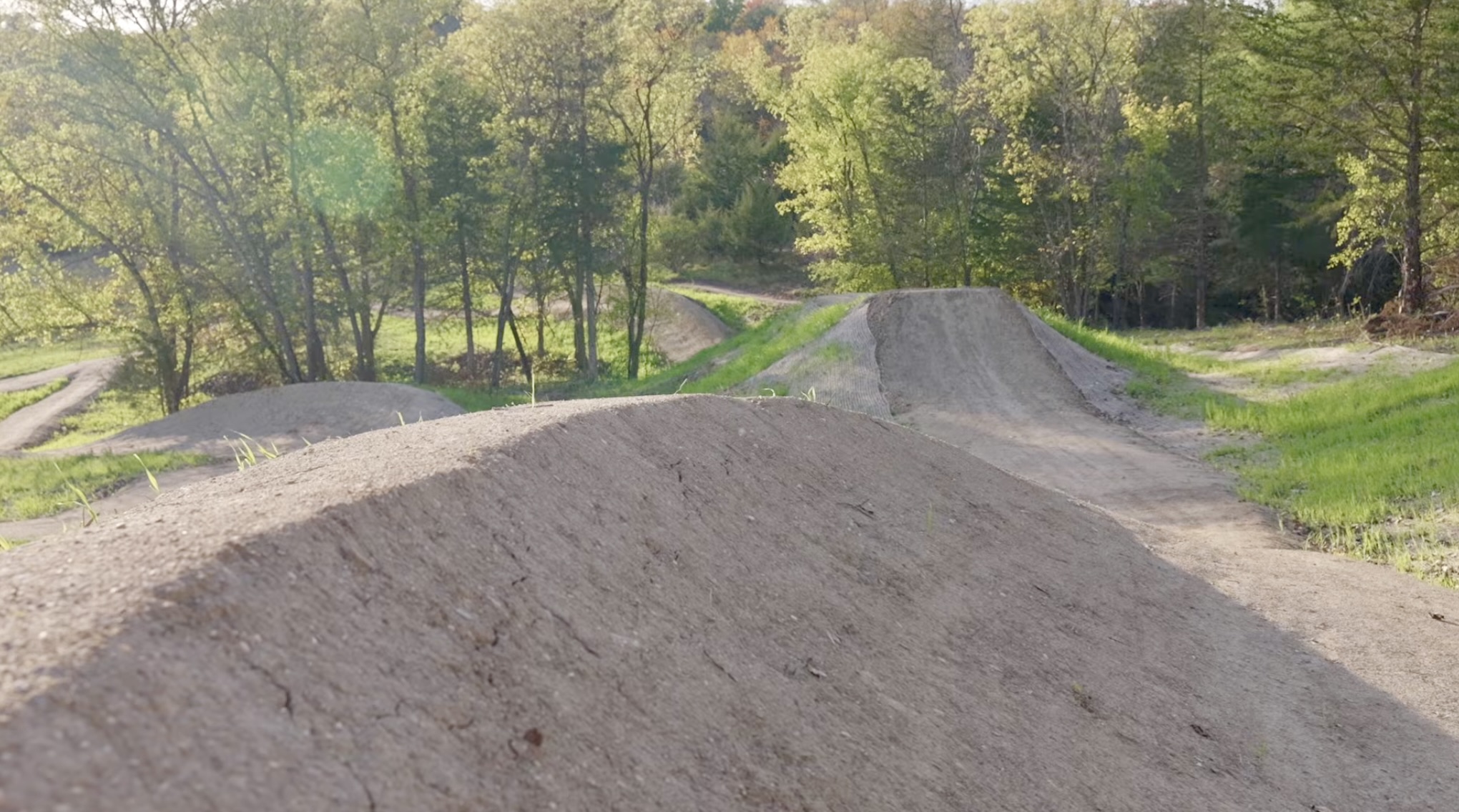
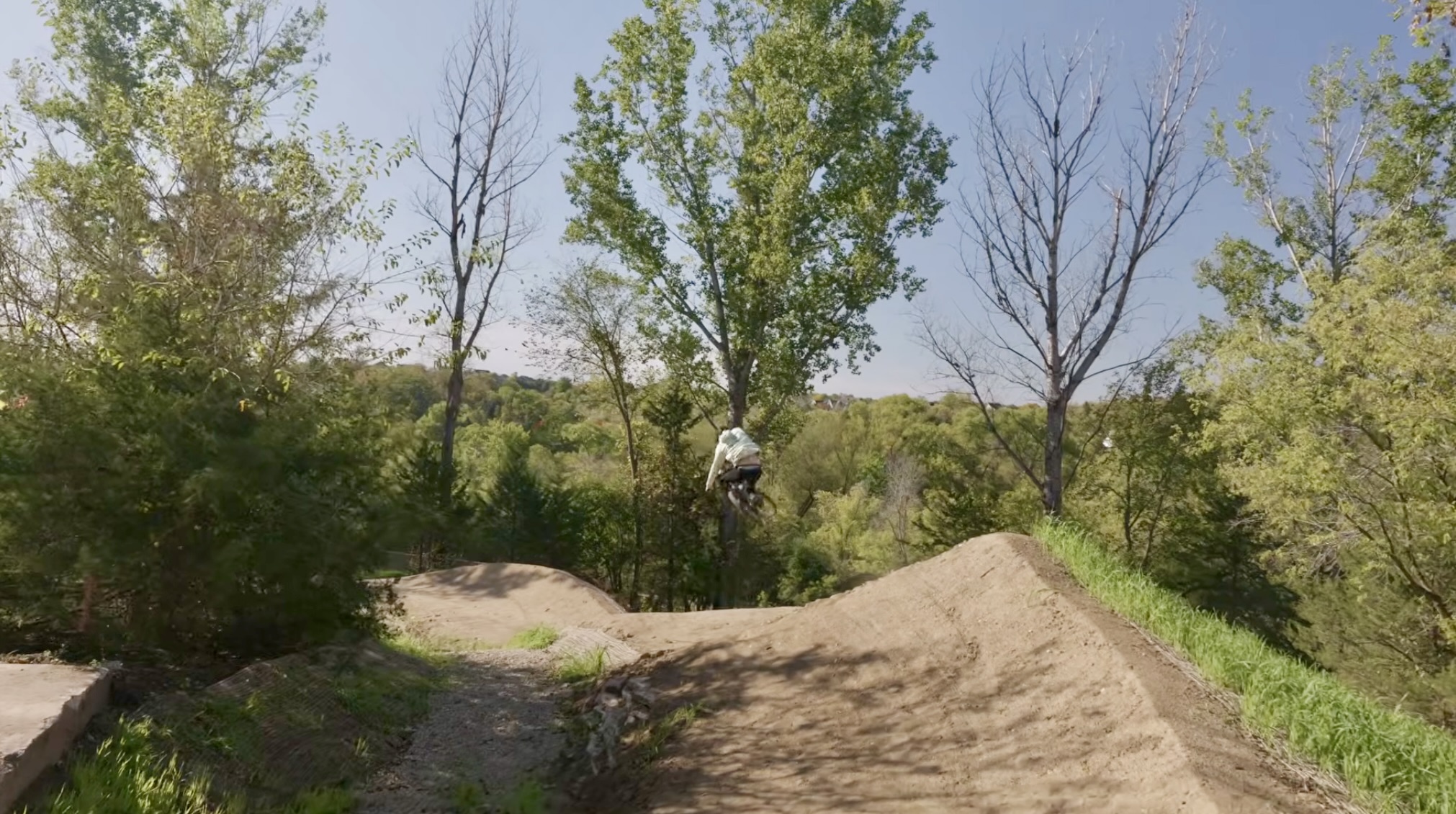
Looking at the blue options, Buck and the Pathfinder crew definitely made the trails approachable. The “jump line” features a fairly easy downramp from the Tree Fort followed by what you would expect on an intermediate jump trail: berms, table tops, and rollers. Pathfinder incorporated even more progression into this flow trail by adding additional take-offs on some of the jumps — mellower on the left, a bit further back and steeper on the right.
Progression was also the focus on the blue drop line. While the woodwork coming off the hub for this trail creates a “drop” at the end, Pathfinder made it rollable, letting riders work up to the send. The same holds for the handful of wooden drops that follow, each with a steep wooden backside before a dirt landing. At speed, this backside is easy to clear, but it also provides a bit of a buffer for those working their way up to the right trail speed.
The blue drop trail culminates with a fairly tall wooden on/off feature that, when ridden at trail speed, results in a four- or five-foot drop.
The advanced trail options
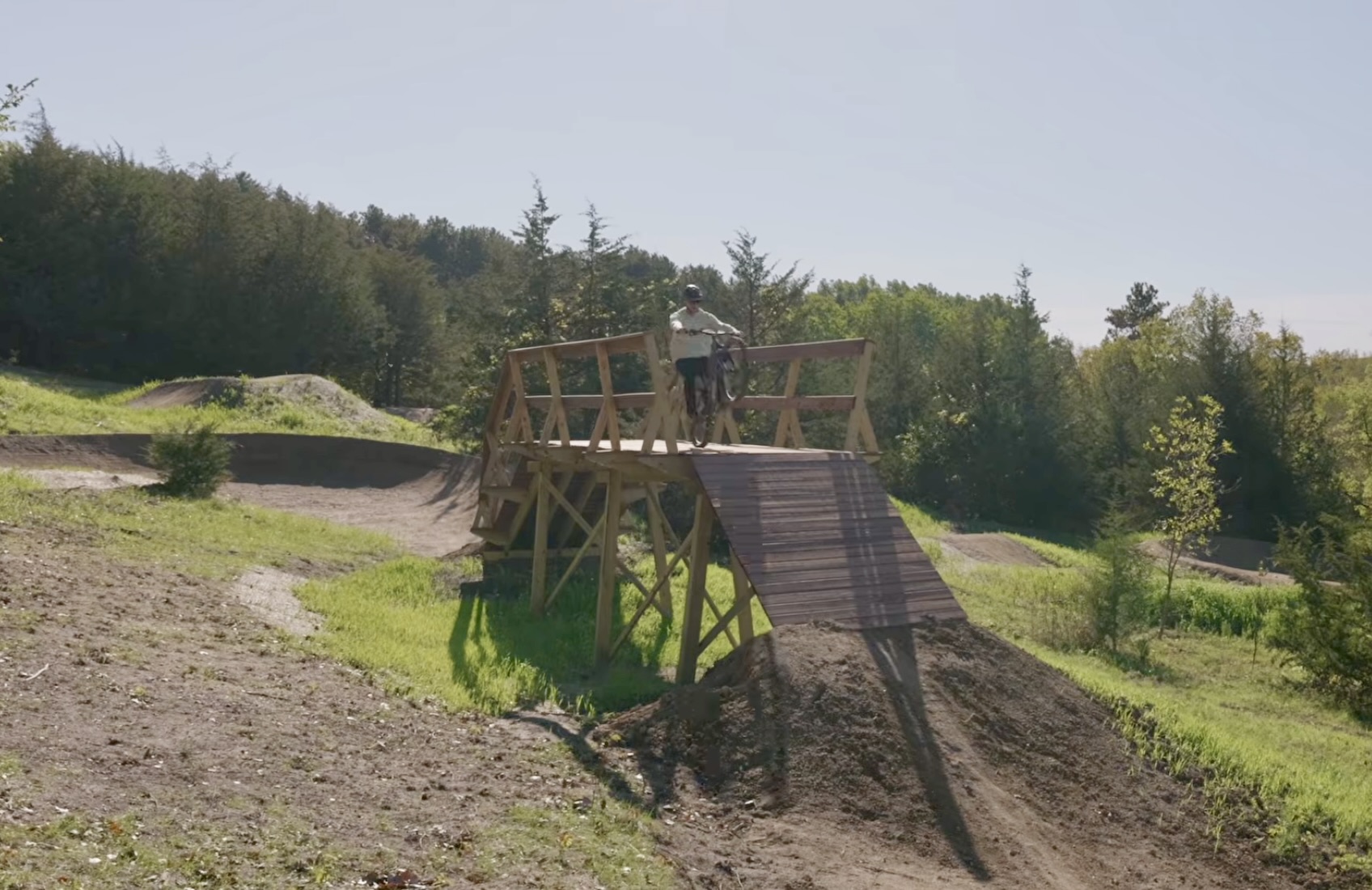
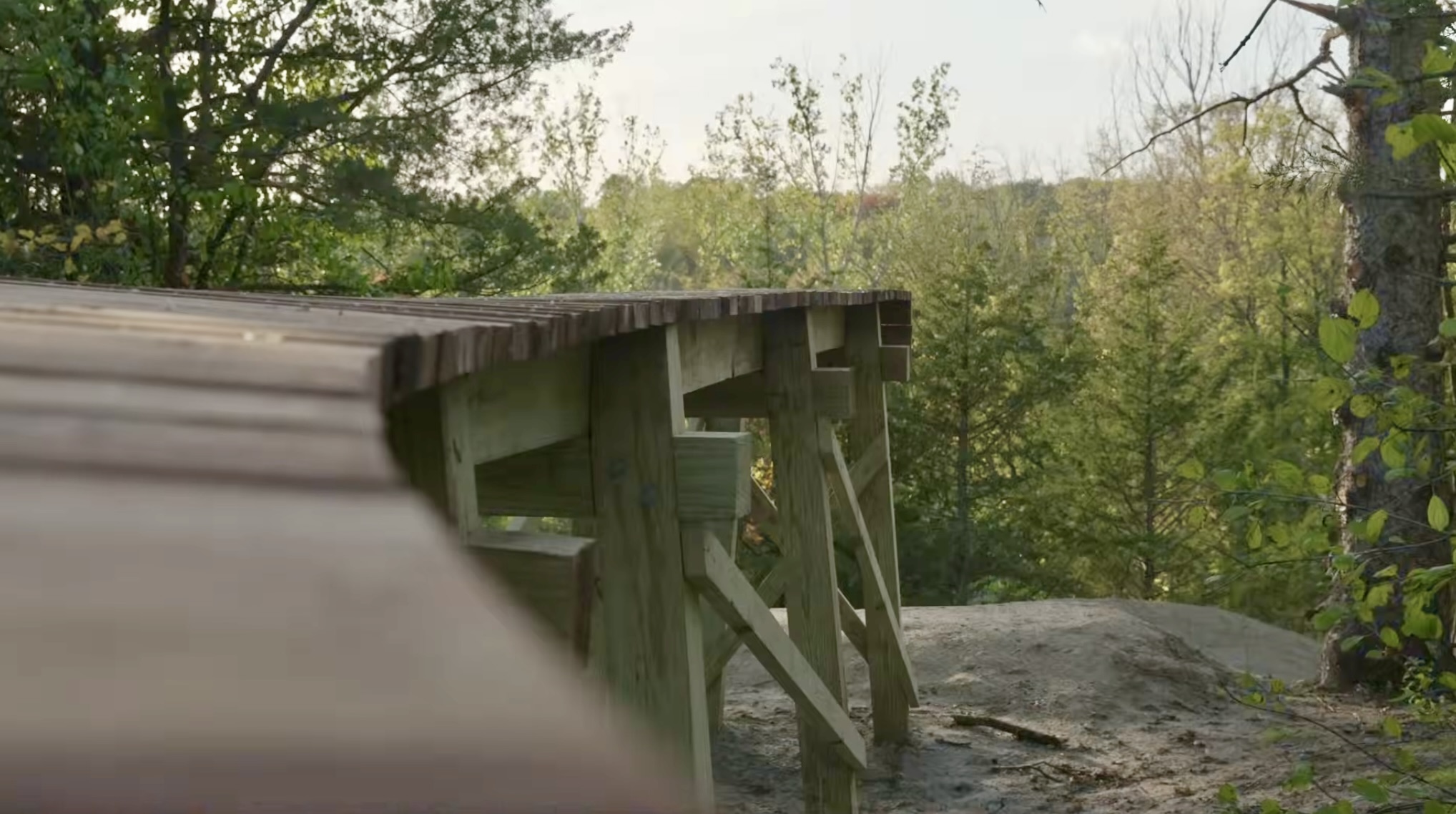
Pathfinder also built two black options off the Tree Fort. The jump/drop line starts with a long ride across a wooden bridge from the hub, resulting in a three- to four-foot drop. After the drop, this trail easily hits the highest speeds as riders twist around a few berms before hitting a shark fin that leads into the park’s largest jump. While this finishing jump isn’t a true double, it has a distinct knuckle at the landing, so it’s not as forgiving if you come up short.
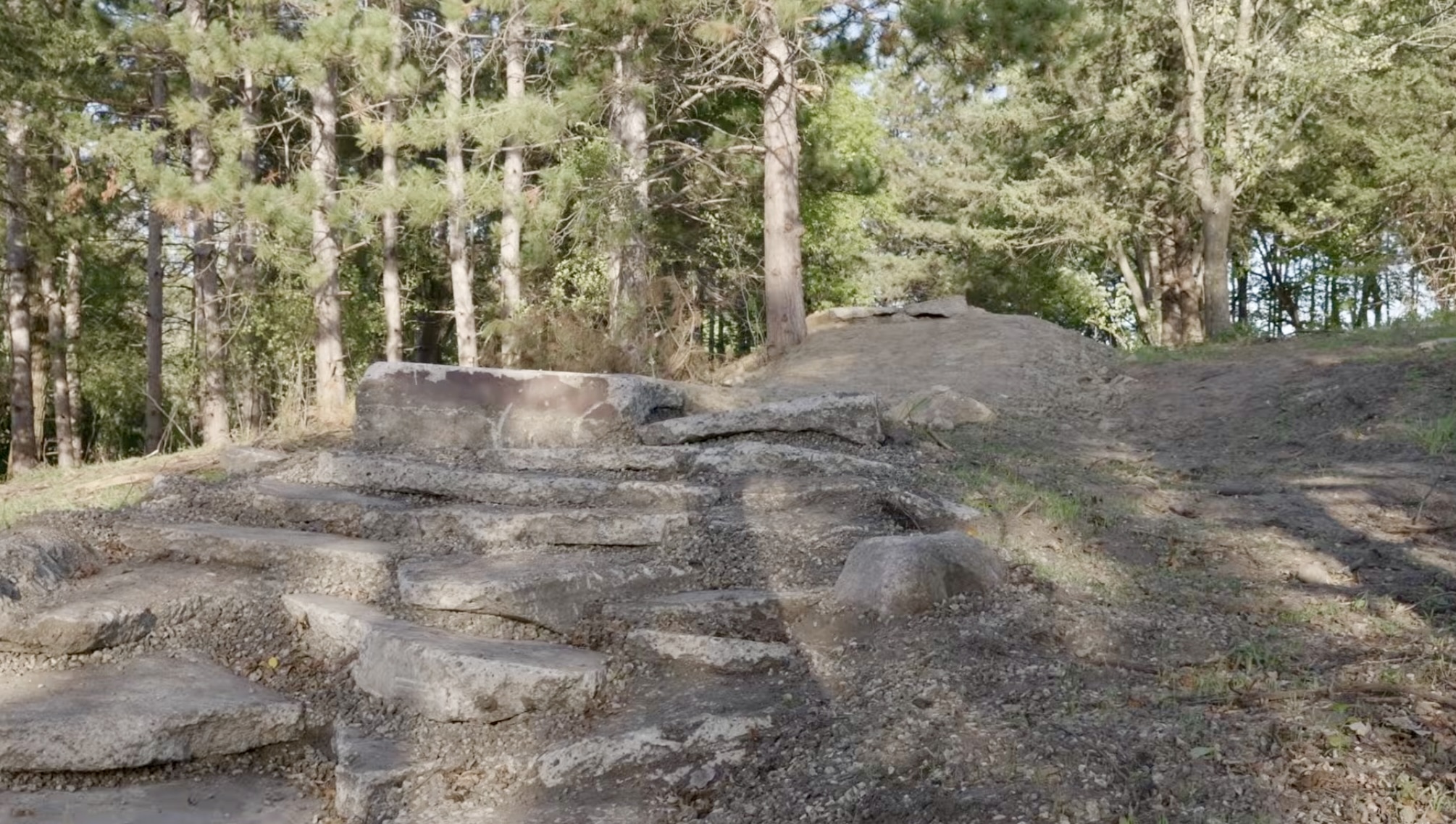
The black tech trail starts with a relatively steep roll-in off the hub, then straight into a smaller double hip-jump that sends the rider into a series of berms. From there, you hop straight into the tech, constructed without the use of any rocks or roots.
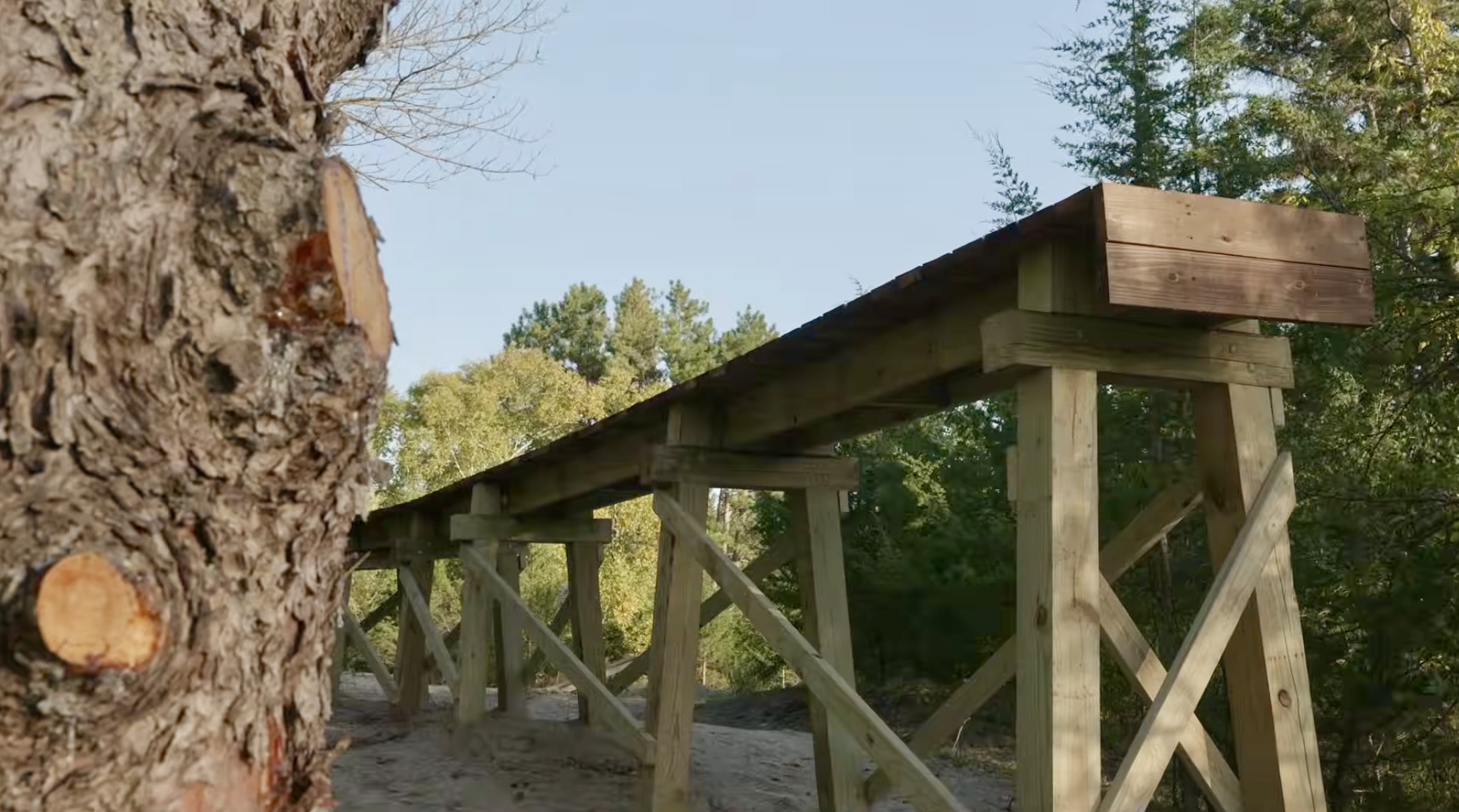
“[The land] is an old farmstead, so we had a bunch of stuff we needed to get rid of — recycled concrete slabs and old foundation pieces and stuff like that,” Buck told us. So, Pathfinder incorporated the concrete into the black tech trail.
The soil at the park didn’t consist of much usable rock to incorporate into any technical feature. Adding the concrete slabs and foundation pieces killed two birds with one stone. Pathfinder didn’t have to move or figure out where to dispose of the concrete, and they didn’t have to find and bring in rock.
That is a pretty exquisite trail hub…wouldn’t a pile of dirt do the same?
Trail hubs do a few things. First, they often add a bit more elevation where it’s lacking. Places like Bentonville are littered with elevated trail hubs that give riders a bit of extra momentum in flatter areas, helping them clear features on the trail. With 40 or 50 feet of elevation to work with, any extra boost that Pathfinder could get is welcome.
More than providing a bit of extra elevation, hubs are also gathering places for the mountain bike and greater trail community. They are places for the community to come together, be social, and, well, simply hang out. And, for that reason, Buck thinks they need to be more than a pile of dirt.
Plus, trails can significantly boost local economies.
“Cycling facilities and mountain bikes are getting popular enough that they should be treated the same as other recreation facilities,” Buck said. He compared it to a baseball field. Dugouts aren’t essential; you could just have a bench on each side of home plate for players to sit on. But any team will choose a field with a dugout and proper facilities over one without.
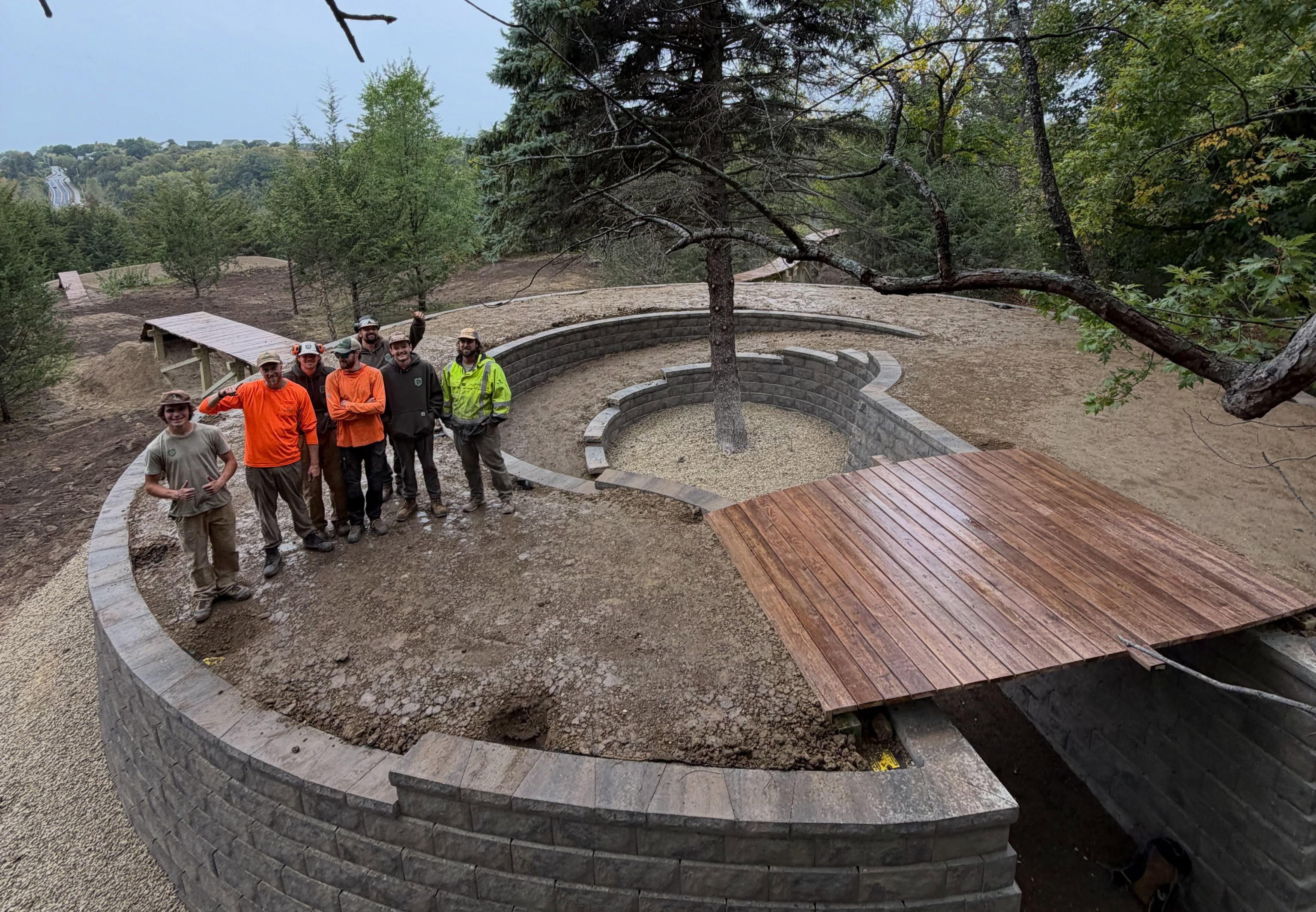
Cedar Hills Bike Park in Eden Prairie, Minnesota
Pathfinder didn’t stop at four trails coming off of the Tree Fort hub. Buck also mentioned a beginner-friendly loop, an adaptive loop, and a skills area. All told, Pathfinder built roughly three miles of trail.
The Tree Fort and all the aforementioned trails are a part of a newly constructed urban bike park called Cedar Hills in Eden Prairie, Minnesota. Eden Prairie is roughly 20 miles southwest of Minneapolis and, for the most part, trails in the region are few and far between. Trail maps show that the surrounding area has mainly relied on the urban bike park system. Cedar Hills not only fills some geographic gaps, but also offers more advanced riding options than the other mountain bike parks.
Cedar Hills Bike Park officially opened this past Saturday.
Keep up with the latest mountain bike news by adding Singletracks as a preferred source on Google.




1 Comments
2 minutes ago