

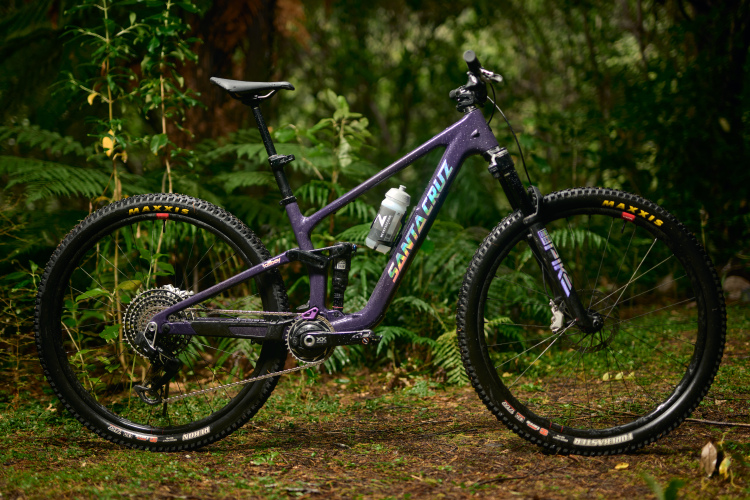
I hope you’re ready because this is going to be a bare-knuckle brawl. It’s the Starling Murmur vs. an 800-pound gorilla, the Santa Cruz Tallboy in this semifinal short-travel trail bike matchup. Before we get to it, here’s how these two excellent trail bikes advanced.
The Murmur came out with a roar
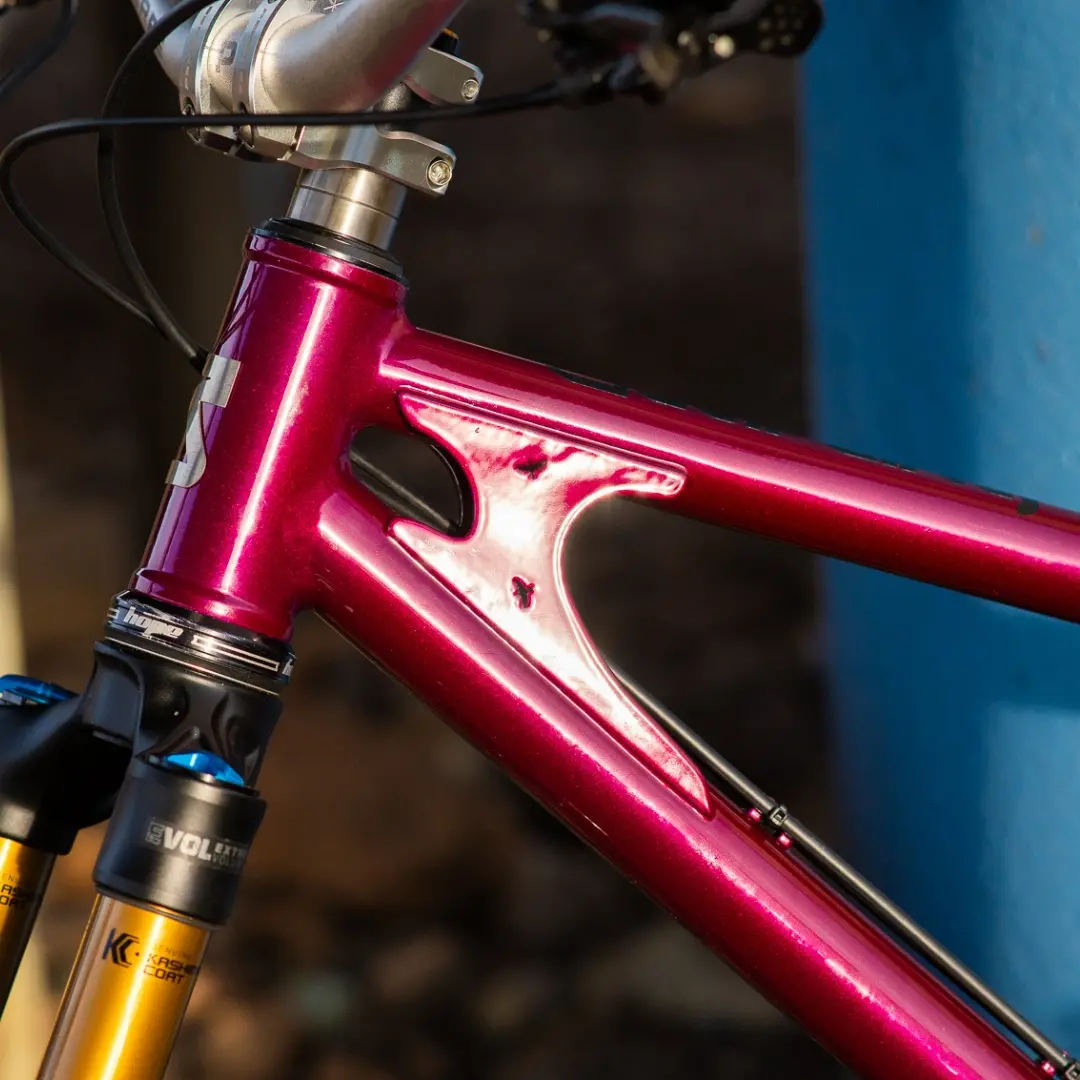
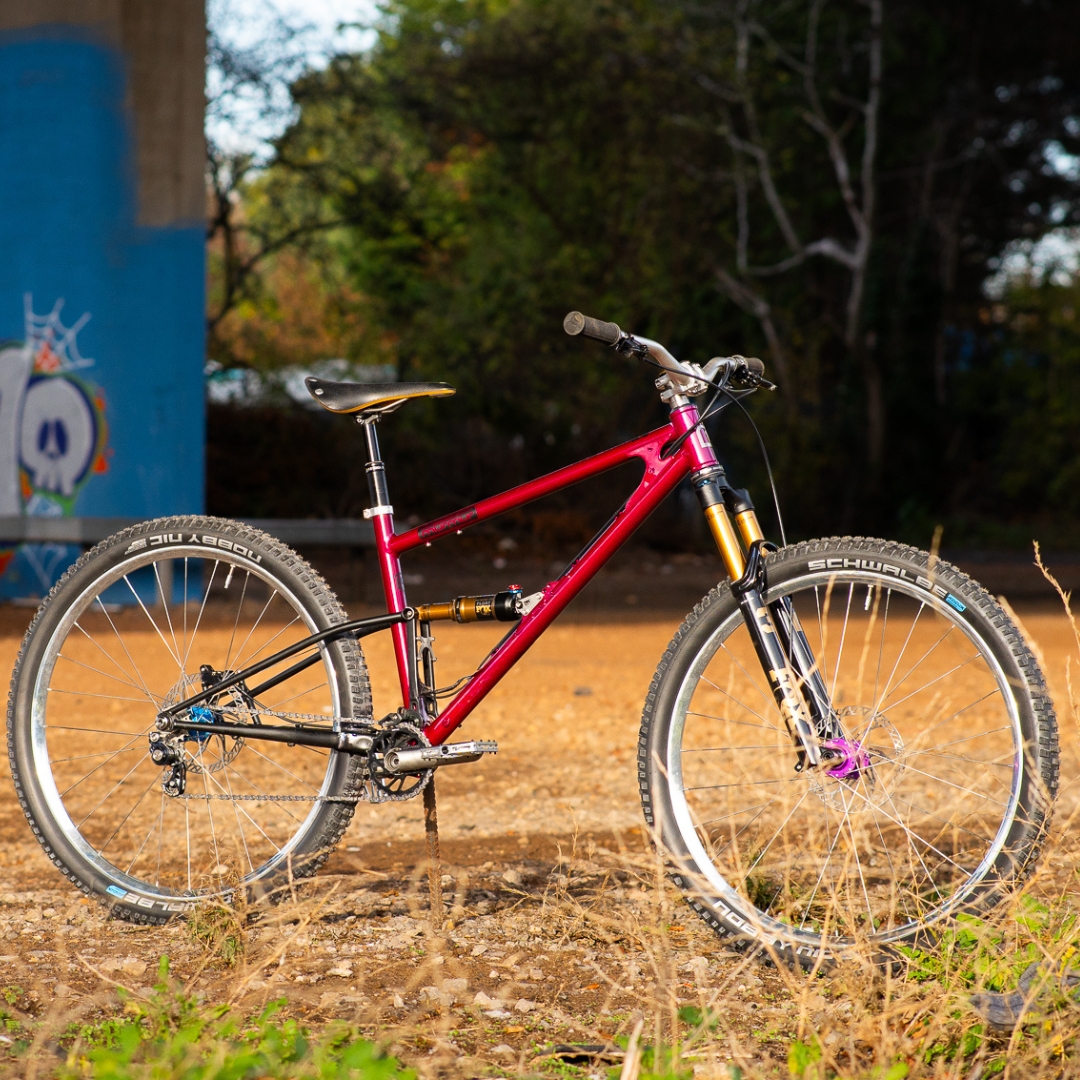
The Starling Murmur defeated the Forbidden Druid in round one, and if I had to guess why, I’d say it came down to two main factors: suspension and geometry.
On the suspension side of the equation, the Forbidden Druid is a four-bar, high-pivot bike, while the Murmur is a single-pivot. High-pivot designs are lauded for limiting chain growth, though the downside is reduced climbing efficiency and added complexity. Historically, short-travel, high-pivot bikes have not been well received; people lost their minds in 2024 when Norco put a high-pivot on the Optic.
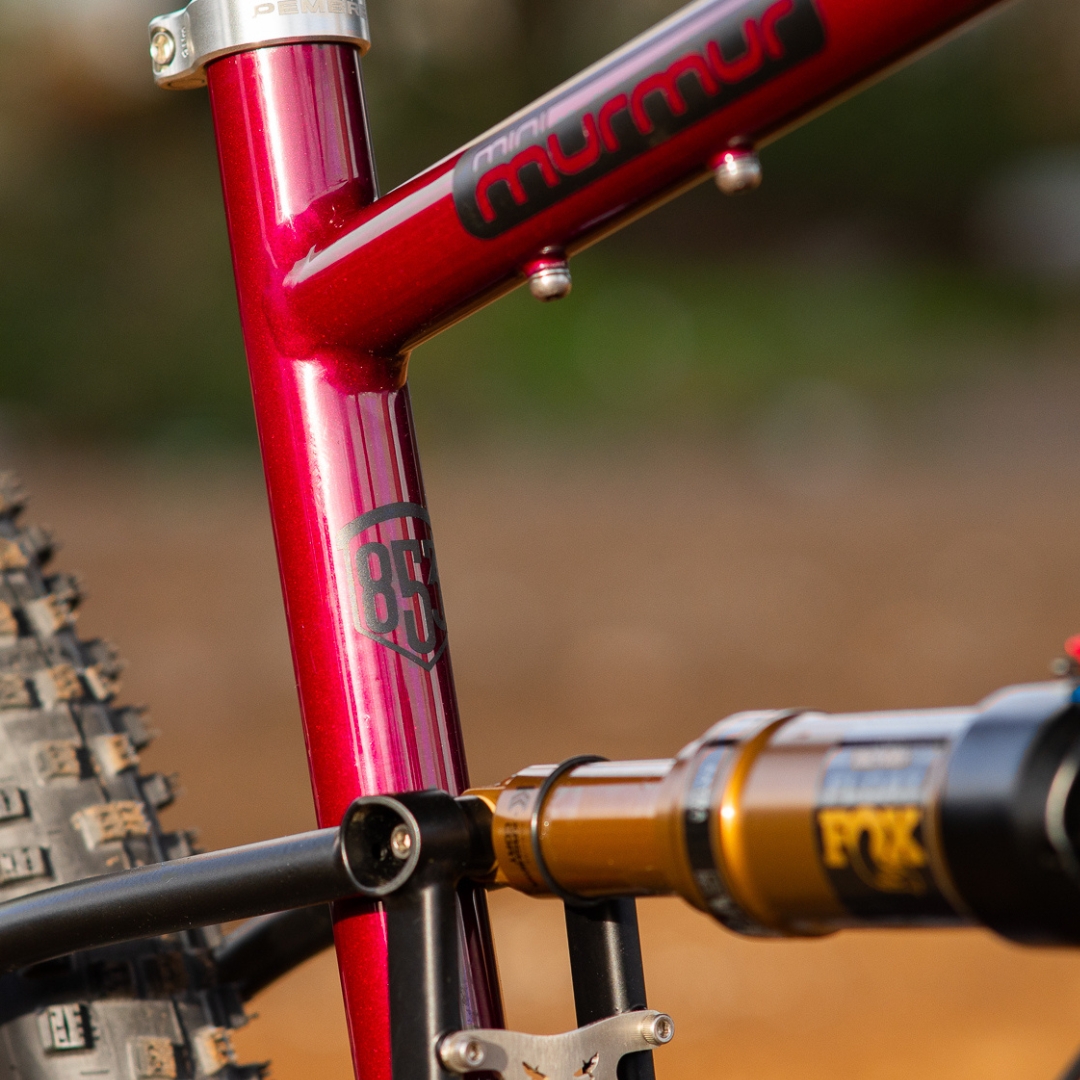
In the end, it appears readers prefer the simplicity and efficiency of the Murmur over the Druid. That simplicity extends beyond the suspension design to the frame (steel) and the use of external cable and hose routing.
The Murmur also has the Druid beat on sizing options, with six frame sizes vs. four, which ultimately promises a closer fit for riders. On the geometry front, the Murmur has what are likely the longest chainstays in the tournament — short- or long-travel — at 455mm. As I mentioned in the Lux Trail vs. Spider recap, there’s been a trend lately toward longer chainstays, and the Murmur has ’em.
The Tallboy stands above the Cascade Peak
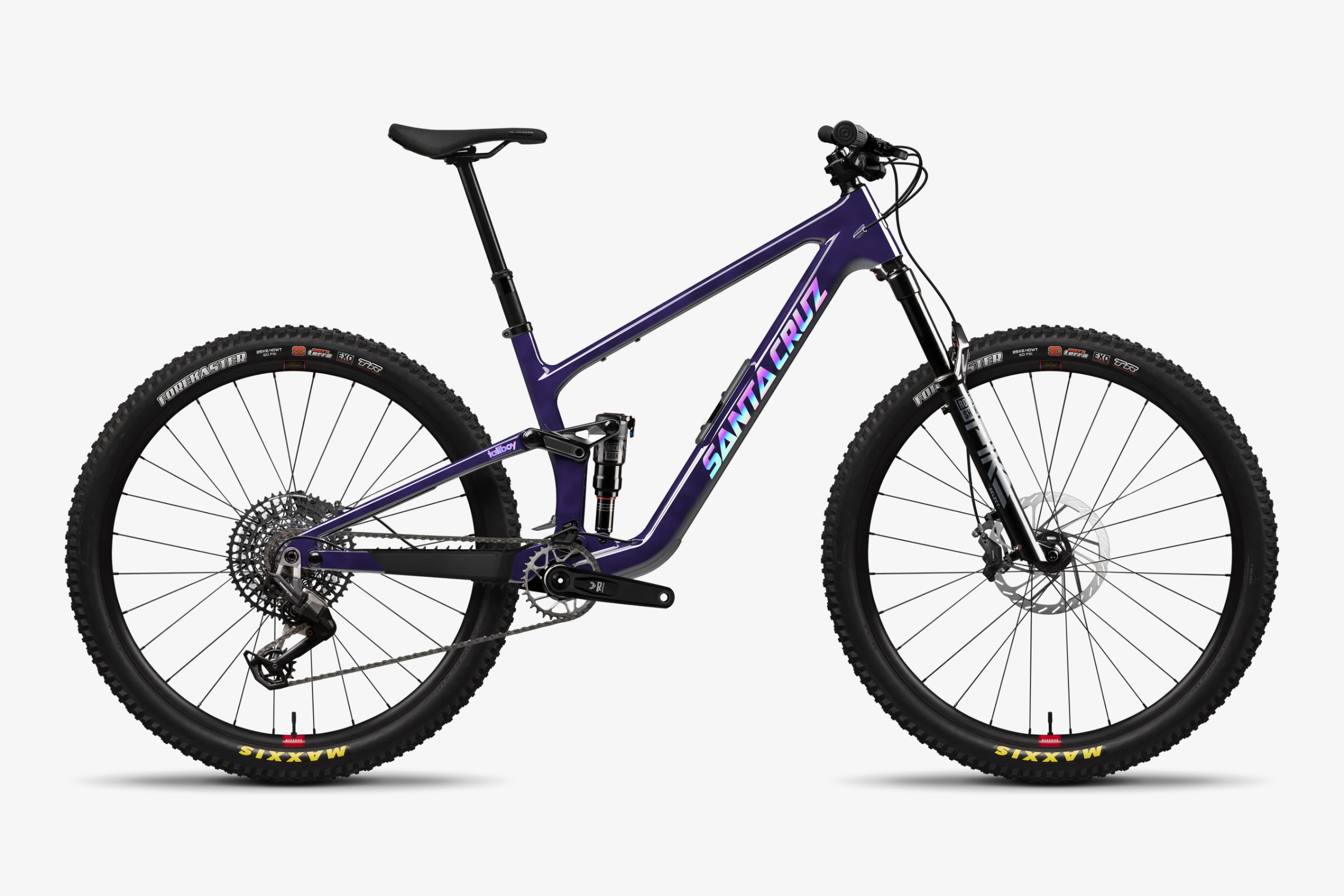
Admittedly, the Ari Cascade Peak drew a tough first-round matchup with the Tallboy. Though the Ari offers a much lower price, that wasn’t enough to convince readers that it’s the better short-travel trail bike choice than the Tallboy.
Naturally, the Santa Cruz name gives the Tallboy a leg up in any competition. Beyond that, I think the lighter weight of the Santa Cruz helped. Sure, for a lot of riders, weight isn’t important, but when push comes to shove, and it’s a choice between a lightweight carbon bike and a heavier aluminum one, carbon usually wins. I would have loved to see the aluminum Ari go against one of the steel bikes in this competition to see how it would fare, but alas, that’s not in the cards this year.
Like the Murmur, the Tallboy is offered in six different sizes, which is two more than the Cascade Peak. The Tallboy also has a lower bottom bracket than the Ari, promising a more agile, “in-the-bike” ride feel, plus longer chainstay lengths that vary by frame size.
The gloves are off as we compare Tallboy and Murmur framesets
Here again, the Tallboy squares off against a very different short-travel trail bike. Both bikes certainly have a cool factor about them, just for opposite reasons.
| Santa Cruz Tallboy | Starling Murmur frame (135mm) | |
|---|---|---|
| Suspension travel (F/R) | 140/130mm | 150/135mm |
| Frame | Carbon | Steel (Reynolds 853 front triangle, chromoly rear) |
| Wheel size | 29″ | 29″ (mixed with alternate swingarm) |
| Geometry* (size large frame) | HTA: 64.8° STA: 76.3° Reach: 472mm Chainstay: 438.5mm | HTA: 65° STA: 78° Reach: 485mm Chainstay: 455mm |
| Sizes | XS–XXL | S–XXL |
| Frame weight | 2.94kg (6.47lb) | ~3.6kg (7.9lb) |
| Price | $3,899 | $2,901 with Fox Float shock |
Same head angle, very different stance
In size large, the Tallboy and Murmur share nearly identical head angles: 64.8° for the Santa Cruz in its low flip chip setting and 65° for the Starling with a 150mm fork. Beyond that, the two bikes don’t have much in common geometry-wise.
The Murmur is the bigger bike front to back. Reach is 485mm compared to 472mm on the Tallboy (size large), and those 455mm chainstays are 16.5mm longer than the Tallboy’s 438.5mm. Add it up, and the Murmur’s 1,260mm wheelbase is about 21mm longer than the Tallboy’s, which should translate to more stability at speed, at the expense of some agility in tight, twisty singletrack.
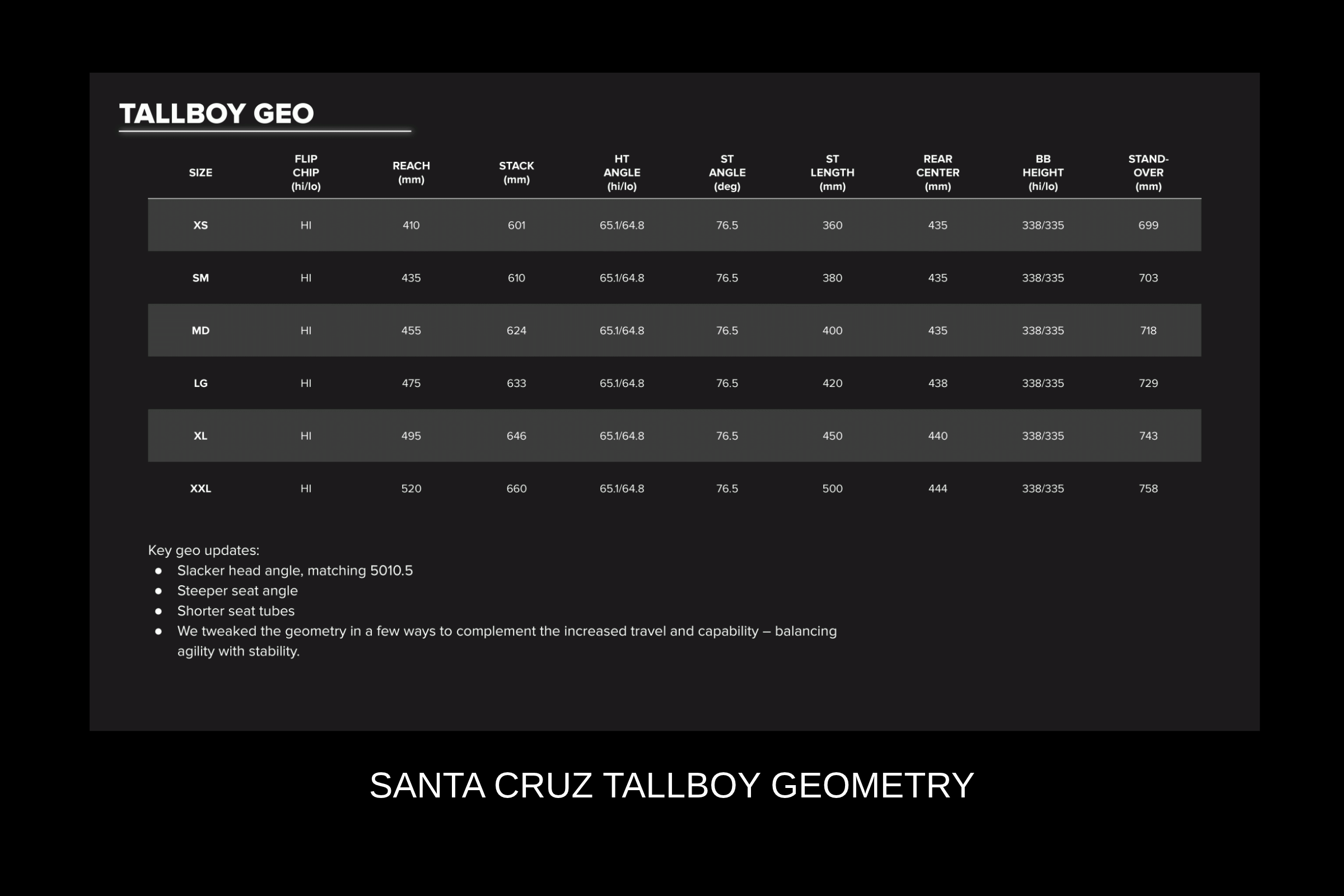
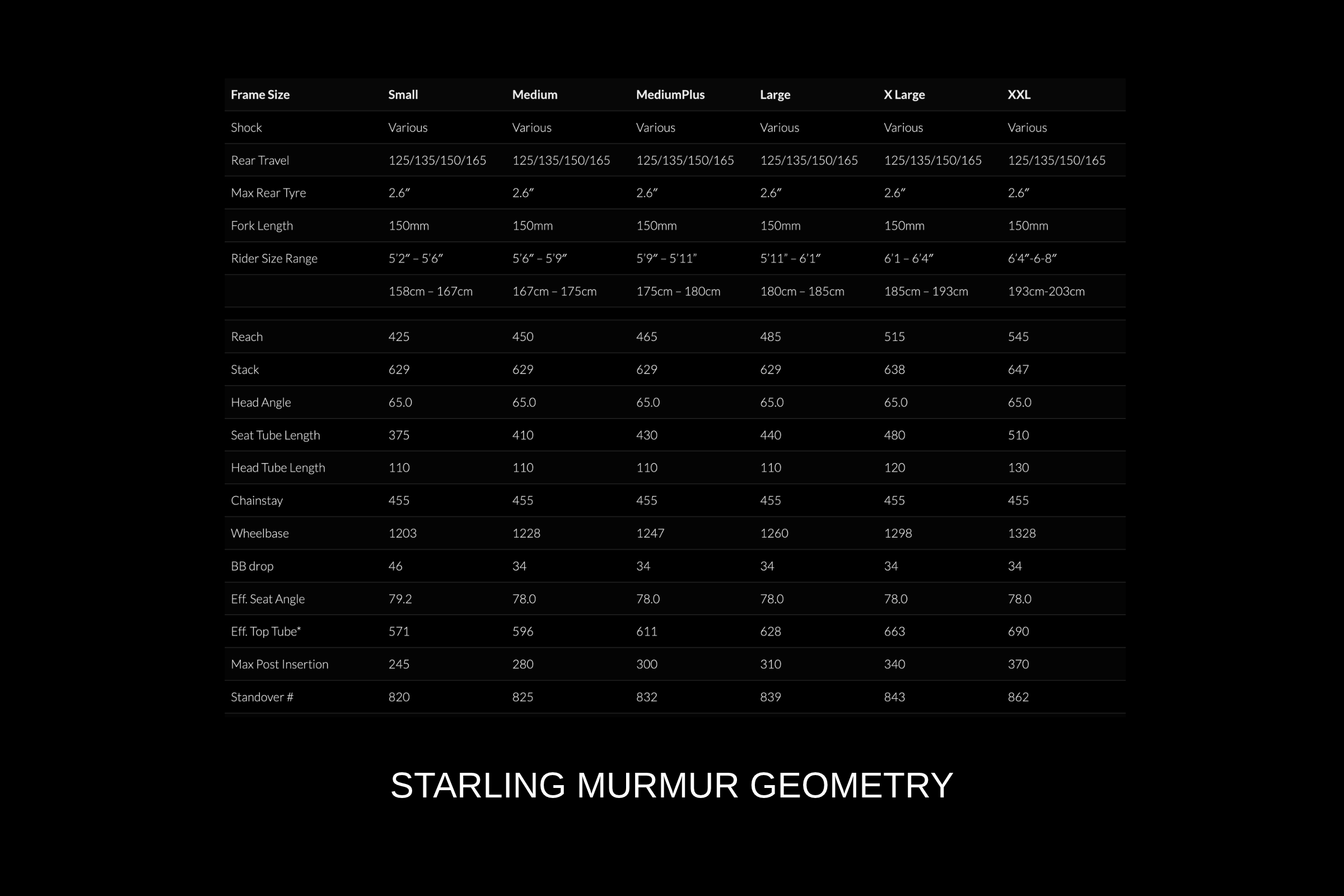
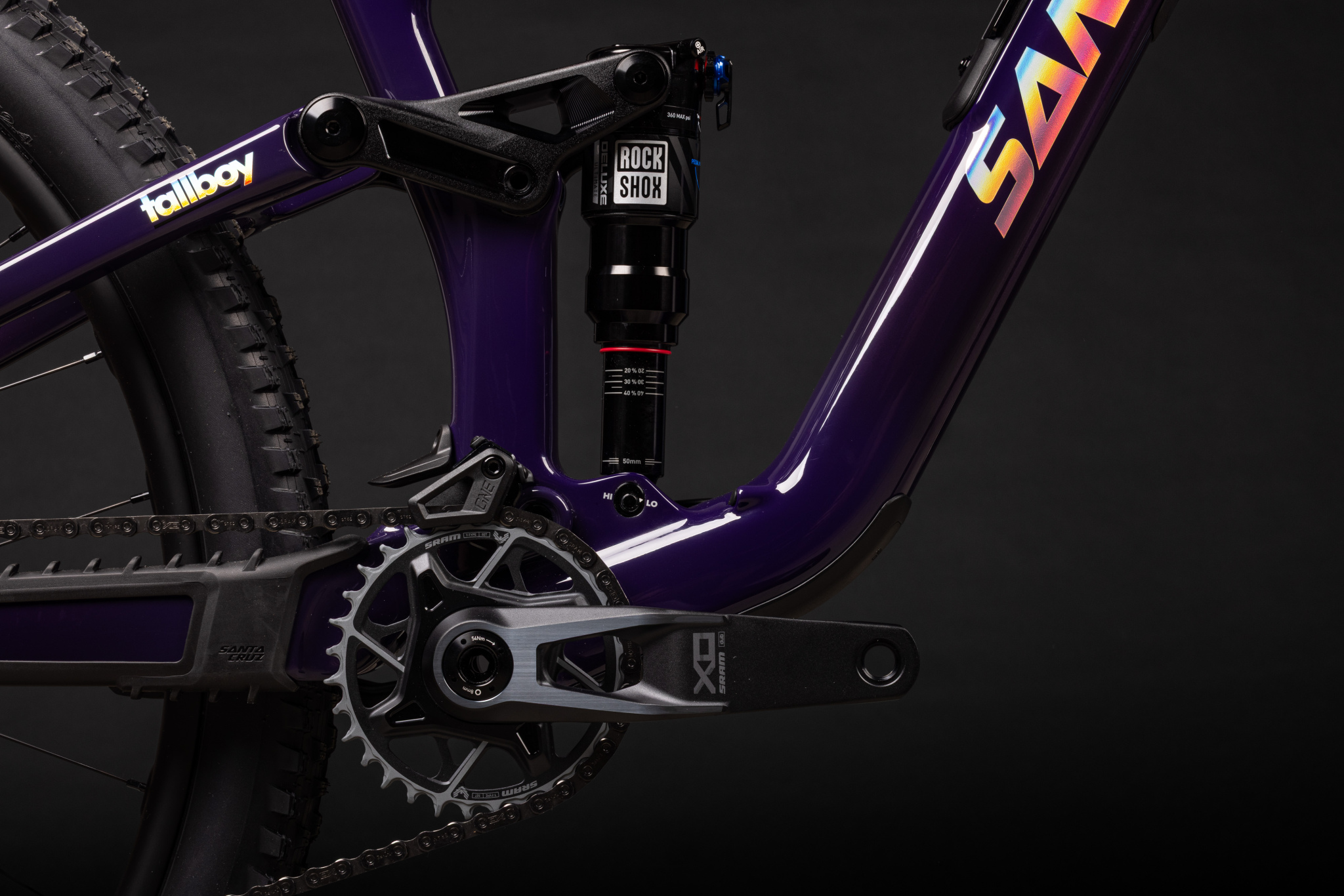
The Murmur’s 78° seat angle is also more than a degree and a half steeper than the Tallboy’s 76.3°, putting riders in a more upright, forward position for seated climbing. Starling keeps chainstays at 455mm across all six sizes, while Santa Cruz scales them from 435mm on the XS to 444mm on the XXL. The Tallboy’s flip chip also lets riders tweak the head angle by 0.3° and the bottom bracket height by 3mm, or as Santa Cruz puts it, “Lo for sending, Hi for pedaling.”
A new four-bar takes on a classic single-pivot
The sixth-generation Tallboy launched in May with a four-bar suspension layout, replacing the VPP design Santa Cruz has used for years. The Murmur sticks with a single pivot, which means fewer bearings to maintain.

Where the Murmur stands apart is adjustability. Starling offers rear travel settings of 120, 135, 150, and 165mm on the same frame, each paired with its own shock. That means a Murmur owner can turn the bike into something closer to an enduro bike down the road, though it requires buying another shock. There’s also the option of swapping out the rear triangle to make the Murmur a mixed-wheel bike.
The Tallboy, by contrast, is a 29er 130mm bike with no mods available. If buyers want a mixed-wheel, short-travel Santa Cruz, that’s the 5010.
Carbon convenience vs. steel character
The Tallboy frame weighs a claimed 2.94kg (6.47lb), while Starling says their steel frames weigh about 3.6kg (7.9lb).

The Tallboy brings features that buyers have come to expect on carbon trail bikes, including Santa Cruz’s Glovebox in-frame storage. Santa Cruz backs the frame with a lifetime warranty and free replacement pivot bearings for the original owner.
The Murmur keeps things simple with external routing, a SRAM UDH, and a bottle mount inside the front triangle on medium and larger frames. Front triangles are made in Europe from Reynolds 853 tubing, and rear triangles are built in Taiwan, with every frame assembled in Bristol, UK. A few sizes (small, medium-plus, and XXL) are built to order at Starling in the UK. Starling offers a seven-year warranty and crash replacement service, plus frame repair and repainting.
The Murmur is offered as a frameset only
Starling sells the Murmur as a frameset only, so we’re comparing the two bikes at the frame level. Santa Cruz offers the Tallboy as a frameset too, at $3,899 including a RockShox Deluxe Ultimate shock. The Murmur frame with a Fox Float shock is €2,996 (about $3,367), roughly $530 less than the Tallboy. Starling also offers an Öhlins TTX22M.2 coil shock option for riders who want to go that route.
In addition to the frame offering, the Tallboy is also available as six complete builds, ranging from the Tallboy Deore at $4,999 to the Tallboy XX AXS FA RSV at $13,999. Plenty of riders prefer buying a complete bike, and it can be a money saver. For $1,100 more than the cost of the frameset, the Deore build adds a fork, wheels, drivetrain, brakes, and a dropper post. It would be tough to buy those parts at retail for that price.
On the other hand, starting with a frameset lets riders pick every component, or move parts over from their current bike. For Murmur buyers, that’s the only option (aside from the shock).

The bottom line
The Tallboy is the lighter, sleeker package, with in-frame storage, a lifetime warranty, a flip chip, and the option to buy it ready to ride. It’s also a little shorter and more compact, which should make it feel livelier on tight trails.
The Murmur costs less as a frameset and offers a longer, more upright fit, plus the ability to change rear travel from 120 to 165mm. Then there’s the steel ride feel, which fans swear by. And don’t forget character.
Which bike would you choose? Vote below, and the winner advances to the final round on November 18 to face the winner of the Canyon Lux Trail vs. the Revel Ranger.
This concludes the semifinal round of our 2026 Trail Bike of the Year competition. Cast your votes by Monday, November 16 and check back to see our final long- and short-travel matchups.
The news stinks. Why not follow Singletracks on Google News to bring more joy to your day?






0 Comments