
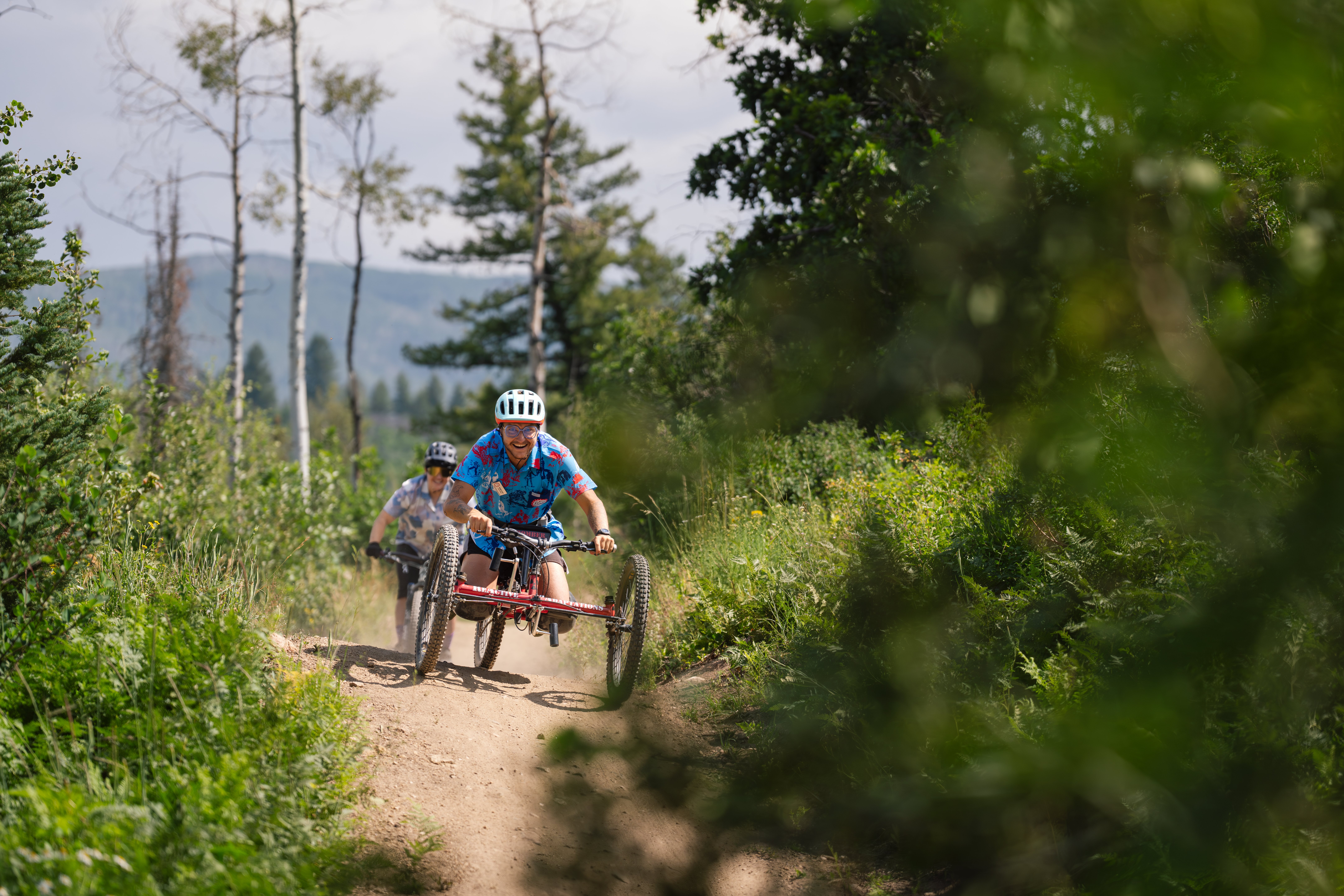
The bike park at Steamboat Resort boasts roughly 20 miles of trails, ranging from green to double black. Of those 20 miles, how many would you guess accommodate adaptive bikes? Five? Ten?
The answer: nearly 90% of all trails. Of the 17 downhill trails at Steamboat Bike Park, 15 are adaptive-friendly, making Steamboat one of the most — if not the most — accessible bike parks in North America.
A (nearly) completely adaptive-friendly bike park
“We’ve been working this summer and the last very hard to resurface and rebuild a few trails with adaptive biking in mind,” Joab Olsen, Trail Crew Supervisor at Steamboat, told Singletracks.
Steamboat worked closely with STARS (Steamboat Adaptive Recreational Sports), which provided consulting services on the project. Much of the consulting focused on getting an appropriate amount of clearance on the trails. An adaptive bike requires roughly the same amount of clearance as a traditional mountain bike, just in different locations. Where most bikes need clearance at handlebar height, adaptive riders need clearance at wheel level.
“I do know that many of the trails were widened and evaluated for accessibility to better accommodate adaptive mountain bikes,” Kaleb Cook, Program Manager at STARS, told us. “This summer marks the launch of our pilot program, which is primarily focused on developing our systems, protocols, and operating procedures while offering select adaptive mountain bike programming to our overnight veteran camps.”
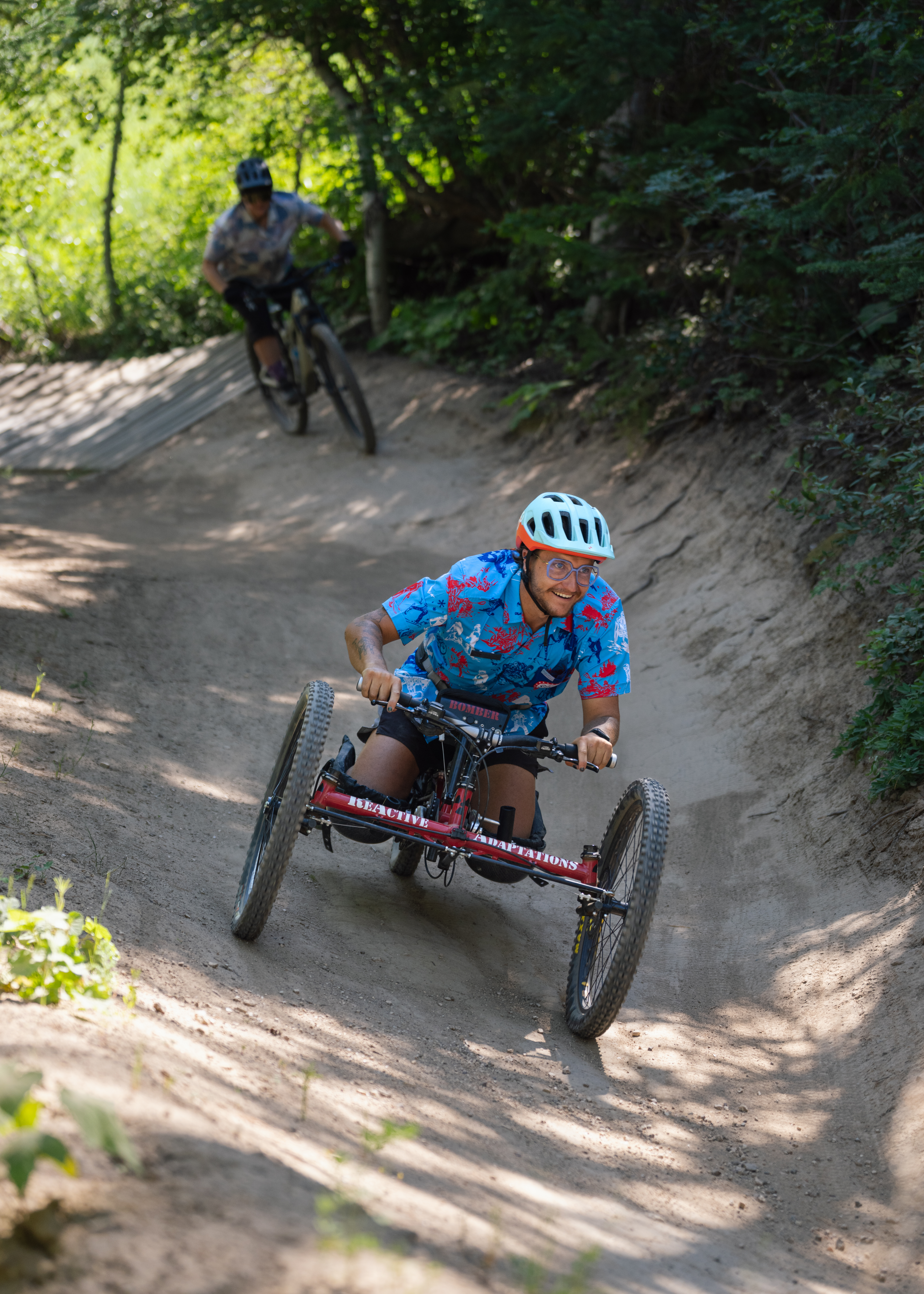
STARS will be running their programming throughout the summer, with Steamboat as a common landing point.
With bike park flow trails having generally wider tread, they are great candidates for adaptive bikes. And, from green to black, Steamboat has quite a few of them, all now adaptive-friendly.
Olsen told us that the standout trails at Steamboat are the blue, flowier trails. And the resort has been putting in quite a bit of work, taking long-loved trails and making minimal changes to accommodate the wider wheelbases of adaptive bikes. Olsen said they focused heavily on trails like Rustler’s Rocks, Gunsmoke, and Mutton Busters, with the latter being a new build as of last year.
“We aim for perfection with our blue trails, as it is often the first place new riders will really get some speed and maybe muster up the courage to get some air,” Olsen explained.
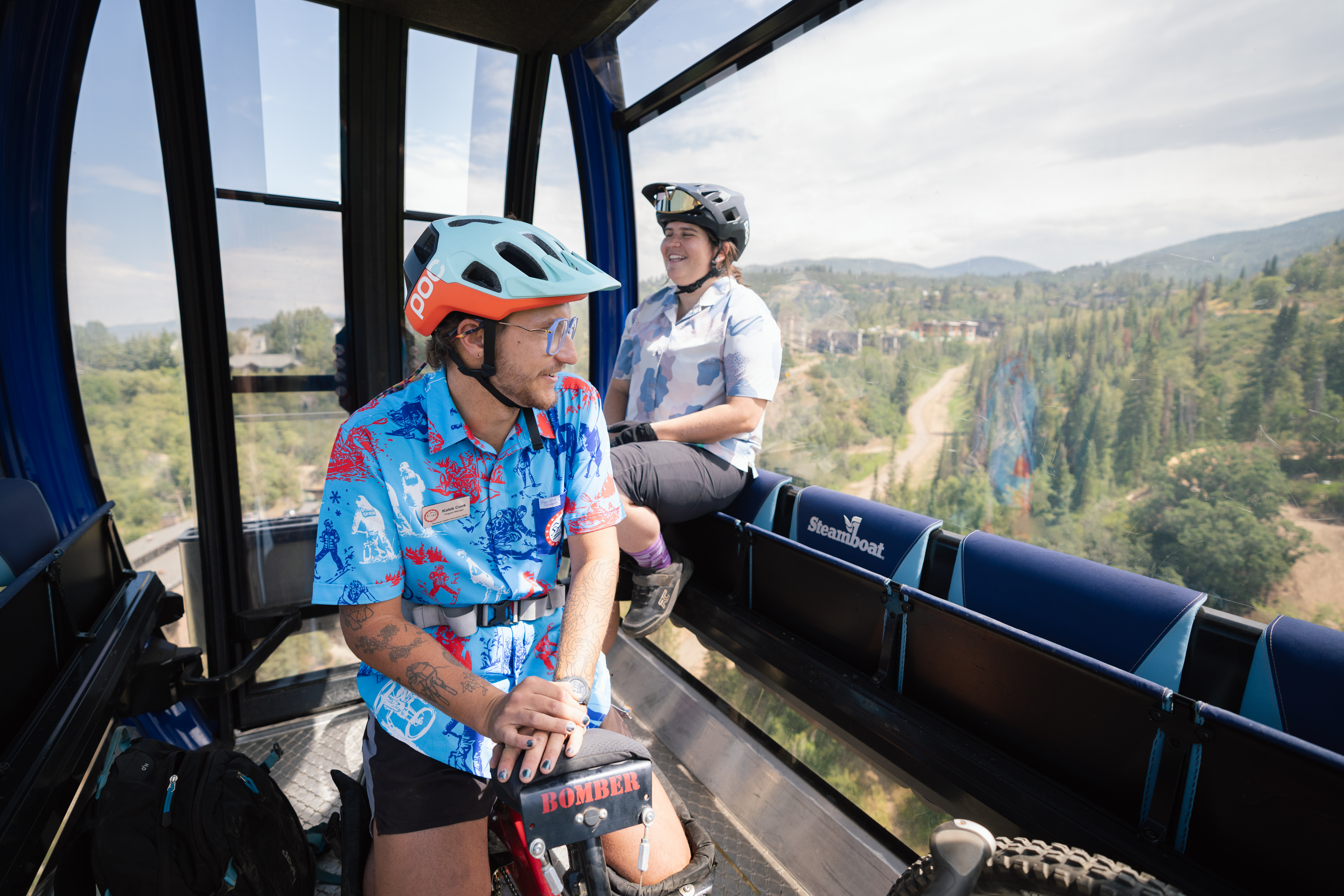
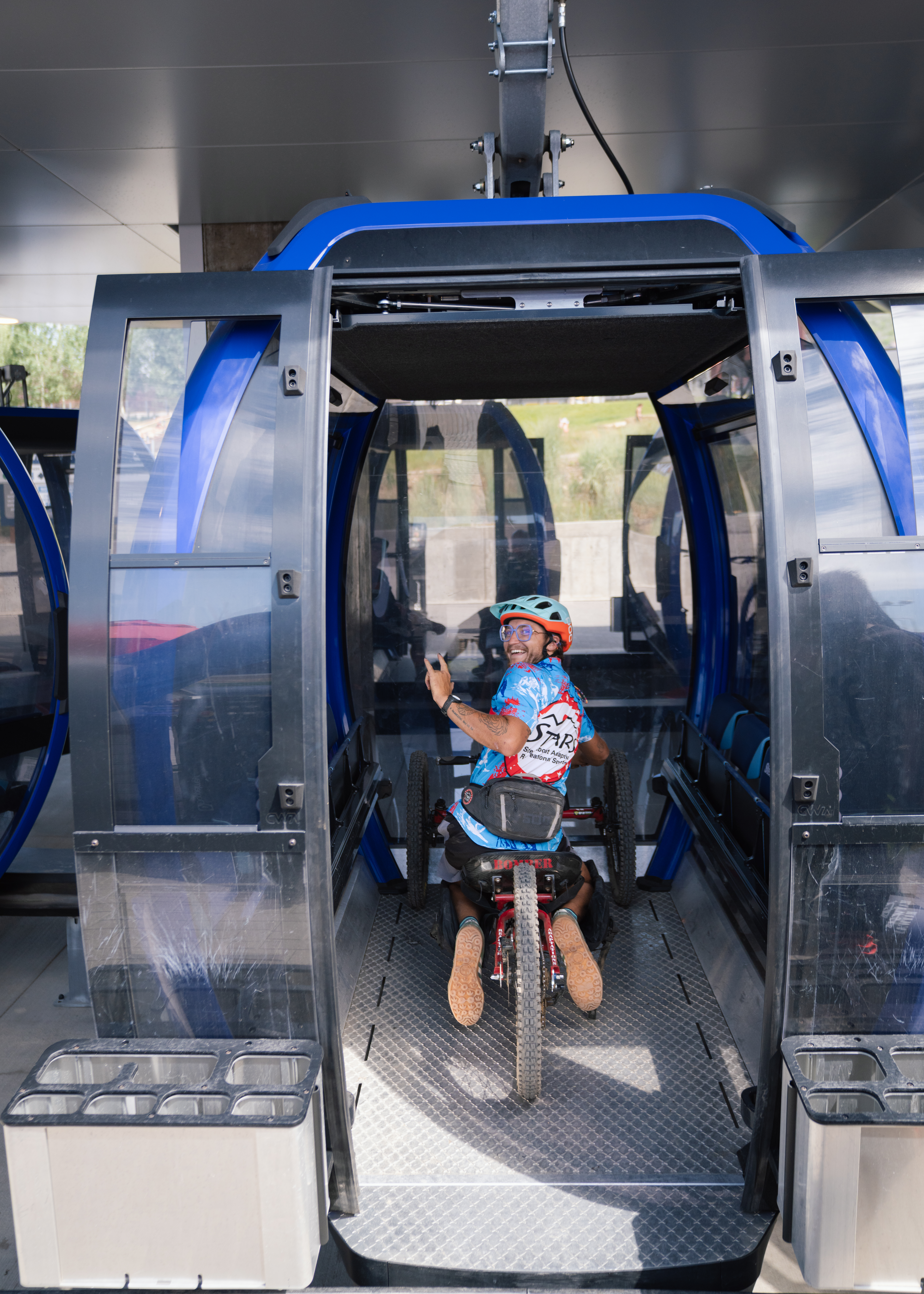
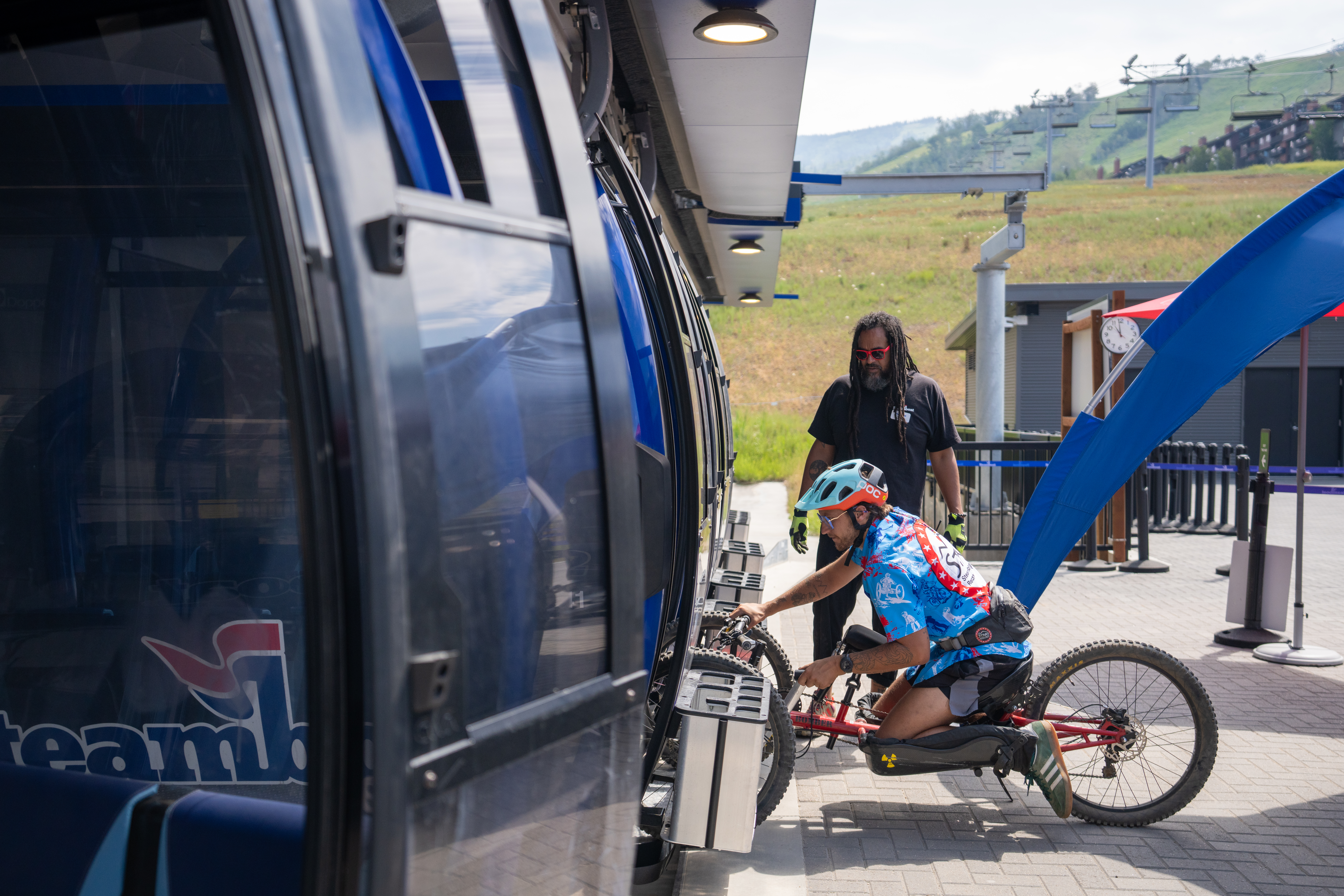
Sometimes minimal changes are required, and sometimes no change is required. One thing that needed a change, regardless, was the gondola. Steamboat worked to ensure the gondolas used to take riders up could accommodate adaptive mountain bikes, which they accomplished with fold-up-style seats.
There is tech, too
“The only ones that are not [adaptive-friendly] are our double black and black tech trails — Bullwhip and Rawhide,” Olsen told Singletracks.
Both (well, some will argue there are three trails) are connected and make up the most technical riding at Steamboat. Technically, Rawhide is split into two sections, an “Upper” and “Lower,” with Upper Rawhide rated double black. Bullwhip precedes it, also with the same difficulty rating. Both eventually “ease” into the single black-rated Lower Rawhide, which likely comes as a relief due to the battering riders just experienced on the previous two.
All told, these three trail segments make up less than two miles of the trail offerings at Steamboat. The descents are on rough, janky singletrack, turning and twisting as they drop about 1,600 feet of elevation.
But that doesn’t mean there aren’t tech options for adaptive riders. Steamboat lists the beginner-friendly Tenderfoot trail and the intermediate Rustler’s Rocks as “technical” trails, though they seem to lean more toward flow. Regardless, both are long, stretching roughly four miles each. Tenderfoot, the green trail, has a mellower descent, dropping just over 1,600 feet over four miles. Rustler’s Rocks is overall faster, dropping just under 2,000 feet in less than four miles.
And more tech is on the way. Olsen told us of a new blue tech trail that will serve multiple purposes for the bike park. First, it will be a chunky, technical option for adaptive riders. Secondly, it will provide a bit of progression for technical riding in general. The new trail will be a mix of machine-built corners and flow along with “raw, uncut hillsides” to navigate.
“There’s great black tech here, but nowhere to really practice before diving in the deep end,” Olsen explained. “So that’s where this trail would be, between cruising the blue flow and the black tech.”
Adaptive mountain bike rentals?
No, Steamboat doesn’t currently offer rentals for adaptive athletes. Adaptive bikes are incredibly expensive, but more than that, they are usually customized for the athlete who needs them. For now (and likely long into the future), Steamboat has a better solution.
“STARS has partnered with Steamboat Resort to provide the adaptive equipment, program expertise, and staff support needed to offer adaptive mountain biking opportunities,” Cook told us.
Steamboat encourages adaptive riders who want to try out the bike park to contact STARS for both rentals and lessons. Without a doubt, they are the experts.
Keep up with the latest mountain bike news by adding Singletracks as a preferred source on Google.




0 Comments