
At first glance, Remy Metailler seems to be living a charmed life. A beautiful home of steel, dark wood, and concrete in an upscale Squamish suburb, minutes from some of BC’s best trails. A couple of trucks in the driveway, an amiable black Lab padding about, and a garage that looks like the stash house for a group of very successful bike thieves.
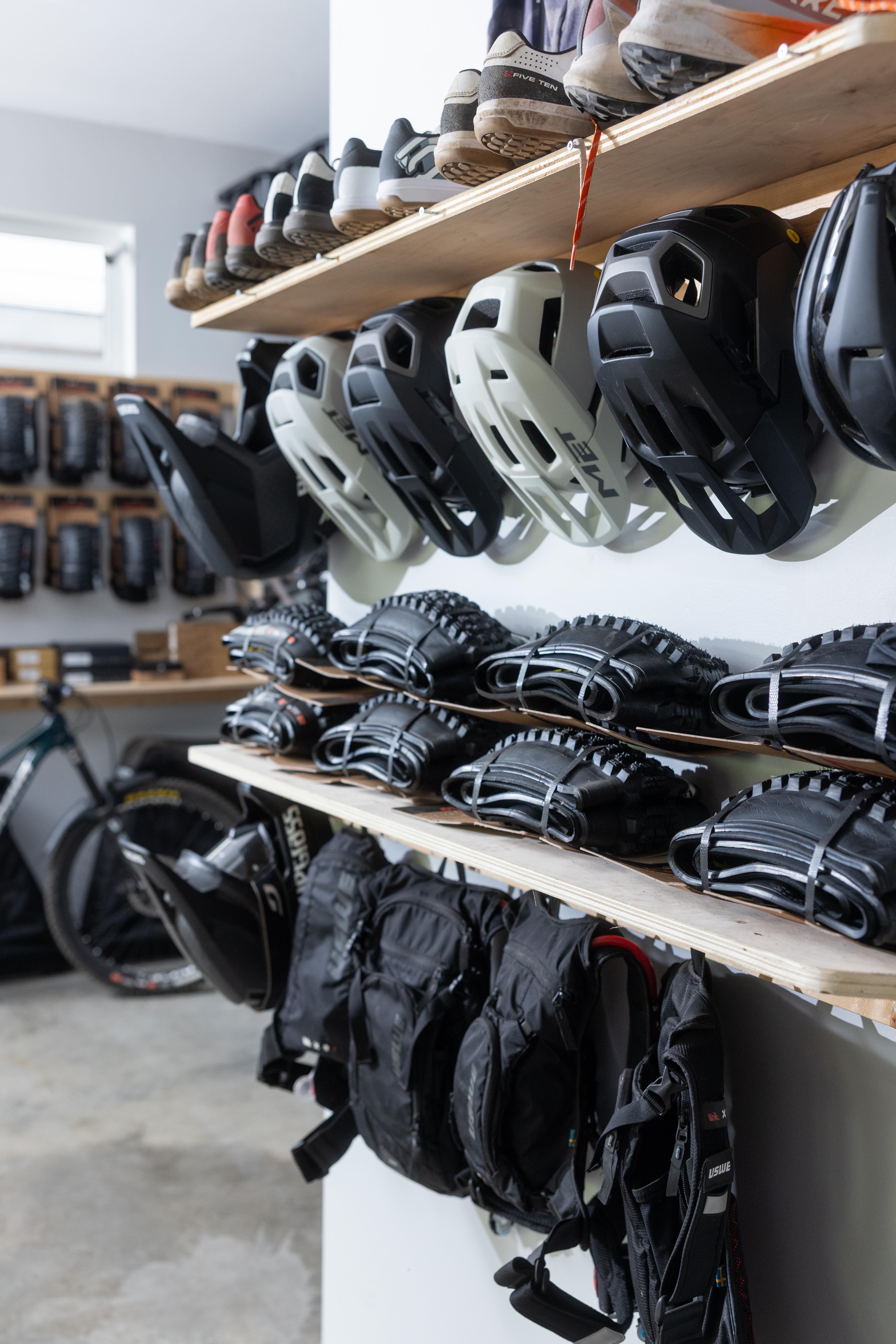
There are 10 different Propain bikes, ranging from short-travel XC up to full DH. Two motocross bikes. Enough boxed tires, pedals, tools, shoes, and other components to last a race team several years.
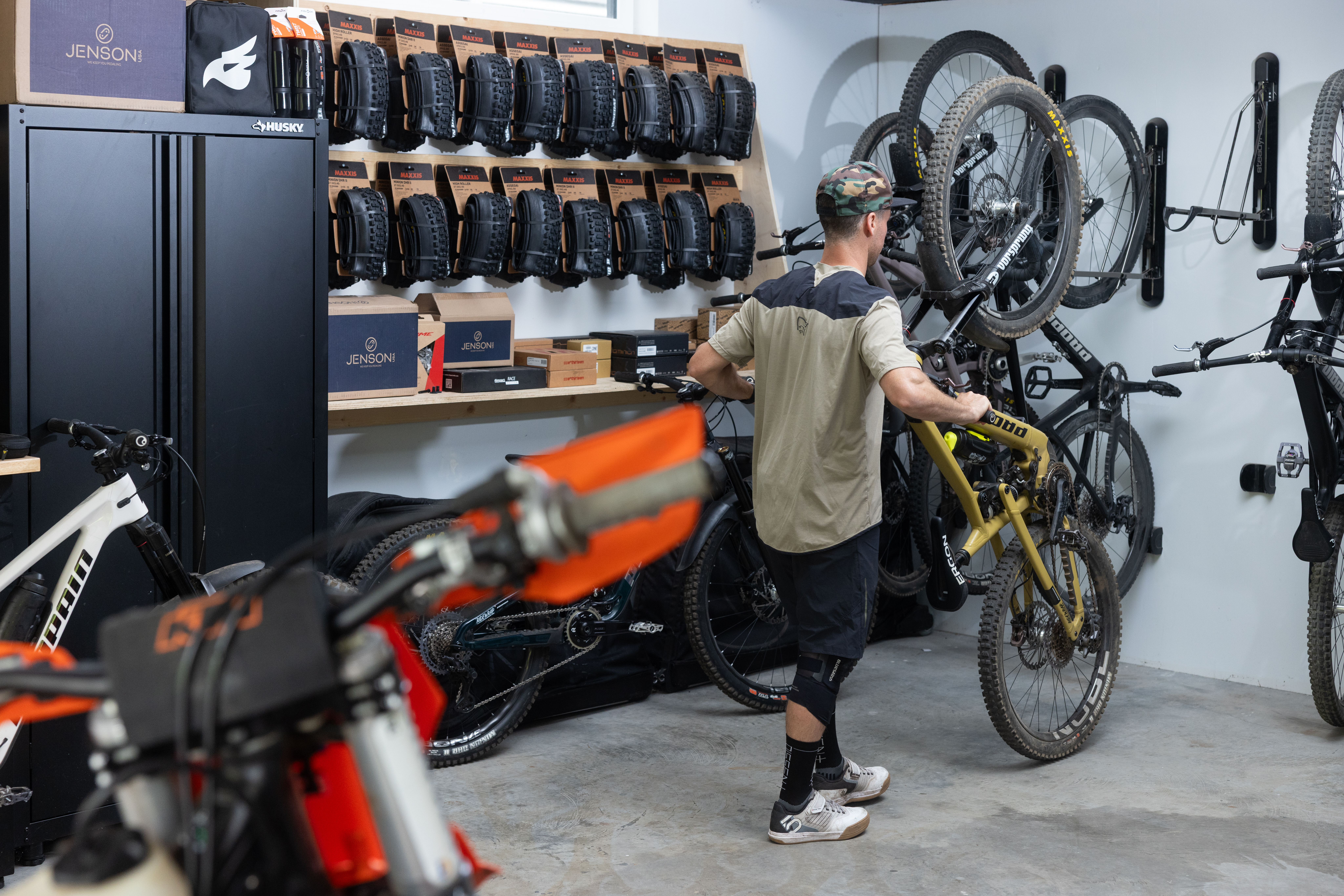
As he gives us the tour and busies himself wrestling a couple of world-class espressos from a coffee machine that probably costs more than your bike, my mind is spinning. All this? From riding a bike?
As it turns out, riding is just the beginning…
Not enough hours in the day
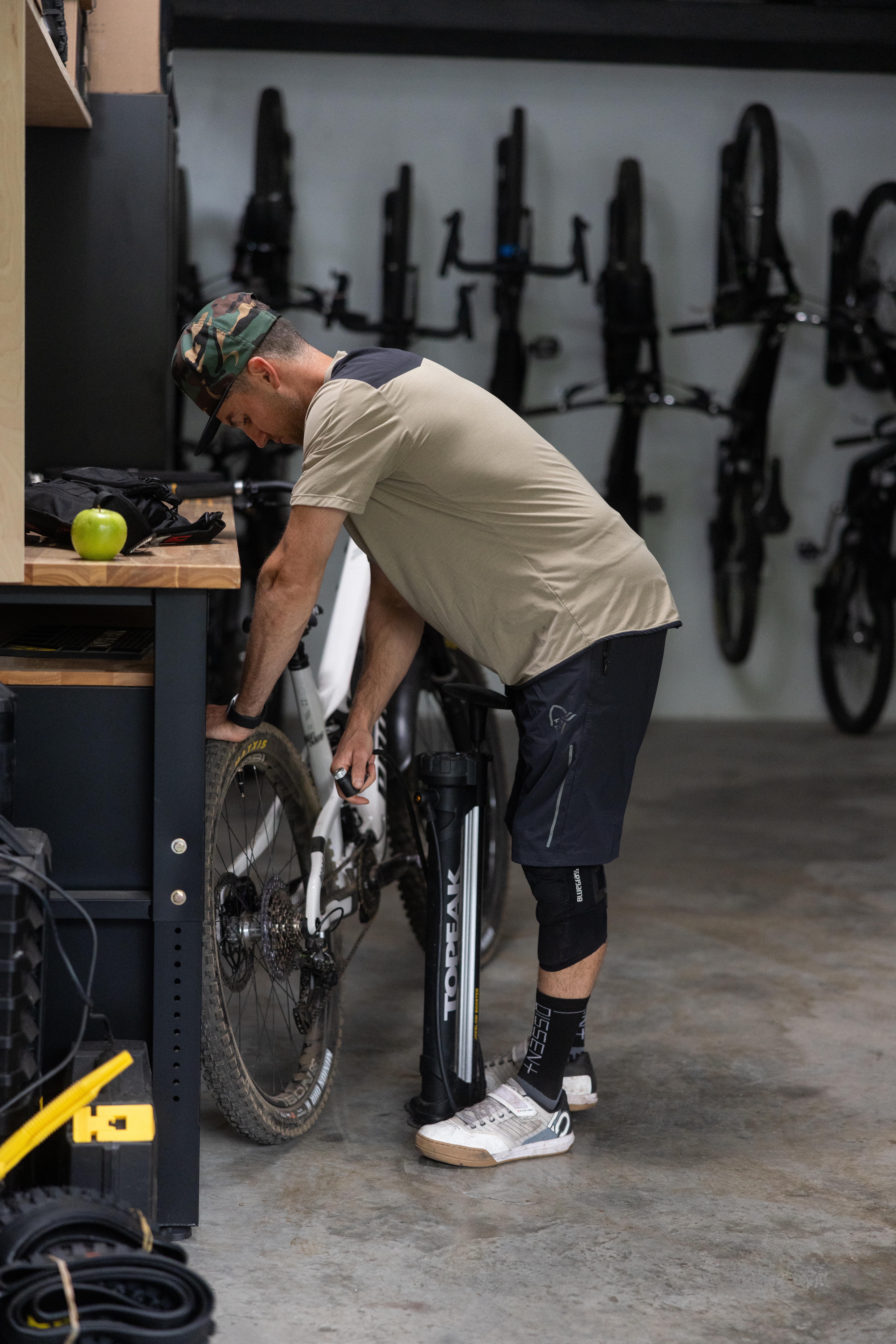
Remy has over 20 different sponsors. Bike, helmet, pedals, saddle, pads, shoes — he’s got a deal with just about every separate component, item of clothing, and protection you could imagine. Sounds pretty sweet, doesn’t it? A garage full of brand new gear, $5K of tires all boxed up and stacked in the corner, a quiver of over 10 bikes to ride.
Now imagine that you — no manager, no agent, no PA or help — have to liaise with each one of those sponsors, every time you make an edit, post a clip, test a product, renew a contract, chase a payment. Being Remy is about way more than being good on a bike.
“I see this as a business,” he said. “I want companies to feel like they get a return on investment. I want the people who watch my content to learn something. I want them to get more stoked to go ride. I want them to look at their bike and feel like, ‘Cool, I’ve set this up smarter, I feel more in tune than ever with my bike,’ or, ‘There’s this challenging feature on my trail I struggled with, I watched Remy’s video, and I learned a couple of tips that helped.’ That’s what I’m chasing.”
Let’s be clear. It’s a problem that a lot of riders would like to have, and not once in our two-hour interview, or the several hours spent in the woods above his home, does Remy complain in any way. He’s focused, and grateful, and 100% on his game throughout. But it’s worth thinking about just how much work it takes, how many paymasters he has to keep happy, and how much pressure there is, every day, from a thousand younger riders all jostling for MTB media supremacy.
“It’s 70, 80 hours a week. I work non-stop. Every day. I never stop. Any time I’m driving, I call people. If I’m driving to Whistler, I’m not listening to music. I’m catching up with sponsors. The part you see, where I’m riding the bike, that’s a small bit. There’s the filming, and all the invoicing, keeping in touch with sponsors, working on product, giving feedback. All that back and forth takes a lot of time. As well as actually trying to get paid…”
Make no mistake – this is a job. And not everyone can do it.
Relentless pursuit
I’ve been lucky enough to watch some truly amazing MTB riding in person. Dan Atherton casually throwing an e-bike off a 20ft drop in Dyfi Forest, or a 14-year-old kid in dungarees and Crocs backflipping and hitting a bell with his back wheel in a whip-off contest in Knoxville.
But the two hours I spent with photographer Rob Perry and Remy, on some spicy trails above his house in Squamish, might be the most impressive thing I’ve ever seen.
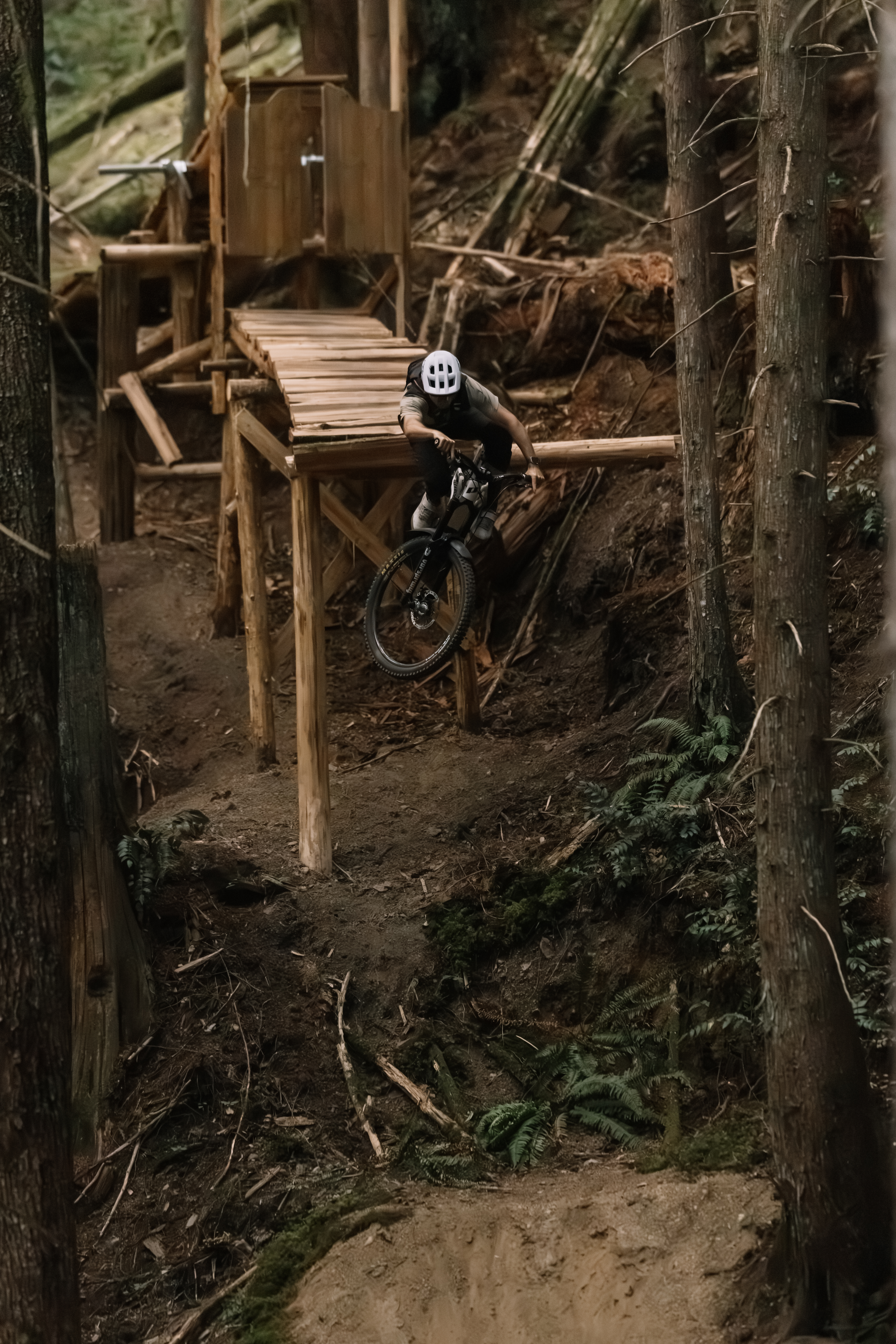
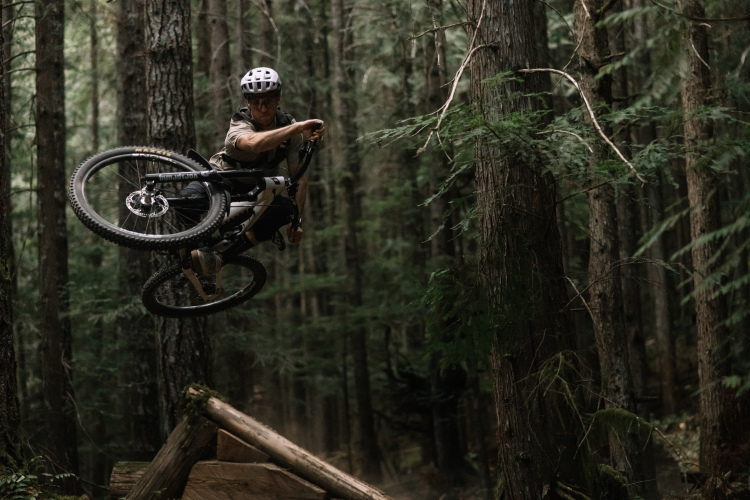
We needed a hero shot for this article — the one you saw at the top. Looks good, doesn’t it? Fully extended tabletop, perfectly tweaked, the light hitting Remy, and his bike, and his many sponsor logos at just the right angle.
Here’s how it happened.
Remy and Rob picked out the spot and discussed the move — a fully-flat, tweaked scrub jump off a large kicker into a sloped landing. Before anyone went anywhere near a bike or a shutter button, they both spent at least 15 minutes discussing the precise set-up for the shot. Remy knew the distance, the level of compression, the light, the saturation — all the pro photo knowledge you can imagine, and described precisely where he’d take off, how his body and bike would move through the frame, and where he was going to land.
Then he did exactly what he said he’d do. First try. It was stunning to watch, and when we all crowded around Rob’s camera display to look at the shots, I honestly thought we could pack up and go home.
But Remy wasn’t happy. Not even close. “It’s OK, maybe about 80%, but I can do better.” And so he did. Ten more times.
Over the next hour, Remy hit that jump again and again, and each time he saw something in the captured frames he could improve. Rob changed positions to catch different angles or to take advantage of how the sinking sun lit the trees and foliage. In one attempt, Remy’s hand was partially obscuring his face, which his sponsors wouldn’t like. In another, the Propain logo on his frame wasn’t visible enough. The jump was too short, or too long, not high enough.
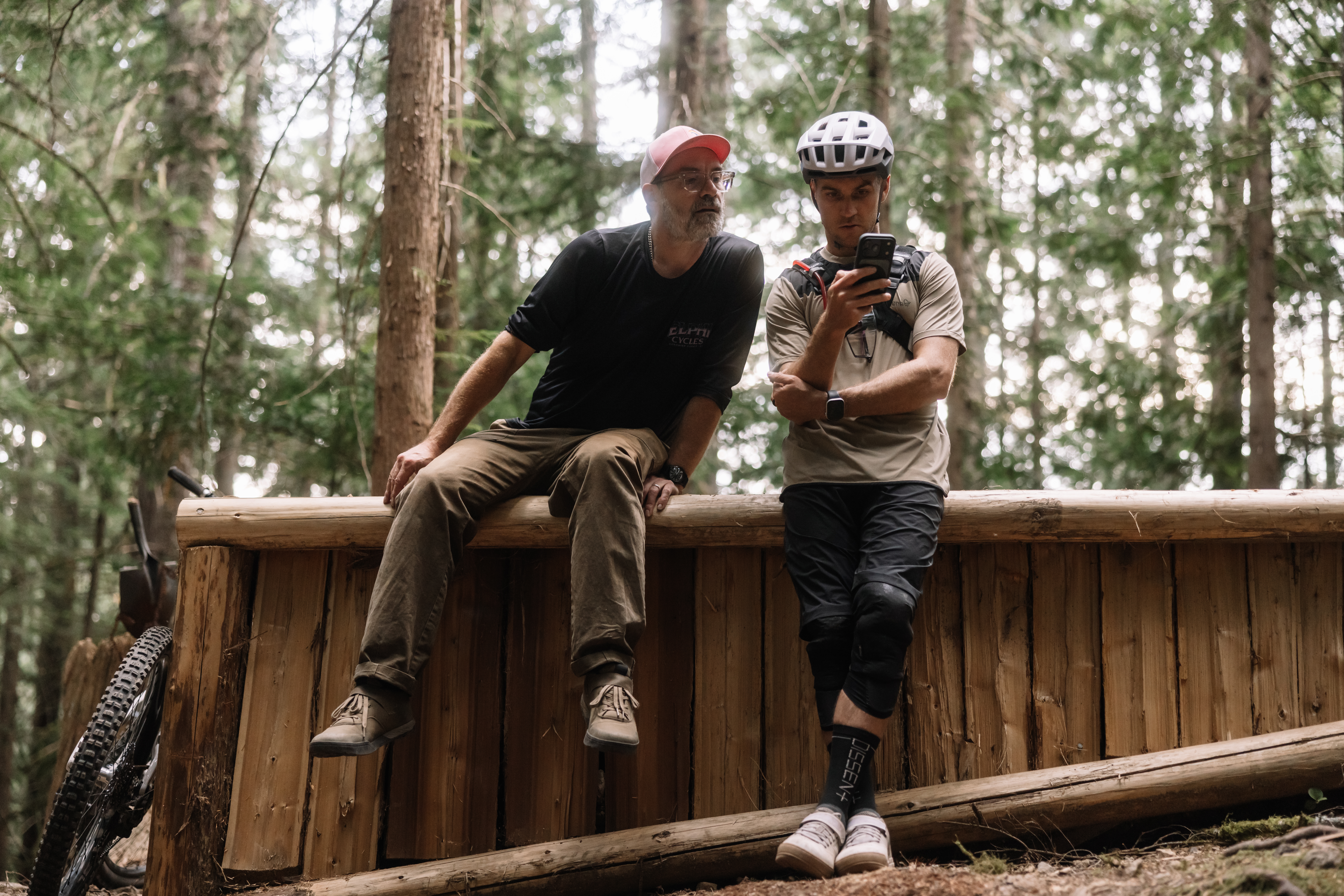
Every single one of these attempts looked world-class to me. I could barely understand or see the details in each image that were being discussed and mitigated with each new attempt. And yet, when I heard the slap of the back wheel into the loam on that final attempt, I — and I think Remy and Rob too — instantly knew that it was the one.
(Just a side note: Rob and I bent down to look at the tire marks made by Remy’s back wheel by the 11 attempts at the jump — none of them were more than 12 inches apart, over 30ft from the lip.)
“You used to see a big drop and go, ‘Holy shit,'” says Remy. “Now you see 20 of them per day. My stuff has to be more creative. If it’s just really big or really well done, it’s not enough anymore. You can’t keep doing it bigger forever. It’s not possible.”
Watching this persistence and perfectionism is when it dawned on me. This is how you stay ahead of the thousands of ride-or-die teenagers hunting your sponsors and your audience and your renown. Not by jumping higher or further or more dangerously than them, but by working harder.
Picking your battles
Let’s say you ride most weeks, and travel to different trails, and you’re always looking to get better. So sometimes you see a feature or a section of trail that’s a test of your skills, or gives you pause for thought. You weigh it up, take a look, think about your job, or your family, or your medical insurance… it’s what we all do. Sometimes you go for it, sometimes you don’t.
Except Remy, or one of the many others who live by their audience and their views. Their calculation has to be different. And it’s a calculation he’s making every single week. So what happens when he just doesn’t feel like it?
“Sometimes I want to do something and I just check out,” he said. “A year or two ago I went to film this big drop in Cumberland. I looked at it and knew I’d do it perfectly. I could close my eyes and know I’d land it. But when it was time, I just didn’t want to do it. I know I could, it’s pretty straightforward, but in my head I was just pushing the bike away. I didn’t care. So the entire video was me not doing it, and I got a lot more praise than if I’d done it. Sometimes I look at something and think, I know I can do it, I’ll do it first try, I’ve done it 20 times before — fuck it, I don’t need to.” Then he laughs.
So after a couple of hours of conversation, and another three in the woods of Squamish, watching Remy jump, drop, repeat and pore over every detail of moves that most of us won’t ever think about being good enough on a bike to ever do, the overall impression is an oddly sobering one.
To be Remy, or a rider like him — Gee Atherton, or Brendan Fairclough, or anyone who depends on selling their talent to a fickle digital audience — is to live in a very risky way. Not just the risks of being 40 feet in the air, or teetering on the lip of a drop that’ll kill you if you mess it up, but because you live in the imaginations of a million riders you’ll never meet. Riders whose eyeballs, and the value they represent, can be distracted in a millisecond by another rider, or a text, or a clip of a dancing AI monkey. All the toys, all the gear, all the comforts, all the renown — it could disappear overnight with a change in the digital winds.
Remy shrugs at the suggestion that he’s living on a precarious edge, and knows that he’s in a position a lot of people would like to be in.
“I’m so lucky to be able to ride the best trails in the world, in the best conditions, on the best bikes,” he said. “Everything I run on the bike, I chose — I’m stoked on it. I get to choose the trail. I pick where I ride, what bikes I ride, when I ride. Lakes, rivers, the geography… there’s so much I can do. So I’ve got a good life — I know it.”
Thanks to Visit Squamish and Ford Trucks for supporting this interview.
The news stinks. Why not follow Singletracks on Google News to bring more joy to your day?

0 Comments