

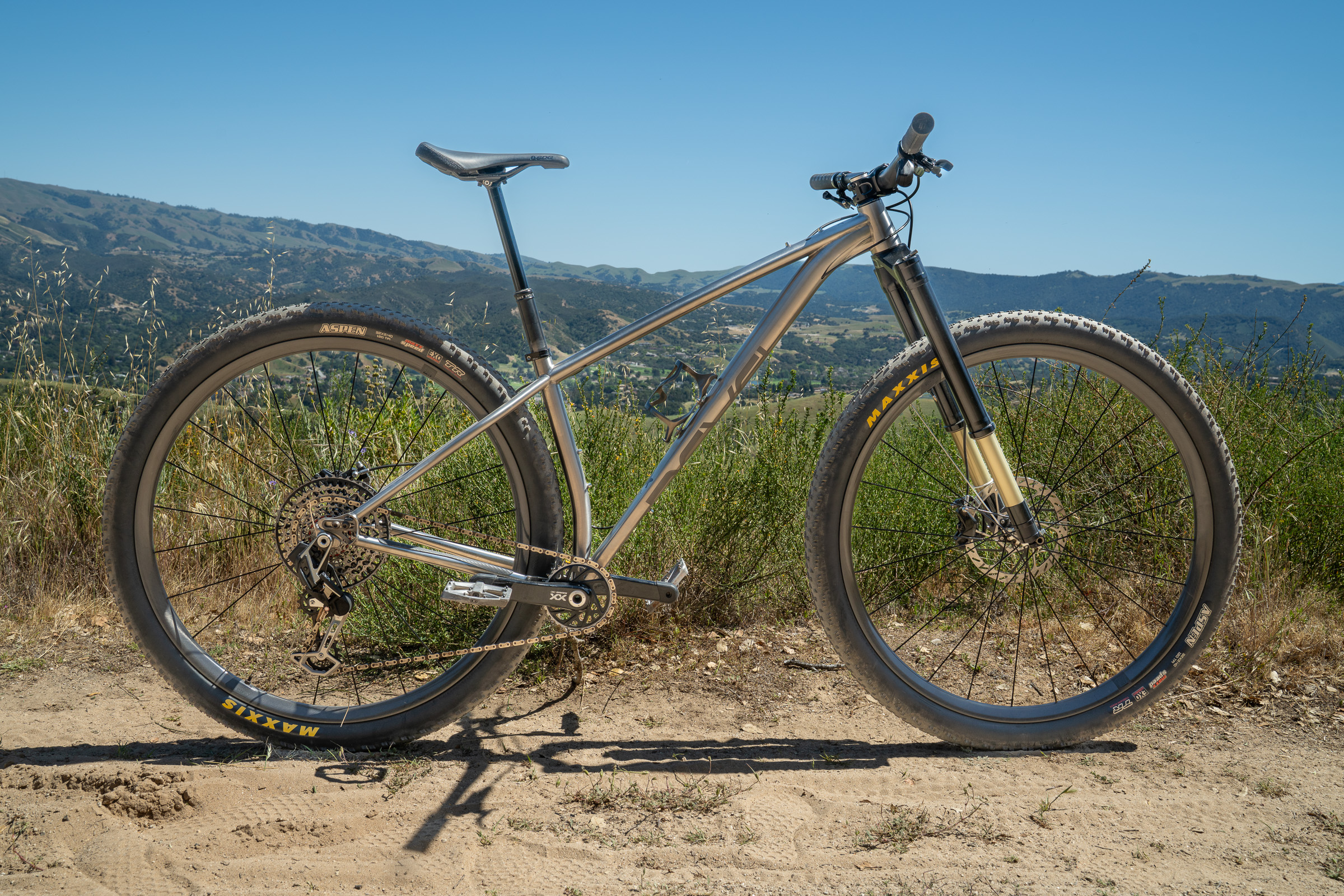
My main quest at Sea Otter was straightforward: Test ride a mountain bike with 32-inch wheels. In fact, I had been hoping to test a big-wheel bike for more than a decade after seeing a dusty Black Sheep 36er mountain bike at the Interbike Outdoor Demo in 2010. Sadly, I was told it wasn’t available for a test ride.
Though I found plenty of 32er bikes on display at Sea Otter this year, it turned out no one was set up to offer bike demos. Despite all the hype, consumers are still being asked to look but not to touch. I would later develop a theory for why this was the case.
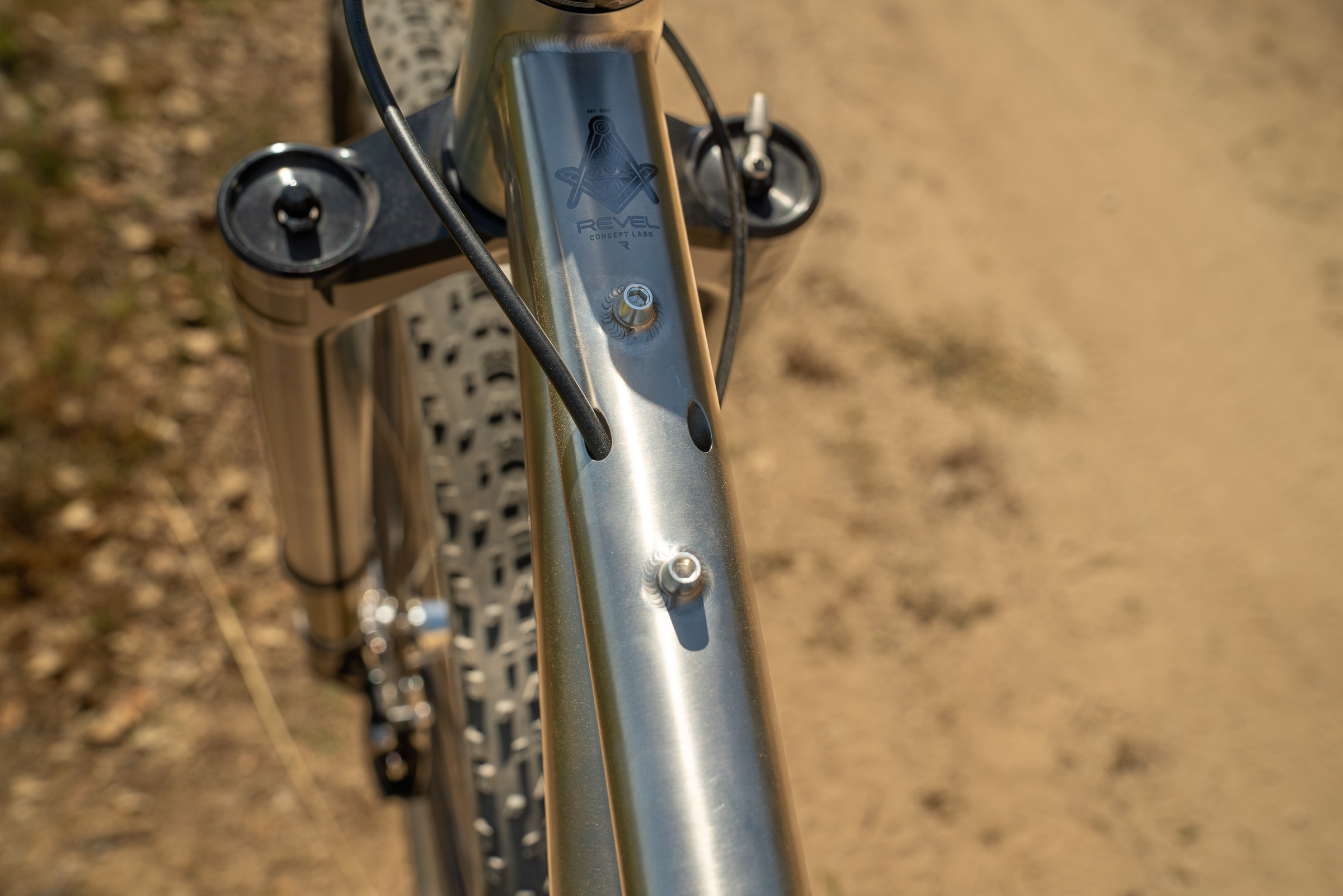
Revel is one brand experimenting with 32-inch wheels through its Concept Labs skunkworks, which is known for producing one-offs like a 3D-printed DH bike and a CBF-suspended titanium bike. After chatting about one of the bikes, to my surprise, Revel Global Brand Strategist Chris Reichel agreed to let me ride a prototype on the trails outside the Sea Otter expo.
On the trails with 32-inch wheels
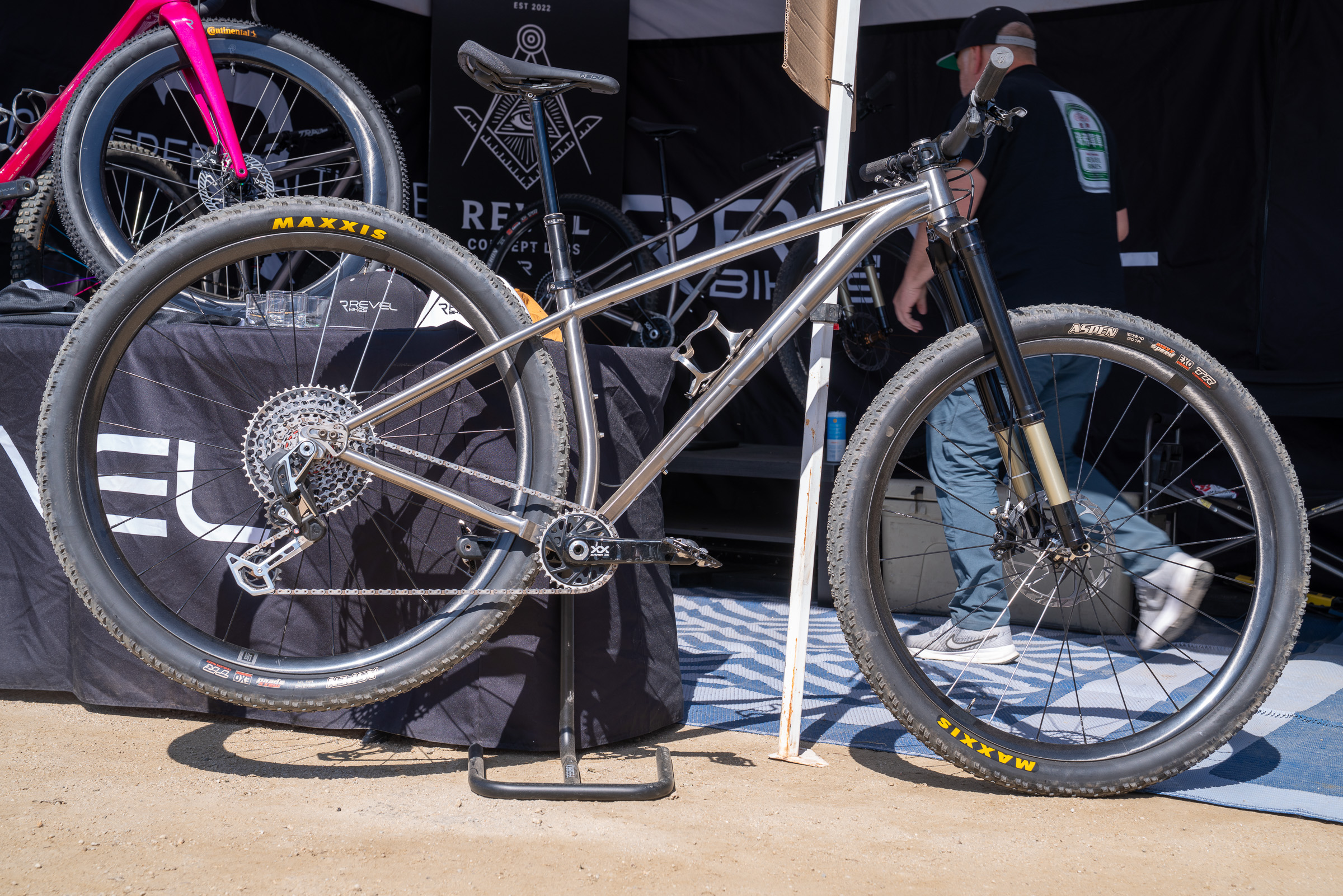
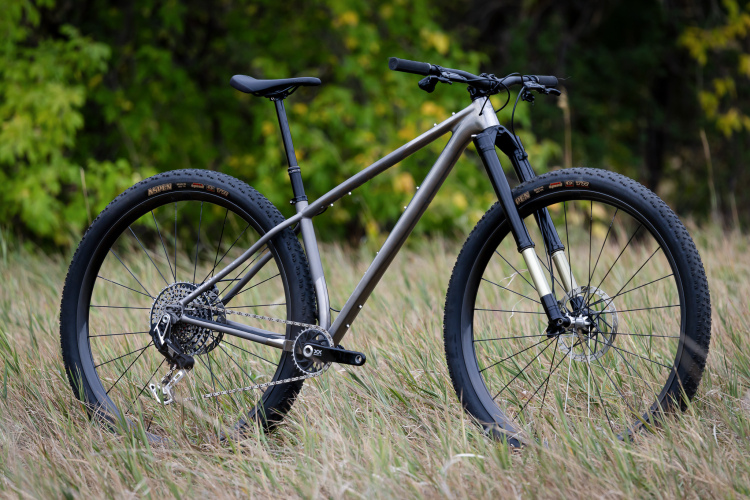
Right off the bat, the Revel 32er prototype provided a comfortable fit. The titanium frame sat somewhere between a size large and extra large, and as you can see from the hero photo at the top, the wheels look quite proportional. I even ended up with a negative saddle-to-drop height despite the tall front end.
Pointing the hardtail downhill, the bigger wheels definitely feel more stable. And through short, chunky sections, it seemed like the bigger wheels smoothed things out better than 29er hoops, but then again, it’s possible I only imagined the effect. After all, I’m well-versed in the supposed advantages of 32-inch wheels, namely improved rollability, and confirmation bias is real.
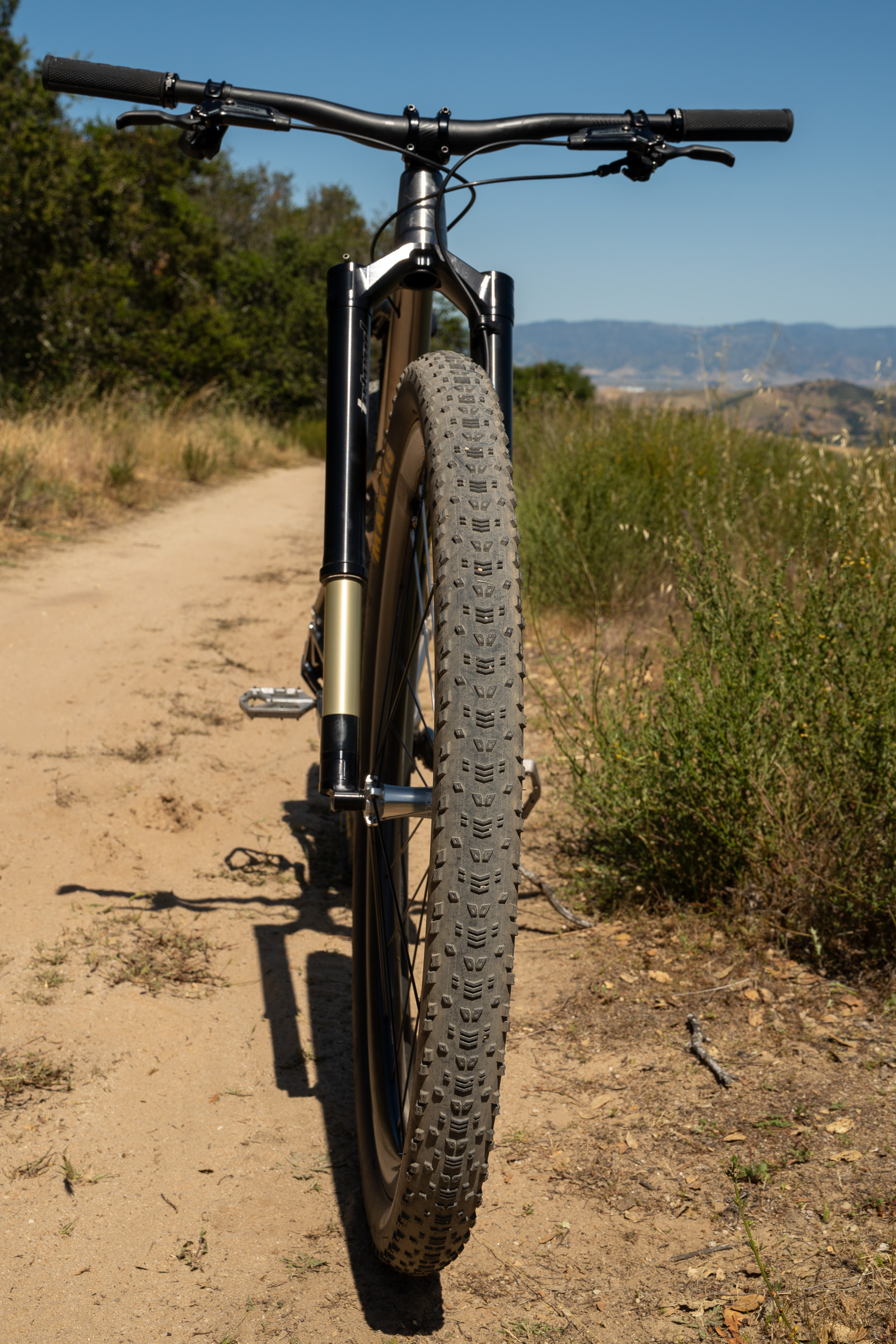
The Maxxis Aspen tires proved to be woefully undergunned, even for the mellow Fort Ord singletrack, and had me braking hard before the turns to avoid sliding out. To be fair, the Nerds-candy-over-hardpack trail surface is going to be a challenge for any mountain bike tire. Fortunately, we’re starting to see knobbier 32-inch tire options, and a hardtail like the Revel prototype could certainly benefit.
The inverted Intend Samurai XC is surprisingly stiff and responsive in the corners. It’s supple off the top and feels as dialed as anything from RockShox or Fox.
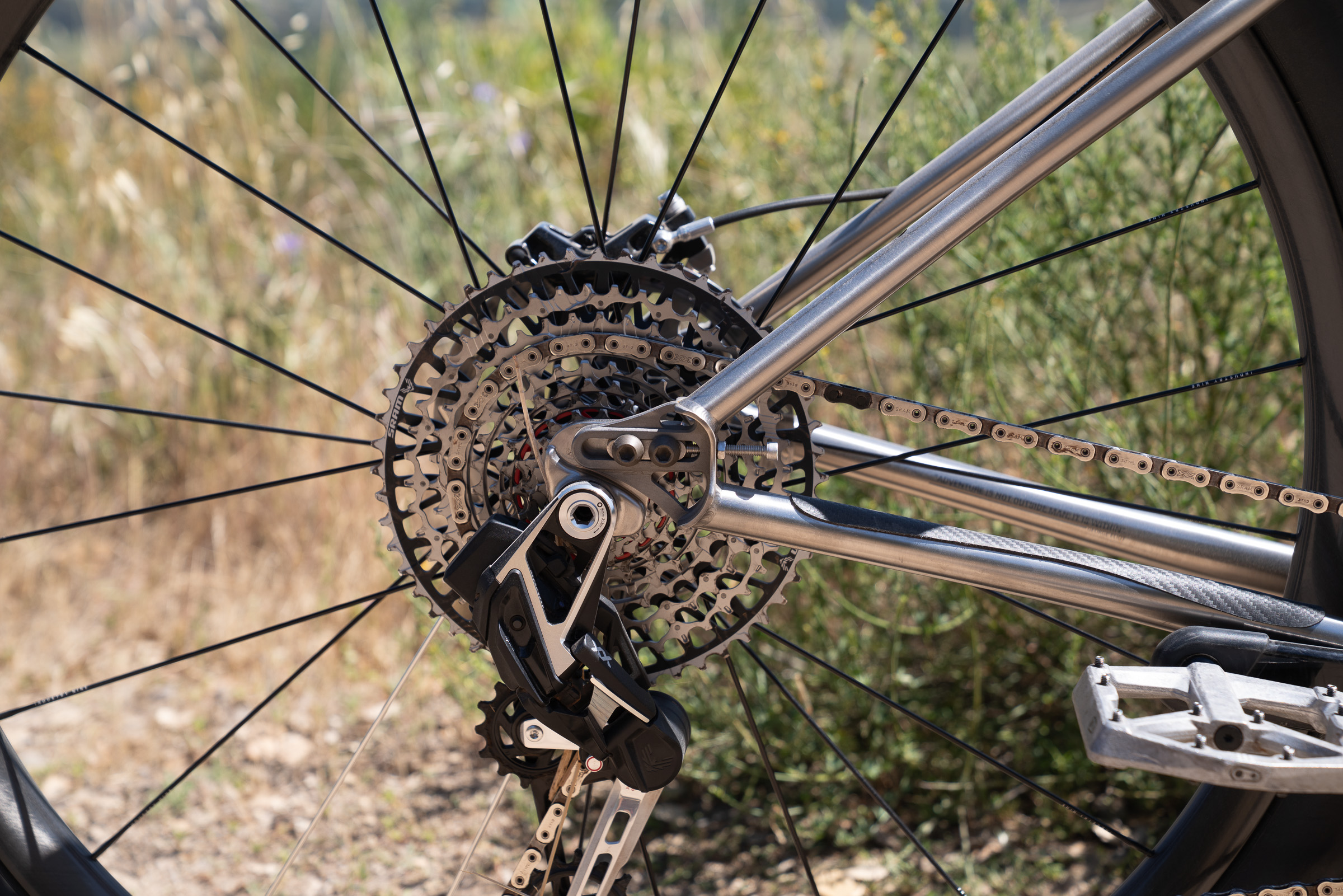
Uphill, the 32er put me in a comfortable pedaling position. The Revel prototype was set up with a 32T chainring, which is what I’m used to riding on my 29ers. As a result, each pedal stroke noticeably propelled the bike forward a little more than usual, thanks to the larger diameter wheels. On the steepest stretches in my biggest gear, I was out of the saddle to keep the bike moving forward. If this were my own bike, I’d be tempted to drop down to a 30T chainring.
Before my test ride, Revel founder Adam Miller warned me the steering on the prototype 32er still wasn’t completely dialed. It’s early days for 32er geometry, and builders like Revel are working to find the right balance. Go too slack on the head tube angle, and the front end wanders on the climbs. Too steep, and it’s sketchy going downhill. And it’s not just the head tube angle: pretty much every measurement affects weight distribution, which in turn affects how the bike handles.
Based on my brief test ride, I’d say the front end felt pretty good, both going uphill and down. It was only at low speeds, on flat ground weaving through the crowds at Sea Otter, that the steering wanted to flop. Panicked, I overcompensated, which only made matters worse. Some of the people around me might’ve wondered if it was my first time riding a bike.
I suspect this isn’t a geometry problem, but rather a wheel size problem. The taller front axle height, combined with the necessarily longer wheelbase, simply isn’t as agile as the 29ers I’m used to riding. The higher front end feels great otherwise, and I suspect it will just take time to adjust my steering input to compensate. However, the longer wheelbase will continue to pose a challenge in tight situations.
The verdict
Based on this short test ride, on a prototype 32er that’s likely to see changes before it’s released (if at all), I’m bullish on big wheels. That might not be what you want to hear, but keep reading.
At 6’3″ (1.9m) tall, most extra-large bikes are still too small for me. Even with riser bars and a long seatpost, I’m left hunched over the bars. This Revel 32er prototype, likely without even trying, just fits. While we’re slowly starting to see stack heights increase on 29ers (the new Surly Sorceress, for example), 32ers naturally bring the front end up to a level that’s comfortable for tall riders like me.
I also like going for long, pedally rides, and this 32er is an excellent choice for that type of ride. (For the record, I like short, no-pedal downhill rides and slow tech rides too.) A 32er would be perfect for bikepacking and for all-day epics too, though not so much for my local trails, which are tight and require endless starts and stops. I don’t race, but it makes sense that 32-inch wheels offer an advantage here as well.
And lastly, to be completely transparent, 32-inch wheels are good for journalists like me. With any new mountain bike development, riders have questions, and answering those questions keeps me employed. To be clear, I don’t have a vested interest in whether 32ers succeed or fail. I’ve been doing this long enough to know that there will always be something new for the mountain bike media to dissect. At the moment, it’s 32-inch wheels.
There’s a good chance you won’t be riding a 32er in the future
Are you tall? Do you like all-day, pedally rides? Do you race? Are you a cycling journalist? If you answered no to one or more of these questions, you probably don’t need a 32er. And in that case, my advice is simple: don’t buy one.
Even if you answered yes to some of the questions above, my advice is the same: don’t buy one. Yet. Be patient. Hell, for years 29er geometry was so bad that a lot of riders decided to trade in their 29ers for 27.5″ bikes, only to switch back years later once the bikes finally improved.
So why was it so hard to find a 32er demo bike to ride at Sea Otter? My theory is that it’s because the bikes aren’t dialed yet. The hype has outrun the tech, at least for the moment.
Though it’s unlikely 32er will become the next 29er, the benefits are real for a certain set of riders. And for the sake of all of us, it’s good to have choices.
Keep up with the latest mountain bike news by adding Singletracks as a preferred source on Google.


8 Comments
Apr 29, 2026
I'm thinking of practical issues like putting it on a car carrying rack, getting it round the tight corner into the pedestrian entrance to my garage, how much space it takes up in my campervan. My 29" bike seems to be at or near the limit for all of these, certainly compared to the 26" it replaced. If a 32" is too big to readily fit into my - or anyone else this might apply to of course - lifestyle, then it doesn't matter how well it rides if I'm cursing it every moment I'm not actually riding it.
May 7, 2026
Apr 29, 2026
Apr 29, 2026
Apr 30, 2026
May 6, 2026
May 5, 2026
May 7, 2026
And then there is the question of serviceability: how easy is it to mount or unmount the tyres? Can it be done trailside?
Big wheels might find a niche, but I don't think they will be able to compete with the 29, so I guess we are in pretty much agreement!