
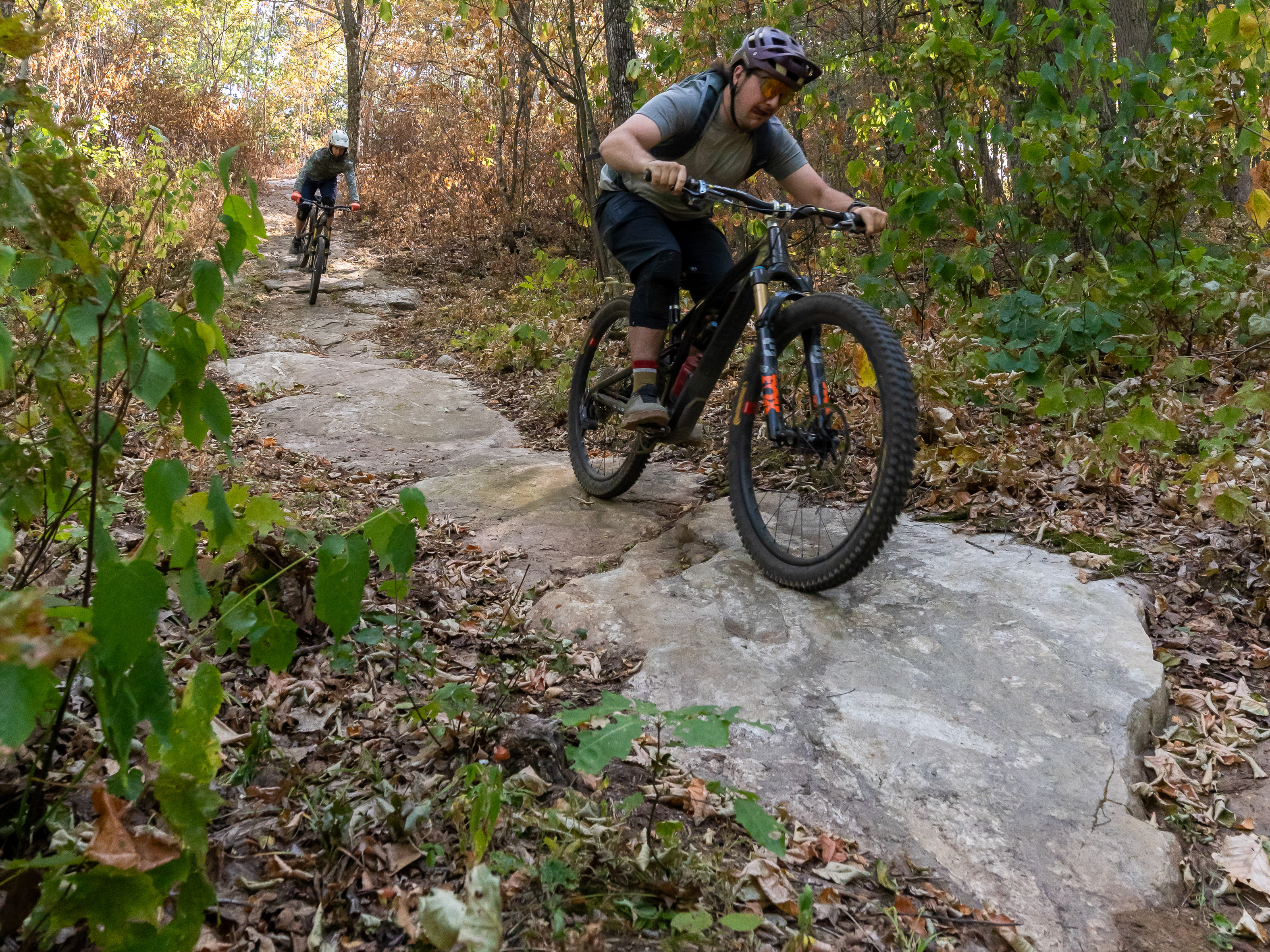
While mega ski resorts like Whistler-Blackcomb and Killington boast the biggest and best downhill mountain bike parks, there’s been a recent surge across the country in small, hometown ski areas expanding their mountain biking infrastructure. One of those hometown ski areas has emerged as a benchmark for downhill riding in the Northeast.
“One thing that I think makes Mt. Abram really unique is […] that we really are here for the community that has grown around us,” said Allie Masten, Director of Marketing for Mt. Abram Ski Area, located near Bethel in western Maine. This focus on the local community has led Mt. Abram to build diverse trails across the entire difficulty spectrum, including some of the most technical double black tech lines on the East Coast.
“There is not a lot of ego in our community,” Masten added. “We have a ton of riders who ride at a really, really high level, and those are the people who are out there taking laps with some of the younger kids, showing them how to tackle different lines. It really is like a progression and learning hub.”
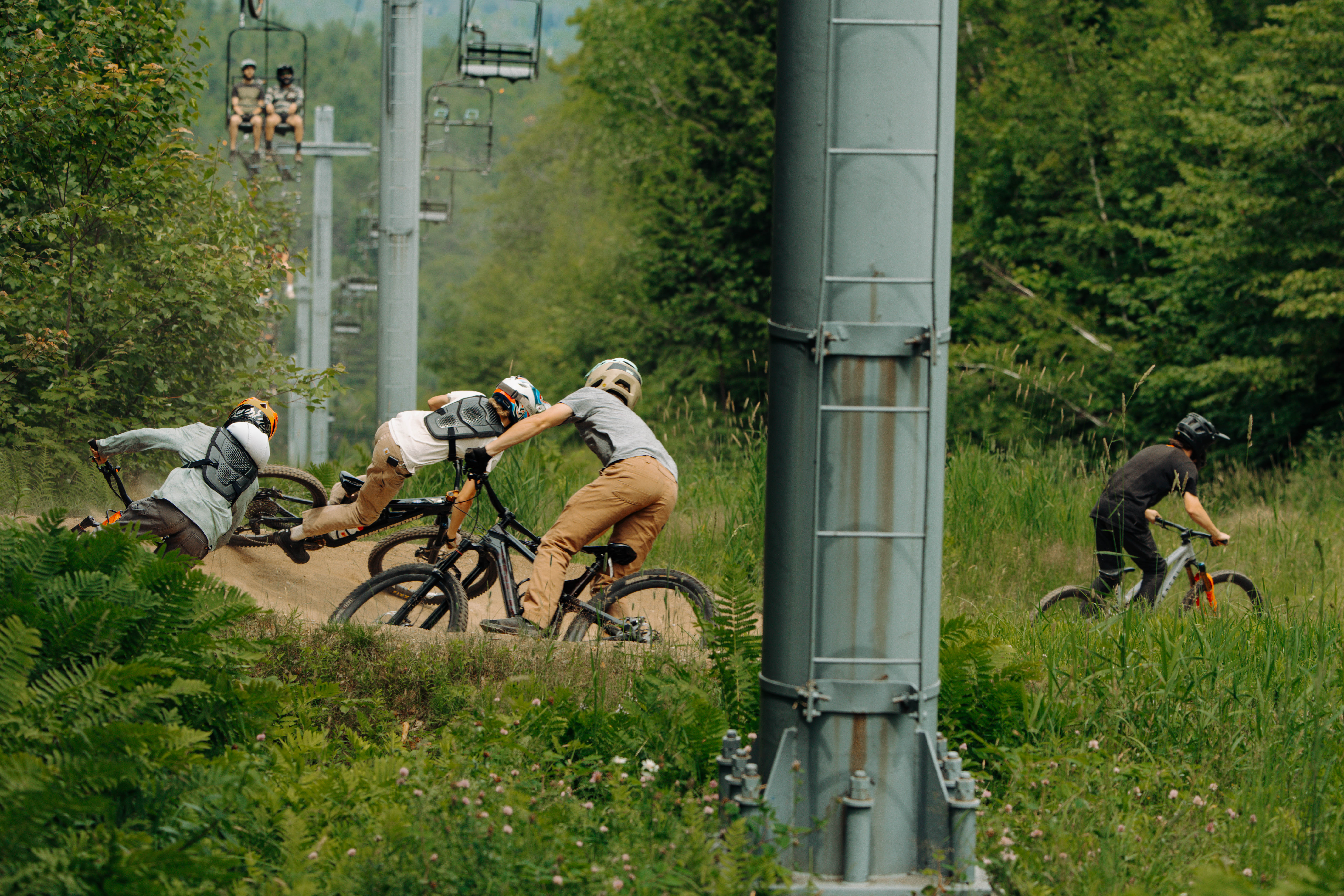
Mt. Abram might be a small ski area, but that hasn’t stopped them from making a big impact
You won’t find any high-speed detachable quads at Mt. Abram. All of the lifts are fixed-grip, which they run at a slightly slower rope speed for summer operations. However, to keep the lifts running smoothly, employees load the bikes for the clients as the chairs whiz by.
The bike park is open Thursday through Sunday during the summer season, with the West Side lift operating on all days, and the Main Side lift running Friday-Sunday. The West Side chair serves the bulk of the bike park terrain with the most varied trail offerings, while the most technical trails on the mountain are served by the “main” lift. Their projected opening date for 2026 is June 12.
Lift tickets cost just $42, providing access to all 8.5 miles of downhill trails spread across roughly 14 different trail segments and 1,000 vertical feet. E-bikes are allowed on the uphill climbing routes and trails, but aren’t allowed on the chairlifts. According to reports from the 2025 season, it costs $15 to ride the trails without using the chairlifts.
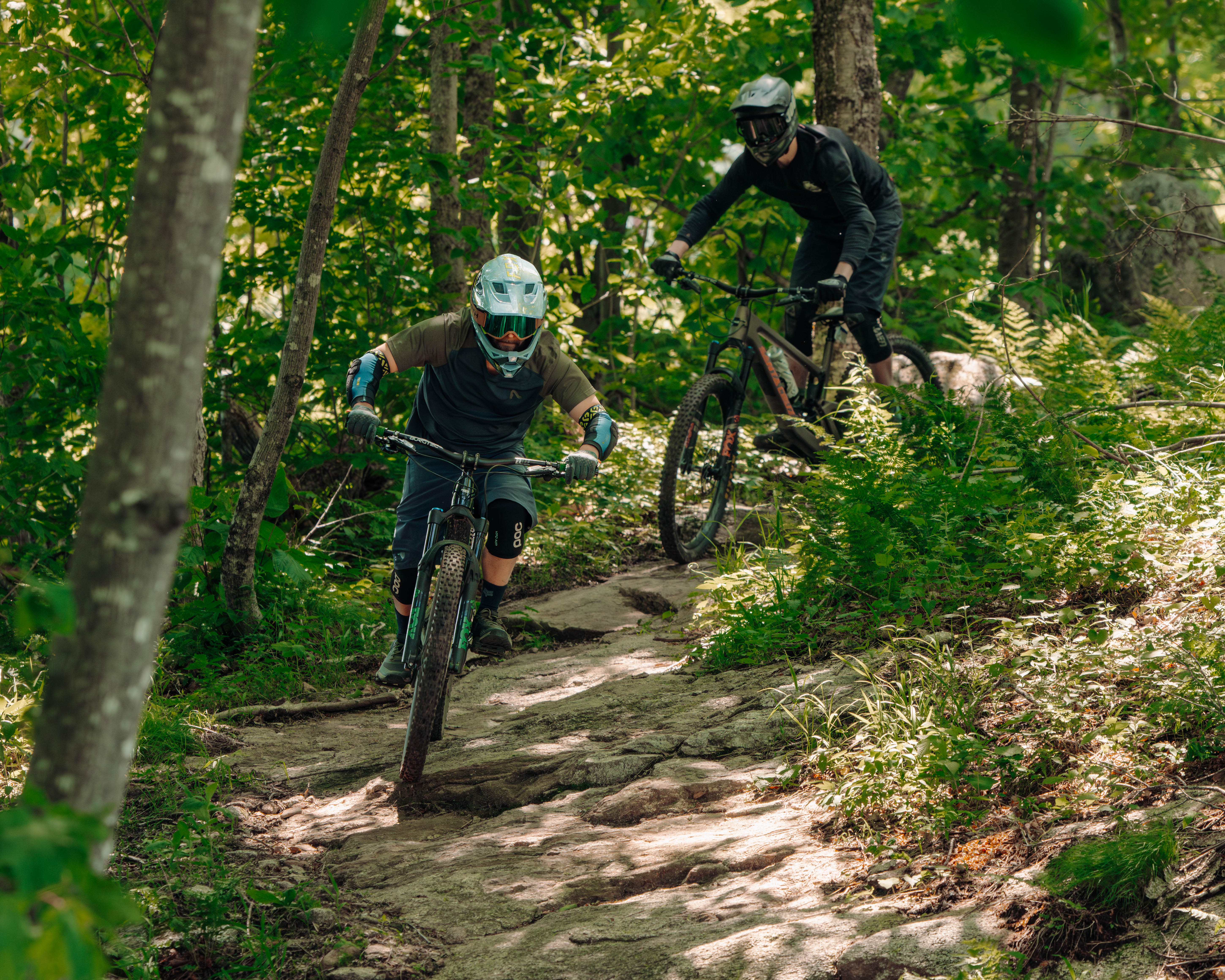
In-house trail builders have constructed an incredible bike park
While many ski areas hire out the construction of their bike parks to international companies like Gravity Logic, Mt. Abram has instead built and developed their trails solely using in-house trail builders. There’s been no grant funding, and no outside help: Mt. Abram’s in-house crew has painstakingly built this now-renowned bike park. And other orgs, like NEMBA, are taking notice: the Mt. Abram trail builders have begun contracting out for other gravity trail builds across the Northeast.
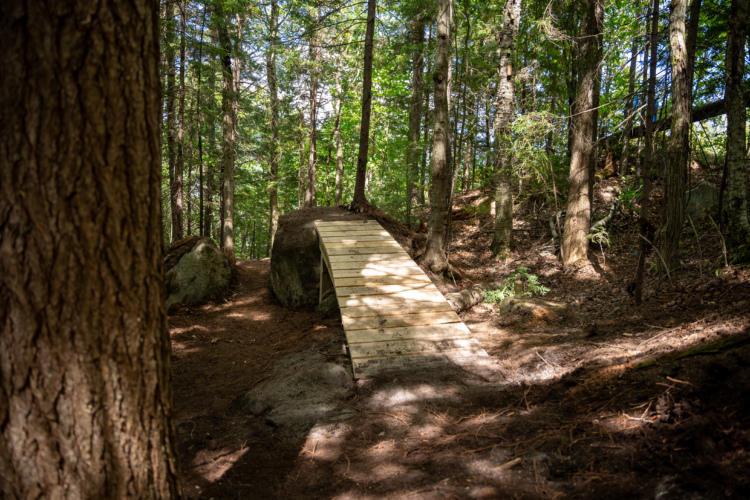
While Mt. Abram’s trail builders definitely have the skills required, building the bike park over the last roughly eight years has still been a challenge. “I don’t think we’ve ever found an easy section of trail to build at Mt. Abram,” said Max Southam, Lead Trail Builder for Mt. Abram. “The mountain has a pretty long history of human involvement with the soils, like ski trails getting bulldozed, snow pipe getting laid. And a lot of original waterways on that mountain got erased in the 60s all the way through the 80s, as they were building out the ski area — different times for environmental requirements. And so we deal a lot with abnormal water flow. […] We’ll watch a water bed or a river disappear underground and reappear 400 feet later. And if you aren’t careful, you put a trail, and you do all the right drainage, and water still comes straight out of the middle of the trail. So water [and water management] is definitely the biggest hurdle at the mountain. We’ve really developed a pretty robust system for dealing with water that many other ski areas employ, such as uphill ditching of the trails, […] using the right size culverts, putting bridges where necessary.”
Despite the water challenges, they’ve built an impressive trail system that just keeps getting bigger and better.
The latest trail additions on Mt. Abram
The crew opened several key trails for the 2025 season, setting the park up for success in 2026 and beyond. Here are the latest additions to Mt. Abram Bike Park.
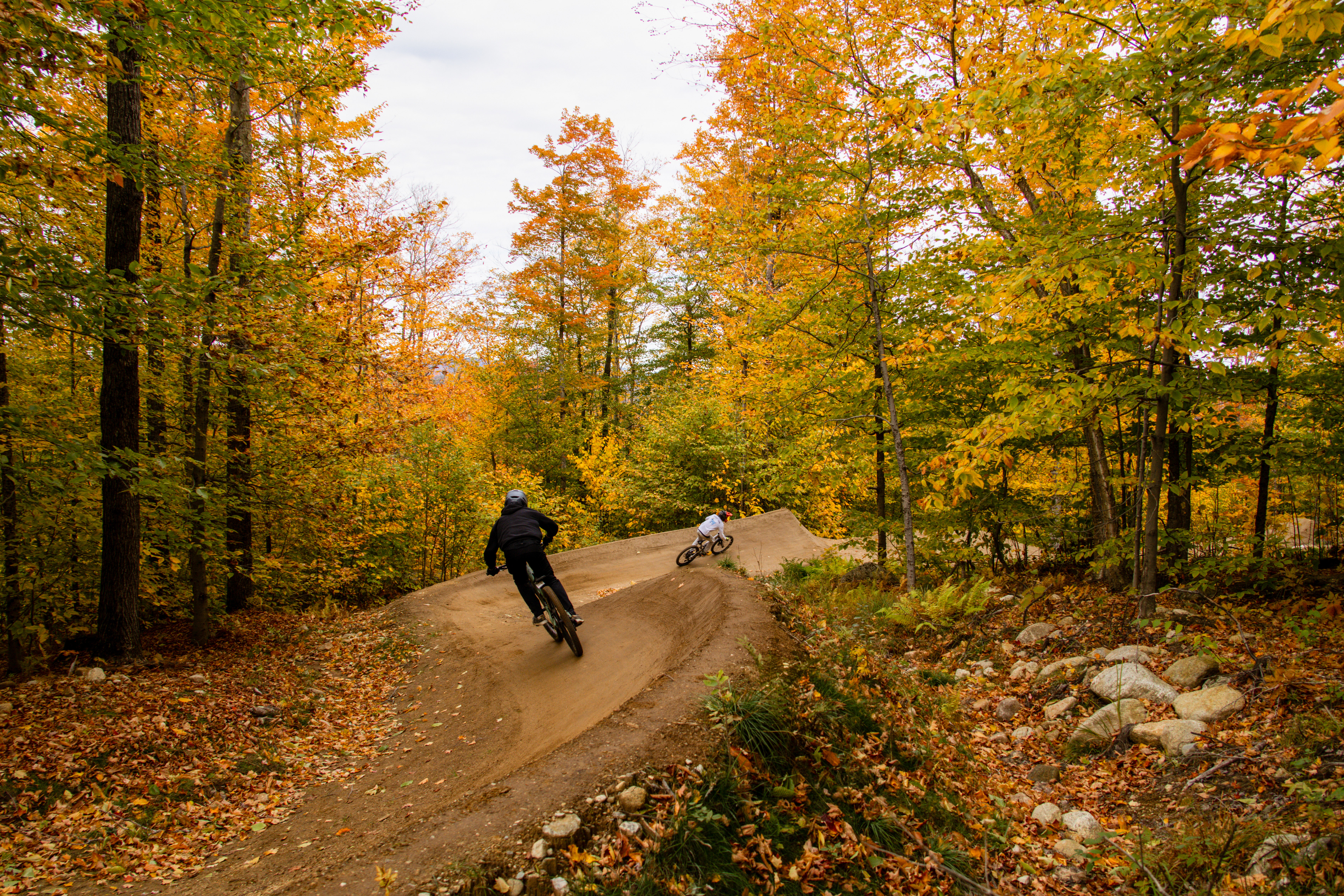
Main Line
Construction on Main Line has been underway for three seasons, with a fourth season of work on this trail coming up in 2026. Despite ongoing work, the trail opened to the public very briefly at the end of 2024, with 2025 being its first full season.
This is Mt. Abram’s advanced jump trail, with “eight or nine features with a couple different split line options for people who want to catch a little more air or a little less air,” said Southam. “It starts just above the top of the West Side lift. So it’s a small hike, maybe a minute hike, from the top of the lift up to the top of the jumps, and that gets you down a third of the mountain so far. And currently, where that ends, it links into Drain Line, which is a trail that was built last summer.”
Drain Line
Drain Line was built in 2024 and opened for the 2025 season. This rake-and-ride tech trail is designed for advanced riders, but it offers “multiple line options for people who want to catch some air, hit some drops, and go-arounds for those who just want to get down the mountain.”
George’s Jungle
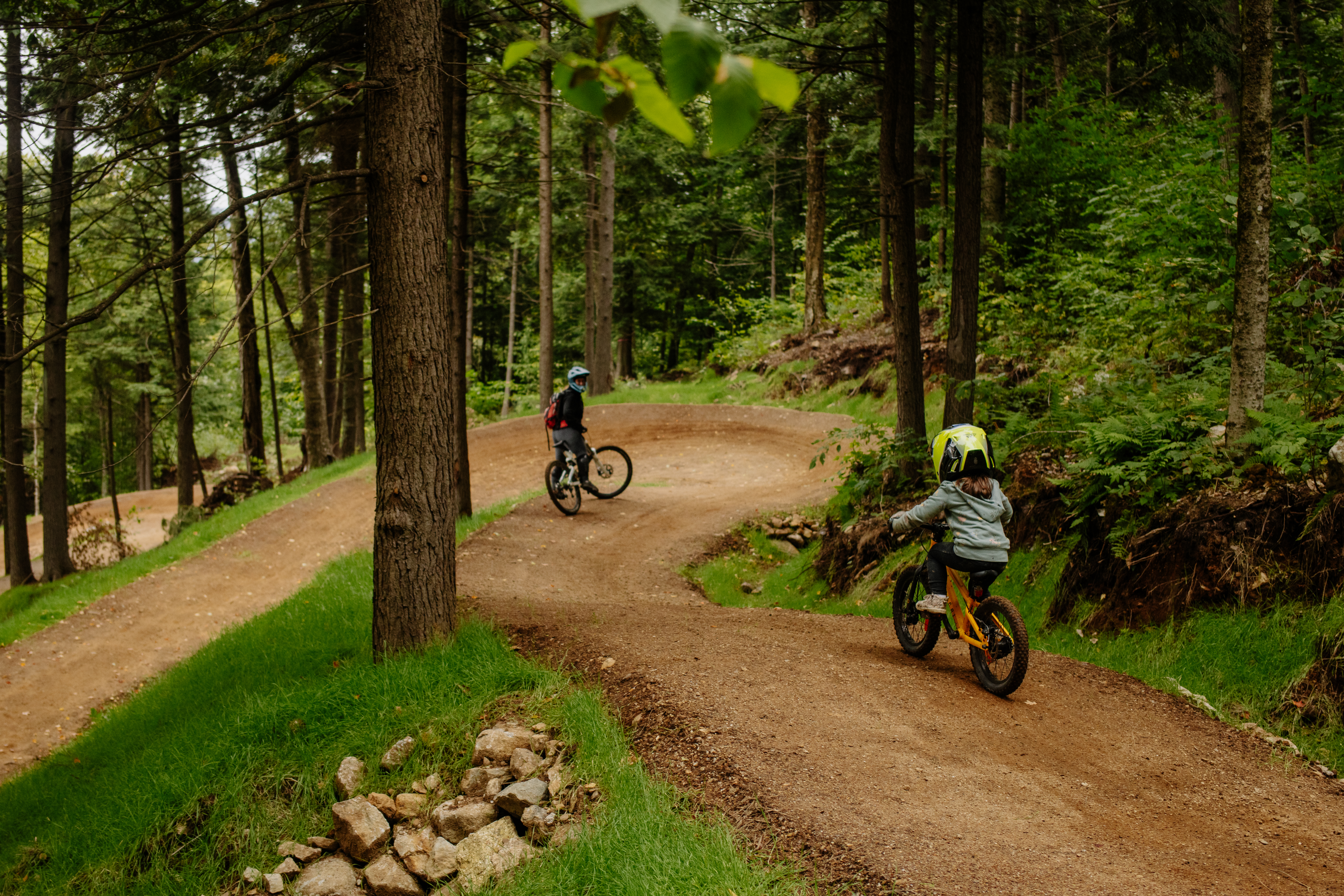
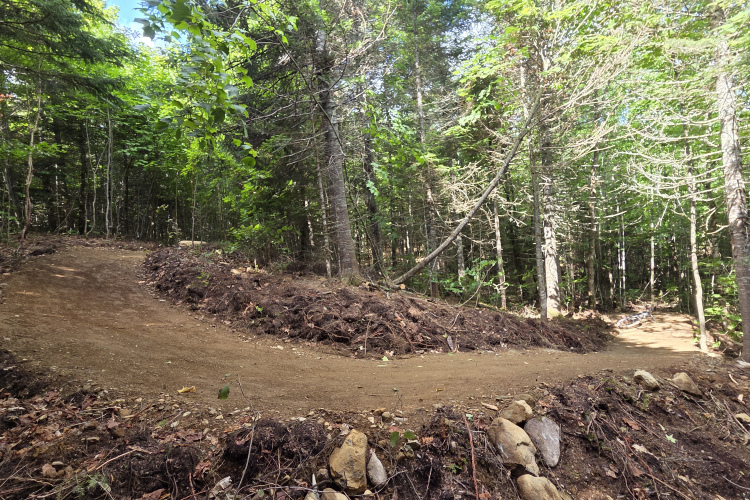
George’s Jungle was an existing trail from the original bike park buildout, but it’s undergone a multi-year reconstruction project to deal with water issues that weren’t anticipated during the first round of construction. After three years of work, the rebuild of this trail is now complete, and it’s now built sustainably, despite Mt. Abram’s difficult water situation.
George’s Jungle is “a really introductory level trail with some rollers and some berms, but most of the grade’s pretty mellow, and most of the radius of the turns being nice and wide,” according to Southam.
Astronaut Doctor
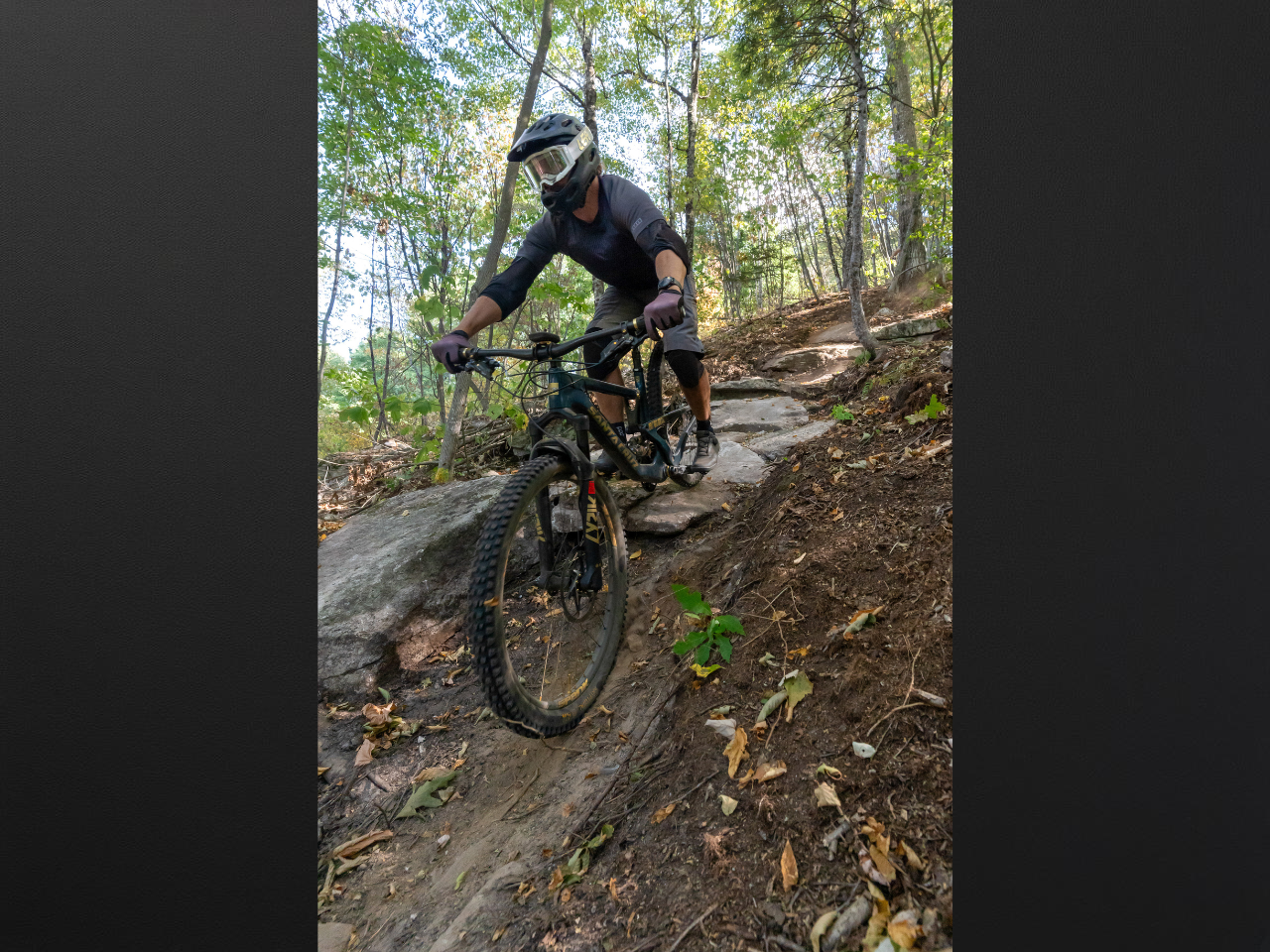
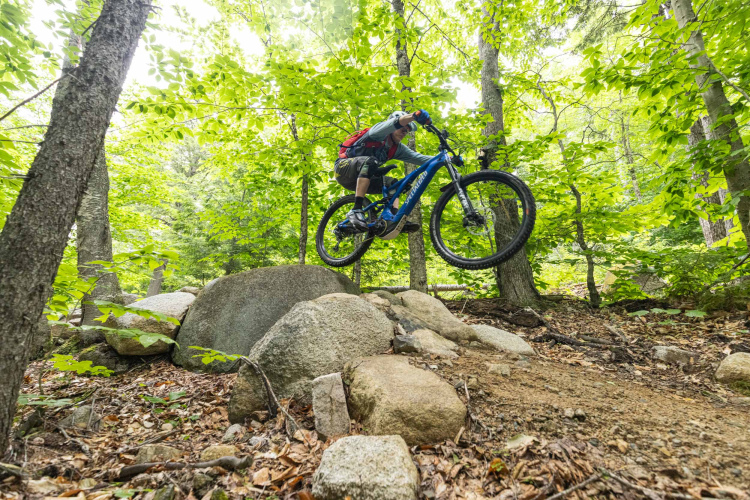
Completed in 2025, Astronaut Doctor is filled with rocky, natural terrain, and is now the most advanced tech trail on the mountain. Nearby PBC is a double black, and Astronaut Doctor steps it up a notch from there. While this new marquee tech descent features A and B lines, the “easy” B lines allow riders to piece together a roughly double black diamond ride, while the A lines are true pro-level features.
Mt. Abram is filled with this rocky terrain, which makes it challenging to build flow trails. The mountain boasts numerous rocky slabs, which the builders have stitched together into elaborate lines. “And then in between those slabby chunks, there’s still not really any dirt, so a lot of it ends up being hand-placed rock armoring, like pretty artistic trail surface in a lot of places,” said Southam.
Astronaut Doctor runs from the summit to the base of the Main Side lift, providing a continuous 1,000 vertical foot descent.
2026 plans: a skills area at the base of the mountain
For the 2026 build season, Southam’s crew plans to build a 3,000 square foot skills development track at the base of the mountain to help new riders hone their skills before hopping on a lift. It will feature a progressive drop zone, progressive jumps, and a turning/braking area. Southam plans to construct trail-style features similar to those found in the main bike park to help riders make the leap to shredding downhill laps.
Hometown downhill shredding is alive and well in the Northeast
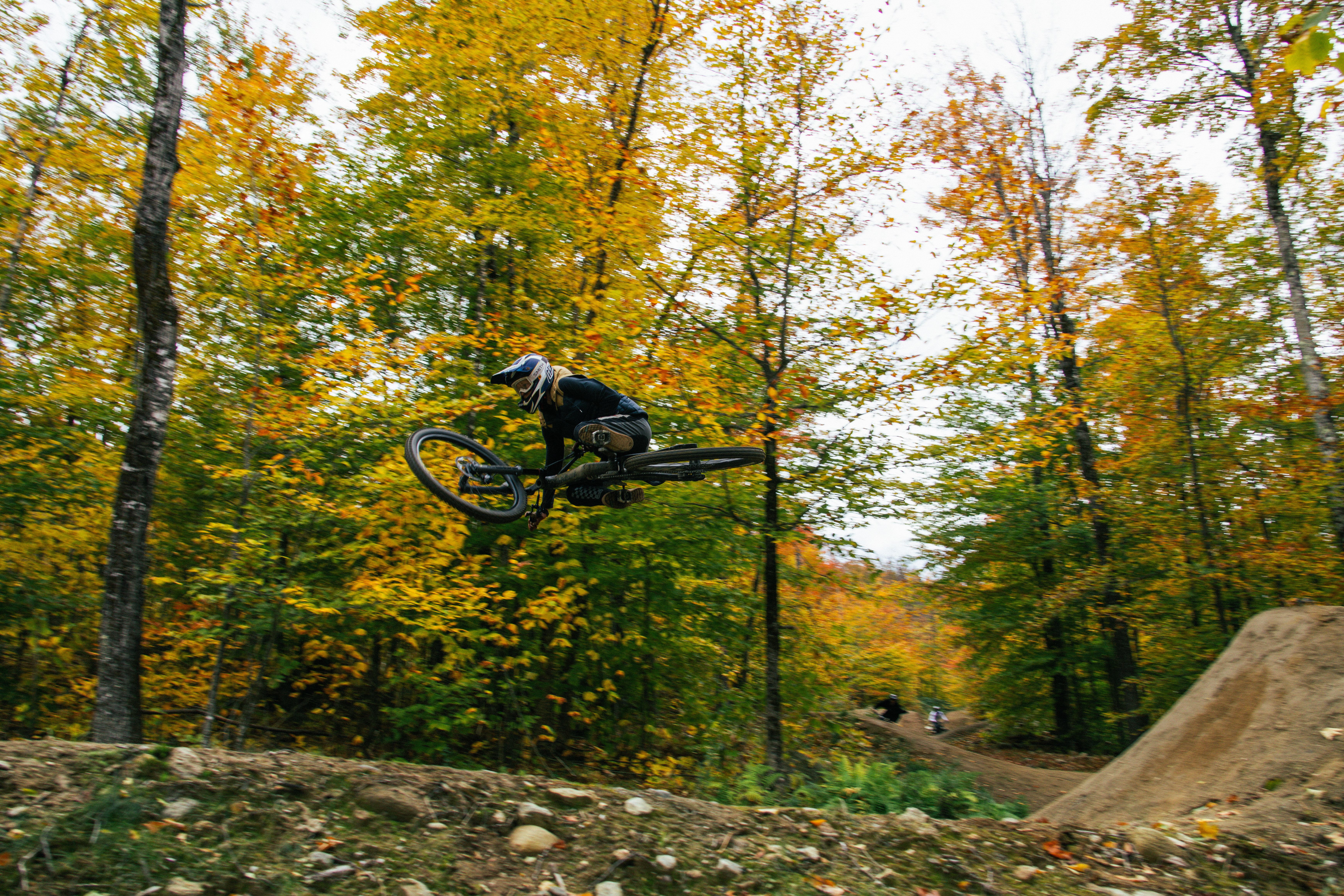
Mt. Abram’s in-house trail crew has clearly constructed a well-equipped bike park offering trails for the entire spectrum of riders — and that includes the top end of the technical spectrum. These well-built gravity trails are making waves across the Northeast, as evidenced by the builders’ newfound popularity and demand for other projects across the region.
But at the end of the day, for Southam and Masten, it’s all about serving the community.
“It’s really just people who love riding bikes, love spending time together, and we’re really lucky that they choose to do that at Mt. Abram,” Masten concluded.
The news stinks. Why not follow Singletracks on Google News to bring more joy to your day?


0 Comments