

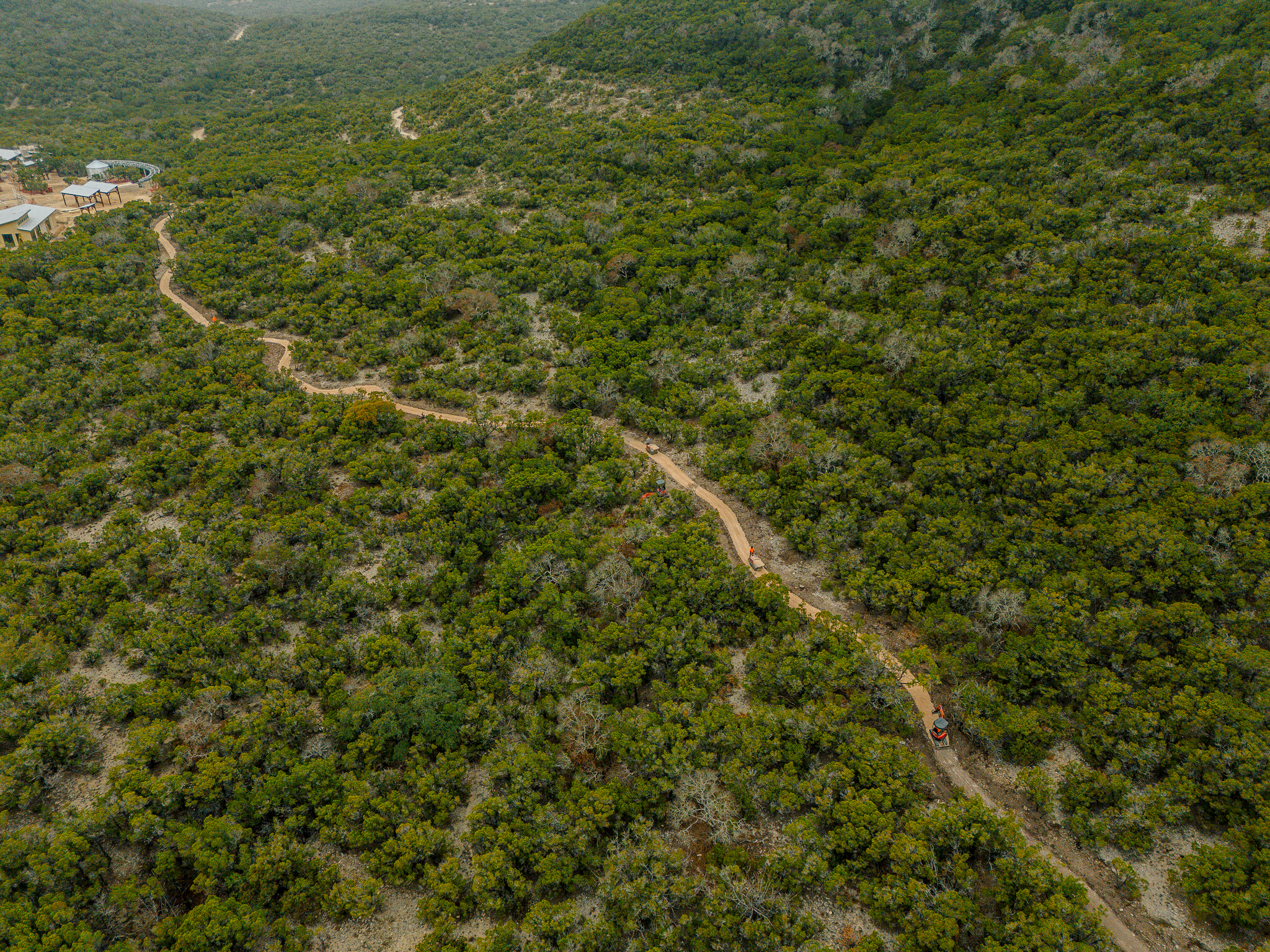
Rock Solid Trail Contracting is widely regarded as the largest trail building contractor in the world, with crews spanning the USA from coast to coast out of their dual headquarters in Bentonville, AR, and Copper Harbor, MI. While they’ve completed innumerable massive trail projects over the years, they’re currently building “Rock Solid’s most ambitious project ever for a single season,” according to Adam Munich, Digital Marketing Coordinator for Rock Solid. “We’re planning on constructing anywhere from 25 to 30 miles of trail this season.”
That 25-30 miles is not across the entire company, but in a single trail project over a 6-7 month build window. The project in question? The Albert and Bessie Kronkosky State Natural Area in Pipe Creek, Texas (or ABKSNA, for short).
A new state natural area in Texas’s portfolio
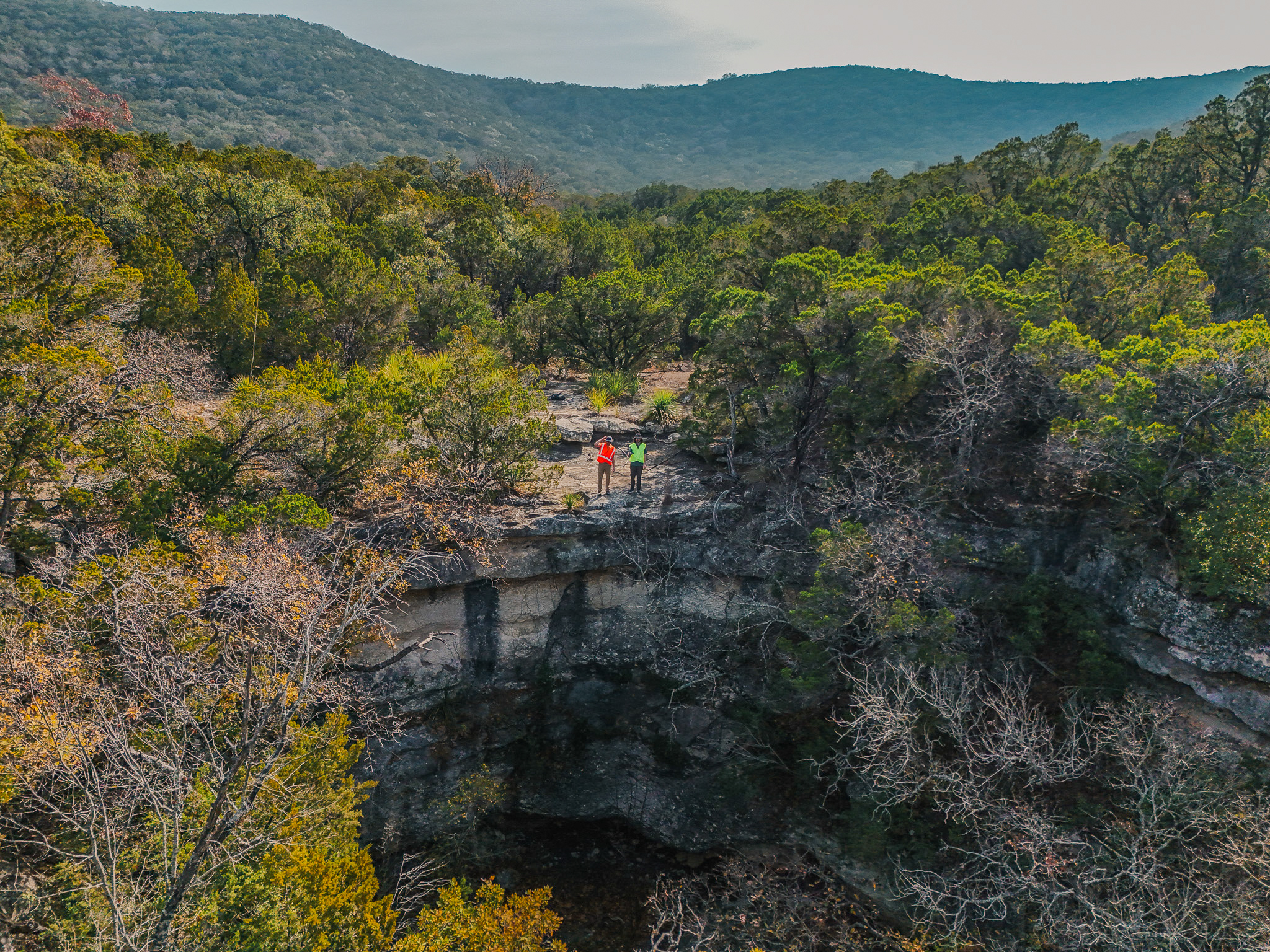
ABKSNA represents a significant addition to Texas’s public lands portfolio. Located in Pipe Creek—northwest of San Antonio in the heart of Texas Hill Country—this protected area has transitioned from private ranch land to a conservation-focused state natural area. “It used to be [the] Albert and Bessie Kronkosky ranch, and they donated it to Texas State Parks, and it’s currently under development,” Munich explained.
What sets ABKSNA apart from a traditional state park is its conservation mandate. “So this is different because it’s a state natural area. It’s not a state park like Palo Pinto Mountains State Park,” said Munich. However, both entities are managed by Texas Parks and Wildlife (TPWD).
“A state natural area is a piece of land with unique natural, cultural, and historical features,” according to TPWD. “Protecting and managing these features is our highest priority.”
The area protects several endangered species, including the golden-cheeked warbler, alligator lizard, sycamore leaf snowbell, bigtooth maple, Bernie bean, and Texas spring salamander. The landscape features springs, seeps, and waterfalls, along with big rolling hills characteristic of Texas Hill Country.
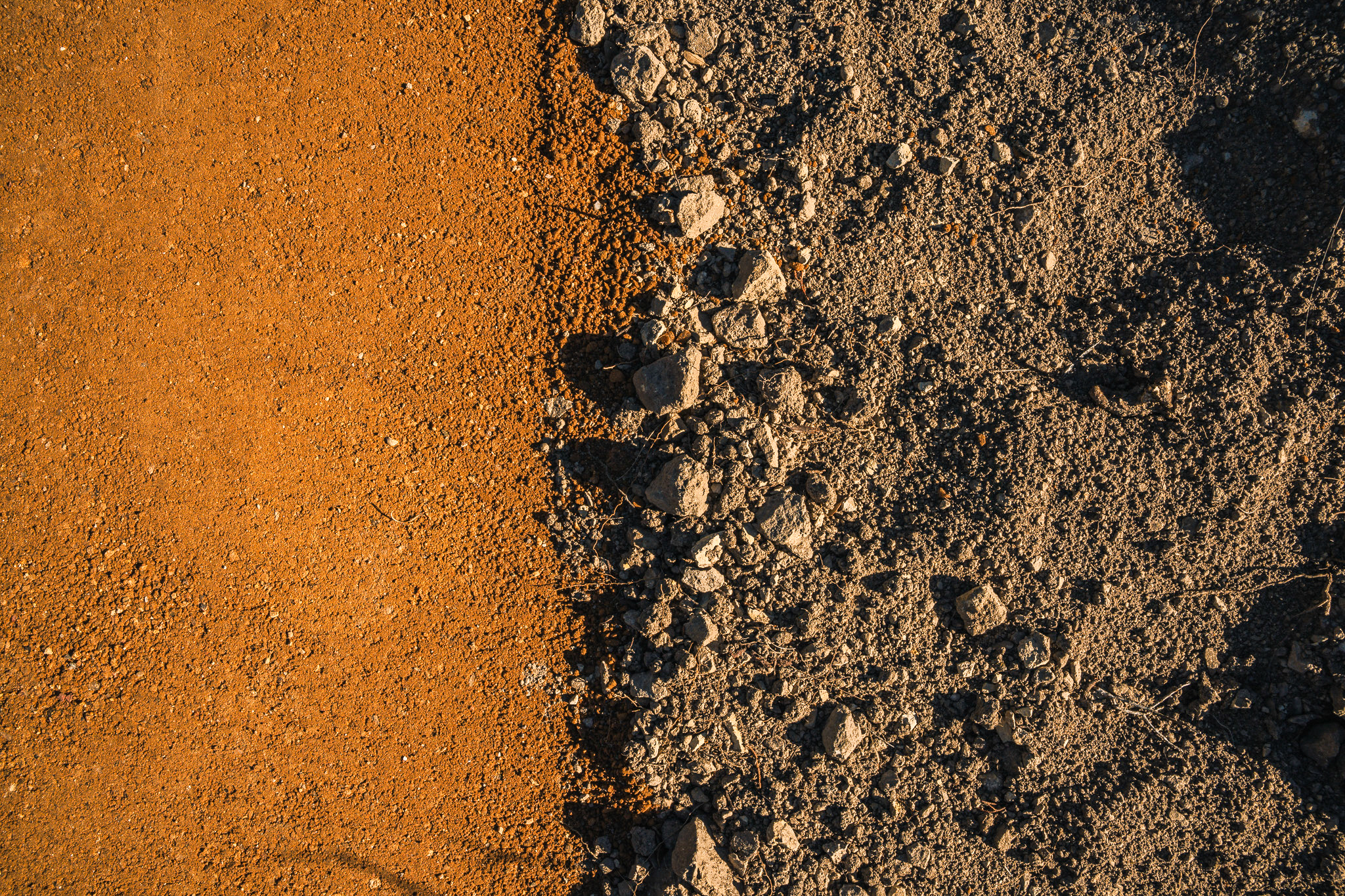
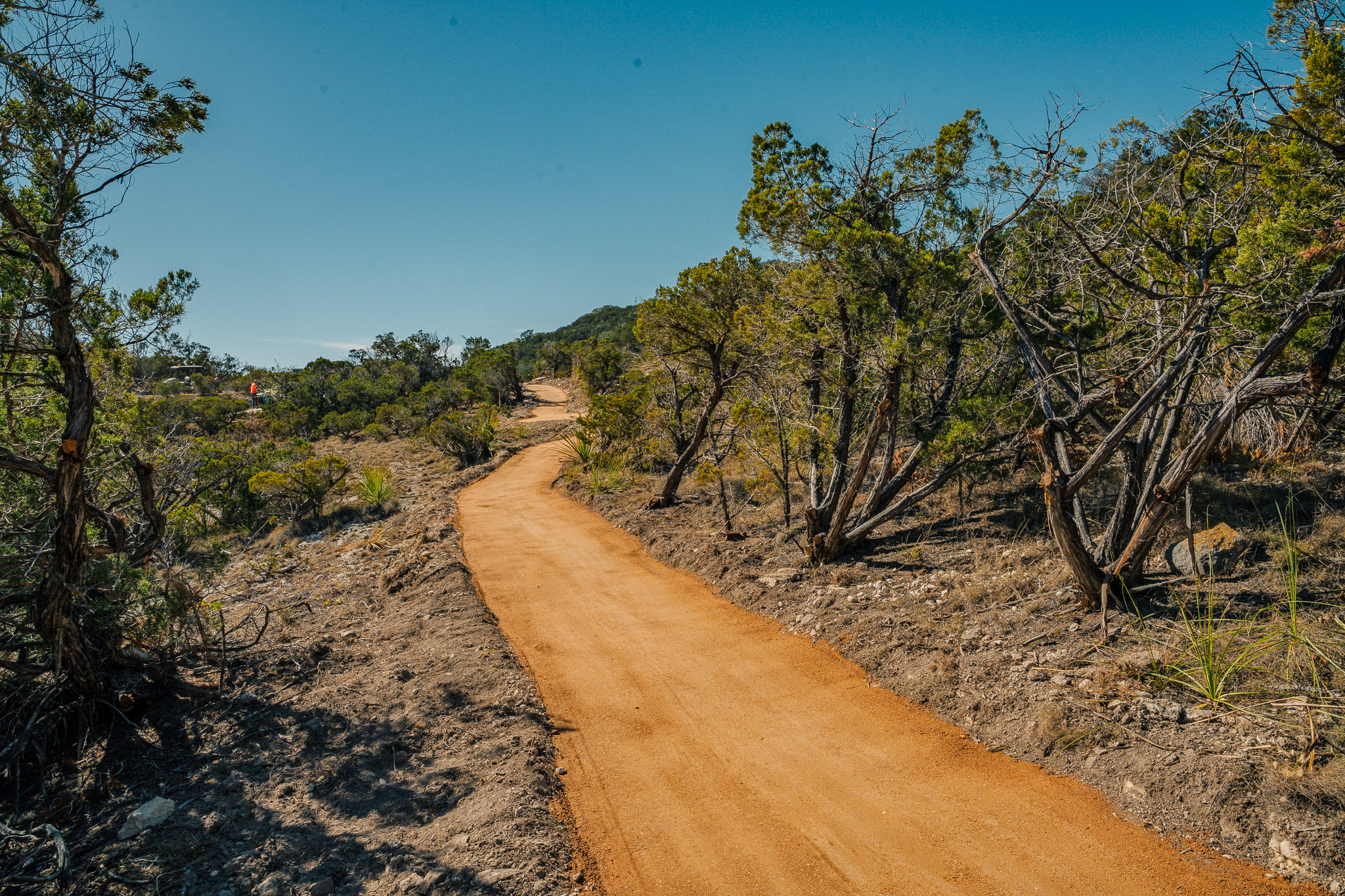
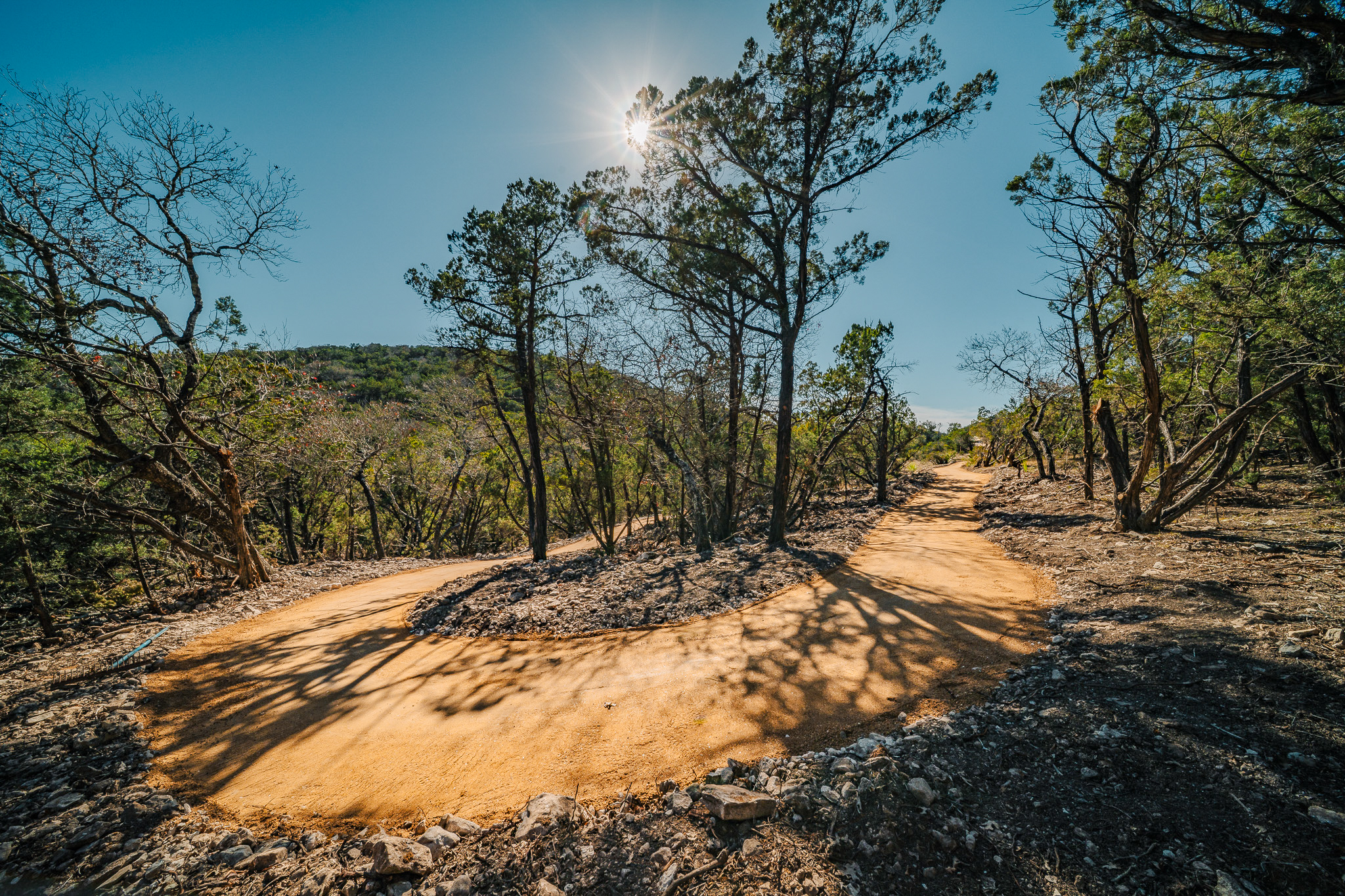
StaLock trail under construction.
What is Rock Solid building in ABKSNA?
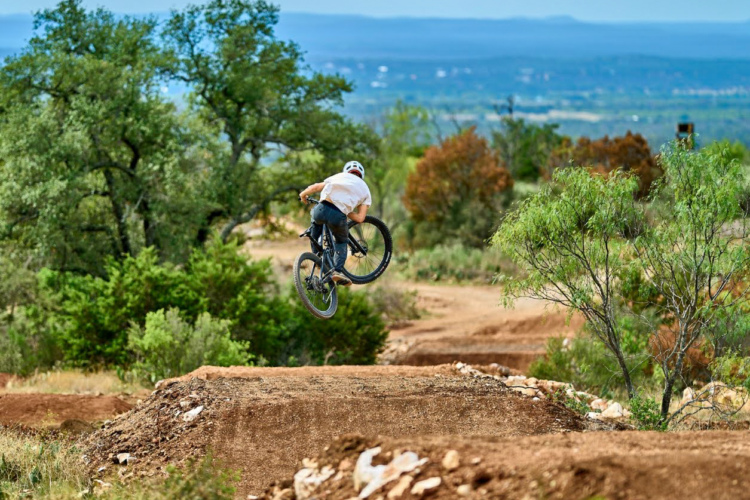
Rock Solid’s crews are currently building three different types of trails in this expansive network: ADA-accessible trails, front country natural-surface trails, and back country natural-surface trails. The accessible trails are fully ADA-compliant and measure about four feet wide. They’re built utilizing StaLok to harden the surface: a natural aggregate soil enhanced with polymer technology. StaLok is used widely across many TPWD parks. But of course, mountain bikers will be most interested in the front country and backcountry singletrack trails.
But what exactly differentiates a frontcountry trail from a backcountry trail? “Part of it’s going to be how wide it is,” said Munich. “Part of it’s going to be how close it is to the infrastructure, parking, roads, all that fun stuff.” He noted that there will be significant differences between the two types of trail. The backcountry trails will measure about two feet wide, versus three feet for the frontcountry trail, and will provide a more traditional singletrack feel. “There’s some really cool ridgeline, black diamond, backcountry trails as well,” he added.
At this time, it’s unclear precisely how much of the 25-30 miles of trails under construction will be open to mountain bikes. However, according to James Rice, TPWD Superintendent for ABKSNA, “The majority of the trail system is considered appropriate and safe to accommodate hikers and bikers.” Unfortunately, e-bikers are out of luck: e-bikes are currently classified as motor vehicles by TPWD and will not be allowed on the trails.
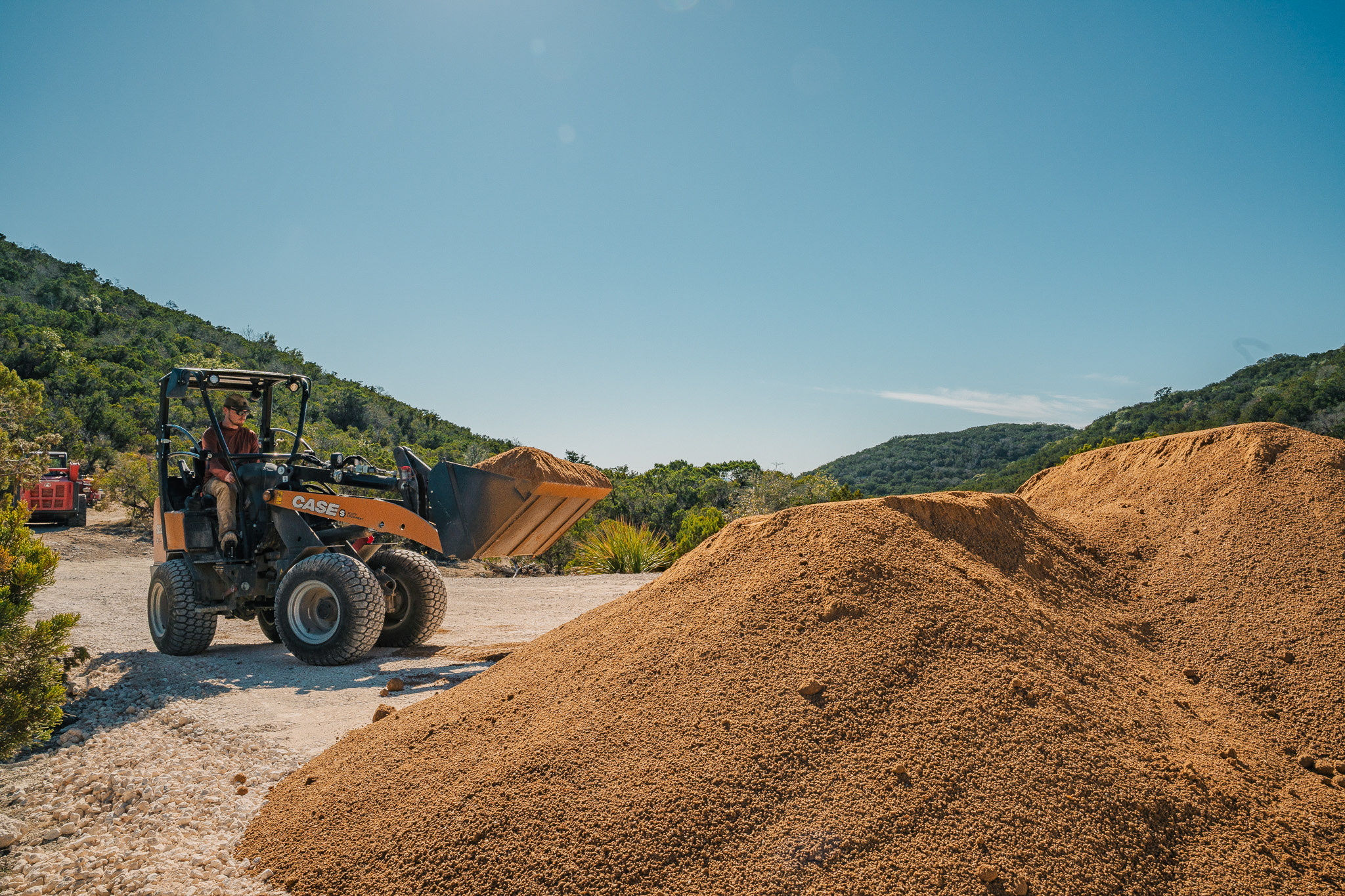
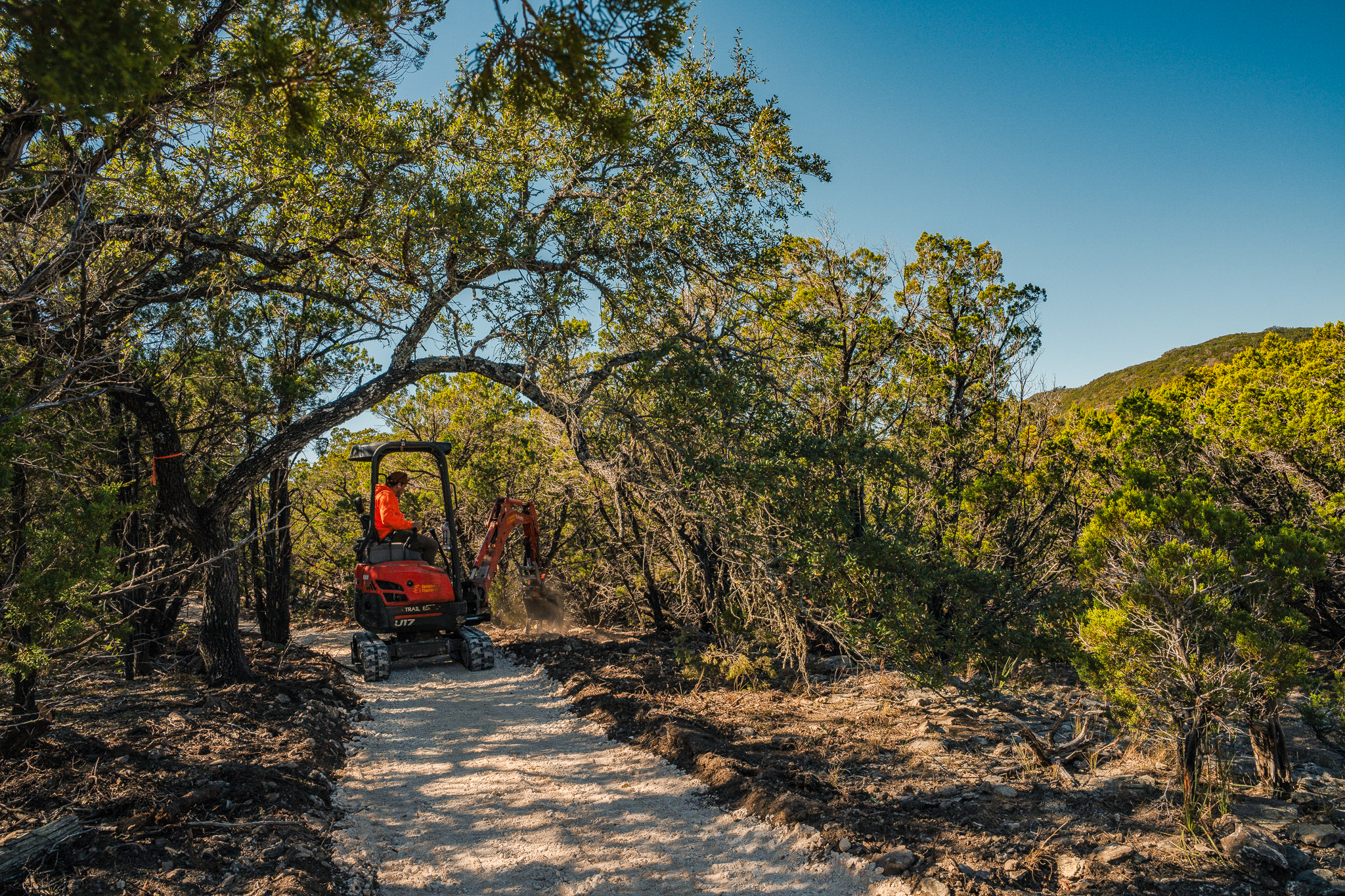
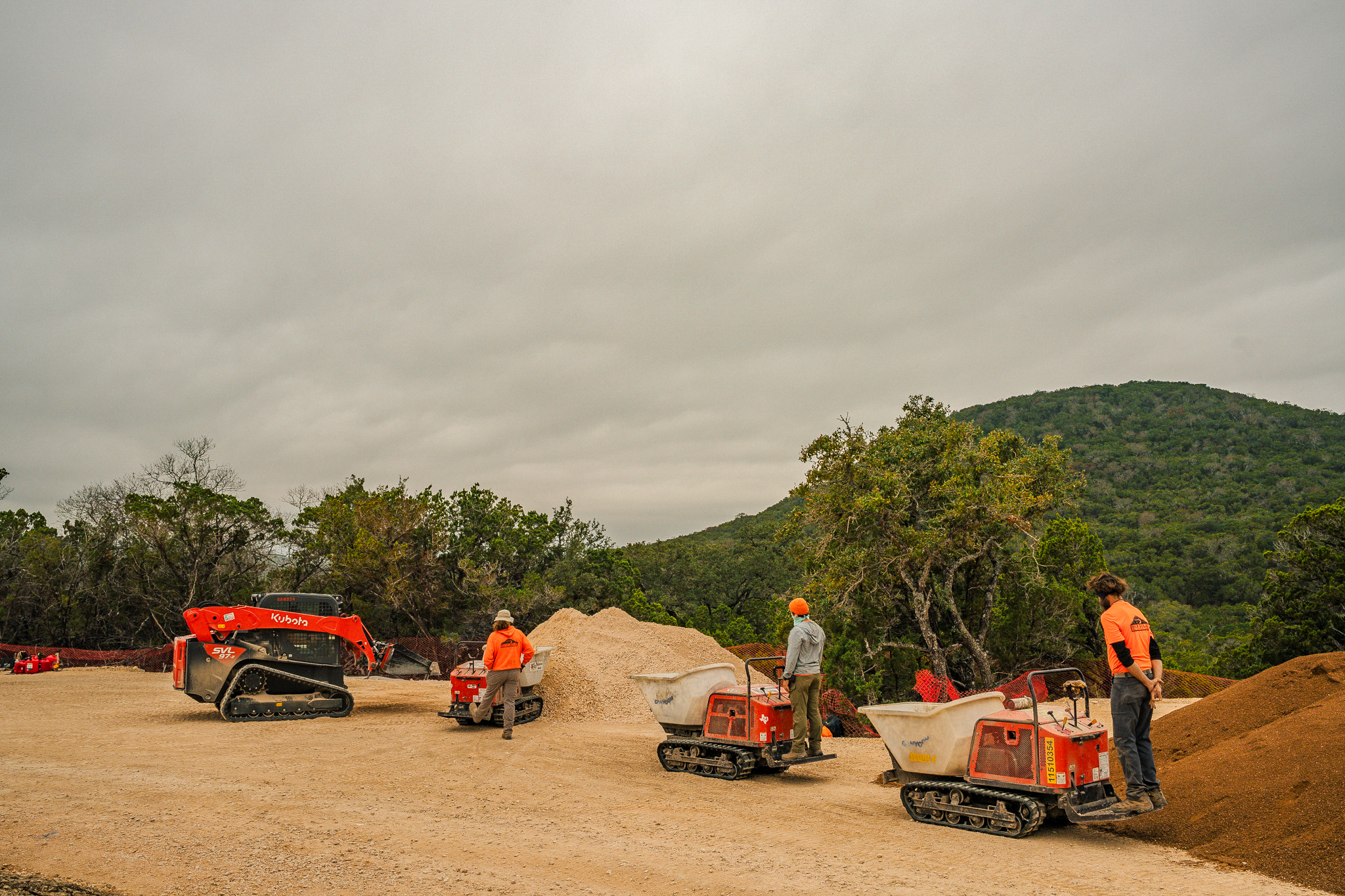
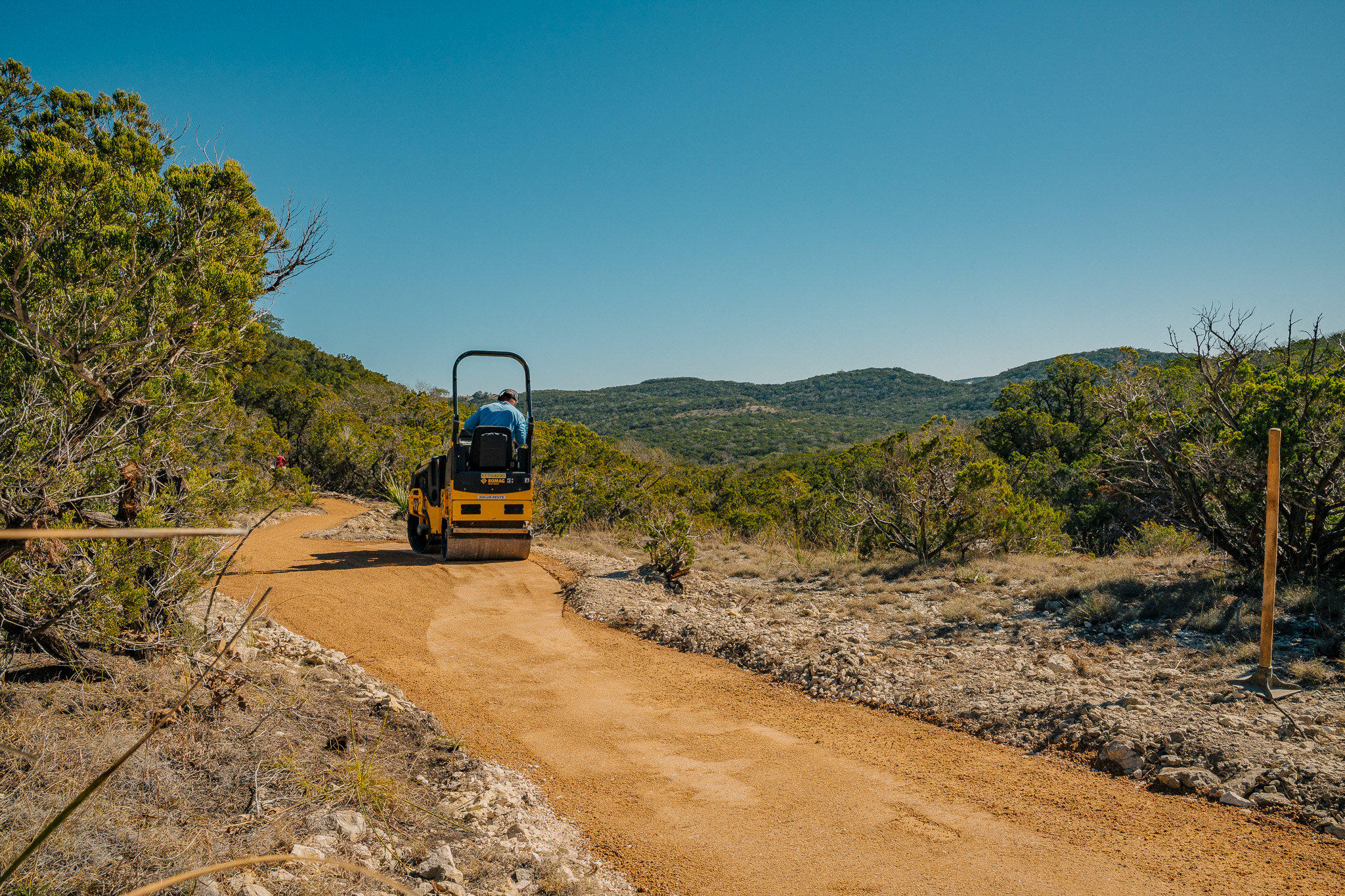
The scale of this trail build is absolutely massive
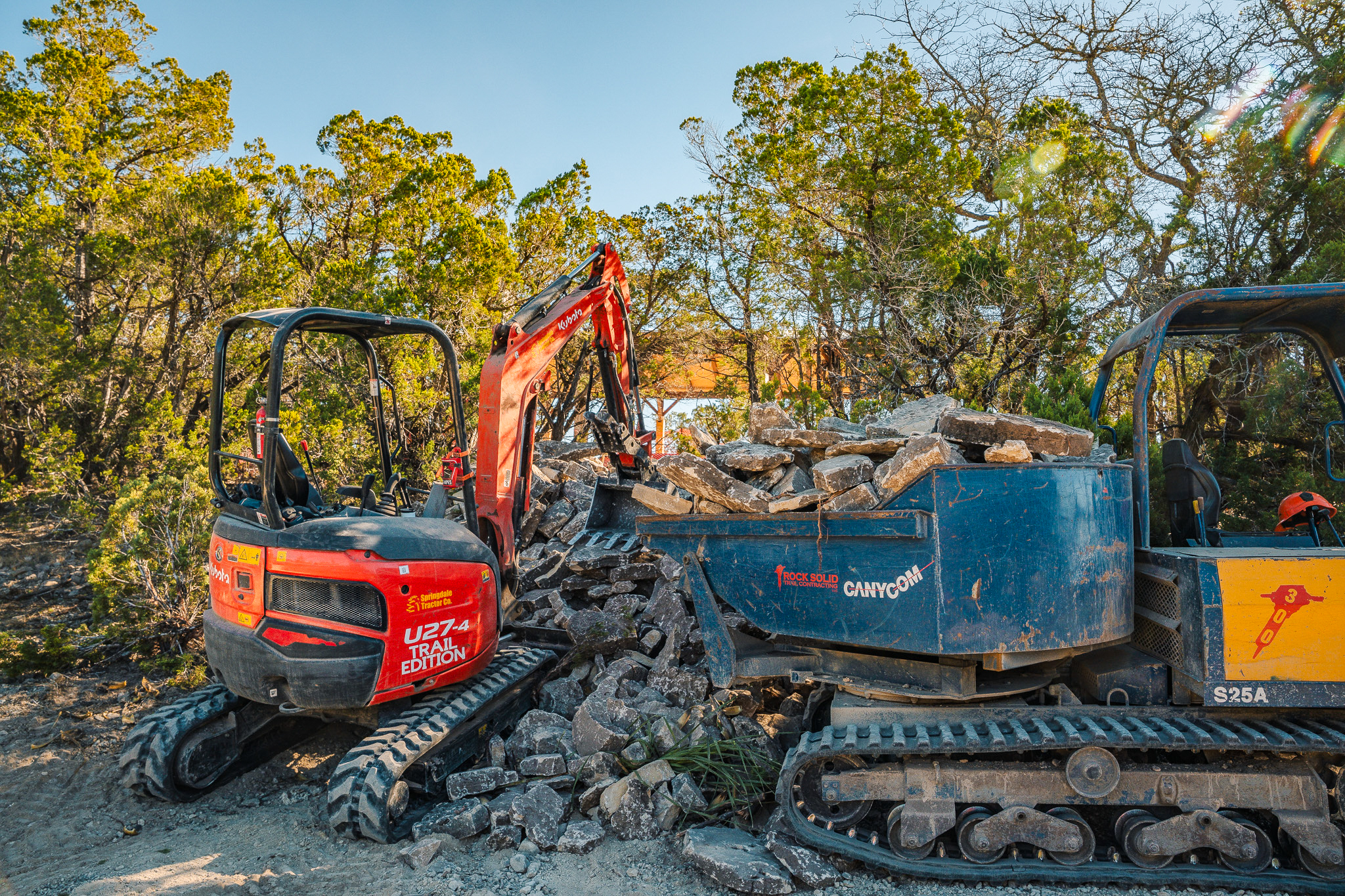
Building 25-30 miles of singletrack in about six months is a mammoth undertaking that very few companies could tackle. But as the biggest trail building company in the world, Rock Solid was able to allocate eight full crews to the ABKSNA project. Each crew typically consists of three people, including one machine operator/foreman and one or more handworkers. After adding site superintendents and a lead foreman, Munich estimated that at least 27 people are currently working on the ABKSNA project concurrently.
All of these crews are moving in different directions and working on different parts of the network, so organization and coordination of the various teams is of paramount importance. “The site superintendent can communicate with the project manager and the office staff, and then the site superintendent can connect with either the crews or the lead foreman, and then the lead foreman can help manage everything, all the smaller stuff,” Munich explained. “So there’s a clear structure in place that allows everyone to really have their specialty, whether it’s managing client expectations/relations, making sure that everything on the site is going smoothly and that everyone has all the resources they need, or just telling people, ‘Go here, do this thing, and this is how you do it.’ Everyone has their own spot and their own way to coordinate the chaos. I mean, eight machines moving forward at the same time. That’s a lot moving at once.”
The coordination required for this project is more akin to a heavy construction site than to a couple of friends digging a new trail in the woods, especially on surfaced, ADA-accessible trails. For those more complex builds, one crew builds the base tread, another brings in the base rock, and a third crew surfaces it. The crews and project managers all have to communicate several times per day to keep the various moving parts and pieces aligned. It really takes a company of Rock Solid’s scale to pull this off.
So just how big a company is Rock Solid? To put it in perspective, they’ve assigned eight of their crews to ABKSNA, but they still have 10 additional crews working on various projects across the country. As big a project as ABKSNA might be, it still only requires about 44% of Rock Solid’s total workforce.
How does this compare to other Rock Solid projects?
While Munich confirmed that this is indeed Rock Solid’s most ambitious project, “it’s not too crazy off” from some of the projects they’ve completed before. They’re currently building about 20 miles in one shot in Norman, OK. Rock Solid built the 80-mile network at Cuyuna Lakes and estimated that their largest build there in a single season was between 20 and 22 miles. Still, leveling up to 25-30 miles in just 6 months of building is a truly ambitious endeavor.
One reason they can commit so much labor to a single project is the time of year. “The crews really enjoy just working down in the warmer weather and experiencing the sunshine,” said Munich. “A lot of our crews are from up north, whether it’s Wisconsin, Minnesota, Michigan, so being able to get away from some of the snow and cold weather and just be able to enjoy being outside in the sun is a pretty cool aspect of working down there.”
While the 60-70 degree temps are great during mid-winter, Rock Solid intends to have the build done before the mercury climbs too high. They aim to complete the full build by April or May, 2026.
Details about public access to the trails are still to be determined, but San Antonio mountain bikers should definitely add this new network to their list of spots to check out soon.
Know about a new trail project we should cover? Whether you’re breaking ground on the next must-ride trail network or putting the finishing touches on a neighborhood flow trail, we want to hear about it. Drop us a line at [email protected] with the details, and your project could be featured!
The news stinks. Why not follow Singletracks on Google News to bring more joy to your day?


3 Comments
Feb 22, 2026
How about we stop calling machine built trails singletrack? Singletrack means hand cut trails no wider than a 1-2 feet...
Feb 25, 2026
Mar 1, 2026