


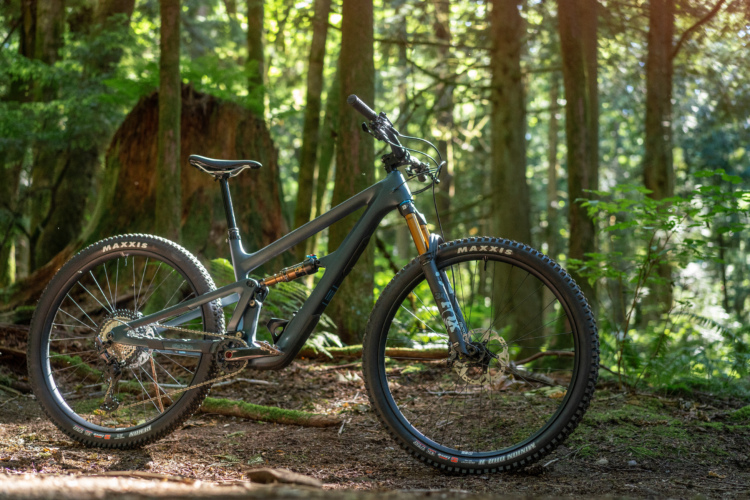
The all-new Ibis Ripley SL is here, though the brand could have just as easily called it the Exie Trail. Like the XC-race-focused Exie, the Ripley SL frame is made in the USA and utilizes a similar DW-Link shock configuration. But with four-piston brakes, 130mm forks, and downcountry-rated tires, the Ripley SL builds reassure us that it’s a Ripley too.
Ibis Ripley SL highlights
- 130/117mm suspension travel front/rear
- Weight: 5lb (frame), complete builds as low as 25lb
- Manufactured in Watsonville, California
- Price: $4,499 frameset, builds from $6,249 – $11,449
- Available at Jenson USA
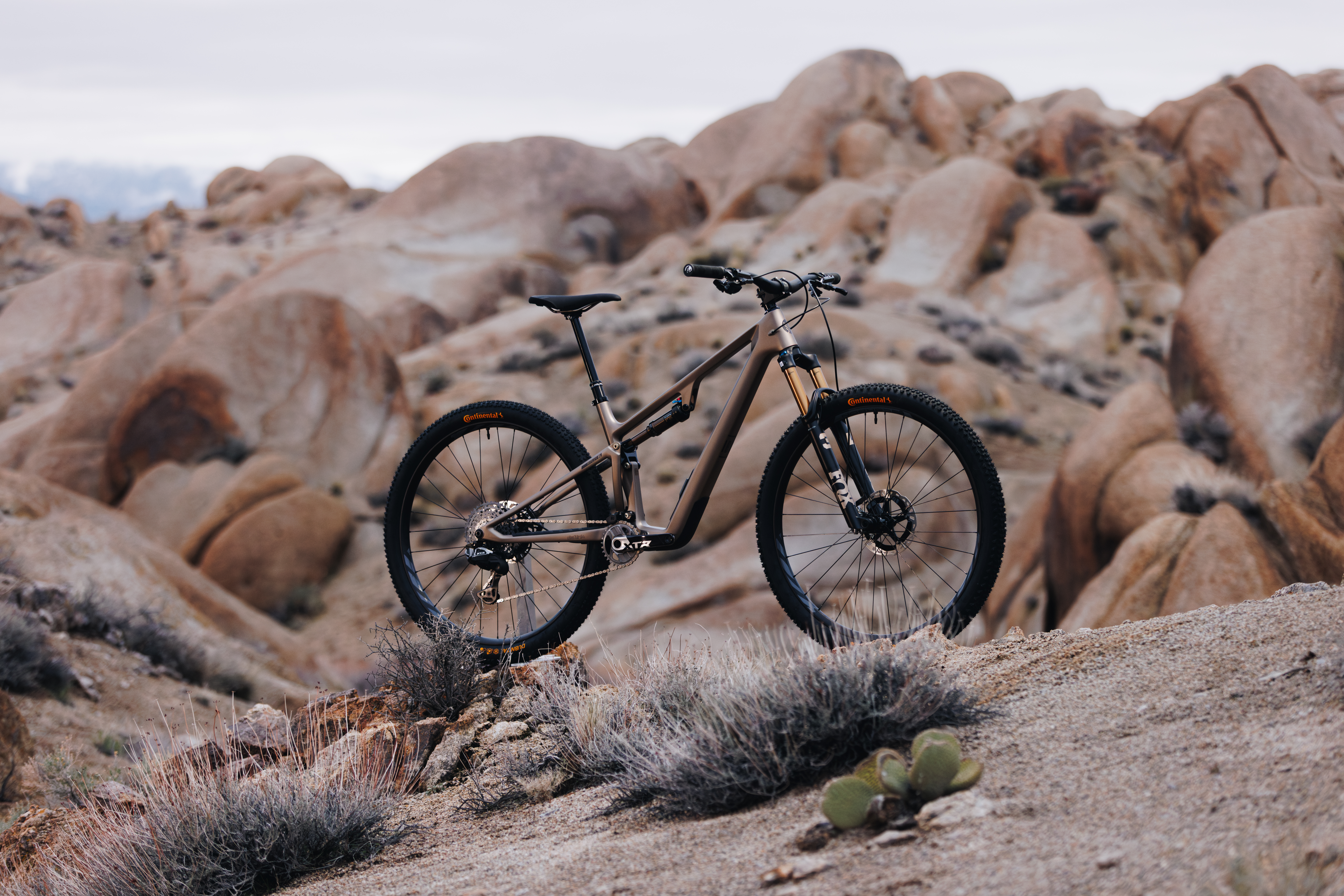
A new look for Ibis
The Ripley SL introduces a new look for Ibis, and is the clearest indication that the bike represents a blend of the brand’s Exie cross-country bike and Ripley trail bike. Unlike the Ripley, the Ripley SL moves the shock mount to the top tube, just like the Exie. However, the Ripley SL keeps the Ripley’s straight top tube, unlike the Exie.
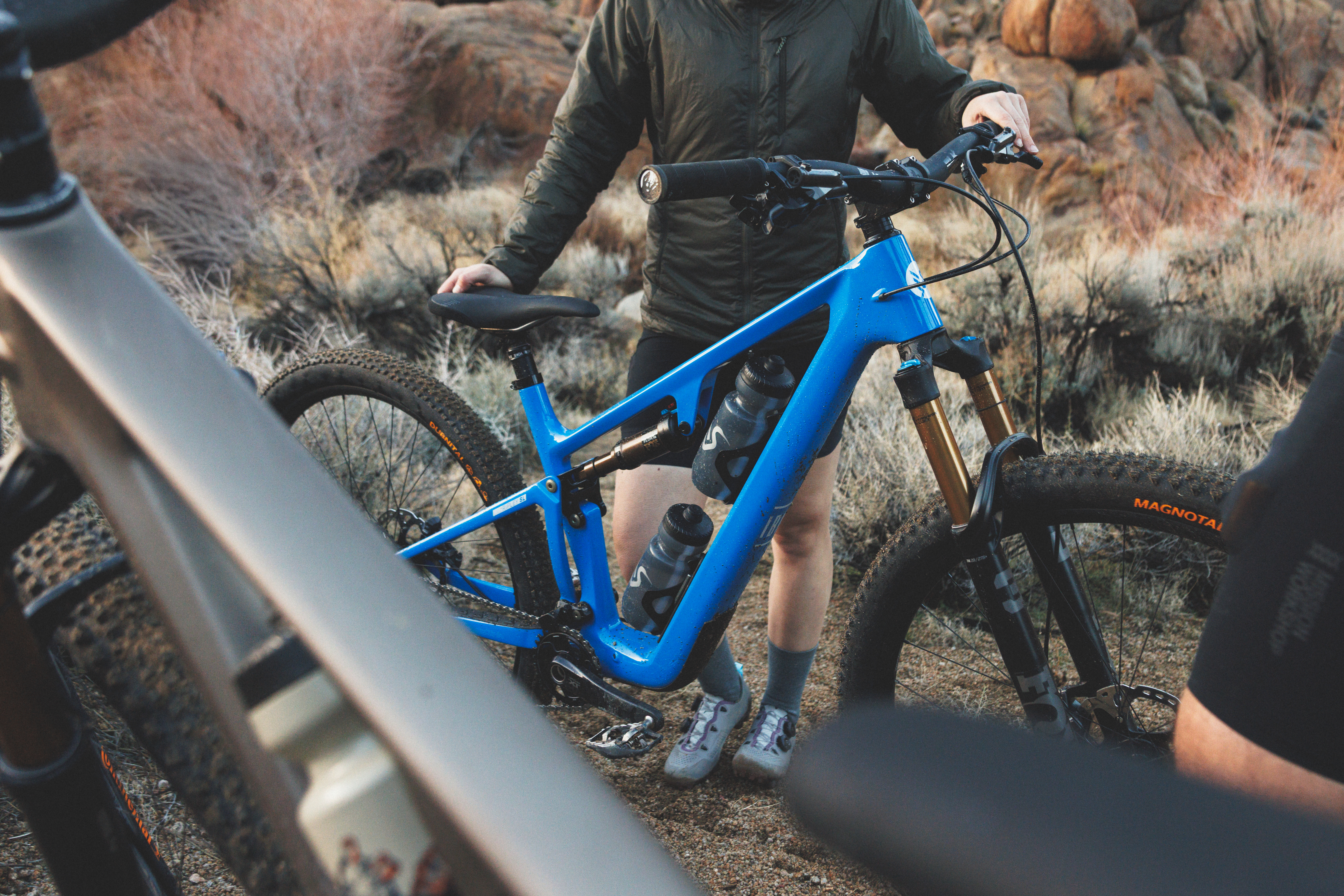
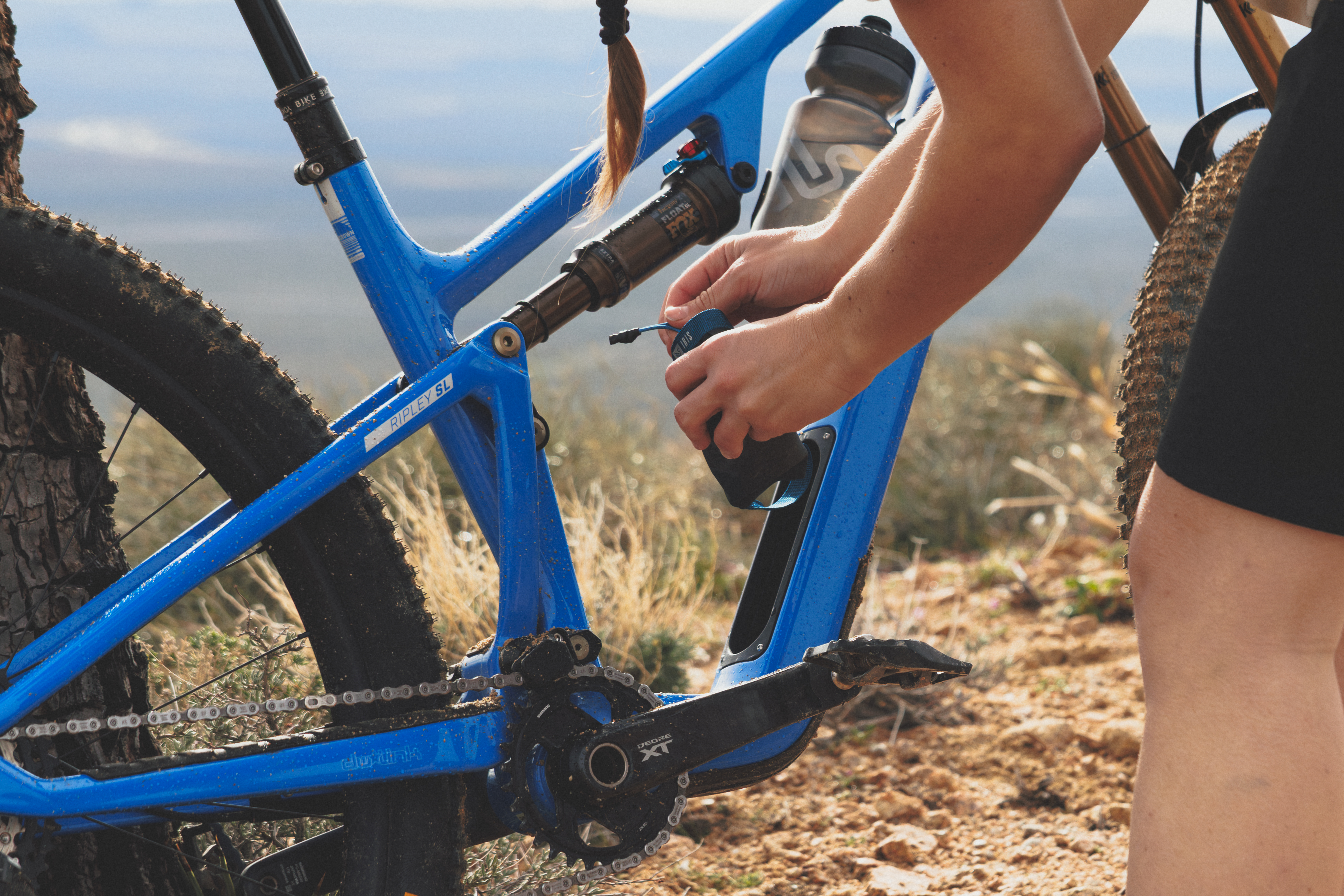
The upshot is a modern-looking bike with room for two water bottles inside the front triangle (size medium frames and larger). Like the Ripley, the Ripley SL gets internal frame storage in the downtube. However, unlike the Ripley, the Ripley SL does not have a flip chip for running mixed wheels.
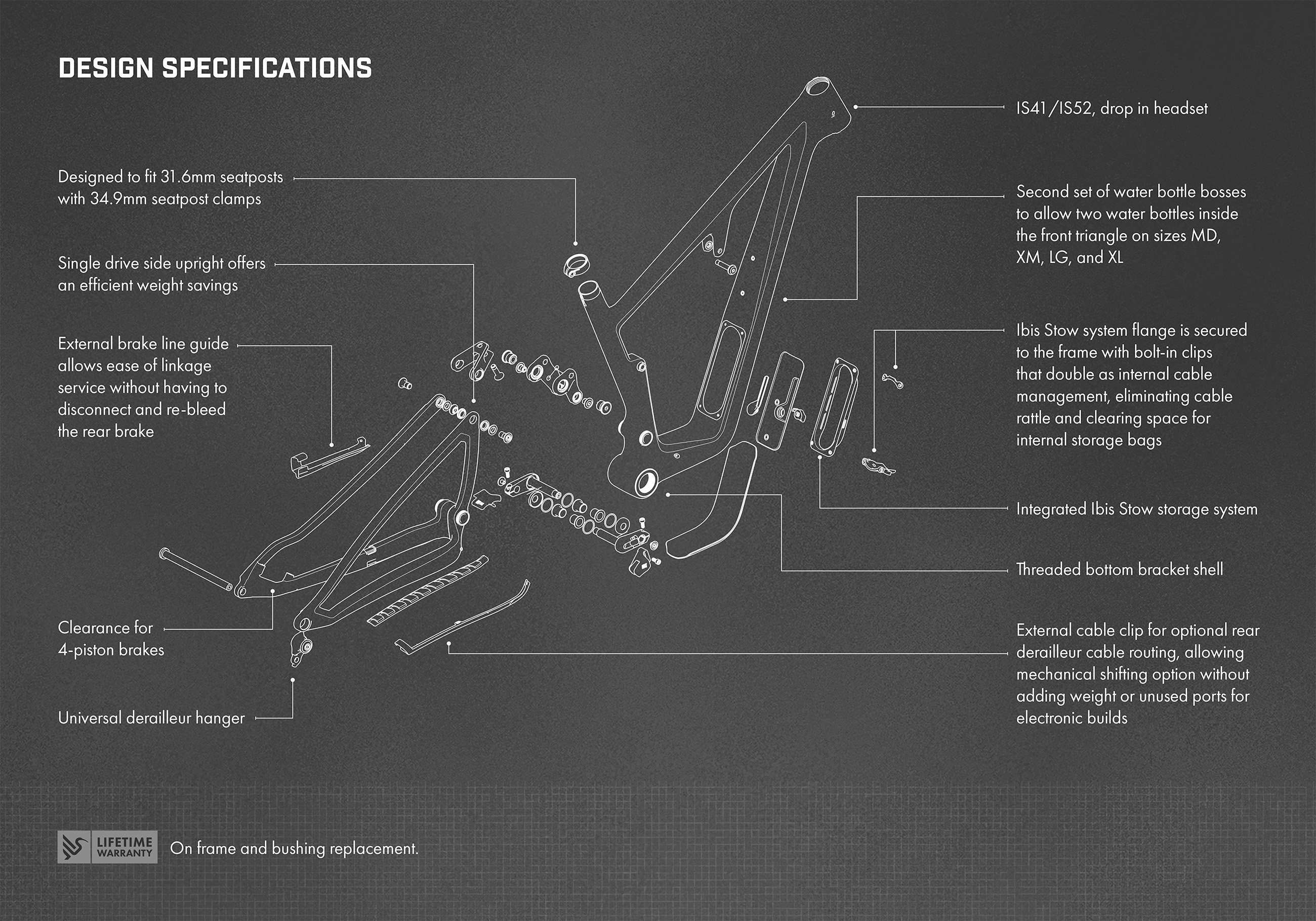
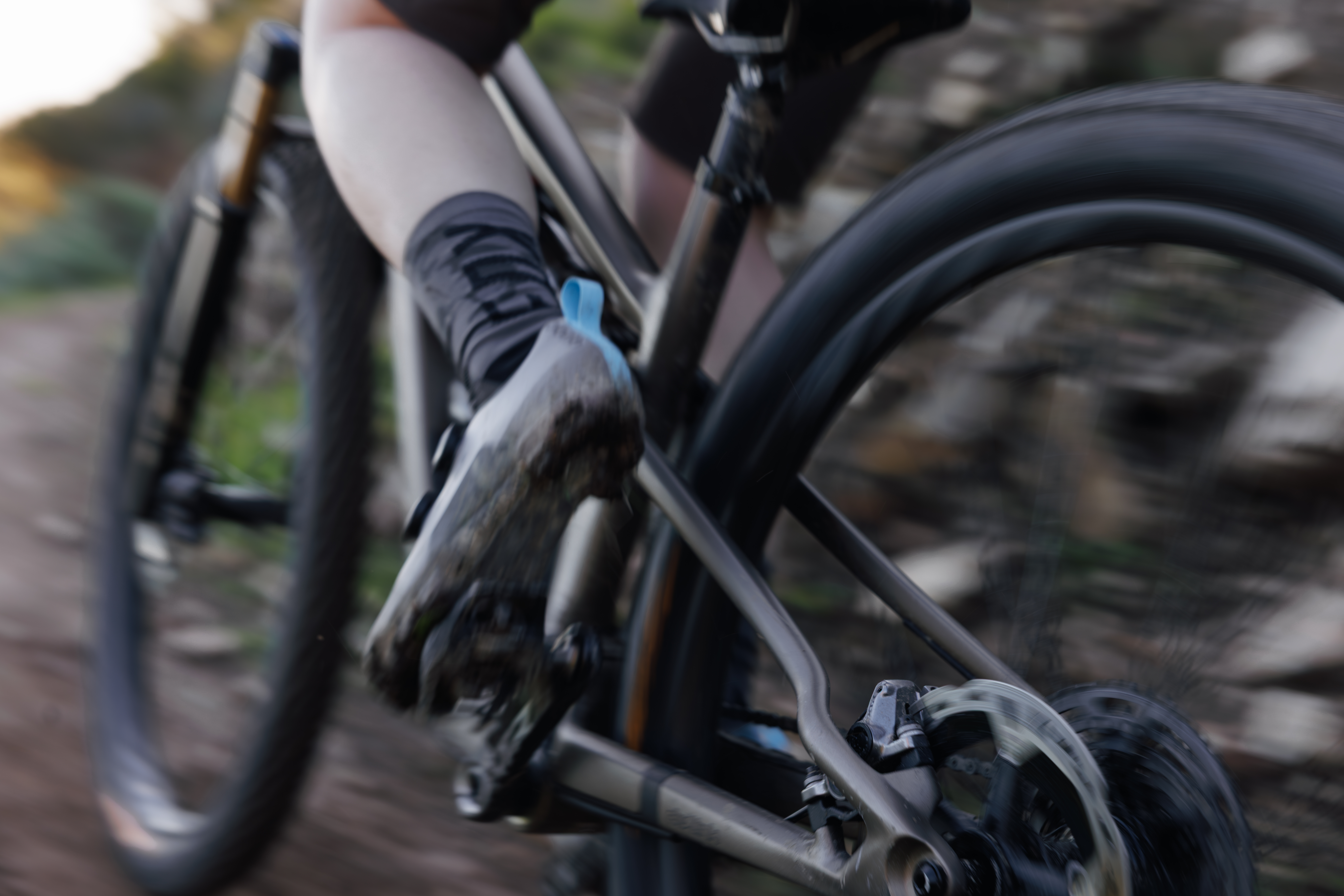
Bike mechanics will be stoked to see a new cable routing scheme that makes it easier to service the linkage. The rear triangle features a brake line guide and an external (removable) cable clip to keep things nice and neat, but also accessible. And for those who are running a wireless derailleur, the cable clip design ensures there aren’t exposed, unused ports in the rear triangle.
At just five pounds, the Ripley SL frame weighs more than two pounds less than the Ripley and just a smidge more than the Exie.
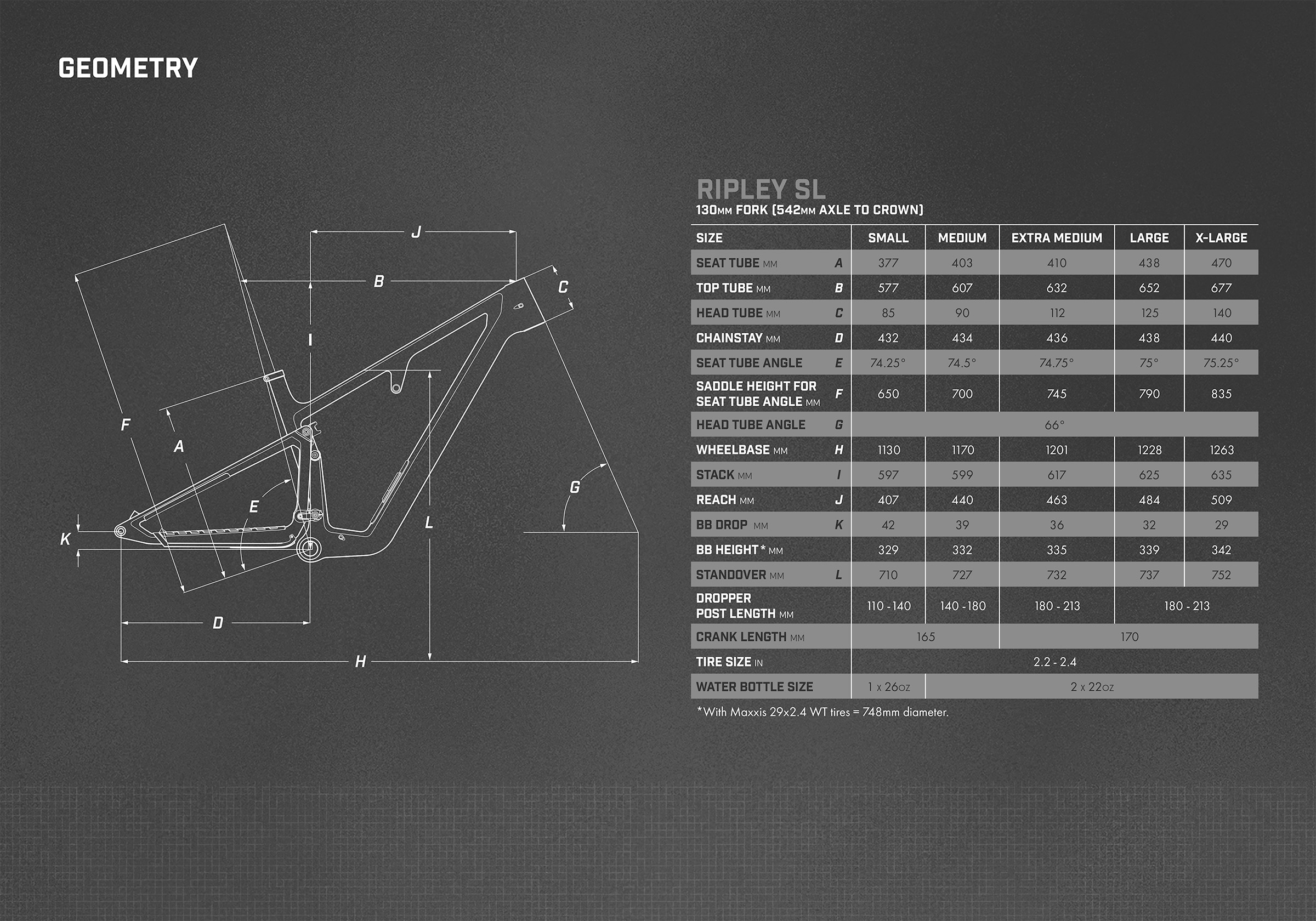
With 117mm of rear suspension travel, the Ripley sits between the 100mm Exie and 130mm Ripley. Similarly, the geometry for the Ripley SL — with a 66° head tube angle and 484mm reach (size large) — splits the difference between the race-oriented Exie and the Ripley trail bike.
The build spec is what makes the Ripley SL downcountry
Ibis managed to avoid the word “downcountry” in the official press release for the Ripley SL, but in an accompanying FAQ, they couldn’t resist. “A 120mm fork will take the Ripley SL from downcountry to World Cup XC,” they wrote.
In fact, this is exactly the distinction that matters when it comes to deciphering this misunderstood mountain bike category. There are cross-country race bikes, and then there are short-travel mountain bikes that are designed to be more fun and comfortable to ride.
So the Ibis Ripley SL specs four-piston brakes, Fox 34 SL forks, and grippy Continental Magnotal (soft) tires up front. At 25lb for the lightest builds, it’s still a very lightweight spec without compromising the bike’s descending capabilities.
Of course, tires are easy to swap, and one curious design choice is the 2.4″ rear tire clearance. That’s the same as the Exie, but less than the 2.5″ clearance the standard Ripley offers. A tenth of an inch probably isn’t a big deal, though it could potentially limit burlier tire options that some riders prefer.
The Ibis Ripley SL fills a gap in the brand’s lineup with a true downcountry bike that’s not only lightweight but also made in the USA.
Keep up with the latest mountain bike news by adding Singletracks as a preferred source on Google.


3 Comments
Feb 19, 2026
Feb 19, 2026
Feb 18, 2026