
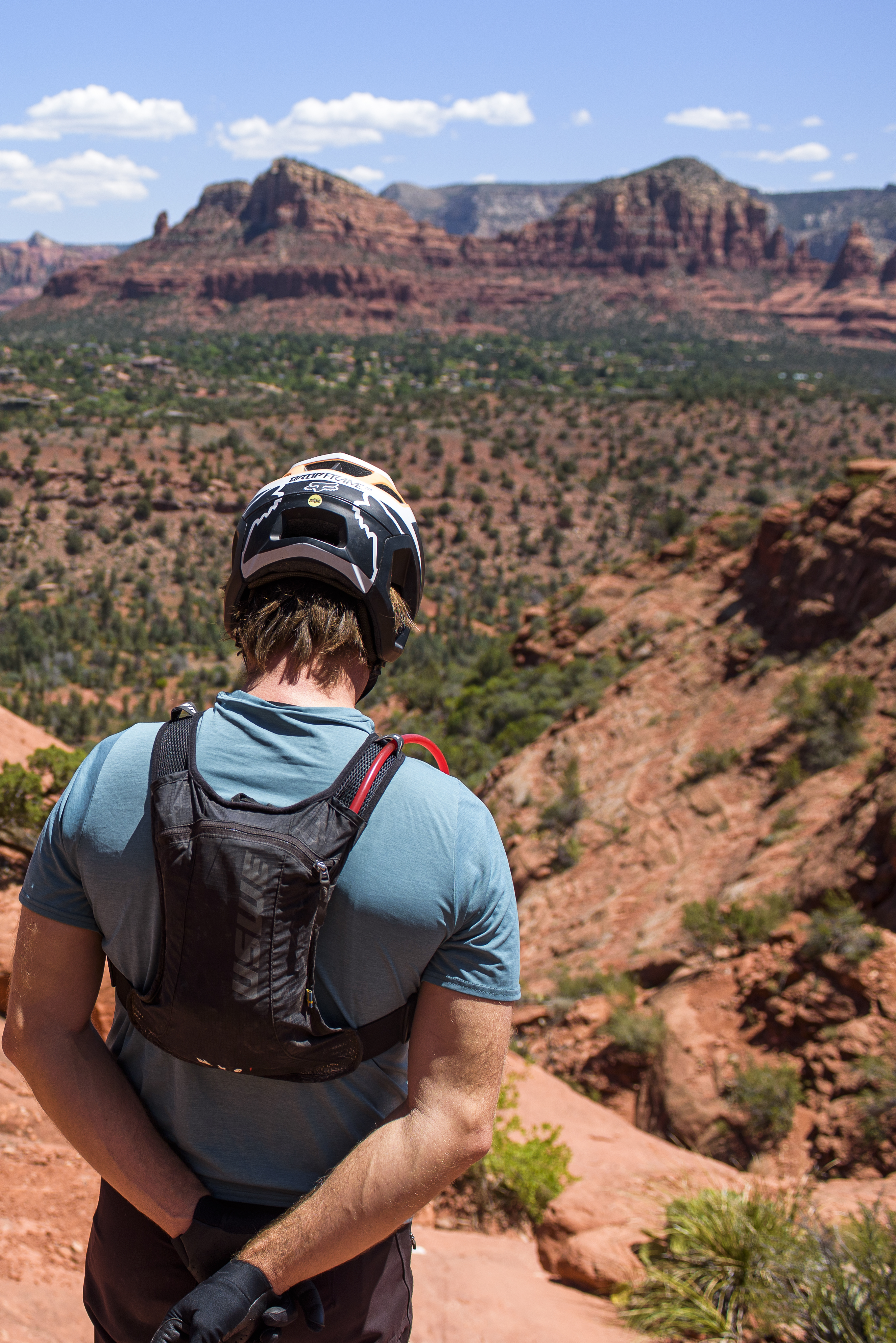
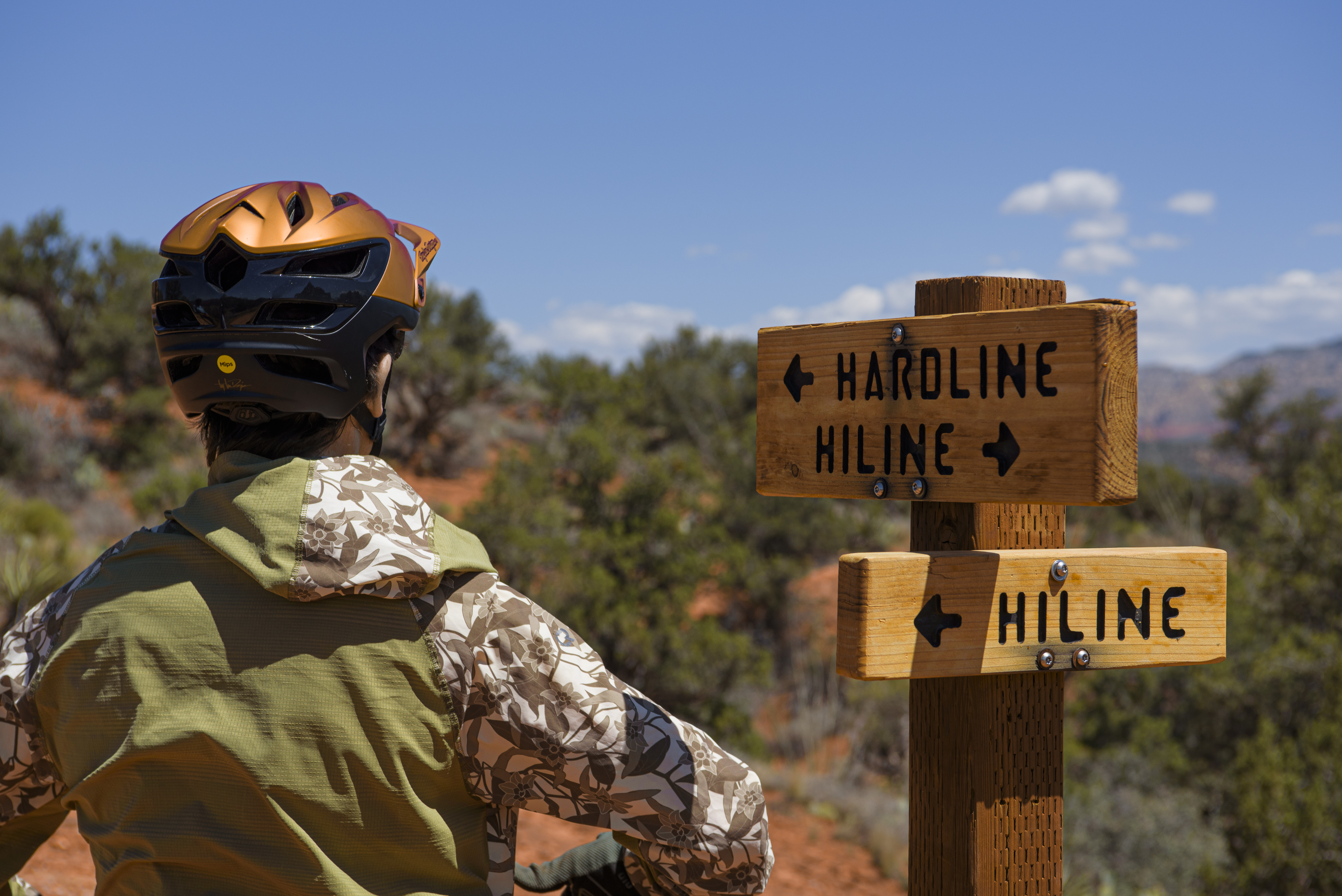
There’s one question you’re always going to get when you talk to other riders in Sedona – ‘Did you ride Hiline?’ It’s the most famous Triple H trail, along with Hangover and Hogs. There’s a wealth of unique riding all over town, from the technical to the flowy, but these three are the ones any self-respecting rider is expected to try.
Until March 5, 2025, that is, when Hardline was officially opened. It’s a Double Black Diamond trail that took a decade of consultation and engagement with the Forest Service and multiple local stakeholders, hundreds of professional and volunteer trailbuilder hours, and the movement of many, many tons of rock. Its builders claim it’s the most difficult publicly accessed MTB trail in the US.
But the current — and very pressing — question is this: Am I capable of getting down this thing without plunging to my death?
Let’s step back
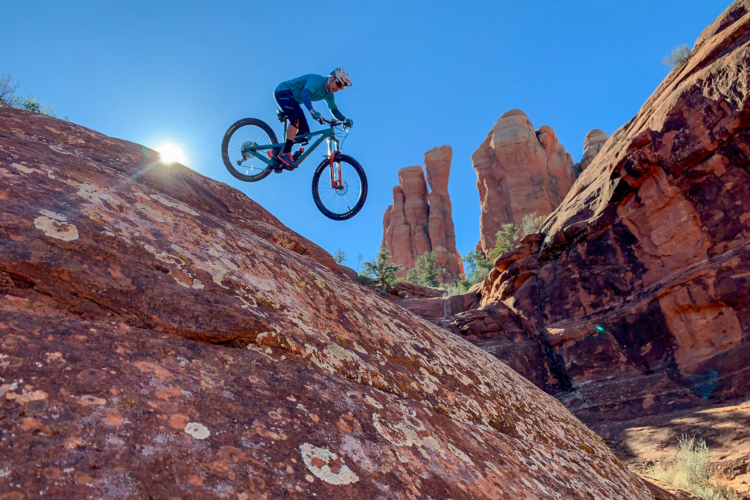
Even if you’ve never ridden here, you know it. The iconic red rocks of Sedona are a mecca for riders from all over the US and beyond, with well over 250 miles of purpose-built trails that take every advantage of its grippy sandstone ledges, bluffs and canyons. You’ve watched Remy or Nate or Jeff Lenosky or someone of their ilk hop up its sharp ledges, slam down its rock rolls or teeter along precarious cliff edges.
Yes, despite its wealth of trails, growing visitor numbers and location in the heavily-administered Coconino National Forest, local rider, trailbuilder and advocate Lars Romig, Verde Valley Cyclists Coalition managed to lead a team of people to advocate for, design and build this very challenging trail, when the sensible option might well have been more Green or Blue trails to make Sedona’s technical riding more accessible. How, and why, did that happen?
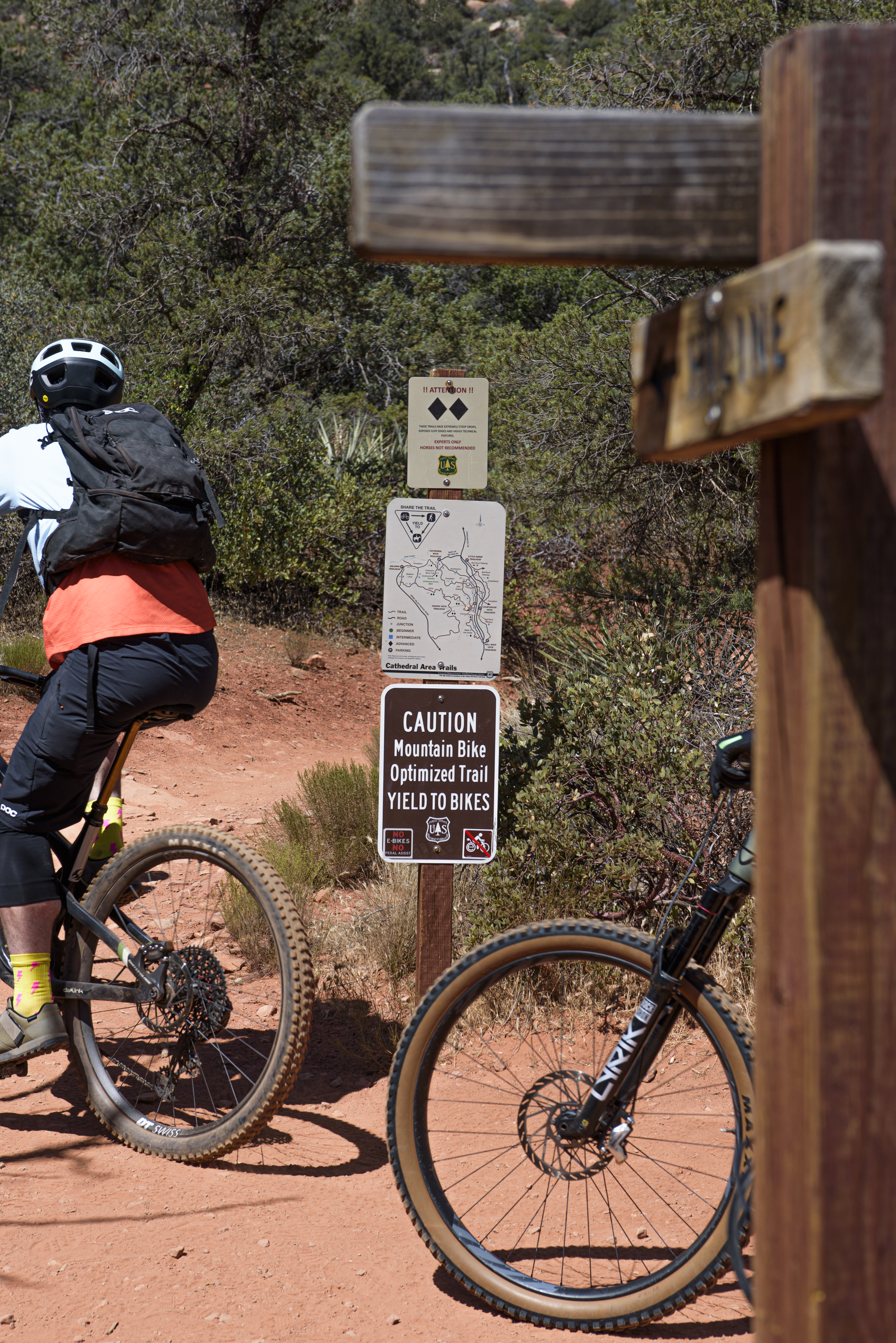
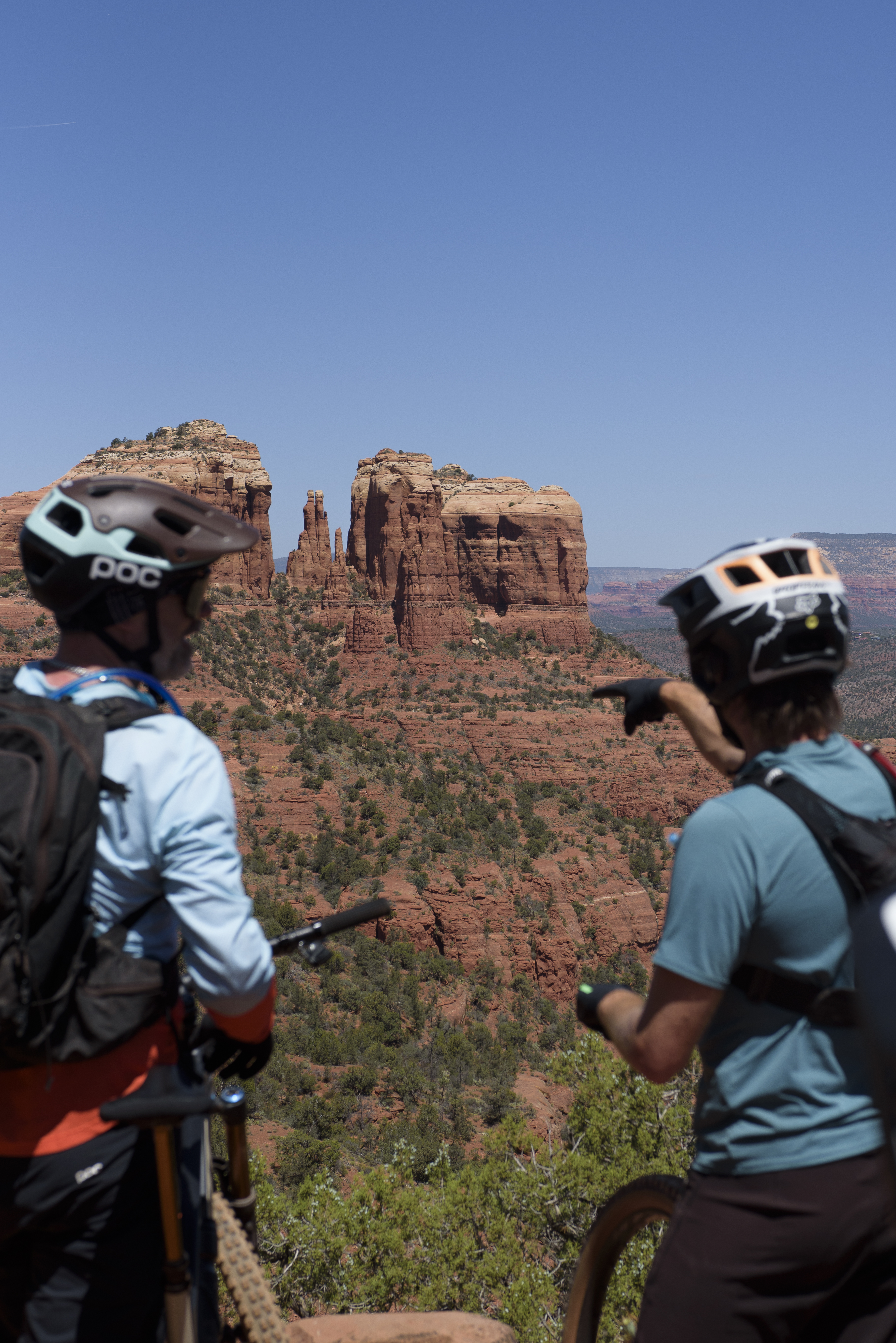
Over a coffee or three in the Mountain Modern hotel, he explained his thinking.
“It’s an argument about development — making sure MTB grows and changes, and that Sedona is part of that change. I know new and beginner riders need green and blue trails to do that, and that Sedona is a hard place to ride already. But we’ve produced some amazing riders from here because it’s hard to ride, and you need different skills. So if we push at the edge of that, and make a trail that could only be here, then gradually those skills filter down, and the sport grows. It’s not an easy case to make, but we made it happen.”
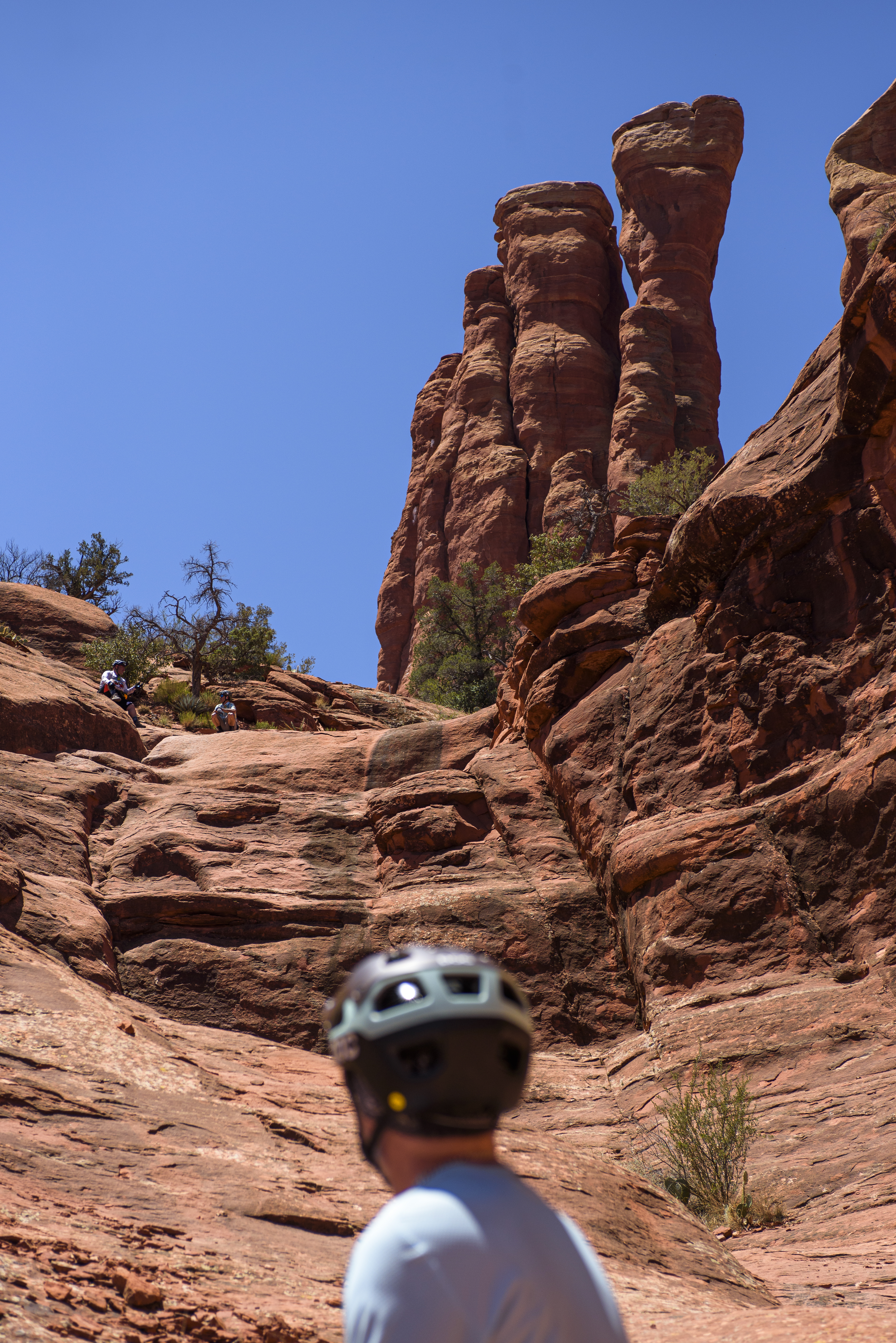
Where the rubber meets the rock
That’s all well and good in theory, and I champion progress as much as the next guy, but neither he, nor Lars, is here right now, as I stare down a 60-foot rock canyon and question my life choices.
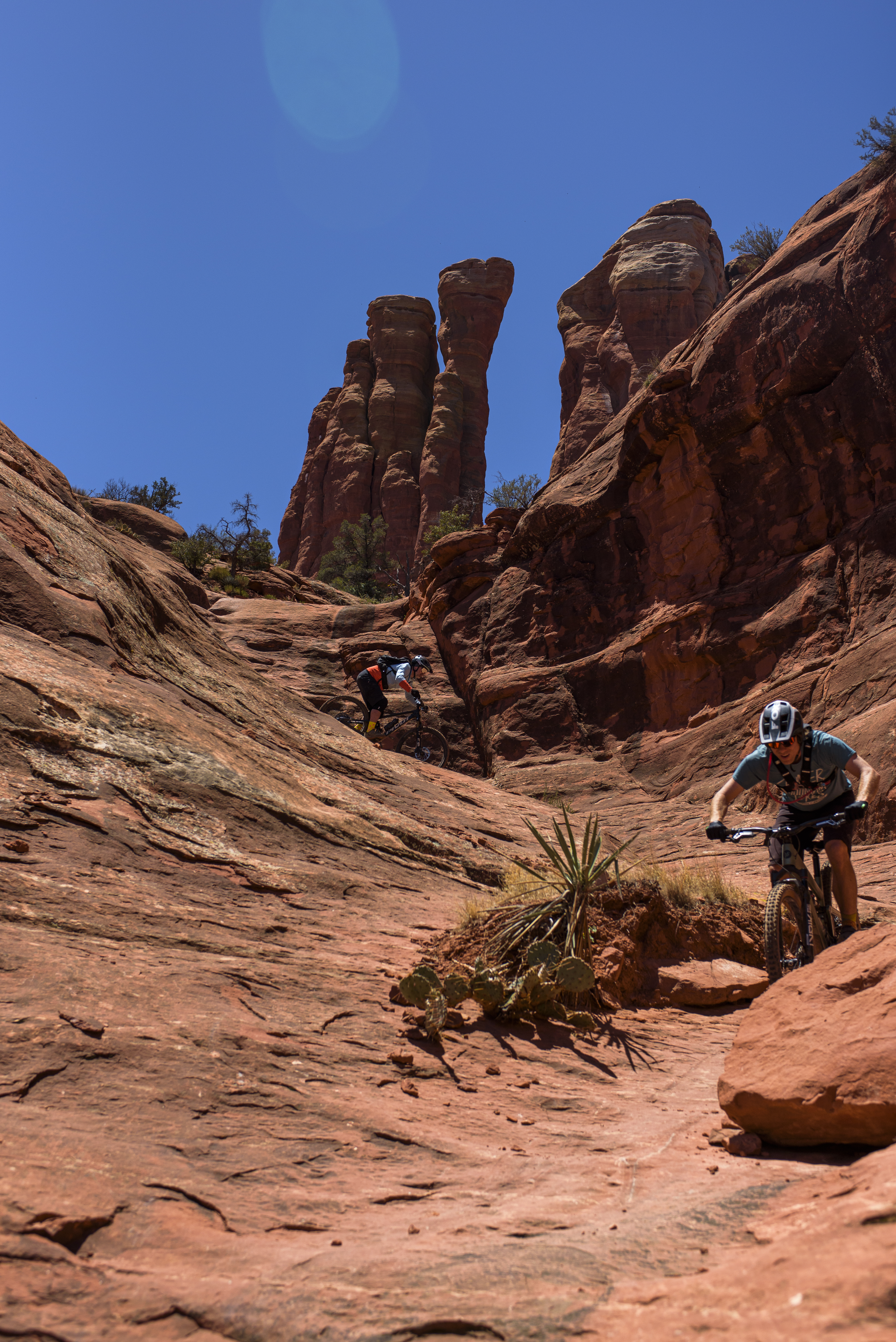
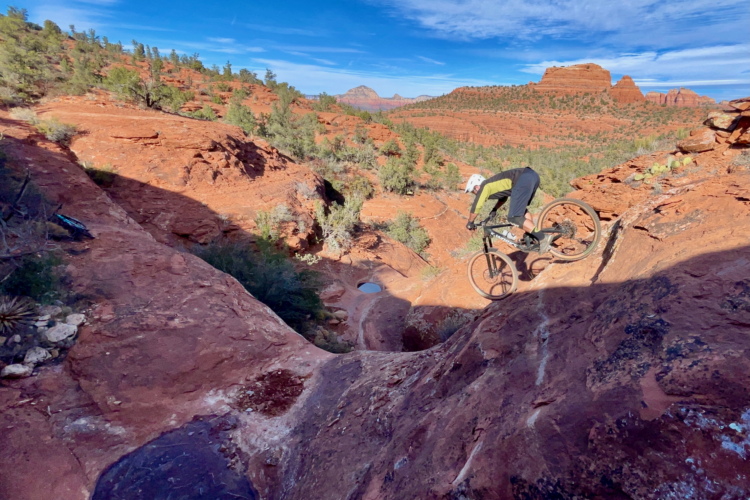
We dropped in around 20 minutes ago, after branching off Hiline and riding a few hundred yards up a spine to the first real feature. It’s a steep 15-foot rock roll into loose pebbles, with a sharp right turn and spiky rocks and cacti on either side. It’s an excellent squirrel-catcher — intimidating, difficult and specifically designed to give you pause. If you don’t fancy this, turn back. I’m not sure I fancy it myself, but I’m being guided by Mike Rainey, owner of Thunder Mountain Bikes and promoter of Sedona MTB Festival, and manage to make it down without so much as a slither, which is just the boost I need.
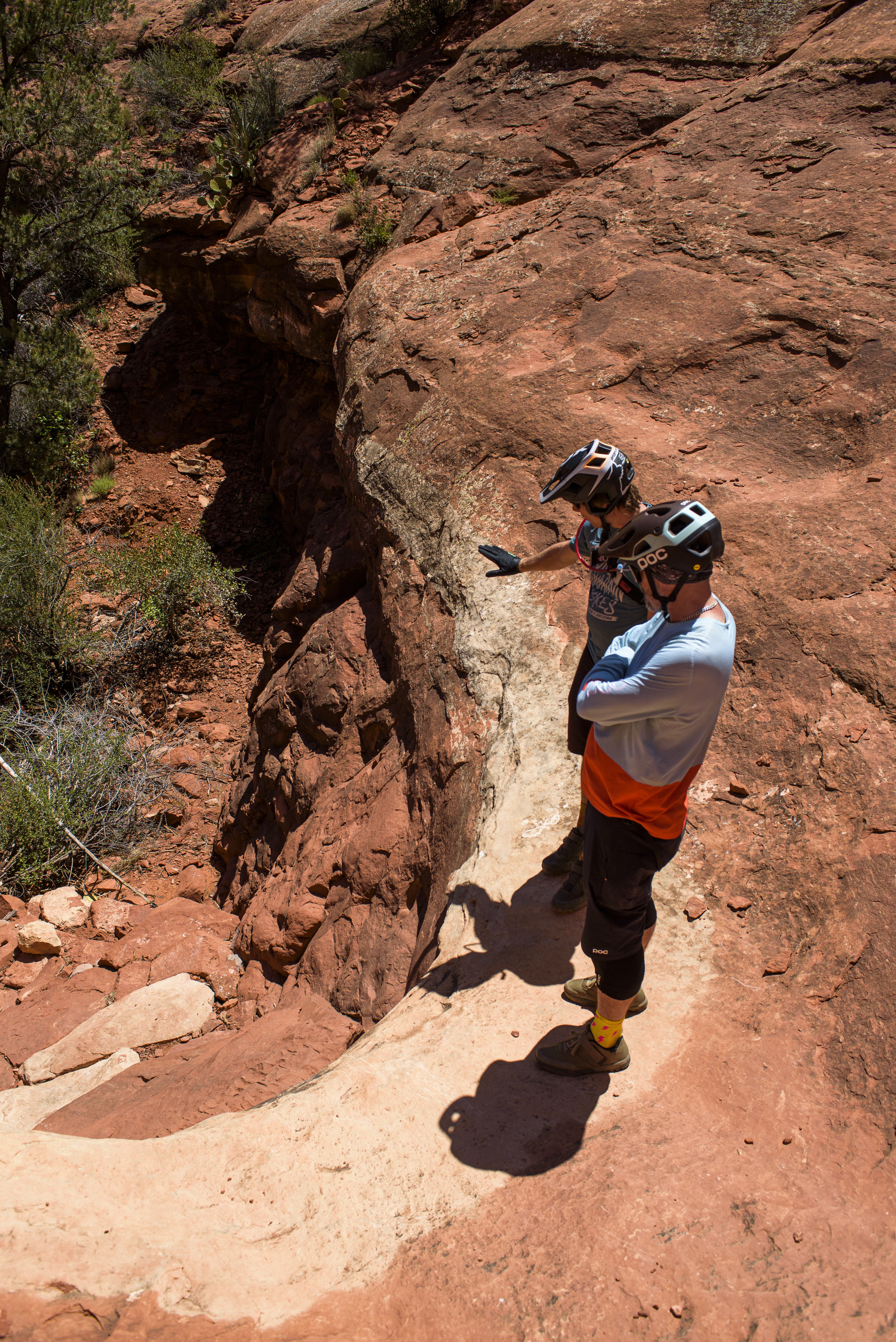
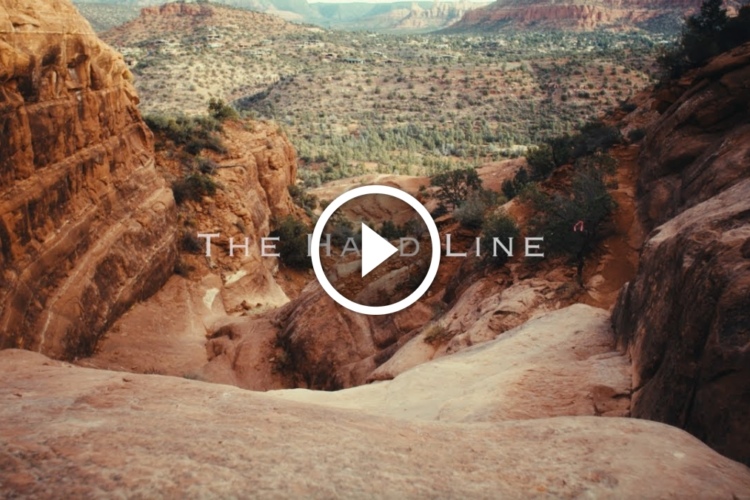
The next few minutes are thrilling — rolls up and down ledges, tight hairpins around canyon rims, hops off boulders and a long off-camber traverse with a yawning plunge to the right. All of this would be noteworthy, but it’s just a prelude to the main event. Just type Hardline Sedona into YouTube, and you’ll see what I mean. From near the top of the plateau, the view down is just that — a tight curved lip atop a slickrock bowl, with a near-vertical drop down 60 feet to the sloping floor. That’s the pro line (never doing it) and the line I’m supposed to try, which is a razor-thin shelf to the right, flush against a rock wall, followed by a lumpy 30ft scree track between the rocks, a 90-degree-plus turn, then two slab rolls down the last 40 feet.
Safe-ish hands
I’m a lucky guy. When I do stuff like this, I’m never alone. For this particular escapade, my friend Danny Vazquez from Phoenix, Artec Durham, and photographer Michael Farrell from Flagstaff and Mike Rainey are all here to provide advice, moral support, and (potentially) soothing words while we wait for the medical helicopter. But before I do this, I need to be alone for a little while.
Do you do this? Carry out a borderline schizophrenic debate with yourself, out loud, about whether the juice of a feature is worth the squeeze? It’s always a bit redundant with me, as my body tends to decide for me as soon as I see something, but I find the ritual of the pre-ride chat with myself calming. Particularly when there’s the pressure of a photographer perched precariously at the point you’re most likely to lose traction/faith/skill. So I hike back up, wander in circles talking to myself for a few minutes, then it’s go time. A quick check over my trusty loaner Pivot Switchblade, a nod from Mike Rainey, and we’re off.
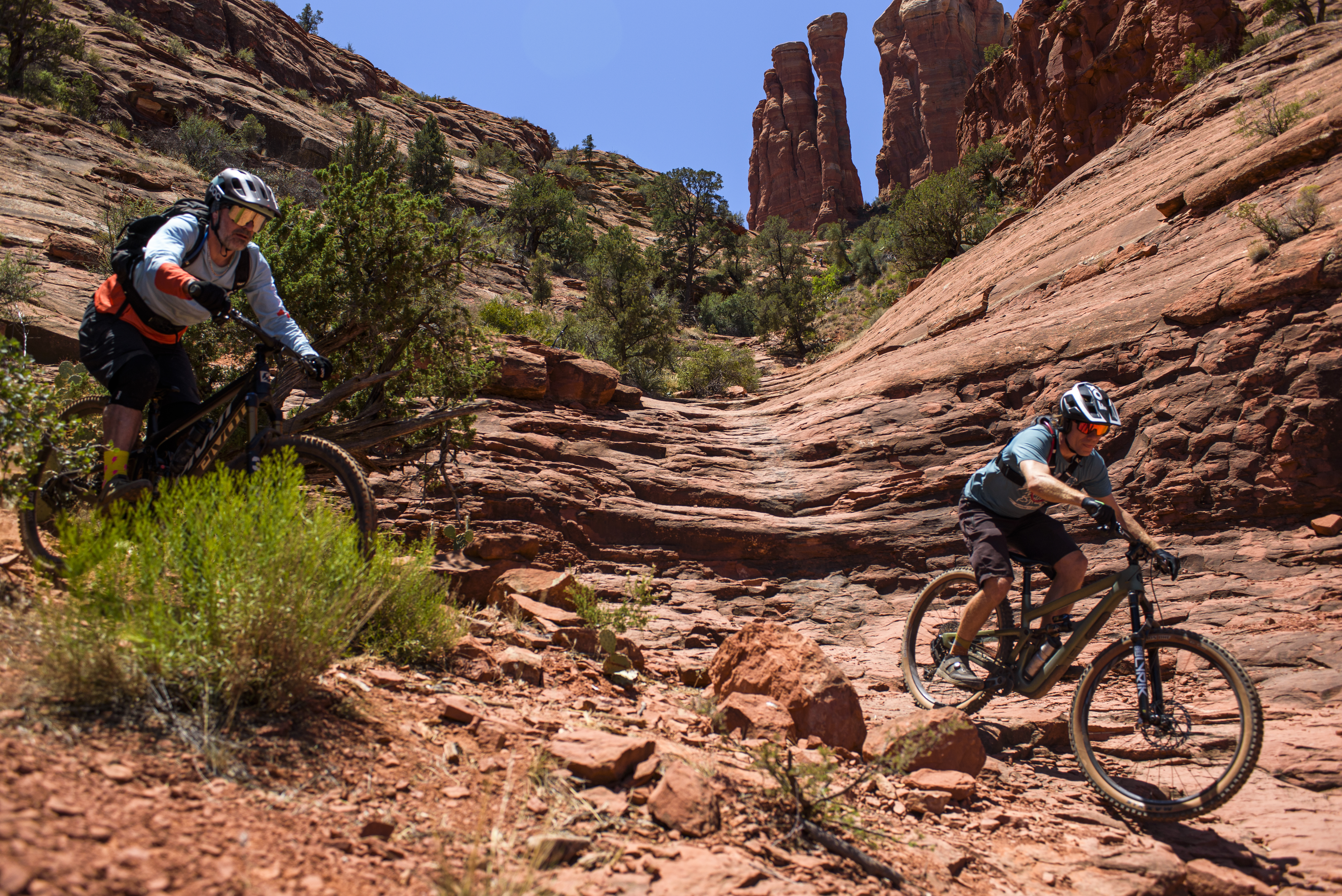
Real time
The first 30 feet are steep, smooth rock rolls leading toward the top of the main drop, then the official line cuts right over a large boulder. The exposure here is severe — the bowl lip is inches away on the right, and I’m as full of adrenaline as I’ve ever been, torn between controlled speed and the urge to just let go of the brakes and let fate decide.
The next section is the riskiest. The official line is a thin, dusty ledge running along the bowl edge, with a rock wall on the left that threatens to poke your bar end and send you straight down the 60ft drop. It’s not technically difficult — you’ve probably ridden similar features — but the exposure distills every centimeter of trail into hallucinatory focus. One dab — at exactly the wrong place — but I hold my nerve.
Then there’s a bump up into a loose 20-foot chute that slopes down to the exposed left-hand turn, then time for a pause before positioning to roll down two steep slabs, strewn with pebbles — one short, one over 40 feet long and dropping into the sloping, rugged floor of the bowl. That’s not the end of it — a loss of concentration or misplaced wheel could still send you OTB after the slabs are over, and the landing would not be nice. A good deep breath, a careful pump of the front brake, and it was suddenly over. Within what feels like seconds, we’ve raced down the last few shelves of the bowl on drops, ramps and rolls, and we’re cruising back to the F-150 and its precious cargo of chilled Gatorade.
I rode Hardline. I am insanely happy.
Make your mark
That feeling of having done something unique isn’t about bravery or skill. I haven’t got much of either. The rush, the rush I’m still feeling now, is from having done something that can only happen in one particular place, of having somehow stolen a part of it that I can keep with me forever.
Sedona’s Hardline isn’t for everyone, nor should it be. But it has more opportunities for every kind of rider to do something that gives them that exact feeling. Whatever and wherever your edge is, riding here will take you right up to it, and a little bit over too.
I’m grateful it took care of me.
Thanks to Sedona Tourism Office, Ford Trucks, and Pivot Cycles for their help with this article.
Keep up with the latest mountain bike news by adding Singletracks as a preferred source on Google.

0 Comments