

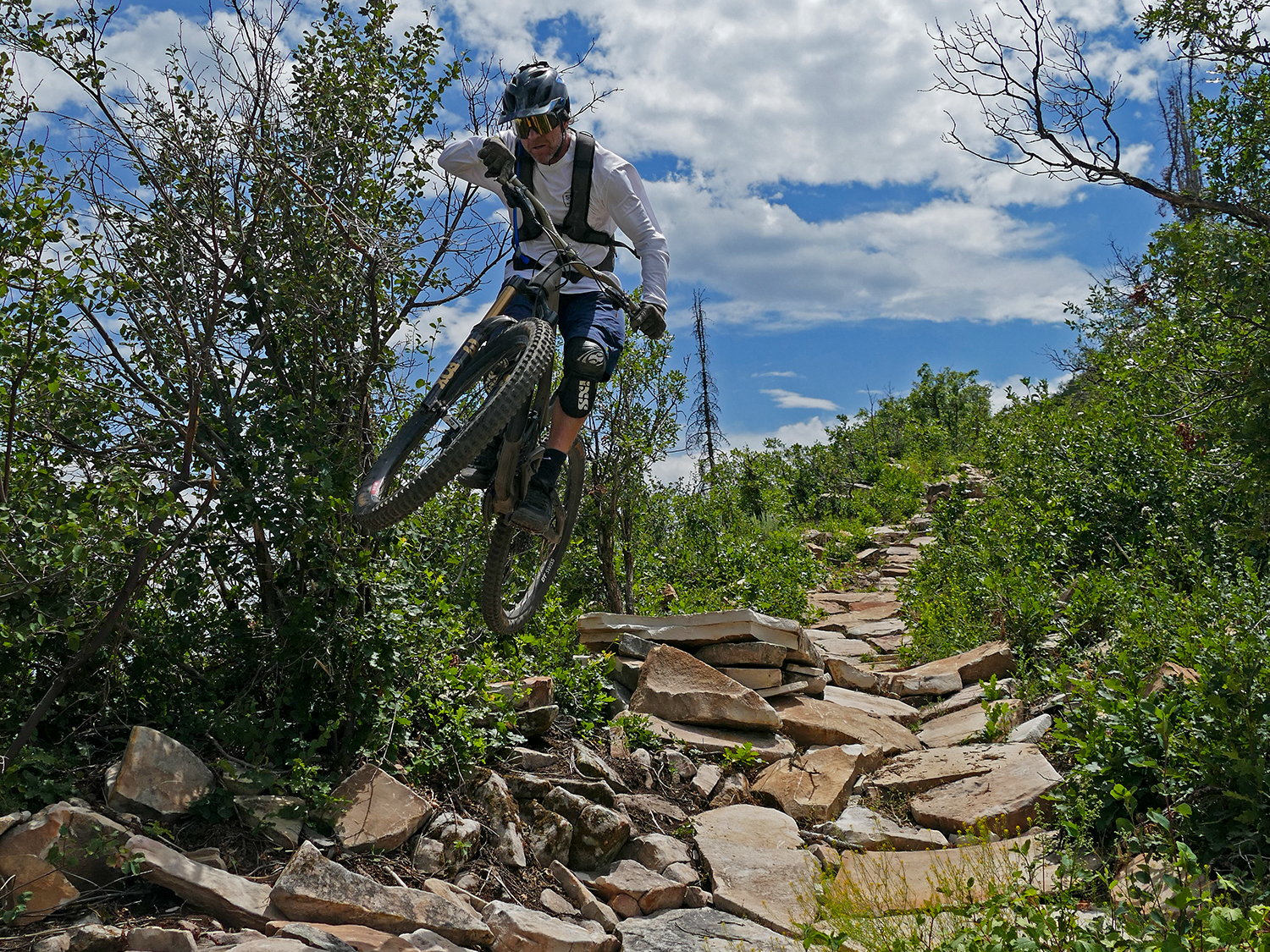
You’re guaranteed to have AC/DC playing as the soundtrack when you drop into the first top-to-bottom one-way directional downhill trail on Emerald Mountain in Steamboat Springs, Colorado. This brand-new trail, christened “Highway to Hell,” is a monumental trail building accomplishment. And yet, it came surprisingly easy.
‘This is how they should all be. It’s so easy.’
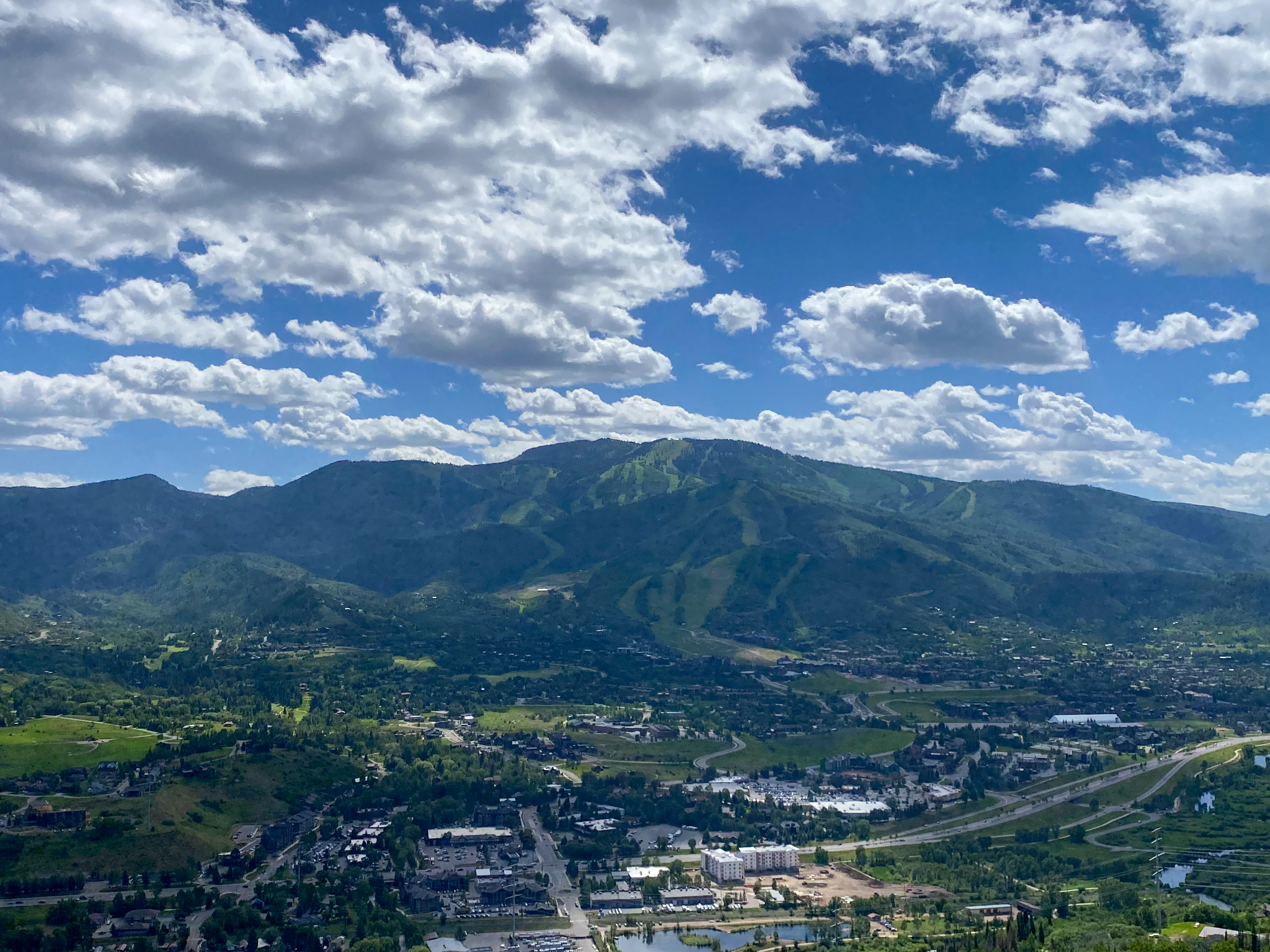
We’ve reported extensively on the Mad Rabbit project in Steamboat Springs, and after years of “banging our heads against the wall,” the Routt County Riders (RCR) are finally making progress. As they slowly moved the Mad Rabbit project along, Kyle Pietras, RCR’s Vice President at the time, came forward with a proposal for an ambitious top-to-bottom black diamond descent in the popular Emerald Mountain Trail System.
Two one-way downhill trails had been included in the Emerald Mountain master plan — one green, and one black. RCR has already built a light-blue one-way downhill trail known as NPR (No Pedaling Required), which satisfied the easy end of the master plan’s spectrum, but they had never built the black trail. Since the trail was already in the master plan and located on city land, RCR was able to get it approved fairly quickly, even though the city manager, parks and rec commission, and the city council all had to approve it.
Since the trail had already been included in the master plan, it was also prequalified for funding through Steamboat’s 2A tax funds, which are earmarked for trails. Those 2A funds covered the $350,000 build-out by Shea Ferrell of FlowRide Concepts.
All told, the trail went from vision to completion in just under two years. “We’re all blown away [by] how quickly it happened,” said Craig Frithsen, Board President for RCR. “It was just like, ‘Oh, this is how they should all be. It’s so easy.'”
What will riders find on the Highway to Hell?
The descent begins on the very top of Emerald Mountain, dropping 3.5 miles and 1,400 vertical feet all the way down to the lower trailhead on the edge of town. This top-to-bottom run is impressive in its own right. While many dense, fully-developed in-town trail systems are happy to just build one or two short connectors every couple of years, RCR blazed a massive 3.5-mile continuous run.
Highway to Hell rolls out in several distinct sections. The first section off the top of the mountain was the last to be built; it’s a super smooth flow trail with berms, jumps, tabletops, doubles, and transfers crafted from dark black dirt.
When the trail passes the quarry, an upper hub junction for several trails, it enters what’s already the most iconic section of the trail. Here, the trail runs along an extensive rock-armored section with rock kickers built in. Frithsen explained the build decision, saying, “That was a really, really difficult section to build in. Essentially, there is no dirt. It’s pretty crazy.”
“I mean, literally, what there is to build off of is basically rocks. It was impossible to even create a borrow pit to fill cracks in the rocks, or anything in the proximity of the trail,” he continued. “So those guys just started armoring, and basically did a big, huge armored section, from the quarry down. It’s probably like a quarter mile, or something like that.”
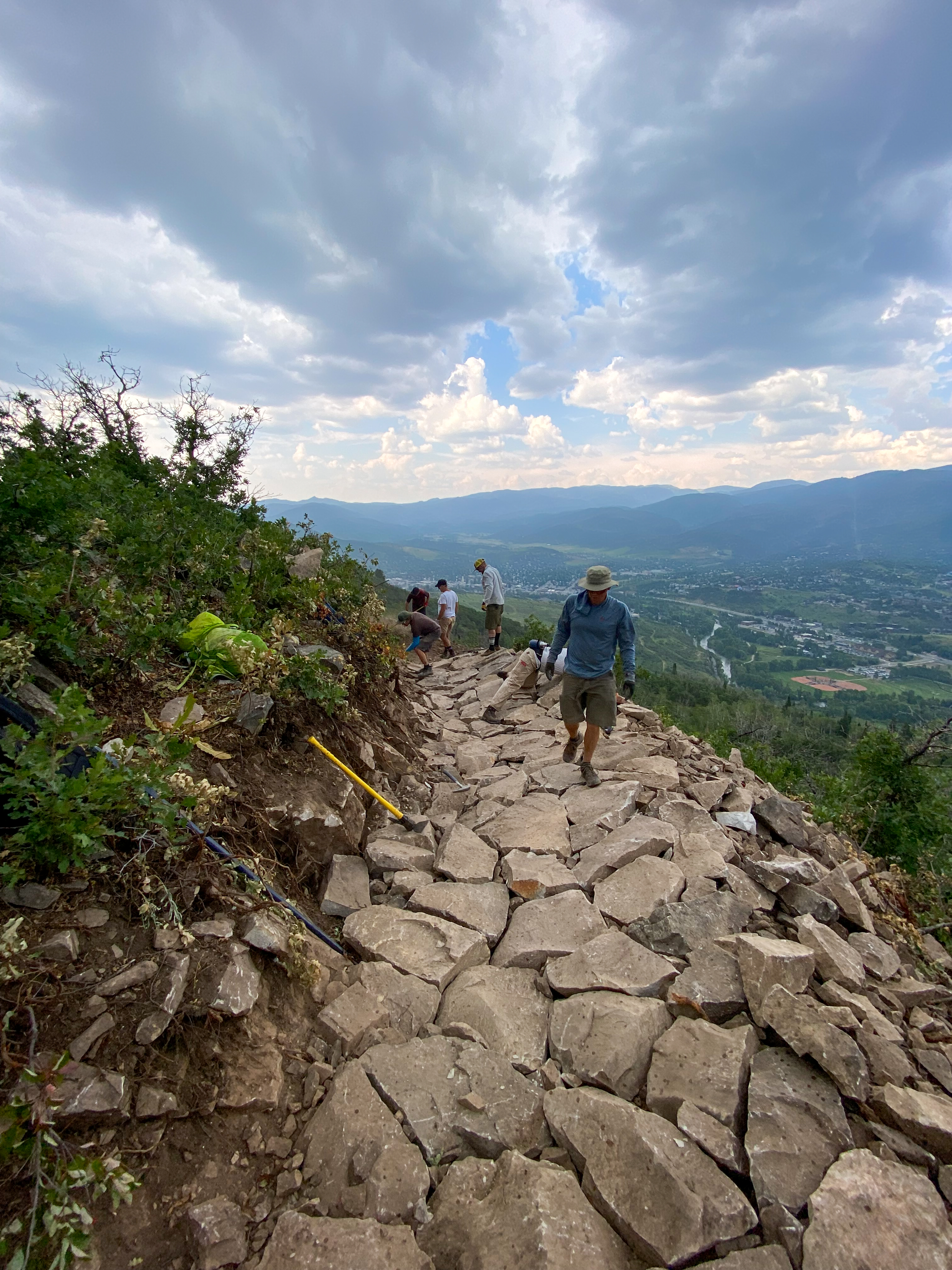
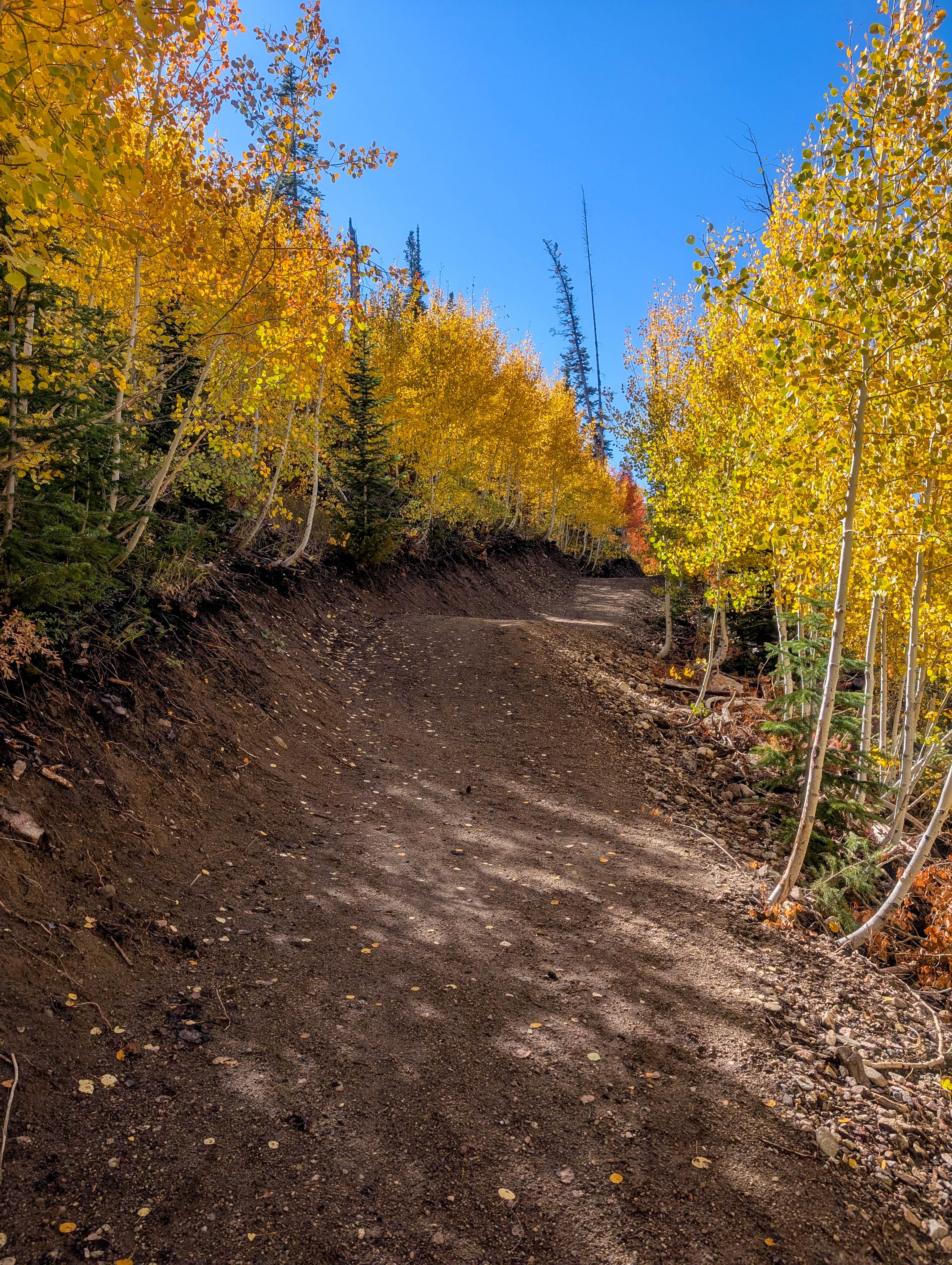
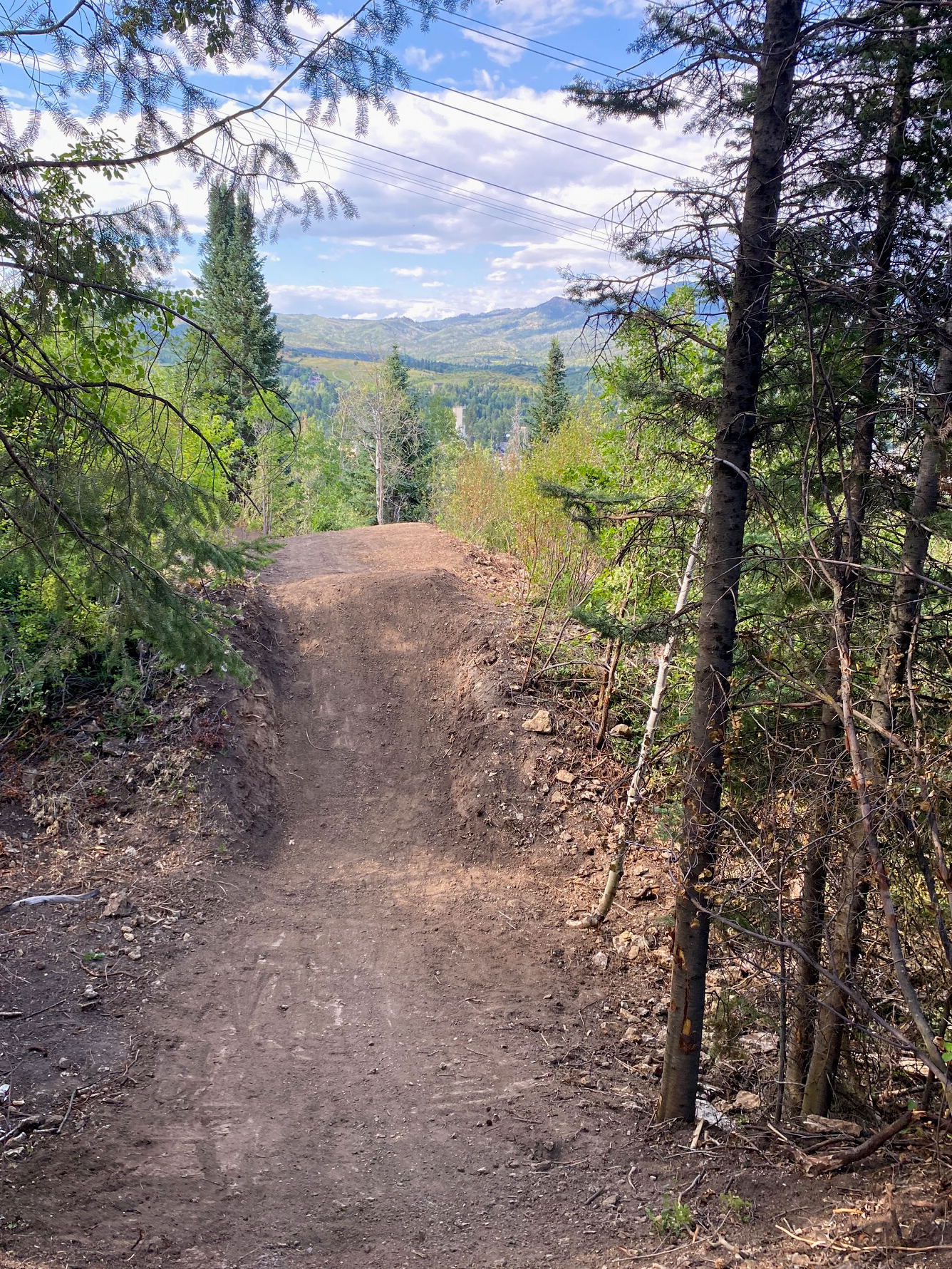
After the rock armored section, the flow returns, but with intermittent rocky chunk as the trail continues to follow the ridge. Then, where Highway to Hell was going to have to cross a climbing trail, comes another standout feature: the “Pirate Ship.”
“Shea basically was like, ‘Why don’t we just build a bridge over it?’ And the city was amenable to it, and we basically end up putting this big bridge up over it,” said Frithsen. “It’s tall enough you can ride a horse underneath it.”
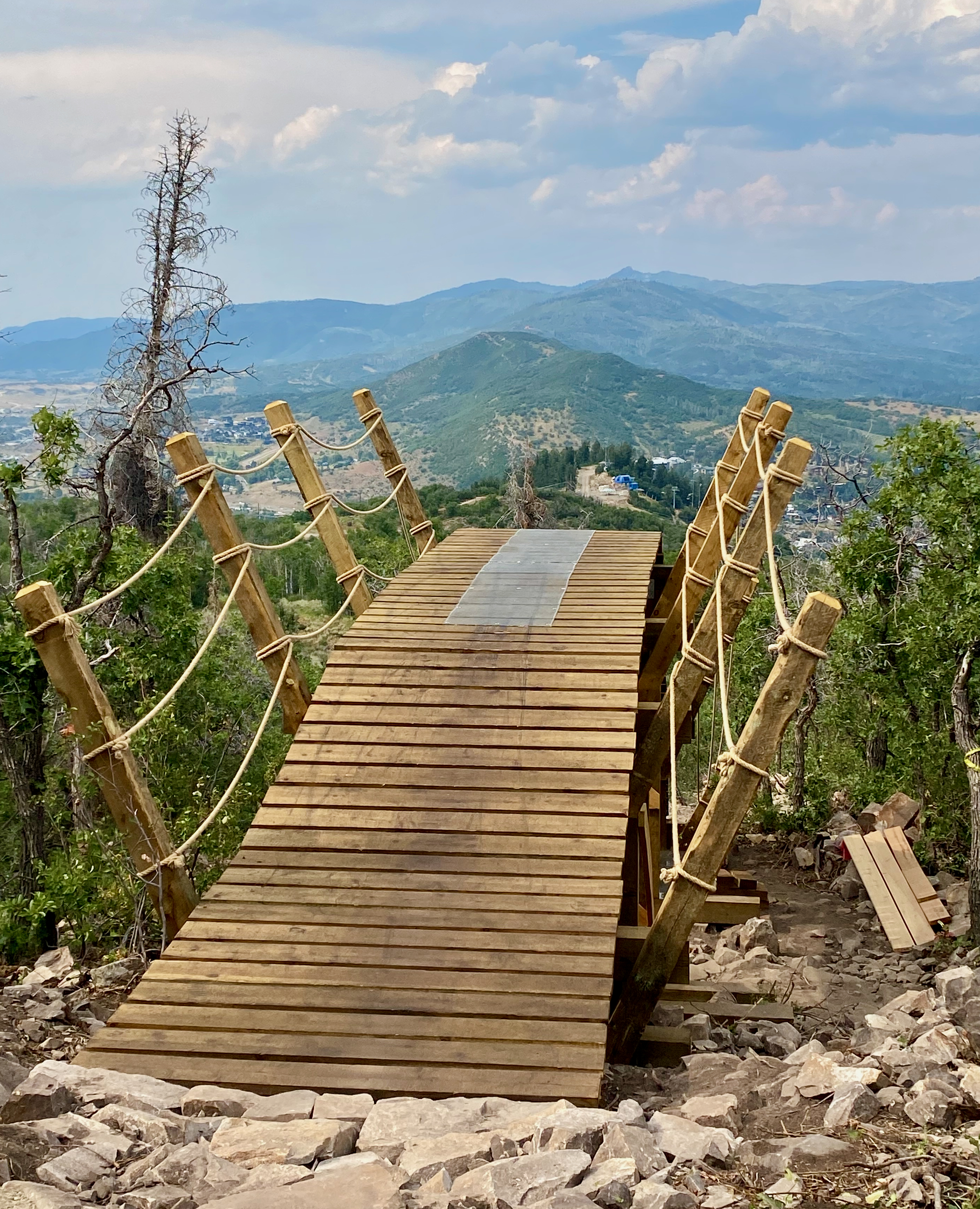
The name comes from the rope guardrails lining the sides of the bridge. Despite the rope guard rails and the black-diamond trail rating, “it’s very intimidating. A lot of people […] walk around the side of it. […] But I would classify it as an intermediate feature. It’s fully rollable. You don’t need to air it at all. And it’s really fun.”
The final, lower section gets even smoother, though it still has a few rock-armored sections. Riders will find drops, jumps, and even a few doubles on the lower section. The berms on the lower section are massive and built to last.
“When you think you’re almost at the bottom, there’s a whole ‘nother section that actually has some of the bigger features on the whole trail,” said Frithsen. Known as the “Rodeo Booter,” there are three different sizes and a ride-around, but advanced riders can really go full-send.
“It seems like it’s been really well received by the biking community,” he concluded. “And the way that it’s built is definitely that an intermediate can ride it and really not leave the ground. Or an advanced person can catch some really big airs.”
The road to hell
It’s said that the road to hell is paved with good intentions, but RCR didn’t stop there — they followed through and created a truly epic downhill trail. So does that follow-through on their intentions make this new trail a “Highway to Hell” or a “Stairway to Heaven”? If you ask most mountain bikers, I’m sure they’d prefer a good downhill over any climb, no matter how holy.
Personally, I’ll see you in hell.
Know about a new trail project we should cover? Whether you’re breaking ground on the next must-ride trail network or putting the finishing touches on a neighborhood flow trail, we want to hear about it. Drop us a line at [email protected] with the details, and your project could be featured!
Keep up with the latest mountain bike news by adding Singletracks as a preferred source on Google.



1 Comments
Dec 25, 2025