singletracks is mountain biking
Sign In | Create Your Account | Site Map | Help  


Mushing on the Mound: What to do when snow slows your roll

Tuesday, January 31st, 2012

I remember seeing these trails signs this summer and thinking “What’s with that guy’s feet?”

Those of you in the northern parts of the US and in Canada know, right about now the opportunities for good, quality mountain-style bike riding are few. The days are short, the temperatures are forbidding, the ground is frozen and unless you’ve got a Pugsley (or other flavor of fat bike) you’re not getting very far in the snow. I for one like to take advantage of this season to drink more beer, eat whatever the hell I want and put on some ‘insulation’. But moderation in all things, right? So I’ve got to find some active things to do when there’s no riding to be done: trail, road, cyclocross or otherwise. I could get my exercise fix indoors at the fitness center my workplace so generously provides, but I’ve always had an aversion to working out. The term itself is not for me. When I’m out riding, working up a sweat, burning serious calories I consider it ‘play’. The ‘work’ in ‘working out’ is what doesn’t make sense to me. Wouldn’t you rather do something fun? Speaking of fun…

Step 1: Put these weird things on your feet. Think of it as clipping in to SPDs

I had mountain biked the trails at Blue Mounds State Park in the summer. I only went once this year due to many factors, #1 being I had mega-rad trails I could ride to in 5 minutes during my lunch break. But during my Blue Mounds visit two things stood out in my mind: the first being “Holy shit, there are climbs and descents!!” (Wisconsin is a very flat place) and the second being “Who’s that little fella on all the mountain bike trail markers?” I would have to wait 5 months to find out that he is a snow shoe-er. Once the white stuff started to fall I got desperate for things to do outdoors. For the first time in my life I tried downhill (emphasis on hill) skiing a few weeks ago, and when I heard that Blue Mounds was a good place for snowshoeing I made arrangements to try it out. A quick call to my local member-owned outdoor supply cooperative and I secured a pair of rental foot paddles.

A little of this, a little of that to keep warm

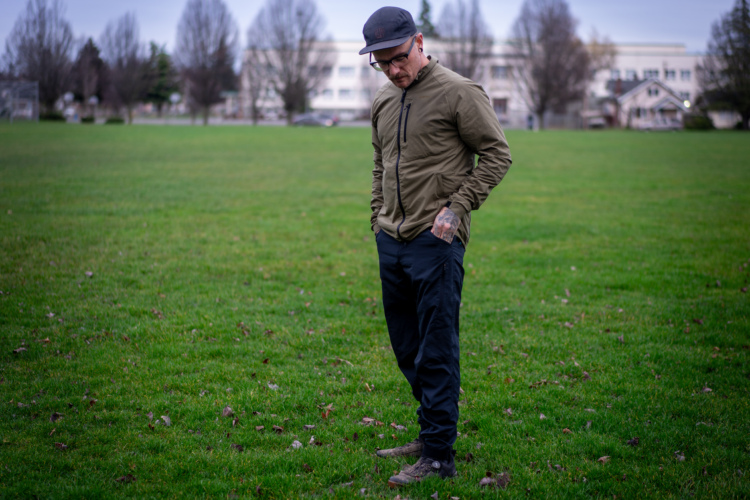
So with proper gear acquired, I set out to inspect the trails I knew during the summer in a completely different context. One good thing to this whole endeavor was that much of the warm stuff I needed was simply bike stuff re-purposed. The goal was the same: layer appropriately so that once under way I didn’t get too warm, while retaining the freedom of movement required for the activity. I had a great merino wool base layer that would go on under my riding clothes on the coldest days. No ski pants, but my trekking pants and over that my packable rain pants made a good substitute. A Fox rain jacket over all of my torso layers kept the wind out just like it does on chilly trail rides. Add to all that a little liquid warmth in coffee and whiskey form (see above) and I was good to go.

It’s a pretty amazing thing to explore the same trails you first knew as speeding blurs of green and brown at a completely different speed, in a completely different season. You recognize features, spot alternate lines, understand the terrain on a whole new level. This side gets wind from the south, easy to see from the drifts. This big bowl fills with snow – it would fill with water in the spring/summer – better to divert the trail around the area. Plus, with no leaves there are sight lines for miles and it’s a great way to envision the entire picture and think out the flow of things. If you’re active in building and maintaining your local trails I highly recommend you check out the trails in the off-season – you’ll gain a great insight when they’re covered snow. Plus, they look cool…

I was able to take my time in the tranquility of the afternoon to stop, look around, take pictures whenever I saw something I felt should be captured. How many times have you finished a ride and felt exhilarated at going full bore the entire time, but still wishing you stopped to snap a few pics to show your buddies the ride as you saw it? By intentionally shifting gears, taking my time and absorbing every sensory input the park had to offer I felt that I got to experience the trails in a richer way. It was a good foil to the full throttle, go-fast, shred-it-and-forget-it attitude I usually take when I roll wheels through the singletrack.

So if you, like me, are not going to be turning a crank in anger for a while, try out your trails with new eyes. Strap on some shoes, fill up you flask, bring your camera and see the track in a new light. Your riding will be better for it come spring, and it’s 100 times better than the Stairmaster.

7 Winter MTB Photos

Saturday, January 21st, 2012

This past week we featured winter mountain biking photos as a nod to those who keep the pedals turning through the coldest temps, the darkest days, and the deepest snows. Hats off to all of you, the hardcore, who never stop spinning!

“Triple D (Second Place 2011).” Photo: FloridaSnowman.

“December 31 and the sun sets on the last ride of 2011.” Trail: Discovery Hill, Idaho. Photo: chukt.

Photo: Durango Devo.

Mendenhal Glacier. Photo: Klister.

Photo: michaelkll.

Photo: element22.

Steve Meurett on his new Salsa Mukluk 2 at Levis Mound, WI. Photo: Steve Meurett.

Your Turn: What was your favorite photo from this week?

Lack of Snow Around the US Means Extended Mountain Biking Season

Wednesday, January 11th, 2012

Most of the country has been suffering from a horrible snow year, but for many people this just means that the mountain biking season hasn’t come to an end yet! When I went home to visit family up in Wisconsin, I packed my skis because I was so stoked to hit the slopes during my annual winter trip. And there was snow on the slopes… but that was the only place that had snow, thanks to an artificial snow-making system.

I had several friends head out to Levis Mounds to mountain bike that week, and they reported back that the trails were almost completely bone-dry, save for a few small snowy patches in the shade. They’ve even posted a few videos to Youtube from their recent trail escapades:

Now I really wish that I had brought my mountain bike, too!

Other Regions

Many other areas of the country are having a similar winter. BendBulletin.com recently published an article about the best places to ride your mountain and/or road bike in Bend, Oregon during this incredibly dry year. According to the article, several trail systems including the Peterson Ridge Trail System and Maston Trail System are 100% free of snow and are in great riding condition!

The Boise Weekly out of Idaho recently published a short article in their recreation section entitled “Still No Snow… F*** it, Go Mountain Biking.” Apparently the trails in Boise are also in great shape, varying from frozen to tacky depending on the sunlight-to-shade ratio throughout the day.

Mountain bikers in the Northeast have been out on the trails too, according to an article on Boston.com entitled “Hey la Nina, where’d you go with our snow?” The article also cites abysmal snow conditions in the Lake Tahoe and Mammoth areas of California, Utah, and Colorado. According to the article, the only places in the country that truly have snow are Wyoming and Alaska.

And Alaska has truly been pounded! Just check out this photo from Cordova, Alaska that I saw on AK_Dan’s Facebook Profile, originally taken by Rob Campbell:

In case you’re having a hard time understanding what you’re seeing, those are the cables for a chairlift, and the metal piece sticking out of the snow is the top of the chairlift pole!

I’m sure those hardy Alaskans with their snow bikes are pushing the pedals anyway, though!

Common Sense

In the southern US, from the East Coast all the way to the West, we generally enjoy a 12-month riding season, so our tires have been rolling along like normal, although with slightly higher-than-average temperatures.

Since there is not snow on the ground to deter riders in many areas, trail advocacy groups all over the country are kindly asking that, while there are great opportunities to ride singletrack this winter, please exercise common sense and don’t ride wet trails. Please only ride trails when they are either dry or fully frozen! Riding soggy, wet trails can cause incredible trail damage, and this time of year the ruts you can make will freeze in place and will remain for many weeks (and even months) to come.

As one of the articles linked above mentions, riding through wet areas causes ruts, and riding around them widens the beautifully-narrow singletrack trail. If you encounter mud, please turn around.

If the trails are wet, it is the perfect time to go out and explore your local back roads! Many areas are blessed with extensive networks of unpaved forest roads that wind all through the mountains. While somewhat monotonous by mountain biking standards, riding dirt/gravel roads is much more fun than freezing through the high speeds of road riding. If you’re lucky, some of your local back roads may be passable only by 4×4′s… and mountain bikes! If you’ve got technical back roads, winter is the perfect time to go out and explore them! When dry trails return this spring and summer, you can jump back on the singletrack in earnest. But for now, if the trails are wet, please exercise restraint!

But hey, if conditions are dry, get out there and shred some mid-winter singletrack!

Your turn: Are you still pushing the pedals in your neck of the woods?

Glacier Gloves: Winter Cycling Gloves

Monday, November 28th, 2011

The Glacier Glove company has been making neoprene gloves for various wet and cold activities for almost 30 years and their products have been used by the likes of the Navy Seals, the US Coast Guard, Mt Everest climbers, and on Antarctic Expeditions.

Next month, the company will be releasing a version created especially for cycling. I received a pre-release pair for testing, and so far I am really impressed!

When I first pulled these out of the package, that distinctive neoprene smell took me back to growing up on the coast of Maine around commercial fishing and other cold, wet, winter activities. There’s no lobster fishing going on here in Colorado, but it is frequently cold enough to warrant a good pair of gloves for winter riding.

The cycling-specific Glacier Gloves are just the right thickness and sport articulated fingers for a more natural fit while grasping the handlebars. The gloves extend well up the wrist for extended coverage with no gaps between the glove cuff and your arm warmers, jacket, or long sleeve jersey. Although the natural neoprene fit means they won’t really go anywhere, these gloves also include a velcro strap to cinch things down tight.

On the bike these feel great. Tactile feedback is adequate, the natural padding of the neoprene provides excellent vibration dampening, and the articulated fingers help with working the brakes and shifters. Most importantly, these gloves are WARM! The neoprene does a great job of keeping heat in, and wind and water out. You will feel like your hands are in the pockets of your favorite coat rather than leading the way through the icy wind at 20 miles per hour. In all seriousness, it needs to be colder than 35° or so or they will be too warm.

A couple of things about these gloves take a little getting used to. For example the first couple of times I shifted gears I got a “gear and a half” due to the extra thickness compared to my regular riding gloves. And though I’ve learned to work my smart phone and cycling computer while wearing my regular gloves, there is no way that will work with the Glacier Gloves; they will have to come off. Also, the velcro strap falls exactly where my heart rate monitor / wrist watch fits. I expected this to be a problem, but the glove strap is long enough to wrap around wrist and watch with length to spare, and the glove material is pliable enough that it caused me no discomfort whatsoever. If the gloves start to get a little stinky, like neoprene sometimes does, turn them inside out and wash them in warm water with some mild hand soap. Rinse them thoroughly, dry them out, and you’re back in business.

Bottom line: If you ride your bike in cold and/or wet weather, you need a pair of these gloves! They are scheduled to hit the streets in December, so maybe Santa will drop a pair under the tree for you…

Thanks to the folks at Glacier Glove for sending these gloves for testing.

Footnote: Because these are not publicly available yet, I had to settle for a pair of XXL gloves which are a bit too big for me. They seem to run pretty true to size, so when you order, use their sizing guide, or order the same size you wear in regular cycling gloves.

Since the XXL gloves are too big for me I’ll be buying my own pair, and if anyone can correctly identify the trail where the pic below was taken, I’ll send this pair to our resident Singletracks snow rider, Funrover, for his continuing winter excursions. :D

Photo by Funrover

Dialing Your Mountain Bike in for Fall and Winter Riding

Monday, October 31st, 2011

The best few months of riding are upon us:  fall!  The heat from summer has finally broken and leaves are changing color – it’s truly a great time to be in the woods on a mountain bike.  But fall and winter in the southeast and other parts of the country brings changes to the trails.  Dry hard packed trails become covered in leaves and pine straw and low spots become damp and seem to stay that way.  Here are a few things you can do to your bike to make it better suited to the trail conditions of fall and winter.


Leaves make the trails slippery. Proper tires can help a lot.

Tires

I like using lightweight, low profile, fast rolling tires in the summer.  But, those types of tires don’t work so well in the fall and winter so I like to switch to tires with larger knobs with more space between them, which does two things.  The big knobs dig into wet dirt and pierce through the leaves to find something solid to hold on to, giving me more traction for climbing, braking, and cornering.  The wide spacing between the knobs allows the tire to shed mud better, so it doesn’t get packed in and turn the tire into a slick.


The old Continental Mountain King is the best tire I’ve ever used for fall riding in the southeast.  The big triangular knobs punch right through the leaves and grab hold of the firm earth below.  It’s slow rolling, but the grip is outstanding.  Unfortunately Continental has changed the design on the Mountain King… I’m not sure how well the new version works in the leaves.

Keep the Mud Out

Fall and winter bring rain and snow, which leads to mud, which can work its way into your shifter cables, leaving them stiff and unresponsive.  One of the best things you can do to your bike to keep it running smoothly is to start using full length housings on all your shift cables – that way there’s no exposed cable and nowhere for mud to get into the system.  Some bikes are designed to be run this way – they have cable guides, not cable stops.  I wish every bike was built this way.  If yours isn’t designed for full length housing, just use zip ties.  It’s not the prettiest set up, but it’ll keep your shifting smooth and maintenance free all season.


My old bike wasn’t designed for full length housing, but I ran it that way anyway.  Photo: azdrawdy

There are also a few totally sealed cable systems designed to work with bikes not made for full length housing.  Gore’s RideOn and Nokon systems are two examples.  They use a one piece liner that runs inside the housing from the shifter all the way to the derailleur.  So even if you have cable stops, and sections with no housing, the liner is still there to keep the cable covered and mud free.  These systems look much better installed than my zip-tie method, and weigh a little less, but they’re also much much more expensive.


Sealed cables means you can do stuff like this as much as you want without messing up your shifting.

A Lube For Every Season?

Chain lube is another place you may want to make adjustments along with the seasons.  Many people switch to a heavy wet lube for the fall and winter months.  Thick chain lubes do a really good job of staying on the chain for a long time regardless of the trail conditions – but they also attract dirt and grime.  Be sure to wipe the chain down regularly to remove the excess lube and dirt.  It’s been my experience that certain wax based lubes, like Squirt (which I’m using all the time now) still work well in the wetter months of the year.  However, since the lube falls off the chain when it gets dirty you have to reapply it more often.


Wet lubes tend to stay on the chain even in really crappy conditions. Just be sure to wipe all that gunk off after the ride to minimize wear and tear on your drivetrain.

Your Tips

What do you do to your bike to prepare it for the colder, wetter months of the year?  Tell us in the comments section below.

Best Trails for Winter Mountain Biking in Colorado

Wednesday, February 23rd, 2011

Winter riding in Colorado is a balancing act of temperatures, short days, snow and trail access. Rides after work require decent lights, and most of the popular trails close an hour after sunset. Temps can vary from below freezing to the 70′s, sometimes from one day to the next. Storms can dump two feet of snow in a 48 hour period, only for it to melt and dry out a week or two later. Many of the higher elevation trails are snowed in from November through May which further limits winter trail riding options. Combine all of these factors with the temptation to leave the bike and go skiing, and before you know it, a month will have gone by with no time spent in the saddle.

Here are some winter trail options for those of us who aren’t into snow biking.

Green Mountain

Green Mountain is pretty much the go-to trail for winter riding in the Denver area. With its southern exposure and lack of trees, it dries quickly and it is open until 11pm for night riding. There is ample parking at both the Rooney Rd and Alameda Pkwy trailheads.

I tend to use the Rooney Rd trailhead and ride counter-clockwise, with some backtracking to hit connector trails and add more mileage. My favorite way to come down is ‘Box o’ Rocks,’ and if you watch for it, there is a cut-off as you get back to the interstate that has some stuff to play around on. If you miss the turn coming down, look to your right just before the overpass. You can ride back up that short section from there.

Green Mountain photo by taiguy.

If you have energy and lights left, head across Rooney Rd. to Zorro Trail, which is a connector to the Dakota Ridge Trail and takes 10-15 minutes to climb.

Matthews Winters / Dakota Ridge

Just across the ridge, the Matthews Winters/Dakota Ridge area gets plenty of sun and is very rocky, which helps keep it dry. Start from Red Rocks Parking Lot #2 and head across the road to the Dakota Ridge trailhead. From the descent at the other end, head back across the same road and pick up Matthews Winters. Morrison Slide is an optional add-on, but either way you’ll end up back at your car. The Dakota Ridge section features some of the most technical riding in the Front Range area, whereas the Matthews Winters side, though still quite rocky, is much less intense.

These trails are not open at night.

Dakota Ridge photo by Grant Landsbach.

Ridgeline Open Space & Quarry Mesa

For some winter night riding other than Green Mountain, head a few minutes south to Castle Rock for Quarry Mesa or Ridgeline Open Space.

Ridgeline, as the name suggests, is rolling singletrack that follows a ridge on the west side of town. There are a couple of modest climbs and a few switchbacks, but the rest is fast, flowing singletrack. Access the trailhead from Coachline Rd and enjoy the views of the city lights from the top of the ridge.

Quarry Mesa is a short, lollipop-shaped trail. It’s all singletrack with some switchbacks leading up the side of the mesa and a loop around the top. Ride up, do the loop both ways, and come back down for a total of five miles. Like Ridgeline, there is nothing technical. (Note: Rhyolite Bike Park is not open at night, but the mesa trail is)

Both of these trails dry quickly and are open until 9pm. Day or night, they are great options for grabbing a few miles of wintertime dirt.

South Shore Lake Pueblo

Just two hours south of the Denver area, Pueblo is usually free of snow and has some amazing riding. The South Shore Lake Pueblo trail system has roughly 18 miles of interconnecting trails with everything from flowing singletrack to super technical rocks and ledges. I recently went there for the first time and it was incredible! A friend and I rode for over three hours and linked together 14 miles of trail and still didn’t see everything. The trail surface varies from gravel to hardpack as well as sections covered in broken shale and even some slickrock. Riders of any skill level will find plenty to do and trails can be looped together or ridden in opposite directions for even more variety. This trail network should definitely be on your winter to do list!

Parking at the main entrance will require a state parks pass, but if you drive about a mile further west, the “red gate” parking lot on the right-hand side of the road is free. From there you can access four of the major trails into the network.

Hopefully these suggestions will help keep you off your trainer this winter, and if anyone has other winter trail suggestions in Colorado, drop them in the comments!

Sometimes The Only Thing Left To Do Is Cyclocross

Friday, February 11th, 2011

Yup, it feels that way sometimes.

When Jeff sent me the email informing me I was picked to be on the Singletracks blog team, I almost turned him down. At the time I sent in my application I was living in Philadelphia, a 15 minute ride from the sweetest trails imaginable in Fairmount Park and I had a stable of bikes in the garage to suit my mood on any given day. But by the time his email came I had moved to Madison, Wisconsin for a new job without a single bike. I was living in a hotel (still am) and didn’t even know where the trails were. But I’m working on it.

Seeing as it’s winter in Wisconsin at the moment, hitting the trails isn’t in the cards right now so I’ve done the next best thing: I bought a bike that will be my workhorse and jack-of-all-trades: a 2011 Trek Gary Fisher Collection Presidio cyclocross bike. I chose the bike for the sweet steel frame and great 2×10 drivetrain but most of all for the ability to mount fenders. Bad weather and wet roads have never been an excuse to keep me indoors so I wanted the bike to be ready for anything. So on went a pair of fluted Velo Orange aluminum fenders and now me and the bike stay nice and dry (well, drier anyway).

When the snow started coming down I was happy to have a good headlight for visibility and the Bar Mitts to keep my hands cozy.

On my first ride in over a month it felt great to start getting back into shape for when the snow melts. I’ll be using this cyclocross bike as a commuter, a light off-road steed, and an around town bike to tackle the snow covered trails that tie Madison’s neighborhoods together. Today I got in 35 chilly, hilly miles doing a dry run on the route I’ll take when I start commuting to the office. It’s humbling to realize how little time I spent in the big ring, but after a winter lazy spell you’ve got to start somewhere.

Since the cold, snowy weather will be around for a while longer (so I’m told by the locals) I’ll have some non-singletrack posts to fill the time until the thaw. I’m almost through reading the book Bicycle Technology and a review will be up soon. I’ll also be starting an MTB-specific strength training program to get pumped for the season. Hopefully between that and my cyclocross miles I’ll be ready for the dirt in short order.

And the sooner I can ditch this gear, the better.

When the snow is flying and the wind is blowing, the less skin exposed, the better.

Stay off the Trainer and on the Singletrack: 7 Essential Pieces of Cycling Apparel for Winter MTBing

Wednesday, January 26th, 2011

It is a weird time of year to be a mountain biker. Depending on where you live, you could either be trying to get up the determination to brave the chill and ride, or putting away your bike and waxing up the downhill skis.

Here in the southeast, most of us tend to mountain bike year round since the cold weather isn’t that severe and we don’t get enough snow to ski on. I say “most of us” because the cold inevitably scares a number of riders off of their bikes and into the gym or onto the trainer. However, after growing up in central Wisconsin and living in Montana, I have learned that you can enjoy exercising outdoors in just about any conditions.

The trick is to dress for the weather.

Long-Sleeve Jersey

An insulated long-sleeve jersey is the first logical defense against the deepening chill of winter. My go-to jersey from Pearl Izumi isn’t very thick at all, but it does an excellent job of trapping my body heat. After I’ve been exerting myself on the bike for a couple of  minutes and my body heats up, the insulated jersey  captures that heat and holds it close, warding off the cold.. By having a jersey specially designed to do this, I can stay warm without the bulk of a big jacket.

Riding Tights

Personally, I’ll just ride with shorts until it gets down into the low 40s. But once the mercury drops to 39 degrees and below, it’s time for me to break out the tights. When I first started cold-weather riding, I would simply wear long underwear and other loose layers over my chamois (and under my outer shorts so I wouldn’t look like too much of a dweeb).

I didn’t understand the benefits of a set of cycling-specific thermal tights until I bought a pair at an REI scratch and dent sale. Cycling-specific cold-weather tights are designed to do the same thing as the thermal jersey I mentioned above: trap your body heat and keep you warm without excess bulk.

Honestly, they do an amazing job! To date, I have yet to go on a ride where my one pair of tights does not feel adequate. I have ridden with simply that one pair of tights in temperatures nearing the teens, and still that one layer has done an amazing job of conserving my own body heat that I have been comfortable throughout my whole ride. Sure, at that temperature you’ll feel the chill when you start out, but once you are generating some heat by pushing those cranks, you’ll feel toasty and be tearing it up on rock-solid singletrack.

Full-Finger gloves

The extremities are the hardest part of the body to keep warm when mountain biking. Add in the fact that you’re gripping the handlebars and need your thumbs to shift and your fingers to brake, and keeping your fingers toasty but not sweaty all while maintaining functionality can become an art form.

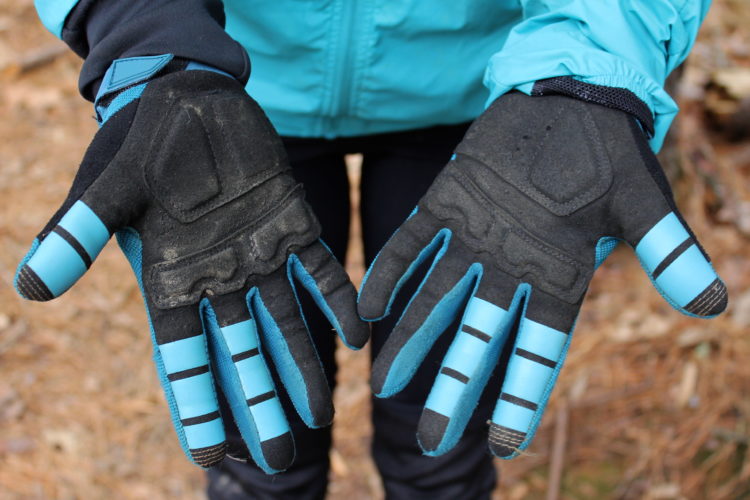
Many different factors come into play: air temperature, wind speed (how fast you’re riding), and moisture. Realistically, you may need several different pairs of gloves for different temperature ranges. I recently picked up the Fox gloves pictured above and they’re great for weather in about the 35ish-60ish degree range, due to the vents on the back. When temperatures dip below 30, I’ll go with a significantly heavier glove. Many bike companies make gloves for lower temperature ranges, but I find that some ski gloves work just as well.

Wool Socks

As I mentioned above, the extremities are the hardest part of the body to keep warm. Swap out your cycling socks for a heavier-weight wool sock. They may be a little bulkier, but a little discomfort is way better than frost bite!

Shoe Covers

One piece of essential gear that I have largely ignored until recently (much to the detriment of my frozen toes) are shoe covers.
The average mountain bike shoe is designed with large vents to channel air into the shoe to keep your feet from sweating excessively during the hot summer months and to drain water after deep creek crossings. But these features work against you once the weather turns cold.
While you may look funny wearing them, plastic covers solve the problem of shoes designed for the desert by keeping the cold air and snowy/slushy muck out and your body heat in.

Large Hydration Pack

While you might not need to carry as much water during the winter as you do during the blazing hot days of the summer, I always carry a large-capacity Camelback that features a large storage compartment. Since the weather outside and your internal temperature can fluctuate so much over the course of a ride, I find that a large pack is convenient for carrying extra layers in case I need them, or storing layers that I’ve chosen to take off.

Cycing Beanie: For When it Gets Really Cold

When the temperatures start getting seriously cold and your ears start freezing solid, try on a cycling-specific beanie to keep your noggin warm. The greatest loss of body heat occurs through your head (and specifically your ears), so buying a beanie will help you in extra-cold conditions. Personally, I don’t usually feel a need to put a hat on while riding until the temps are at least into the 20′s. Trek7k wrote an article about cold weather cycling clothes about 2 years ago, and he talked specifically about cycling beanies. There’s more great info there, so be sure to check it out!

If you live at a higher latitude and have to deal with subzero temperatures and significant amounts of snow, these same principles still apply. Just add thicker and more numerous layers!

Hopefully these clothing tips will help prepare you for a fun winter season filled with frozen singletrack instead of several mundane months spent on the trainer. Get out there and rip it up!

Your Turn: Do you have any cold weather mountain biking tips to share? If so, please add them in the comments section below!

29 Trails in 29 Days

Thursday, December 16th, 2010

As a mountain biker, winter can sometimes get a little depressing. Memories of summer epics have long faded while the cold temperatures keep us (and our buddies) indoors more often than we’d like. Frankly I’m a little tired of my own excuses for not riding more in the winter so I decided to challenge myself to ride 29 trails in 29 days (on a 29er).

The plan is to kick things off on January 8, 2011 by riding the Snake Creek Gap Time Trial #1 in Dalton, GA. Although I’ve never ridden “the Snake,” I’ve been told by many riders who are much better than me that it’s a tough course so it should be a good wake-up call. Then, on day 29 (February 5) I’ll ride the same course again to see how my time has (hopefully) improved. For the first race I won’t do any extra training beyond what I would normally ride.

Since I’ll be riding the same trail on day 1 and day 29 (the Pinhoti Trail) I’ll need to ride two trails on one day during the challenge. In fact I plan on riding multiple trails some days to leave other days open to give myself a little scheduling flexibility. I’ve already mapped out a potential list of trails spread across 5 states in the southeast; about half the trails on my list are trails I’ve never ridden so I’m stoked for the adventure.

The 29 day challenge should also give me a good chance to put some of my gear to the test. In particular I’ll be reviewing the new SRAM X0 2×10 drivetrain to see how it holds up under wet, potentially icy conditions and nearly continuous wear and tear.

Throughout the challenge I’ll be sharing race reports, gear reviews, and trail descriptions along with training updates and more. We’ll also post up a schedule of some upcoming rides in case anyone wants to join me on the trail.

29 trails in 29 days – I can’t wait to get started!

A Taste of Winter Mountain Biking on Pinhoti Trail

Thursday, December 2nd, 2010

Sometimes you just gotta go for a ride. Greg (Goo), Jeremy (GoldenGoose), and I were looking for a place to ride on Wednesday and after our first two choices – Dawson Forest (closed for hunting) and Blankets Creek (closed for wet trails) – fell through, we finally settled on Tatum Lead/Pinhoti, a route none of us had ridden before.  Jeremy’s guidebook rated the 15-mile route “very difficult” and we were stoked to see what this section of the 100+ mile Pinhoti Trail had to offer.

It rained all day Tuesday in Atlanta and when we arrived at the trailhead Wednesday afternoon around 1pm we could still see snow on top of the surrounding peaks (yes, snow in Georgia). The thermometer in the car read 38 degrees and with the breeze it was easily much colder. Luckily the route began climbing the paved road immediately so we were able to warm ourselves up a bit.

After climbing about 2 miles and 500 vertical feet on highway 52 we realized we missed our turn onto Tatum Lead road and ended up backtracking about a mile to the dirt road. Tatum Lead road quickly joined up with the Pinhoti Trail which at this point follows a nondescript forest road that’s open to motorized vehicles. The descent down this road was fun with small berms but I sorta dreaded climbing back up this road on our return.

At about the 3-mile mark we passed the turn-off for the Pinhoti Trail and continued on the forest road, entering the Rock Creek ATV area. Much to my surprise, the ATV trails were in great shape and flowed downhill really well. In fact, the water breaks on the descent down to Rock Creek reminded me of some of the groomed DH trails at Northstar, albeit much wider and without the sculpted, banked turns. Sadly the downhill was over quickly and we began our ascent back up the road toward the Pinhoti trail.

For the next two miles or so the Pinhoti Trail follows Peeples Lake Road which was mostly flat as it follows Baker Branch creek. This area was full of makeshift campsites and roads leading in several directions but fortunately the trail is well marked. We crossed Baker Branch creek at least 4-5 times and after the first few crossings I resigned myself to cold, wet feet for the rest of the ride.

From Peeples Lake Road the trail started getting steep – too steep for us to ride in some spots. All told we climbed over 800 feet in just a mile and a half on this section. At the top of the climb we joined back up with our previous route and kept climbing back toward Tatum Lead Road.

On the way back we turned off Tatum Lead road before the highway, staying on the Pinhoti Trail, where we found some of the best riding of the day! The trail quickly left the wide gravel road and lead into some great singletrack cut into the side of the hill. This section only lasted about a mile before returning to highway 52 but it was definitely the highlight of the trip.

At the end of the day we rode about 17 miles with 2,800 feet of climbing which ain’t too shabby. The Pinhoti trail continues past the spot where we parked and it was tempting to keep riding the singletrack but with the sun setting it was starting to get even colder. Not to worry – I’m sure we’ll be back soon to explore even more!

Ice Biking with Mountain Bikes

Tuesday, February 16th, 2010

ice_biking

photo by Nicole Goodhue Boyd, WickedLocal.com.

I feel like this is something we’ve written about before but a recent article about ice biking got us thinking about this extreme form of MTB once again. Last week the Ipswich (MA) Chronicle wrote about members of the New England Mountain Bike Patrol who are into “ice biking” and the article goes into a good amount of detail about the studded bike tires the guys use to ride on slippery ice. Unfortunately the article didn’t shed much light on why mountain bikers would want to go ice biking – it is, after all, just riding on a flat, frozen pond – so we decided to do some research of our own.

Our friend Steven Regenold (the GearJunkie) wrote a great piece back in 2007 describing the competitive side of ice biking. An oval course is marked out on a frozen surface and riders race hard through the straights while slowing to hold their line through the turns. With the Olympics in full swing, the whole thing sorta reminds me of short track speed skating where the ability to stay upright is just as important as being fast. Now that I think about it, why isn’t ice biking part of the Winter Olympics? :)

While ice biking is mostly akin to short track MTB racing, we’re thinking there should be room for an icy dirt-jump equivalent as well. Just think: jumps and banked turns built from compacted snow, tabletops glazed with an icy crust, and landing zones filled with soft, fluffy snow. The Kona White Style event is basically an icy/snowy DH/DJ course built using snow cats and bulldozers but a fun course could just as easily be constructed using friends and a few shovels.

Riding on frozen trails is yet another form of ice biking but in our experience, it’s mostly just an exercise in frustration (plus in some cases it can be bad for the trails). The great thing about ice biking on ponds is there’s a consistent surface for studded tires to bite into and riders get to create their own courses. Safety is key when biking on frozen ponds and it really only makes sense in the far northern US and Canada. Just this year two teenagers in our area died after walking out onto a frozen pond and falling through the ice so don’t try this at home unless you’re absolutely certain the surface is safe.

Mountain bikers are an industrious bunch and cold/freezing weather can’t stop us from riding our bikes. Give us extreme conditions and we’ll always find a new way to ride!

Leadville Mountain Bike Racing – In Winter!?

Wednesday, February 11th, 2009

Photo from Leadville Winter Mountain Bike Blog.

Most of us have heard of the Leadville 100 mountain bike race – the grueling 100-mile race course that takes place above 10,000 feet each summer – but there’s actually a newer race series happening in the Leadville, CO area this time of year: The Leadville Winter Mountain Biking Series. Melanie Wong writes about her experience riding in a recent series race in the Vail Daily and it’s a great read if you have the time.

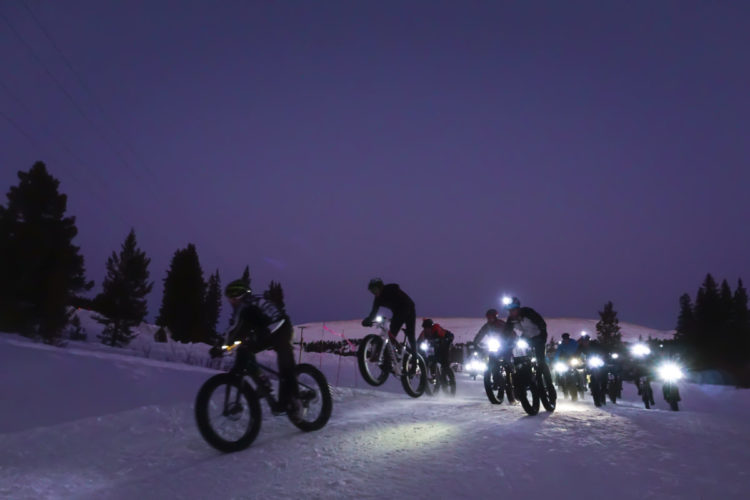
Last weekend’s race took place at the Tennessee Pass Nordic Center near Ski Cooper and the course consisted of cross country skiing trails ridden in the dark. Apparently 65 riders showed up for the race (a record for the series) and there were riders of all types and ages (including at least one single-speeder). The next Leadville Winter Mountain Biking Series race will be held at the Mount Massive Golf Course and will follow a unique 2-person relay format around a fast 6-mile circuit.

It’s great to see groups organizing races and group rides during the cold winter months since most of us just make excuses that keep us from going out alone. Just goes to show you it’s always possible to get out and ride, no matter where you live or what the weather conditions may be!


Site Map | Advertise | Partners | Contact Us | Terms | Privacy
Campground Reviews | Hiking Trails | Trail Running | Skiing / Snow Sports | Mountain Biking
Copyright 2012 Blue Spruce Ventures LLC | Atlanta, GA
singletracks.com is yet another slick Review App