singletracks is mountain biking
Sign In | Create Your Account | Site Map | Help  


MTB Beefcake in the Making

Tuesday, February 22nd, 2011

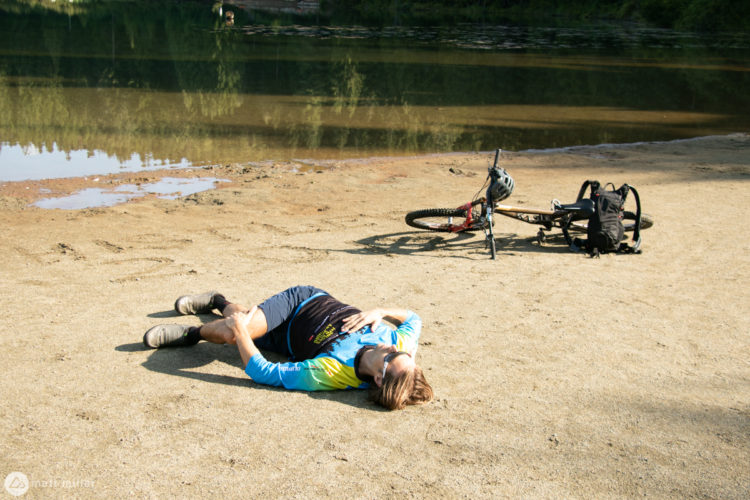
No more of these for me, I’ve gotta be ready to crush the springtime trails.

This week I received a digital copy of James Wilson’s 12 week mountain bike training program called “Mountain Bike Dumbbell Combos”. The package includes a 23-page manual explaining and laying out the options for the warm-ups, exercises and combined routine schedules that you can put together to whip yourself into full-on trail destroyer mode. If you’re snowed in right now as I am, you’re looking for anything to keep you sharp for that first day on the trails come springtime.

Looking over the 12-week plan and all its exercise components, I am truly psyched to get in the gym. But one of the best parts of this training regimen is that you don’t even need a gym to do it. Forty five minutes, 3 times a week in any 5′x5′ space will do. Grab a jump rope and adjustable dumbbells and you’re ready to work your upper body in addition to conditioning your core and legs.

Along with the detailed explanation of the exercises, Bike James includes several nutrition tips about the most important meal, what you should be eating (and avoiding), and some great meal suggestions to feed those muscles you’re developing. Nutrition has always been the weak point of any “training” I’ve done in the past; I’m hoping that having the benefit of concise guidelines about it will allow me to take full advantage of this non-trail time.

I’ll report back as things progress. Perhaps next post I’ll be raffling off a couple tickets to the gun show. Dadum ching!

Sometimes The Only Thing Left To Do Is Cyclocross

Friday, February 11th, 2011

Yup, it feels that way sometimes.

When Jeff sent me the email informing me I was picked to be on the Singletracks blog team, I almost turned him down. At the time I sent in my application I was living in Philadelphia, a 15 minute ride from the sweetest trails imaginable in Fairmount Park and I had a stable of bikes in the garage to suit my mood on any given day. But by the time his email came I had moved to Madison, Wisconsin for a new job without a single bike. I was living in a hotel (still am) and didn’t even know where the trails were. But I’m working on it.

Seeing as it’s winter in Wisconsin at the moment, hitting the trails isn’t in the cards right now so I’ve done the next best thing: I bought a bike that will be my workhorse and jack-of-all-trades: a 2011 Trek Gary Fisher Collection Presidio cyclocross bike. I chose the bike for the sweet steel frame and great 2×10 drivetrain but most of all for the ability to mount fenders. Bad weather and wet roads have never been an excuse to keep me indoors so I wanted the bike to be ready for anything. So on went a pair of fluted Velo Orange aluminum fenders and now me and the bike stay nice and dry (well, drier anyway).

When the snow started coming down I was happy to have a good headlight for visibility and the Bar Mitts to keep my hands cozy.

On my first ride in over a month it felt great to start getting back into shape for when the snow melts. I’ll be using this cyclocross bike as a commuter, a light off-road steed, and an around town bike to tackle the snow covered trails that tie Madison’s neighborhoods together. Today I got in 35 chilly, hilly miles doing a dry run on the route I’ll take when I start commuting to the office. It’s humbling to realize how little time I spent in the big ring, but after a winter lazy spell you’ve got to start somewhere.

Since the cold, snowy weather will be around for a while longer (so I’m told by the locals) I’ll have some non-singletrack posts to fill the time until the thaw. I’m almost through reading the book Bicycle Technology and a review will be up soon. I’ll also be starting an MTB-specific strength training program to get pumped for the season. Hopefully between that and my cyclocross miles I’ll be ready for the dirt in short order.

And the sooner I can ditch this gear, the better.

When the snow is flying and the wind is blowing, the less skin exposed, the better.

CycleOps Joule 2.0 Review

Thursday, January 13th, 2011

A little while back I did a write up on the CycleOps Powertap SL+ for mountain bikes. At the time I raved about how well it worked and how useful the data was when downloaded to the PC. At the time someone mentioned that the Cervo display unit wasn’t the greatest, especially given the cost of the system and honestly I had to agree. Well guess what? The good folks at CycleOps must have been listening because they gone and improved it. Yup, the Powertap SL+ now comes standard with the Joule 2.0 display head unit. For those who already have a Powertap you can also purchase the Joule 2.0 to work with your existing system.

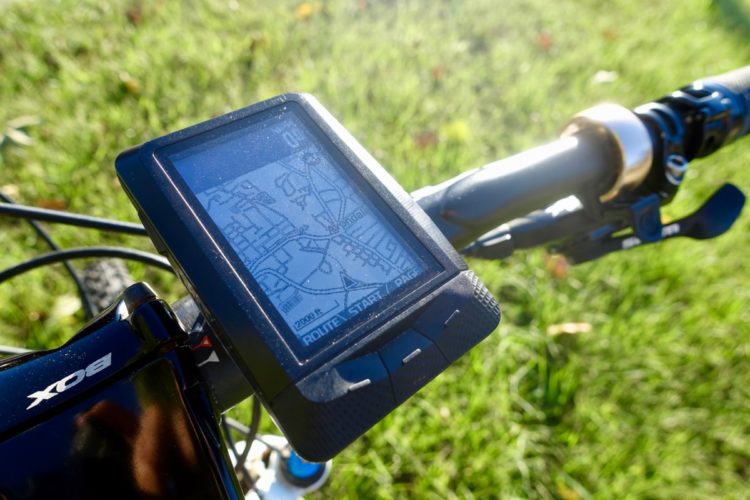
The Joule 2.0 represents a quantum leap in both performance and user interface improvement. The old two-button Cervo was a bit of a pain to set up. You needed to remember the right sequence of  buttons to press and how many times to press them to access specific data and functions. The new Joule, on the other hand, almost doesn’t need instructions – by playing around with the menu I was able to find almost everything I needed. The Joule 2.0 is also ANT+ compatible meaning you can use it with many heart rate monitors, cadence sensors, power meters, and speedometers from other manufacturers.

The main screen displays six different metrics in real time along with two additional data fields, all of which are user-configurable. Two buttons and a joystick control allow you to get to everything quickly and the intuitive menu is easy to follow and understand. Compared to the Cervo, you also get two new inputs that previously were not included: altitude and temperature. Now that’s what I’m talking about! Obviously the amount of climbing during a training ride is important to know but temperature also has an impact on performance and gives a more complete picture of individual workouts.

The Joule 2.0 isn’t just a fancy display upgrade; the included PowerAgent software takes your training to another level.  Believe it or not, saving and analyzing training data is often the difference between first and the first loser in many races. The more detail you’re able to track and respond to, the more quickly you will improve.

The PowerAgent summary report contains basic info about each ride and is good for a quick comparisons between previous rides. The power detail report looks at your ride intensity, including normalized power, watts per kilogram of body weight (perfect for comparing yourself to other riders), and time spent at zero watts. The work report quantifies work completed, including training peaks and calculates a training stress score (TSS) and intensity factor (IF) for each workout.

PowerAgent also produces a peak power report showing a spectrum of peak power data indicating ride intensity at key physiological markers of current fitness compared to previous performances. In other words, you can track how well your heart, lungs, and legs are working from day to day. Power and heart rate data is slotted into zones and plotted against time to show the type of workout you’re getting each time. Finally, PowerAgent includes a surge and climbing report covering all the altitude gained along with a calculation of vertical ascent and grade. Pretty cool stuff for those who want to know exactly what they are doing and how well they are doing it. There are even extra features within the software that allow you to share your info with trainers and others on Twitter, 2Peak.com, and other training websites.

Using the Joule on both my trail bike and my training bike (essentially my XC bike mounted up on my CycleOps Super Magneto Pro) has been a piece of cake. The mount supplied with the Joule is far more rugged than previous models (I always worried it might break, though it never did) and mounts easy enough to most round-ish stems. Some of the shorter machined stems that are not round may have a small issue and need an adapter to allow better placement for the two tie wraps. I also used a little double sided tape to secure my mount in addition to the tie wraps.

On the trails the screen is easy to read and easy to use even with gloved fingers and the real time metrics seem to update very quickly. The only thing that had me slightly concerned was the mini-USB connector on the back of the Joule head unit. The port isn’t covered which means water could potentially penetrate the unit, though I didn’t have any problems in my tests. If you’re really worried, a small piece of tape just might do the trick on rides with deep stream crossings or in rainy conditions. And remember to look up at the trail from time to time instead of staring at the Joule the whole way – I nearly smacked a tree during one ride! The included heart monitor works well without a lot of fiddling to get the transmission synced up.

So, what do I think of the Joule? Well, if you’re on the fence about purchasing a Powertap, this update to the Powertap SL+ ($1,699 MSRP for the complete MTB power system) should make the decision much easier. Even if you have an existing Powertap SL+, I think the new Joule 2.0 ($449 MSRP) is a valuable for upgrade over the older Cervo head unit. Mountain bike training alone isn’t enough if you aren’t tracking your complete progress; fortunately the Joule 2.0 is just the tool to help you reach your competitive goals for the new year.

I would like to thank the folks at CycleOps for sending down the Joule for a review.

Downhill Mountain Biking: For Academic Course Credit?

Thursday, March 18th, 2010

dh_course

Six downhill mountain bike racers are working toward their Business And Technology Education Council qualifications in a unique program at Borders College in Scotland this year. Two of the six riders are pros and all race at the national level which means they need to devote serious time to their training which a traditional program might now allow.

The one-of-a-kind module combines course work in psychology, coaching, and sports nutrition which should help students both on the trail and off. Plus the students get a great education they can fall back on should their downhill MTB careers not work out.

These days it takes a lot to reach the top of the sport in mountain biking and training is basically 24×7 for the pros. What you eat, how long you sleep, how you practice, and what you learn all go toward reaching the podium. The athletes at Borders College admit as much and say the classes are especially helpful in addressing the psychological and mental aspects of downhill racing.

Now if only more colleges offered decent mountain biking scholarships…

Study Shows Viagra Enhances Cyclists Performance at Altitude

Wednesday, November 18th, 2009

viagra-pills

So this is actually an old study (2006) but I just read some commentary about this over on seriousrunning.com this week. Apparently cyclists who took Viagra as part of a study increased performance (cycling, that is) by up to 45% at high altitudes. Not everyone in the study showed signs of improvement but for those who did it sounds like it was pretty significant.

It’s interesting to note that the altitudes we’re talking about here – above 12,700 feet – are pretty extreme. Couple that with the fact that the study found no boost at sea level and it’s sorta questionable whether this matters at all. Of course this hasn’t stopped pro cyclists from being caught with bags full of Viagra at the Giro d’Italia and other big races. Back in 2008 the World Anti-Doping Agency began investigating Viagra to see whether the substance should be banned but as far as I can tell they’re still studying the issue.

Even the Leadville 100 MTB race doesn’t quite make it up to 12,700 feet above sea level but it’s probably close enough that popping a Viagra might help racers get to the top. Even more promising seems to be the idea of using Viagra to treat altitude sickness. So the next time you head out for an epic ride above tree line, consider bringing a couple Viagras in your pack – you never know when you might need them :)

I’ll leave the rest of the Viagra jokes to the commenters below.

Rachel Atherton dislocated shoulder on training ride

Thursday, January 29th, 2009

Photo by Sven Martin, Velonews

Rachel Atherton, was hit by a car while riding her road bike in Santa Cruz last week. Atherton dislocated her shoulder in the accident, Velonews reports:

World downhill champion Rachel Atherton of Great Britain dislocated her shoulder after colliding with a car in Santa Cruz, California, on Sunday. Atherton, who rides for Animal-Commençal, was training on her road bike with her brothers Dan and George when the accident took place.

The three had been in Santa Cruz on a training trip since January 9.

Atherton reportedly hit the car head-on, with her Cervelo road bike taking the lion’s share of the damage. The 21-year-old Atherton also suffered cuts and bruises to her face.

I always used to think a dislocated shoulder was the most glorious of bike related injuries.  I was riding with my friend, Esther, at Skeggs once where she took a nasty tumble and dislocated her shoulder.  We had to hike out about 2 miles and though I tried to keep Esther’s mind of the pain by trying to be funny, I knew it was a long and agonizing walk for her.

We made it to the closest fire station and Esther was feeling better thanks to a couple hunky firemen and a little morphine.  Must have been a good dose because she was feeling well enough for me to take a picture of her grotesque bulging arm socket (man, I wish I had a picture to insert here!).  After a few hours in and out of consciousness at the emergency room, Esther was all better and had proven she was one tough cookie!

So here’s to the tough cookies like Esther and Rachel Atherton, who can bounce back on their feet bike after a serious injury and giving us all a sense of mental and physical toughness to admire!

MTB Race Inspiration from Matt Adams of Unreal Cycles

Friday, January 23rd, 2009

If you’re developing cabin fever while trying to stay in mountain biking shape this winter, you can also be preparing your 2009 race plans. If you have never tried a mountain bike race, find a race and you just might surprise yourself with how fun and rewarding it can be. For inspiration, let’s take a peek into the life of Unreal Cycles sponsored racer, Matt Adams. Matt shared with us his passion for riding bikes, his training regimen, and his 2009 racing schedule:

“Over the past seven years I have spent countless hours aboard my bicycle. My two wheeled companion has given me way to escape the trials of day-to-day life, a way to lose myself in another world.

My Unreal Junior has become a close companion. Downhill, dirt jumps, street, or slalom, the Junior loves it all. It has helped to make my training a joyful experience.

Matt Adams on his Unreal Junior

I ride a minimum of four days a week, more if I can help it. The typical day involves racing cars down the suburban streets in my hometown of Pacifica, California. Then hitting the dirt jumps or downhill trails, depending on my mood: keeping it fun is important. At least three of these ride days are followed by a second grueling upper or full body workout. I have found jiu-jitsu to be an excellent addition to my training regime. Twice a week I hit the mats for 3 1/2 hours. The core workout is intense. Sit-ups, leg lifts, pushups, pull ups, bench press and curls are a daily must as well.

In 2009 I will be focusing on racing on the west coast. I’ll be hitting some of the local Sandhill Ranch series, the Sea Otter Classic, some North Star races, and the Southridge Classic in Fontana come November. I will also be doing several of the CCCX races in Monterey. Also in 2009 I will be helping instruct at a local XC camp, and doing a 24 hour race in July.”

We’re wishing Matt the best of luck in his upcoming races. This spring, we’ll be testing an Unreal frame similar to Matt’s, so stay tuned for more about this unique build from Unreal Cycles.

A race schedule like Matt’s may seem daunting to most of us, but to reiterate his own words,”keeping it fun is important.” So what are you waiting for? Whether it’s entering your first mountain bike race or testing your endurance in a 24 hour race, just get out there and have fun!


Site Map | Advertise | Partners | Contact Us | Terms | Privacy
Campground Reviews | Hiking Trails | Trail Running | Skiing / Snow Sports | Mountain Biking
Copyright 2012 Blue Spruce Ventures LLC | Atlanta, GA
singletracks.com is yet another slick Review App