singletracks is mountain biking
Sign In | Create Your Account | Site Map | Help  


Syncros FL Carbon 29er Mountain Bike Fork Review

Wednesday, July 20th, 2011

Hey gram counters: how’d you like to shave a couple pounds off your 29er mountain bike with a single upgrade? After putting the Syncros FL Carbon 29er fork through its paces on the trail I’m ready to fill you in on the details, talk about performance, and award style points.

The Deets

The Syncros FL Carbon mountain bike fork weighs just 1.25 pounds (580 grams) compared to 3.5+ pounds for the lightest 29er suspension forks available. Heck, this fork still weighs about half what you’d expect from a rigid steel version! It’s not the lightest carbon 29er fork available but it’s pretty dang close (we’re talking grams).

Unlike other rigid carbon forks, the Syncros FL Carbon is full-on carbon fiber from the steerer to the crown to the drop outs and brake tabs. The crown and steerer assembly is a full monocoque which means it’s essentially built up as a single piece for exceptional strength and durability. In fact Syncros says there’s no rider weight limit for this fork – how’s that for strength confidence?

To some a rigid mountain bike fork might seem like a throwback but this fork features a completely modern design. Aside from the carbon construction, the Syncros Carbon FL fork plays nicely with fat tires (2.4+) and only works with disc brakes (truly old-school V-brake aficionados will need to look elsewhere). The brake mounts are International Standard (IS) so if you’re upgrading you may need to pick up the appropriate adapter. We’ve also heard there’s no maximum rotor size on the FL Carbon which would make it unique among rigid carbon 29er forks.

Another thing that makes the FL Carbon design unique is the offset (or rake): just 38mm. The offset is basically the distance between the center of the dropouts and the steering axis and is one of three factors that determine a bike’s “trail.” So, holding a bike’s head angle and tire diameter constant, a shorter offset increases trail which improves stability on the bike (but decreases handling precision). By comparison, Niner’s carbon fork has a 45mm offset while the XRR470 from DT Swiss has a 41mm offset.

On the Trail

It’s been a long time since I’ve put in serious saddle time on a rigid mountain bike – like 12 years. It’s hard to imagine a time when even the most entry level bike didn’t come with a squishy fork but believe it or not, it’s still possible to get rad on a rigid mountain bike! Though to be honest I was a little worried at first…

Ok, so here’s where the specs meet the trail and it all starts to make sense. The cool thing about carbon fiber is that designers can influence characteristics like stiffness and compliance based on the way the fibers are laid out. The upshot: I found the FL Carbon is tuned so it’s not overly harsh on the trail yet it’s still strong enough to stand up to serious abuse. Still, make no mistake – this is a stiff, rigid fork. After just a few rides I needed to re-tighten most of the bolts on my stem and bar attachments to eliminate all the chatter.

To the uninitiated, the thought of riding rigid sounds like torture but this is where this fork’s light weight saves the day. See, instead of plowing right over rocks and roots using a heavy suspension fork, I found the FL Carbon allowed me to finesse the trail more easily – speed hops and wheelies were nearly effortless. Granted, this takes more concentration and I was definitely slower than usual on the really techy stuff but I didn’t run into anything (stairs, rocks, etc.) I couldn’t handle.

Speaking of lower weight, as you can imagine this fork climbs like a dream. Not to state the obvious here but the FL Carbon is lightweight and doesn’t dive even a millimeter when I mash the pedals – seated or standing. This is where the rigid rider makes up time after picking slowly through the tech stuff!

My biggest gripe about the FL Carbon is the 9mm QR wheel mount option. Maybe I’m just spoiled after switching over to through-axle forks and wheels but the slight lateral flex on this fork feels a little strange. During the first few rides I was constantly stopping to make sure my QR skewer wasn’t loose because the front end felt like it had a minor quiver (for those who are still riding a traditional fork with standard QR mounts you won’t notice a thing.) Of course I can’t fault Syncros for this design decision – try to find a rigid 29er fork with a through-axle today and you’ll come up empty handed.

Still, the FL Carbon handles well, especially since there aren’t any springs getting in between the force you put into the handlebars and the reaction you get from the wheel. My MTB trackstands were never more crisp!

Style Points

The photos should really speak for themselves but what I like about the FL Carbon is that it looks like a mountain bike fork. Sure, there are rigid MTB forks out there that are more aerodynamic and shiny but to me those look more road than trail. By contrast the black matte finish on the FL Carbon looks like it belongs on a stealth fighter and on the trail this fork is my secret weapon.

The Verdict

If you’re looking for a way to save a lot of weight on your 29er without sacrificing nearly as much performance (or style!) as you might think, the Syncros FL Carbon is the way to go. At $499 MSRP the cost is comparable to a decent suspension fork and a good value for such a highly engineered component. Are you ready to get rigid?

Thanks to the folks at Syncros for providing the FL Carbon fork for review.

Syncros FRIC FR/DH Stem Review

Monday, July 11th, 2011

Every so often, someone in the bike industry comes up with something really unique… something truly revolutionary… something that’s just FRIC’n cool! Tom Ritchey and the folks at Syncros / Ritchey have had more than their fair share of these types of products and a little while back I got my hands on the new FRIC stem which I tossed on my bike right away.

The FRIC is intended for the FR/DH crowd. With a patented forged design, you’re getting a super strong stem that’s shockingly lightweight. How light? My stem weighed in at 123g according to my scale, which matches the claimed weight from Syncros. But how is this stem different from all the others on the market?

For one thing the steering tube clamp bolts are forward of the steering tube, adding precious space for the family jewels, just in case you find yourself in a bad situation. Sure, a few other brands have forward set bolts (or forward facing pinch wedges) but that’s not all. What really sets the FRIC apart is the revolutionary 260-degree 4-bolt wrap clamp. With this patented design [Intelligent Clamp (IC™ )] you thread the bar into the Fric and then use the small segments to fasten down the bar. This method applies more uniform force around the bar, reducing the chance of cracks and fatigue.

As far as fit goes, the FRIC is only offered with 45mm of extension, which is a pretty safe choice for most AM-DH bikes but may disappoint those looking for more options. The zero rise on this stem may require you to add spacers if you’re finding yourself a bit down and over the bars so if you’re installing this on a fresh fork, keep a bit of extra length for spacers until you find the perfect height (or bar rise).

Installing the FRIC did take a bit more patience than a standard stem as the clamp makes you thread the bar through rather than placing it in. A note to people with painted bars: due to the tight fitting clamp, lube up your bar with soap to allow it to slide in easier. The added layer of paint makes for a very tight fit, though carbon and anodized bars should be fine. I installed an Easton Havoc carbon bar with no issues or scratches. For those of you with full rise bars (40mm+), bring them to the store with you to make sure the FRIC can pass the bends (just in case). After you thread the bar it is a matter of following the installation instructions and warnings. Torque the stem clamp bolts first, followed by the handle bar clamp bolts. It may take two tries on this to get your bar position just right, but it’s well worth the added time taken.

Using the FRIC I have to say that I truly loved it and not just because the compact design makes for a very clean look. What I really appreciated was the silent operation of the stem with no slippage or creaking to be heard. Even on the roughest rockgardens I didn’t observe any signs of flex or twist. That’s pretty impressive considering the size and design of this stem.

Now for $79.99 MSRP you’re definitely getting your money’s worth. The only bad thing here is the fact that you only have one steering tube size so for those with the 1.5″ steering tubes you’re outta luck (for now). The Fric comes in either white or black and as I stated before, visit your LBS to make sure it fits your bars.

I would like to thank the folks at Syncros for sending up the FRIC for a review.

Syncros FL Carbon Mountain Bike Fork Preview

Monday, June 6th, 2011

We don’t post a lot of product review teasers here on singletracks but the Syncros FL Carbon Fork is particularly drool-worthy and we just couldn’t resist. The FL Carbon is an all-carbon 29er mountain bike fork that weighs 1 lb, 5 oz. according to our postage scale. And that’s before cutting the steerer to size!

I had the fork mounted on my Redline d660 just a few days ago and haven’t had a chance to ride it yet but I can tell you this: my 29er mountain bike now weighs just 2 lbs. more than my carbon fiber road bike. Ridic.

This is one of those forks you take into the bike shop and a crowd of customers and employees starts to gather around to gawk. The FL Carbon is a fork that looks like it belongs on a mountain bike unlike some of the other rigid carbon forks out there. Let’s just hope it doesn’t completely harsh the ride on the trail.

Stay tuned for the full review within a few weeks!

Syncros FR Wheelset: Extended Review

Thursday, February 17th, 2011

Syncros offers their FR wheelset to the DH/Freeride crowd as a high quality wheelset for a reasonable price. Back in the spring I previewed this wheelset so if you missed it or want to check out the specs, click here. Many of the top riders on the North Shore ride these wheels so I was excited to test them out for myself. My tests took place on the toughest, roughest trails in Whistler, on the North Shore and in Kelowna.

The Ride

The first thing you notice about these wheels is their distinctive styling – the white really pops out on the trail and in pictures and sets your bike apart from the rest. But as soon as you saddle up, what you’ll really appreciate is that the bearings roll fast and the hubs are smooth – and they remained so through the duration of my tests.

I tested these wheels under the most extreme conditions possible, mounting them on my Banshee Legend MKII and pounding them mercilessly on the rough, rock strewn, jump infested trails around Vancouver, British Columbia. I have a “plow through anything” mentality and at 6’3”, 195 lbs, my equipment takes far more abuse than the average rider dishes out. Given the extreme nature of the testing, the Syncros FR wheels held up fairly well.

I did my best to destroy these wheels. I rode them down steep rock faces, big jumps, rough landings and rock strewn race courses. They sustained some damage during testing but never catastrophically failed.

The front wheel still runs straight and true after 3 months of testing and only 1 spoke needed re-tensioning. Rear wheels always take more punishment than the front and this showed during testing. My first flat spot occurred early on but after tightening the spokes and straightening the rim, the wheel was good to good go for another month until I encountered a particularly nasty race course that resembled a dry riverbed. That trail, combined with a few more weeks on the shore and in Whistler, caused a couple more flat spots in the rear rim. By then the rim was pretty haggared and the flat spots caused the spokes to loosen prematurely.

The largest flat spot occurred at the seam which is pinned with no welding like some more robust wheels on the market. Welding the seam instead of just using sleeves would greatly increase the strength of this rim (but the trade-off is this would probably increase the price). That being said, I put these wheels through hell and they held up better than many other wheels I’ve tested.

The Verdict

If you’re looking for a relatively strong, middle-weight DH wheelset that won’t break the bank, consider the Syncros FR wheels. They aren’t nukeproof but will be plenty strong for the average downhiller or freerider. As long as you’re not casing lots of jumps or mindlessly plowing into rock gardens, these wheels should last a solid season or more.

Thanks to Syncros for providing these wheels for testing.

Ritchey / Syncros: 1000mm Bars (!), FRIC Stem, and Carbon 29er Fork

Thursday, September 30th, 2010

After seeing more than one set of super wide 800mm bars at Interbike, element22 and I were having a conversation that went something like this:

element22: Wow, 800mm bars – that’s gotta be as wide as it gets.
trek7k: I dunno, next thing you know someone will come out with 820mm so they’re just a little wider than everyone else. It’s an arms race.

Fast forward to later in the day and our meeting with Sean from Ritchey / Syncros. Strolling around the booth I literally knocked a set of bars off the display and immediately element22 recognized the gag: 1000mm handlebars (1 meter or 39.37 inches for those who aren’t up on the metric system). Sean assured us the bars were created just as a conversation piece but I’m not so sure. Apparently the feedback from some younger riders was that they’d be interested in giving the 1000mm bars a try. Add to that the fact that the bar was produced with thicker walls for added strength – at the very least someone will be riding with these babies to see how they feel on the bike. What do you think – how wide is too wide for mountain bike handlebars?

Aside from the gag bars, Syncros unveiled a totally innovative (and patented) mountain bike stem called the FRIC. The “Intelligent Clamp” design wraps 260-degrees around the bar (unlike traditional 180-degree stem clamps) to reduce bar stress and increase fatigue strength. Reduced bar stress is a great thing for anyone who runs carbon bars but is wary of over-torquing things. Of course this means most bars will need to be threaded through the stem on installation but that’s a small price to pay. The stem also sports a centered steer tube slot which means improved bolt clearance. The whole package weighs just 124 grams – sweet.

Stems and bars are certainly interesting but what really caught my eye was the new 29er fork from Syncros. From a distance the rigid carbon fork looks like a standard suspension fork – but one that’s been blacked out for stealth early-product testing. Most of the rigid, carbon mountain bike forks I’ve seen look like they belong on a road bike but this one definitely fits the scene. I’m hoping to get a few test rides in on one of these in the near future – stay tuned for more…

The company also showed off updated wheels (including 29er hoops), pedals, and hubs. Honestly we could have spent all day drooling over the latest stuff at the Ritchey / Syncros booth.

Ritchey / Syncros has a great reputation for innovative design and solid products and the line-up for 2011 certainly doesn’t disappoint. Where will the company push the boundaries next?

Syncros Crux Platform Pedal Review

Thursday, June 3rd, 2010

The Syncros Crux pedals are intended for downhill, freeride, 4x, trials, BMX racing, and dirt jump applications. If you’re into any of that stuff and are looking for a pedal with unparalleled grip, look no further.

004

Syncros uses a high quality, 6061 aluminum alloy for the pedal body. The result is a pedal that’s lightweight and stronger than it needs to be. Because this pedal is competition oriented, it is lighter than Syncros steel pedals but does not come with the same lifetime warranty. The concave shape produces maximum foot/pedal contact and the specially designed replaceable pins provide more grip than any other pedal I’ve tested.

The Crux pedals feature an axle made of SNCM CroMoly, the hardest axle material available. Four bearings per pedal will keep it spinning smooth and free of play for a long time. And if the bearings ever do wear out, you can easily rebuild the pedal with parts available at your local shop. At $183.95 MSRP, these pedals costs $40+ more than the competition but at just 428 grams they’re 90-110 grams lighter than similarly priced pedals. Oh yeah and the graphics look great, especially when paired with the matching FR 31 bars. The Crux pedal is available in black & grey grunge, white & grey grunge, and white & purple grunge.

The Ride

Initially I was a bit skeptical about the size of these pedals since I’m used to riding a bigger platform. But after just a few minutes my concerns disappeared. The slightly smaller platform means all the pins dig into your shoes, minimizing slippage.

003

Whether you ride with a skate shoe or 5.10’s, these pedals offer plenty of grip. The unique pin design bites into your shoes so once your foot is on the pedal it won’t slip off. These pins will take a chunk out of your shin if you do slip a pedal so Syncros highly recommends wearing leg armor while using the Crux. When paired with 5.10’s, the Crux provides so much grip it feels like you’re clipped in. This makes the Crux pedal ideal for terrain where your foot would normally slip around such as technical DH, Freeride, dirt jumps, and skatepark riding.

All this extra grip gives you instant confidence. Within minutes I was jumping higher, riding faster and pulling better moto whips than usual. This confidence extends into all riding situations be it rock gardens, corners, jumps, steeps or skinnies. The Crux pedals don’t spin during foot tricks like no footers thanks to the tight bearing tolerances – a nice touch for sure. I even got some props from other riders at Joyride 150, my local bike park, on the look of these pedals and how well they matched the FR 31 bars.

012

The Verdict

After over a month of pounding these pedals hard they are still good as new. The Syncros Crux pedals should continue to perform flawlessly for months to come, given the impressive materials Syncros builds these pedals with. These are the best pedals I have used to date and I highly recommend them for their intended use.

Similar Products Tested

- 1664 Beaver Traps
- Axiom Roadgap
- Easton Flatboy DH
- GT Flats
- Mosh Flats
- Truvative Holtzfeller
- Truvative Hussefelt
- Wellego Flats

Thanks to Syncros for supplying the Crux pedals for testing.

About Syncros

Syncros started operating out of a Vancouver bike shop in the 1980’s, producing parts that could withstand the pounding dished out by riders on the nearby North Shore Mountains. Syncros was bought by Ritchey in 2003 and today produces high-end components built tough enough to withstand the most difficult trails while maintaining competitive weights and prices.

Syncros FR 31 Handlebar Review

Friday, May 28th, 2010

bars1

Today’s fastest MTB racers are choosing increasingly wider handlebars in an effort to improve leverage and control. Gravity racers are also demanding low rise or flat bars which allow the rider to get into a low, powerful position. Syncros understands this and offers the FR 31 bar for extreme riders looking for maximum width and minimum rise.

If you look around the pits at a DH race, you’ll find that most racers run bars 710-785mm wide with 0-1” of rise. These days most DH race bikes are equipped with either the Chromag Fubar OSX, Raceface Atlas, Sunline V1 or Truvative BooBar handlebars bolted to the front end. Syncros aims take some market share from these 4 companies with the FR 31 handlebar. At 315 grams these bars are around 10% heavier than the competition but at just $66.95 MSRP, the FR 31 is $20-50 less expensive than the others.

lava_bars

Looking at the bars, the first thing that strikes you is the width. At 790mm (31 inches), this is the widest bar on the market which translates into unparalleled leverage and control. Every rider I talk to who has switched to wide bars likes the extra control and refuses to go back to narrower bars. Of course if you just can’t get used to that much leverage or if you regularly ride trails with really closely spaced trees, you can always cut the bars to size.

The Ride

There’s a reason why all the top racers are running wide bars like these. It took me about an hour of ride time to get used to the FR 31 bars but after that I was launching jumps higher, pinning corners faster, pumping rollers better, pedaling harder, and rolling through rough terrain more easily.

No matter the terrain, your bike will feel more stable with these ultra wide bars. The width, rise, and sweep combine to put your hands in an ideal riding position which allows you to exert more power on the bars. In particular, the low rise puts you into a streamlined, race-ready position. I tested in black/grunge black bar, which drew some compliments, especially when paired with the matching Crux pedals.

The Verdict

The Syncros FR 31 bars are a perfect choice if you are a new school rider looking for more control overall and I wholeheartedly recommend them.

Similar Products Tested:

- Sunline V1
- Truvative Team DH/XC
- Truvative Holzfeller
- Truvative Hussefelt
- 2007 Raceface DH

Thanks to Syncros for supplying the FR 31 bar for testing

About Syncros

Syncros started operating out of a Vancouver bike shop in the 1980’s, producing parts that could withstand the pounding dished out by riders on the nearby North Shore Mountains. Syncros was bought by Ritchey in 2003 and today produces high end components built tough enough to withstand the most difficult trails while maintaining competitive weights and prices.

Sneak Peek: Syncros FR Wheelset

Wednesday, February 3rd, 2010

Over last 5 years, more and more riders have been choosing to equip their DH and freeride bikes with Syncros FR Wheelsets. These wheels are easy to identify thanks to their distinctive white rims and prominent logo placements. Syncros parts are quite popular in British Columbia, Canada, where the company started and the Syncros-sponsored NSMB team is also located in B.C. Here in the east, however, Syncros wheels are not as widely used which is a shame. As a former resident of Vancouver’s fabled North Shore, I’m excited to test these wheels since many of the riders I look up to used Syncros FR Wheels.

syncros_fr_wheels

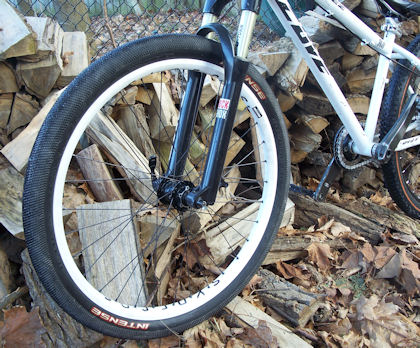
The 2010 Syncros FR Wheelset features their strongest rim yet, the DS 32, laced to the Syncros FR hub, which uses an impressive 4 bearings per wheel. All that strength comes with a slight weight penalty as the Syncros FR wheels weigh 2725 grams as tested which is about 500 grams heavier than many DH racing wheel sets. However, if you value long-term durability and build quality over weight, the Syncros FR wheels should fit the bill.

These wheels are individually hand-built with DT Swiss spokes and nipples, ensuring excellent quality and maximum durability. The FR wheelset is built with standard J-bend spokes in a 3X pattern. They come in matte black or white hubs while the rim is only offered in white. These wheels are available in 135×10 and 150×12 rear hub spacing and a 20mm thru-axle only front hub.

First Impressions034

These wheels feel much lighter than they are when installed because the bearings roll so well. The distinctive white rim looks great and makes your bike stand out. The tolerances on the FR Wheelset are very tight, so much so that installing the thru-axles required more force than usual both front and rear. This isn’t a bad thing, because there is literally no play – an important feature when you’re hucking around. These wheels are true and still spinning fast after weeks of pounding at Joyride 150, an indoor bike park. Stay tuned for a full review in the spring after I have a chance to test these wheels on some real DH terrain.

Thanks to Syncros for providing the FR Wheels for testing.

About Syncros

Syncros started operating out of a Vancouver bike shop in the 1980’s, producing parts that could withstand the pounding riders dished out on the nearby North Shore Mountains. Syncros was bought by Ritchey in 2003. Today Syncros produces high-end components built tough enough to withstand the most difficult trails while maintaining competitive weights and prices.

IMBA Members Get Big Discounts From Syncros

Thursday, August 13th, 2009

join-imba

Syncros is partnering with the International Mountain Biking Association (IMBA) to give IMBA members 25% off bars, headsets, wheels, saddles, seatposts, pedals, and tires. IMBA trailbuilders get an even better deal – 40% off Syncros products via coupons handed out by local IMBA Team Captains. If you’re looking to upgrade your components with Syncros gear a $30 IMBA membership will easily pay for itself!

Singletracks.com is an IMBA corporate member but I honestly didn’t realize that IMBA supporters received discounts at so many places. Check this out: 15% off at Backcountry.com, 10% off at the Kona web store, 10% off Western Spirit cycling tours, and Subaru gives you up to $3,300 off a new car! Even Hertz (the rental car company) offers IMBA member discounts, though unfortunately that doesn’t cover bike rack rentals :)

Even if you’re not an IMBA member yet you can show your support just by choosing where to shop. JensonUSA donates a portion of sales to IMBA and here on singletracks we give 100% of the proceeds from t-shirt sales to IMBA.

IMBA is doing a ton of great stuff all around the world to support mountain biking – what will you do to support IMBA?

Syncros FL 7075 Riser Bar and FL Stem Review

Friday, February 13th, 2009

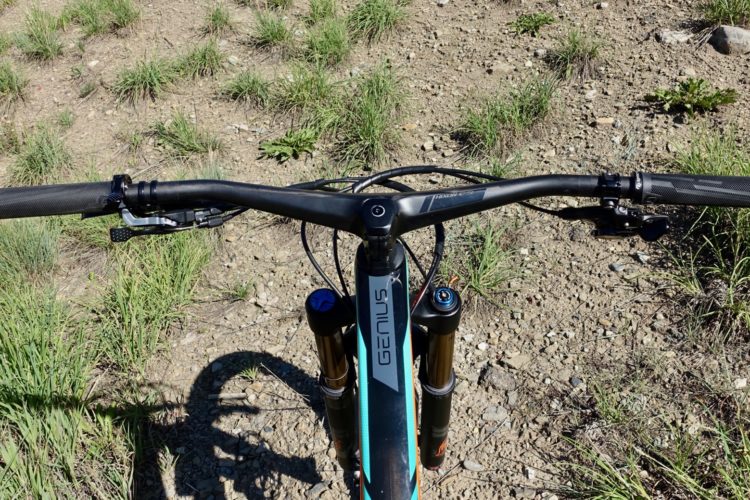
Have you ever held a bike part in your hand, and the only thing you could think of was how beautiful and elegant it was? I rarely get that way over mountain bike parts because they usually they have a rugged aesthetic that leans more towards tough and burly rather than flowing and smooth. The Syncros FL stem stands apart from other mountain bike parts: It has a gently tapered bi-oval shape that conveys both strength and elegance, and all the clamp areas are smooth and well rounded, ideal for use with carbon parts. In use the bi-oval design is stiff – no visible flex, even during hard out-of-the-saddle efforts.

The Syncros FL 7075 Riser Bar continues the look with a smooth transition from the oversize clamp area to the gently swept bar tips. Opt for the Black Grunge color scheme–both parts have splatters of color that Jackson Pollock would admire.

On my bike, the stock bar and stem were okay, just boring and clunky. Ever since I installed the Syncros parts, I feel like I’m riding a much finer machine. Both parts are very affordably priced for the quality and workmanship, especially when you stand them next to other aluminum parts that cost 30 to 50% more.  While the FL series is intended for aggressive XC use, Syncros offers an AM and an FR line for Downhill, All Mountain an Free Riding. Amazingly, the stem weighed exactly the advertised weight (this never happens) of 137 grams. The handlebar weighs a respectable 250 grams, much less than the 375 gram OE grade bar that I took off my bike.

The FL stem has an MSRP of $83.95, on sale now from Outdoor Outfitters for $82.99. The FL 7075 Handlebar has an MSRP of $70 and can be purchased from Competitive Cyclist.


Site Map | Advertise | Partners | Contact Us | Terms | Privacy
Campground Reviews | Hiking Trails | Trail Running | Skiing / Snow Sports | Mountain Biking
Copyright 2012 Blue Spruce Ventures LLC | Atlanta, GA
singletracks.com is yet another slick Review App