
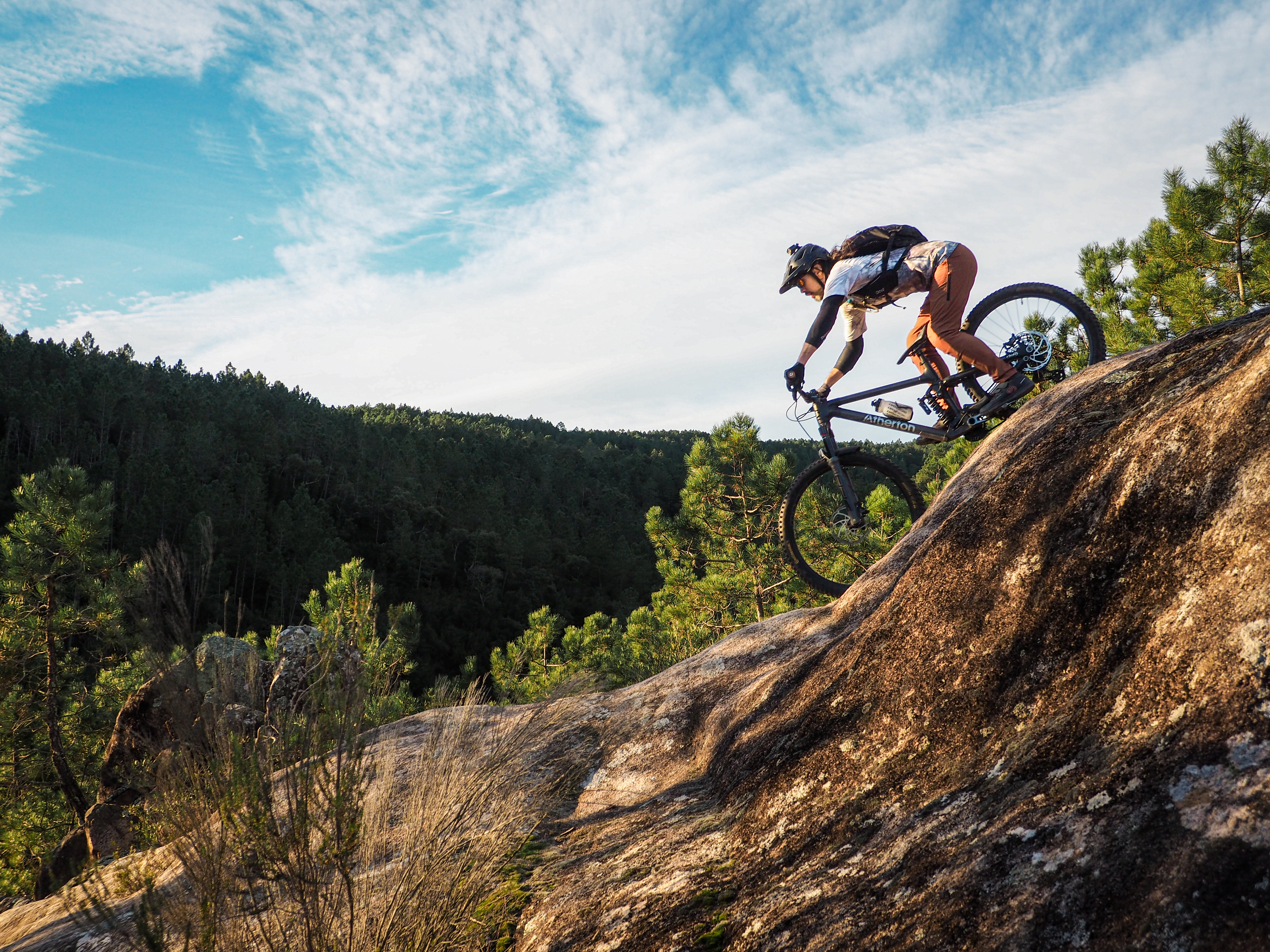
Most American riders planning a winter trip think desert Southwest: Sedona, Tucson, and Moab. But for East Coast riders especially, there’s a case to be made for skipping the domestic destinations. Santa Coloma de Farners (SCF), an hour from Barcelona in Spain’s Girona province, offers dry mid-winter riding and direct transatlantic flights that are often less than eight hours. The difference is what’s waiting for you when you land: 60 miles of volunteer-built granite singletrack that World Cup teams use for winter training, and that almost no American riders have on their radar.
SCF is located just 30 minutes inland from the cycling hub of Girona city. While Girona dominates the cycling headlines — gravel capital of the world, boutique skinny-tire bike shops, hipster cafes tucked between castles featured in Game of Thrones, even host to Sea Otter Europe — the real mountain biking gem of the province sits in the forested granite hills of SCF, known locally as Riudarenes. On any given winter weekend, it’s normal to see media crews and World Cup teams from across Europe circulating the trails, from XC to enduro. The terrain is the draw — and it’s unlike anything most American riders have encountered.
Granite slabs, steep singletrack, and three distinct zones
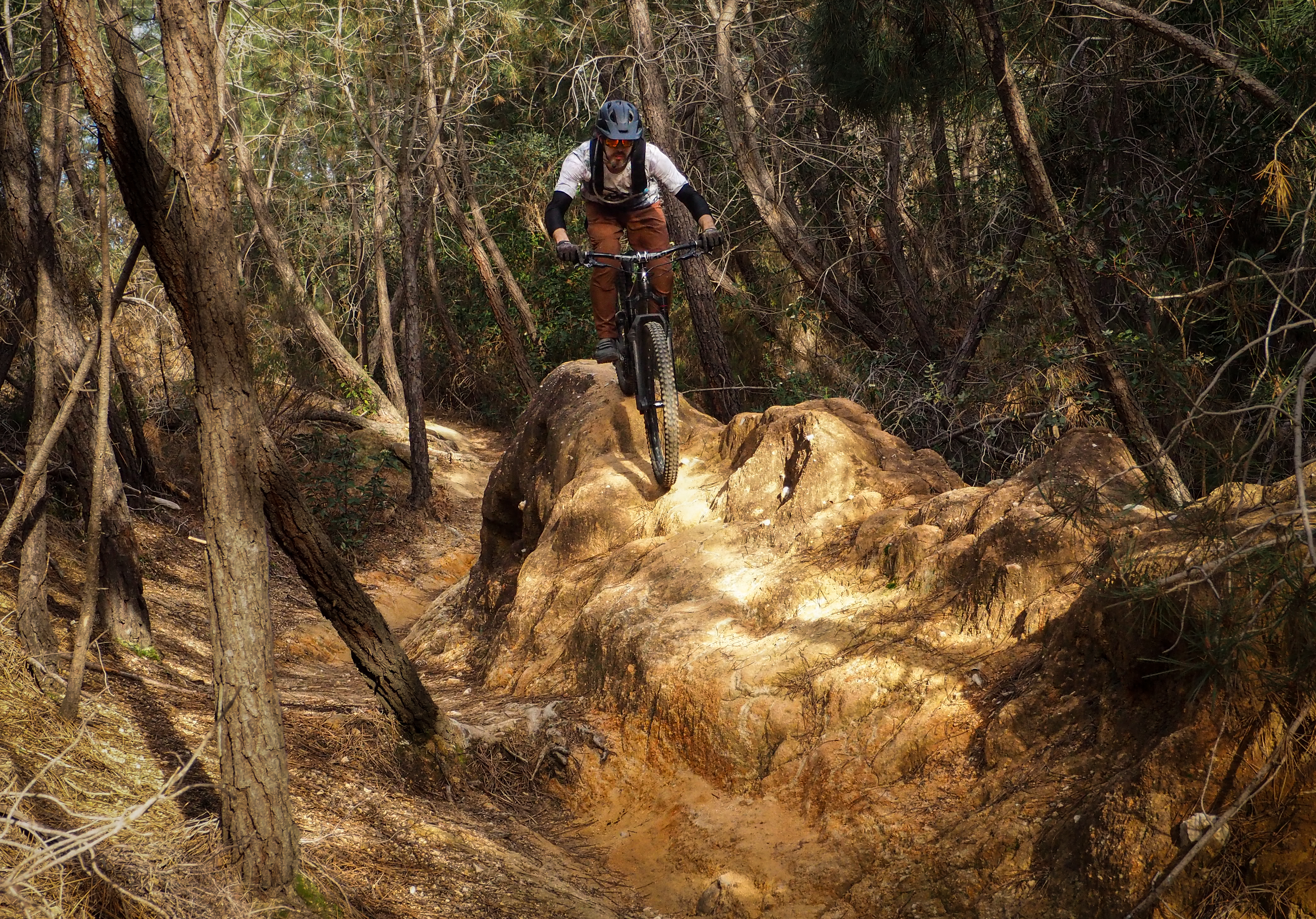
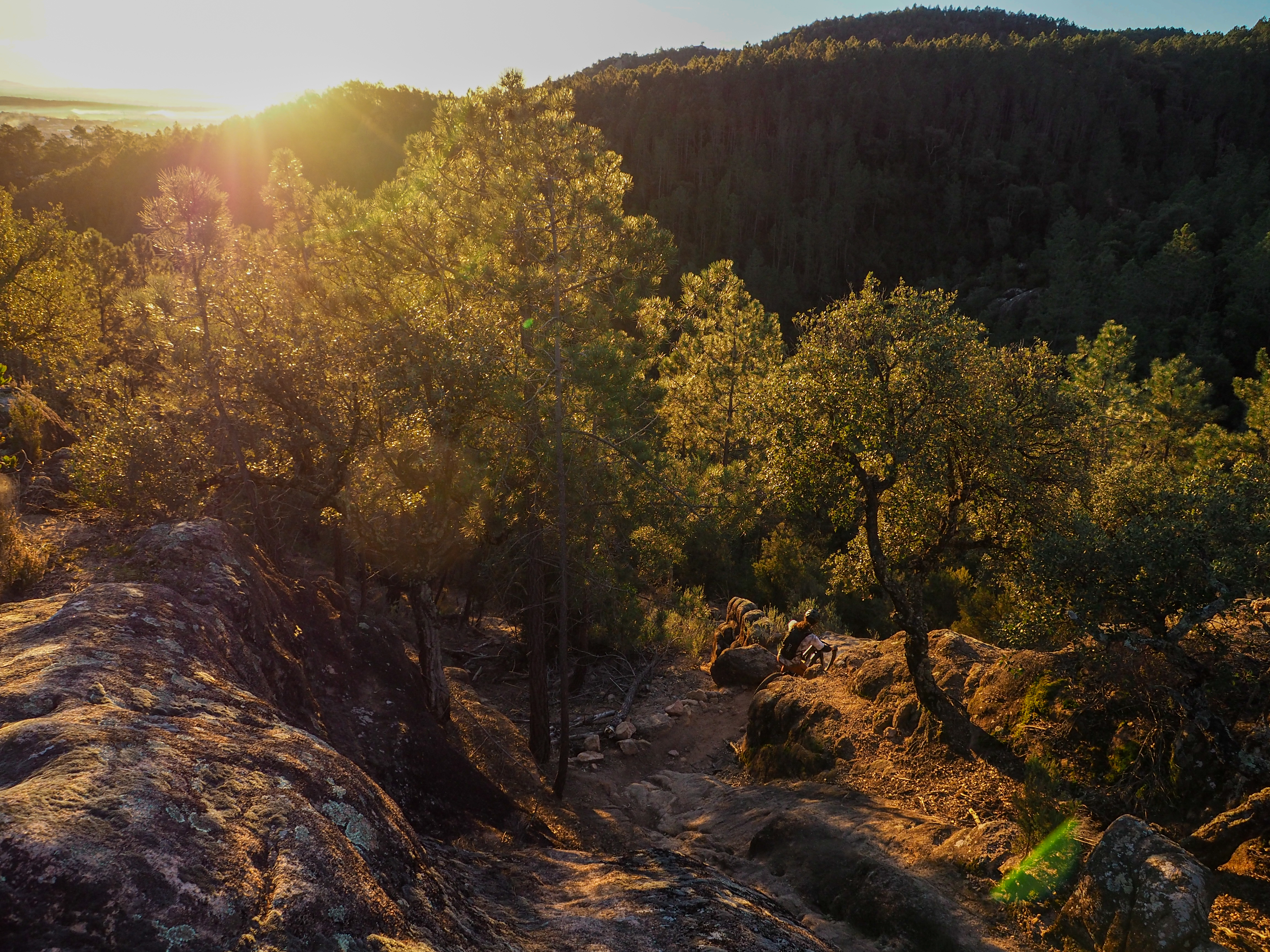
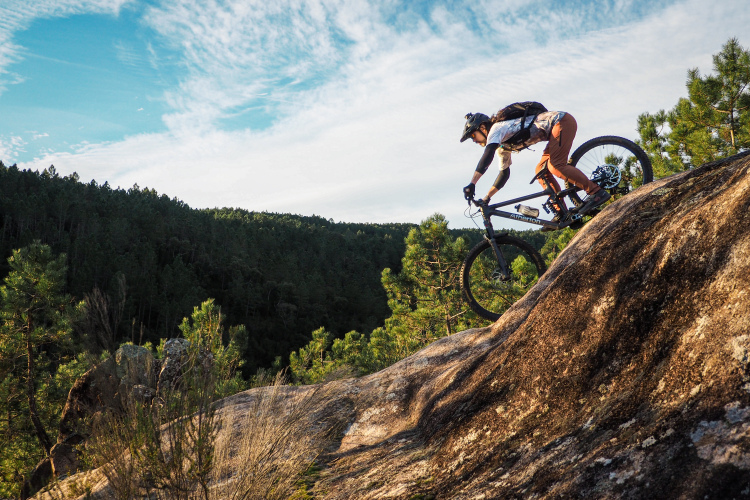
With elevations under 1,500ft, the weather is mild and Mediterranean year-round — on a clear day you can see the sea in one direction and the snowy high Pyrenees in the other. Most descents are composed of 500–1,000ft of vertical drop with large boulders, bedrock, and sandy soil. The hills are steep and numerous, offering a variety of route combinations, terrain aspects, and disciplines from gravel to XC to enduro. To get to the top of the descents, there are options from mellower meandering gravel roads to steep bedrock ribbons and everything in between.
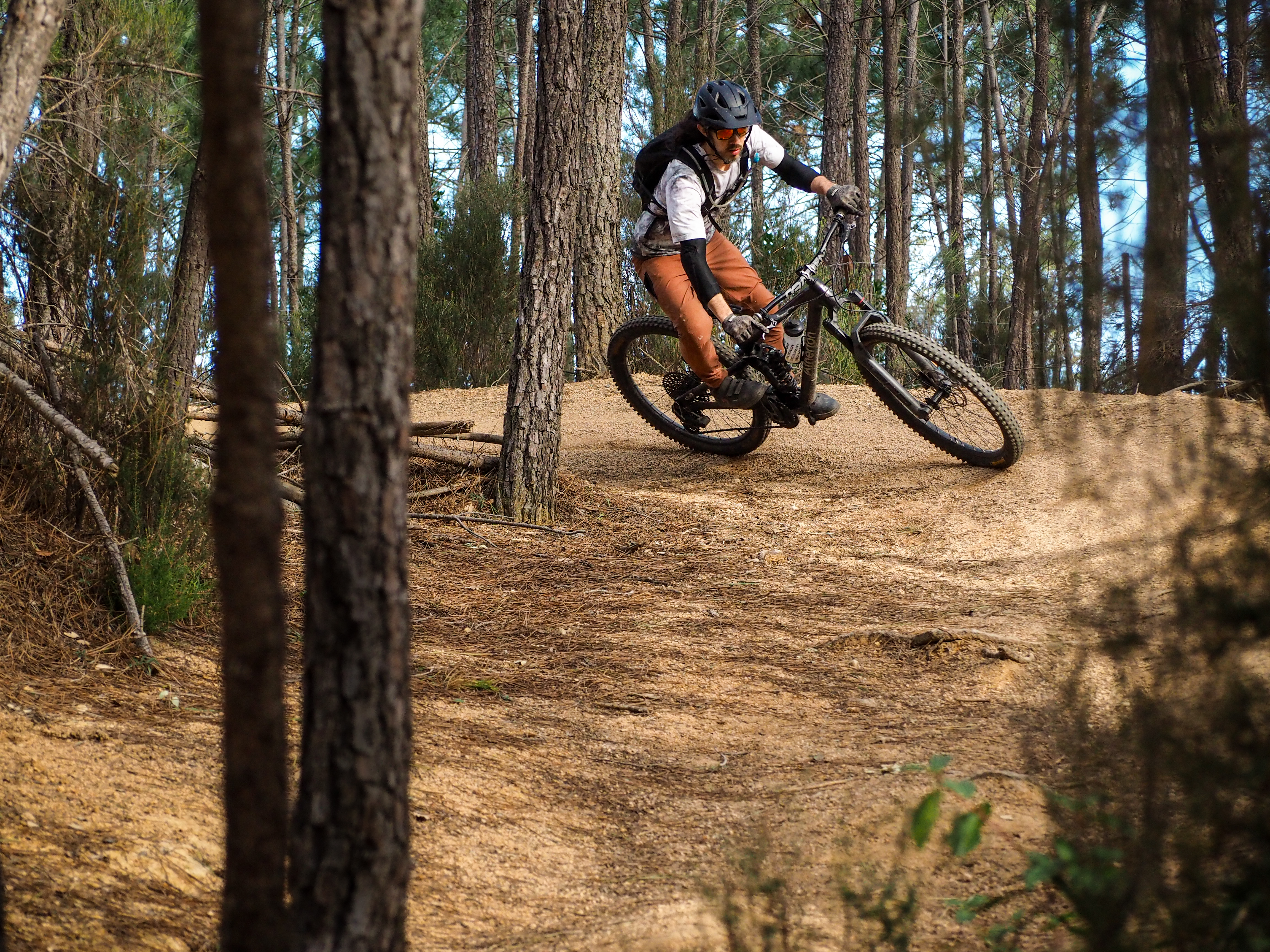
The slabs of rock, llosa in the local Catalan language, help with trail durability and grip. The neighboring town of Riudarenes is home to a local bike shop — REM Riudarenes — that holds two large races every year: the Argimon Flow XC race and the BTT Riudarenes Enduro. The bike shop employees help with trail maintenance and ensure the trails are prime for the races. There is no formal trail association, but the durable rock trail tread and easily stackable sandy soil contribute to upkeep. If you are familiar with riding in Colorado, SCF is like a less remote Buffalo Creek, but with steeper rock slabs to accompany the familiar kitty-litter-like soil.
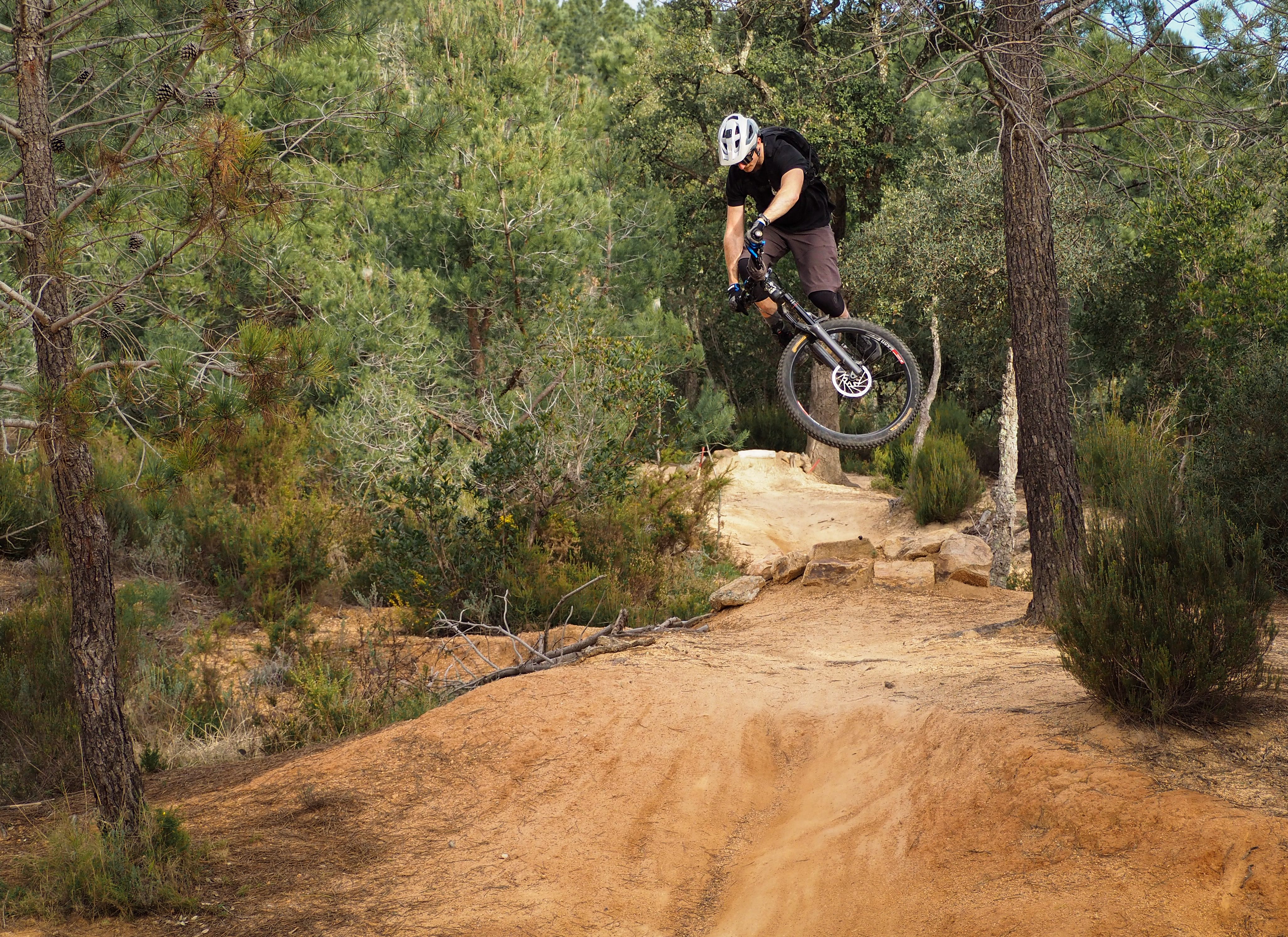
Make no mistake, there are no machine-built flow trails here. While you can achieve some flow, these are primarily hand-cut trails interspersed with granite faces. The Catalan word for trail, corriol, actually means where water drains off a slope, creating a path. While a scary thought for trail builders, it is true that many of the granite trail sections seem to be cleaned by runoff without damaging the trail surface. Therefore, the more difficult trails tend to be more fall-line. While there are some supported turns and the occasional jump, there are no big berms or sculpted landings.
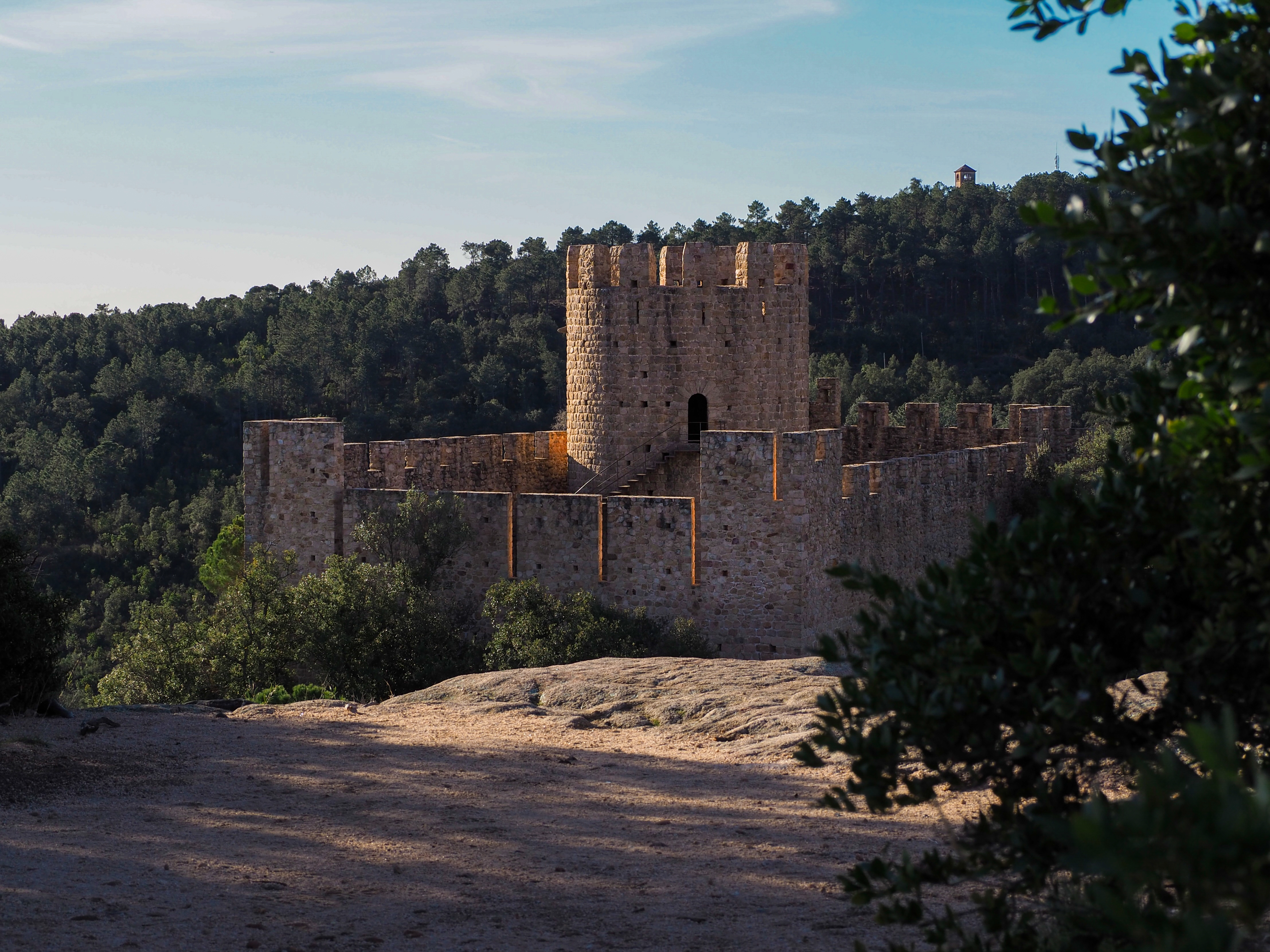
SCF can be divided into three general trail zones from north to south: the Farners Castle, the Caseta, and Argimon Peak. The Farners Castle zone has six named descents with a more northerly aspect, so they hold moisture a bit longer, which is preferable with the sandy soil. La Serp is the easiest of the six, but all the trails here are difficult to very difficult.
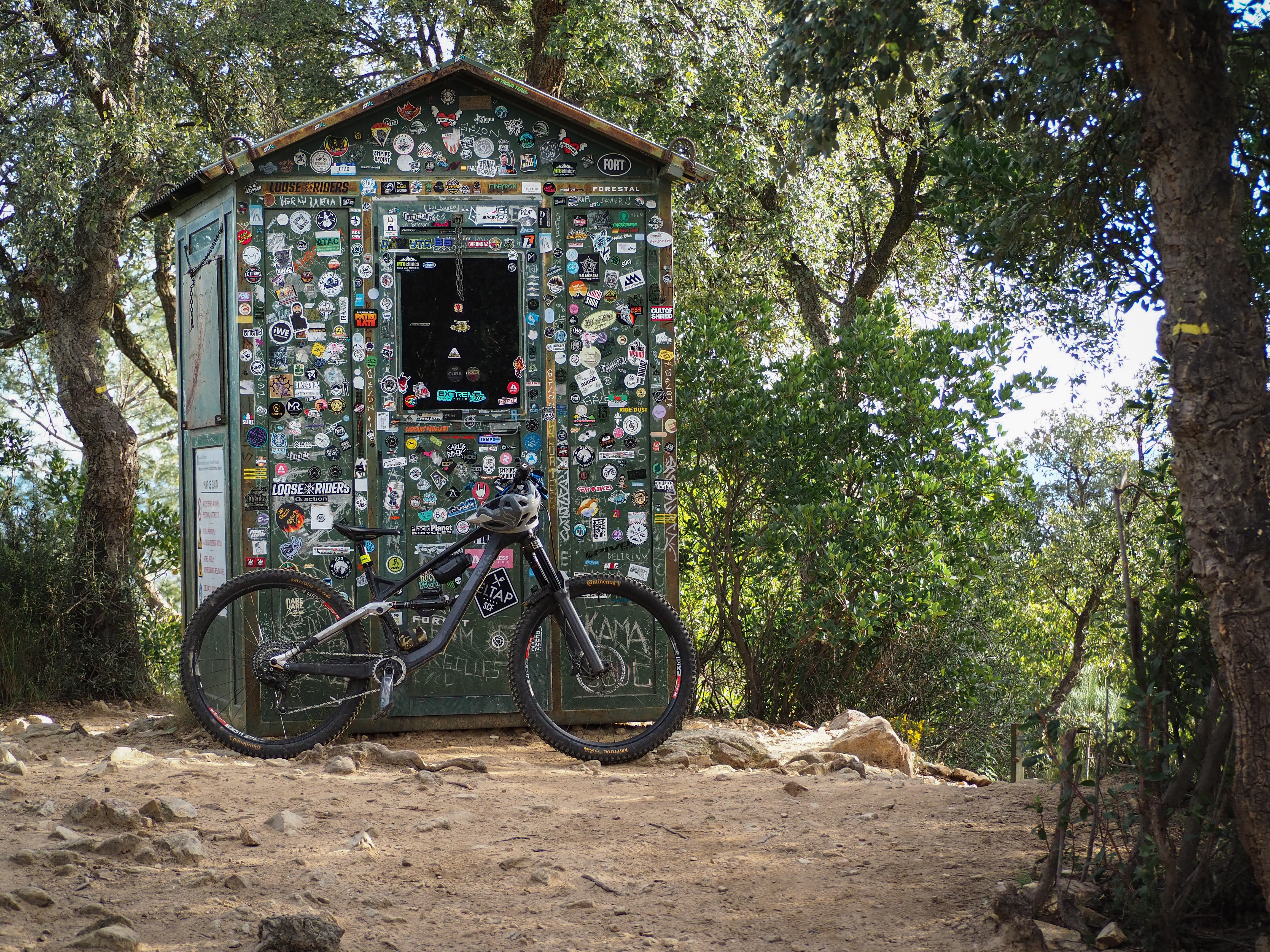
For more intermediate terrain, there are more options from the Caseta, or “little house” in English. At the top of the climb, there is a tiny green shack plastered with stickers from riders around the world, and it’s the classic group photo spot. This zone is the largest of the three, with a variety of trail styles, aspects, and difficulty levels. One of the most famous trails, known as Spiderman, begins here. Rumor has it there are over 70 small jumps, but what is a known fact is that the number of proper landings is nearly zero. Nevertheless, the trail is fast and flowy with line options for intermediate riders.
One of the most famous slow-tech trails of northeastern Spain is located below the Caseta: Shambala. The trail is almost entirely composed of irregular rock slabs with deep cracks and crevices to navigate over or thread the needle through. Clearing the whole descent in one go is only for experts, and blind on the first descent, only for the pros. Practicing nose pivots on tight corners and precise brake control is critical. The trail is tight, steep, and allows little room for error. Luckily, the speeds are generally slow, so it may not be as dangerous as it seems at first — and yes, it’s named after a Spanish amusement park ride.
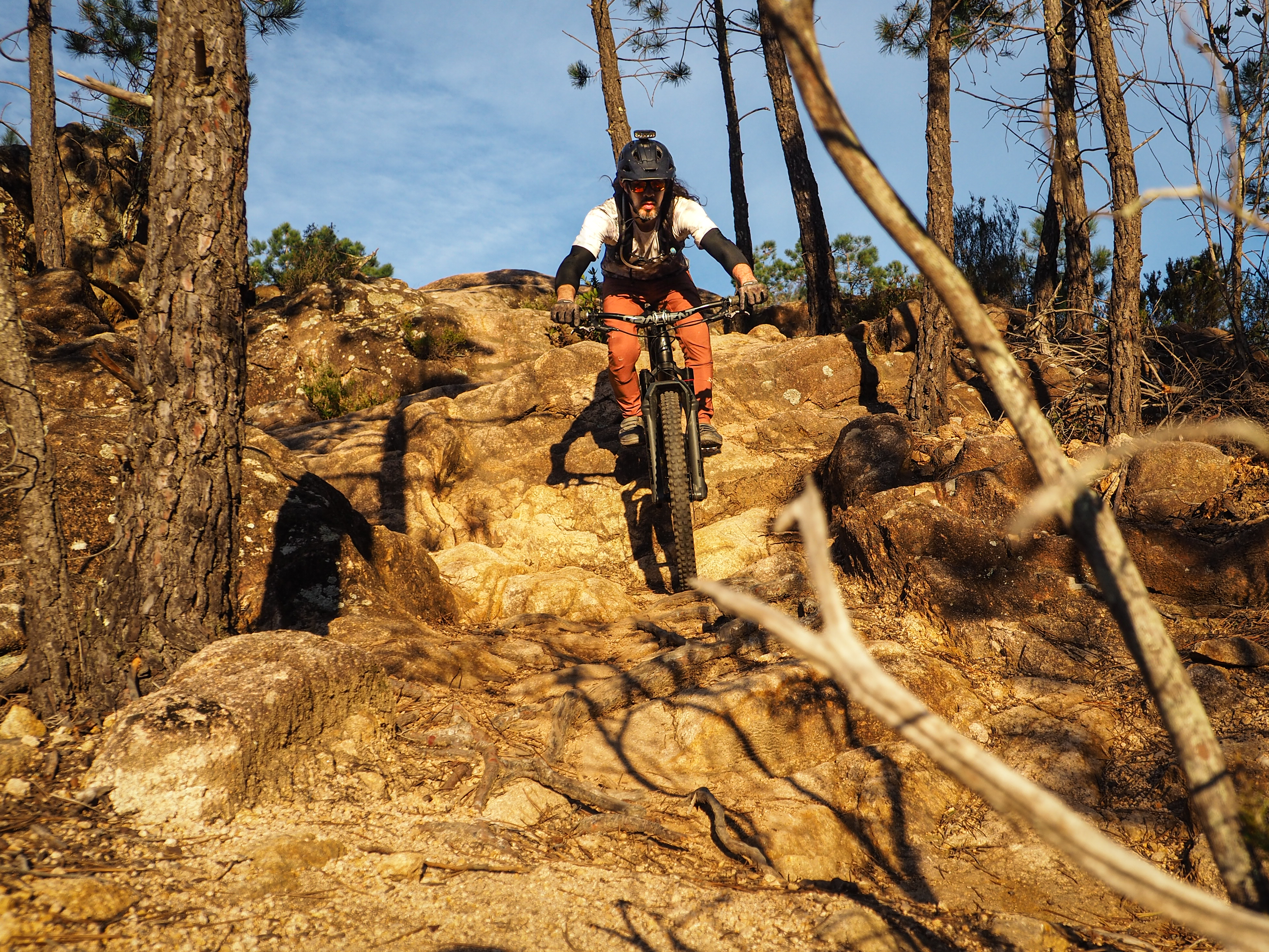
For those looking for an even rawer experience, the highest peak in the zone is Argimon. It is more remote and offers more traditional trails. There are fewer slabs and supported turns, and even more rough, unmanicured terrain. 23 and Spicy Kalimotxo are two newer trails in this area, opened in the last couple of years. They are technical and full of off-camber rock gardens and blind rock rolls. This zone is expert-only.
Due to the sandy soil, the best time to ride here is with moisture during the shorter days of winter, regardless of zone. Riders can literally ride in the rain and still be able to stop on the steepest rock features. The worst time to ride is July and August — a sand-dust patina forms on rocks and roots in the dry, turning everything into something closer to ball bearings than trail surface. It seems counterintuitive, but the wet is when SCF truly rides best. Plan accordingly.
Volunteer-built and community-driven
Local builder Lander Ua stressed the importance of volunteers, since these trails are 100% volunteer built and maintained. “Maintenance has been carried out by passionate local mountain bikers with over 30 years of hard work,” said Ua. “For the past six months, several volunteer meetups have been organized to trim vegetation and repair damage caused by the recent rains. The number of volunteers is growing.”
The area does not have a Parc Natural designation, like Barcelona’s Collserola Park. Therefore, riding on singletrack is generally permitted. On a sunny weekend in February, you may find hundreds of riders in the parking lot, then not another soul until you return to your car — after miles of trail spread across multiple low-elevation peaks.
Ua summarizes the local riding culture well: “I want to thank the riders and visitors, whose numbers are growing every year. They smile after riding our trails, express their gratitude for our work, and even offer financial contributions, which we never accept, as we do this out of love for mountain biking and nature.” It’s a community-driven network, shaped by care for both the riding and the landscape.
Why go here instead of other winter destinations?
While SCF can’t compete with the solitude and wildlife viewing of the American Southwest, it makes up for it in history, culture, and ease of access. SCF also stacks up well against its fellow Catalan riding hubs — while Tremp offers more terrain variety and a dedicated trail organization, SCF typically has even better weather and easier access with a higher density of both towns and trails. Some refer to SCF as mini-Finale Ligure due to its close proximity to the Mediterranean and the similar raw enduro trail style.
The main parking area at the urban-edge Parc de Sant Salvador has plenty of capacity and is frequented by campers, often with French or German plates. The locals swear by the water at the park’s fountain, filtered by the same mountains the trails descend from. There is a small open-air cafe in the park as well, offering tapas, beer, and coffee underneath the large sycamore trees scattered throughout the sand-covered plaza.
The village center of SCF is just a few minutes of pedaling from the parking area and offers lodging options if a ride-in, ride-out vacation is the goal. It also offers a dense, historic town center with plentiful dining options and grocery stores.
Otherwise, renting a car and staying in Girona is a smart combo of riding and seeing one of the most beautiful small cities in Europe. The best bike rental selection in the area is in Girona. E-bikes are allowed and are a great option for riders already accustomed to the extra braking distance and finesse required by a heavier bike.
Who will enjoy SCF the most?
SCF is perfect for intermediate to advanced riders who want to ride granite slabs and steep hand-cut singletrack in a part of the world that most mountain bikers have never considered. Advanced riders who love slow-tech and want to test their mettle will be right at home on Shambala and the Argimon zone.
Families will find plenty to keep everyone happy, from hiking around old hilltop castles to exploring old town Girona, and the trails are close enough to services to make it easy to squeeze in a ride between other activities. Plus, Spain is quite affordable all around, from eating out to car rentals to accommodations.
Plenty of riders fly from Boston to Sedona, so why not just fly to Spain? Choosing Spain over the Southwest could save time and travel headaches, and it will definitely provide an unforgettable international singletrack experience!






0 Comments