
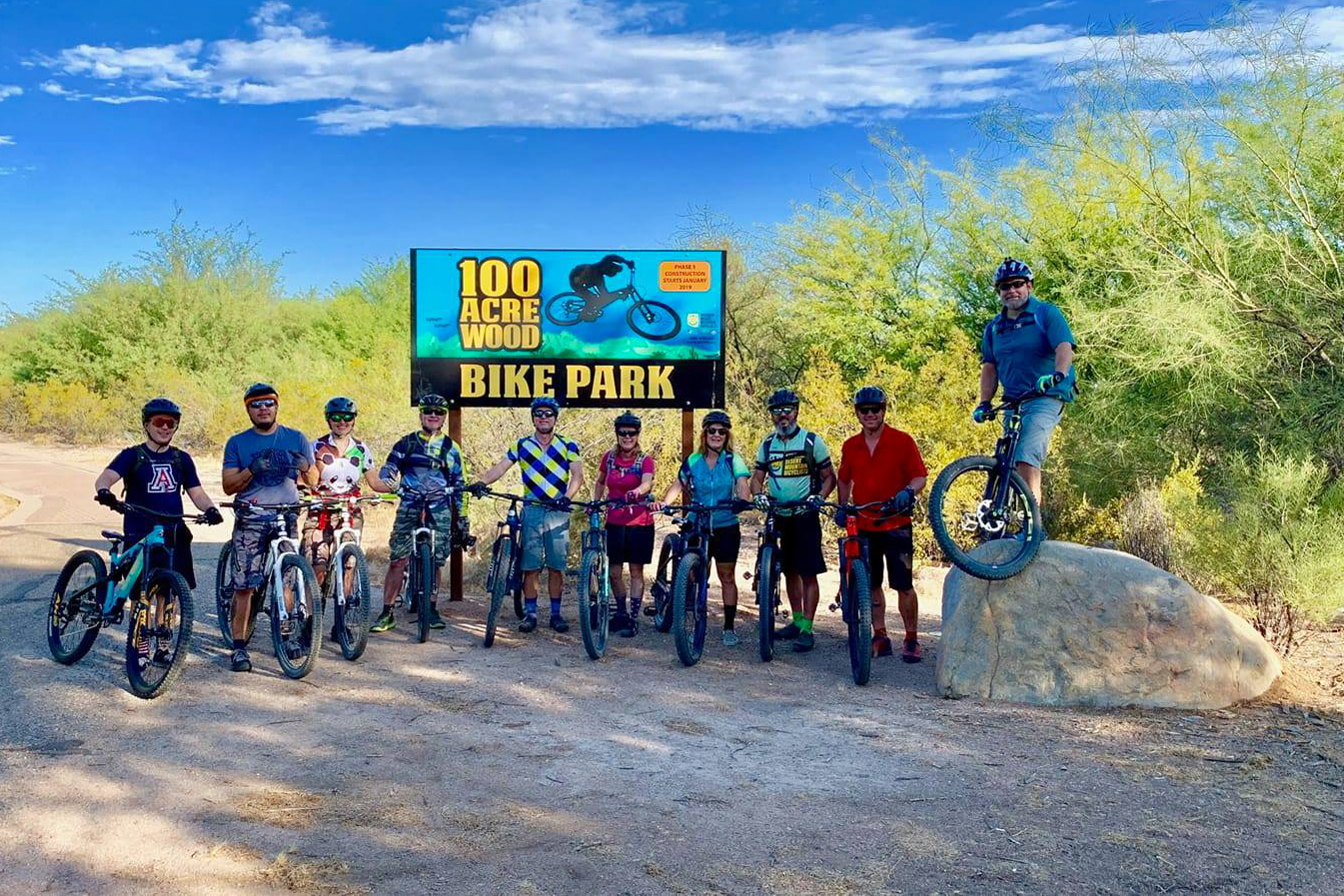
Tucson has some of the best mountain biking in the Southwest — and some of the steepest learning curves. When most of your local trails are raw and rough, getting new riders up to speed takes more than encouragement. It takes infrastructure.
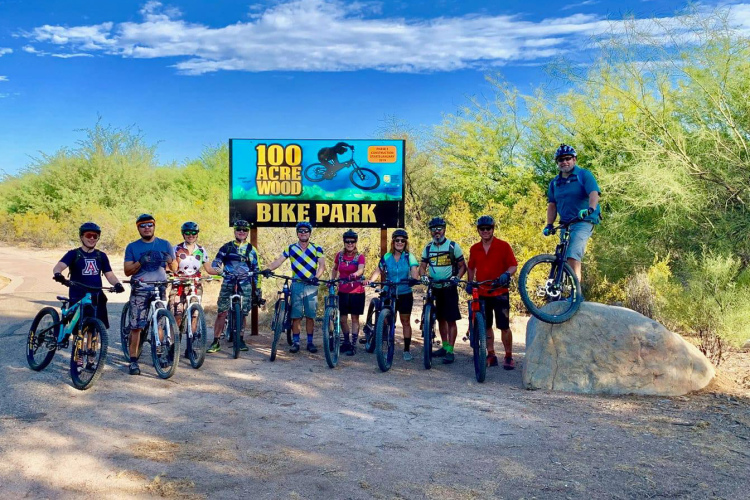
Thanks to $340,000 in funding from a variety of sources, including Arizona State Parks, the Trek Foundation, Sonoran Desert Mountain Bicyclists (SDMB), Athletic Brewing Company, and numerous community donors, the 100-Acre Wood Bike Park is set to re-open this year. According to the city’s materials, the park “will provide Tucson’s growing outdoor recreation community with a unique, purpose-built space for riders of all levels to build skills and connect with nature in the urban core.”
To find out more about the park and the history behind its development, Singletracks spoke to Nat Lopes with Hilride Progression Development Group, LLC (Hilride); Stephanie Kopplin, the Capital Planning & Development Project Manager for the City of Tucson’s Parks and Recreation Department; Bob Burns, the Executive Director of the Trek Foundation; and Dave Slagle with SDMB.
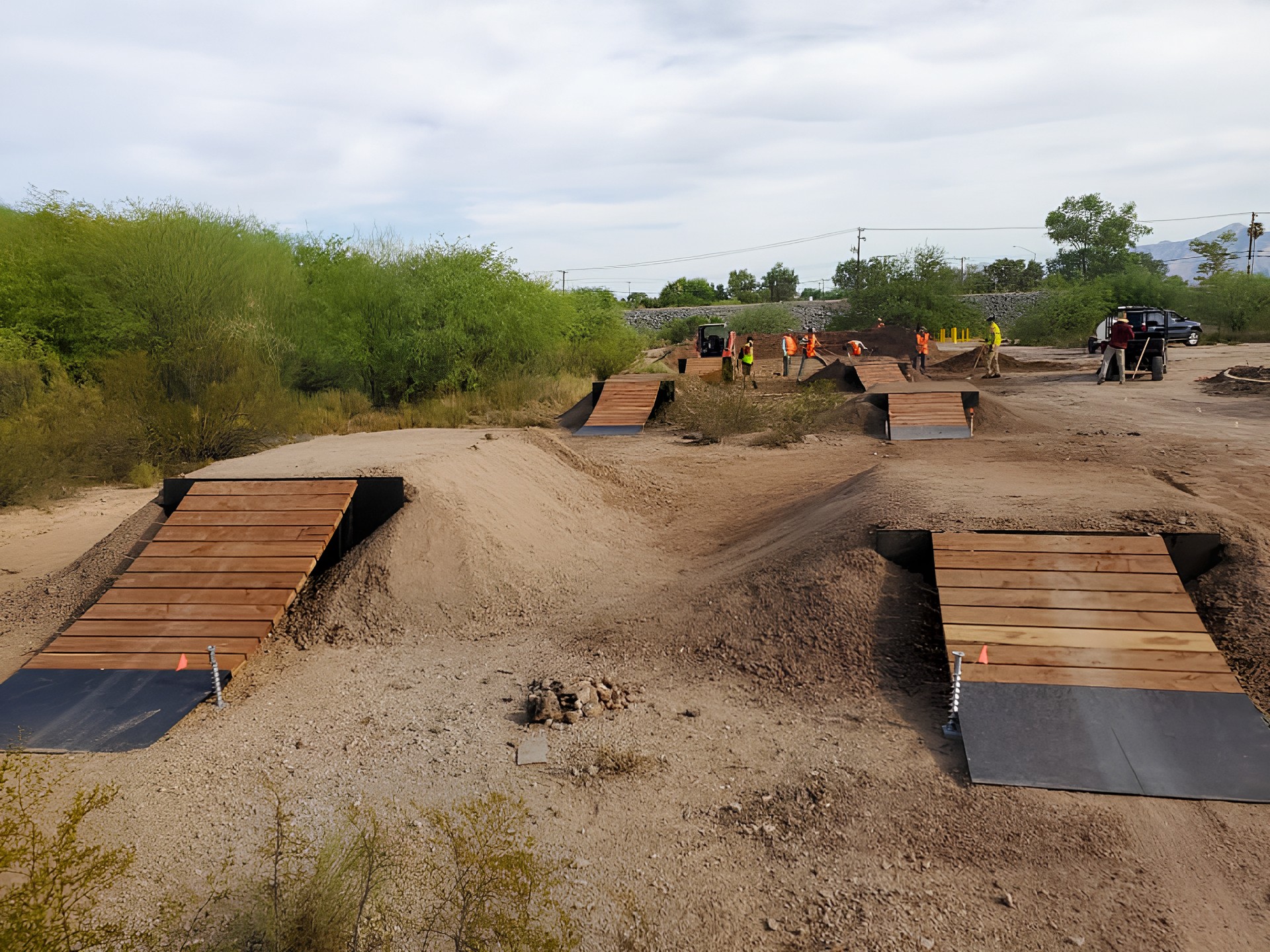
The park first opened in 2019, but it didn’t last long
Pima County and the City of Tucson had incorporated the idea of a bike park into long-range planning documents back in the late 1990s. However, no further action was taken until 2014.
That year, the City of Tucson Parks and Recreation Department, the United States Air Force (which owned and managed the land that would become 100-Acre Wood), and the Pima County Natural Resources, Parks and Recreation Department began the master planning process. Funding for the planning process was provided by local healthcare organizations through grants.
Slagle told Singletracks that the United States Air Force and the City of Tucson executed a five-year lease agreement for the property in 2016. The master plan for the site was completed and adopted by the city in 2018.
SDMB then began fundraising efforts to bring in an outside contractor to help build trails at the site. Slagle had seen Lopes’ work at Griffin Bike Park and suggested SDMB hire him. Once sufficient funds were raised, SDMB paid Lopes to come to Tucson. He and SDMB began building trails and features at the site in 2019.
Lopes and SDMB jointly built three XC trails, three different flow trails that all initiated from a gravity hub, and a small jump line at the site. Next, they added forty-three different features to the beginner XC trail, turning it into a progressive skills trail. In all, just over four miles of trails were built at the site, and local riders began using them on a regular basis.
Then COVID hit. With it, there was a major decrease in activity at the site.
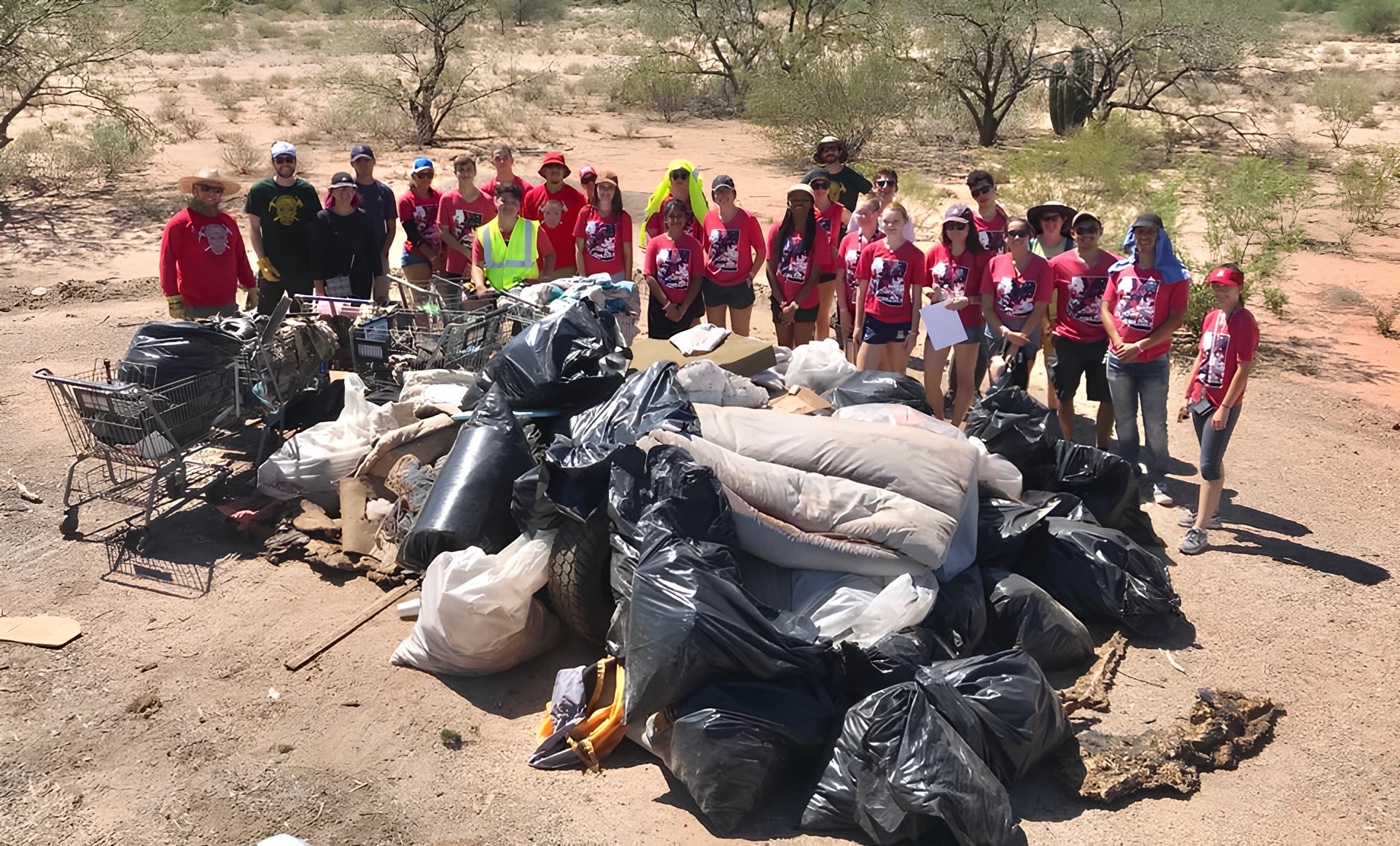
The pandemic brought an increase in individuals experiencing homelessness to Tucson, and the city had to resolve the issue before the bike park could move forward
During the pandemic, the city closed parks, including the bike park. With no one using it for recreation, individuals experiencing homelessness began living there, establishing a large encampment on the site. When the city restarted its efforts to move the park forward over the last two years, it had to address the encampment with a compassionate, collaborative approach.
The city and its partner service providers focused on building relationships and trust with the people who were living there and established a regular presence at the site. They used a housing first approach, focusing on providing permanent housing to individuals experiencing homelessness without preconditions such as sobriety or employment.
At the same time, Kopplin said that the city made it clear to the community encamped at the site that it would be closing on a specific date to facilitate cleanup and subsequent construction. The combination of providing services along with setting expectations worked very well. The city divided the site into zones and cleaned up each zone in succession, allowing individuals to secure services and make arrangements before cleaning and closing the zone.
Zone one was completed in May of 2024. Zone two was cleared out by March of 2025, and zone three was closed out in November of 2025. The success of the site’s transition was due to several agencies and organizations working together to provide a combination of services, including medical services, shelter and supportive services, and clean-up and safety services.
Kopplin also mentioned that the same outreach groups are still monitoring the site and are available to provide services and support.
Once the city started moving forward with the park, the Trek Foundation helped provide a significant portion of the funding for construction
The Trek Foundation was established in 2021 “to help protect land, develop trail systems for public use, and provide more riders access to great places to ride,” according to its website. It is headed by Bob Burns, who was the former general counsel for Trek until he retired from that position in 2018.
As part of his new role, Burns moved to the Tucson area from Wisconsin. Shortly after his arrival, he learned about the project and decided to get involved.
“The Trek Foundation focuses on natural surface trail projects within the vicinity of population centers that are free and open to use and give kids the opportunity to have a safe place to ride and experience mountain biking,” said Burns. The proposed bike park is perfectly aligned with the foundation’s focus.
In addition, Burns sits on the Board of Directors for the National Interscholastic Cycling Association (NICA). “One of the biggest challenges to [NICA’s] growth is having venues for kids to ride and practice on in close proximity to where they live,” he said. Having a bike park located at the 100-Acre Woods site would be a huge benefit to the local NICA team, as well as other youth cycling programs in the city, like GRO girl GRO and El Grupo Youth Cycling.
Burns told Singletracks that the Trek Foundation entered into an agreement with the city in 2024 to fund 50% of the cost of phase one of the bike park ($116,000). “The project has a lot of really good potential.”
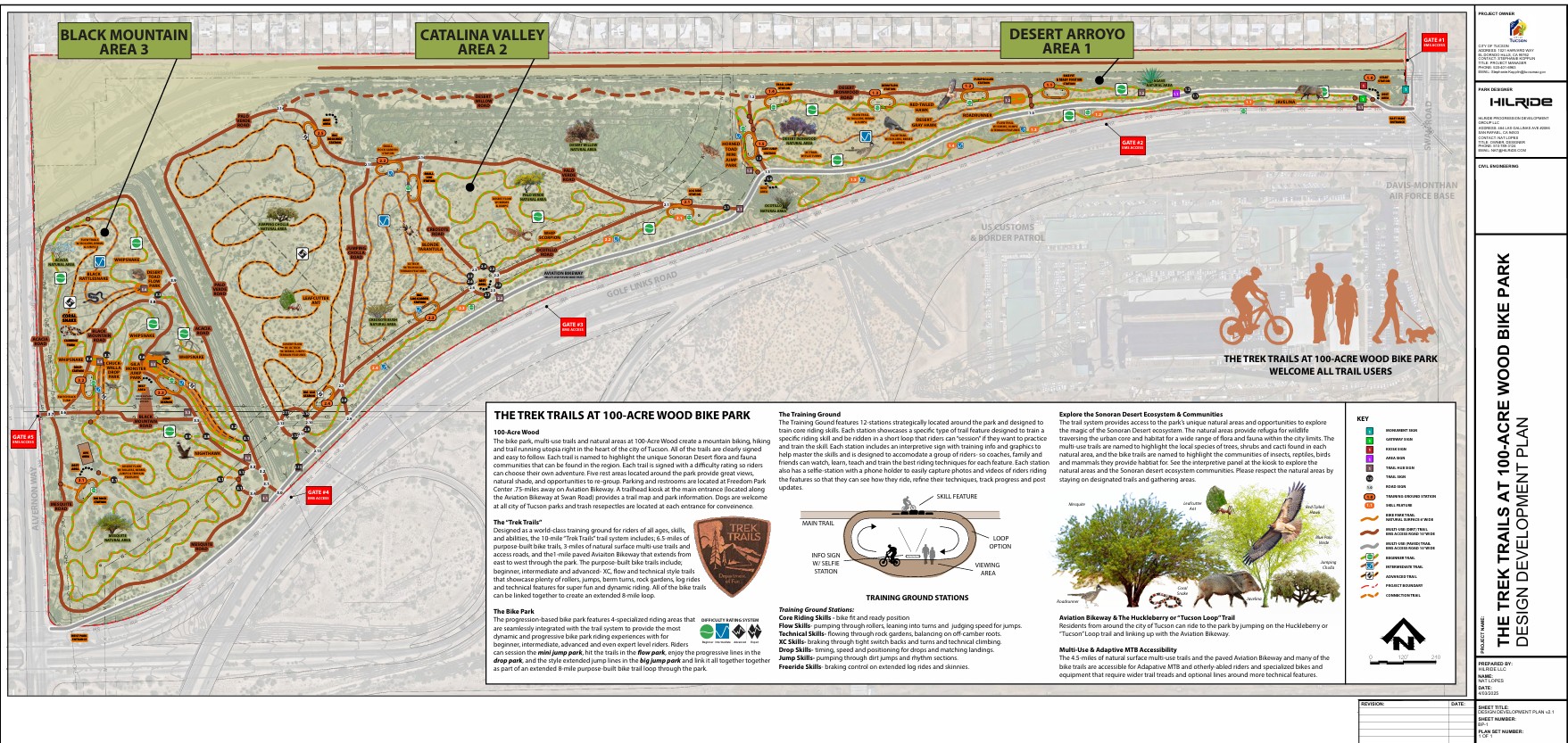
The bike park will foster rider development and skills progression, along with stewardship of the trails and land
Lopes, who designed the park, told Singletracks that the site is unique. “There’s 60,000 residents in the immediate area, but the site makes you feel like you are in the natural Sonoran Desert environment.” The site escaped development because it is an overshoot for the landing area at the adjacent Air Force base, and there are restrictions on what the property can be used for.
His design for the bike park is partly inspired by the nearby Fantasy Island Mountain Bike Park and the open, flowing trails there. It will be a stacked loop trail system with approximately 10 miles of trails.
Based on feedback from residents, the city wanted to create a bike park and community gathering place that celebrated the natural environment of the site while being a place where riders could develop their mountain bike skills with unique training stations, a progressive riding experience, and places to rest and relax outside. As Slagle put it, “most of the trails in Tucson are raw and rough. We needed a stepping stone for new riders to develop their skills before riding the other trails here.”
The site is divided into 10 ecosystem zones that serve as nature restoration sites, and the trails themselves are named after the local flora and fauna found there.
Lopes, who was involved in helping launch the NICA national expansion from the original NorCal league, also designed the park to help local NICA teams, and novice riders in general, build their skills. First, the park will have a series of skill stations. “Each station has a feature with a ride around and a loop so riders can session the feature, signage that will include riding tips, and a selfie station where a rider or coach can mount a phone and record video of the rider doing the feature,” said Lopes.
Second, Lopes said the park will also have five regrouping rest points in shady areas for NICA teams to gather back up during rides at the park. These points will allow a team to regroup without blocking the trail for other users, and each area has a dual-use rock seating area that is designed to be ridden as a technical trail feature, so faster riders can session the feature while they wait for the rest of their group to catch up.
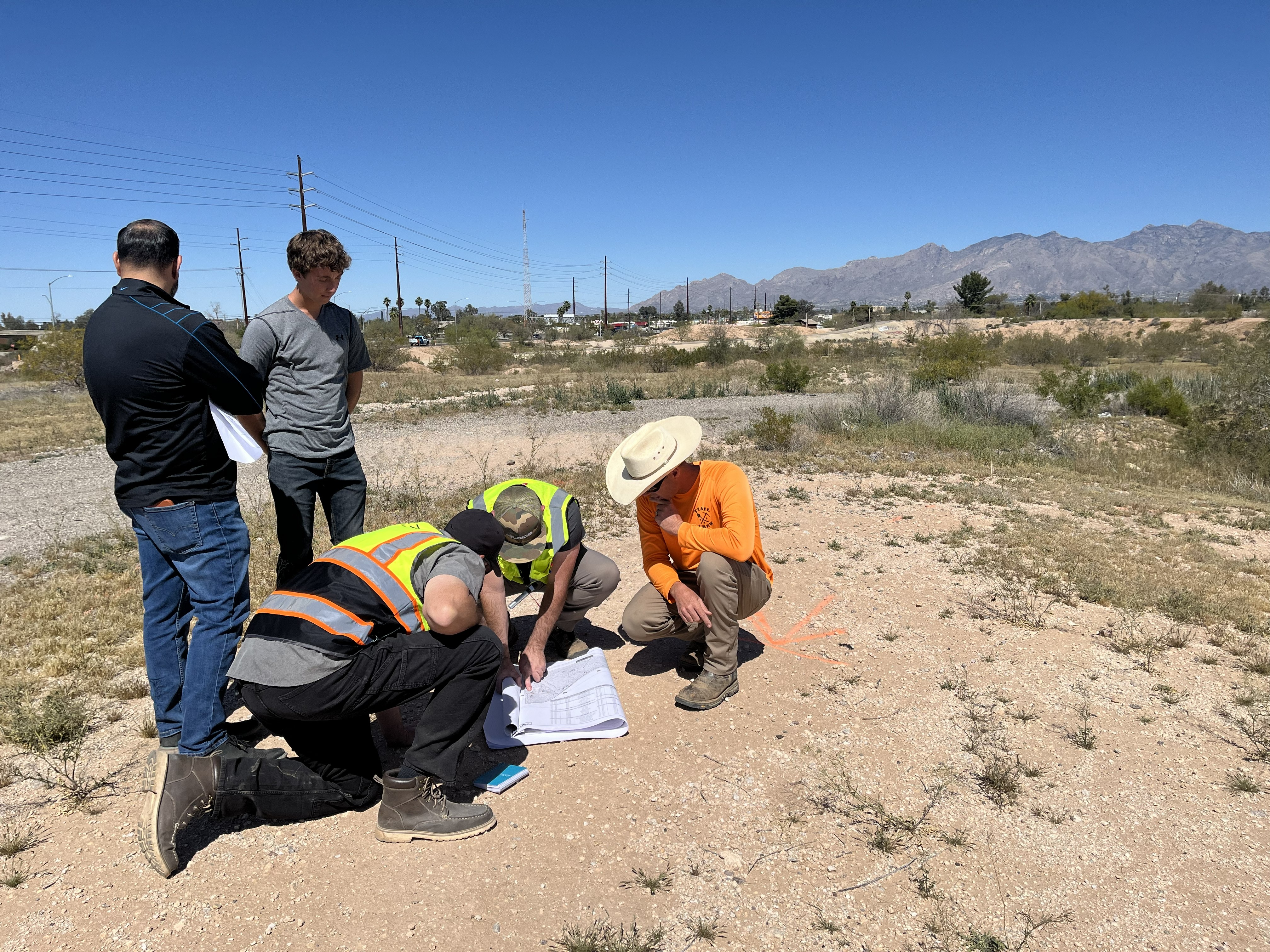
When finished, the bike park will be a great place for residents to get outside and enjoy the outdoors
The city currently has a 20-year lease with the Air Force base for the property, and SDMB has an agreement with the city to maintain the trails and features at the park. While there are no parking areas or facilities at the site, there are nearby parking, water, and facilities at the Todd M. Harris Sports Complex and Freedom Park Center, which connects to the 100-Acre Wood Bike Park via the Aviation Bikeway.
Construction on the site begins in March, with the bike park expected to open to the public by this summer. The funds raised to date will cover all the infrastructure and trails, though the park won’t have the full depth of features shown in the master plan when it initially opens.
The park will be multi-use and community-oriented, with 4.5 miles of trails designated as accessible to Adaptive MTB.
Lopes also designed a special “flight training area” where kids can scan a QR code to get paper airplane designs to build and test. The designs match real Air Force planes stationed at the adjacent base — the same ones riders will likely see training overhead.
In a city surrounded by rugged desert landscape, the 100-Acre Wood Bike Park will offer something different: a place where the learning curve is built in by design, not by accident. That’s a resource that Tucson riders have needed for a long time.
Know about a new trail project we should cover? Whether you’re breaking ground on the next must-ride destination or putting the finishing touches on a neighborhood flow trail, we want to hear about it. Drop us a line at [email protected] with high-quality photos of your build, plus details like trail mileage, location, difficulty, and what makes it special. We’re always on the hunt for the next great trail story, and there’s a good chance your project could be featured in an upcoming article.



0 Comments