
“There’s no history associated with this land. So it’s a blank slate to try to introduce Decorah to new trail building techniques and hopefully, get something that beginners can use, but advanced riders will also find it a lot of fun too.”
That’s Brian Fuhrmann, Project Manager for Pine Creek Trail Builders. Pine Creek is in the process of building a brand-new eight-mile trail system in the town of Decorah, Iowa, in Carlson Park. The 110-acre park was donated by the Carlson family, a multi-generational family from northeast Iowa with deep ties in the region.
Increasing Decorah’s trail diversity
Decorah is home to some of the oldest mountain bike trails in Iowa. The classic trail system “features 20 miles of some of Iowa’s earliest hand-built MTB trails, lovingly cared for by the community for over 40 years,” said Benji Nichols, Secretary for Decorah Human Powered Trails (DHPT). “But the [traditional] trails are real tight and rocky, as you would think of […] first gen [traditional] singletrack. So a lot of fun, but very challenging. Not a lot of beginner trail, as we would think of at this point in time, and not a lot of good places for especially younger riders to kind of get their feet underneath them and learn skills besides ‘just go.’”
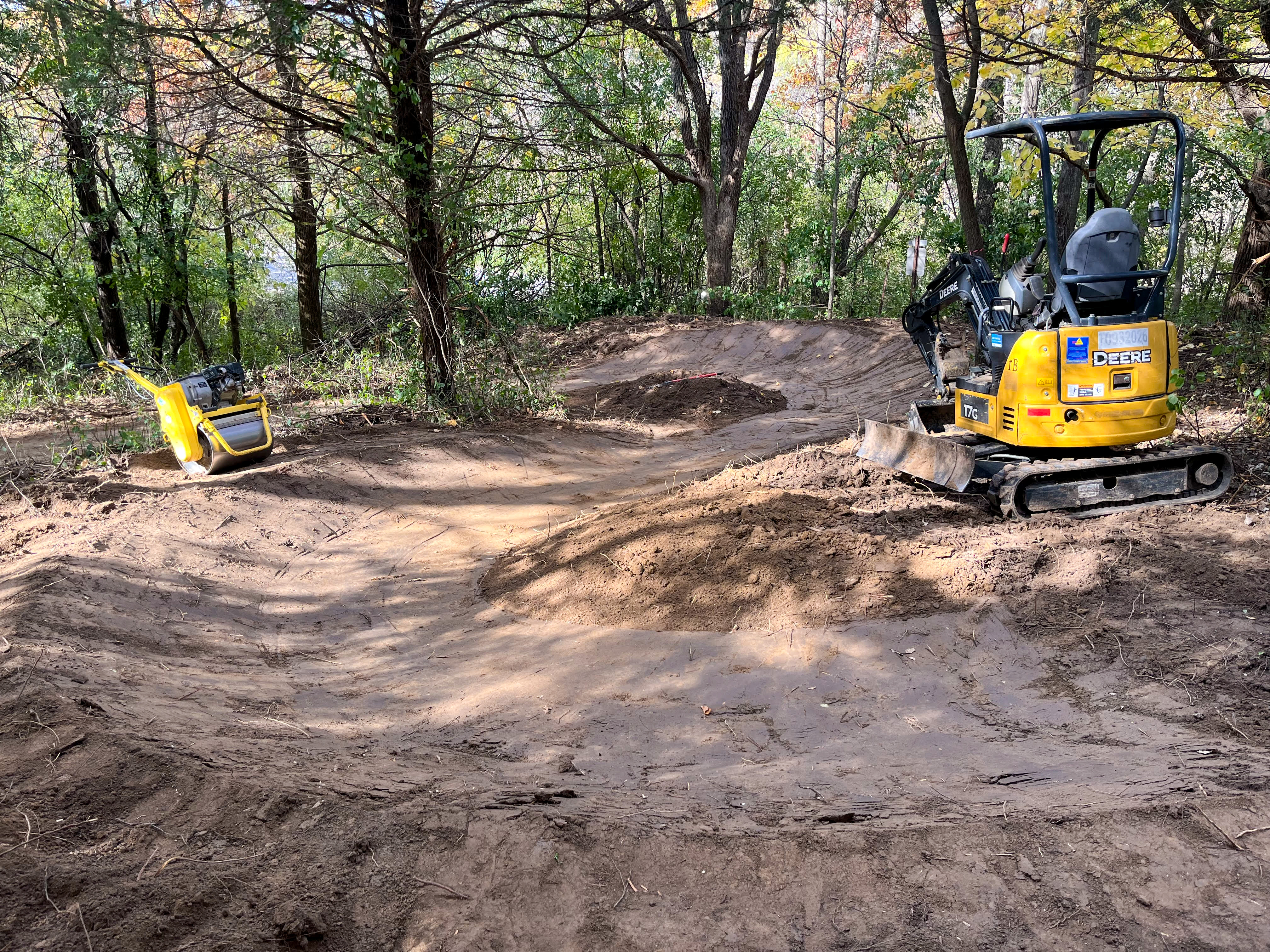
The trail development at Carlson Park is going to change all of that. The park already contains a 2.5-mile, 14-foot-wide core trail encircling the property, and Pine Creek and DHPT are in the process of building 5.5 miles of new beginner and intermediate-friendly singletrack. While advanced riders should have fun on these trails too, beginner riders are definitely the target audience.
What will riders find at Carlson Park?
“The original plan that we had gone to IMBA Trail Solutions [for] was to design us a Northwest feature zone, which would be like a hub style network of trails, a couple gravity trails, and a return trail that would also serve as the pedestrian entrance to the park, because that corner of the park is closer to the city and then requires less ride time on pavement to get to the park,” said Fuhrmann.
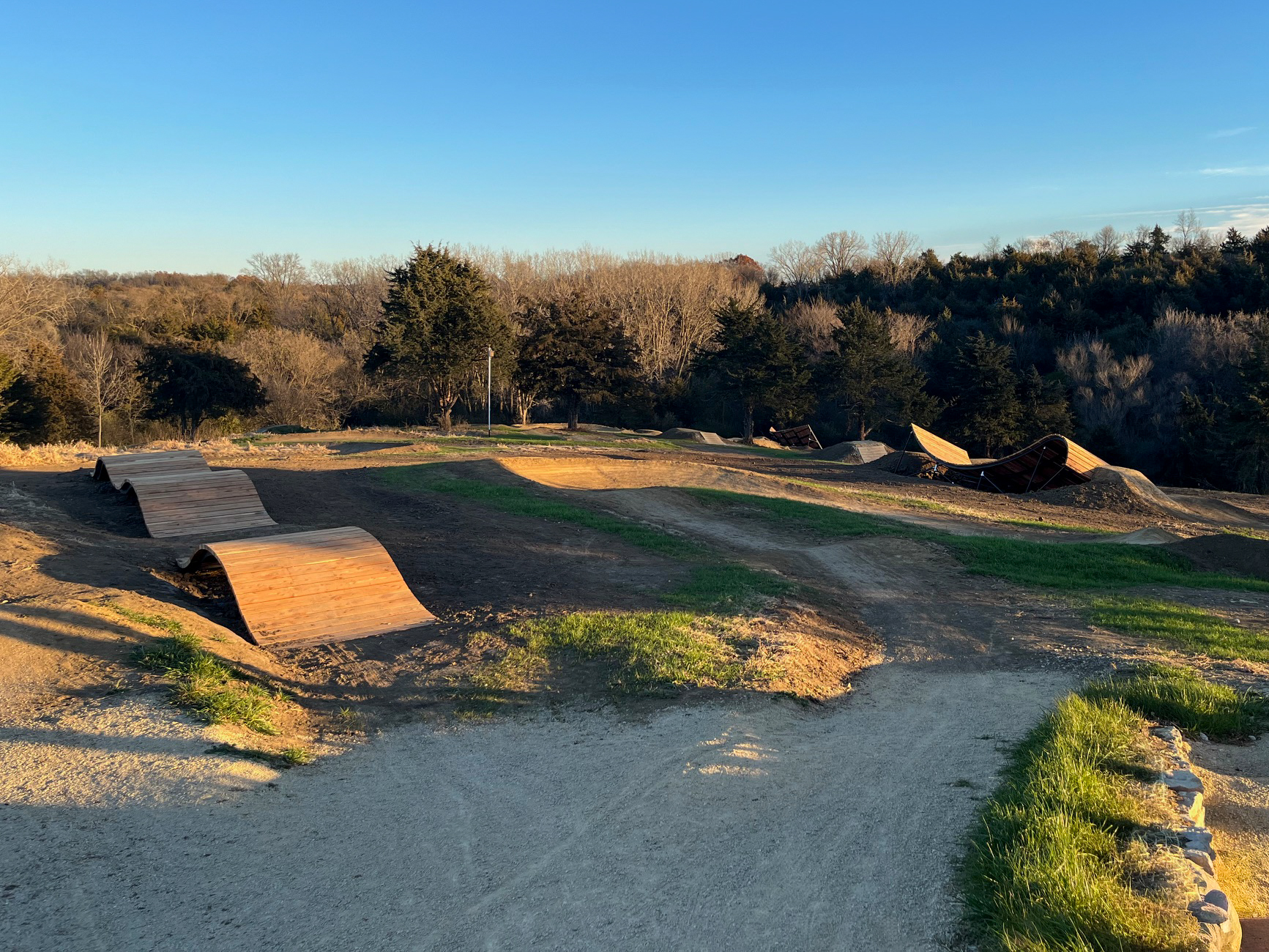
The “Northwest zone” includes beginner and intermediate gravity lines, which are “kind of like gravity pump tracks,” according to Fuhrmann. The park only offers about 115 feet of vertical drop, so “they’re not super high-speed gravity trails.” But they are designed to help riders maintain momentum so they can hit all the features.
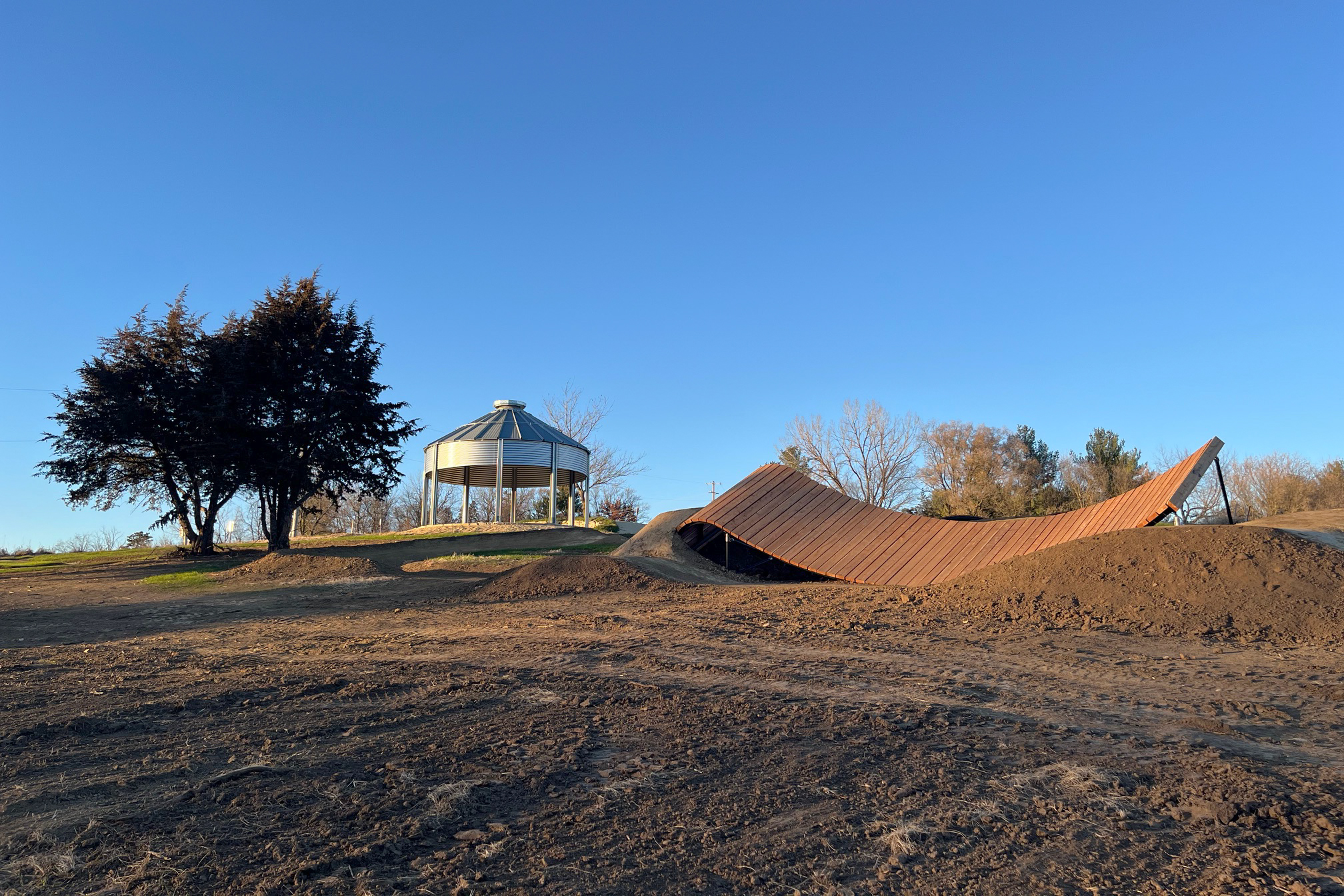
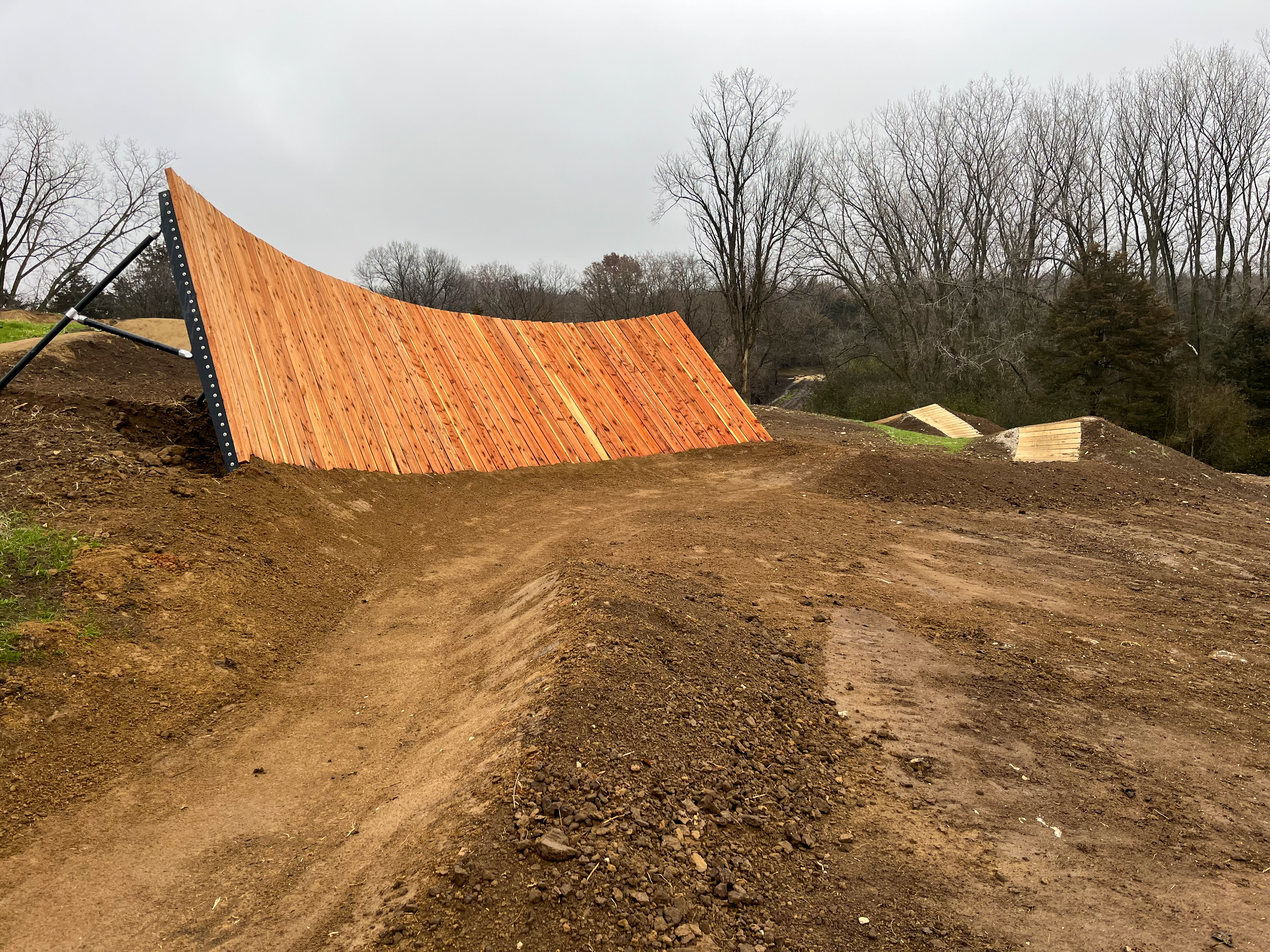
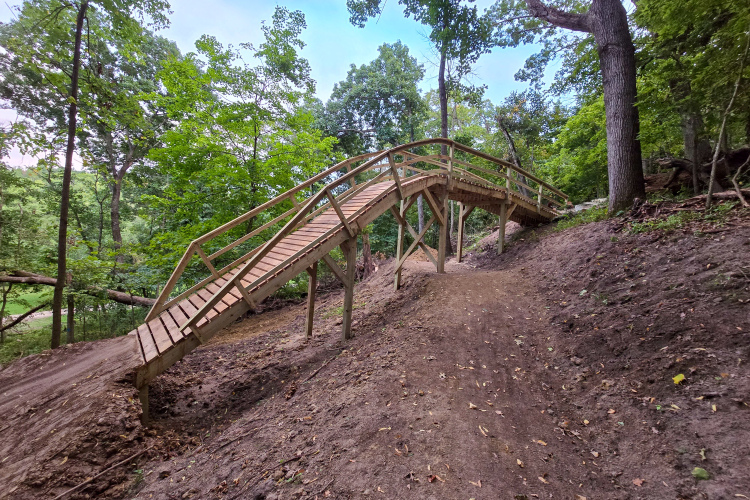
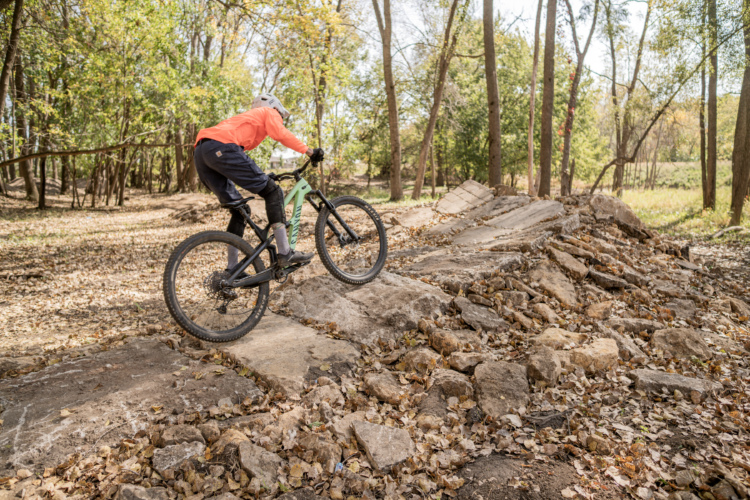
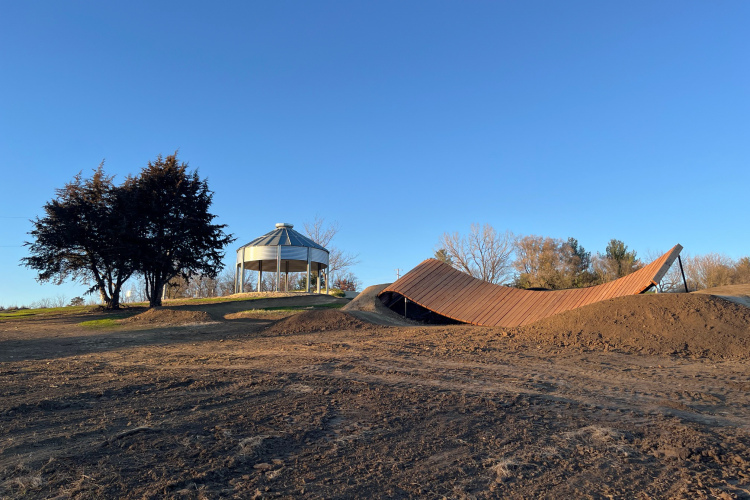
The trails include features like rollers, limestone-faced tabletop jumps, wooden rollers from American Ramp Company, and a wooden wallride. There’s also a “hammock jump,” which is like a jump on/jump off whale tail that’s tilted about 30 degrees, so the dip is almost on the ground.
Riders entering the Northwest zone will pass through a one-of-a-kind trailhead shelter: the “Rotary Binzebo,” a purpose-built grain bin gazebo built by Sukup Manufacturing and donated by the Decorah Rotary Club. “It’s a neat feature that lends some of the traditional Iowa landscape and is also visible from Highway 9,” said Nichols.
Construction on the Northwest zone was largely completed in 2025, with the City still needing to do some native grass seeding. In 2026, Fuhrmann will continue building additional classic singletrack in the rest of the park, with completion anticipated before the end of this year’s build season.
Funding and future potential
The current Carlson Park build-out cost $480,000. Of that amount, $150,000 was raised from citizens locally, and $293,000 was secured via an RTP grant. In addition, a private family “had given a chunk of money that was kind of waiting,” said Nichols. “They really wanted it to go towards the trail project as well.” Finally, additional funds were raised via local hotel/motel tourism taxes. Ultimately, DHPT raised more money than they needed to complete the project, which is not something we commonly hear.
There’s still room in Carlson Park for even more trail development. The IMBA plans had identified a section of the park for black-diamond trails, which could add another 1.5 miles of singletrack. However, DHPT isn’t currently working on that section.
Ultimately, whether or not more trails are built in the park depends on what the City chooses to do with the property. The trail development is essentially the first amenity built on this land. The City could choose to build ball diamonds, camping, yurts, or any number of other recreational amenities. There’s still plenty of room in Carlson Park — but with these first trails, DHPT worked to ensure that mountain bikers were very visible, as this will help secure future access.
“Sometimes in mountain biking, you may have 15 people in the woods there mountain biking, and nobody knows they’re there,” said Fuhrmann. “But with this Northwest feature trail, the public is able to see that this thing is getting widely used.”
Know about a new trail project we should cover? Whether you’re breaking ground on the next must-ride destination or putting the finishing touches on a neighborhood flow trail, we want to hear about it. Drop us a line at [email protected] with high-quality photos of your build, plus details like trail mileage, location, difficulty, and what makes it special. We’re always on the hunt for the next great trail story, and there’s a good chance your project could be featured in an upcoming article.



0 Comments