

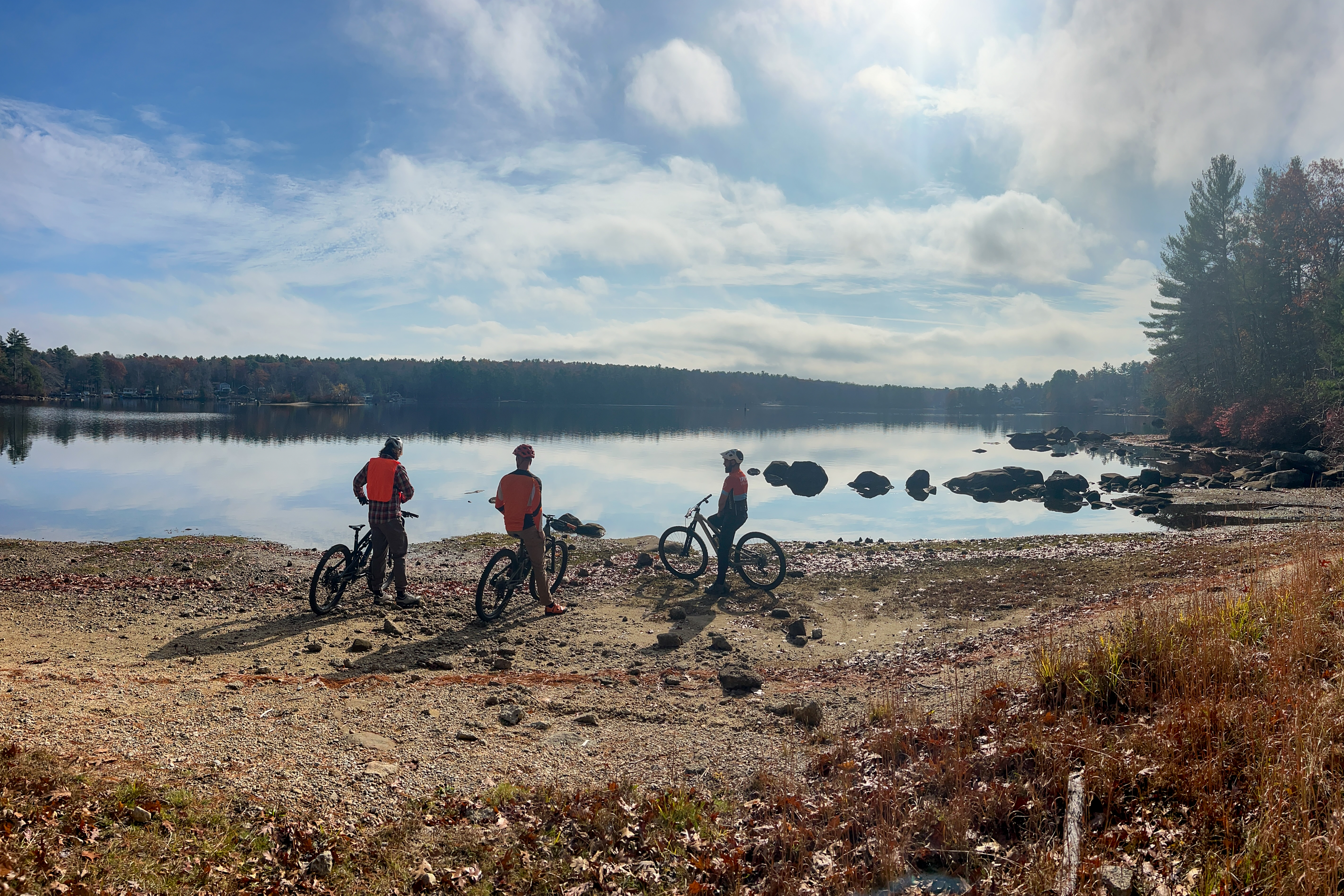
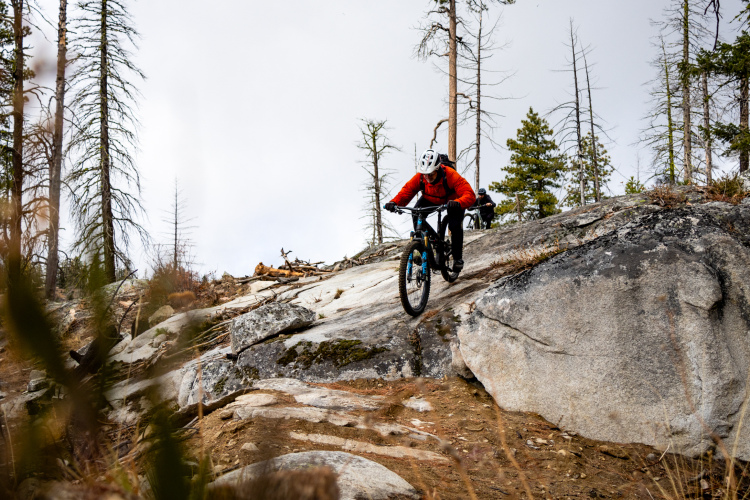
Mountain biking in New England is typically described as rough, rocky, and technical, with many elevation maps resembling an EKG. So when the Rhode Island chapter of the New England Mountain Bike Association (RINEMBA) got the chance to build some gravity-focused flow trails, they jumped at the chance.
Plus, trails would cost much less than the $40 million glamping proposal.
From summer camp memories to mountain bike destination
Echo Lake Campground was established in the early 1950s on the western shores of Echo Lake in northeastern Rhode Island. This Echo Lake, also known as Pascoag Reservoir, is not to be confused with Rhode Island’s other Echo Lake, southeast of Providence.
Many residents of northeast Rhode Island likely have memories of camping at Echo Lake Campground. Unfortunately, the campground was officially closed in 2020 after nearly 70 years of ownership by the same family. And, the campground’s closure impacted more than Rhode Island’s recreation opportunities.
“There’s a little village just north of Echo Lake called Pascoag,” Dennis Wilson, RINEMBA President, told us. “A lot of that village catered to the needs of the campground. They were selling firewood and all the things you need when you’re going camping.”
Places like Pascoag, that once supplied everything Echo Lake campers forgot, took a significant hit as the campground fizzled and eventually closed.
Shortly after its closure, the state of Rhode Island purchased the former campground. The state’s initial plan was to create a luxury camping resort that could compete with other facilities throughout the Northeast.
However, their glamping idea was too costly, with a quote of around $40 million. Fortunately, RINEMBA had already built a solid relationship with Rhode Island land managers while working on another potential project. That relationship prompted the folks at the state’s Department of Environmental Management (DEM) to reach out about Echo Lake when the glamping plans fell through.
“The ball was rolling a little bit with this other property, and we were starting to talk to the right people,” Michael Petrarca said. “We ended up hitting some environmental easements at that property, but that positioned us perfectly for when this opportunity at Echo Lake came about.”
Petrarca is a lifelong Rhode Island resident and lives just minutes from Echo Lake. He joined RINEMBA because he wanted to do more to bring mountain biking to his community. Petrarca has been instrumental in fostering a relationship with the trail builders who’ve decided to take on the project.
Let there be flow
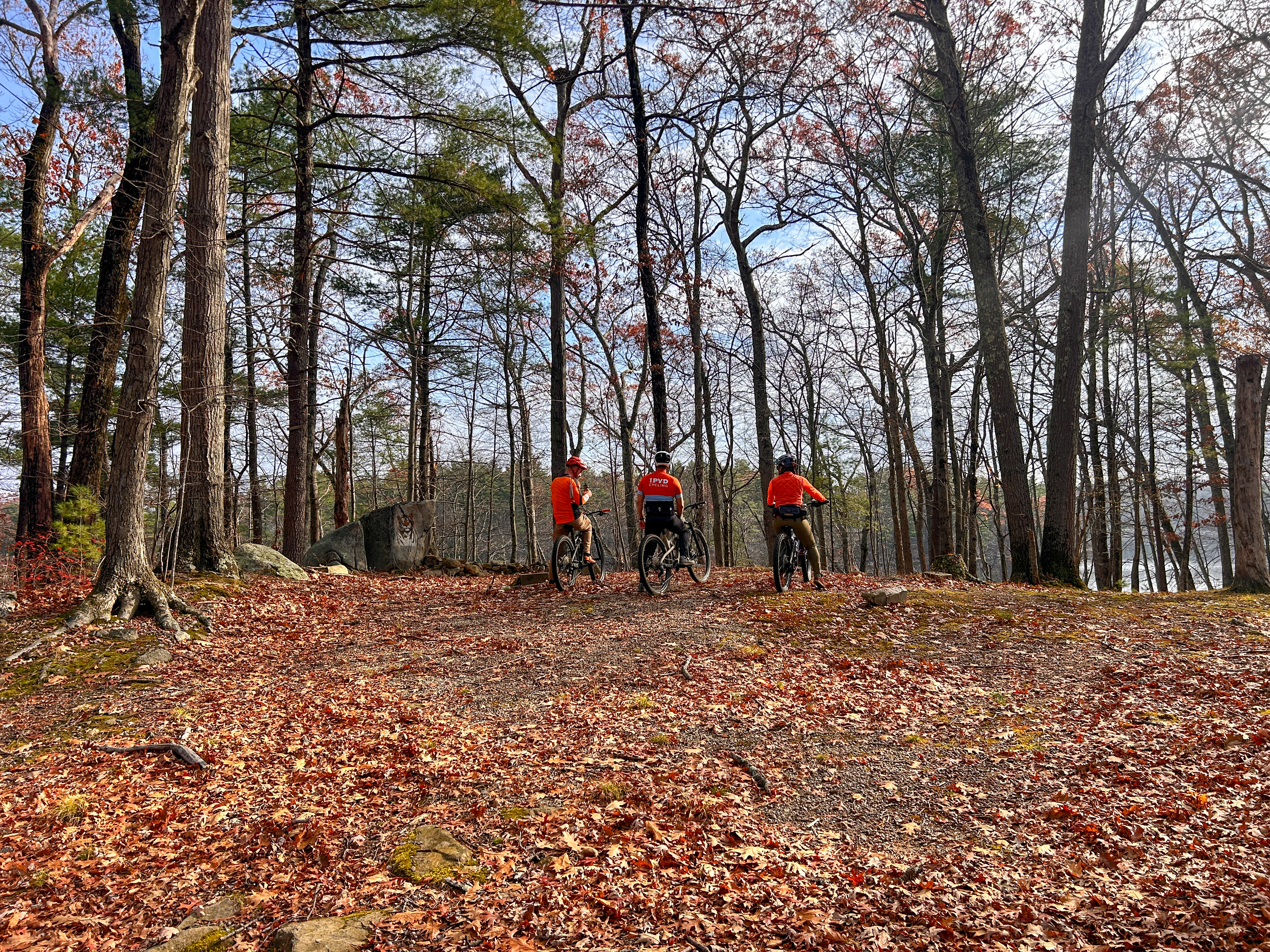
“There are no flow trails in southern New England, Massachusetts, or eastern Connecticut,” Wilson told us. “The closest you can get is a brewery in western Connecticut that’s got amazing flow trails, but that’s still a two-hour drive for any of us.”
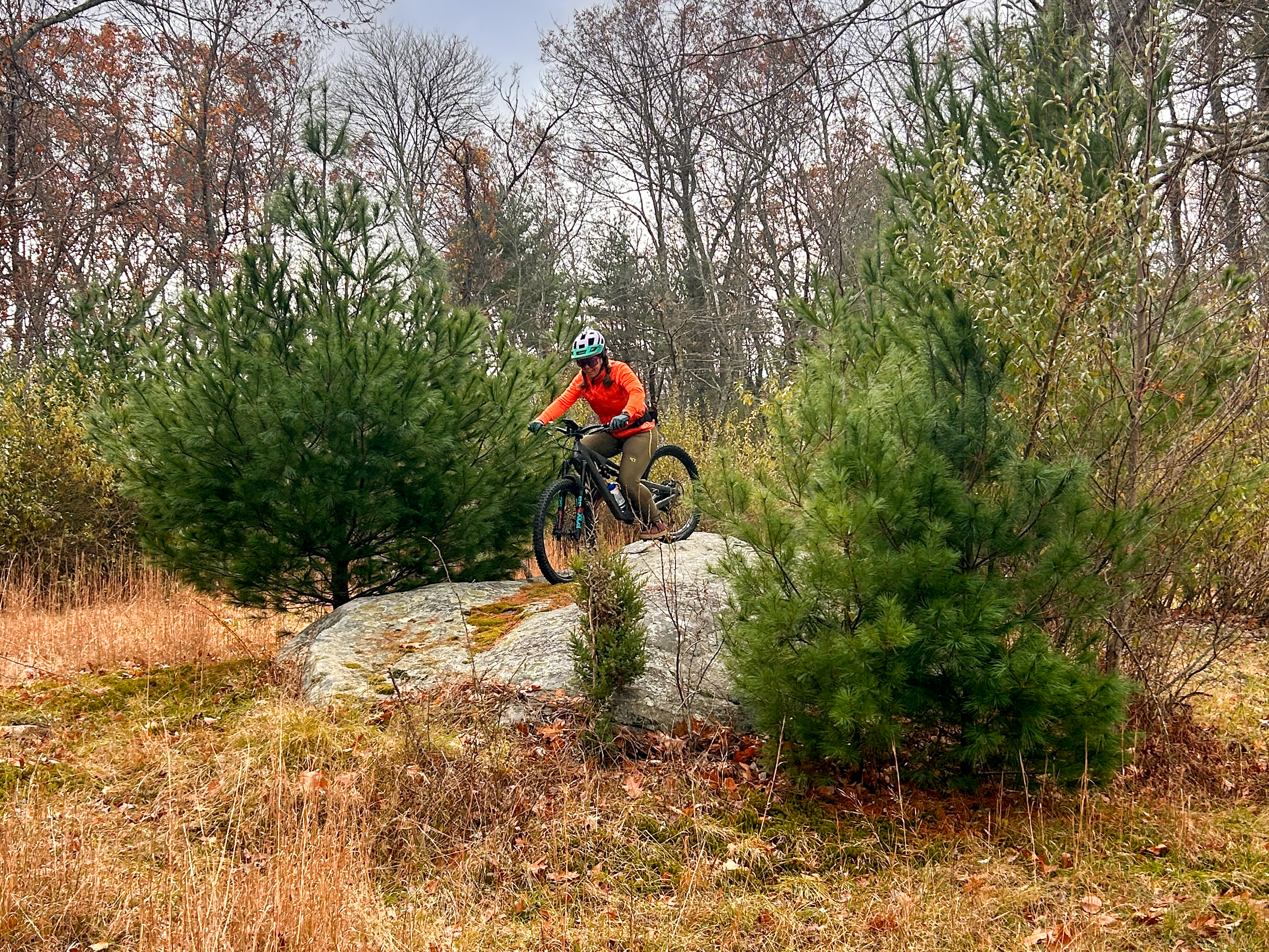
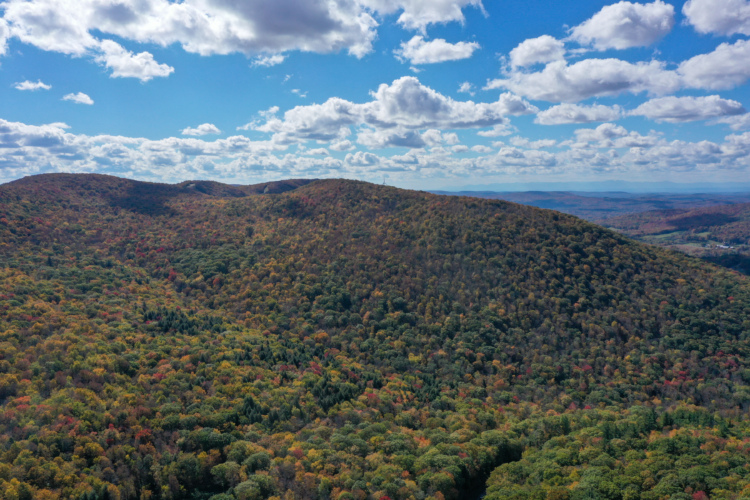
The chunk of land that Rhode Island purchased at Echo Lake is only 240 acres. However, Wilson and Petrarca pointed out that it sits in the middle of the largest green space in Rhode Island. The land also connects to other green spaces that are in Connecticut and Massachusetts. While it may be far off, there is potential for growth.
For now, they are excited about Echo Lake’s potential. The area’s proximity to metropolitan areas such as Providence, Boston, and Hartford should help attract a crowd.
And so should the flow trails.
Preliminary plans call for over six miles of trails, with a little something for everybody. Currently, a nearly two-mile green loop will sit at the base of the trail system, closest to the shoreline in Echo Lake’s flatter areas. Slopes rising roughly 200 feet to the west of the beginner loop will house four blue trails and two black trails — 3.6 miles and 1.2 miles, respectively.
While Wilson and Petrarca expect the trails to include typical flow trail features, they are not yet sure exactly what those features will look like. And that’s on purpose.
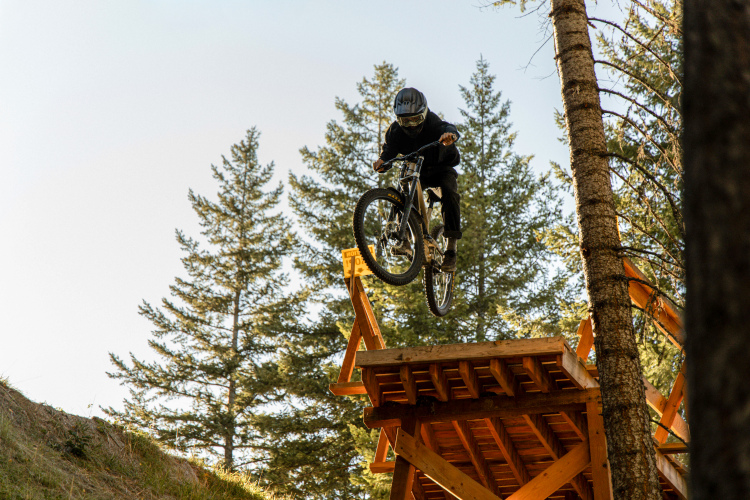
“It’s important that these trails are enticing to established mountain bikers,” Wilson said. “So, I would say, ‘yes’ to jumps, berms; there might be some doubles. We’re leaving it to the trail builders to paint the picture. These are the professionals. We’ve ridden their work. We know what their work feels like, and we’re super confident in our choice with this builder.”
For this project, RINEMBA hired Sinuosity, based in Vermont. Petrarca explained that these trail builders quickly climbed to the top of their list. The style of trails Sinuosity built was what he and other NE Rhode Islanders were “driving four hours to get to.”
RINEMBA was able to put in for bids from trail builders and hire Sinuosity so quickly, thanks to a $150,000 grant from DEM. RINEMBA estimates the total cost at $400,000, and they are nearly halfway there.
As part of the grant, DEM wants RINEMBA to make a portion of the trails accessible on adaptive bikes — something the organization is excited about. Wilson and Petrarca explained that over 50% of the trails at Echo Lake will be adaptive-friendly.
RINEMBA expects construction to begin in spring 2026, with the first trails opening later that year. For a region that’s spent decades watching riders load up their cars for multi-hour pilgrimages to find berms and flow, Echo Lake represents more than just six miles of new singletrack — it’s a fundamental shift in what New England mountain biking can be. And if Wilson and Petrarca have their way, it’s just the beginning.
Know about a new trail project we should cover? Whether you’re breaking ground on the next must-ride destination or putting the finishing touches on a neighborhood flow trail, we want to hear about it. Drop us a line at [email protected] with high-quality photos of your build, plus details like trail mileage, location, difficulty, and what makes it special. We’re always on the hunt for the next great trail story, and there’s a good chance your project could be featured in an upcoming article.

2 Comments
Jan 16, 2026
Dec 24, 2025