
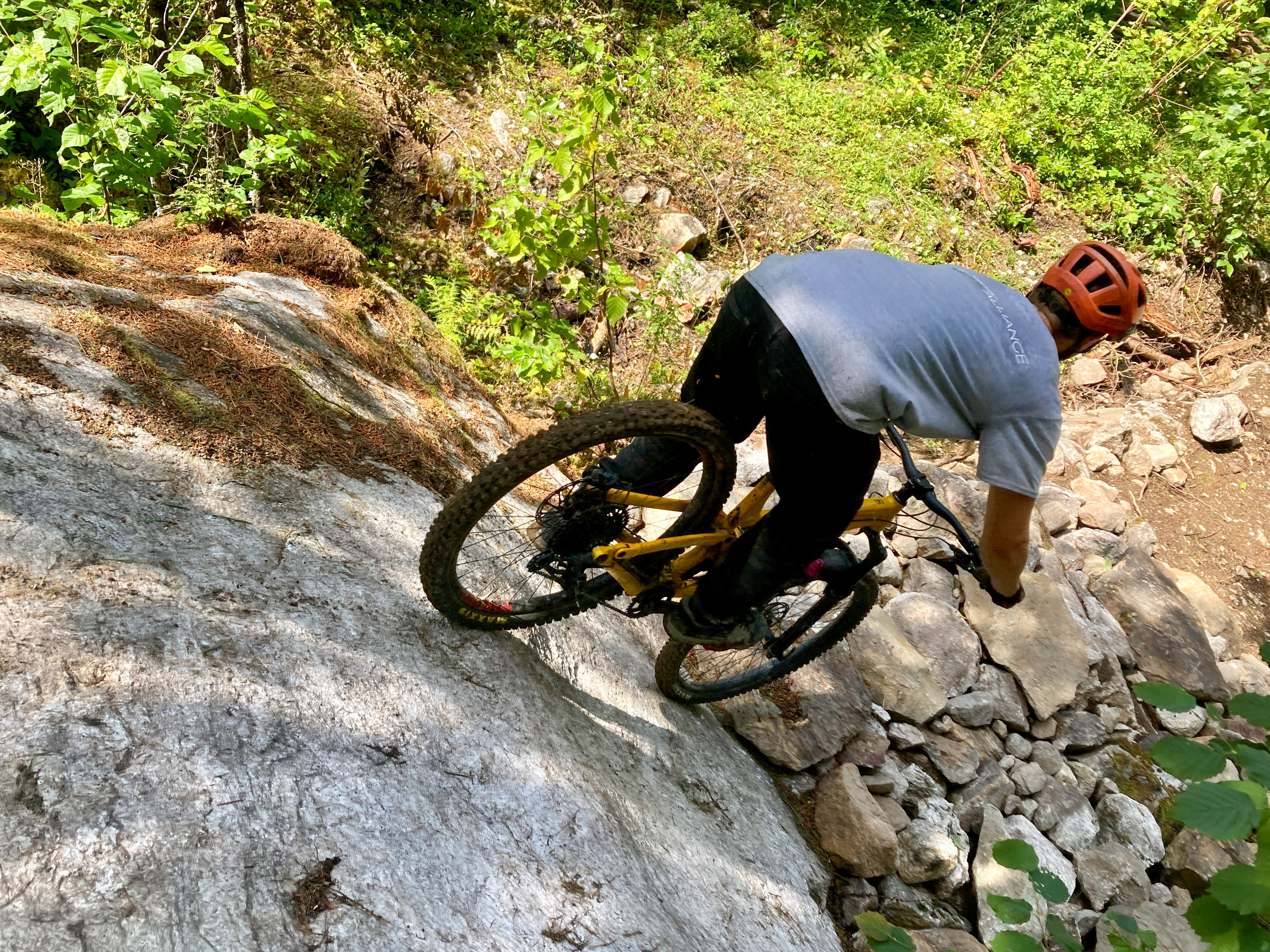
British Columbia (BC) is world-famous for its mountain bike trails. Destinations like the North Shore and Whistler have ingrained themselves into mountain bike lore. It’s where freeride was born and where premier events like Crankworx and the BC Bike Race are held.
Now, there is a new bike park in an area of BC that never had trails before. Last year, Owlhead Mountain Bike Park opened in the District of Sicamous with 4km (2.49mi) of trails.
Soon, it’s going to more than double in size with an additional 6km (3.73mi) of trails currently in the works. The District of Sicamous, the Shuswap Trail Alliance (STA), Recreation Sites and Trails BC, and the Splatsin First Nation all collaborated on the creation of BC’s newest bike park.
Singletracks spoke to Adrian Bostock with STA; Trevor Timmer with Clever Trail Design; Kayla Gunner with the Splatsin First Nation; Carly Procyshyn, the Executive Director for Tourism and Economic Development for the Sicamous Development Corporation; and Councilor Gord Bushell with the District of Sicamous to find out more about the project.
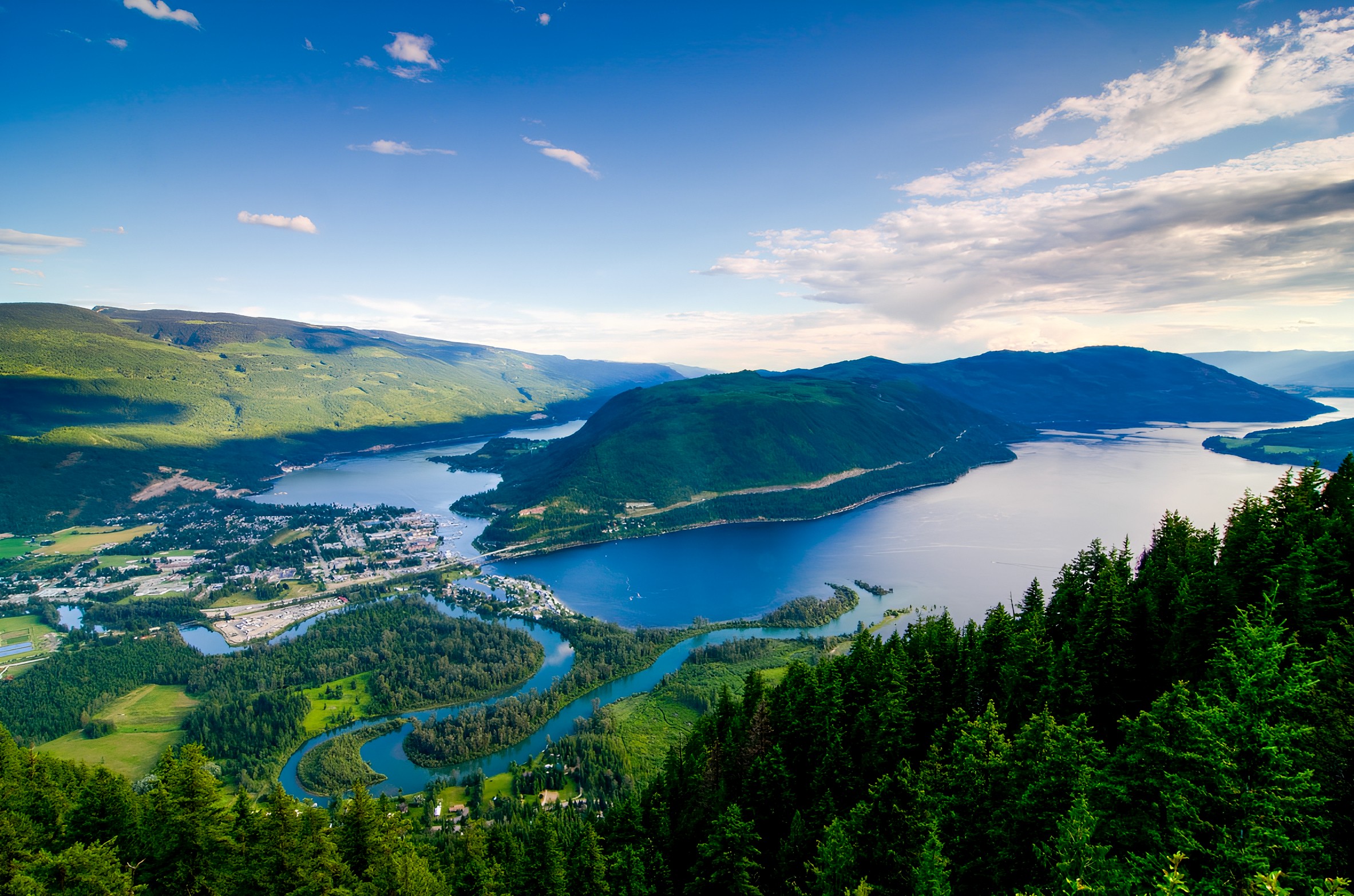
Despite its size, Sicamous is a major recreational destination in BC
With just over 2,600 residents, the District of Sicamous is not a heavily populated area. However, it is well known for its recreational opportunities.
The district is known as the Houseboat Capital of Canada and welcomes thousands of visitors each year. It has over 1,000km (621mi) of shoreline, including that of Shuswap and Mara Lakes.
Tourism is the major driver of the district’s economy. Besides lake-based recreation, the area is known for its snowmobile trails, which have been labeled as the best in BC, as well as its hiking trails.
However, mountain bike trails were notably absent from the area. That changed toward the end of the 2010s when the district decided to create a new bike park.
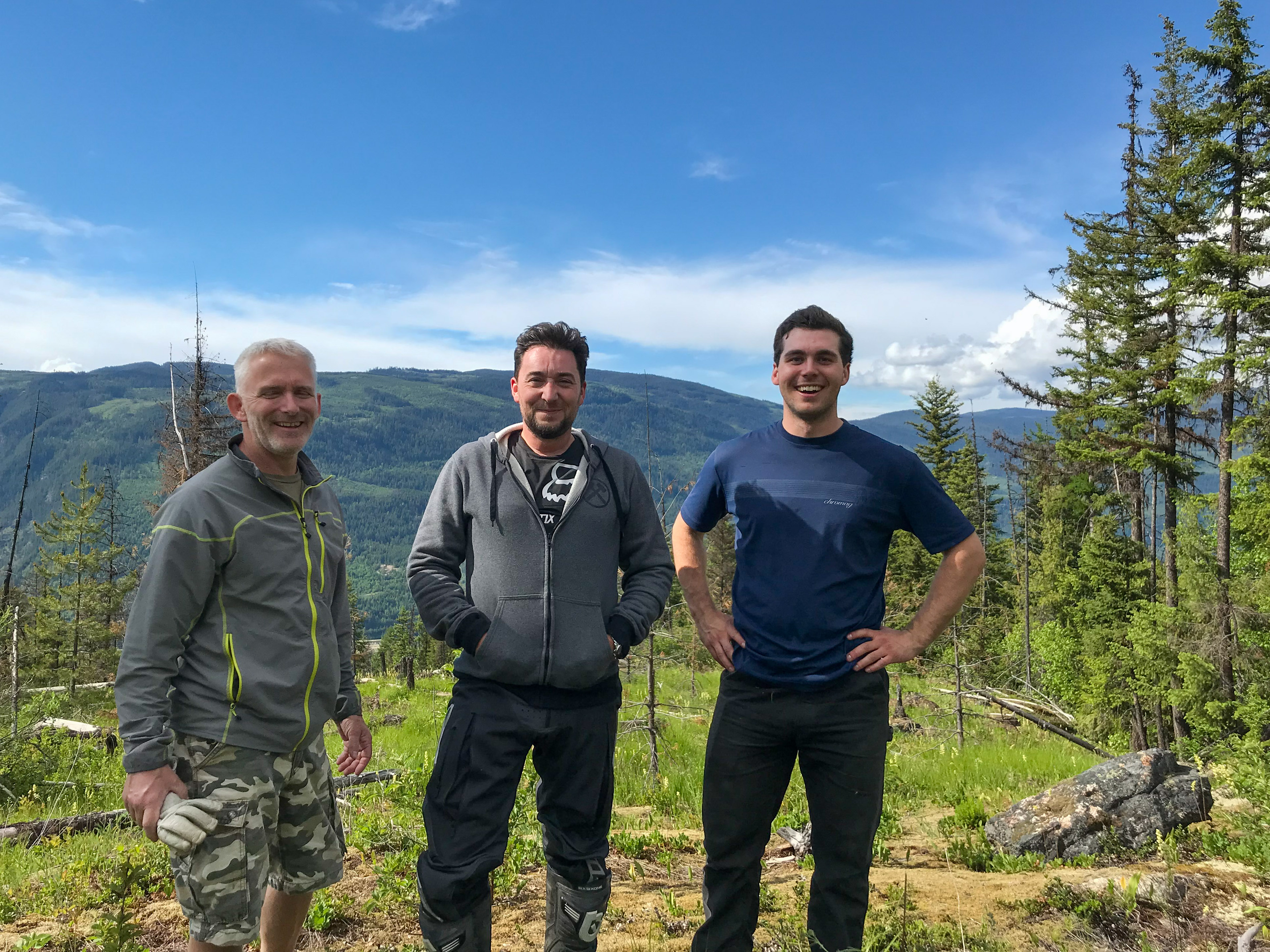
The district looked at building trails to bring much-needed revenue to the region
Bushell, who has been a member of the District of Sicamous Council since 2014, told Singletracks that the district was struggling financially in the mid-2010s. When he became a council member, the local elementary school was facing closure due to a lack of funds.
The council hired a new town manager and a new operations manager who were keen on using outdoor recreation to generate additional revenue for the town. In early 2019, the council, the operations manager, and a local rider named Corbin Selfe all sat down to develop a plan for new trails.
“We were looking for something that kids could do,” said Bushnell. Additionally, he stated that the district was struggling economically in the winter months and was trying to expand tourism during its shoulder seasons to help. Since the area’s climate permits people to use trails from mid-March through the end of November, mountain biking would be a great activity to add to the area.
The district started the approval process for the new bike park prior to the pandemic, then reached out to STA for assistance with the project.
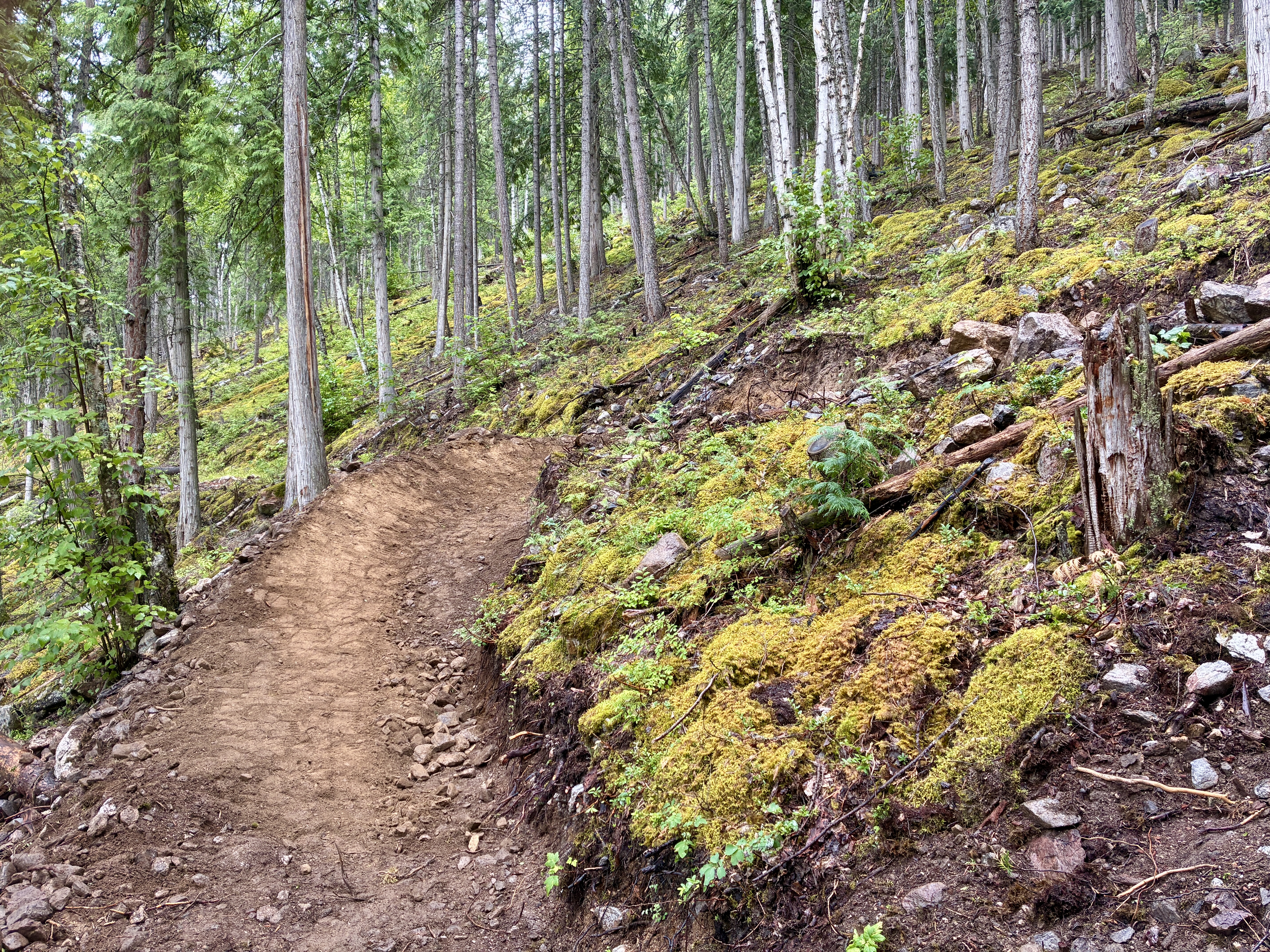
STA came on board in 2021 to assist with the approval process and manage the project
STA was formed in 2007 to focus on trails for all non-motorized user groups. In addition to advocacy, STA does maintenance and trail building for the Shuswap area.
Bostock told Singletracks that new trail projects usually take about five years to be approved. Since the majority of BC is Crown land, approval for new trails must come from the land manager, Recreational Sites and Trails BC. Additionally, the Splatsin (pronounced Spla-jeen) First Nation also had to approve the project before any site work could begin because of the land’s cultural significance.
Splatsin is one of 17 communities within the Secwepemc (Shuswap) Nation. They occupied the land in that region long before the first white settlers arrived in the 1800s. The Splatsin lived in villages in Sicamous, along the shores of Mara Lake, and throughout the territory.
Gunner told Singletracks that, under the law, there is a duty for the government to consult with indigenous communities when projects impact territorial lands. Through archival research and a site visit with community members, the Splatsin identified cultural uses for the land at Owlhead Mountain.
According to Gunner, the bike park site is “in an area where there was extensive community use, including a winter village site.” Gunner said that the Splatsin were semi-nomadic and did a seasonal round of their territory, living in different places throughout the year depending on what they needed to harvest from the land.
The Splatsin developed interpretive signage that was placed at the site. “It’s always important for the community to be recognized,” said Gunner.
Once all the approvals were obtained, the build process could begin.
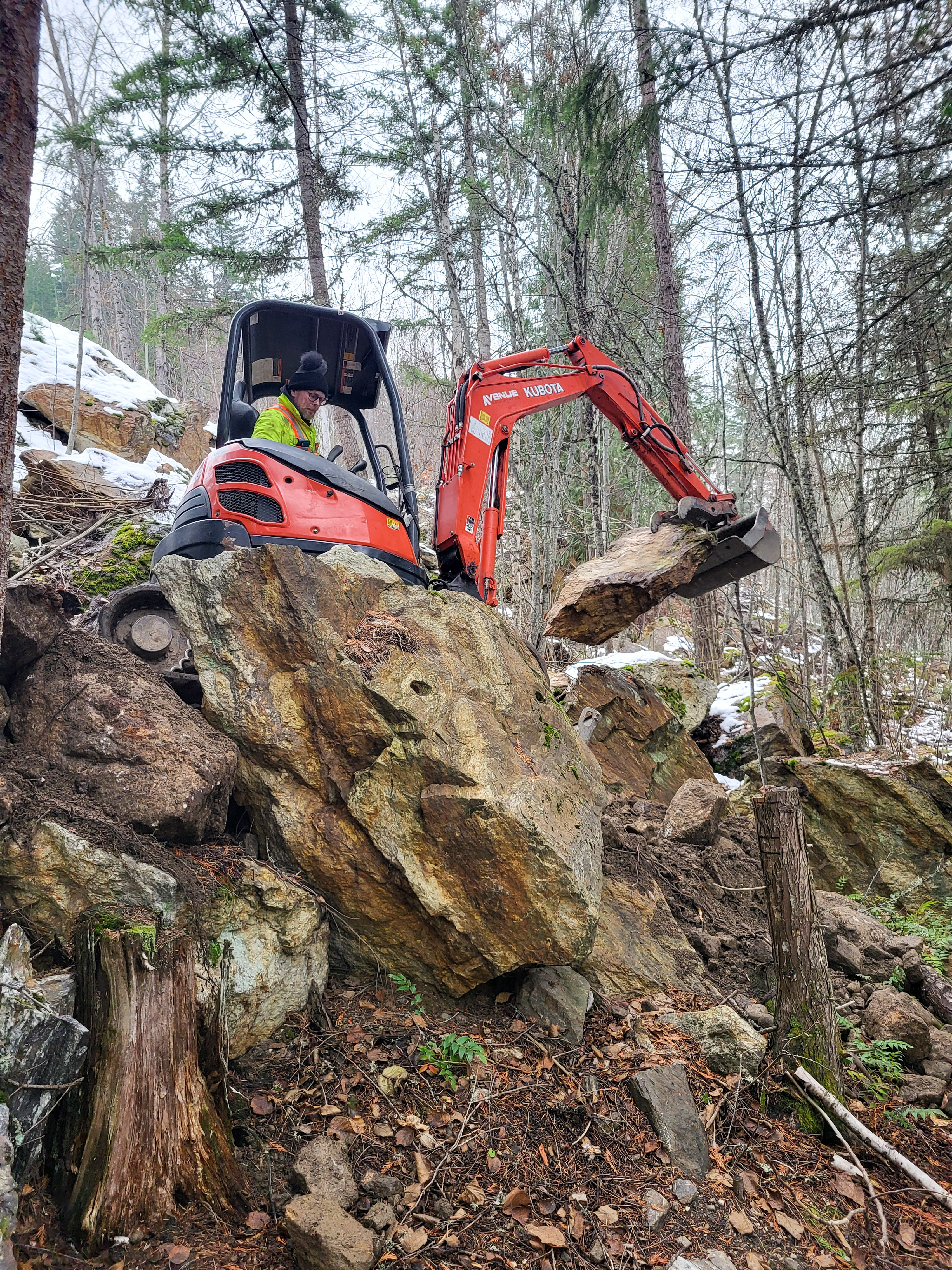
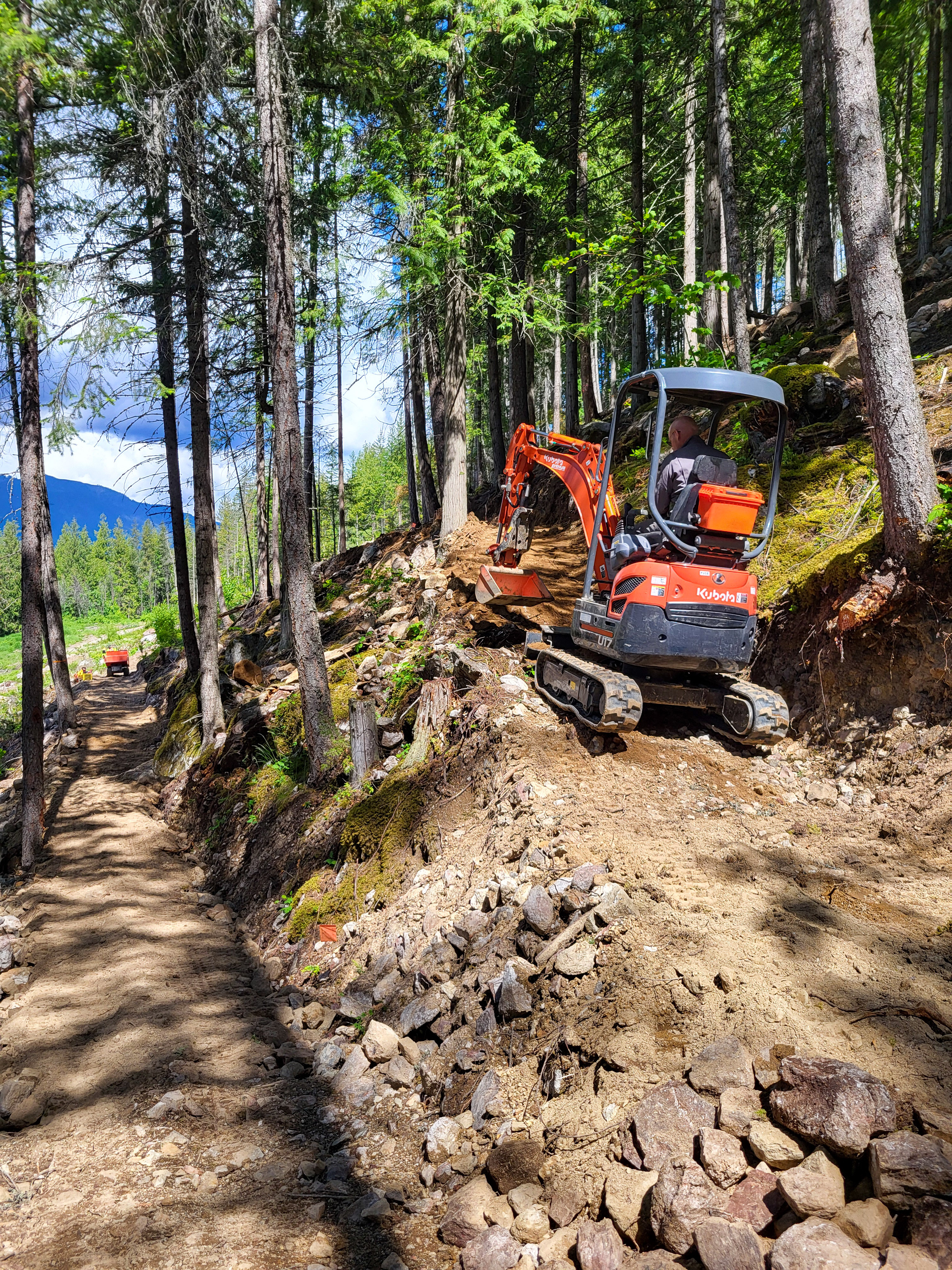
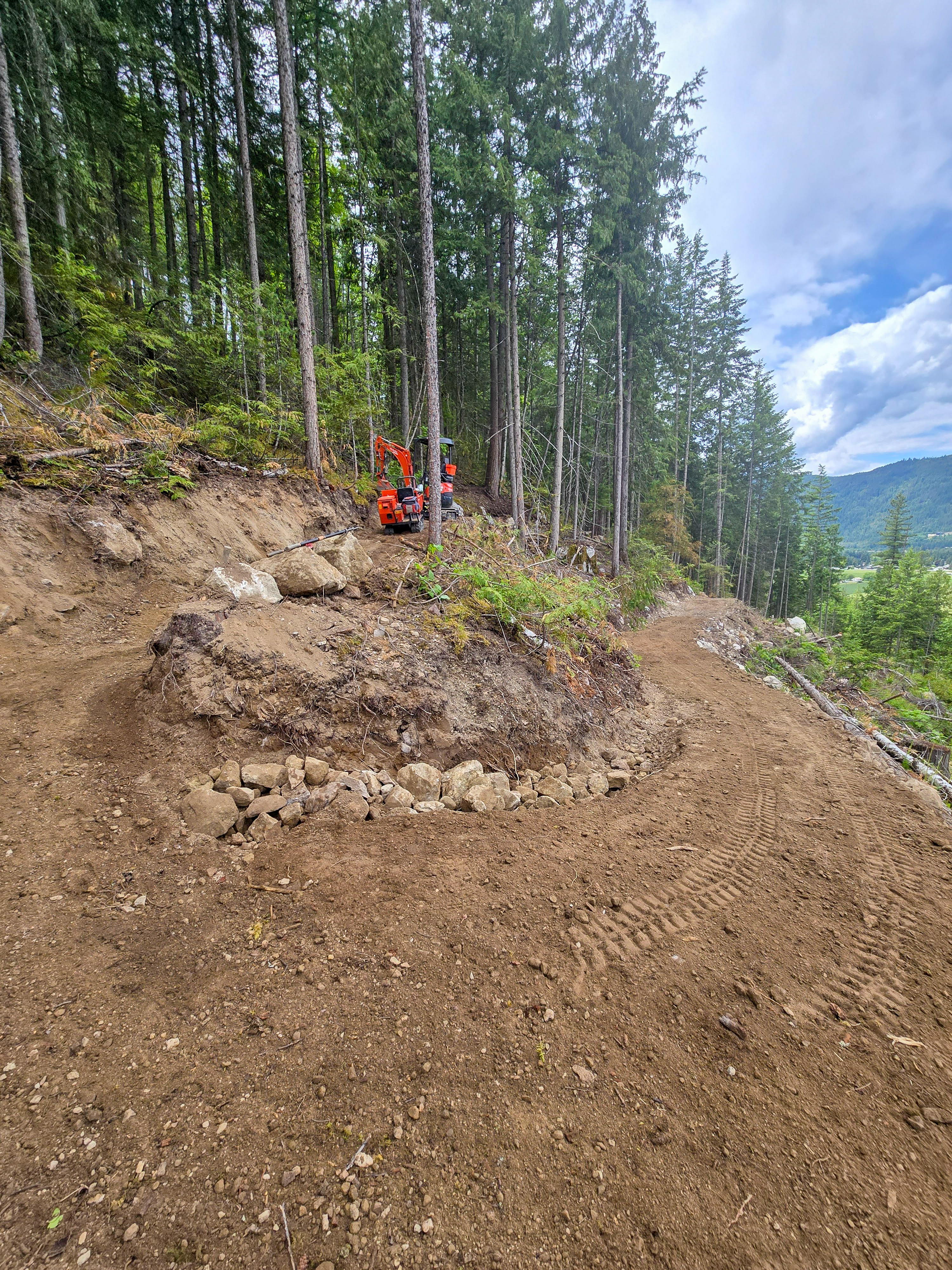
A lot of rock had to be moved to create the trails at the bike park. Photos: Clever Trail Design.
Phase one revealed some major challenges with the site’s terrain
Timmer’s company was hired by STA as the builder for the first phase of the bike park. He and Bostock did the initial layout of the trails in the fall of 2022, and Timmer started the initial rough-in of the trails in the fall of 2024.
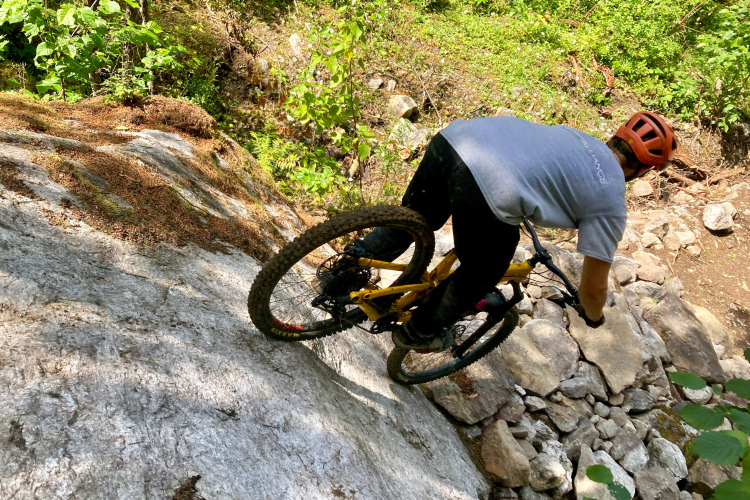
Phase one entailed the creation of a green climbing trail 2.8km (1.74mi) long and a blue downhill trail 1.2km (0.75mi) long. Almost immediately, Timmer saw there was a major challenge to building at the site. “There is an unbelievable amount of rock, and massive rocks too. There is so much rock there that there is little material left to build with.”
On top of that, the site’s slope is very steep: upwards of 60% in places. Consequently, Timmer had to work hard to build the trail within provincially-approved grades. “On one section of the green climbing trail, there are 11 switchbacks within 700m (0.44mi) to make it fit within the grade for a green trail,” said Timmer.
The phase one construction budget was approximately $180,000 CAD, with $117,000 coming from a federal funding source, Pacific Economic Development Canada (PacifiCan), and the District of Sicamous providing the remainder, along with additional planning funding.
An additional $13,000 was allocated for Secwépemc engagement during this phase. This included site visits with Elders and leadership from the Splatsin First Nation and led to the development of interpretive signage. Of that amount, $9,000 came from PacifiCan.
It was completed in July of 2025. Almost immediately, Timmer received a lot of positive feedback from local riders. “They were absolutely ecstatic about it.”
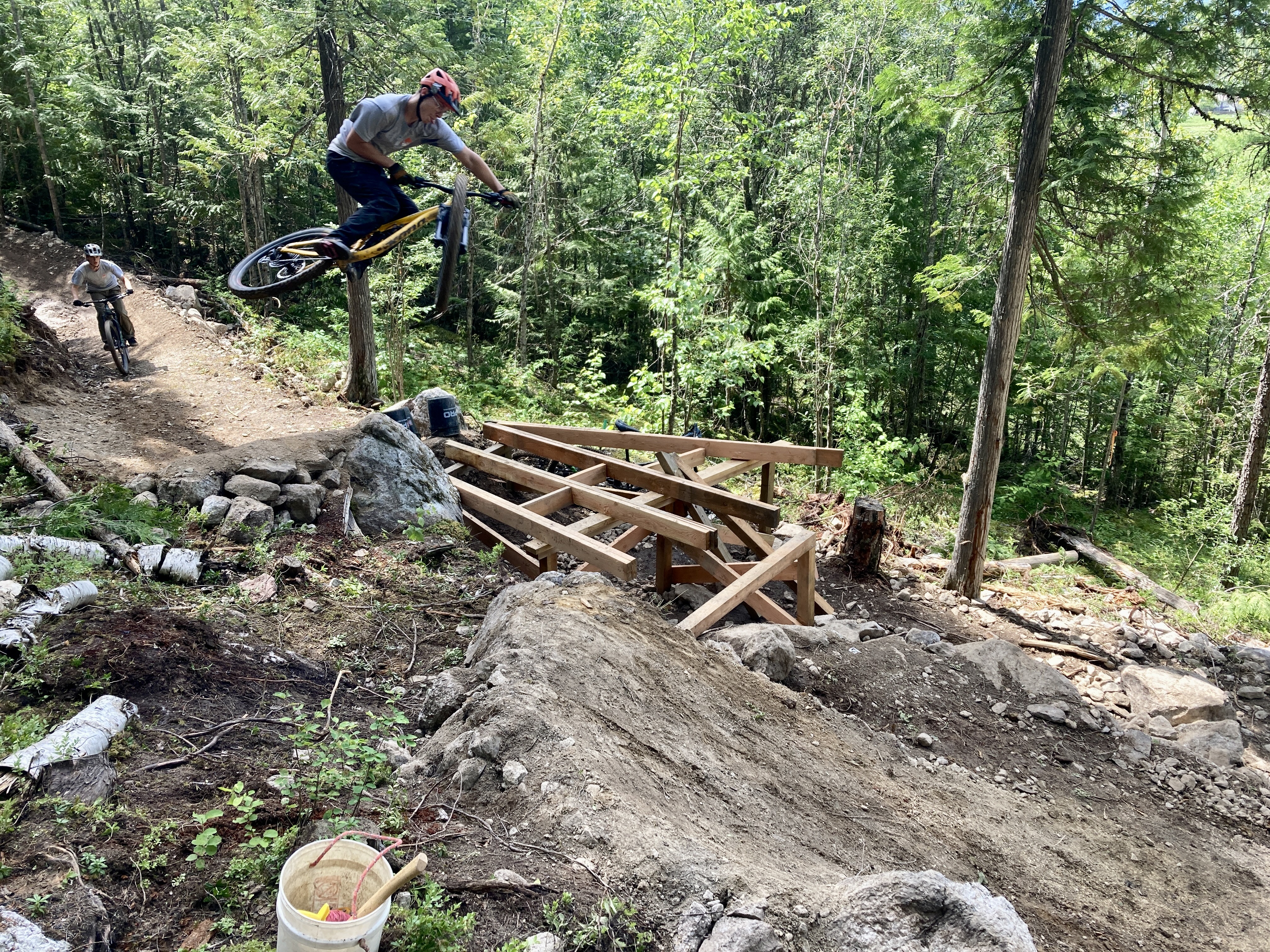
Phase two will more than double the amount and length of the trails
The second phase includes adding another 2km (1.2mi) to the green climbing trail, adding a blue jump line connecting to the existing blue downhill trail, and creating a black trail that is a mix of XC and downhill. In all, another 6km (3.73mi) will be added to the bike park.
The phase two budget is $293,000, with funding coming from the District of Sicamous, including $280,000 from the Columbia Shuswap Regional District (Area E) through the Economic Opportunity Fund. The Shuswap Trail Alliance is contributing $10,000 toward Indigenous engagement for phase two.
The District of Sicamous has also provided approximately $40,000 in planning funding across phases one and two.
Bostock said that STA has submitted a Section 57 application (for authorization to build trails) to Recreational Sites and Trails BC and is currently working through the First Nations Referral process. He stated that the earliest start for the phase two build would be the fall of 2026, but construction might be delayed until spring of 2027 or beyond.
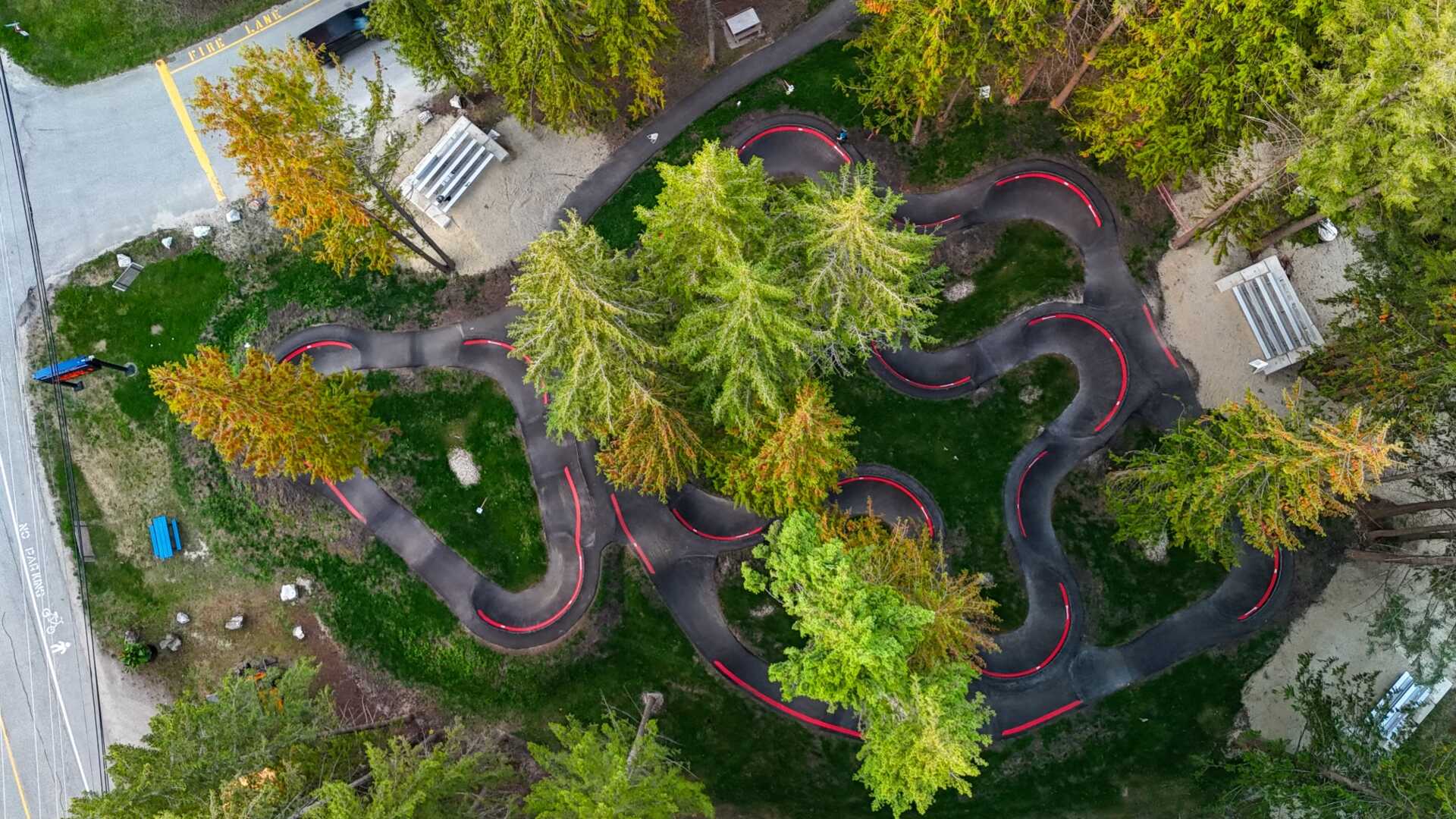
The bike park is part of a bigger plan to make Sicamous a destination for riders
Procyshyn told Singletracks that Owlhead Mountain Bike Park is one part of a larger plan the district has to attract riders to Sicamous. “Biking as an entire sector is a top priority for the area.”
After watching riders pass by Sicamous on the way to other nearby mountain bike destinations like Revelstoke and Vernon for years, the district wants to get in on the action. As Procyshyn put it, “we want to make Sicamous a mountain bike destination.”
In addition to the bike park, the district also built a Velosolutions pump track that opened in 2024 and hosted the UCI Pump Track World Championships Canada Qualifier in 2024 and 2025. And a short ferry ride across the narrows from downtown takes riders to the Shuswap North Okanagan Rail Trail, a multi-use gravel trail that, when complete, will be over 50km (31mi), running from Sicamous south to Armstrong.
The district also just completed a trails master plan that proposes more trails and connectivity between trails, including those at Owlhead Mountain Bike Park. Procyshyn was quick to give the district credit for its dedication to making Sicamous a rider-friendly place. “When they decide to invest in a project, they do it the right way.”
Know about a new trail project we should cover? Whether you’re breaking ground on the next must-ride destination or putting the finishing touches on a neighborhood flow trail, we want to hear about it. Drop us a line at [email protected] with high-quality photos of your build, plus details like trail mileage, location, difficulty, and what makes it special. We’re always on the hunt for the next great trail story, and there’s a good chance your project could be featured in an upcoming article.


0 Comments