

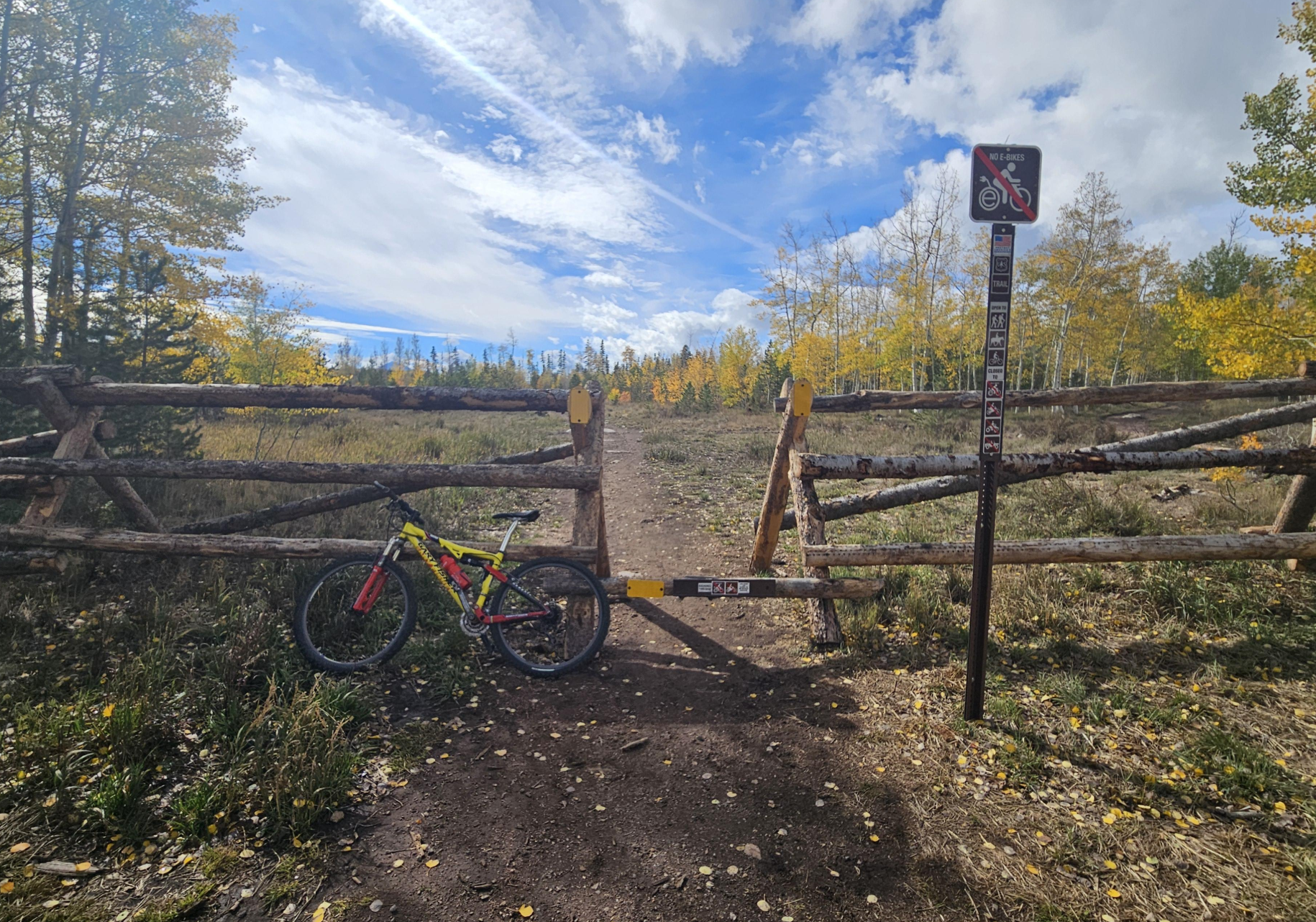
Keeping e-bikes off trails where they aren’t allowed is a challenging task for any land manager. Signage is typically the most common way to communicate the rules, while issuing citations is less common and generally the most extreme response.
In some instances, barriers are also used at trail systems, though they are more commonly used to restrict access to OHV users and livestock. A new step-over barrier on at least one trail in the White River National Forest is meant to prevent e-bike access, but also prevents access for adaptive riders.
An “e-bike barrier” that doesn’t keep e-bikes out
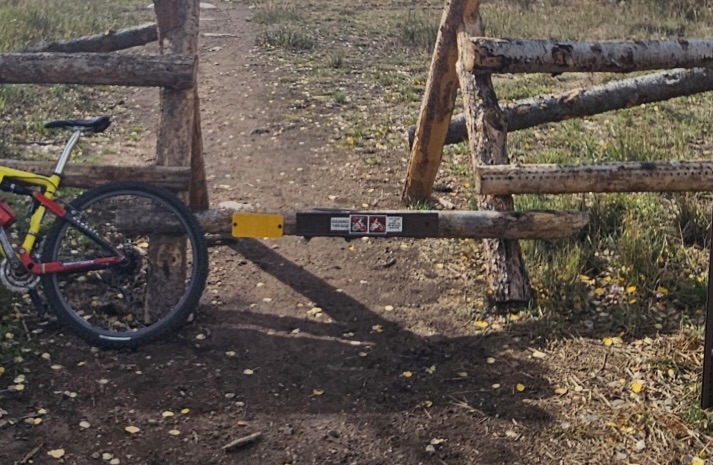
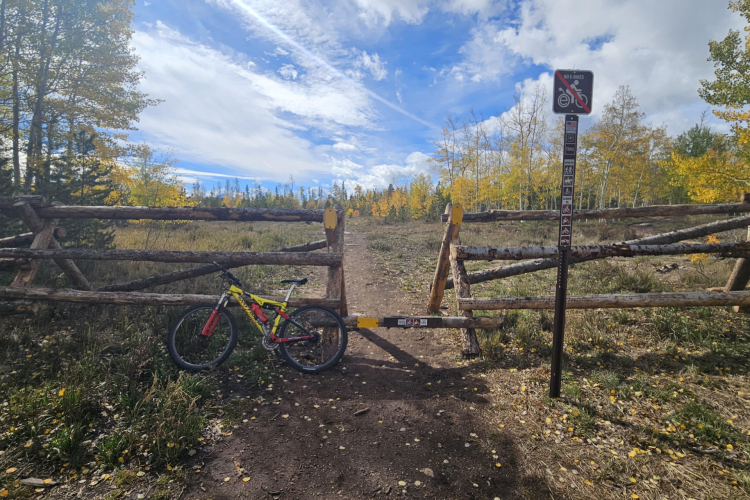
At least two e-bike barriers have been installed on at least one trail. Local news first reported on the barriers, including a photo of the “e-bike barrier” blocking the entrance to the Creek 9093 trail. Another photo of a similar barrier popped up on Reddit, which seems to be in a completely different area, if it is the same Creek Trail at all.
The barriers are simple — a small log attached across an opening between fencing on either side of the trail. This barrier log is set some 10” to 12” above the ground, with signs indicating that motorized and e-bike use is prohibited.
Similar signs are posted next to the opening, showing which user groups are allowed and which are not. The signage clearly indicates that the trail is off-limits to motorized bikes and e-bikes, including class 1 e-bikes, yet a barrier at the bottom further restricts access.
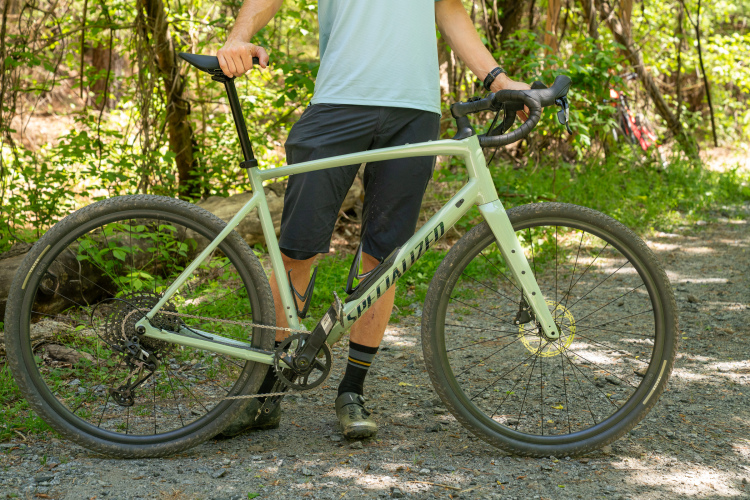
Hopefully the signs are enough to keep those user groups from accessing those trails, because the barrier surely doesn’t. Most riders who want to poach the trail on an e-bike can easily dismount, lift the bike over the barrier, and keep going. Considering that some class 1 e-bikes, like the Lauf eElja, can weigh as little as 36 pounds, the barrier installed to keep them out seems more like a minor inconvenience and another place to post signage.
A skillful rider might even be able to bunny-hop over the apparent e-bike barrier.
Is the barrier for class 1 e-bikes or e-motos?
Singletracks has covered the issues surrounding e-bike/e-moto conversation over the past few years. Much of the controversy around e-bikes now stems from confusion about what an e-bike is.
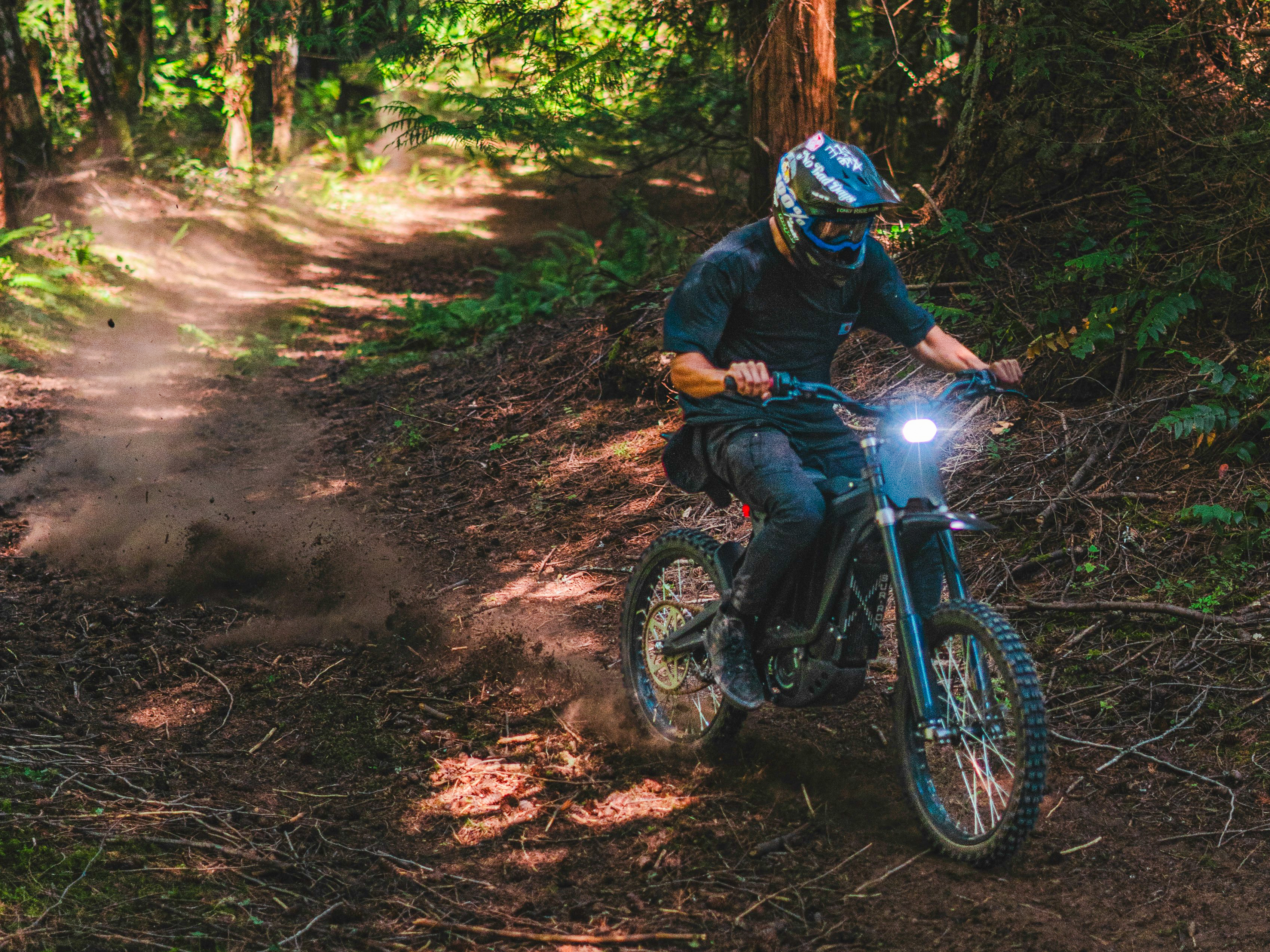
Most mountain bikers using the term “e-bike” are referring to a class 1 pedal-assist mountain bike, such as the Lauf mentioned above. And while we might know the difference between the three classes, non-mountain bikers don’t. The term “e-bike” became a sort of catch-all phrase in reporting, often used to describe bikes that are actually e-motos.
Our reporting further found that, according to land managers and law enforcement, it wasn’t necessarily the class 1 e-bikes that were causing issues. Rather, teenagers on what were more accurately described as “e-motos” were commonly the problem, forcing many states to take a tougher stance and change laws.
However, the barrier still doesn’t seem to do much to keep these vehicles out. While e-motos are significantly heavier than class 1 e-bikes, a rider could still lift an e-moto up and over the barrier, one wheel at a time.
Who the barriers do seem to keep out
While the barriers likely won’t do much to deter an e-bike or e-moto rider determined to poach the trails, they would definitely prevent an adaptive rider from accessing what lies beyond.
At least one trail we know of from the photos is the Creek Trail in Silverthorne. It is a shorter trail that connects to a larger trail system. And while there is no indication that Creek is an adaptive-friendly trail in the first place, the barrier now crosses it off the list for any adaptive rider looking to explore.
Exactly how many e-bike barriers there are, and on how many trails, is unclear.
Silverthorne, Colorado, is just north of Breckenridge — both towns are in Summit County — and both have recently discussed e-bikes on trails. Summit County declined to comment on the “e-bike barriers” or on e-bike access on county trails in general. Instead, they referred us to officials at the White River National Forest, which manages the trails and the barriers.
We followed up with White River officials, who initially responded to a request for comment but couldn’t provide responses in time for publication.
For now, know that class 1 e-bikes are not allowed on Creek Trail in Silverthorne, CO, even if you can very easily lift your front and rear wheels over the “barrier.”
Keep up with the latest mountain bike news by adding Singletracks as a preferred source on Google.


1 Comments
0 minutes ago
In my area, the local police have stepped up enforcement of e-motos being ridden on public property, and it's definitely deterred a lot of riders. As a result, many have decided to sell their e-motos.
Another thing that should reduce e-moto adoption going forward is a change to product import requirements. Previously, CPSC compliance reporting was voluntary in some cases; now, it's required for all imports, making it harder to import e-motos that are misclassified as e-bikes.